Alternatives to large national HVAC firms.
# Alternatives to Large National HVAC Firms | M&E Guide
Why Regional Providers Excel for Commercial HVAC Needs
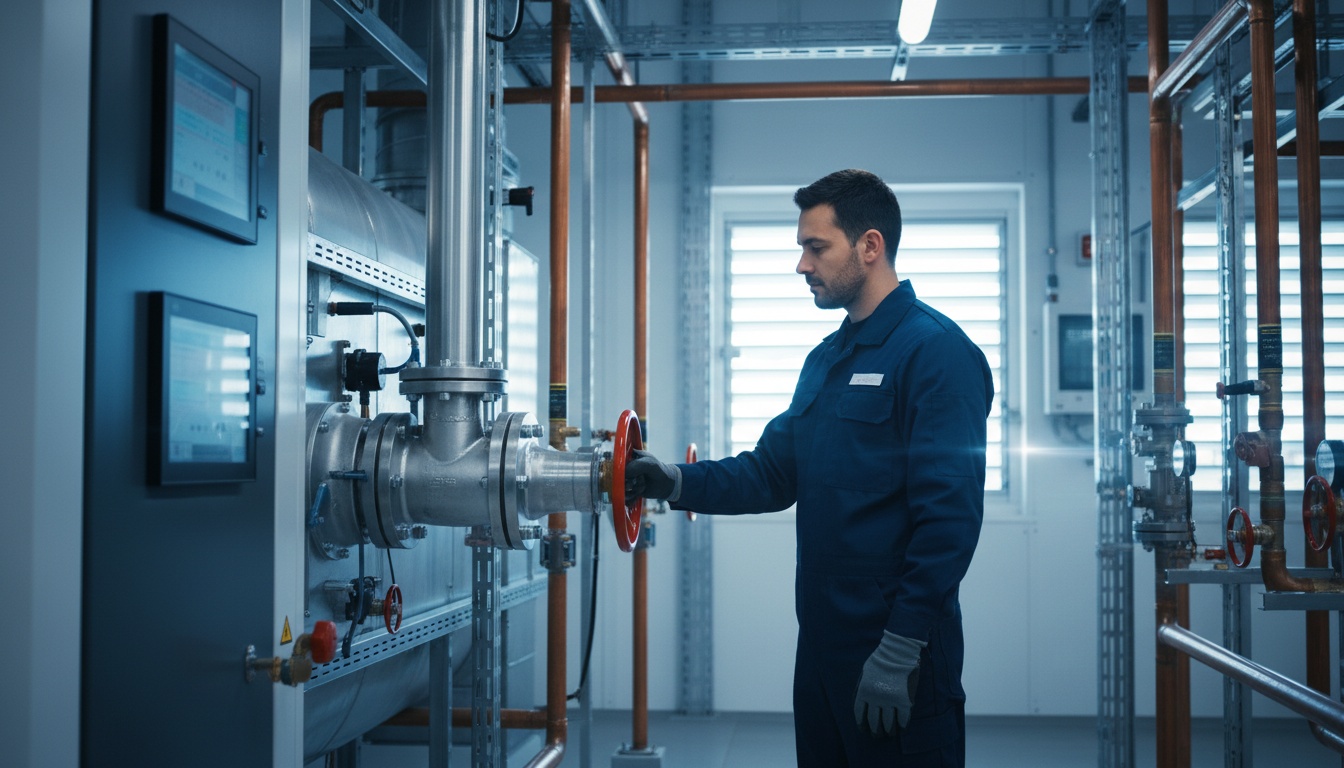
After 24 years moving from apprentice combustion engineer to managing commercial maintenance contracts, I can tell you the engineering quality between national and regional firms is often comparable. The difference lies in accountability, speed, and cost structure. Regional specialists operate without the bureaucratic drag that cripples national responsiveness.
Faster Response and 24/7 Availability Without the Premium Price
Genuine 24/7 availability means an engineer answers the phone at 3am, not a call centre logging your details for Monday morning. Regional providers staff their own emergency lines because their reputation depends on every single client. When a boiler fails in a care home, you need someone who treats it as their problem, not ticket reference 47,832.
Planned Preventative Maintenance (PPM) with regional firms costs less and delivers more. National contracts often include quarterly visits that tick compliance boxes without genuine asset care. Regional engineers who service the same buildings repeatedly spot developing issues before they become emergencies. That continuity saves money.
Deep Knowledge of UK Regulations and Climate Variations
SFG20 compliance is not optional. It is the baseline standard used across commercial building maintenance. Regional specialists live and breathe these requirements because their local reputation depends on getting them right. They understand seasonal variations in the Midlands climate, know when condensing boilers need glycol protection, and recognise which systems require F-Gas certification updates.
National firms often subcontract regional work to local engineers anyway, adding a management fee whilst removing direct accountability. You pay extra for a middleman.
Tailored Integration with Plumbing and Electrical Systems
Commercial buildings do not operate in silos. Your HVAC system interacts with plumbing, electrical distribution, and Building Management Systems (BMS). National firms compartmentalise these disciplines, sending separate contractors who do not communicate. Regional M&E specialists handle the full integration because they understand how a faulty pump affects chiller performance, or how electrical phase imbalance damages compressor motors. See more about mechanical, electrical, and plumbing.
This joined-up approach prevents the “blame game” that plagues multi-contractor sites. When air conditioning fails, you do not want three different firms pointing fingers. You need one accountable partner who owns the entire mechanical and electrical infrastructure.
The M&E Maintenance Solutions Limited standard: We maintain every system to SFG20 specifications with digital compliance certificates delivered within 24 hours. Our engineers learn your building's quirks because the same team attends each visit. That continuity catches problems before they become emergencies.
Explore our Building Fabric Repairs & Maintenance services to see how comprehensive care supports your building's integrity.
Spotting Reliable Local Alternatives to National Chains
Not every regional provider delivers on its promises. The market contains sole traders masquerading as established firms, and national subcontractors presenting themselves as local. Vetting alternatives to large national HVAC firms requires the right questions and verifiable credentials.
Key Certifications and Vetting Checks for Genuine Providers
Gas Safe registration is non-negotiable for any firm working on gas-fired appliances. REFCOM certification demonstrates competence in refrigerant handling and F-Gas compliance. Beyond these statutory minimums, look for ISO 9001 quality management accreditation and membership of professional bodies such as the Building Engineering Services Association (BESA). These credentials separate professional operations from cowboys. The Engineering Council UK also provides guidance on qualifications.
Ask to see recent compliance certificates from other clients (with identifying details redacted). Genuine providers maintain meticulous digital records because regulatory audits demand them. If a firm hesitates to show proof of certification or cannot produce current Gas Safe documentation, walk away.
Questions to Ask Before Switching Your Contract
Start with response time guarantees. “We aim to respond quickly” means nothing. You need contractual commitments: emergency attendance within two hours, routine PPM scheduling within agreed windows, and named account managers who know your portfolio. Ask who answers the emergency line at 2am on Sunday. If it is a call centre, you are dealing with a national model in regional clothing.
Request client references from similar commercial properties in your area. A firm maintaining office blocks in Birmingham should be able to provide three verifiable contacts. Speak to those facility managers directly about response times, invoice accuracy, and whether the same engineers attend each visit.
Red Flags in ‘Local’ Firms Masquerading as National
Watch for vague geographic claims like “serving the UK” when a firm claims to be regional. True regional providers specify their operational radius: “covering Birmingham, the West Midlands, and surrounding counties within 90 minutes.” National subcontractors use local addresses whilst routing calls through central dispatch systems.
Vetting Checklist for Regional HVAC Providers
- Gas Safe and REFCOM certification verified on official registers
- ISO 9001 accreditation or equivalent quality management system
- Contractual response time guarantees with penalty clauses
- Direct engineer phone numbers, not call centre routing
- At least three verifiable client references in your sector
- Digital compliance certificate delivery within 24 hours
- SFG20 maintenance schedules as standard, not optional extras
- Clear geographic service area (specific counties, not “nationwide”)
- Named account manager assigned to your portfolio
- Transparent pricing without hidden “administrative fees”
Sustainable and Compliant Futures with Proven Regional Partners
Commercial property faces mounting pressure to decarbonise whilst maintaining operational reliability. Regional M&E specialists often outperform national firms in sustainable system integration because they engineer solutions around your specific building, not a corporate product catalogue. This approach aligns closely with UK government objectives outlined by the Department for Levelling Up, Housing and Communities.
Integrating Heat Pumps, Solar PV, and Efficient Systems
Air-to-water heat pumps and R32 refrigerant systems can reduce carbon emissions by 40–60% compared with legacy gas boilers, but only when they are properly specified and maintained. National contractors may push standardised solutions that ignore a building's thermal characteristics. Regional engineers conduct heat loss calculations, assess existing distribution systems, and design integrations that work in real conditions.
Solar PV integration with HVAC systems requires understanding electrical load profiles and battery storage options. A regional provider managing complete M&E infrastructure can coordinate these systems, reducing peak demand charges and improving on-site consumption of renewable generation.
To explore eco-friendly options, consider our dedicated Renewable Energy Solutions tailored for commercial buildings.
The Value of Internal Testing and Long-Term Partnerships
Alternatives to large national HVAC firms succeed through relationship continuity. The same engineers servicing your plant room for years build the site knowledge that prevents avoidable failures. They remember that the backup boiler has a temperamental pressure relief valve, or that the BMS controller needs a specific firmware version.
This continuity supports proactive maintenance. Regular engineers spot developing issues during routine PPM visits because they know what “normal” looks like for your systems.
Audit Your Setup: Steps to Proactive Maintenance Today

Most facility managers inherit maintenance contracts without questioning whether they serve the building's actual needs. Start by requesting your last 12 months of service records. Calculate the ratio between planned maintenance visits and emergency call-outs. If emergency work exceeds 30% of total spend, your provider is failing you.
Review your compliance documentation. Every Gas Safe appliance service should generate a certificate within 24 hours. F-Gas systems require annual leak checks with refrigerant records logged to DEFRA standards. Missing or delayed paperwork is not just administrative sloppiness; it exposes you to enforcement action under the Health and Safety at Work etc. Act.
Energy consumption patterns reveal hidden inefficiencies. Compare monthly utility bills against degree days (heating and cooling demand adjusted for weather). If costs rise whilst degree days remain stable, plant equipment may be degrading. Poorly maintained HVAC systems can consume 15–30% more energy than properly serviced units, and that waste compounds each month action is delayed.
Maintenance Audit Action Steps
- Calculate the emergency vs planned maintenance spend ratio over 12 months
- Verify all Gas Safe and F-Gas certificates are current and digitally accessible
- Request SFG20 compliance documentation from your current provider
- Compare energy bills against degree day data to identify efficiency drift
- Interview facilities staff about engineer continuity and response times
- Review contract terms for guaranteed response times and penalty clauses
- Obtain three quotes from regional alternatives with identical scope
- Check provider certifications directly on Gas Safe and REFCOM registers
- Request a site survey from a qualified M&E specialist to benchmark the current setup
- Document recurring faults to identify systemic maintenance failures
The transition from national contractors to alternatives to large national HVAC firms does not require immediate termination of existing agreements. Start with a parallel evaluation: commission a site survey from a qualified regional provider whilst the current contract continues. Compare the findings with the reports supplied by the national firm. Discrepancies often highlight missed risk.
Commercial reality: A Birmingham office block reduced annual M&E costs by £18,000 by switching from a national contractor to a regional specialist. Service levels improved: response times dropped from eight hours to 90 minutes, and the same engineering team attended each visit. Proactive maintenance identified a developing chiller fault that would have cost £12,000 in emergency replacement.
Do not wait for a catastrophic failure to force a decision. The best time to evaluate alternatives to large national HVAC firms is when systems are running smoothly. You can negotiate from a strong position, complete due diligence, and transition methodically rather than scrambling during an emergency.
Building maintenance is not glamorous work, but it underpins business continuity. Heating, ventilation, and air conditioning systems protect commercial assets, support tenant comfort, and help you stay compliant. Treating them as a commodity purchase rather than an operational partnership is a false economy that usually costs more over time.
Regional M&E specialists offer the accountability, responsiveness, and technical focus that national firms promise but rarely deliver. The choice is between reactive chaos and proactive control. Choose partners who answer their own phones at 3am, send the same engineers who know your building, and stake their local reputation on getting it right first time.
Book a site survey with a qualified regional provider and compare its SFG20 approach, response commitments, and pricing with your current arrangement. The cost of a survey is modest; the cost of waiting until the next emergency breakdown is not.
Learn more about our Commercial HVAC Installation and Maintenance for reliable, responsive service tailored to your needs.
Frequently Asked Questions
What are the main issues with using large national HVAC firms for commercial buildings?
From my experience, national firms often come with hidden costs due to corporate overhead and can suffer from slow response times. Their operational models, built on ticket systems, mean your emergency might be queued behind many others across the country. This can lead to significant business disruption and revenue loss.
How do regional HVAC providers offer better value than national chains?
Regional providers typically operate with lower overhead, allowing them to charge 20-30% less for comparable engineering quality. You're paying for the service, not funding a massive corporate infrastructure. This leaner model translates directly into cost savings for commercial managers.
What kind of expertise do regional HVAC specialists bring to commercial maintenance?
Regional specialists offer deep local knowledge, understanding specific UK building regulations, and the quirks of older building stock, like those in the Midlands. They also know local suppliers for legacy parts and can provide tailored solutions, unlike the one-size-fits-all approach of many national firms.
How does the corporate structure of national HVAC companies affect service for facility managers?
National firms' corporate structures often lead to bureaucratic processes, slow decision-making, and engineers unfamiliar with your specific site. Their reliance on resource allocation algorithms means your urgent needs might not get the immediate attention a regional provider, focused on its local reputation, would give.
Why are response times often slower with national HVAC providers?
Large national firms manage vast portfolios, queuing emergencies through central ticket systems and resource allocation algorithms. This means an engineer might not be available until days later, even for critical failures. Regional providers, with dedicated local teams, can mobilise much faster, often within 90 minutes for emergencies.
Can regional HVAC firms handle complex commercial building needs, like integrated systems?
Absolutely. Many regional M&E specialists, like us, understand that HVAC systems interact with plumbing, electrical, and Building Management Systems. We provide a joined-up approach, preventing the "blame game" that occurs when multiple, disconnected contractors are involved. This ensures one accountable partner for your entire mechanical and electrical infrastructure.
What are the benefits of consistent engineers working on my commercial building's HVAC?
Consistent engineers who regularly service your building learn its unique quirks and history, spotting developing issues before they become emergencies. This continuity saves money on reactive repairs and ensures genuine asset care, going beyond just ticking compliance boxes. It builds trust and accountability.