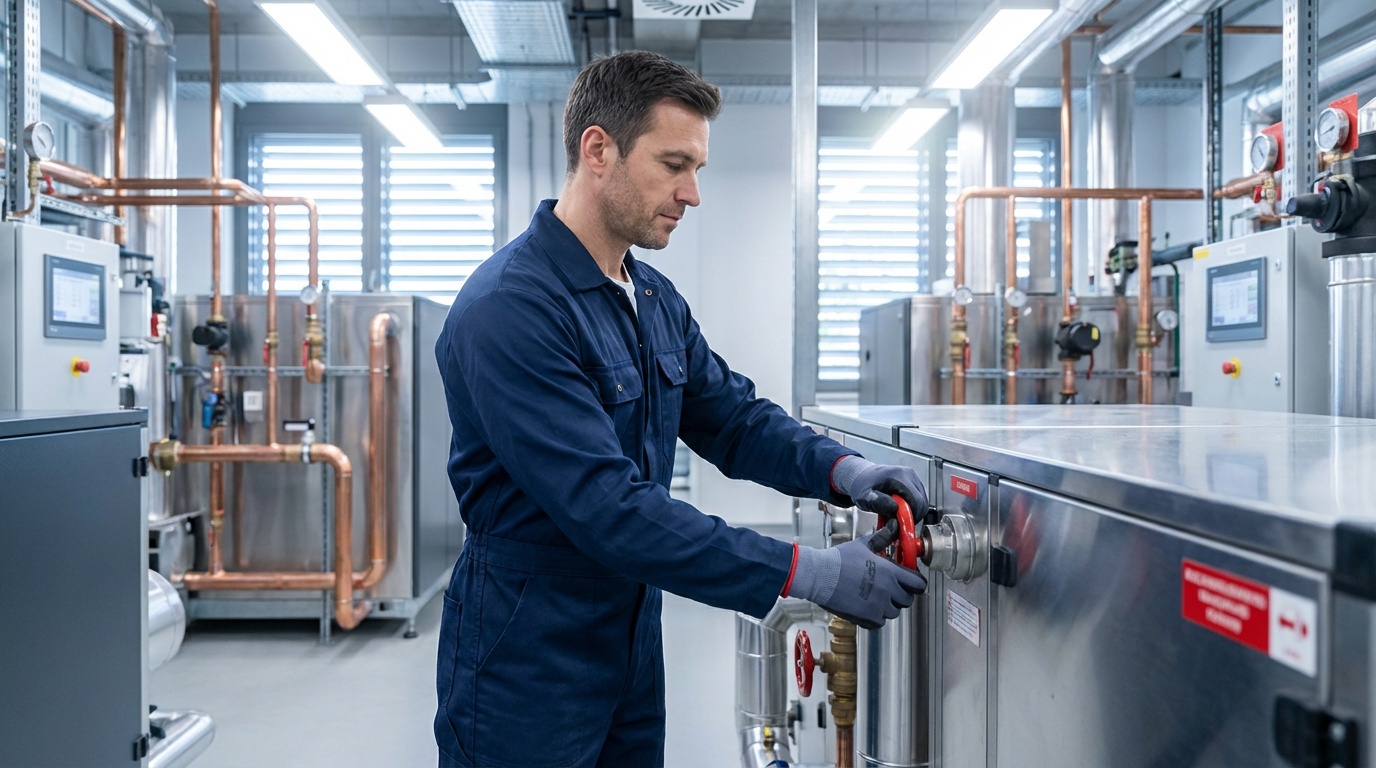
Smart building maintenance vs manual.
# Smart Building Maintenance vs Manual: UK Guide 2026
The Commercial Reality: Why Your Building's Maintenance Strategy is Costing You More Than You Think
It's 7am on a Monday in January. Your Birmingham office building's HVAC system has failed overnight. Staff arrive to a freezing reception. Your facilities manager is frantically working through a spreadsheet of contractors, hoping someone answers.
By 10am, you've lost three hours of productivity across 80 employees, and the emergency call-out fee has already hit £800 before a single spanner touches metal.
This is manual maintenance. No sensor alerted you to rising compressor temperatures. The system simply failed, and you scrambled.
The Hidden Costs Stack Up Silently
In my 24 years working from apprentice combustion engineer to managing M&E Maintenance Solutions, I've seen the same pattern repeat: manual maintenance looks cheaper on paper until it catastrophically isn't.
A filter that should've been changed quarterly gets forgotten for nine months. Energy consumption creeps up by 18% because the system's working harder. Then the motor burns out.
Suddenly you're paying for parts at emergency rates, overnight shipping, and lost business hours.
Engineering Reality: Reactive maintenance costs 3-5 times more than planned preventative maintenance over a three-year asset lifecycle. The savings you think you're making by skipping quarterly PPM visits vanish the first time you face an emergency shutdown.
What I've Seen Go Wrong
Manual logging fails because humans are inconsistent. I've audited plant rooms where compliance certificates were filed in three different locations--some handwritten, some missing entirely. When an HSE inspector arrives, that chaos becomes a legal liability.
Digital systems don't forget. They don't misplace paperwork. They time-stamp every action and store it in the cloud, where auditors can access it instantly.
Key Differences: Smart Building Maintenance vs Manual Methods

How Manual Maintenance Operates
Manual maintenance runs on fixed schedules and visual inspections. An engineer visits quarterly, checks a list, replaces parts based on manufacturer recommendations, and leaves.
If something fails between visits, you only discover it when occupants complain or equipment stops working. There's no predictive capability. You're maintaining to a calendar, not to the actual condition of your assets.
Smart Systems: Sensors and Real-Time Data
IoT sensors monitor temperature, vibration, pressure, and energy consumption continuously. When a bearing starts to degrade, the system detects the vibration signature change weeks before failure.
AI algorithms analyse patterns across your entire estate, flagging anomalies that human eyes miss. You receive alerts on your mobile before problems escalate, allowing planned interventions during off-peak hours rather than emergency shutdowns during trading times.
Direct Comparison for UK Facility Managers
| Feature | Manual Maintenance | Smart Building Maintenance |
|---|---|---|
| Fault Detection | Reactive; discovered during inspections or after failure | Predictive; sensors identify issues weeks in advance |
| Compliance Records | Paper or PDF certificates filed manually | Automated digital logs with instant audit trails |
| Response Time | Hours to days depending on contractor availability | Real-time alerts enable immediate action |
| Energy Efficiency | Periodic checks; inefficiencies go unnoticed between visits | Continuous optimisation based on live performance data |
| Cost Model | Lower upfront, higher total cost due to emergency repairs | Higher initial investment, significantly lower lifetime costs |
M&E Maintenance Solutions integrates smart monitoring with our 24/7/365 support because sensors alone aren't enough. You need engineers who understand what the data means and can act on it. That's where our two decades of hands-on experience becomes the difference between data and decisions.
UK Compliance Risks: Manual Logging vs Smart Traceability
Why Manual Records Fail Audits
An engineer completes a Gas Safe inspection, writes notes on a tablet, uploads a PDF to your server, and emails you a copy. Six months later, an HSE inspector asks for proof of F-Gas refrigerant handling records.
You search three email accounts, two shared drives, and a filing cabinet. The certificate exists somewhere, but "somewhere" doesn't satisfy a legal audit.
SFG20 mandates specific maintenance frequencies and documentation standards. Manual systems rely on individual engineers remembering to complete every field correctly. I've seen Gas Safe certificates missing engineer registration numbers, F-Gas records without refrigerant quantities logged, and PPM reports that contradict previous visits because different engineers interpreted the same equipment differently.
These aren't malicious errors. They're inevitable human inconsistency under time pressure.
Smart Systems Deliver Instant Compliance Proof
When an engineer completes work, the system captures their credentials, time-stamps the activity, photographs the asset, and stores everything in a tamper-proof digital ledger. Refrigerant quantities are logged via Bluetooth scales that sync directly to your F-Gas register. Gas Safe certificates generate automatically with all required fields populated from engineer profiles and equipment databases.
Your compliance dashboard shows every asset's status in real time. Certificates due for renewal appear 30 days in advance. When an auditor arrives, you grant portal access and they review five years of records in minutes rather than days.
This isn't convenience. It's risk reduction.
The Legal Exposure from Missing Paperwork
UK regulations tightened significantly after Grenfell. The Building Safety Act 2022 introduced the "golden thread" concept: complete, digitally accessible records of every building system throughout its lifecycle.
Manual maintenance can't meet this standard.
Legal Reality: Under the Building Safety Act, Accountable Persons must maintain digital records accessible to regulators within 24 hours. Manual filing systems don't comply. The penalties aren't only financial; they include potential criminal charges for gross negligence.
If you can't produce instant, verifiable proof of maintenance history, you face enforcement notices, insurance complications, and personal liability for responsible persons under CDM regulations. The legal exposure far exceeds the cost of implementing proper digital systems.
Cost Savings and Proven ROI: Numbers from the Plant Room
Downtime and Energy Bill Reductions
Predictive maintenance reduces unplanned downtime by 60-75% compared with reactive approaches. A retail site losing £5,000 per hour during HVAC failure can save £120,000 annually by preventing only four major incidents.
Energy optimisation through continuous monitoring typically reduces consumption by 12-20% within the first year, as systems run at design efficiency rather than degraded performance between quarterly inspections.
What We've Tested Internally
At M&E Maintenance Solutions, we test emerging technologies internally before recommending them to clients. Our trials of air-to-water heat pumps with smart controls showed a 35% energy cost reduction versus traditional gas boilers when paired with real-time weather compensation and occupancy sensors.
Solar PV installations monitored through smart inverters identified underperforming panels within days rather than waiting for annual output reviews, protecting ROI from day one.
This open-door evaluation policy means clients receive proven solutions, not experimental gambles.
Birmingham Office Complex: The Numbers
A Birmingham office complex we manage switched from manual quarterly inspections to smart monitoring in 2024.
Previous annual spend: £28,000 maintenance plus three emergency call-outs averaging £6,500 each. Total: £47,500.
Year one with smart systems: £35,000 upfront investment, £18,000 annual monitoring, zero emergency failures. Total: £53,000.
From year two onwards: £18,000 annually versus £47,500. That's £29,500 saved every year.
Break-even came at 18 months. Energy bills dropped by 16% from efficiency gains, adding another £8,200 annual saving.
Your Action Plan: Audit Your Setup and Make the Switch

5 Questions to Ask Your Current Provider Today
- Can you provide digital compliance certificates within 24 hours of any job? If they send PDFs days later, your audit trail has gaps.
- Do you maintain to SFG20 standards with documented evidence? Generic "best practice" isn't legally defensible.
- What's your reactive versus proactive maintenance ratio? If over 40% of spend goes to emergency repairs, your strategy is broken.
- Can I access real-time asset performance data? If not, you're managing blind between quarterly visits.
- Do the same engineers service my site consistently? Continuity matters because experienced eyes spot developing issues.
How to Implement Without Disruption
Start with critical assets: main HVAC plant, boilers, and chillers. Retrofit wireless sensors to monitor performance baselines for three months while maintaining current schedules.
Use that data to identify which assets need attention most urgently. Gradually expand coverage as ROI proves itself.
Phased implementation protects operations while building the internal business case.
Why Partner with M&E for 24/7 Proactive Support
Smart systems generate data. You need engineers who translate that data into decisions.
M&E Maintenance Solutions combines sensor technology with two decades of hands-on commercial HVAC expertise. We monitor your systems, interpret anomalies, and dispatch engineers before failures occur.
Big enough to cope with complex multi-site estates, small enough to care about the individual quirks of your specific building.
That's the MEMS Standard: right first time, every time.
Future-Proofing Your Building Strategy
The Regulatory Timeline Through 2027
UK building regulations are accelerating towards mandatory digital twins and real-time monitoring. The Building Safety Regulator has signalled that by 2027, all commercial buildings over 18 metres will require live system monitoring with accessible digital records.
Waiting to transition means retrofitting under regulatory pressure rather than implementing strategically. This isn't a future debate. It's a present requirement for estate managers planning beyond the next budget cycle.
Energy Performance Certificate requirements are tightening too. Buildings rated below C face rental restrictions from 2027. Manual maintenance can't deliver the continuous optimisation needed to maintain performance ratings as regulations tighten.
Your building's EPC rating directly affects capital value and tenant demand. This is asset protection, not only operational efficiency.
Why Heat Pumps and Solar Need Smart Controls
The commercial property sector is shifting rapidly towards heat pumps, solar PV, and battery storage. These technologies require sophisticated controls to deliver promised savings.
A manually maintained air-to-water heat pump operates at fixed parameters regardless of weather, occupancy, or grid pricing. Smart controls adjust flow temperatures based on outdoor conditions, pre-heat spaces during cheaper electricity periods, and integrate with solar generation to maximise self-consumption.
The hardware is identical. The intelligence layer determines whether you achieve 20% savings or 40% savings.
LED lighting with occupancy sensors and daylight harvesting requires smart building infrastructure to function properly. Solar thermal systems need continuous monitoring to detect glycol degradation or circulation failures before they damage collectors.
The sustainable technologies that qualify for government incentives and satisfy ESG reporting requirements depend on intelligent systems to deliver their full potential.
My Verdict
Manual maintenance served the industry adequately when buildings were simpler and regulations lighter. That era has ended.
The combination of Building Safety Act requirements, energy performance mandates, and increasingly complex HVAC systems makes manual approaches legally and commercially unsustainable.
The MEMS Recommendation: Begin with critical assets this quarter. Retrofit monitoring to main plant, establish performance baselines, and let the data prove the business case. Expand coverage systematically as ROI demonstrates itself. Delaying transition increases both risk and eventual implementation costs.
Selecting the Right Implementation Partner
Technology vendors sell platforms. Engineering firms sell labour. You need both integrated.
Your maintenance partner must provide sensor infrastructure, data interpretation, and experienced engineers who act on insights.
Assess potential partners on three criteria: Do they hold current certifications (Gas Safe, REFCOM F-Gas, SafeContractor)? Can they demonstrate operational smart building projects with quantified results? Do they offer genuine 24/7/365 response because predictive alerts arrive outside office hours?
Generic FM corporations treat buildings as contracts. You need a partner who treats your plant room as their responsibility.
M&E Maintenance Solutions built our reputation over 19 years by combining boots-on-the-ground engineering expertise with forward-looking technology adoption. We test innovations internally before recommending them, ensuring clients receive proven solutions rather than experimental risks.
Our ISO 9001 certification and SFG20 adherence provide the quality framework, whilst our open-door technology evaluation policy keeps us ahead of regulatory and efficiency curves.
The transition from manual to smart building maintenance represents the most significant shift in commercial property management since computerised BMS systems arrived in the 1990s. Estate managers who act now gain competitive advantage. Those who delay face regulatory enforcement and spiralling reactive maintenance costs.
The choice is between planned investment on your timeline or forced expenditure on the regulator's schedule.
Contact M&E Maintenance Solutions today for a site assessment. We'll audit your current maintenance strategy, identify immediate risks, and provide a phased implementation roadmap that protects operations whilst building your smart building infrastructure.
The plant room doesn't wait for convenient timing. Neither should your maintenance strategy.
Frequently Asked Questions
What are the advantages of using smart building maintenance?
As someone who's seen the chaos of manual systems, smart building maintenance is a game-changer. It offers predictive fault detection, identifying issues weeks before failure, and provides automated digital logs for instant audit trails. This means real-time alerts, allowing planned interventions and continuous optimisation of energy use, ultimately reducing lifetime costs.
What are the disadvantages of smart buildings?
From a commercial reality standpoint, the primary 'disadvantage' of smart building maintenance is its higher initial investment compared to traditional manual methods. However, my 24 years on the tools tell me this upfront cost is quickly offset by significantly lower lifetime operational costs and avoided emergency repairs. It's an investment that pays off.
How does smart building maintenance differ from manual methods?
Manual maintenance relies on fixed schedules, visual checks, and reactive responses, often leading to equipment failure before discovery. Smart building maintenance, on the other hand, uses IoT sensors and AI to continuously monitor asset conditions, predicting issues and enabling proactive, condition-based interventions. It's a shift from guesswork to data-driven intelligence.
What hidden costs are associated with manual building maintenance?
Manual maintenance often looks cheaper on paper, but it carries significant hidden costs. These include increased energy consumption from inefficient systems, emergency call-out fees, overnight shipping for parts, and substantial productivity losses during unexpected breakdowns. Over an asset's lifecycle, reactive maintenance can cost 3-5 times more than planned preventative maintenance.
How do smart systems improve compliance and record-keeping for commercial properties?
Manual logging is prone to human inconsistency, leading to misplaced or incomplete compliance certificates for things like Gas Safe or F-Gas. Smart building systems automate this, capturing engineer credentials, time-stamping activities, and storing everything in a tamper-proof digital ledger in the cloud. This provides instant, auditable proof, eliminating legal liabilities and ensuring adherence to standards like SFG20.
How do smart building systems help manage energy consumption?
Smart building systems continuously monitor energy consumption through IoT sensors and use AI algorithms to identify inefficiencies. This allows for continuous optimisation based on live performance data, preventing issues like an 18% creep in energy use from forgotten filter changes. By detecting problems early, smart systems ensure your HVAC and other systems run at peak efficiency, saving you money.