Industrial Electrician Jobs reviews
The Commercial Reality of Industrial Electrician Jobs
Industrial Electrician Jobs reviews consistently show UK salaries ranging from £36,000 to £50,000-plus annually, with hourly rates between £16.97 and £23.67 depending on experience, sector and location. This guide covers pay, qualifications, day-to-day realities, and how to identify employers worth your time.
Why Downtime in Industrial Sites Costs More Than You Think
A production line halted by an electrical fault doesn't just pause output. It triggers a cascade: missed delivery windows, idle labour costs, potential spoilage and regulatory scrutiny. In my experience across Midlands facilities, a single unplanned outage on a manufacturing site can cost tens of thousands within hours. The industrial electrician standing between that outcome and normal operations carries genuine commercial weight, not just a toolbox.
A Day in the Life: From Troubleshooting to Compliance Checks
Job listings rarely capture what the role actually involves. A typical shift moves between fault-finding on three-phase motor drives, completing Electrical Installation Condition Reports (EICRs), documenting compliance records, and liaising with site engineers on planned shutdowns. The pace is relentless. The accountability is real. The satisfaction of restoring power to a facility that employs 200 people doesn't appear in any job advert.
What Industrial Electricians Actually Do: Core Responsibilities and Emerging Tech
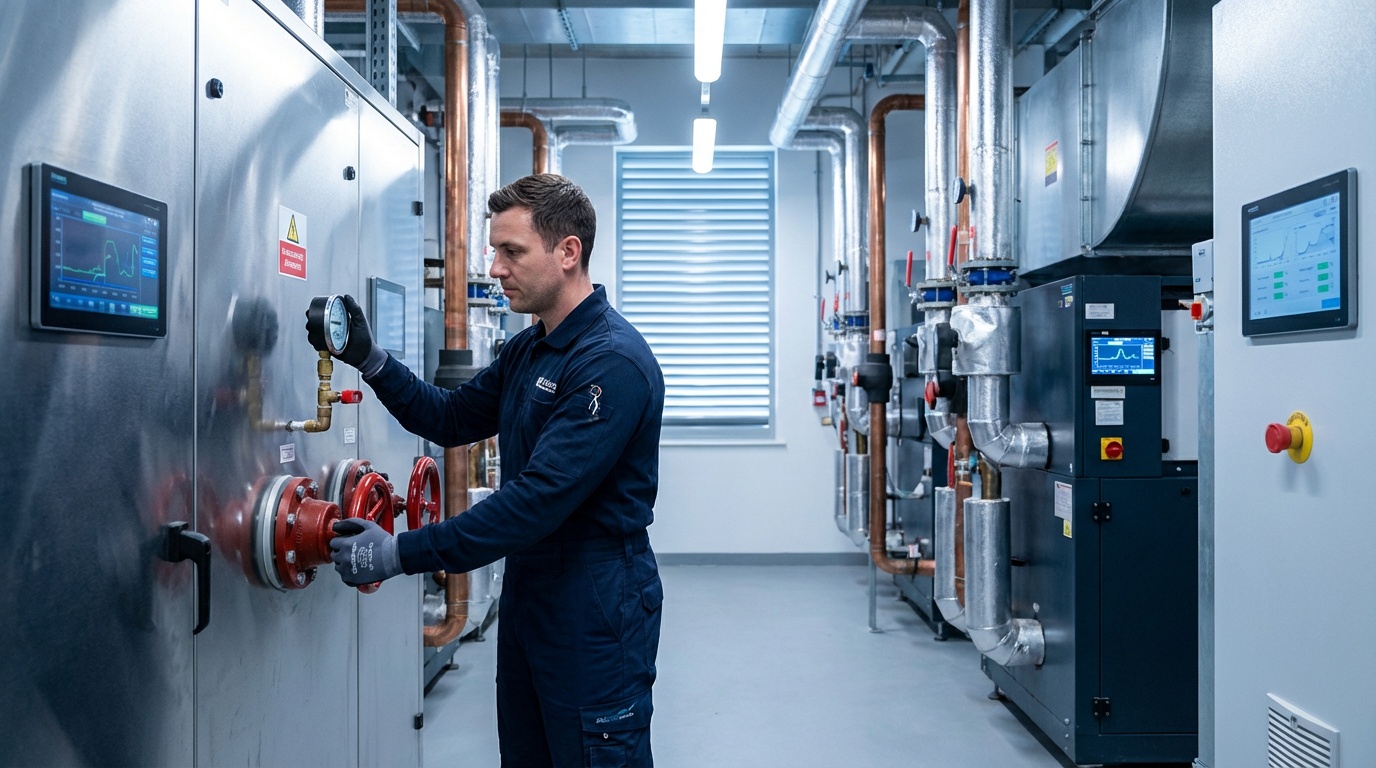
Core Responsibilities in Industrial vs Commercial Settings
Commercial electricians handle lighting, distribution boards and tenant fit-outs. Industrial electricians operate in a different tier entirely: motor control centres, programmable logic controllers (PLCs), high-voltage switchgear, and hazardous-area installations under ATEX regulations. Facility managers hiring for industrial sites need to understand this distinction. Sending a commercial sparky into a plant room isn't a cost saving -- it's a liability.
Handling Emerging Tech: Solar PV and Heat Pumps
Pros of Industrial Electricians Upskilling in Sustainable Tech
- Solar PV and heat pump competencies command a measurable salary premium
- Facilities increasingly require multi-discipline engineers under one PPM contract
- Integrated maintenance providers can reduce material costs by 10-15% through bulk purchasing agreements and by holding stock for emergency repairs
- Upskilled engineers can future-proof their careers against automation risk
Cons to Consider
- Additional certifications require upfront time and financial investment
- Not all industrial sites currently deploy renewable systems
- Poorly matched technology installations create long-term maintenance burdens
At MEMS, we vet sustainable technologies like heat pumps thoroughly before recommending installation -- site-specific suitability over trends. Industrial electricians who work with that due-diligence mindset are the ones employers retain long-term.
UK Pay Breakdown: Salaries, Hourly Rates, and Regional Variations
Average Earnings by Experience Level
| Experience Level | Typical Hourly Rate | Typical Annual Salary |
|---|---|---|
| Junior (0-3 years) | £16.97 - £18.50 | £33,000 - £38,000 |
| Mid-Level (3-7 years) | £19.00 - £21.50 | £39,000 - £44,000 |
| Senior / Specialist | £22.00 - £23.67 | £46,000 - £50,000+ |
Industrial vs Other Sectors: PAYE, CIS, and Overtime
Overtime opportunities in industrial roles are often absent from commercial equivalents. Most industrial sites run 24/7/365, meaning unsociable hours attract meaningful pay uplifts. CIS contractors often net higher day rates but carry full self-employment costs. PAYE roles within integrated FM providers offer pension contributions, sick pay and structured progression -- things contracting simply can't match over a career.
Top-Paying Locations and Current 2026 Data
London commands the highest rates, but the West Midlands and North West are closing the gap as manufacturing investment accelerates. Birmingham-based industrial electricians with COMPEX certification are currently among the most sought-after in the UK market.
Qualifications, Training Paths, and Certifications for Higher Pay
Essential Certs: COMPEX, 2391, and SFG20 Standards
A Level 3 NVQ is the baseline. COMPEX certification for hazardous-area work adds a demonstrable salary premium. The 2391 Inspection and Testing qualification is non-negotiable for anyone conducting EICRs. Employers aligned with SFG20 compliance standards expect engineers who understand scheduled maintenance frequencies, not just fault response.
Apprenticeship Routes and Career Progression
Level 3 Electrotechnical apprenticeships remain the most direct route into industrial roles. The progression from apprentice to lead engineer to contracts manager is well-established within integrated FM firms. Engineers who combine field experience with commercial awareness -- understanding how their work protects asset value and keeps sites legally compliant -- tend to move up faster than those who treat compliance as paperwork rather than professional currency. For a broader overview of the trade, the Prospects electrician job profile provides useful context on entry routes and long-term earnings.
Insider Reviews: Real Experiences at UK Facility Maintenance Firms
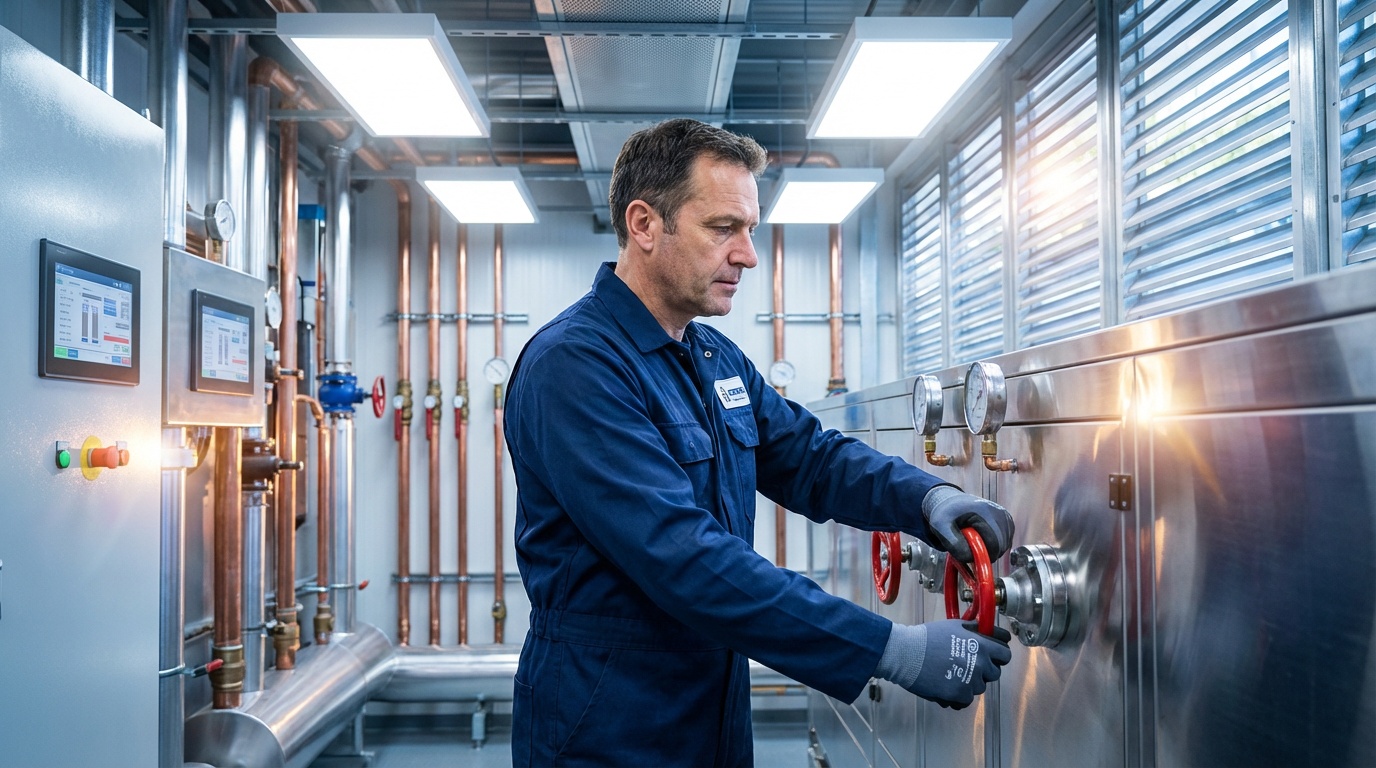
What Engineers Actually Say About Integrated FM Roles
The most consistent theme across reviews from integrated FM environments is continuity. Engineers who service the same sites year after year build institutional knowledge that makes them genuinely hard to replace. That knowledge protects the business and the engineer's career simultaneously. It's not just job security -- it's professional compounding.
Company Culture That Beats Big FM Providers
Large FM corporations rotate engineers constantly. You never know the building; the building never knows you. At MEMS, the same team returns to the same sites. We maintain comprehensive, traceable compliance records -- Gas Safe, F-Gas, REFCOM, and SFG20 -- delivered within 24 hours of job completion, with a single point of accountability across every trade. That structure produces better engineers, not just better paperwork. We're big enough to cope with complex commercial demands, small enough to care about the details.
How to Spot the Right Employer: Checklist for Job Hunters
- PPM structure: Does the employer operate scheduled maintenance, or do they chase breakdowns?
- Compliance documentation: Are Gas Safe, F-Gas, and REFCOM records traceable and delivered promptly?
- Engineer continuity: Will you own a site relationship, or will you rotate constantly?
- 24/7 support model: Does the firm offer genuine 24/7/365 availability via a single contact number, or is out-of-hours cover outsourced?
- Training investment: Does the employer fund COMPEX, 2391, or SFG20-aligned development?
The right employer answers all five without hesitation. Any hedging on those points is your answer. Single-trade contractors may advertise competitive day rates, but the hidden costs stack up fast: duplicated site visits, co-ordination delays, fragmented compliance records, and no single point of accountability when something goes wrong. One contract, one compliance trail, one team that knows your building -- that's what integrated FM delivers.
Where Industrial Electrician Careers Are Heading
The 2026 picture is straightforward. Decarbonisation targets are pushing facilities towards heat pump and solar PV integration at pace. Industrial electricians who carry COMPEX certification alongside renewable energy competencies will sit in the highest-demand bracket in the UK market. Birmingham and the wider West Midlands are already seeing this shift, with manufacturing investment driving demand for multi-discipline engineers who understand both legacy plant and emerging systems.
SFG20 compliance requirements are also tightening. Employers who can't demonstrate scheduled maintenance frequencies and traceable records will face increasing regulatory pressure. Choosing an employer with rigorous PPM structures isn't just a career preference -- it's protection against being associated with a non-compliant site when something goes wrong.
The employer matters as much as the role. Pay scales, qualifications and day-to-day responsibilities are only part of the equation. The structure of the firm you join determines whether your skills compound or stagnate. Industrial electricians at integrated FM providers consistently report faster progression, better training investment and genuine site ownership. Those rotating through single-trade contractors report the opposite. The gap between those two experiences isn't marginal -- I've watched it play out across 24 years in this trade.
For facility managers, the same logic applies. The industrial electrician you retain through an integrated provider knows your building, your systems and your compliance history. That institutional knowledge reduces downtime, protects asset value, and keeps your people safe. Reactive maintenance is a failed strategy regardless of which side of the arrangement you're on.
Visit the MEMS news hub for current opportunities, career development insight, and further reading on how we approach building maintenance -- right first time, every time.
Frequently Asked Questions
Are industrial electricians in demand?
Yes, absolutely. Industrial electricians, especially those with specialist certifications like COMPEX, are highly sought after across the UK. The need to prevent costly downtime in industrial facilities means skilled engineers are always in demand to keep operations running smoothly.
Is being an industrial electrician hard?
It certainly presents challenges. Industrial electricians deal with complex systems like PLCs and high-voltage switchgear, often under tight deadlines to prevent significant commercial losses. It requires constant learning and a sharp mind, but the satisfaction of keeping a major facility operational is immense.
Can electricians make $200,000?
In the UK, industrial electrician salaries typically range from £36,000 to over £50,000 annually for senior specialists. While £200,000 is not a typical figure for an electrician in the UK, significant overtime opportunities in 24/7 industrial sites can certainly boost earnings considerably beyond base salaries.
What is the number one killer of electricians?
Safety is paramount in our trade. While the article doesn't specify a 'number one killer,' working with high-voltage systems and in hazardous environments, as industrial electricians do, always carries risks if proper procedures and ATEX regulations are not strictly followed. Continuous training and adherence to safety protocols are non-negotiable to protect our engineers.
Can industrial electricians make 100k a year?
While base salaries for senior industrial electricians in the UK typically reach £50,000 or more, reaching £100,000 annually is uncommon without significant, consistent overtime or moving into management roles. The demand for skilled engineers and potential for overtime in 24/7 operations does offer substantial earning potential above the base.