HVAC vs traditional heating systems for facilities?
The Commercial Reality: When Heating Fails, Business Suffers
The High Cost of Downtime
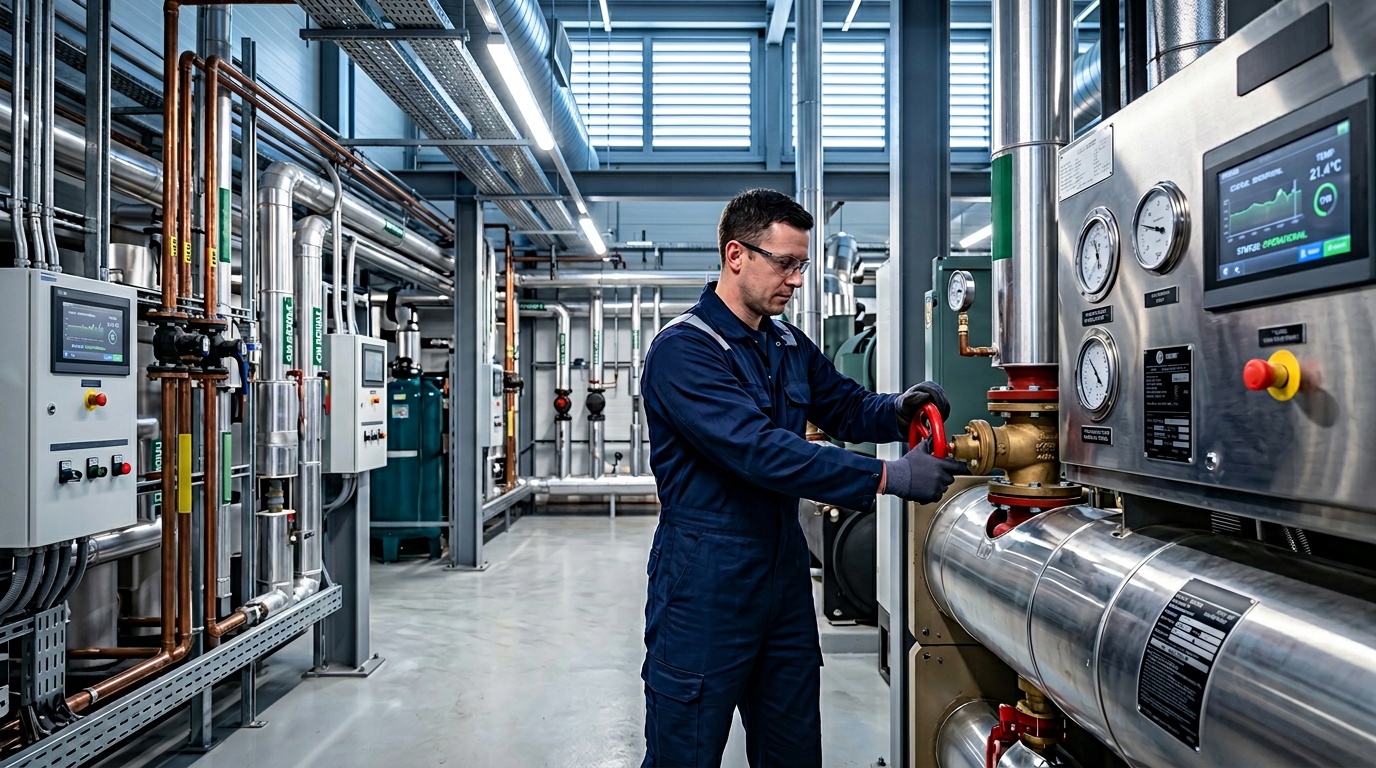
The question of HVAC vs traditional heating systems for facilities is not an academic one. When a boiler fails at 6am on a January Monday, you're not dealing with a maintenance problem. You're dealing with a business continuity crisis: staff sent home, clients turned away, and liability exposure mounting by the hour. I've seen this play out across commercial estates throughout the West Midlands more times than I care to count.
What Facility Managers Are Actually Dealing With
The real pain isn't the breakdown itself. It's the cascade: emergency call-out premiums, reactive parts sourcing, and the uncomfortable conversation with senior management about why a planned system upgrade was deferred to protect budget. Pair that with tightening UK energy regulations and net zero commitments, and the pressure on facility managers has never been greater.
Understanding the Core Differences
Traditional Systems: Boilers, Furnaces, and Radiators
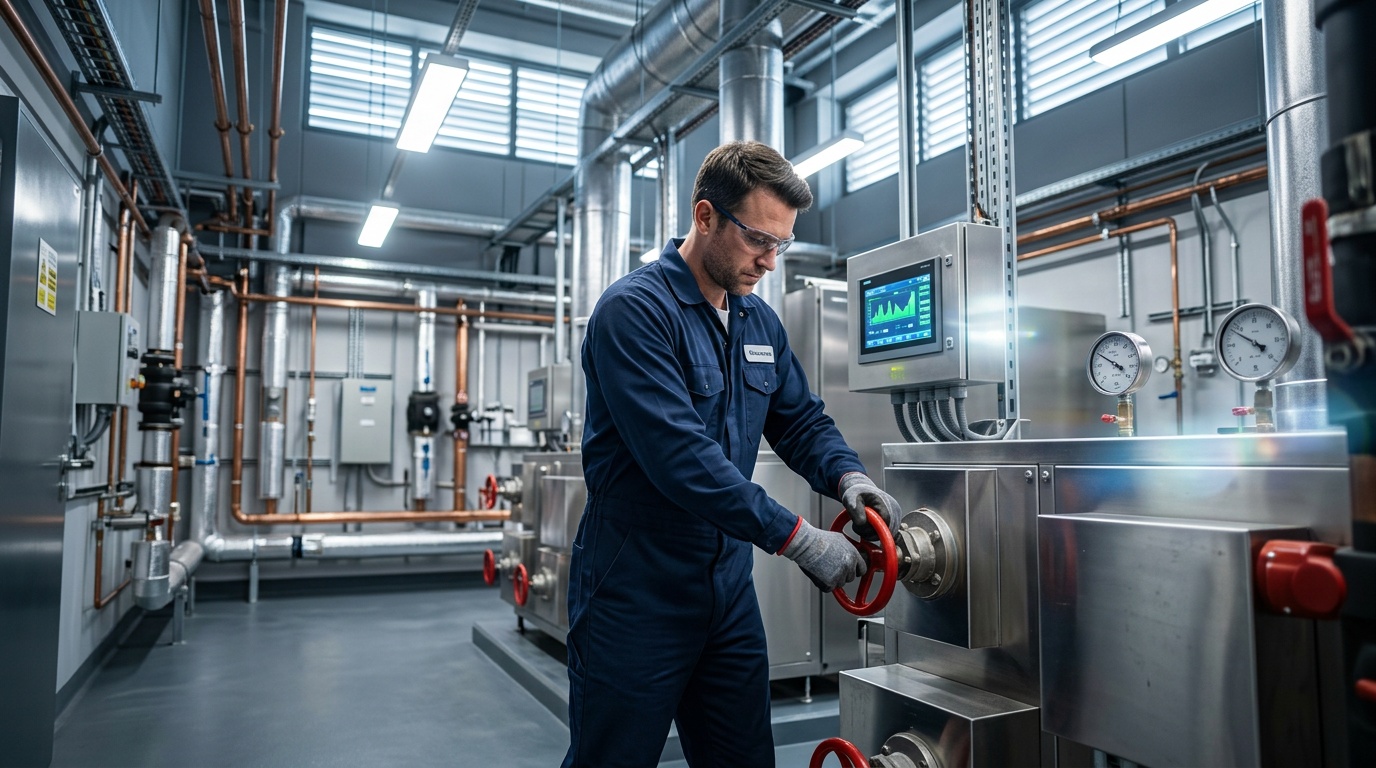
Traditional heating systems generate heat from a single source--typically a gas- or oil-fired boiler--and distribute it via pipework to radiators or underfloor circuits. They do one job: produce heat. Maintenance is governed by Gas Safe regulations and SFG20 task schedules, and when serviced correctly, these systems are reliable. The limitation is their single-function design and ageing efficiency ratings.
What HVAC Actually Delivers
Modern commercial HVAC, particularly heat pump technology, moves heat rather than generating it. That one distinction fundamentally changes the efficiency equation. It also addresses ventilation compliance under Building Regulations Part F--something a standalone boiler simply can't do.
| Factor | Traditional Heating | Modern HVAC |
|---|---|---|
| Primary Function | Heat only | Heat, cool, ventilate |
| Fuel Source | Gas/oil | Electric/refrigerant |
| SFG20 Compliance Scope | Boiler plant only | Full M&E estate |
| Smart Controls Integration | Limited | Native capability |
| Carbon Footprint | Higher | Lower |
Energy Efficiency and Environmental Impact
Where Traditional Systems Lose Ground
Older gas boilers operating below 90% efficiency are effectively burning money. Scale accumulation, worn heat exchangers, and poorly calibrated controls compound losses quietly--sometimes for years before the bill arrives. For facility managers benchmarking against ESOS (Energy Savings Opportunity Scheme) requirements, that inefficiency creates both a financial and a reporting liability. It won't stay hidden forever.
The HVAC Efficiency Case
Air source heat pumps can deliver a Coefficient of Performance (COP) above 3.0--three units of heat output for every unit of electricity consumed. For facilities with high occupancy or year-round conditioning demands, that ratio represents a material reduction in both operational energy spend and carbon reporting obligations under UK Streamlined Energy and Carbon Reporting (SECR). The maths gets harder to ignore the larger your estate becomes.
The True Cost: Installation, Maintenance, and Operational Expenditure
Upfront Investment vs. Lifecycle Reality
HVAC carries a higher installation cost. That's a straightforward fact. A like-for-like commercial HVAC installation will typically exceed a boiler replacement by a considerable margin. The error most facility managers make is stopping the analysis there. Lifecycle modelling across a ten-year horizon--accounting for PPM costs, energy spend, and emergency call-outs--consistently narrows that gap and frequently inverts it. A boiler that looks cheap on day one can be brutal on year five.
Maintenance Requirements Side by Side
HVAC System
- Consolidated PPM schedule across one integrated system
- Remote diagnostics reduce reactive call-outs
- REFCOM F-Gas compliance managed under one contract
Traditional Heating
- Lower individual service cost per visit
- Separate contracts for boiler, controls, and ventilation
- Higher emergency call-out frequency as systems age
Future-Proofing Your Facility: Compliance, Scalability, and the Strategic Choice
Navigating UK Compliance in 2026
SFG20 compliance is not optional. Neither is Gas Safe certification, REFCOM F-Gas registration, or adherence to evolving Building Regulations. On this front, HVAC systems bring additional obligations--but they also consolidate them. A single, properly managed contract covers more regulatory ground than three separate reactive arrangements stitched together. That consolidation has real value when an auditor comes calling.
Smart Technology and Long-Term Scalability
Modern HVAC integrates natively with Building Management Systems (BMS), enabling real-time monitoring, predictive fault detection, and energy optimisation without bolting on additional infrastructure. Traditional systems can be retrofitted with smart controls, but the capability ceiling is lower. For facilities planning expansion or multi-site consolidation, that scalability gap matters more than most budget reviews acknowledge.
Making the Strategic Choice
The honest answer is that context determines the correct decision. A smaller, single-use facility with a recently installed condensing boiler and a disciplined PPM programme may not yet justify full HVAC conversion. A multi-occupancy commercial building with year-round conditioning demands, SECR obligations, and a net zero target almost certainly does.
Use this checklist before committing to either path:
- Is your current system operating above 90% efficiency, verified by recent service records?
- Do you hold current Gas Safe, REFCOM F-Gas, and SFG20-compliant maintenance documentation?
- Are your energy bills increasing quarter-on-quarter without a corresponding increase in occupancy?
- Does your facility have year-round cooling or ventilation requirements beyond what a boiler can address?
- Is your estate subject to ESOS or SECR reporting obligations?
- Are you planning facility expansion or multi-site consolidation within five years?
If you answered yes to three or more of those questions, the lifecycle economics of HVAC will almost certainly work in your favour. If your answers are predominantly no, a disciplined Planned Preventative Maintenance programme for your existing traditional system may be the more commercially sound short-term position--provided you start planning the transition now, not after the next breakdown.
At MEMS, our Building Fabric Repairs & Maintenance service supports both system types, ensuring the surrounding building envelope performs in step with your chosen heating strategy. Choosing the right system means little if the fabric around it is failing--and we've seen that oversight cost facility managers dearly across sectors from healthcare to commercial warehousing.
Ready to assess which system is right for your estate? Contact the MEMS helpdesk--available 24/7/365--for a no-obligation site survey.
Frequently Asked Questions
What is the $5000 rule for HVAC systems in commercial facilities?
While there isn't a specific '$5000 rule' I adhere to, the underlying principle often relates to the decision point for repairing an old system versus investing in a new one. For commercial facilities, it's about looking beyond the immediate repair cost and considering the lifecycle expenditure. If a repair is a significant percentage of a new system's cost, especially for an inefficient traditional system, a strategic replacement with modern HVAC often makes more financial sense in the long run, factoring in energy savings and reduced call-outs.
What is the number one problem with commercial HVAC systems?
From my experience on the ground, the number one problem isn't the HVAC system itself, but often the lack of proactive, planned maintenance. When planned system upgrades are deferred to protect budgets, or routine SFG20 task schedules aren't followed, that's when you see failures. A heating or cooling failure isn't just a mechanical issue, it's a revenue problem, a compliance problem, and a people problem for any commercial facility.
What HVAC systems are best for improving indoor air quality and managing allergies in commercial buildings?
While the article focuses on the commercial realities of heating and cooling, modern HVAC systems, particularly those with advanced filtration and ventilation capabilities, play a significant role in indoor air quality. By addressing ventilation compliance under Building Regulations Part F, these systems can filter out airborne particles and allergens, creating a healthier environment. This is a key benefit for commercial facilities looking to improve working conditions for their occupants.
Why might some contractors express reservations about heat pumps?
The perception that some contractors 'don't like' heat pumps often comes down to the higher upfront installation cost compared to a like-for-like boiler replacement, and the need for specialized REFCOM F-Gas compliance and expertise. However, from a facility manager's perspective, modern heat pump technology offers significant long-term operational savings due to its efficiency, delivering a Coefficient of Performance, COP, above 3.0. At MEMS, we embrace these technologies, constantly evaluating and testing new HVAC innovations to ensure our commercial clients benefit from sustainable and efficient solutions.
How do modern HVAC systems help commercial facilities save money?
Modern commercial HVAC systems, especially heat pump technology, save money by moving heat rather than generating it, leading to much higher energy efficiency. With a Coefficient of Performance, COP, above 3.0, they significantly reduce operational energy spend compared to older gas boilers. While the upfront installation cost can be higher, lifecycle modelling consistently shows a material reduction in overall expenditure over a ten-year horizon, including energy, maintenance, and emergency call-out costs.
What are the main compliance considerations for commercial heating systems in the UK?
For commercial heating systems in the UK, compliance is non-negotiable. Traditional systems require Gas Safe certification and SFG20 task schedules. Modern HVAC systems, particularly those with heat pumps, also require REFCOM F-Gas registration and address ventilation compliance under Building Regulations Part F. Facility managers must also consider ESOS and SECR requirements, as inefficient systems create both financial and reporting liabilities.
Why is a heating system failure considered a business crisis for a commercial facility?
When a heating system fails in a commercial facility, it's far more than just a mechanical problem, it's a business continuity crisis. Staff may be sent home, clients turned away, and liability exposure can mount quickly. As I always say, a heating failure is simultaneously a revenue problem, a compliance problem, and a people problem, causing significant disruption and unexpected costs for the business.