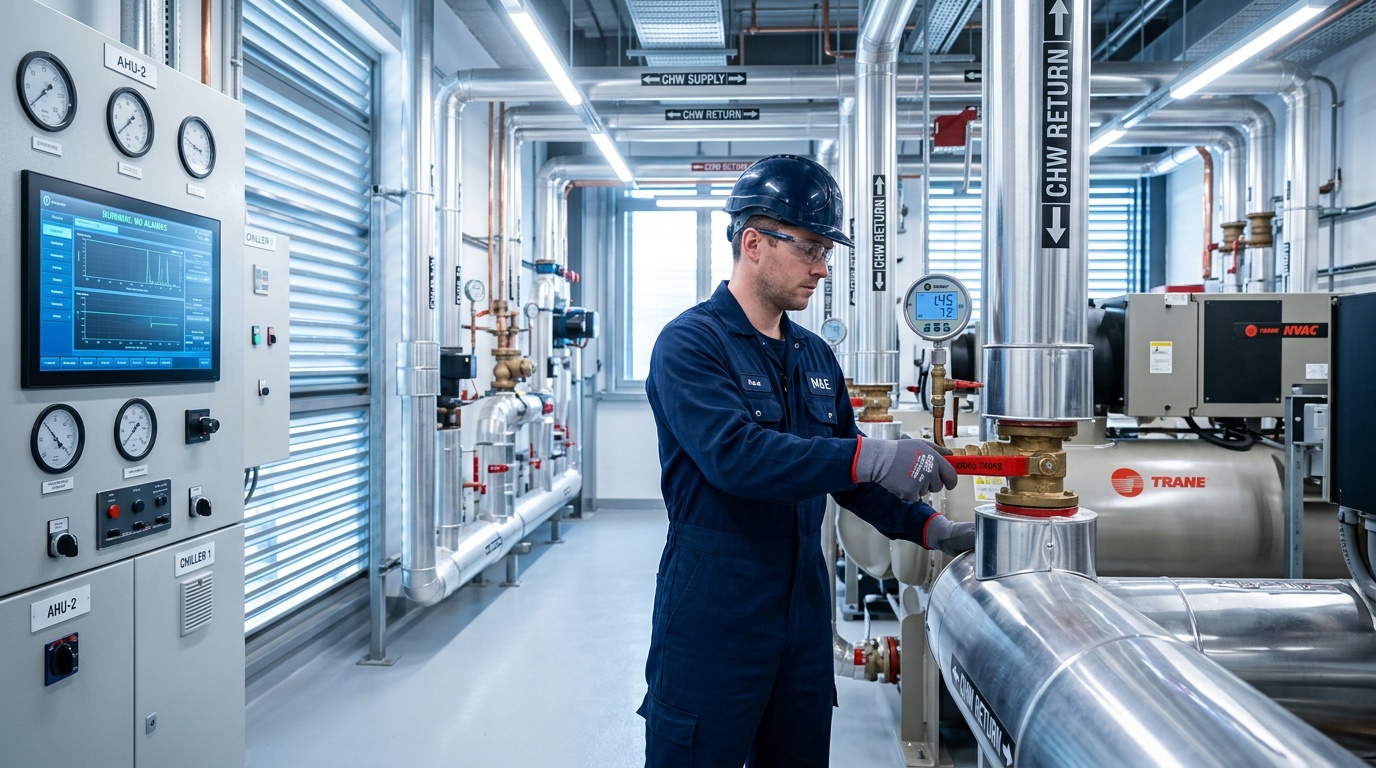
what is M&E Maintenance Solutions
What Exactly Does 'M&E Maintenance Solutions' Mean for Your Commercial Property?
M&E Maintenance Solutions refers to comprehensive Mechanical and Electrical maintenance services for commercial buildings, specialising in HVAC systems, compliance management, and sustainable building operations. Founded in 2007, the company focuses on proactive maintenance strategies that prevent costly breakdowns whilst maintaining regulatory compliance.
M&E: The Foundation of Building Operations
M&E stands for Mechanical and Electrical systems. The invisible infrastructure that keeps commercial buildings functioning. Mechanical systems include heating, ventilation, air conditioning (HVAC), and water services. Electrical systems encompass power distribution, lighting, and building management systems. When these fail, business stops.
The "Solutions" element distinguishes professional service providers from basic repair contractors. It means addressing root causes, not just symptoms. A blocked filter isn't only cleaned; the maintenance schedule gets reviewed to prevent recurrence.
Core Services You Can Expect
Professional M&E maintenance encompasses Planned Preventative Maintenance (PPM), emergency response, compliance certification, and energy optimisation. This includes Gas Safe Register compliance, F-Gas certification for refrigeration systems, and adherence to SFG20 standards.
Modern providers also integrate sustainable technologies: air-to-water heat pumps, solar PV systems, LED lighting upgrades, and building management systems that reduce operational costs whilst improving occupant comfort.
Why 'Solutions' Matters More Than Repairs
The difference between maintenance and solutions lies in strategic thinking. Maintenance fixes problems; solutions prevent them. This approach extends asset lifecycles, reduces energy consumption, and supports ongoing compliance.
Engineering Reality: Reactive maintenance can cost 3-5 times more than planned maintenance. A £200 quarterly service can prevent a £2,000 emergency breakdown.
In practice, this means a proactive maintenance model delivered by over 20 core staff across the UK, supported by an open-door policy for evaluating new technologies before recommending them to clients. The focus remains on commercial buildings where downtime directly affects revenue.
The M&E Maintenance Solutions Difference: Proactive Compliance and Future-Proofing

Planned Preventative Maintenance (PPM) in Action
PPM transforms building maintenance from crisis management to strategic asset protection. Instead of waiting for equipment failure, scheduled inspections identify wear patterns, replace components before failure, and optimise system performance. This approach can reduce energy consumption by up to 15% whilst cutting unexpected downtime.
Professional PPM schedules align with manufacturer recommendations and regulatory requirements, ensuring that compliance certificates remain current whilst protecting warranty coverage. Without this foundation, you're just running another reactive repair service.
SFG20 Standards: Your Assurance of Professional Practice
SFG20 provides the industry framework for maintenance frequencies and procedures across all building systems. These standards specify when HVAC filters require replacement, how often boilers need inspection, and the testing protocols for safety systems. Compliance isn't optional; it's part of your legal protection.
Professional providers use SFG20 as their baseline, not their ceiling. This maintains consistent service quality regardless of which engineer attends your site. Digital compliance tracking provides audit trails that satisfy insurance requirements and regulatory inspections.
Integrating Sustainability During Routine Maintenance
Modern M&E maintenance integrates energy-efficient technologies during routine upgrades. Air-to-water heat pumps can replace ageing heating systems, LED lighting reduces electrical loads, and solar PV systems can offset energy consumption. These get planned alongside maintenance, not treated as entirely separate projects.
Commercial Reality: Sustainable upgrades during planned maintenance typically cost less than standalone retrofit projects. Disruption is usually minimal because access is already scheduled.
The 'Open Door' Innovation Policy: Vetted Technologies
Technology evaluation needs real-world testing before client recommendation. Professional providers test new HVAC technologies internally, monitoring performance data and reliability before offering them commercially. This protects clients from becoming unwilling beta testers.
Done properly, this includes structured evaluation, so recommendations are based on proven performance rather than marketing claims.
The Commercial Realities: Bottom Line Protection and Uptime
The True Cost of Downtime
When HVAC systems fail during peak trading hours, the financial impact extends beyond immediate lost sales. Staff productivity drops in uncomfortable environments, customer satisfaction falls, and insurance claims for spoiled stock may become necessary. A single day of system failure can cost retail operations £5,000-£15,000 in direct losses.
Professional M&E maintenance reduces these scenarios through monitoring and proactive component replacement. Calculate your daily revenue, consider downtime risk, and compare that figure against annual maintenance investment.
Cutting Operational Expenses Through Efficient Systems
Poorly maintained HVAC systems consume far more energy than optimised equipment. Dirty filters force fans to work harder, scaled heat exchangers reduce thermal efficiency, and worn components create imbalances that waste energy.
Financial Reality: A £3,000 annual PPM contract can reduce energy costs and avoid emergency repairs, but results vary by site, usage, and equipment condition.
Occupant Comfort Affects Your Bottom Line
Temperature variations above 2°C from optimal can reduce cognitive performance and increase employee sick days. Consistent environmental control through professional maintenance supports stable working conditions and productivity. This benefit rarely appears in maintenance budgets but directly affects operational success.
Protecting Your Assets: Building Fabric Longevity
M&E systems protect building structures from moisture damage, temperature extremes, and air quality issues that degrade construction materials. Proper ventilation prevents condensation damage, controlled heating prevents freeze damage, and filtered air reduces particulate contamination.
This represents a joined-up approach that treats building systems as part of overall asset protection rather than isolated pieces of equipment. It supports building longevity whilst maintaining conditions needed for business continuity.
Questions to Ask Your M&E Maintenance Provider
Is Your Provider Truly Proactive?
Ask for their reactive versus planned maintenance ratio. Professional providers typically aim for roughly 80% planned maintenance and 20% reactive repairs. If those numbers are reversed, you're paying premium rates for crisis management rather than strategic asset care.
Request maintenance schedules aligned with SFG20 frequencies. Generic "quarterly visits" can indicate a less tailored approach; component-based schedules demonstrate deliberate planning.
Do They Actually Follow SFG20 Standards?
Professional providers reference SFG20 standards and can supply digital compliance tracking. They should explain why specific maintenance frequencies matter for your equipment types and regulatory requirements.
How Do They Handle New Technologies?
Ask about their technology evaluation process, sustainable upgrade options, and energy-efficiency improvements during routine maintenance. Strong providers integrate these into planned works rather than presenting them as disconnected extras.
What's Their Communication Style?
Ask for clear reporting timescales after service visits, including photographs and compliance certificates where relevant. Professional providers keep you informed without creating unnecessary admin work.
Are They a Partner or Just Another Contractor?
Large FM corporations often treat sites as numbers; specialist providers treat them as partnerships. Look for consistent engineering teams who understand your building's requirements and operational patterns.
The right provider combines capability with accountability. They respond promptly, maintain accurate site history, and plan work around operational needs to minimise disruption.
Frequently Asked Questions
What does M&E stand for in commercial property services?
M&E stands for Mechanical and Electrical systems. These are the essential services like heating, ventilation, air conditioning (HVAC), power distribution, and lighting that keep a commercial building running smoothly. Without proper M&E, your business simply stops.
What is M&E maintenance for commercial buildings?
M&E maintenance refers to the comprehensive care of a commercial building's Mechanical and Electrical systems, with a strong focus on HVAC. It involves proactive strategies to prevent breakdowns, manage compliance, and ensure sustainable operations. Our goal is to keep your commercial property functioning efficiently and reliably.
How do M&E Maintenance Solutions differ from basic repairs?
M&E Maintenance Solutions go beyond simply fixing problems; we focus on preventing them and addressing root causes. This means implementing Planned Preventative Maintenance (PPM), ensuring compliance, and optimising systems for energy efficiency. Our approach extends asset lifecycles and significantly reduces the risk of costly emergency breakdowns.
What types of maintenance services are included in M&E Maintenance Solutions?
Our M&E Maintenance Solutions include Planned Preventative Maintenance (PPM), rapid emergency response, compliance certification, and energy optimisation. We adhere to industry standards like SFG20 and manage certifications such as Gas Safe and F-Gas. We also integrate sustainable technologies like air-to-air heat pumps and LED lighting upgrades.
Why is Planned Preventative Maintenance (PPM) a core part of M&E Solutions?
PPM is fundamental because it transforms building maintenance from crisis management to strategic asset protection. By identifying wear and replacing components before failure, PPM significantly reduces unexpected downtime and can cut energy consumption by up to 15%. It also ensures your compliance certificates stay current and protects equipment warranties.
How do M&E Maintenance Solutions integrate sustainable practices?
We integrate sustainable technologies directly into our maintenance and upgrade plans. This includes installing air-to-air heat pumps, solar PV systems, and LED lighting upgrades during routine work. These planned improvements reduce operational costs, improve occupant comfort, and help clients meet their environmental goals.
What commercial benefits does M&E Maintenance Solutions offer businesses?
Choosing M&E Maintenance Solutions protects your bottom line by preventing costly downtime and reducing operational expenses. Proactive maintenance extends the life of your assets and ensures ongoing regulatory compliance. This strategic approach helps avoid significant financial losses that can arise from unexpected system failures in commercial properties.