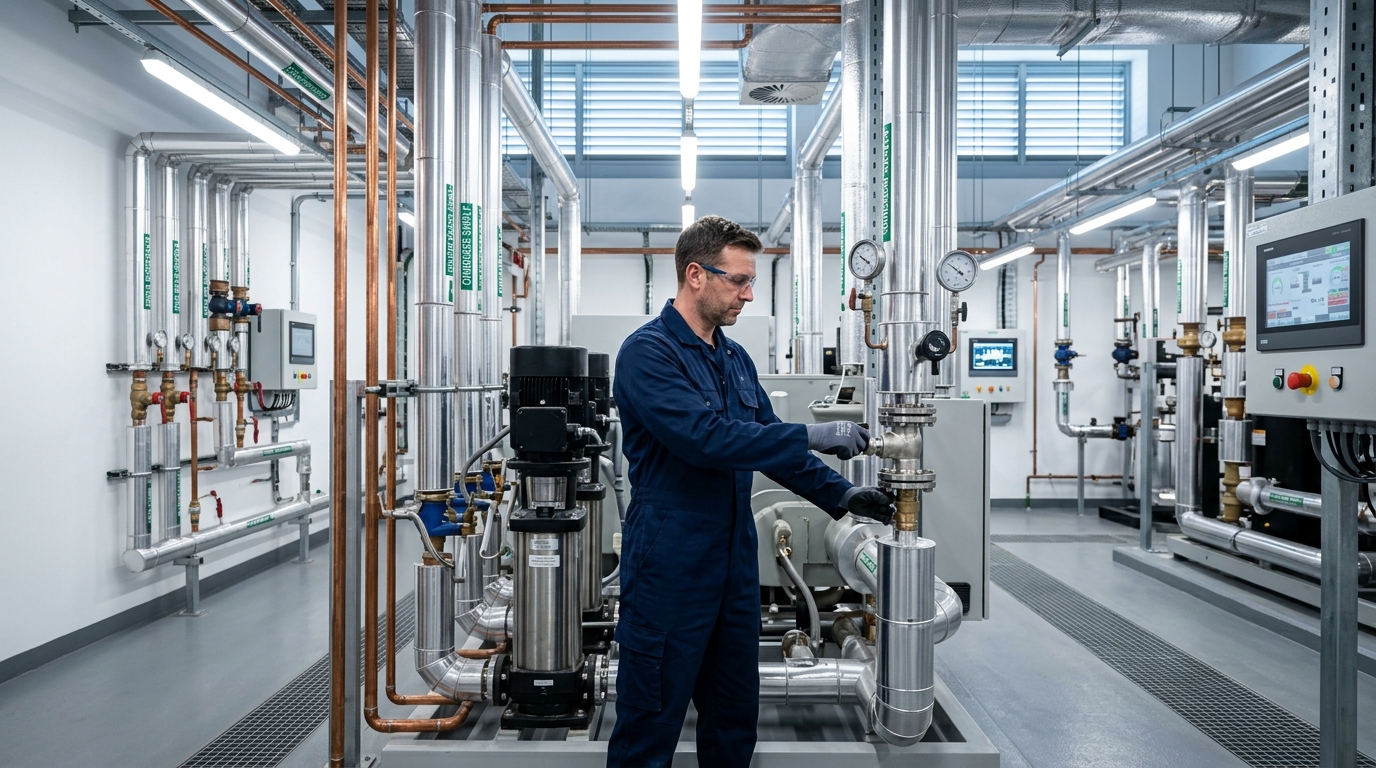
Sustainable repairs vs quick fixes for commercial HVAC?
The True Cost of HVAC Downtime: Why a Quick Fix Is Not Always Cheaper
Last month, I watched a Birmingham office block lose £15,000 in productivity because its facility manager chose a £200 compressor patch over an £800 proper repair. The "fix" lasted three weeks before failing completely during a heatwave. This scenario illustrates the false economy behind Sustainable repairs vs quick fixes for commercial HVAC?
In my 24 years moving from apprentice combustion engineer to managing commercial sites across the Midlands, I've seen this pattern repeatedly. Quick fixes create what I call "maintenance debt". Each temporary solution compounds the eventual cost of failure.
Defining the 'Quick Fix' Mentality in Commercial HVAC
A quick fix addresses immediate symptoms without diagnosing root causes. It's the difference between taping a leaking pipe and replacing corroded sections. Quick fixes typically involve:
- Temporary patches on failing components
- Bypassing safety systems to maintain operation
- Using non-standard parts to reduce immediate costs
- Ignoring manufacturer specifications for speed
The Hidden Financial Drain: Beyond the Initial Repair Bill
The real cost of quick fixes extends far beyond the initial repair invoice. A patched heat exchanger forces the system to work harder, inflating utility bills for months.
Engineering Reality Check: A £300 quick fix that reduces system efficiency by 20% can add £2,000 per year in wasted energy for a typical 10,000 sq ft commercial space.
Emergency call-outs multiply when temporary solutions fail. You're not just paying for parts; you're paying premium rates for urgent labour, often outside normal working hours. Our Building Fabric Repairs & Maintenance service exists because we've seen too many businesses trapped in this expensive cycle.
Impact on Business Continuity and Operational Efficiency
Quick fixes create unpredictable failure patterns. Your HVAC system becomes unreliable, threatening business operations at the worst possible moments. Staff productivity drops when indoor temperatures exceed 24°C. That's backed by HSE guidance on thermal comfort.
Insurance implications often go unnoticed. Many commercial policies require SFG20-compliant maintenance records. Quick fixes rarely meet these standards, potentially voiding cover when you need it most.
Sustainable Repairs: Investing in Longevity and Efficiency
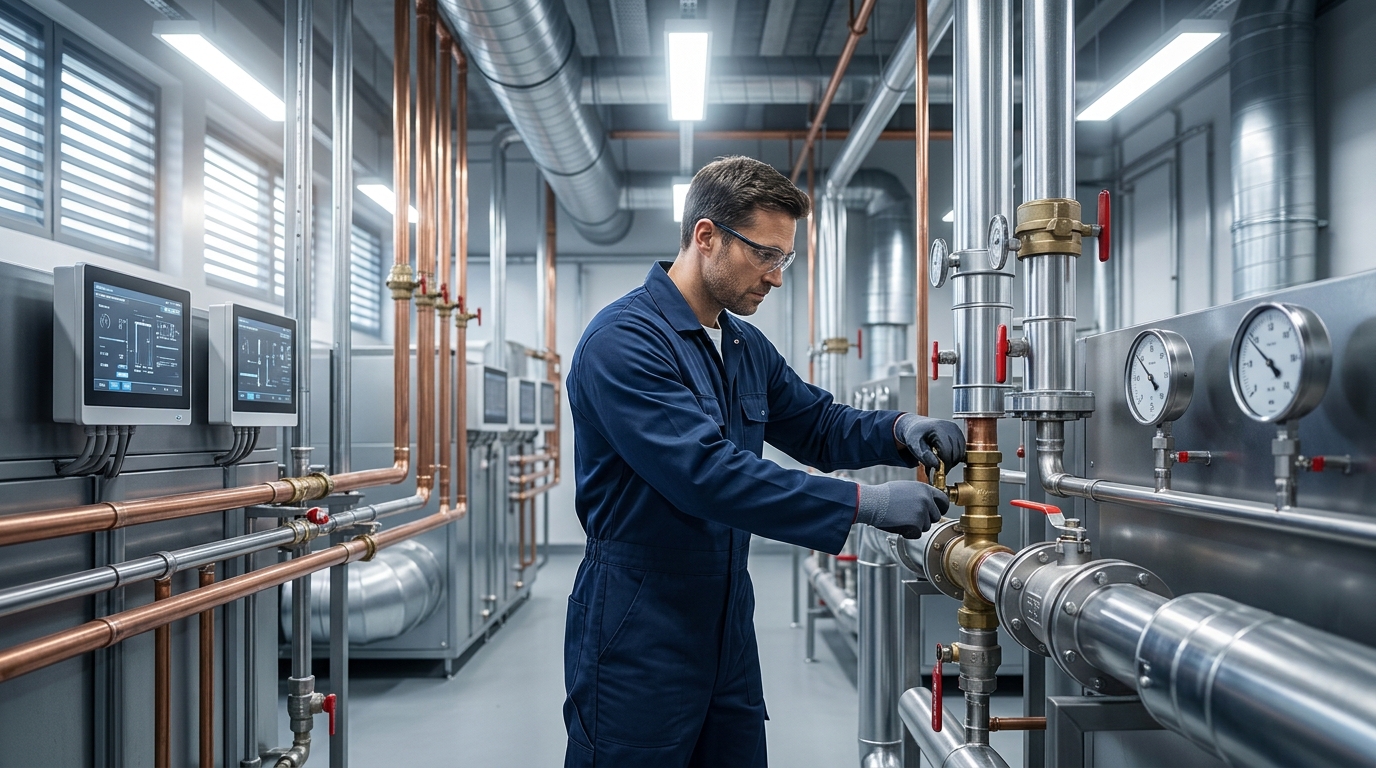
Sustainable repairs address root causes rather than symptoms. When we encounter a failing HVAC component, we analyse the system context. Why did this part fail? What stress factors contributed? How can we prevent it happening again?
This approach often means replacing worn components with upgraded alternatives that meet or exceed original specifications. We use manufacturer-approved parts to ensure compatibility whilst improving overall performance.
What Constitutes a 'Sustainable Repair' in HVAC?
A sustainable repair follows SFG20 guidance and manufacturer requirements. It involves full diagnostic assessment, correct component sizing, and functional testing after installation. We document each change so maintenance records support future service decisions.
The repair should improve system reliability whilst maintaining or improving energy efficiency. This might mean updating controls alongside mechanical repairs, or improving insulation when ductwork is opened.
The Engineering Behind Long-Term Solutions
Proper HVAC repairs require understanding system behaviour. A failing compressor might point to refrigerant issues, electrical problems, or inadequate airflow. Our approach? Check the wider system, not just the failed part.
We calibrate controls, verify refrigerant charge, and test electrical connections. This reduces the risk of cascade failures, where one repair shifts stress to the next weakest link.
The MEMS Standard: Every repair includes system optimisation. We don't just replace failed components. We remove the conditions that caused failure.
Energy Efficiency Gains: A Core Benefit of Sustainable Repairs
Modern parts often run more efficiently than those installed even five years ago. Variable speed drives, improved heat exchangers, and better controls can reduce operating costs significantly. In many sites, a properly executed sustainable repair pays for itself through reduced utility spend within 18-36 months.
Beyond the Breakdown: Proactive Maintenance vs Reactive Repair Cycles
Sustainable repairs vs quick fixes for commercial HVAC? The debate misses a fundamental point: the best repair is the one you never need. Planned Preventative Maintenance (PPM) identifies issues before they become failures.
Our 24/7 service model exists because breakdowns don't follow business hours. But our PPM schedules exist to reduce emergency call-outs. We've cut emergency repairs for some clients by up to 70% through consistent proactive maintenance.
The SFG20 Standard: A Blueprint for Proactive Care
SFG20 sets out maintenance tasks and frequencies for HVAC assets. These are evidence-based activities designed to reduce premature failure whilst supporting compliance and manufacturer expectations.
Following an SFG20-aligned schedule means changing filters monthly rather than quarterly, and completing heat exchanger inspections on schedule rather than waiting for comfort complaints. Simple.
Identifying the Warning Signs: When a System Needs More Than a Band-Aid
Rising energy bills indicate declining efficiency. Uneven temperatures suggest airflow problems. Unusual noises signal mechanical wear. These symptoms need investigation, not a quick patch.
When repair costs exceed 50% of replacement value, or when efficiency drops below acceptable standards, sustainable solutions may mean replacement rather than repeated repairs.
Making the Right Choice: Sustainable Repairs for a Compliant and Efficient Future
Sustainable repairs vs quick fixes for commercial HVAC? After two decades managing commercial HVAC systems across the West Midlands, the maths is clear: sustainable repairs deliver better long-term value.
Quick fixes create technical debt. Each temporary solution increases the likelihood of future failures whilst reducing system efficiency. The Birmingham office block that lost £15,000 in productivity could have avoided that disruption with an £800 sustainable repair three weeks earlier.
Recap: The Long-Term Value Proposition
Sustainable repairs cost more upfront but deliver stronger returns over the asset lifecycle. They restore equipment to manufacturer intent and can improve performance when modern components are correctly specified and commissioned.
The MEMS Calculation: Sustainable repairs can pay for themselves within 18-36 months through reduced energy costs, fewer breakdowns, and protected productivity.
When to Consider Replacement Over Repair
Sometimes the most sustainable option is planned replacement. When repair costs exceed 60% of replacement value, or when equipment is over 15 years old with declining efficiency, replacement becomes more economical.
Our assessments include lifecycle thinking. We estimate remaining useful life against repair costs, helping facility managers make informed decisions based on engineering realities rather than budget pressure alone.
Modern HVAC systems offer improved efficiency and controllability. A 10-year-old system operating poorly may consume more energy than a correctly designed replacement.
The MEMS Commitment: Reliability, Compliance, and Cost Savings
We built MEMS to bridge the gap between the boiler room and the boardroom. Every sustainable repair we complete follows SFG20-aligned tasks where applicable, with clear documentation. You receive compliance certificates promptly by email to support your audit trail.
Our 24/7 service model means support when you need it, and our PPM approach means you should need it less often.
Your Next Steps: Securing Your Building's HVAC Future
Audit your current maintenance approach. If most of your HVAC spend goes on emergency repairs, your strategy needs attention. Measure the split between reactive and proactive spend and track repeat faults.
Review your compliance records. Can you produce current Gas Safe and F-Gas documentation quickly when requested? If not, you may be exposed legally and operationally.
Contact M&E Maintenance Solutions Limited for a site assessment. We'll review your systems, identify likely failure points, and recommend options that protect business continuity whilst reducing long-term cost. When it comes to Sustainable repairs vs quick fixes for commercial HVAC? the right choice protects your assets and your people.
Frequently Asked Questions
What is the core difference between a quick fix and a sustainable repair for commercial HVAC?
A quick fix addresses immediate symptoms, like taping a leaking pipe, without diagnosing the underlying cause. A sustainable repair, on the other hand, involves a full diagnostic assessment to understand why a component failed and then replaces or repairs it to prevent recurrence, often improving overall system performance.
Why do quick fixes for commercial HVAC often end up costing more in the long run?
Quick fixes create what I call 'maintenance debt.' They lead to hidden costs like a 15-30% drop in energy efficiency, multiplying emergency call-outs at premium rates, and unpredictable system failures that disrupt business operations and productivity. The initial savings are quickly overshadowed by these accumulating expenses.
How do quick HVAC repairs impact a business's continuity and operational efficiency?
Temporary solutions create unreliable HVAC systems, leading to unpredictable failures that can halt business operations at the worst times. This can cause staff productivity to drop when thermal comfort standards are not met, and it can even put commercial insurance cover at risk if maintenance records do not meet SFG20 standards.
What does a 'sustainable repair' involve for a commercial HVAC system?
A sustainable repair follows SFG20 guidance and manufacturer requirements. It includes a thorough diagnostic assessment, correct component sizing, and functional testing after installation. We document each change to support future service decisions, aiming to improve system reliability and energy efficiency.
Can sustainable HVAC repairs genuinely lead to energy efficiency gains?
Absolutely. Sustainable repairs can improve energy performance by 10-25% compared with simply replacing older components. Modern parts, variable speed drives, and better controls reduce operating costs. In many commercial sites, a properly executed sustainable repair can pay for itself through reduced utility spend within 18-36 months.
How does planned preventative maintenance (PPM) fit into avoiding quick fixes and ensuring system longevity?
The best repair is the one you never need. Planned Preventative Maintenance identifies issues before they become failures, significantly reducing the need for reactive quick fixes or even sustainable repairs. Following an SFG20-aligned schedule protects equipment life, maintains legal compliance, and can reduce emergency call-outs by a substantial margin.