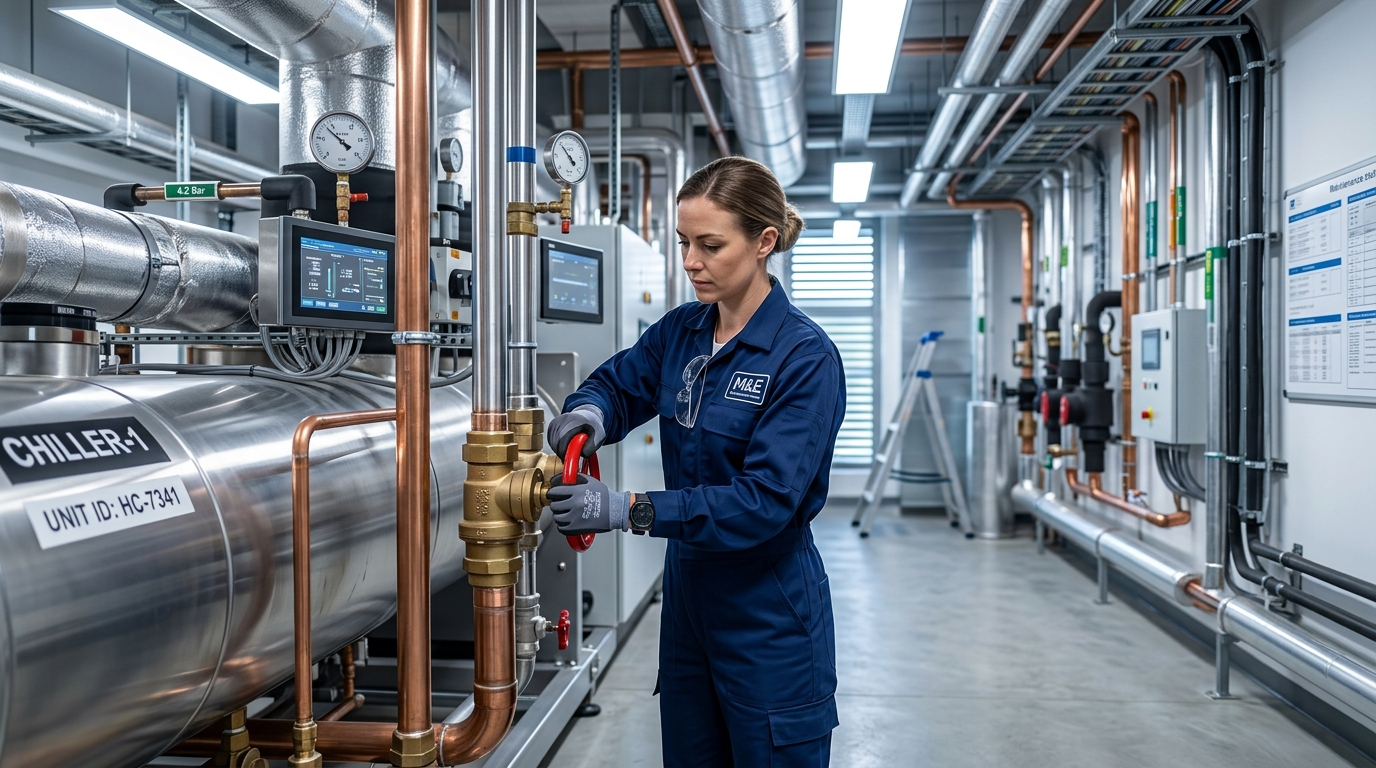
Top certified technicians for facility M&E services?
Beyond the Badge: What 'Certified' Really Means for Your Facility's M&E Services
As the Founder and Managing Director of M&E Maintenance Solutions Limited, I’ve spent over two decades on the front line of facilities maintenance. I started as an apprentice combustion engineer, and I know first-hand that a certificate on the wall does not automatically translate to reliable, cost-effective service. You may be asking, “Top certified technicians for facility M&E services?”, but the reality is more complex than a piece of paper. It is about understanding what those certifications signify and what they do not. This guide cuts through the jargon and sets out practical checks you can use.
The Commercial Reality: When 'Certified' Falls Short
Facility managers often assume that a recognised certification guarantees competence. Many certifications show a basic level of knowledge, not consistent practical application or up-to-date experience with modern systems. In commercial settings, that gap can lead to disruption and avoidable cost. What matters is continuity of service, not a badge alone.
Deconstructing 'M&E': Mechanical and Electrical Services Explained
M&E Services Defined
M&E, or Mechanical and Electrical, refers to the building services that keep a commercial property functional, comfortable, and safe. This includes systems such as heating, ventilation, and air conditioning (HVAC), plumbing, power distribution, lighting, and fire safety systems. It is the infrastructure that keeps a site operating as intended.
Why Basic Certification Is Not Enough: The Risk of the 'Paper-Thin' Technician
A technician may be Gas Safe registered or hold an F-Gas certificate. That does not automatically mean that the person understands the energy implications of a failing heat exchanger or the downstream impact of poorly installed ventilation. In commercial buildings, shallow experience leads to repeat faults, wasted energy, and asset damage. This is where experience matters when selecting “Top certified technicians for facility M&E services?”.
The MEMS Standard: Our Approach to Technician Excellence
At M&E Maintenance Solutions Limited, we treat certification as the starting point. We employ engineers who hold the required qualifications and can evidence hands-on competence. Our technicians look beyond the immediate fault and assess how each system affects efficiency, compliance, and operating cost. We invest in ongoing training and a culture of practical problem-solving with commercial awareness.
The UK's Essential M&E Certifications: Your Facility Manager's Compliance Checklist
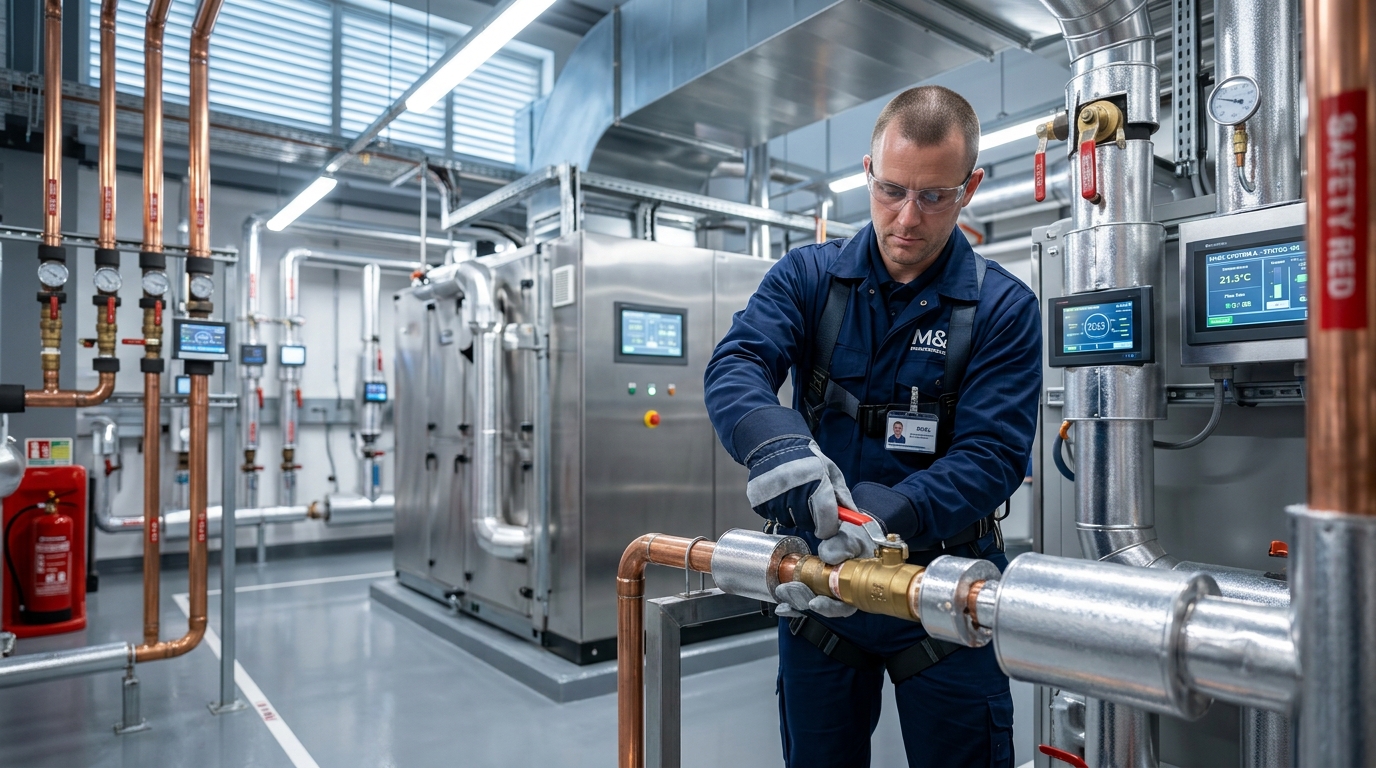
Regulatory requirements for M&E services in the UK can be demanding. Safe, lawful operation means understanding the certifications your engineers must hold. These are not box-ticking exercises; they reflect duty of care, legal compliance, and safe systems of work.
Navigating the Regulatory Environment: Gas Safe, F-Gas, and Beyond
Gas Safe Register: The official list of engineers and businesses legally permitted to carry out gas work in the UK. If your site has gas appliances, engineers must be Gas Safe registered with the relevant categories. Using a non-registered engineer for gas work is illegal and dangerous.
Refcom F-Gas Certification: Required for engineers who handle refrigerants used in commercial air conditioning and refrigeration plant. It confirms competence in safe handling and helps reduce environmental harm through correct containment and record-keeping.
HVAC Expertise: Key Competency for Climate Control
Beyond F-Gas, HVAC competence should be proven through relevant training and experience across boilers, chillers, air handling units, ventilation, controls, and building management systems (BMS). Manufacturer training and industry-recognised courses can provide assurance, particularly where specialist equipment is installed. Up-to-date training supports system performance and compliance.
Electrical Safety: Essential Qualifications for Peace of Mind
Electrical work must be completed by competent persons. Qualifications aligned to BS 7671 (IET Wiring Regulations) are commonly expected. For inspection and testing, appropriate qualifications are required. Competent electrical maintenance reduces risk of fire, faults, and unsafe operation.
Plumbing and Water Systems: Ensuring Health and Functionality
Engineers working on water systems should understand the Water Supply (Water Fittings) Regulations and good practice in water hygiene, including Legionella control. In commercial environments, competence includes documentation, temperature control, inspection regimes, and safe remedial actions.
SFG20: The Benchmark for Planned Preventative Maintenance in the UK
SFG20 is not a technician certification, but it is a widely used maintenance standard for building services. A reputable provider should be able to align planned preventative maintenance (PPM) to SFG20 task schedules and frequencies, adjusted to site risk and asset criticality. Asking whether a contractor can evidence SFG20-aligned maintenance is a practical way to assess maturity and consistency.
The Unseen Costs: How Untested Technicians Undermine Your Building's Efficiency and Safety
When budgets tighten, it is tempting to focus on the day-rate or call-out fee. The bigger cost often sits in poor diagnosis, repeat attendance, energy waste, and preventable downtime. If you are weighing up “Top certified technicians for facility M&E services?”, consider the commercial impact of competence, not the price of a single visit.
The 'Cheap Fix' Fallacy: Short-Term Savings, Long-Term Nightmares
A quick, low-cost repair can mask an underlying fault. When the root cause remains, failures return and collateral damage builds. That means extra call-outs, unplanned replacement, and disruption that could have been avoided with correct diagnosis and competent repair.
Energy Inefficiency: The Silent Drain on Your Budget
Poorly maintained systems waste energy. Dirty filters, incorrect setpoints, drifting controls, leaking valves, and underperforming plant force equipment to work harder than necessary. Over time, that waste inflates operating expenditure and hides in plain sight on monthly utility bills.
Downtime Disasters: The True Cost of Unexpected Breakdowns
When critical building services fail, operations suffer. Heating loss in winter, cooling failure in summer, or electrical issues can halt production, reduce staff productivity, and affect customer experience. Emergency repairs can be expensive, and the hidden cost is often business interruption.
Legal Liabilities: The Perils of Non-Compliance
M&E services operate under strict safety and environmental obligations. Using unqualified staff, skipping required inspections, or maintaining poor records can lead to enforcement action, fines, and reputational damage. Compliance is a duty of care and a board-level risk.
Occupant Well-being: The Impact on Your Team and Visitors
Comfort and health are directly tied to building services. Poor temperature control, inadequate ventilation, and unreliable lighting create complaints and reduce productivity. Consistent maintenance supports a safer, more comfortable workplace and a better visitor experience.
Beyond the Certificate: M&E Maintenance Solutions Limited Commitment to Proven Expertise and Innovation
When clients ask, “Top certified technicians for facility M&E services?”, they are usually asking for lower risk: safer operation, fewer failures, and predictable performance. At M&E Maintenance Solutions Limited, we focus on evidence: competence, documentation, and accountable delivery. Certification matters, but it is the application of that knowledge on live commercial sites that protects assets and keeps buildings operational.
Our Open-Door Innovation Policy: Testing Before We Roll Out
Technology moves quickly in HVAC and energy systems. We keep an open-door approach to assessing new technologies and methods before they are offered to customers. That means controlled evaluation, clear acceptance criteria, and a focus on safety, compliance, and maintainability.
What to Ask Any Provider: A Practical Checklist
- Which certifications and categories are held (Gas Safe, F-Gas), and can you provide evidence?
- How is competence maintained (refresher training, supervision, manufacturer courses)?
- How are PPM tasks specified and scheduled (including SFG20 alignment where appropriate)?
- What reporting will be provided after each visit (findings, actions, parts, photographs where relevant)?
- How are compliance records stored and made available for audits?
Bringing It Back to Outcomes
Certifications tell you whether a person is permitted to work on specific systems. Outcomes tell you whether the work protects performance and reduces risk. When you choose “Top certified technicians for facility M&E services?”, prioritise a partner that can evidence competence, communicate clearly, and support compliance across the life of your assets.
Frequently Asked Questions
What is a facility maintenance engineer?
A facility maintenance engineer, often called an M&E technician, manages the essential mechanical and electrical systems that keep commercial buildings running. This includes HVAC, plumbing, power, lighting, and fire safety. It's about ensuring continuity of service and operational efficiency, not just fixing immediate faults.
What is an M&E technician?
An M&E technician specializes in mechanical and electrical services, which are the core infrastructure of a commercial building. They work on systems like heating, ventilation, air conditioning, electrical distribution, and plumbing. For us, it means looking beyond a basic repair to understand the system's overall impact on efficiency and compliance.
What certification should I get as a maintenance technician?
For maintenance technicians in the UK, essential certifications include Gas Safe Register for gas work and Refcom F-Gas for handling refrigerants. Beyond these, qualifications aligned with BS 7671 for electrical work and proven HVAC competence are key. It's about demonstrating real-world ability, not just holding a piece of paper.
What jobs can I get with a level 3 engineering technician?
A Level 3 engineering technician can pursue roles within mechanical and electrical services, working on systems like HVAC, electrical, or plumbing in commercial settings. While a Level 3 provides a foundation, real value comes from hands-on experience and continuous training. We look for technicians who can apply their knowledge to complex commercial building systems.
Why isn't basic certification enough for commercial M&E services?
Basic certifications often show foundational knowledge, but they don't guarantee practical application or up-to-date experience with modern commercial systems. In our experience, a "paper-thin" technician can lead to repeat faults, wasted energy, and costly asset damage. True competence comes from experience and a deep understanding of system interactions.
How can facility managers choose top certified M&E technicians?
Beyond checking for essential certifications like Gas Safe and F-Gas, look for providers who emphasize hands-on competence, ongoing training, and commercial awareness. A reputable provider should also align their planned preventative maintenance with standards like SFG20, showing a commitment to consistent, high-quality service.