m and e
Beyond the Acronym: What 'M&E' Really Means for Your Commercial Building's Health
M and E stands for Mechanical and Electrical systems. The invisible infrastructure that keeps your commercial building operational. Unlike project management terminology, m and e in construction refers specifically to heating, ventilation, air conditioning, plumbing, lighting, power distribution, and fire safety systems that require ongoing maintenance and compliance oversight.
The Common Confusion: Construction vs Project Management
Many facility managers get confused when discussing m and e because the acronym means different things across industries. In project management, M&E refers to Monitoring and Evaluation frameworks. But in building services and construction, the m and e meaning covers the physical systems that power, heat, cool, and protect your commercial property.
Mechanical Systems: Your Building's Circulatory System
Mechanical systems include your building's HVAC equipment, boilers, chillers, pumps, ventilation fans, and plumbing infrastructure. These components regulate temperature, air quality, and water distribution throughout your facility. When mechanical systems fail, occupant comfort drops and energy costs spike. Regular maintenance prevents expensive breakdowns and keeps performance efficient.
Engineering Reality Check
A blocked air filter doesn't just reduce airflow. It can increase your energy consumption by up to 15% while forcing equipment to work harder, shortening its operational lifespan.
Electrical Systems: Power Distribution and Safety Networks
Electrical systems include power distribution boards, lighting circuits, emergency systems, fire alarms, security installations, and building management systems. These networks deliver electricity safely throughout your property while supporting compliance with current regulations. Electrical failures create immediate safety risks and potential business interruption.
Why This Matters for Facility Managers
Understanding the m and e framework helps you communicate effectively with contractors, budget appropriately for maintenance requirements, and spot when systems need professional attention. Mechanical and electrical systems work together. A fault in one area often impacts another. That's why maintenance strategies must account for building-wide performance.
The Cost of Silence: How Poor M&E Maintenance Destroys Budgets and Compliance
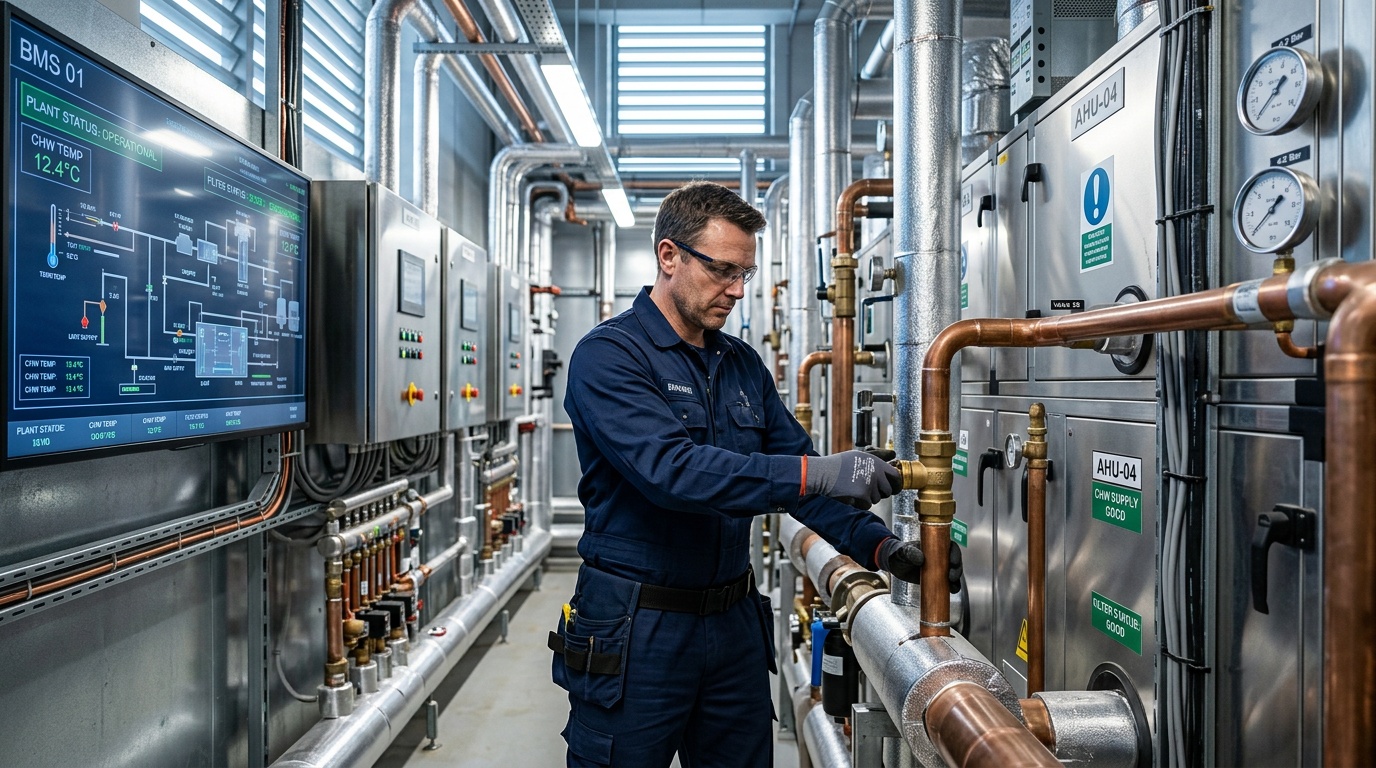
There's a dangerous misconception in commercial property management: "if it's not broken, don't fix it." In my 24 years in this industry. From apprentice on the tools to managing sites across the Midlands. I can tell you that silence in a plant room is often the warning sign that gets ignored.
The 'If It Ain't Broke' Fallacy
Asset degradation is silent. Scale build-up in a boiler is silent. But the bill when your system fails mid-winter? That screams.
I see it constantly: a facility manager skips quarterly PPM visits to save budget. It looks good on the P&L sheet for three months. Then a compressor burns out because a £50 filter wasn't changed. Suddenly, you're not paying for a service visit. You're paying for emergency call-outs, premium-rate parts, and potential business closure.
At MEMS, we operate on a simple engineering truth: maintenance costs less than repair.
The Cascade Effect: How Small Problems Become Disasters
A loose connection becomes a fire risk. A blocked drain becomes flood damage. A failing bearing becomes complete motor replacement. The m and e framework includes interconnected systems where small faults trigger major failures. What starts as a £200 repair becomes a £20,000 replacement project.
Engineering Reality Check
A single failed pump in your heating system can force the boiler to cycle inefficiently, increasing gas consumption by around 30% while reducing component lifespan throughout the circuit.
The Energy Drain: How Poor Maintenance Kills Efficiency
Poorly maintained mechanical systems consume more energy for the same output. Dirty heat exchangers reduce efficiency. Worn bearings increase electrical consumption. Calibration drift in building management systems creates temperature swings that waste energy and annoy occupants.
Equipment running outside optimal parameters doesn't just cost more to operate. It fails sooner. A boiler designed for 20 years might need replacing after 12 without proper maintenance. That's not just lost capital investment; it's unplanned expenditure that destroys budgets.
When Systems Fail: The Real Cost of Downtime
When heating fails during winter trading, you're not just paying for emergency repairs. You're losing customers, damaging staff productivity, and potentially facing insurance claims. Retail spaces lose footfall. Office buildings lose tenant satisfaction. The commercial impact goes far beyond the repair bill.
Legal Exposure: Why Compliance Isn't Optional
Failing to maintain building services properly creates legal exposure beyond repair costs. Gas Safe regulations, F-Gas compliance, and electrical safety standards are legal requirements. One incident involving poorly maintained equipment can result in prosecution and insurance invalidation. With severe consequences if someone gets hurt.
Staying Legal: Your Guide to UK M&E Compliance
Compliance isn't about ticking boxes. It's about protecting people and property while reducing the risk and cost of regulatory failure. Understanding your legal obligations for building services keeps you operational and defensible during audits and investigations.
SFG20: The Maintenance Bible You Need to Know
SFG20 provides industry standards for maintenance frequencies and procedures across building services. This framework specifies when and how systems should be serviced. Following SFG20 guidelines demonstrates due diligence and strengthens your position if equipment fails despite appropriate maintenance.
Compliance Reality Check
SFG20 is the baseline for planned maintenance. Insurers and assessors reference it when reviewing whether you took reasonable steps to manage risk.
Gas Safe, F-Gas, and Electrical Safety: Know Your Legal Duties
Gas Safe registration means only qualified engineers work on gas appliances. F-Gas regulations cover refrigerant handling and leak detection. Electrical safety requires inspection and testing of circuits and equipment at specified intervals. Penalties for non-compliance can be severe.
How Building Management Systems Support Compliance
Modern BMS technology supports monitoring and reporting that aids compliance. These systems track performance, log maintenance activities, and maintain audit trails that demonstrate good governance. Digital compliance records are increasingly expected during regulatory reviews.
Auditing Your Provider: The Questions That Expose Service Gaps
Evaluating your current maintenance strategy requires honest assessment of performance, compliance, and value. These questions expose service gaps and help you make informed decisions about your building's future.
Quick Strategy Health Check
Review your maintenance records for the past year. Calculate the ratio between planned maintenance costs and emergency repairs. If emergency work represents more than 20% of your total spend, your strategy needs attention.
Essential Provider Evaluation Questions
- Do you maintain to SFG20 standards with documented evidence?
- Can you provide digital compliance certificates within 24 hours?
- What's your average response time for emergency calls?
- How do you track and report energy-efficiency improvements?
- What preventative measures do you recommend to reduce emergency call-outs?
Red Flags: What Poor Providers Can't Answer
Ask about equipment lifecycle management, energy optimization strategies, and how they keep you informed about regulatory updates. A quality provider offers proactive recommendations, not just reactive fixes. They should understand your business operations and tailor maintenance schedules accordingly.
The Real Cost of Cheap Maintenance
Compare total annual costs, including emergency call-outs, increased energy consumption, and compliance risks. The cheapest maintenance contract often becomes the most expensive when hidden costs emerge. Calculate value based on uptime, efficiency, and confidence in your compliance position.
Frequently Asked Questions
What does M&E stand for?
M&E stands for Mechanical and Electrical systems. These are the invisible systems, like your heating, ventilation, air conditioning, and power distribution, that keep a commercial building running smoothly. It's the core infrastructure that needs constant attention and maintenance.
What is an M&E in construction?
In construction and building services, M&E refers to the physical mechanical and electrical systems that power, heat, cool, and protect your commercial property. This includes everything from HVAC equipment and plumbing to lighting, power boards, and fire safety systems. These are the components that make a building functional and safe.
What is the M&E area?
The M&E area encompasses all the essential mechanical and electrical infrastructure within your commercial building. This covers systems that regulate temperature and air quality, manage water distribution, deliver electricity, and provide critical safety functions like fire alarms. It's about the entire operational environment of the property.
Is M&E the same as MEP?
While the article focuses on M&E as Mechanical and Electrical, plumbing is always a core part of the mechanical systems we deal with in commercial buildings. So, in practice, what we call M&E often covers the same ground as MEP, which stands for Mechanical, Electrical, and Plumbing. It's just a slightly different way of describing the same essential building services.
What is an M&E job?
An M&E job involves the installation, maintenance, and repair of a commercial building's mechanical and electrical systems. This could mean servicing HVAC equipment, ensuring power distribution is safe and efficient, or maintaining critical fire and security systems. It's about keeping a building operational, compliant, and performing at its best.