network building
Understanding 'Network Building' in Commercial Facilities: Beyond the Cables
In commercial property management, network building refers to two interconnected systems: the physical integration of building services (HVAC, electrical, plumbing, and building fabric) and the professional alliance of trusted specialists required to maintain them. Managing these dual networks effectively supports operational continuity, regulatory compliance, and long-term asset value.
The Dual Definition: People and Infrastructure
For a facility manager, the concept of a network extends beyond IT infrastructure or structured cabling. It covers the connected building systems that keep a commercial property functional, and the working relationships with service providers who keep those systems running. Day-to-day resilience comes from aligning the physical plant with the people who maintain it, with clear ownership and joined-up reporting.
On the physical side, building fabric, drainage, heating and power distribution depend upon one another. When one element fails, the knock-on effect can compromise multiple areas of the facility. Managing this risk calls for planned upkeep of the structure alongside internal services, including Building Fabric Repairs & Maintenance, so that weatherproofing, safety and access all support reliable operation.
The Engineering Reality
A building is a living organism. A leak in the roof fabric can compromise electrical distribution boards, which can shut down HVAC plant. Network building means understanding these dependencies and managing them under a unified maintenance strategy.
Why Facility Managers Need a Strategic Network
Operating in isolation invites avoidable failures. Facility managers face pressure to cut energy use, meet statutory compliance duties and control operating costs. Those targets are difficult to meet without a reliable network of technical partners who understand commercial environments and can coordinate fault-finding across systems, rather than treating each issue as a single-trade problem.
The M&E Approach: A Unified Solution
At M&E Maintenance Solutions Limited, we bridge the gap between engineering precision and commercial asset management. With a single point of contact across HVAC and complementary building services, you reduce delays caused by multiple vendor handovers. Our Building Services Technicians and aligned partners coordinate visits, reporting and remedial actions so that systems work together and compliance evidence is easier to maintain.
Building Your Trusted Partner Network: The Foundation of Efficient Operations
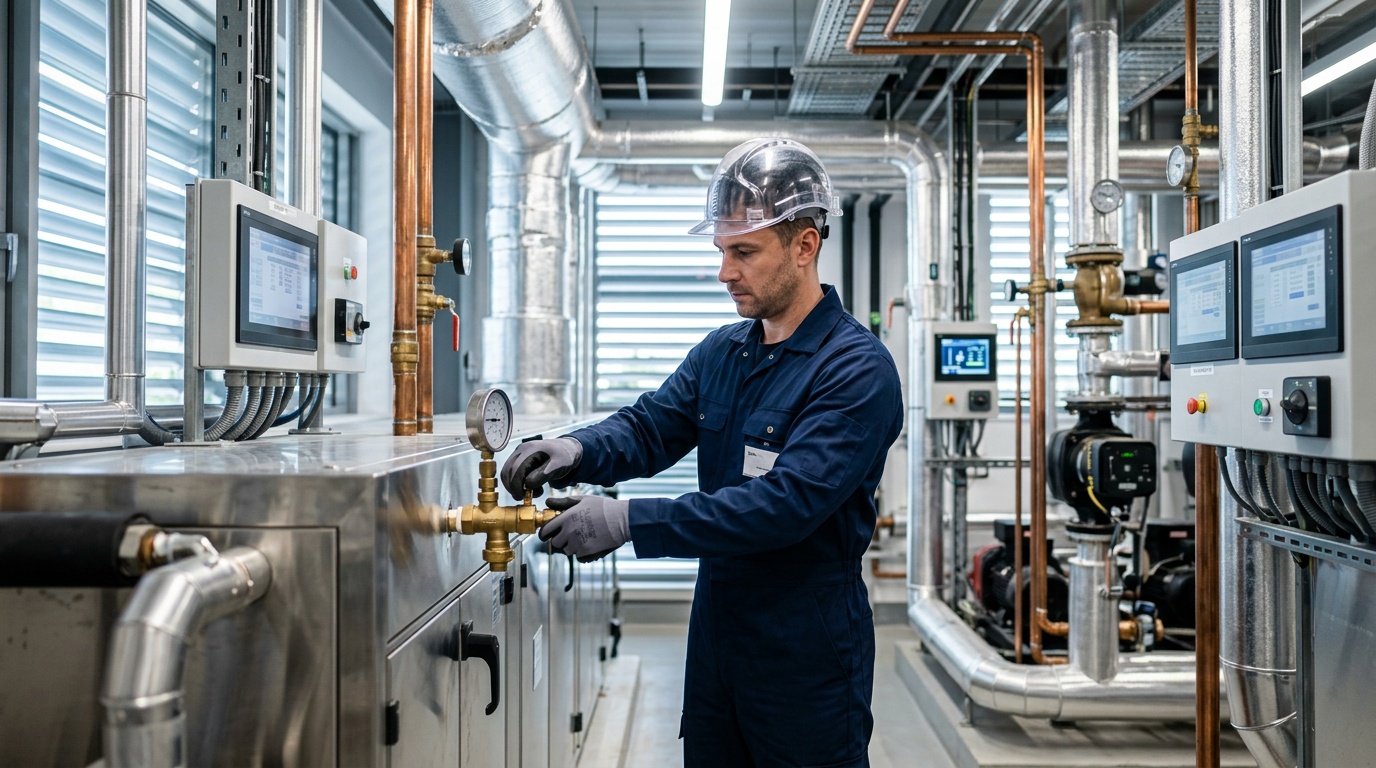
Reliable delivery depends upon the right people as much as the right plant. This section focuses on how to select and manage contractors so that response, documentation and accountability stay consistent across your site portfolio.
The Pitfalls of a Fragmented Vendor List
Managing an oversized vendor list creates administrative drag and increases risk. When HVAC, electrical and structural work sits with separate firms, information can be lost between call-outs and planned visits. That fragmentation often leads to disputes when faults cross system boundaries, which can extend downtime and inflate costs while the root cause remains unresolved.
What to Look For in HVAC, Electrical, and Plumbing Specialists
When selecting partners to join your operational network, technical competence is only the baseline. Look for credentials such as Gas Safe registration, Refcom F-Gas certification and SafeContractor accreditation. Also look for partners who provide 24/7 emergency support through a staffed help desk, with clear escalation routes and job tracking, rather than reliance on automated voicemail.
Sourcing Technical Partners
Pros of a Consolidated Partner Network
- Consistent service standards across building fabric and mechanical systems
- Reduced administrative overhead with single-point invoicing and communication
- Faster emergency response through defined service level agreements
- Coordinated preventative maintenance that minimises operational disruption
Cons of a Fragmented Vendor Approach
- Conflicting recommendations from different specialists on multi-system issues
- Higher administrative costs from managing many individual contracts
- Greater risk of compliance gaps due to uncoordinated record-keeping
- Slower response during critical failures due to handovers and disputes
M&E's 'Open Door' Innovation: Vetting for Reliability
Standards on site are non-negotiable. Every technician wears a clearly identifiable uniform and displays an identification card, supporting security and professionalism. Our recruitment and vetting processes focus on competence and conduct, and our wider delivery model includes closely aligned strategic partners and sister companies for complementary services, so that you still get a joined-up approach when additional trades are required.
The 'Small Enough to Care' Advantage
Large facilities management providers can be slow to act when a decision sits in a queue. We combine organised processes with direct accountability, keeping communication clear and decisions practical. For facility managers, that usually means faster approvals, fewer repeat visits and reporting that ties faults back to the wider system condition, rather than a single isolated job.
The Network Within Your Building: Integrating Sustainable Technologies
Once the partner side is stable, the next step is understanding how the building’s internal systems affect one another. This is the practical network building meaning on the engineering side: controlling interfaces so that upgrades deliver value without creating new faults.
How HVAC, Electrical, and Plumbing Systems Connect
Modern commercial buildings rely on connected mechanical, electrical and plumbing systems. They do not operate in silos. Controls, sensors and power quality affect HVAC operation; water quality, pressure and pipework routes affect heat pump performance; and access, containment and drainage affect the maintainability of everything installed. When these interfaces are mapped and maintained, energy performance and fault response become more predictable.
The Fayetteville Project: A Blueprint for Integrated Sustainability
Outside the UK, some engineers reference examples such as the Fayetteville sustainable design initiative to illustrate joined-up planning. If you are searching for network building fayetteville, the key lesson is not the location, but the method: building fabric decisions, plant selection and water systems are planned together so that one upgrade does not undermine another. We apply the same joined-up mindset to UK commercial maintenance and retrofit planning.
Case Study Insight
Successful integration needs a whole-property view. When building fabric, insulation and mechanical services are maintained together, performance drift is reduced and utility costs may decrease, depending on condition, occupancy and control strategy.
M&E's Role in Optimising Your Building's Internal Network
We specialise in optimising the internal network of services across commercial sites. Our planned preventative maintenance programmes aim to keep heating, ventilation and associated electrical and control systems working together efficiently. That oversight helps reduce avoidable wear, supports lifecycle planning and improves the quality of compliance documentation generated from inspections and remedial work.
From Air-to-Water Heat Pumps to LED Lighting: A Cohesive Strategy
Low-carbon upgrades succeed when supporting infrastructure is checked first. Installing air-to-water heat pumps or upgrading to LED lighting should be matched to electrical capacity, controls strategy and the building fabric condition. We help coordinate these upgrades so that commissioning is cleaner, disruption is limited, and performance can be tracked against realistic baselines.
Beyond the Technical: The Human Element of Network Building
Systems fail, but communication failures cause longer outages. The human side of network building is about culture, competence and continuity so that your site knowledge does not walk out of the door.
The 'High-Pressure Culture' Trap: What Employee Reviews Reveal
Industry employment trends, including feedback on platforms such as Glassdoor, show a recurring pattern: high-pressure cultures can lead to high staff turnover. When engineers are stretched too thin, quality drops and compliance details get missed. Searches such as network building and consulting glassdoor often highlight this risk across the sector. We link engineer welfare to client outcomes, because consistency on site depends upon stable teams.
Why a Collaborative, 'Customer First' Approach Matters
Our approach is straightforward: treat people properly and the work improves. When technicians have the time and support to diagnose faults thoroughly, you get fewer repeat call-outs and clearer reporting. That translates into better on-site behaviour, better handovers and fewer surprises during audits, particularly when multiple systems are involved.
Building Long-Term Relationships, Not Just Transactions
We do not treat maintenance as a series of disconnected emergencies. We focus on long-term relationships, based on asset history, recurring defects and realistic budgeting. Over time, that allows you to plan capital spend, reduce avoidable failures and keep critical areas operational with less disruption during planned works.
M&E's Commitment to Your Team and Your Building
Our commitment is to keep your business operating with minimal disruption, backed by clear communication and practical engineering. Through our Building Fabric Repairs & Maintenance support and our HVAC-focused maintenance services, we help you manage your property with confidence, with coordinated delivery across our technicians and aligned partners.
Frequently Asked Questions
What is the meaning of network building in commercial facilities?
From my perspective as a facility manager, network building covers two essential areas. It's about the physical connections between a commercial property's systems, like HVAC, electrical, and plumbing, and the professional relationships you build with trusted specialists who maintain them. Getting both right ensures your building runs smoothly and efficiently.
What is the purpose of building a strong network for commercial property management?
The main purpose is to ensure operational continuity, meet compliance, and protect your asset's long-term value. A well-built network, both physical and professional, prevents isolated failures from becoming major disruptions. It allows for coordinated maintenance and faster problem-solving across all building systems.
How do I build an effective partner network for facility maintenance?
Building an effective partner network starts with selecting technically competent specialists who also offer 24/7 support and clear communication channels. Look for credentials like Gas Safe registration and SafeContractor accreditation. Consolidating your vendor list helps reduce administrative burden and ensures consistent service standards across your site portfolio.
What should I consider when building a network of maintenance partners?
Beyond technical competence, consider a partner's ability to provide unified solutions across multiple services like HVAC and complementary building systems. A single point of contact can significantly reduce delays and improve coordination. This approach helps avoid disputes when issues cross system boundaries and ensures a comprehensive maintenance strategy.
Does network building only refer to IT infrastructure?
Absolutely not. While IT networks are part of it, in commercial property management, network building extends far beyond structured cabling. It encompasses all the interconnected physical building systems that keep a property functional, alongside the professional alliances with service providers who maintain those systems. It's about managing the whole building as a living organism.
What are the benefits of a consolidated partner network compared to a fragmented vendor approach?
A consolidated partner network offers consistent service standards, reduced administrative overhead, and faster emergency response times. It allows for coordinated preventative maintenance, minimizing operational disruption. In contrast, fragmented vendors often lead to conflicting advice, higher costs, and slower resolution of complex issues due to handovers and disputes.
How do HVAC, electrical, and plumbing systems connect in a commercial building?
Modern commercial buildings are highly integrated; these systems do not operate in silos. For example, a leak in the roof fabric can compromise electrical distribution boards, which in turn can shut down HVAC plant. Understanding these dependencies is key to managing them under a unified maintenance strategy, ensuring all elements work together reliably.