Electrical vs plumbing maintenance contracts: pros and cons UK.
The Commercial Reality: Why Your Maintenance Contract Choice Matters
I've spent twenty-four years in this industry, starting as an apprentice combustion engineer and working my way into the boardroom. I've seen what happens when a facility manager tries to shrink the maintenance budget. A burst pipe doesn't just spill water. It destroys stock, ruins flooring, and forces you to close your doors. A power failure doesn't just turn off the lights. It halts production lines and compromises security systems. The decision between electrical vs plumbing maintenance contracts: pros and cons UK facility managers face should carry the same weight as a capital expenditure project. You're not buying a service visit; you're buying business continuity.
Key Takeaways
- I've spent twenty-four years in this industry, starting as an apprentice combustion engineer and working my way into the boardroom.
- I've seen what happens when a facility manager tries to shrink the maintenance budget.
- It destroys stock, ruins flooring, and forces you to close your doors.
I recently helped a facility manager in the West Midlands who faced a catastrophic pump failure. Because they lacked a proactive maintenance partner, the repair cost hit fifty times the annual service fee. The business lost three days of trade. That's the real cost of treating maintenance as a grudge purchase. Cheap contracts often exclude essential tasks like water treatment or thermal imaging, leaving you exposed.
Downtime's True Cost: Beyond the Lost Hour
The true cost of downtime extends far beyond the repair invoice. It includes lost revenue, emergency call-out premiums, and damage to your reputation. If your commercial property houses tenants, their income stops when your infrastructure fails. They'll look to you for compensation. A comprehensive maintenance contract is your primary evidence of diligence, proving you took every reasonable step to protect building occupants.
Compliance Is Non-Negotiable: What You're Legally Required to Do
In the UK, electrical systems must comply with BS 7671 and the Electricity at Work Regulations 1989. Plumbing and gas work requires Gas Safe Register compliance, the Water Supply Regulations 1999, and often Refcom F-Gas for refrigeration. Ignorance of these regulations won't hold up in court. If a system failure causes injury or property damage, liability falls on you. A properly structured contract gives you documented proof that you've met your duties.
Understanding the Core Differences: Electrical vs. Plumbing Maintenance Contracts
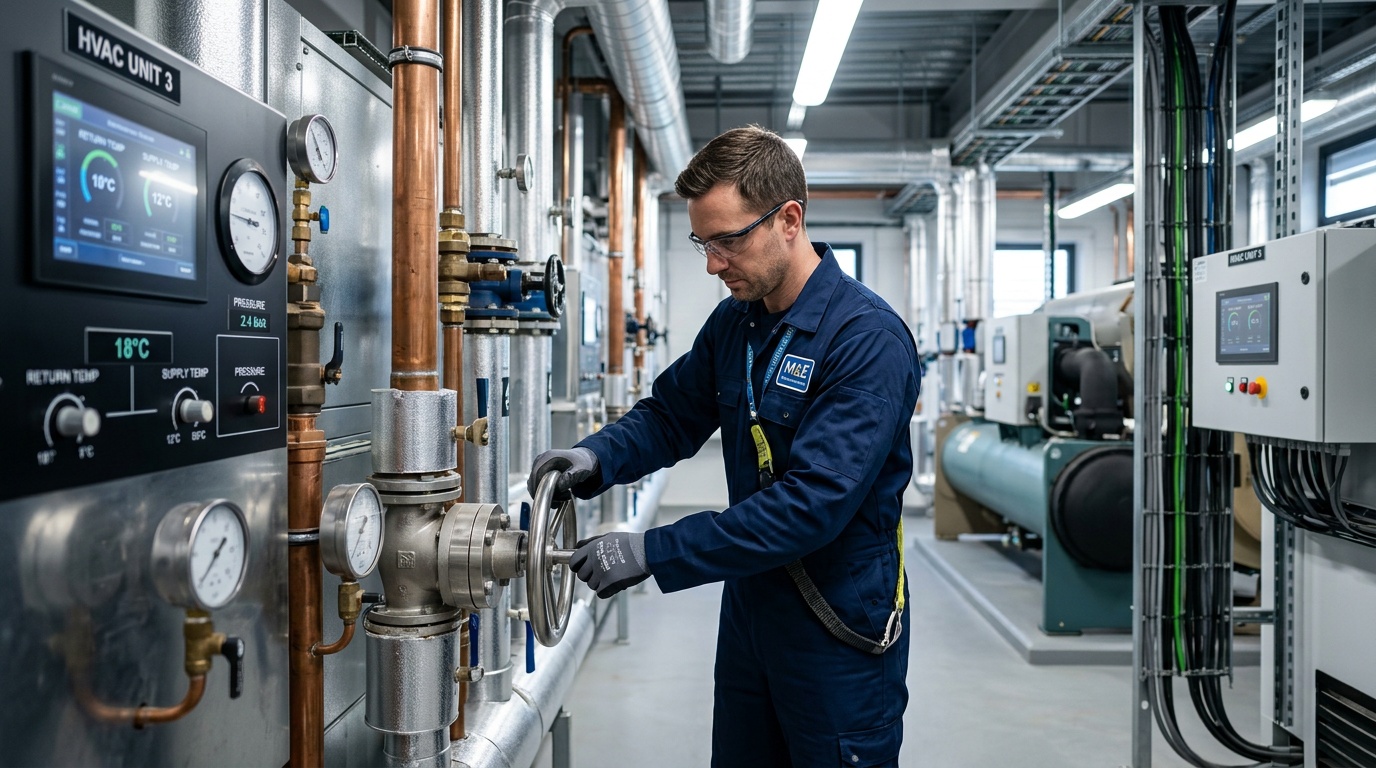
Electrical and plumbing maintenance require very different skill sets, certifications, and approaches to risk. Treating them as interchangeable is a mistake that leads to substandard work and safety hazards. Let me break it down simply.
Scope of Work: What's Actually Covered?
Electrical contracts cover power distribution, lighting, and safety systems: fixed wire testing, emergency lighting checks, panel inspections. Plumbing contracts deal with water delivery, drainage, and heating: pipework integrity, pump servicing, drainage. In modern commercial buildings these lines blur. Heating systems need both Gas Safe engineers and electricians. Your contract must explicitly list which assets are covered and which are excluded.
Specialist Skills & Certifications: The Foundation of Safety
You can't compromise on qualifications. For electrical work, engineers must be competent. Ideally registered with NICEIC or ECA. For plumbing and heating, Gas Safe Register is mandatory for any work on natural gas or LPG. At M&E Maintenance Solutions, we ensure our engineers hold Refcom F-Gas too, so whoever enters your plant room understands the complex safety protocols required to keep your building operational and legal.
Common Failure Points: Proactive Care for Each System
Electrical systems often fail due to thermal stress, loose connections, or dust and moisture. Proactive care means infrared scanning and torque testing. Plumbing systems typically fail from corrosion, scale buildup, or freezing. Proactive care means water analysis and insulation checks. Recognising these different failure modes is why you need a provider who understands specific maintenance schedules for each discipline.
Regulatory Landscape: BS 7671 vs. Water Regulations & Gas Safe
The UK regulatory environment is complex. Your maintenance contract must address each set of requirements. A generic service visit that doesn't produce the correct certification leaves you non-compliant. That's a risk I'd never advise taking.
| Feature | Electrical Maintenance | Plumbing & HVAC Maintenance |
|---|---|---|
| Primary Focus | Power distribution, lighting, safety systems. | Water delivery, drainage, climate control. |
| Key Legislation | Electricity at Work Regs, BS 7671. | Gas Safe (Installation and Use) Regs, Water Regs. |
| Common Hazards | Fire risk, electric shock, system overload. | Flooding, Legionella, gas leaks, scalding. |
| Proactive Tasks | Thermographic surveys, RCD testing, bonding checks. | Water treatment, pressure testing, pump servicing. |
The Pros and Cons: Weighing Up Specialist vs. Combined M&E Contracts
Now we get to the core question: should you hire a dedicated electrical firm plus a separate plumbing company, or opt for a combined Mechanical and Electrical solution? That's the heart of the electrical vs plumbing maintenance contracts: pros and cons UK debate. Each approach has clear advantages and trade-offs.
Specialist Electrical Maintenance Contracts: Advantages & Drawbacks
A specialist electrical contractor brings deep expertise in power systems. They live and breathe BS 7671. The downside? Coordination. If you have a combined fault. Say a pump that won't start. The electrician blames the plumber and vice versa. That finger‑pointing delays getting your system back online.
Specialist Plumbing Maintenance Contracts: Advantages & Drawbacks
Specialist plumbing and heating engineers are experts in fluid dynamics and combustion. Ideal for complex boiler repairs. But they often lack the capability to handle the control systems that govern modern plant rooms. Today's HVAC systems are as much about electronics as mechanics. A specialist plumber might fix the valve but can't recalibrate the Building Management System (BMS).
The Case for Combined M&E Maintenance: Streamlining Your Operations
A combined approach gives you a single point of accountability. With one provider, you have one contract, one invoice, one point of contact for all Plumbing and Electrical Services. If a fault crosses disciplines, it's handled internally without delay. For facility managers juggling multiple buildings, that integration reduces stress and improves response times.
When to Choose Separate vs. Integrated: A Decision Framework
Use this framework. If you manage a small, single‑use property with simple systems, separate specialists might suffice. But if you manage a large commercial estate, a school, or a healthcare facility, the integrated model wins. The complexity of modern buildings demands a holistic view. The electrical vs plumbing maintenance contracts: pros and cons UK analysis almost always favours integration for any site where downtime carries a high financial penalty.
Pros of Combined M&E Contracts
- Single point of contact for all building systems.
- Improved coordination for complex, multi-disciplinary faults.
- Streamlined compliance reporting across all disciplines.
- Potential cost savings through bundled service delivery.
Cons of Combined M&E Contracts
- Risk of a "jack of all trades" provider lacking deep specialist knowledge.
- Potential for larger firms to be less flexible than local specialists.
- Dependency on a single provider for critical infrastructure.
Beyond the Basics: Future-Proofing Your Contracts with Innovation & Integration
The old model of siloed maintenance doesn't cut it anymore. Modern commercial buildings demand systems thinking. If you're still managing separate contracts for every trade, you're missing opportunities for efficiency, cost reduction, and sustainability. Especially as renewable technologies become standard.
The Blurring Lines: How Renewables Impact Electrical and Plumbing Needs
Renewable technologies like air‑to‑water heat pumps and solar PV are blurring traditional boundaries. A heat pump needs both electrical expertise for the controls and compressor, and plumbing knowledge for the hydronic side. Solar PV connects to your electrical distribution but often integrates with hot water generation. A pure electrician or pure plumber may lack the full picture. You need a partner who understands the entire system.
M&E Maintenance Solutions' 'Open Door' Policy: Vetted Technology for Your Estate
At M&E Maintenance Solutions, we operate an open door policy towards technology. We evaluate new HVAC products rigorously before offering them to clients. We test them, understand their failure modes, and ensure they integrate with your existing infrastructure. When you choose us, you get vetted innovation, not experimental kit. We've applied this approach to Commercial Air Conditioning Maintenance, LED lighting upgrades, and solar thermal installations across the Midlands.
Integrating Compliance and Sustainability: A Holistic Approach
Compliance and sustainability aren't conflicting goals. A well‑maintained system is both safer and more efficient. By integrating your contracts, every service visit considers both compliance requirements and energy performance. For example, a quarterly HVAC service should check refrigerant leaks (F‑Gas compliance) and optimise airflow for efficiency. One engineer can achieve both if they've got the right training. That holistic approach cuts your carbon footprint and your operational costs at the same time.
The Cost of Silos: Why Integrated Maintenance Saves Money in the Long Run
Operating separate contracts creates hidden costs: multiple admin fees, coordination schedules, and wasted time managing different account managers. When a fault crosses disciplines, you face delays while contractors wait for each other. The electrical vs plumbing maintenance contracts: pros and cons UK discussion almost always concludes that integration reduces total cost of ownership. At MEMS, we see it daily. Clients who consolidate their maintenance with us typically reduce annual spend by 15 to 20 percent. Simply by eliminating duplication and improving response times.
Your Action Plan: Securing the Right Maintenance Contract for Your Commercial Property
You now understand the landscape. Time to act. Use the framework below to evaluate your current contracts or pick a new provider. This isn't about finding the cheapest quote. It's about finding the partner who will protect your asset and your reputation.
Questions to Ask Potential Providers: The 'MEMS Standard' Checklist
When interviewing providers, ask: What certifications do your engineers hold? Can you show evidence of SFG20 adherence? How do you handle emergency call‑outs outside office hours? What's your average response time for a critical fault? Can you service both electrical and mechanical aspects of my HVAC system? If a provider hesitates on any of these, they're not ready for the complexity of your building.
Understanding Service Level Agreements (SLAs) and Response Times
Your SLA is the backbone of your contract. It defines response times for different fault categories. A critical failure. Total loss of heating in winter. Should guarantee a four‑hour response. A minor issue might allow 48 hours. Make sure your SLA matches your business risk. If you operate a 24‑hour facility, you need round‑the‑clock support. At MEMS, we provide a M&E HVAC Compliance Health Check with 24/7/365 coverage because building failures don't observe office hours.
Identifying Hidden Costs and Common Contract Exclusions
Read the small print. Common exclusions include specialist testing (thermographic surveys), consumables (filters, belts), and out‑of‑hours call‑out fees. Some contracts exclude remedial work. They'll diagnose but charge extra for the repair. Your contract must state clearly what's included and what's chargeable. Hidden costs erode your maintenance budget. Demand transparency before you sign.
The MEMS Advantage: 24/7/365 Reliability and Asset Protection
Choosing the right partner turns maintenance from a cost centre into a strategic advantage. At MEMS, we hold SafeContractor, Refcom F‑Gas, Gas Safe Register, and ISO 9001 certifications. We employ over twenty core staff and use strategic partners to cover any requirement across the UK. Our reputation is built on referrals and long‑term relationships. We're big enough to cope with complex estates but small enough to care about every client. When you partner with us, you get a team that treats your building's health as our own responsibility.
The choice between electrical vs plumbing maintenance contracts: pros and cons UK facility managers face isn't binary. The answer lies in integration, expertise, and genuine partnership. If you're ready to move beyond reactive firefighting and into proactive asset management, contact us today. We'll audit your current setup and show you how a unified approach can save you money, improve compliance, and protect your business.
References
Frequently Asked Questions
What is the main difference between electrical and plumbing maintenance contracts for commercial buildings?
Electrical maintenance contracts cover power distribution, lighting, and safety systems like fixed wire testing and emergency lighting checks. Plumbing maintenance contracts focus on water delivery, drainage, and heating systems, often requiring Gas Safe registered engineers. In a commercial setting, these disciplines overlap on systems like HVAC, which need both electrical and plumbing expertise to keep your building compliant and operational.
Which trade pays more in the UK, electricians or plumbers?
In the UK, both trades command competitive rates, but plumbers and heating engineers can earn a slight premium due to the higher risk and regulation around gas work and water hygiene. However, hourly rates alone don’t tell the full story. The total cost of a maintenance contract depends on the scope of work, certifications required, and the urgency of callouts. A cheap single-trade quote often misses critical compliance tasks, costing you more in the long run.
Is plumbing or electrical a better trade to specialise in for commercial maintenance?
Neither is better than the other. Both are equally essential for a commercial building's operation. Electrical systems keep the lights on and machinery running, while plumbing systems protect against water damage and maintain heating. The real question is whether your facility manager can afford to manage separate specialists or whether a partner who handles both disciplines offers better continuity and accountability.
What certifications should I look for in an electrical or plumbing maintenance provider?
For electrical work, look for NICEIC or ECA registration as evidence of competence, plus adherence to BS 7671. For plumbing and gas, the Gas Safe Register is mandatory for any work on natural gas or LPG, and Refcom F-Gas certification for refrigeration systems. A provider that holds SafeContractor and ISO 9001, like M&E Maintenance Solutions, gives you confidence that every engineer on site meets legal and industry standards.
How do maintenance contracts help with UK compliance for electrical and plumbing systems?
A maintenance contract provides documented evidence that you have taken all reasonable steps to comply with the Electricity at Work Regulations 1989, BS 7671, and the Water Supply Regulations 1999. Without proper service records and certification, a system failure that causes injury or damage could leave you personally liable. A proactive contract ensures inspections and testing are scheduled and logged, so you can prove diligence in court or to an insurer.
What are the most common failure points in commercial electrical and plumbing systems?
Electrical systems often fail from thermal stress, loose connections, or dust and moisture buildup. Infrared scanning and torque testing can catch these early. Plumbing systems typically suffer from corrosion, scale, or freezing pipes. Water analysis and insulation checks are key. Recognising these different failure modes shows why you need a maintenance partner who understands each discipline’s specific schedules rather than offering a one-size-fits-all service.