no man's land fort the solent
In the world of commercial asset management, understanding the history and operational evolution of unique properties is more than just an academic exercise. For those overseeing substantial investments, whether as landlords or business owners, a building's past often dictates its future potential and its present risks. It’s about recognising how a structure's original purpose, its subsequent transformations, and even its moments of dormancy can impact everything from compliance and security to revenue generation. My 24 years in facilities maintenance, starting from the ground up as a combustion engineer, have taught me that the most valuable insights often come from looking at assets through a lens of both technical engineering and commercial continuity. This is particularly true when we consider structures as unique as the sea forts dotting the Solent, like the formidable No Man's Land Fort.
Key Takeaways
- A property's original design and past uses directly shape its current compliance requirements and security vulnerabilities.
- Understanding the operational history of a unique asset like No Man's Land Fort helps predict future maintenance challenges and revenue opportunities.
- Facilities managers must look beyond surface conditions and consider how periods of dormancy or transformation affect a building's structural integrity.
- The most effective asset management strategies blend technical engineering expertise with a clear view of commercial continuity over the long term.
These aren't just old buildings; they are complex, isolated environments that present extraordinary challenges for maintenance, operation, and any attempt at commercial use. My mission at MEMS Facilities Maintenance is to bridge the gap between the boiler room and the boardroom, ensuring that the engineering realities of keeping a facility running smoothly translate directly into business benefits. Cost savings, legal compliance, and uninterrupted operation. Let's delve into the story of No Man's Land Fort, exploring its past and the practical implications for its future, viewed through the eyes of a seasoned maintenance professional.
No Man's Land Fort: A Victorian Fortress in the Solent
Where is No Man's Land Fort and what is it?
No Man's Land Fort is a remarkable, man-made island situated in the Solent, the strait separating the Isle of Wight from mainland Great Britain. Specifically, it lies approximately 1.5 miles offshore from the southern coast of Hampshire, near Portsmouth, and about 2 miles from the Isle of Wight. This imposing structure is one of a trio of artificial sea forts. Along with Spitbank Fort and Horse Sand Fort. Built in the 19th century to defend the approaches to Portsmouth Harbour and the naval dockyards. It is a Grade II listed building, a testament to its historical and architectural significance. Its construction, from 1867 to 1880, was a monumental feat of engineering for its time, designed to withstand naval bombardment and serve as a vital part of Britain's coastal defence strategy.
The fort itself is a vast, multi-level structure, essentially a heavily fortified island. It comprises a central keep surrounded by a circular sea wall, with living quarters, gun emplacements, and storage areas built within its thick granite and brick walls. The design was intended to create an unsinkable, formidable deterrent. However, its strategic purpose was relatively short-lived, rendered largely obsolete by advancements in military technology shortly after its completion. Despite its military history, the fort's sheer scale and unique location have always hinted at potential beyond defence, presenting a complex puzzle for anyone considering its future use or maintenance.
The birth of the Palmerston Follies
The genesis of No Man's Land Fort, along with its sister forts, can be traced back to the recommendations of the Royal Commission on the Defence of the United Kingdom, which was established in 1859. Driven by anxieties about French naval power under Napoleon III and the perceived vulnerability of Britain's coastline, the commission proposed a series of powerful defensive fortifications. These structures, often referred to as Palmerston Follies after Prime Minister Lord Palmerston, were intended to form an impenetrable barrier against invasion. Construction began in the 1860s, using vast quantities of stone and brick, with each fort housing hundreds of men and powerful artillery.
No Man's Land Fort, being the largest and furthest offshore, was a key component of this ambitious defence scheme. It was designed with multiple tiers of gun decks, capable of mounting heavy cannons that could sweep the Solent. The surrounding sea wall provided protection against direct naval assault, while the fort's isolation made it difficult for enemy forces to approach or land. The build was a colossal undertaking, requiring precise engineering and a significant labour force. However, by the time construction was completed in the late 1870s and early 1880s, the advent of more powerful rifled artillery and improved naval designs had already begun to diminish the effectiveness of fixed, masonry fortifications. This historical context is essential for understanding the fort’s transition from a military asset to a property with a completely different commercial destiny.
From Royal Commission to Hotel. The Evolution of the Fort
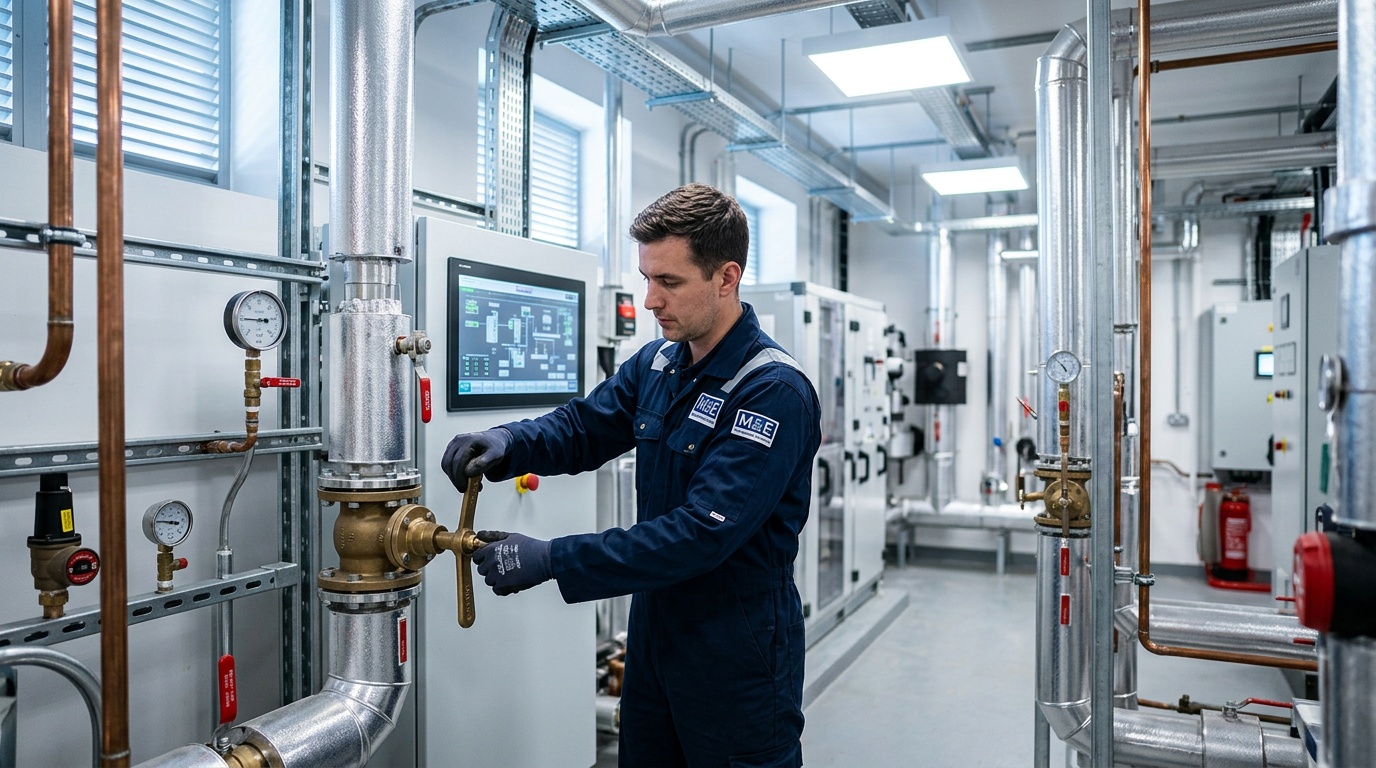
Military service and decommissioning
The military career of No Man's Land Fort, like its sister structures, was surprisingly brief. Commissioned into service in the late 19th century, it formed part of a formidable sea defence network. The fort saw service during World War I, primarily as a base for anti-submarine defences and searchlights, and it was also armed with naval guns. However, its role diminished significantly as naval warfare evolved. By World War II, the advent of air power and long-range artillery meant that the fort's primary defensive capabilities were largely obsolete. It was still garrisoned, but its strategic importance waned further, and it was eventually decommissioned as a military installation.
Following its decommissioning, the fort stood largely redundant for many years. While it remained a significant landmark, its upkeep as a purely historical or static defence structure would have been a substantial undertaking. The Royal Commission's 'follies' were built for a specific era of warfare, and their post-military existence posed a challenge: what to do with these vast, isolated, and historically significant but functionally outdated structures? The military's withdrawal left a void, marking the end of one chapter and setting the stage for an entirely unexpected transformation that would require a different kind of expertise to manage and maintain.
The remarkable hotel transformation (2014-2018)
The most dramatic chapter in the fort's modern history began in the early 2000s when a private buyer acquired it with ambitious plans. After years of disuse, the fort underwent an extensive and costly renovation project, transforming it from a derelict military structure into a unique luxury hotel and exclusive events venue. This ambitious undertaking, which spanned several years and significant investment, aimed to capitalise on the fort's unique setting and historical character. The project involved installing modern amenities within the historic walls, creating en-suite bedrooms, restaurants, bars, and even spa facilities.
Between approximately 2014 and 2018, No Man's Land Fort operated as a high-end hotel, offering guests an unparalleled experience. Staying in a 19th-century sea fortress with panoramic views of the Solent. It featured 23 en-suite bedrooms, multiple function rooms, and amenities like a swimming pool and fire pits. Access was exclusively by boat or helicopter, adding to its exclusivity. This period represented a significant commercial success, demonstrating that with the right vision and substantial investment in infrastructure and refurbishment, such a challenging asset could indeed become a profitable enterprise, albeit one requiring constant, specialised operational oversight.
Closed doors: What happened to No Man's Land Fort hotel?
Despite its unique appeal and luxury offering, the hotel operation at No Man's Land Fort proved to be unsustainable in the long term. Following its transformation and operation as a hotel and event space, the fort eventually ceased its hospitality functions. Reports indicate that the business faced significant operational challenges, likely stemming from the sheer cost and complexity of maintaining an isolated sea fort, coupled with the specialised nature of running a hospitality venue in such a location. The isolation, while contributing to its allure, also meant higher logistical costs for supplies, staffing, and guest transport, particularly by helicopter or boat.
By the early 2020s, the fort was no longer operating as a hotel or event venue. It entered a period of closure for its hospitality functions, leading to confusion about its current status. This closure prompted further speculation and interest in its future, particularly regarding its potential sale. The transition from a functioning luxury hotel back to a closed, albeit still equipped, property highlighted the precarious nature of such ambitious ventures and the ongoing challenge of finding a commercially viable and operationally sound model for these unique historical assets. The dream of a thriving hotel was put on hold, leaving the fort once again at a crossroads.
The operational lifecycle of No Man's Land Fort, from its conception as a defensive bastion to its brief stint as a luxury hotel, underscores a fundamental principle in facilities management: the immense challenge of maintaining and operating assets in extreme or isolated environments. My experience with MEMS Facilities Maintenance, focusing on commercial buildings across the UK, has shown me that the engineering demands of such locations are exponentially higher. Whether it's a remote industrial site or a unique structure like this fort, the 'business as usual' approach simply doesn't apply.
Consider the practicalities: a constant supply of power, clean water, waste management, and climate control are not optional extras; they are the bedrock of any operational facility. For a building perched in the Solent, these necessities require bespoke, resilient systems that can withstand marine conditions and operate with minimal external support. My team and I constantly work with clients to engineer solutions that ensure uptime and efficiency, often integrating advanced technologies like solar PV for energy independence or sophisticated water treatment systems to meet stringent Legionella prevention standards. The fort's journey from military to hospitality and back again is a powerful case study in how engineering infrastructure underpins commercial viability, especially when faced with unique environmental challenges.
No Man's Land Fort Sale Price: £1.25m, £4.25m and Everything Between
The fluctuating market value of a unique asset like No Man's Land Fort is a constant source of interest, and for good reason. For potential investors, developers, or even curious observers, understanding the price trajectory provides insight into the fort's perceived commercial viability and the challenges associated with its ownership. The journey from a military relic to a potential luxury destination has been marked by several significant sales, each reflecting different market conditions and investor appetites. Tracking these figures helps paint a clearer picture of the fort's financial history and its current standing as a property opportunity, moving beyond mere speculation to concrete data.
Navigating the sale history of such an unusual property can be confusing, with figures varying significantly over time. This isn't a typical residential or commercial property; its value is tied to its heritage, its unique location, and the substantial investment required for its operation and maintenance. My own experience in facilities management has taught me that the cost of ownership for unique or isolated assets is far greater than initially apparent. It’s not just the purchase price; it’s the ongoing operational expenditure, the capital required for upgrades, and the ability to generate revenue that truly define an asset’s worth. Understanding the past sale prices of No Man's Land Fort is a critical step in evaluating its future potential and the realism of its market positioning.
The 2009 private sale: £910,000
The first significant indicator of the fort's post-military commercial potential emerged in 2009. At this point, No Man's Land Fort was acquired by a private buyer for approximately £910,000. This marked the beginning of its transition from a disused historical site to a property with development aspirations. The price reflected a period when the fort was still largely derelict, requiring extensive refurbishment and a visionary approach to unlock its value. This acquisition set the stage for the ambitious hotel transformation that would follow, demonstrating that even in its raw state, the fort held substantial appeal for those willing to undertake a major project.
The 2015 market listing: £4.25 million
Following the extensive renovation and its operation as a luxury hotel and events venue, the perceived value of No Man's Land Fort saw a dramatic increase. By 2015, the property was listed on the market with an asking price of £4.25 million. This figure represented not just the physical structure but also the considerable investment in its transformation, the established brand as a unique destination, and the infrastructure put in place to support its hospitality operations. The substantial jump in valuation from its 2009 purchase price underscored the success of the development but also perhaps indicated an optimistic outlook on its future revenue-generating capabilities as a high-end venue.
The 2024 Savills auction result: £1.25 million
More recently, in June 2024, No Man's Land Fort was put up for auction by Savills, achieving a sale price of £1.25 million. This result is notably lower than the £4.25 million listing price from 2015, reflecting a shift in the market or perhaps the challenges of maintaining such a unique property. The auction process often attracts buyers looking for specific opportunities, and the final price can be influenced by bidding dynamics and the current economic climate. This sale indicates a significant change in valuation, suggesting that the fort is now being positioned at a price point that acknowledges the considerable ongoing operational and maintenance commitments required for any future commercial use.
Current freehold and leasehold availability (2025/2026)
Following the June 2024 auction, the status of No Man's Land Fort continues to be a topic of interest for potential custodians. While the £1.25 million figure represents a recent sale, the terms of such disposals can include freehold or leasehold arrangements, each carrying different implications for ownership and usage rights. The future availability will depend on the new owner's plans; they might seek to re-open it as a hotel or event space, repurpose it entirely, or hold it as an investment. For any prospective party considering this unique property, a thorough due diligence process is paramount. This includes understanding the full extent of the lease terms if applicable, the condition of the infrastructure, and the realistic operational costs involved in managing a structure in such an exposed marine environment. The fort remains a property of significant historical and potential commercial value, but its future will undoubtedly be shaped by practical, ongoing management and engineering considerations.
| Year | Sale Type | Price | Notes |
|---|---|---|---|
| 2009 | Private Sale | £910,000 | Acquisition for refurbishment |
| 2015 | Market Listing | £4.25 million | Post-renovation hotel operation |
| 2024 | Auction (Savills) | £1.25 million | Current sale result |
| 2025/2026 (Projected) | Freehold/Leasehold Availability | Varies | Subject to new owner's plans and market |
Getting to No Man's Land Fort and What You Would Find Inside
The very nature of No Man's Land Fort dictates that accessing it is an experience in itself, far removed from simply driving up to a property. Its location, 1.5 miles offshore in the Solent, means that conventional transport methods are impossible. This isolation, while a key part of its historical defence strategy and its modern appeal as a unique venue, presents significant logistical considerations. For anyone considering visiting, investing, or managing such a site, understanding these access requirements is fundamental. It shapes operational planning, guest experience, and the overall cost of maintaining connectivity and supply chains to the fort.
The primary means of reaching No Man's Land Fort are by helicopter or by sea. The fort is equipped with multiple helipads, designed to accommodate regular flights that can transport guests and supplies directly to the site. For those arriving by water, there are dedicated sea landing stages that allow boats and larger vessels to dock safely. These transport methods, while offering spectacular views and a sense of adventure, come with their own set of operational complexities. Weather conditions in the Solent can change rapidly, impacting flight schedules and sea access, which means contingency planning is always essential. This logistical challenge is a constant factor for any operation based at the fort, directly influencing its reliability as a venue or a business location.
Amenities and infrastructure: pool, spa, restaurants, bedrooms
Stepping inside No Man's Land Fort, one finds a surprisingly extensive array of amenities and infrastructure, testament to its transformation into a luxury hotel and event space. The fort boasts 23 en-suite bedrooms, offering comfortable and well-appointed accommodation within its historic, thick-walled structure. These rooms are designed to provide a unique guest experience, blending historical character with modern comforts. Beyond accommodation, the fort houses several dining areas, including restaurants and bars, designed to cater to guests and event attendees, offering panoramic views of the Solent as a backdrop to their meals.
Further enhancing its appeal as a destination, the fort includes leisure facilities that contribute to its exclusive offering. Guests can make use of an indoor swimming pool, providing a place for relaxation and recreation. Additionally, spa facilities are available, allowing visitors to indulge in treatments and wellness experiences. For events, the fort offers a range of function rooms and spaces, adaptable for conferences, weddings, and private parties. The infrastructure extends to essential services required for isolated operation, such as power generation, water supply, and waste management systems, all of which are critical for sustaining any commercial activity within this unique, sea-bound environment. These facilities, while impressive, require continuous, specialised maintenance to operate effectively, a challenge that lies at the heart of managing such an asset.
Engineering the Solent Fortress: Operational Realities
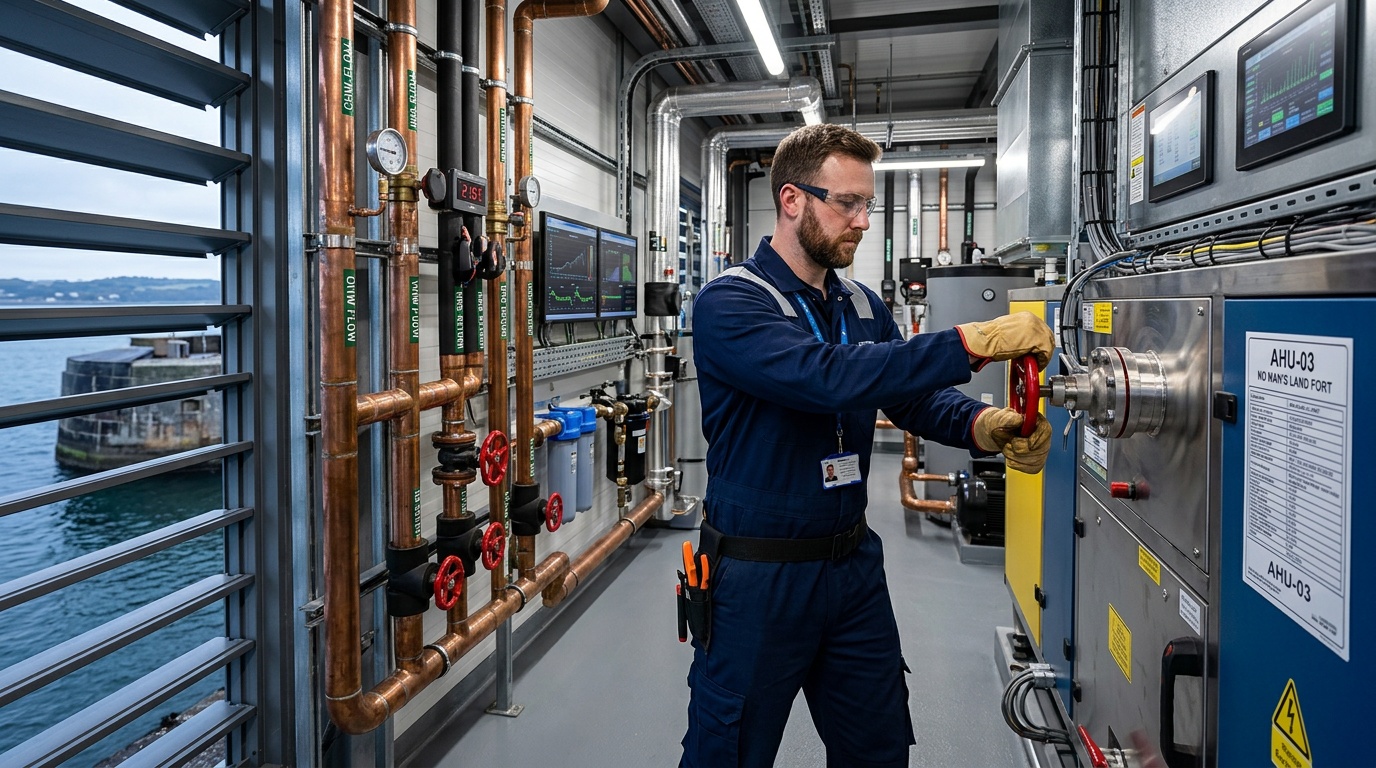
The journey of No Man's Land Fort from a 19th-century military structure to a modern hospitality venue highlights a critical, often overlooked, aspect of asset management: the engineering required to sustain operations in challenging environments. My 24-plus years in facilities maintenance have shown me that the most impressive structures, whether historic or contemporary, rely on unseen, complex systems to function. For an isolated sea fort like No Man's Land, these systems are not just important; they are the absolute lifeline, dictating the feasibility and cost-effectiveness of any commercial endeavour. The engineering challenges presented by its marine location are exponential compared to a standard mainland building, demanding constant vigilance and specialised expertise.
The infrastructure required to support a hotel and event venue in the Solent is far more than just plumbing and wiring; it’s a self-contained ecosystem. Reliable power generation, often requiring backup systems, is paramount. Water supply needs to be managed meticulously, involving intake, purification, storage, and distribution, all while adhering to strict health and safety regulations, particularly concerning Legionella prevention. Heating, ventilation, and air conditioning (HVAC) systems must be designed to cope with the corrosive marine atmosphere and maintain comfortable internal conditions. For a property like No Man's Land Fort, ensuring these systems are not only installed but also maintained to the highest standards through planned preventative maintenance is the only way to guarantee operational continuity and protect the significant investment made in the asset. This engineering backbone is what truly enables any commercial dream to survive and thrive in such an extraordinary setting.
The Engineering Challenge: Sustaining a Hotel in the Solent
The journey of No Man's Land Fort from a 19th-century military structure to a modern hospitality venue highlights a critical, often overlooked, aspect of asset management: the engineering required to sustain operations in challenging environments. My 24-plus years in facilities maintenance have shown me that the most impressive structures, whether historic or contemporary, rely on unseen, complex systems to function. For an isolated sea fort like No Man's Land, these systems are not just important; they are the absolute lifeline, dictating the feasibility and cost-effectiveness of any commercial endeavour. The engineering challenges presented by its marine location are exponential compared to a standard mainland building, demanding constant vigilance and specialised expertise.
The infrastructure required to support a hotel and event venue in the Solent is far more than just plumbing and wiring; it’s a self-contained ecosystem. Reliable power generation, often requiring backup systems, is paramount. Water supply needs to be managed meticulously, involving intake, purification, storage, and distribution, all while adhering to strict health and safety regulations, particularly concerning Legionella prevention. Heating, ventilation, and air conditioning (HVAC) systems must be designed to cope with the corrosive marine atmosphere and maintain comfortable internal conditions. For a property like No Man's Land Fort, ensuring these systems are not only installed but also maintained to the highest standards through planned preventative maintenance is the only way to guarantee operational continuity and protect the significant investment made in the asset. This engineering backbone is what truly enables any commercial dream to survive and thrive in such an extraordinary setting.
Power generation and solar PV integration
Operating a facility as isolated as No Man's Land Fort requires a robust and self-sufficient power strategy. Relying solely on external grid connections is impossible, making the fort's own power generation capabilities paramount. Historically, this would have involved diesel generators, which are noisy, produce emissions, and require a constant fuel supply. A significant logistical challenge for a sea fort. Modern approaches, however, look towards more sustainable and resilient solutions. My team at MEMS Facilities Maintenance often advises clients on integrating renewable energy sources, such as solar photovoltaic (PV) systems. While a full solar array might be constrained by the fort's architecture, even supplementary solar PV panels, coupled with efficient battery storage, can significantly reduce reliance on fossil fuels. This not only cuts operational costs but also enhances the fort's environmental credentials, a key consideration for any modern commercial venture.
The engineering behind such a system involves careful planning of panel placement to maximise sunlight exposure, even in a marine environment, and ensuring the electrical infrastructure can safely and efficiently integrate these new power sources. Backup generators remain essential for redundancy, especially for critical systems like water pumps and life safety equipment. The goal is to create a layered power system that is reliable, cost-effective, and as environmentally sound as possible, ensuring that the lights, heating, and all essential services for the no man's land fort the solent can remain operational regardless of external conditions.
Water supply, treatment and Legionella prevention
Securing a constant supply of potable water for a sea fort presents a unique engineering puzzle. The fort likely draws water from the sea, requiring sophisticated desalination or purification systems to make it safe for consumption and use. This process is energy-intensive and demands regular maintenance of membranes, filters, and pumps. Beyond initial purification, maintaining water quality within the building's distribution network is equally critical. Stagnant water in extensive pipework, especially in a building with varying occupancy, creates ideal conditions for bacterial growth.
This is where Legionella prevention becomes a non-negotiable aspect of facilities management. Strict protocols, including regular water temperature monitoring, flushing regimes, and chemical treatments where appropriate, are essential to mitigate the risk of Legionella pneumophila. My experience in managing commercial buildings, including those with complex water systems, means we always prioritise compliance with ACoP L8 guidelines. For a venue like No Man's Land Fort, where guest safety is paramount and the consequences of a Legionella outbreak would be catastrophic for its reputation, a proactive, rigorous water management plan, supported by detailed record-keeping, is fundamental to its operational integrity.
HVAC and climate control in a 19th-century sea fort
Maintaining a comfortable internal climate within a 19th-century sea fort like No Man's Land Fort is a significant engineering feat, compounded by the harsh marine environment. The thick granite and brick walls offer some natural insulation, but they also trap moisture, leading to potential issues with dampness and condensation, particularly during colder months. The salty sea air is also highly corrosive, meaning HVAC systems, pipework, and electrical components must be specified and maintained with materials resistant to this aggressive atmosphere. Standard HVAC units would have a drastically reduced lifespan if not protected or specifically designed for such conditions.
The design of an effective HVAC system must balance heating, cooling, and ventilation needs while managing humidity. This often involves a combination of systems: perhaps central heating powered by efficient boilers or heat pumps, supplemented by localised air conditioning units and controlled ventilation to ensure fresh air circulation without excessive heat loss. For a property where guest comfort is key, such as the no mans land fort hotel, ensuring these systems are not only installed but also meticulously maintained through planned preventative maintenance (PPM) is vital. Regular servicing of filters, fans, coils, and controls prevents breakdowns and ensures optimal energy efficiency, which is crucial given the high operational costs inherent in such a location.
Planned Preventative Maintenance in an extreme marine environment
The principle of Planned Preventative Maintenance (PPM) is the cornerstone of reliable facilities management, but its importance is amplified exponentially in an extreme marine environment like that of No Man's Land Fort. Components are subjected to constant stress from salt, wind, and moisture, accelerating wear and tear. A reactive approach, where repairs are only undertaken when a system fails, is not just inconvenient; it's potentially disastrous and prohibitively expensive. Imagine a critical pump failing during a storm, or a heating system succumbing to corrosion in winter. The consequences could range from significant financial loss to safety hazards.
At MEMS Facilities Maintenance, we advocate for a PPM schedule that goes beyond the standard. For a property like this, it means more frequent inspections, using specialised corrosion-resistant materials, and employing diagnostic techniques to identify potential issues before they manifest. This includes everything from checking structural integrity against the elements to ensuring backup power systems are always ready, and water treatment protocols are rigorously followed. Investing in a comprehensive PPM strategy for No Man's Land Fort is not a cost; it is an essential safeguard for the asset’s longevity, operational continuity, and commercial viability. It’s about ensuring this unique piece of history can continue to function, whether as a hotel, a private residence, or another commercial venture, by proactively managing the engineering realities of its formidable location.
Key Insight: The Fort's Engineering Demands
Sustaining operations at No Man's Land Fort requires a sophisticated, integrated engineering approach far beyond typical building maintenance. From self-sufficient power generation and rigorous water treatment to corrosion-resistant HVAC and a hyper-vigilant PPM schedule, every system must be engineered for resilience against the extreme marine environment. The commercial success of any future endeavour hinges entirely on mastering these fundamental engineering challenges.
No Man's Land Fort: Frequently Asked Questions
For anyone intrigued by the history, potential, or sheer uniqueness of No Man's Land Fort, a host of practical questions naturally arise. The property's evolution from a military defence to a luxury hotel, and its subsequent periods of closure and sale, can lead to confusion. Below, we address the most common queries to provide clarity on its current status, accessibility, and potential as a commercial asset.
Is No Man's Land Fort currently open as a hotel?
As of recent information, No Man's Land Fort is not currently operating as a hotel or a public event venue. Following its extensive renovation and operation as a luxury destination, the hospitality functions ceased. While the fort remains a physical structure with its amenities largely intact, it is not open for public bookings or stays in a hotel capacity. Its operational status is subject to the plans of its current owners and any future sales or lease agreements.
Can I visit No Man's Land Fort?
Direct public visits to No Man's Land Fort are not possible when it is not operating as a hotel or event venue. Access is restricted and typically requires specific arrangements, such as being a guest during its operational periods or attending a private event. The only means of access are by helicopter or by sea, and these journeys require pre-arranged transport, often managed by the venue or a third-party operator. Currently, without an operational hospitality business, general visits are not facilitated.
How much would it cost to stay or hire the fort?
When No Man's Land Fort was operational as a hotel, individual room rates and venue hire costs were substantial, reflecting its exclusive nature and unique offering. Prices for overnight stays could range from several hundred pounds per room, and hiring the entire fort for private events or corporate functions would typically cost tens of thousands of pounds per day, depending on the services required. Since its closure as a hospitality venue, these specific rates are no longer applicable. Any future commercial use would determine new pricing structures.
Can I buy No Man's Land Fort?
Yes, No Man's Land Fort has been available for purchase. It was most recently sold at auction by Savills in June 2024 for £1.25 million. Prior to that, it was listed on the market at higher figures. Ownership opportunities, whether freehold or leasehold, arise periodically. Prospective buyers would need to engage with property agents specialising in unique or commercial assets and be prepared for the significant investment required not only for the purchase but also for ongoing operational and maintenance costs inherent in managing such an isolated property.
Who owns No Man's Land Fort now?
Following its sale at auction in June 2024 for £1.25 million, No Man's Land Fort is under new ownership. The specific identity of the private buyer has not been widely disclosed, which is common for such high-profile, unique property transactions. The new owners will determine the fort's future use, which could involve redeveloping it as a hospitality venue, a private residence, or another commercial enterprise. Information regarding ongoing plans or future availability would typically be managed through property consultants or direct owner channels.
References
Frequently Asked Questions
Where is No Man's Land Fort?
No Man's Land Fort is an artificial island situated in the Solent, approximately 1.5 miles offshore from Hampshire near Portsmouth and 2 miles from the Isle of Wight. It is one of three Victorian sea forts built to protect the naval dockyards.
How was No Man's Land Fort built?
No Man's Land Fort was built between 1867 and 1880 using granite and brick to create a fortified island with multiple gun decks and living quarters. The construction was a major engineering challenge, requiring precise placement of heavy materials in a marine environment.
Who bought No Man's Land Fort?
No Man's Land Fort was purchased by private investors who transformed it into a luxury hotel and events venue. The conversion required careful planning to address the unique maintenance and operational needs of an isolated, historic structure.
What are the three forts in the Solent called?
The three sea forts in the Solent are called No Man's Land Fort, Spitbank Fort, and Horse Sand Fort. They were built as the Palmerston Follies to defend Portsmouth from naval attack.
Does No Man's Land Fort still exist?
Yes, No Man's Land Fort still exists as a Grade II listed building. After its military decommissioning, it was repurposed for commercial use such as a hotel, demonstrating the ongoing need for specialised maintenance and compliance.
How has No Man's Land Fort been used after decommissioning?
After decommissioning, No Man's Land Fort was converted into a luxury hotel, events venue, and museum. Its isolated location presents ongoing challenges for facilities maintenance, including power supply, water systems, and structural preservation.