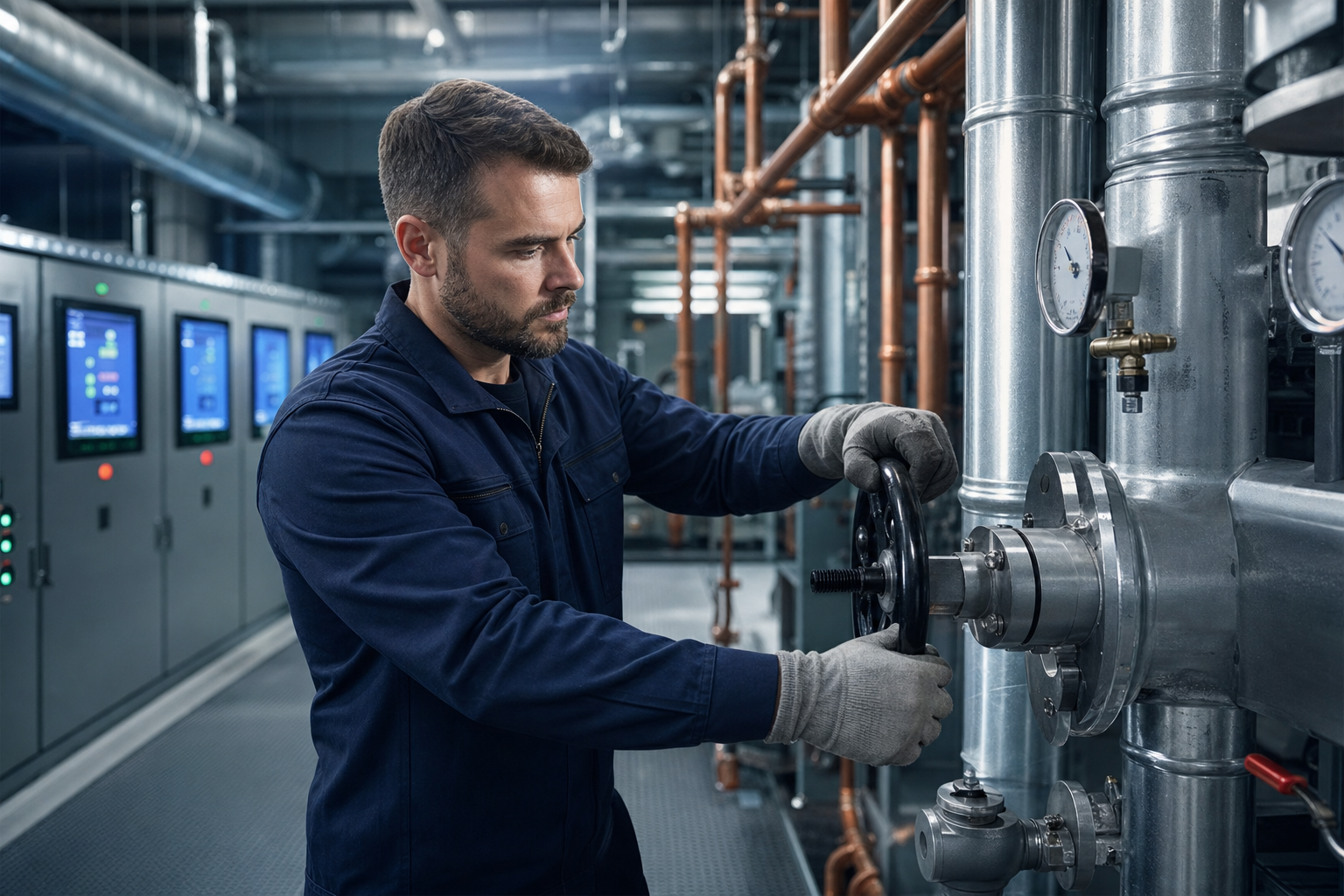
Top rated plumbers for leak repairs in Birmingham commercial.
Understanding Commercial Water Leaks: Detection and Immediate Response
Water damage accounts for approximately 25% of all commercial property insurance claims, according to the Insurance Information Institute. A single 1/8-inch leak in a commercial pipe can waste up to 250 gallons of water per day, as reported by the EPA. For facility managers in Birmingham, where aging infrastructure and expanding clay soil increase slab leak risks, a hidden leak is not just a maintenance inconvenience; it is a direct threat to business continuity and asset value.
Key Takeaways
- Water damage is the leading cause of commercial property insurance claims, making early leak detection a financial priority for facility managers.
- A small pipe leak in a Birmingham commercial building can waste hundreds of gallons daily, driving up water bills and risking structural damage.
- Birmingham's aging pipes and clay soil create unique slab leak risks that require plumbers with local experience.
- Ignoring a hidden leak threatens both daily operations and long-term property value, not just maintenance budgets.
Our team has repaired hundreds of commercial leaks across the West Midlands. We have seen the silent damage that runs behind walls, under concrete slabs, and through ceiling voids. The difference between a minor repair and a catastrophic insurance claim often comes down to how quickly you detect the issue and who you call first. In this section, I will explain what to look for, how modern detection works, and the immediate steps every facility manager should take.
Acoustic and Thermal Detection Methods
Modern commercial leak detection has moved well beyond listening sticks. Acoustic sensors can pinpoint the exact location of a pressurised leak by capturing the sound frequency of escaping water. Thermal imaging cameras identify temperature anomalies behind walls or under floors, revealing moisture without any destructive probing. For slab leaks common in Birmingham commercial properties, we use tracer gas detection: a non-toxic gas is introduced into the pipe, and a sensitive detector locates where it escapes. These methods allow us to locate the leak with centimetre accuracy, often without breaking a single tile. This precision is what separates a quick repair from a prolonged demolition. When you search for top rated plumbers for leak repairs in Birmingham commercial, you want a team equipped with these tools, not just a van and a wrench.
Immediate Action Checklist for Facility Managers
The first ten minutes after discovering a leak determine the scale of the damage. Follow this checklist to contain the situation and protect your property.
- Isolate the water supply: Shut off the relevant valve or main stopcock. Label clearly so it can be turned back on when safe.
- Shut down electrical equipment in the affected area: Water and electricity are a lethal combination. Disconnect power to any wet equipment.
- Move valuable inventory and equipment: Prioritise high-value or water-sensitive items. Shift stock, electronics, documents, or machinery to dry areas.
- Document the scene: Take photos and notes for insurance purposes. Include timestamps and visible water paths.
- Call a commercial specialist immediately: Do not use a general handyman. You need a contractor who understands commercial systems, who can respond with the right detection gear and with a 24/7 help desk.
- Notify your insurance broker: Early notification can streamline your claim. Most policies require prompt reporting.
Key insight: Proactive leak detection can reduce water damage repair costs by up to 50% (industry estimate). The cost of a detection survey is tiny compared to the potential loss. Many of our clients now schedule annual acoustic and thermal inspections as part of their planned preventative maintenance programme.
How to Vet Commercial Plumbing Specialists for Complex Repairs
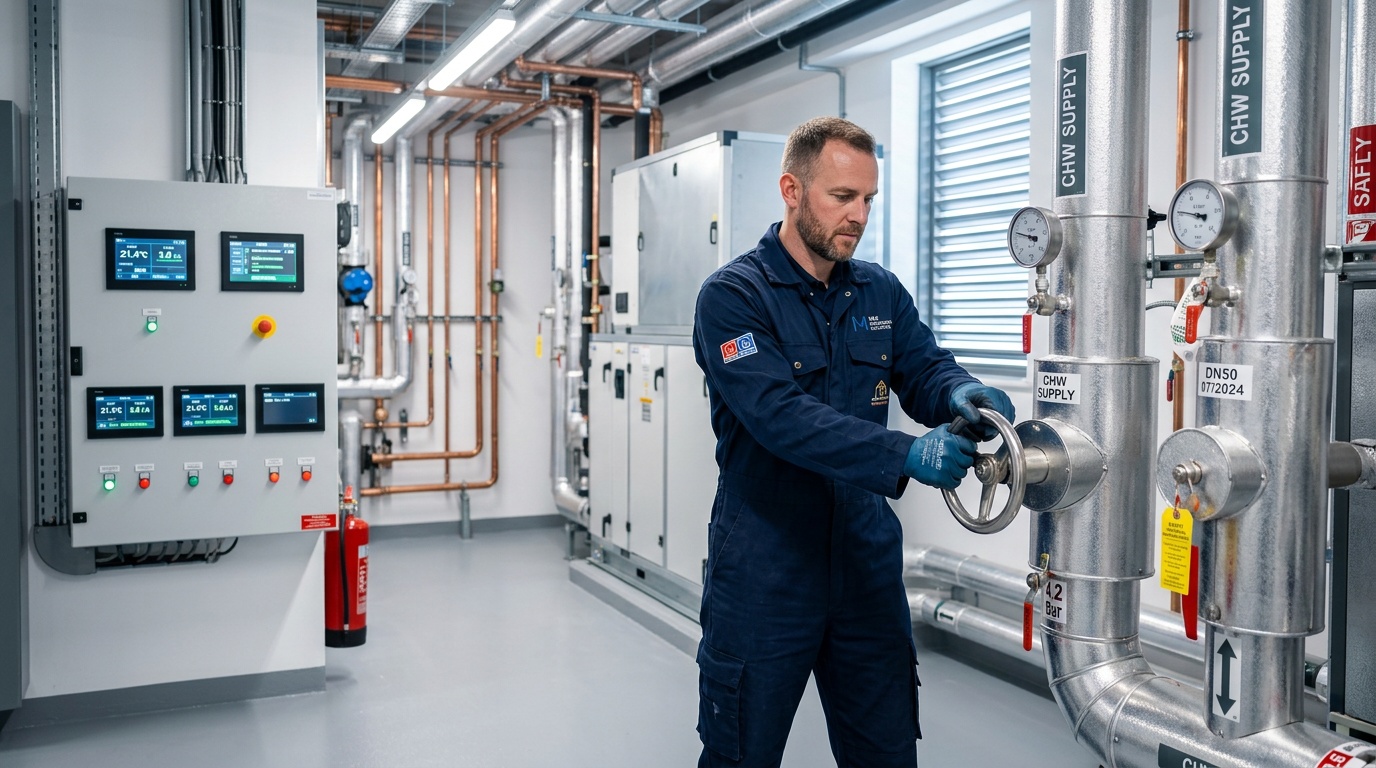
Finding a reliable commercial plumber is not the same as picking a local residential contractor. Your building has complex pipework, high-pressure systems, and compliance obligations under SFG20 and other standards. The wrong choice can lead to substandard repairs, failed inspections, and legal liability. Below, I share the vetting framework we use ourselves when selecting subcontractors and that every facility manager should apply.
Essential Certifications for Commercial Compliance
Start by verifying that the contractor holds Gas Safe Register certification if your leak involves gas lines. For water systems, look for membership in the Water Industry Approved Plumbers Scheme (WIAPS) or similar. Refcom F-Gas certification is essential if the leak affects refrigerant pipes. Safety accreditation such as SafeContractor or CHAS demonstrates that the company meets health and safety standards. Check that they carry public liability insurance covering your property value, typically £5 million or more. Our company, M&E Maintenance Solutions, holds all these accreditations, and our Building Fabric Repairs & Maintenance service integrates these certifications into every job. Do not skip this check. A contractor without proper credentials can void your insurance and leave you exposed.
Questions to Ask Before Signing a Contract
Before you agree to any repair or maintenance contract, ask these questions directly:
- Do you follow SFG20 maintenance standards? This is the industry benchmark for commercial building services.
- Can you provide a written scope of work with fixed pricing for the repair, including any contingency for unforeseen issues?
- What detection methods do you use before breaking into walls or floors?
- Do you have a 24/7 help desk that is actually staffed by engineers, not a call centre?
- Can you provide references from other commercial clients in Birmingham or the West Midlands?
A reputable company will answer these without hesitation. Vague responses or upselling of unnecessary services are red flags. We encourage our clients to visit our workshop, meet the team, and see the equipment. That transparency is part of our Building Fabric Repairs & Maintenance ethos.
Evaluating Response Times and Emergency Protocols
In a water leak emergency, response time is everything. The Institute of Business and Home Safety reports that 40% of businesses never reopen after a major flood. You need a partner who can be on site within hours, not days. Ask for guaranteed response times in writing. Check whether they have engineers living locally or only a central depot. Our team is based in Birmingham and can reach most commercial properties within 60 to 90 minutes of a call. We also maintain a stocked inventory of common pipe materials and fittings to avoid waiting for parts. When you need top rated plumbers for leak repairs in Birmingham commercial, look for a company that offers 24/7/365 support with a live help desk. That is the level of readiness your estate deserves.
| Vetting Criterion | Reliable Specialist | Risky Provider |
|---|---|---|
| Certification | Gas Safe, WIAPS, Refcom, SafeContractor | None or only basic licence |
| Detection technology | Acoustic, thermal, tracer gas | Guesswork or destructive probing |
| Response time guarantee | Within 2 hours for emergencies | Next day or variable |
| Pricing transparency | Upfront fixed estimate, clear scope | Time and materials, vague quotes |
| 24/7 support | Staffed by engineers, not call centres | Answering machine or voicemail |
Pros of Choosing a Certified Commercial Specialist
- Compliance with all regulations and insurance requirements
- Accurate diagnosis using advanced detection equipment
- Rapid response minimises downtime and damage
- Transparent pricing and written scope of work
- Long-term preventative maintenance reduces future leaks
Cons of Hiring an Underskilled General Plumber
- Lack of commercial-grade certifications risks legal liability
- Slow, destructive detection methods increase repair costs
- Unpredictable response times worsen business interruption
- Hidden charges and scope creep inflate final bills
- No proactive maintenance plan. You only see them when it breaks
Commercial Leak Repair Costs and Pricing Transparency
Money is the language of business, and water leaks speak it fluently. Every hour a leak runs untreated, your operating budget takes a hit through wasted water, energy inefficiency, and accelerated asset deterioration. Yet many facility managers discover that commercial leak repair pricing varies wildly between contractors, with no clear explanation why. Understanding what drives those costs and how pricing models differ is the difference between a controlled expense and a budget-blowing emergency.
Factors That Influence Commercial Leak Repair Pricing
Commercial leak repair is not a one-price-fits-all service. Several variables determine the final cost, and a reputable contractor will explain each one before quoting. The urgency of the work is a primary driver: an emergency call-out during business hours differs from a 2 a.m. response with overtime labour rates. Access complexity is another major factor. A leak behind an accessible ceiling tile is cheap to reach; a leak under a reinforced concrete slab or inside a riser shaft requires cutting, coring, and subsequent restoration. Material costs also vary. Copper piping, press-fit stainless steel, and specialist fittings for high-pressure systems carry different price points. Finally, detection method matters. A visual inspection costs little, but acoustic or thermal imaging surveys add value by preventing unnecessary demolition.
Other considerations include the size of the leak, the type of pipe (domestic water, HVAC, fire suppression), and whether the repair requires specialist certifications such as Gas Safe or Refcom F-Gas. Our team always provides a detailed breakdown of these factors so clients understand exactly what they are paying for. When evaluating top rated plumbers for leak repairs in Birmingham commercial properties, pricing transparency is one of the first indicators of a trustworthy partner.
Upfront Estimates Versus Emergency Call-Outs
The difference between a planned repair and an emergency call-out is not just convenience. It is a fundamental difference in cost structure and risk. An upfront estimate allows you to budget, compare quotes, and schedule work at a time that minimises business disruption. The contractor can assess the job methodically, order necessary parts, and assign the right team. The price is fixed, and there are no surprises.
By contrast, an emergency call-out typically carries a premium rate, often double the standard hourly charge, plus a call-out fee. The contractor arrives without full knowledge of the issue, may need to source parts at short notice (with associated markups), and works under time pressure that can lead to cutting corners or unnecessary demolition. The most reliable top rated plumbers for leak repairs in Birmingham commercial settings will provide a fixed-price quotation before any work begins, based on a thorough site assessment. They will also explain the conditions under which additional costs might arise, such as discovering hidden damage behind walls. This transparency is a hallmark of a professional commercial partner.
- Fixed-price estimate: Includes detection, repair, testing, and basic restoration. No hidden extras.
- Time and materials emergency: Hourly labour, parts at cost plus margin, call-out fee. Unpredictable total.
- Emergency premium: Typically 50% to 100% above standard rates for out-of-hours attendance.
- Part sourcing markup: Specialist fittings sourced at short notice often carry a procurement fee.
- Restoration costs: Cutting into walls or floors requires plastering, tiling, or flooring repair, often quoted separately.
The True Cost of Downtime and Property Damage
The visible cost of a leak repair is only part of the financial picture. The hidden costs can dwarf the plumbing bill. Business interruption is the most significant. If a leak forces you to close a retail floor, halt production, or evacuate an office building, the lost revenue per hour can be substantial. Add to that the cost of relocating staff, replacing damaged stock or equipment, and potential penalties for failing to meet client contracts. The Insurance Information Institute reports that water damage accounts for approximately 25% of all commercial property insurance claims. Worse, the Institute of Business and Home Safety notes that 40% of businesses never reopen after a major flood. A slow response to a small leak can escalate into a total loss event.
Property damage compounds the problem. Water wicks into porous building materials, causing structural weakening, mould colonisation within 24 to 48 hours, and degradation of electrical systems. Birmingham's humidity accelerates this process. The cost of drying, remediation, and restoration often exceeds the original repair cost several times over. Our Building Fabric Repairs & Maintenance service addresses exactly this scenario, providing integrated repair and restoration to return your property to full operational condition as quickly as possible. The most cost-effective strategy is to prevent the leak in the first place, which is why we advocate for proactive maintenance over reactive fixes.
Key insight: A proactive leak detection programme can reduce water damage repair costs by up to 50%, according to industry estimates. The cost of an annual acoustic and thermal survey is a fraction of even a single emergency repair. Pairing this with a transparent pricing model from a trusted partner eliminates financial surprises and protects your bottom line. Our Building Fabric Repairs & Maintenance offering combines detection, repair, and restoration under a single, clear cost structure designed for commercial estate managers who value predictability.
Protecting Your Estate with Planned Preventative Maintenance
Every commercial leak I have repaired over my 24 years in this industry shares one common trait. The facility manager always wishes they had acted sooner. The shift from reactive firefighting to planned preventative maintenance (PPM) is not a luxury reserved for buildings with generous budgets. It is a financial and operational necessity for any estate manager who values business continuity. When you engage a partner for top rated plumbers for leak repairs in Birmingham commercial properties, you are already thinking about asset protection. The next step is to stop leaks before they start by embedding a structured PPM programme into the way you manage your estate.
Why Proactive Maintenance Beats Reactive Repairs
The numbers are unambiguous. According to industry estimates, proactive leak detection can reduce water damage repair costs by up to 50%. Yet many estates still operate on a fix-it-when-it-breaks model, treating maintenance as a cost to be minimised rather than an investment in asset performance. I see it regularly a facility manager saves budget by skipping a quarterly service visit. On paper it looks like a saving for three months. Then a pump seizes or a joint fails, and suddenly they are paying for an emergency call-out, parts at a premium, and overtime labour, not to mention the cost of shutting down a floor of operations. The reactive path is almost always more expensive when you account for the full picture including lost revenue, damaged stock, and accelerated asset depreciation.
A proactive PPM schedule flips this equation entirely. Instead of paying a premium for crisis response, you pay a predictable, budgeted amount for regular inspections, filter changes, system testing, and minor adjustments that keep everything running efficiently. Components wear gradually. A bearing that is greased quarterly lasts years longer than one left until it seizes. A filter changed on schedule keeps energy costs lower because the system does not have to work as hard to move air or water. A pipe inspected annually for corrosion can be replaced during a planned shutdown rather than bursting at 2 a.m. on a Saturday when no one is on site to contain the flow. Our Building Fabric Repairs & Maintenance programme is built around this philosophy, giving estate managers visibility and control over their building systems rather than reacting to failures after the damage is done. The barrier for most facility managers is not understanding the value of prevention; it is finding a partner they trust to deliver the programme consistently across multiple trades and properties.
Building Compliance and Asset Longevity
Planned preventative maintenance is not optional under UK law. Regulations governing commercial buildings require regular inspection and testing of water systems, gas appliances, fire suppression systems, and electrical installations. SFG20 is the recognised standard for maintenance specifications, and adherence to it demonstrates due diligence in the event of an incident or insurance claim. Failure to comply can result in fines, invalidated policies, and in the worst case prosecution. Our team integrates SFG20 compliance into every PPM schedule we design, ensuring that your documentation is audit-ready at all times. Certifications including Gas Safe Register, Refcom F-Gas, SafeContractor, and NQA ISO 9001 are not badges on a wall. They are evidence of a systematic approach to safety and quality that protects both your people and your property.
Beyond compliance, PPM directly extends the working life of your building assets. A commercial boiler maintained to manufacturer specifications operates at peak efficiency and can last 20 years or more. The same boiler neglected for five years may fail catastrophically, requiring premature replacement at a cost of tens of thousands of pounds. The same principle applies to pipework, valves, pumps, and the building fabric itself. Regular inspection catches small issues before they become large ones. A minor weep from a joint spotted during a quarterly inspection can be fixed for the cost of a gasket. Left unnoticed for six months, that same weep can saturate insulation, corrode surrounding metalwork, and cause a ceiling collapse that requires weeks of restoration. Our Building Fabric Repairs & Maintenance service combines plumbing, drainage, and structural repairs under a single compliance framework, simplifying your vendor management and reducing the risk of gaps in your maintenance coverage. When you protect the fabric of your building, you protect the value of your estate.
Securing 24/7/365 Support for Your Facility
Even the best PPM programme cannot eliminate every risk. A sudden pipe burst caused by an external contractor, extreme weather, or an unforeseen material defect can still occur. When it does, you need a partner who answers the phone at any hour and dispatches a technician with the right skills and equipment, not someone who has to drive an hour to collect parts first. Our help desk is staffed continuously by engineers who understand commercial systems, not a call centre relaying messages to a duty manager. We guarantee a response within 60 to 90 minutes across Birmingham and the West Midlands, and we carry a stocked inventory of common pipe materials, fittings, and detection equipment so that we arrive prepared. That speed is the difference between a contained incident involving a mop and a wet vacuum and a flooded building that requires weeks of drying, remediation, and restoration. Every technician wears a uniform with a visible identification card, so your security team knows exactly who is on site and why.
This level of readiness is built into our service model because we have seen what happens when it is absent. For estate managers looking for top rated plumbers for leak repairs in Birmingham commercial settings, the quality of emergency support is as important as the quality of the repair itself. We offer consolidated reporting across multiple properties, single-invoice billing, and a dedicated account manager who knows your portfolio and your compliance deadlines. That continuity means we spot patterns across your estate a recurring issue in one building that suggests a wider problem rather than treating each call as an isolated event. When you partner with a team that combines proactive maintenance with genuine 24/7/365 emergency cover, you are not just buying a service. You are buying peace of mind that your building is protected around the clock, every day of the year.
Key insight: The most cost-effective leak repair is the one that never happens. A comprehensive PPM programme backed by 24/7 emergency support gives you both protection and preparedness. Our integrated approach means you have one partner for detection, repair, restoration, and ongoing compliance. That reduces your administrative burden, controls costs, and gives you confidence that your estate is protected around the clock. Whether you manage a single commercial property or a portfolio across the West Midlands, investing in planned preventative maintenance is the single most effective step you can take to protect your assets and your bottom line.
References
Frequently Asked Questions
How much does a plumber charge for fixing a leak in a Birmingham commercial property?
The cost for fixing a commercial leak in Birmingham varies widely depending on the leak's location and complexity. For a straightforward pipe repair, you might pay between £200 and £500, but slab leaks or hidden leaks requiring advanced detection can cost significantly more. Always get a fixed-price written scope of work before any repair begins.
How much does a plumber charge for leak detection in a commercial building?
Leak detection costs for commercial buildings in Birmingham typically range from £150 to £400 for a standard survey using acoustic or thermal methods. More complex tracer gas detection for slab leaks may cost more, but this investment is tiny compared to the potential damage from an undetected leak. Many facility managers find that annual detection surveys reduce repair costs by up to 50%.
How to tell if a plumber is good for commercial leak repairs?
A good commercial plumber holds essential certifications like Gas Safe Register, WIAPS, and SafeContractor or CHAS accreditation. They should use modern detection methods such as acoustic sensors and thermal imaging rather than just breaking into walls. Ask for references from other Birmingham commercial clients and confirm they follow SFG20 maintenance standards.
What are the common problems in commercial plumbing systems?
Common commercial plumbing problems include slab leaks caused by Birmingham's expanding clay soil, hidden leaks behind walls or under floors, and pipe corrosion in aging infrastructure. Unexplained water bill increases, damp patches, mould growth, and low water pressure are typical signs. These issues require specialist detection equipment to locate without unnecessary demolition.
How long does a plumber usually take to fix a leak in a commercial property?
The time to fix a commercial leak depends on the leak's accessibility and detection method. With modern acoustic or thermal detection, a specialist can locate the leak within hours, and a simple pipe repair may take a few hours. Complex slab leaks or repairs requiring structural access can take one to two days. A top rated plumber for leak repairs in Birmingham commercial will give you a clear timeline in the written scope.
What immediate steps should a facility manager take after discovering a commercial water leak?
First, isolate the water supply by shutting off the relevant valve and label it clearly. Then shut down electrical equipment in the affected area, move valuable inventory to dry areas, and document the scene with photos for insurance. Finally, call a commercial plumbing specialist immediately and notify your insurance broker to streamline the claim.
How can I find top rated plumbers for leak repairs in Birmingham commercial properties?
Look for plumbers with commercial-specific certifications like Gas Safe Register, WIAPS, and Refcom F-Gas, plus safety accreditations such as SafeContractor. They should use advanced detection methods like acoustic sensors, thermal imaging, or tracer gas to avoid unnecessary demolition. Check that they have a 24/7 help desk staffed by engineers and can provide references from other Birmingham commercial clients.