How much does estate plumbing maintenance cost annually?
As the Founder and Managing Director of M&E Maintenance Solutions, I've spent over two decades on the tools and now leading a team dedicated to keeping commercial properties running smoothly. My journey started as an apprentice combustion engineer, and I've seen firsthand how neglecting the seemingly minor details of a building's infrastructure can lead to catastrophic failures. In the commercial world, a dripping tap isn't just an annoyance; it's a symptom of a larger issue that can silently bleed your business dry through inefficiency, costly repairs, and potential downtime.
Key Takeaways
- Small plumbing faults often signal deeper system problems that quietly drain your budget through wasted water, energy loss, and escalating repair bills.
- Annual maintenance budgets should factor in both scheduled preventive work and a contingency fund for unexpected failures that could halt operations.
- Preventive plumbing care costs a fraction of what a major system breakdown will set you back in emergency callouts and business downtime.
- Commercial property owners who treat plumbing upkeep as a core operational investment avoid the surprise costs that catch unprepared businesses off guard.
- Specialist maintenance partners can help you forecast yearly expenditure and identify developing faults long before they become expensive emergencies.
Many facility managers and business owners operate under the "if it ain't broke, don't fix it" mentality. It’s understandable when budgets are tight and immediate demands pull focus. However, this reactive approach is a false economy, especially within complex commercial estates. The true cost of estate plumbing maintenance isn't found in a routine service invoice, but in the hidden expenses that surface when a system fails unexpectedly. We're talking about lost revenue, tenant dissatisfaction, and significant emergency repair bills that dwarf the cost of proactive care.
The Real Cost of Estate Plumbing: Beyond the Dripping Tap
The 'Commercial Reality' Hook: Downtime and Hidden Expenses
The most tangible impact of plumbing failure in a commercial estate is downtime. For a retail unit, this means closed doors and lost sales. For an office building, it means disrupted workdays, potential data loss, and a damaged reputation. Emergency plumbing call-outs are not just expensive in terms of labour and parts. Often costing 1.5 to 3 times more than standard service rates. But they also carry indirect costs. These include potential damage to stock or equipment, tenant compensation for lost business, and the significant administrative burden of managing an unexpected crisis. Water leaks alone can account for nearly 25% of total water consumption in an average commercial building, according to Waterwise, representing a direct financial drain before any major failure occurs.
Why 'If It Ain't Broke, Don't Fix It' is a Costly Fallacy for Estates
The principle of "if it ain't broke, don't fix it" is a dangerous mindset for managing commercial properties. Unlike a residential home, an estate comprises multiple systems, often interconnected, serving numerous occupants. A minor issue in one area can escalate rapidly, affecting others. For example, a small leak in a high-rise building could compromise multiple floors, leading to extensive water damage and mould growth, far beyond the initial problem. Preventive maintenance, such as routine inspections and servicing, is designed to identify and rectify these small issues before they become major, costly emergencies. Research suggests that preventive maintenance can reduce overall repair costs by up to 80%, a substantial saving compared to a reactive strategy.
Quick Answer: The question of how much does estate plumbing maintenance cost annually? is best answered by understanding that proactive care is significantly cheaper than reactive repairs. While residential maintenance might cost £80-£240 annually, commercial estates involve larger, more complex systems where planned maintenance prevents costs that can run into thousands, or even tens of thousands, through avoided downtime and emergency call-outs.
Introducing Estate Plumbing Maintenance: What It Entails for UK Facilities
Estate plumbing maintenance in the UK refers to the comprehensive, planned servicing and upkeep of all water supply, drainage, and sanitary systems within a commercial property or group of properties. This goes far beyond simply fixing a leak. It involves regular inspections of pipework, water heaters, pumps, backflow prevention devices, and drainage systems. It also encompasses critical compliance checks, such as ensuring water quality and preventing the spread of Legionella bacteria, a legal requirement under the Health and Safety Executive's Approved Code of Practice L8. For UK facilities, this structured approach is essential not only for operational efficiency and cost control but also for meeting stringent legal obligations.
Annual Estate Plumbing Maintenance Costs: A UK-Specific Breakdown
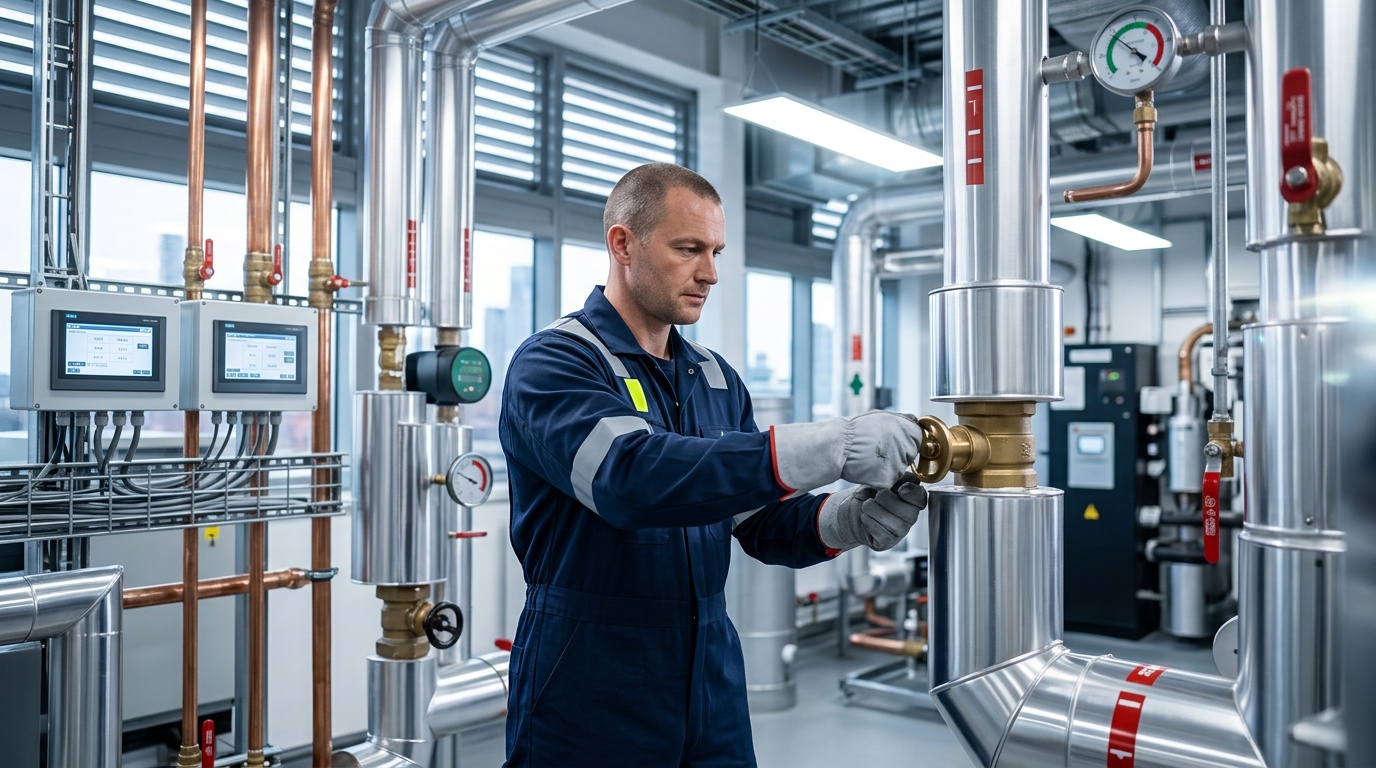
Determining the precise annual cost of estate plumbing maintenance requires a detailed look at various influencing factors. While residential plumbing maintenance might typically fall between £80 and £240 per year, commercial estates operate on a different scale entirely. These costs are heavily dependent on the type, age, and complexity of the building's infrastructure. Understanding these variables is key to accurate budgeting and preventing unexpected financial burdens. The primary keyword, how much does estate plumbing maintenance cost annually?, is best addressed by breaking down the different cost drivers and typical ranges applicable to the UK market.
Typical Annual Cost Ranges for UK Commercial Estates (GBP)
For commercial estates in the UK, annual plumbing maintenance costs can vary significantly. A common benchmark for commercial property maintenance, including plumbing, is often cited as £1 to £3 per square foot. For a moderately sized office building of 10,000 sq ft, this could translate to an annual spend of £10,000 to £30,000. Smaller retail units or industrial spaces might fall at the lower end, while complex facilities like hospitals or large mixed-use developments could exceed this significantly. These figures represent planned preventative maintenance (PPM) and do not include major upgrades or emergency repairs, which would be additional.
How Estate Type Influences Annual Plumbing Maintenance Spend (Office, Retail, Industrial, Mixed-Use)
The type of commercial estate dictates the demands placed on its plumbing systems. Office buildings, while requiring reliable daily water supply and drainage, generally have less complex systems than industrial facilities. Industrial estates might feature heavy-duty pipework, high-pressure systems, or specialised water treatment needs, driving up maintenance costs. Retail properties, particularly those with food service outlets, will have more demanding requirements regarding grease traps and drainage maintenance. Mixed-use developments combine these elements, necessitating a multi-faceted maintenance plan that addresses a wider array of potential issues, thereby increasing the overall annual budget compared to a single-purpose building.
Cost per Square Foot/Unit: Benchmarking Your Maintenance Budget
Benchmarking your plumbing maintenance budget against industry standards is a sound practice. As mentioned, a common guideline for commercial properties is £1 to £3 per square foot annually for comprehensive maintenance, which includes plumbing. For instance, a 5,000 sq ft retail space might budget £5,000 to £15,000 per year. For larger estates, tracking costs per unit or per specific building within the estate can provide more granular insights. This metric helps facility managers to identify outliers, justify expenditure, and ensure their maintenance budget is aligned with operational needs and industry best practices, making the question of how much does estate plumbing maintenance cost annually? more quantifiable.
Key Factors Driving Up (or Down) Your Annual Plumbing Bill: Age, Fixtures, Water Quality, and System Complexity
Several factors directly impact the annual cost of estate plumbing maintenance. The age of the building is paramount; plumbing installed before the 1980s, often using copper or galvanised iron pipes, is more prone to corrosion and leaks, potentially increasing annual repair costs by 20-50%. The type and quality of fixtures (taps, toilets, boilers) also play a role; older or lower-quality fittings are more likely to fail. Water quality is another significant factor, particularly in hard water areas where limescale buildup can severely damage pipes and heating elements, necessitating more frequent descaling and component replacement. Finally, the overall complexity of the system. The number of pumps, the length of pipe runs, the integration of smart water management systems. Will influence the time and expertise required for effective maintenance.
The 'Hidden' Cost of Neglect: Emergency Call-Outs vs. Planned Maintenance
The most significant hidden cost of neglecting estate plumbing is the reliance on emergency call-outs. When planned maintenance is skipped, minor issues fester, leading to system failures that require immediate, often costly, attention. An emergency call-out can cost 1.5 to three times more than a scheduled service visit, not just for the immediate repair but also for the premium charged for out-of-hours or urgent work. Beyond the direct financial hit, the disruption caused by emergency repairs is immense. This includes lost productivity, potential damage to the building fabric, and tenant dissatisfaction, all of which represent substantial, though often unquantified, financial losses. Investing in a proactive, planned maintenance schedule is demonstrably more cost-effective and ensures business continuity, directly answering how much does estate plumbing maintenance cost annually? by highlighting that the cost of inaction is far greater.
| Estate Type | Typical Size (sq ft) | Estimated Annual Maintenance Cost (£/sq ft) | Estimated Annual Total Cost (£) | Key Considerations |
|---|---|---|---|---|
| Small Office | 5,000 | £1.00 - £2.00 | £5,000 - £10,000 | Basic water systems, drainage, WCs. |
| Medium Office / Retail | 15,000 | £1.25 - £2.50 | £18,750 - £37,500 | More complex heating, ventilation integration, multiple WCs. |
| Industrial Unit | 25,000 | £1.00 - £2.25 | £25,000 - £56,250 | Heavy-duty pipes, potential process water, robust drainage. |
| Mixed-Use Development | 50,000 | £1.50 - £3.00 | £75,000 - £150,000 | Combines office, retail, and potentially residential needs; complex interdependencies. |
| Note: These figures are illustrative benchmarks for planned preventative maintenance (PPM) in the UK and do not include major capital works, emergency call-outs, or specific compliance testing beyond routine checks. Actual costs can vary based on building age, specific system complexity, and water quality. | ||||
Essential Services Included in a Proactive Estate Plumbing Plan
A truly comprehensive estate plumbing maintenance plan goes far beyond reacting to leaks or blockages. It’s about establishing a systematic, proactive approach designed to preserve the integrity of your building’s water systems, ensure regulatory compliance, and prevent costly disruptions. As the Founder and Managing Director of M&E Maintenance Solutions, I've seen how a well-structured plan acts as the first line of defence against system failures and unexpected expenses. It’s an investment in operational continuity and asset longevity. For facility managers tasked with managing complex commercial properties across the UK, understanding these essential services is key to developing a maintenance strategy that delivers true value and peace of mind.
The Core Components: Inspections, Limescale Prevention, and Boiler Health
At the heart of any effective estate plumbing maintenance plan are regular, detailed inspections. These aren't just visual checks; they involve probing key components for wear, corrosion, or early signs of failure. This includes assessing pipework for leaks or damage, checking water pressure, and examining the condition of valves and fittings. Limescale buildup is a significant concern in many UK regions, particularly those with hard water. It can restrict flow, reduce efficiency, and cause premature component failure in boilers and water heaters. A proactive plan includes regular descaling or the implementation of preventative measures, such as water softeners or chemical treatments, to mitigate these effects. Maintaining boiler health is paramount, especially during colder months. This involves routine servicing, combustion analysis, and system flushing to ensure optimal performance and safety, preventing the kind of failures that lead to expensive emergency repairs.
Boiler health is a prime example of how proactive maintenance saves money. Neglecting a boiler can lead to inefficient heating, increased energy bills, and, in the worst case, a complete breakdown. This not only affects comfort but can impact business operations. Our approach at MEMS Facilities Maintenance prioritises these core inspections and preventative actions. We ensure that the fundamental elements of your estate’s plumbing are consistently monitored and maintained, addressing minor issues before they escalate into major, budget-busting problems. This diligent attention to detail is what distinguishes a well-managed estate from one constantly battling plumbing emergencies.
Water Quality and Safety: Backflow Testing, Water Sampling, and Legionella Control (L8 Compliance)
Ensuring the safety and quality of water supplied throughout a commercial estate is a legal and ethical imperative. Contaminated water or the presence of harmful bacteria like Legionella can have severe health consequences for occupants and lead to substantial legal penalties. A critical component of estate plumbing maintenance is adherence to the Health and Safety Executive's Approved Code of Practice L8 for Legionella control. This involves regular risk assessments, implementing control measures such as temperature monitoring and preventing water stagnation, and conducting regular water sampling to test for bacterial presence. Backflow testing is another vital safety measure, ensuring that potentially contaminated water cannot flow back into the clean water supply system, which is particularly important in premises with complex interconnected water systems.
Failing to manage water quality and safety can result in significant repercussions. Non-compliance with Legionella control regulations (L8) in the UK can lead to fines of up to £20,000 or more, alongside severe reputational damage. Regular water sampling and analysis, alongside diligent backflow prevention, are not just good practice; they are essential for maintaining a safe working environment and meeting legal obligations. M&E Maintenance Solutions places a strong emphasis on these compliance-driven services, ensuring that our clients are protected from both health risks and legal liabilities. This aspect of maintenance is non-negotiable for any responsible commercial property owner or manager.
Drainage Systems: Preventative Cleaning and Blockage Management
The drainage system within a commercial estate, encompassing everything from internal waste pipes to external sewer connections, is often overlooked until a problem arises. However, blockages and slow drains can lead to unpleasant odours, unsanitary conditions, and, in severe cases, flooding and water damage. Preventative cleaning is essential to keep these systems functioning smoothly. This typically involves periodic flushing of pipework, especially in areas prone to grease buildup (such as catering facilities) or where debris can accumulate. High-pressure water jetting can effectively remove internal pipe blockages before they become critical. Regular inspections of manholes and inspection chambers also help to identify potential issues early on.
Effective blockage management is about preventing the problem from occurring in the first place. Ignoring drainage maintenance is a false economy; a minor blockage that is allowed to worsen can cause significant damage to pipework and surrounding structures, leading to costly repairs and potential business interruption. Water leaks, often stemming from drainage issues, can account for nearly 25% of total water consumption in an average commercial building, as noted by Waterwise. By incorporating regular drain cleaning and inspection into your estate's maintenance schedule, you not only prevent unsightly and unhygienic blockages but also contribute to water efficiency and protect your building’s infrastructure from long-term damage. This proactive approach is fundamental to managing the overall cost of estate plumbing maintenance.
Appliance Checks: Water Heater Servicing, Pump Maintenance, and Fixture Integrity
Commercial estates rely on a variety of critical water-using appliances and systems that require regular attention. Water heaters, whether instantaneous or storage tanks, need periodic servicing to ensure they operate efficiently and safely, preventing limescale buildup and potential component failure. Pumps, used for boosting water pressure, drainage, or circulation, are also vital components. Their maintenance involves checking seals, bearings, and electrical connections to prevent premature wear and unexpected breakdowns. The integrity of fixtures, such as taps, toilets, and emergency showers, also falls under this umbrella. Worn seals, dripping taps, or faulty flush mechanisms not only waste water but can also indicate underlying pressure or pipe issues. Ensuring these appliances and fixtures are in good working order is essential for both occupant comfort and operational efficiency.
A routine maintenance schedule that includes detailed checks of these specific appliances helps to identify potential weaknesses before they lead to failure. For example, a faulty pump can lead to insufficient water pressure in parts of the building, impacting usability, or, if it’s a sump pump, can lead to basement flooding. Similarly, a malfunctioning water heater can disrupt services. By addressing these issues during planned visits, facility managers can avoid the significantly higher costs associated with emergency replacements or repairs. This systematic approach to appliance maintenance is a cornerstone of a cost-effective estate plumbing strategy, helping to answer the question of how much does estate plumbing maintenance cost annually? by demonstrating the value of preventing expensive failures.
Beyond the Basics: Integrating Smart Technologies for Predictive Maintenance
While traditional inspections and preventative measures form the bedrock of estate plumbing maintenance, the integration of smart technologies offers a significant leap forward towards predictive maintenance. Modern estates can benefit from sensors that monitor water flow, pressure, temperature, and even detect early-stage leaks. These sensors can provide real-time data, allowing for immediate alerts to anomalies. For example, a sudden, unexplained increase in water flow or a drop in pressure can be flagged instantly, enabling a rapid response before a minor leak becomes a major flood. This shift from scheduled checks to condition-based monitoring means maintenance is performed only when and where it is needed, optimising resource allocation.
M&E Maintenance Solutions is committed to exploring and implementing innovative technologies that benefit our clients. Our 'open door' policy towards evaluating new HVAC and building management technologies means we are constantly assessing how advancements can improve service delivery. For plumbing, this includes smart leak detection systems, remote monitoring of pump performance, and intelligent water usage analytics. While these technologies require an initial investment, they can dramatically reduce long-term operational costs by preventing catastrophic failures, minimising water wastage (which can account for significant expenditure), and optimising the timing of maintenance interventions. This forward-thinking approach ensures that your estate's plumbing systems are not just maintained, but intelligently managed for maximum efficiency and minimal risk.
Key Services in a Proactive Estate Plumbing Plan
- Regular visual and physical inspections of pipework, valves, and fittings.
- Limescale assessment and preventative treatment (e.g., descaling, water softeners).
- Boiler servicing, combustion analysis, and system flushing.
- Legionella risk assessment and control measures (L8 compliance).
- Water sampling and testing for bacterial contamination.
- Backflow prevention device testing and certification.
- Preventative drain cleaning (e.g., high-pressure jetting) and inspection.
- Water heater servicing and descaling.
- Pump maintenance (seals, bearings, electrical checks).
- Fixture integrity checks (taps, toilets, valves).
- Smart sensor installation for leak detection and performance monitoring.
- Real-time data analysis for predictive maintenance alerts.
- Compliance documentation and record-keeping.
Maximising Your Plumbing Maintenance ROI: Budgeting and Compliance for Estate Managers
As facility and estate managers, your primary responsibility is to ensure the smooth, safe, and cost-effective operation of commercial properties. This often means juggling competing priorities, from tenant satisfaction to energy efficiency and, critically, legal compliance. When it comes to estate plumbing, the question of how much does estate plumbing maintenance cost annually? is intrinsically linked to maximising your return on investment (ROI) and avoiding costly legal pitfalls. Proactive budgeting and a firm grasp of UK compliance regulations are not just good management practices; they are essential for protecting your assets, your organisation's reputation, and your budget. This section focuses on empowering you with the strategies and knowledge to achieve both.
Budgeting Strategies: From Sinking Funds to Zero-Based Approaches
Effective budgeting for estate plumbing maintenance requires foresight and a clear understanding of your property's needs. A common approach is the use of a sinking fund, where a set amount is allocated annually to cover planned maintenance and potential future capital expenditures on plumbing systems. This fund is built up over time, ensuring that funds are available when needed without causing budget shocks. For a more granular approach, zero-based budgeting can be applied. This involves justifying every pound allocated to plumbing maintenance from scratch each financial year, based on an up-to-date assessment of system conditions, compliance requirements, and risk evaluations. For example, if an aging pipe network has been identified, a higher allocation might be justified for preventative works or replacements, directly impacting the annual cost. Benchmarks, such as the £1-£3 per square foot guideline for commercial maintenance, provide a starting point, but a truly effective budget is tailored to the specific estate's age, complexity, and usage patterns.
Justifying the Spend: Presenting Maintenance as an Investment, Not an Expense
One of the biggest challenges for estate managers is convincing finance departments to allocate sufficient funds for planned preventative maintenance (PPM). It’s easy to view plumbing maintenance as a cost centre, but framing it as a strategic investment is key to securing the necessary budget. The ROI of proactive maintenance is substantial. For example, research suggests that preventive maintenance can reduce overall repair costs by up to 80%, as highlighted by Linked By Six. This means that every pound spent on routine checks, descaling, and minor repairs can prevent much larger expenditures on emergency call-outs and extensive damage. Furthermore, maintaining optimal system efficiency through regular servicing directly translates to lower energy bills. Water leaks alone can account for nearly 25% of total water consumption in an average commercial building, according to Waterwise; fixing these promptly through planned maintenance prevents this direct financial drain. By presenting data on avoided costs, improved energy efficiency, and extended asset life, you can demonstrate that investing in plumbing maintenance safeguards revenue and protects the building's value.
Understanding UK Compliance: Building Regulations Part G, Water Fittings Regs, and Beyond
Navigating the complex web of UK compliance is non-negotiable for estate managers. Building Regulations Part G (Sanitation, hot water safety and water efficiency) and the Water Fittings Regulations 1999 (or Water Byelaws in Scotland) are fundamental to plumbing installations and maintenance. These regulations stipulate requirements for the safe supply of water, prevention of contamination, and efficiency. Beyond these, the Health and Safety Executive’s Approved Code of Practice L8 (ACOP L8) mandates rigorous control of Legionella bacteria in water systems, requiring regular risk assessments and monitoring. Non-compliance with Legionella control can lead to severe consequences, including fines of up to £20,000 or more, alongside potential prosecution and significant reputational damage. Furthermore, maintaining systems to standards like BS 6700 (Design, installation, testing and maintenance of services supplying water for domestic use within buildings and their curtilages) ensures that plumbing systems operate safely and efficiently. Understanding these requirements is essential; a proactive maintenance plan should be designed to meet and exceed these standards, ensuring legal protection and a safe environment for building occupants.
The 'MEMS Standard': How Our Vetted Solutions Protect Your Assets and Ensure Uptime
At M&E Maintenance Solutions, we operate on what we call the 'MEMS Standard'. This isn't just about fixing plumbing; it's about providing a holistic, compliant, and cost-effective maintenance partnership. We combine 24+ years of hands-on engineering experience with a commercial asset management perspective. Our team of engineers, many of whom started as apprentices mastering trades like combustion engineering, understand the intricate workings of commercial building systems from the ground up. We don't cut corners. Our planned preventative maintenance schedules are meticulously designed to adhere to SFG20 standards and UK regulatory requirements, ensuring every inspection, service, and repair is carried out to the highest quality. This means your assets are protected, downtime is minimised, and you have the peace of mind that comes from working with a company that prioritises reliability and compliance. Our commitment to using vetted, quality parts and employing skilled technicians ensures that every job is done 'the right way' the first time, safeguarding your investment and operational continuity.
Questions to Ask Your Current Plumbing Maintenance Provider
To ensure you are getting true value and comprehensive coverage for your estate plumbing maintenance, it's wise to regularly audit your current provider. Here are key questions to gauge their effectiveness and compliance:
- What percentage of your service calls are planned preventative maintenance (PPM) versus emergency reactive repairs? A high reactive rate suggests a failure in their PPM strategy.
- Can you provide digital, auditable records of all completed works, including compliance certificates (e.g., Gas Safe, Legionella risk assessments), within 24 hours of completion?
- Do you adhere to SFG20 maintenance standards? If not, what standard do you follow, and how is it verified?
- How do you approach Legionella risk management and water quality testing in line with ACOP L8? What are your procedures for backflow prevention?
- Can you provide a breakdown of typical annual costs for properties similar to mine, and how do you help us benchmark our spend?
- What is your policy on using and testing new technologies for leak detection or system monitoring to improve efficiency and prevent failures?
- What is your emergency response time guarantee for critical system failures?
Asking these questions will help you assess whether your current provider is merely reactive or if they are a proactive partner invested in your estate's long-term health. This diligence is part of answering the core question: how much does estate plumbing maintenance cost annually? by ensuring you are paying for effective, value-driven service.
References
Frequently Asked Questions
How much does estate plumbing maintenance cost annually in the UK?
Annual estate plumbing maintenance costs in the UK typically range from £1 to £3 per square foot, so a 10,000 sqft office might spend £10,000 to £30,000 per year on planned preventative maintenance. This covers inspections, servicing, and compliance checks but excludes emergency repairs.
What does estate plumbing maintenance include?
Estate plumbing maintenance includes regular inspections of pipework, water heaters, pumps, backflow prevention devices, and drainage systems. It also covers critical compliance checks for water quality and Legionella control under HSE Approved Code of Practice L8.
How much does a typical plumbing service call cost for a commercial estate?
A typical emergency plumbing service call for a commercial estate often costs 1.5 to 3 times more than standard service rates due to urgent labour and parts. Planned maintenance visits are more cost-effective and help avoid these expensive call-outs entirely.
Why is proactive estate plumbing maintenance cheaper than waiting for repairs?
Proactive maintenance reduces overall repair costs by up to 80% compared to reactive repairs because small issues are caught early. The indirect costs of downtime, tenant dissatisfaction, and emergency call-out fees make waiting far more expensive.
What factors affect the annual cost of estate plumbing maintenance?
The cost depends on the estate type (office, retail, industrial, mixed-use), building age, system complexity, and square footage. A hospital or large mixed-use development will cost more than a small retail unit due to higher demands and more equipment.
What is the most expensive plumbing fix on a commercial estate?
The most expensive plumbing fixes on a commercial estate typically involve major water damage from undetected leaks, which can cost thousands in repairs, lost revenue, and tenant compensation. Emergency replacements of large water heaters or main drain lines also carry high costs.