A commercial refrigeration unit isn't just a piece of kitchen equipment; it's the heart of your operation's ability to preserve stock, maintain food safety standards, and ultimately, keep your business trading profitably. When it fails, the consequences can be immediate and severe. From spoiled inventory costing thousands to regulatory breaches that damage your reputation. As Stuart Butcher, founder of MEMS Facilities Maintenance, I've seen firsthand how a sudden breakdown can cripple a business. My mission is to bridge the gap between the boiler room and the boardroom, ensuring your assets are managed with both technical precision and commercial awareness.
Many facility managers I speak with across Birmingham, the West Midlands, and the wider UK are tired of the faceless approach of larger FM firms. They need a partner who understands the urgency of a refrigeration failure and can provide solutions that are both technically sound and commercially sensible. This guide is designed to equip you with the knowledge to identify issues early, respond effectively, and choose the right support for which you require commercial fridge repairs near me.
In commercial refrigeration, silence can be deceiving. While a humming fridge might seem to be running smoothly, a host of subtle indicators can signal impending failure, often long before a catastrophic breakdown occurs. Understanding these signs is your first line of defence against costly downtime and inventory loss. From a facility manager's perspective, these aren't just technical glitches; they are direct threats to your operational continuity and your bottom line. Ignoring them is akin to ignoring a leak in your roof. It might seem minor initially, but it will inevitably lead to significant damage.
The most obvious indicator that something is amiss is a change in internal temperature. If your fridge’s thermostat is showing readings that are consistently higher than the set point, or if you notice significant swings throughout the day, this is a serious concern. Modern commercial units often have alarm systems designed to alert you to these deviations. These alarms are not to be silenced and ignored; they are critical notifications. A consistent failure to maintain the correct temperature, typically between 1°C and 4°C for refrigeration, can lead to rapid spoilage. For businesses in the food service or retail sector, this can translate to thousands of pounds in lost stock, as highlighted by industry estimates suggesting commercial refrigeration breakdowns can cost businesses up to £10,000 per day in lost inventory and revenue.
Beyond temperature, pay attention to the physical and auditory cues your refrigeration units provide. Unusual noises. Grinding, rattling, or excessive humming. Often point to issues with the compressor, fan motor, or other moving parts. These components are the engine of your refrigeration system, and when they falter, the entire unit is at risk. Leaks, whether of refrigerant or condensation water, are also red flags. Refrigerant leaks not only indicate a system failure but can also pose environmental risks and lead to decreased cooling efficiency. Excessive frost build-up inside the unit, particularly on evaporator coils, suggests a problem with the defrost cycle or temperature regulation, indicating the unit is working harder than it should, which is a common preventable issue. In fact, 90% of commercial fridge failures are attributed to preventable issues like dirty condenser coils or damaged door seals, according to common technician claims.
Perhaps the most insidious problem is when a commercial fridge appears to be functioning normally. The lights are on, the compressor kicks in, and the fans spin. But it's simply not cooling effectively. This can happen for a variety of reasons, including refrigerant leaks, a faulty compressor, or a clogged expansion valve. The unit is consuming energy, running its cycles, but failing to perform its primary function. This 'silent failure' is particularly dangerous because it lacks an obvious audible or visual alarm. The temperature slowly creeps up, jeopardising stock without immediate notification. This is where proactive monitoring and regular servicing become paramount. Without them, you risk discovering the problem only when your entire inventory is compromised, turning a potential minor repair into a major financial crisis.
Key Insight: Many commercial refrigeration failures stem from issues that could have been prevented with regular maintenance. Early detection of warning signs like temperature fluctuations, odd noises, or excessive frost build-up can save your business from significant financial losses and operational disruption.
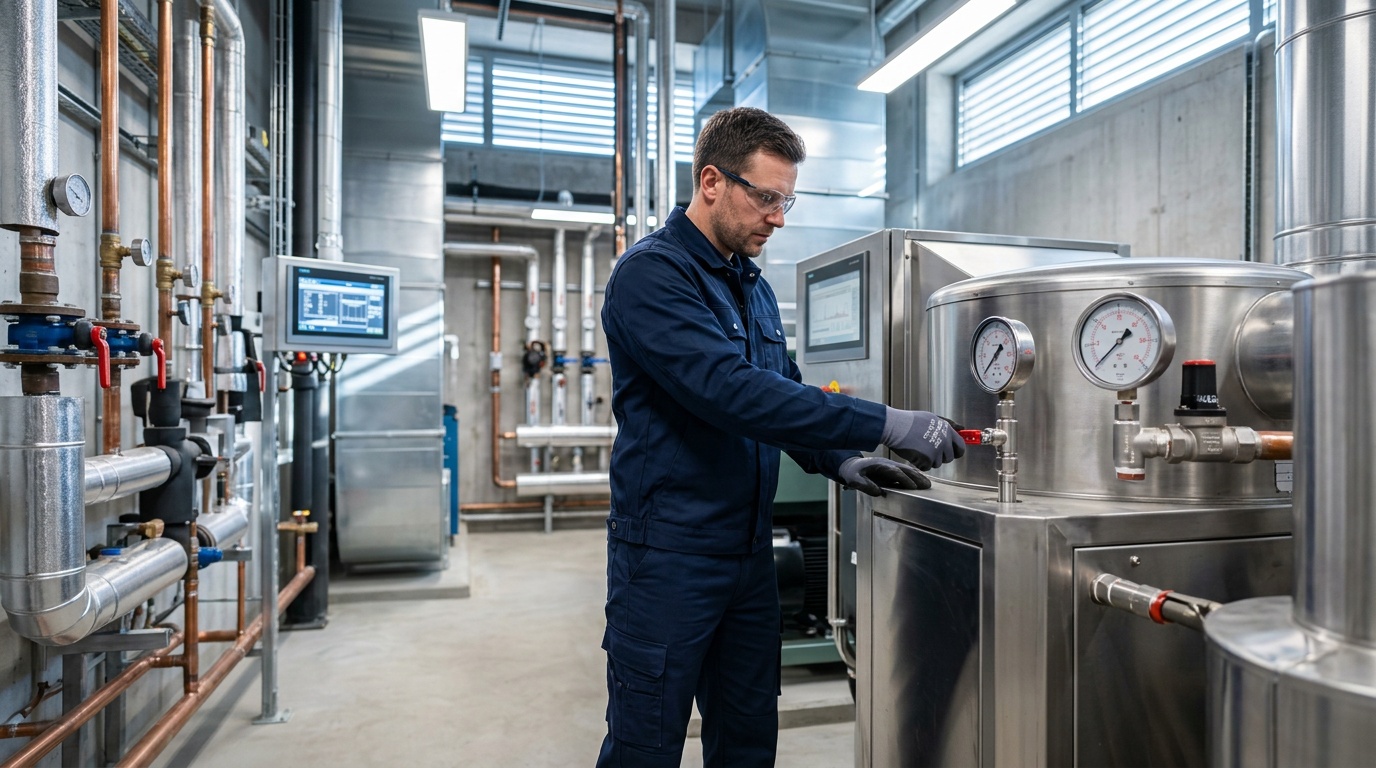
When you suspect a problem with your commercial refrigeration, the instinct is often to call for emergency service immediately. While prompt action is essential, a few quick, safe checks can sometimes identify simple issues or provide valuable information to the engineer who arrives, potentially saving you time and money. As a facility manager, your role is to ensure the building operates smoothly, and this includes understanding the basic health of its critical systems. My approach, honed over 24 years in the trade, is to combine technical knowledge with practical, on-site assessment to identify the root cause efficiently. These initial steps are designed to enable you with a preliminary understanding before you need to engage a professional for Building Fabric Repairs & Maintenance.
First, visually inspect the unit. Are the doors sealing properly? Check the door gaskets for tears or gaps; a poor seal allows warm air to enter and cold air to escape, forcing the unit to work harder and potentially leading to frost build-up. Next, examine the condenser coils, usually located at the back or bottom of the unit. Are they covered in dust, dirt, or debris? Clogged coils significantly hinder the unit's ability to dissipate heat, drastically reducing efficiency and cooling capacity. Ensure the unit has adequate ventilation around it; obstructions can impede airflow. Finally, check the thermostat setting and any visible error codes on the display panel. Sometimes, a simple setting adjustment or understanding an error code can point you towards the issue.
If you discover dirty condenser coils, a careful cleaning with a soft brush or vacuum cleaner attachment can often resolve performance issues. Always ensure the unit is unplugged before attempting any cleaning. For minor door seal leaks, sometimes a thorough cleaning of the gasket and the frame it seals against can restore a proper seal. If the unit is unplugged and then plugged back in, it can sometimes reset minor electronic glitches, similar to rebooting a computer. But it is critical to distinguish between simple maintenance tasks and actual repairs. Pushing beyond basic cleaning or checking settings could inadvertently cause more damage or pose a safety risk. Remember, your safety and the integrity of the equipment are paramount.
If your quick checks reveal issues like refrigerant leaks, strange mechanical noises from the compressor or fan motor, significant frost build-up that doesn't clear with basic maintenance, or if the unit continues to fail to cool after simple checks and resets, it's time to call in the experts. Attempting complex repairs without the necessary training and tools can void warranties, lead to safety hazards, and cause more extensive damage, ultimately increasing the cost of repair. For commercial refrigeration repair service, particularly when dealing with refrigerant handling or electrical systems, professional expertise is non-negotiable. It is at this point that engaging a qualified service provider for commercial fridge repairs near me becomes the most prudent course of action.
Safety First: Always disconnect power to the unit before cleaning coils or performing any physical inspection beyond visual checks. If you are unsure about any step, it is always best to consult a qualified professional.
Finding a reliable engineer for commercial fridge repairs near me can feel like a daunting task, especially when your business is on the line. In the UK, the refrigeration sector is heavily regulated to protect the environment and ensure safety. Choosing an unqualified or inexperienced technician can lead to improper repairs, compliance issues, and potentially greater costs down the line. At MEMS Facilities Maintenance, we believe in transparency and professionalism. As a premier 24/7 maintenance firm, we understand that you need more than just a quick fix; you need a partner you can trust to get it right the first time. This requires looking beyond just the price tag and understanding the qualifications and service standards that define a truly competent provider.
In the United Kingdom, specific certifications are mandatory for anyone handling refrigerants or working on gas appliances. The F-Gas Regulation requires anyone installing, maintaining, or repairing equipment containing fluorinated greenhouse gases (which most refrigerants are) to hold F-Gas certification. This is typically managed through bodies like REFCOM. A REFCOM F-Gas certified engineer has proven their competence in handling refrigerants safely and legally, preventing harmful emissions and ensuring environmental compliance. Also, if your commercial refrigeration unit also involves gas components or is part of a larger gas-fired system, Gas Safe Register certification is essential. This ensures the engineer is qualified to work on gas appliances safely. Operating without these certifications is not only illegal but also exposes your business to significant legal and financial risks. For any commercial refrigeration repair service, ensuring your chosen provider holds these accreditations is the absolute baseline for trust and compliance.
When a critical piece of equipment like a commercial fridge breaks down, downtime is your enemy. You need a provider that offers prompt emergency response. Many reputable firms, including MEMS, offer 24/7 call-out services. Understand their typical response times for emergencies. Are they within an hour, two hours, or longer? Clarify their call-out fees upfront. Are these fees included in the total repair cost, or are they separate? Transparency in pricing is key. Ask about their service guarantees or warranties on repairs. A company confident in its workmanship will typically offer a warranty on parts and labour, giving you peace of mind. For example, our Building Fabric Repairs & Maintenance services are underpinned by a commitment to quality, ensuring that when we fix something, it stays fixed. This level of assurance is what separates a true partner from a transient service provider.
| Key Criteria | What to Look For | Why It Matters |
|---|---|---|
| Certifications | F-Gas / REFCOM, Gas Safe Register (if applicable) | Legal compliance, environmental protection, safety assurance. Non-negotiable for refrigerant handling. |
| Availability | 24/7 Emergency Call-Outs | Minimises downtime and stock loss during critical out-of-hours periods. |
| Response Time | Guaranteed or typical response times for emergencies | Directly impacts speed of resolution and potential financial loss. |
| Pricing Structure | Clear call-out fees, transparent labour rates, itemised parts costs | Avoids surprise charges and allows for budget management. |
| Service Guarantees | Warranty on parts and labour for repairs | Provides confidence in the quality of work and offers recourse if issues reoccur. |
| Experience & Reputation | Years in business, testimonials, client sectors served | Indicates proven capability and understanding of commercial needs. |
To ensure you’re making an informed decision, arm yourself with these questions: 1. Are your engineers F-Gas certified and registered with REFCOM? Do they hold Gas Safe certification if relevant? 2. What are your standard response times for an emergency call-out for commercial refrigeration repair service? 3. Can you provide a clear breakdown of your call-out fees and hourly rates? 4. Do you offer a warranty on parts and labour for repairs? If so, for how long? 5. What is your process for diagnosing and quoting for repairs? 6. Do you have experience with our specific type/brand of commercial refrigeration? 7. Can you provide references from similar businesses in the area? Asking these questions upfront will help you filter out providers who may not meet your operational, safety, or commercial needs, and identify those who are truly equipped to be your trusted partner.
As a facility manager, making the call between repairing an existing commercial refrigerator and investing in a new unit is a significant commercial decision, not just a technical one. It’s about balancing immediate costs with long-term operational efficiency, energy expenditure, and legal compliance. Many providers will simply give you a quote for a repair, but at MEMS Facilities Maintenance, we believe in providing you with the full picture. My experience, spanning over two decades from the workshop floor to managing complex building services, has taught me that the 'cheapest' option today often becomes the most expensive tomorrow. Understanding the true cost of repair versus replacement involves looking at the unit's age, its energy performance, and the potential for future failures.
The decision isn't always straightforward. A seemingly minor repair on a unit that’s nearing the end of its operational life could be throwing good money after bad. Conversely, a more substantial repair might be a wise investment if the unit is relatively new and otherwise performing well. For businesses in the UK, especially those in the food service or retail sectors, the financial implications of this choice are substantial. A breakdown can lead to thousands in lost inventory, as highlighted by industry estimates suggesting commercial refrigeration breakdowns can cost businesses up to £10,000 per day in lost inventory and revenue. Consequently, approaching this decision with a clear framework, focusing on total cost of ownership rather than just the immediate repair bill, is essential for sound asset management.
In the UK, the average cost for commercial refrigeration repair service can range significantly, typically between £150 and £600, depending on the complexity of the issue and the parts required. But these figures are just averages. Several factors can push costs higher. For example, the type of refrigerant needed for a leak repair can vary in price and availability. A faulty compressor replacement is often one of the more expensive repairs, as it's a major component and labour-intensive to fit. Similarly, issues with control boards or complex electrical faults can also command higher prices. On the other hand, simpler fixes like replacing a door seal, cleaning clogged condenser coils (which is often part of our Building Fabric Repairs & Maintenance services when addressing associated issues), or repairing a faulty fan motor are generally less costly.
Understanding these cost drivers is key for facility managers. When you receive a quote, scrutinise it. Does it include the cost of the refrigerant, if applicable? Are the labour rates clearly itemised? Is there a warranty on the parts and the work performed? At MEMS, we believe in full transparency. If a repair is quoted at a price approaching 50% of the cost of a new, comparable unit, it’s a strong signal to consider replacement. This is particularly true if the unit is older or has a history of frequent breakdowns. We aim to provide you with the information needed to make a commercially sound decision, ensuring that any investment in commercial fridge repairs near me delivers tangible, long-term value.
A commercial refrigerator typically has a lifespan of 10 to 20 years, depending on its quality, usage, and maintenance history. But as units age, their efficiency often declines. Older models may not meet current energy standards, leading to higher electricity bills. This is where the 'last repair' threshold becomes critical. If a unit is already 10 years old and requires a major repair, such as a compressor replacement, it might be more economical in the long run to replace it. The new unit will not only be under warranty but will also likely offer significant energy savings. Proper preventive maintenance can extend the life of a unit, but even well-maintained equipment will eventually succumb to wear and tear.
The energy efficiency aspect is particularly pertinent in the UK. With rising energy costs and increasing focus on sustainability, an inefficient refrigerator can become a significant operational expense. Research indicates that proper preventive maintenance can reduce energy consumption by 15-20%, according to Energy Trust research. But even with maintenance, an older unit's inherent design may be less efficient than modern alternatives. When considering a repair, ask yourself: will this fix merely postpone the inevitable, or will it restore the unit to reliable, efficient operation for a significant period? If the unit is already consuming 20-30% more energy than a comparable new model, the cost of that inefficiency over the next few years could easily exceed the cost of a new refrigerator. This is why we advocate for a strategic approach to refrigeration asset management.
| Factor | Consider Repair If. | Consider Replacement If. |
|---|---|---|
| Age of Unit | Less than 5-7 years old | 10+ years old, or showing signs of age |
| Nature of Fault | Minor components (e.g., door seal, thermostat, fan motor) | Major components (e.g., compressor, sealed system, control board failure) |
| Repair Cost vs. New Unit Cost | Repair cost is less than 30-40% of a new unit's price | Repair cost exceeds 50% of a new unit's price |
| Energy Efficiency | Unit already meets current energy standards or is only slightly less efficient | Unit is significantly less efficient, leading to high running costs |
| Frequency of Breakdowns | Isolated incident, unit has been reliable historically | Frequent breakdowns, history of recurring issues |
| Warranty Status | Unit is still under manufacturer's warranty for the repairable part | Unit is out of warranty and repair costs are high |
| Compliance Needs | Repair will ensure continued compliance with food safety regulations | Older unit struggles to maintain required temperatures consistently, risking compliance |
Investing in new, energy-efficient commercial refrigeration equipment is more than just a capital expenditure; it's a strategic move that can significantly reduce operating costs and improve a business's environmental footprint. Modern commercial refrigerators are designed with advanced insulation, more efficient compressors, and smarter control systems that can lead to substantial energy savings. As mentioned, proper maintenance can yield savings of 15-20%, but upgrading to a new, A-rated unit can often surpass this, potentially cutting energy consumption by 30-50% compared to older models. For a business running multiple units, these savings can accumulate into tens of thousands of pounds over the equipment's lifetime.
Also, upgrading to energy-efficient models can contribute positively to your company's sustainability initiatives and corporate social responsibility image. In the UK, government incentives or tax breaks may also be available for businesses investing in energy-saving technologies, further offsetting the initial cost. When considering commercial refrigeration repair service, always ask about the potential for energy savings with a new unit. We can provide estimates for both repair costs and the lifecycle cost of a new, efficient model, allowing you to perform a true cost-benefit analysis. This proactive approach ensures that your investment in refrigeration not only keeps your stock safe but also contributes to your bottom line and environmental goals, turning a necessary expense into a profitable asset.
Strategic Insight: Don't just fix the symptom; analyse the problem. A major repair on an aging, inefficient unit is rarely the most cost-effective long-term solution. Consider the total cost of ownership, including energy consumption, potential future breakdowns, and compliance, when deciding between repair and replacement.
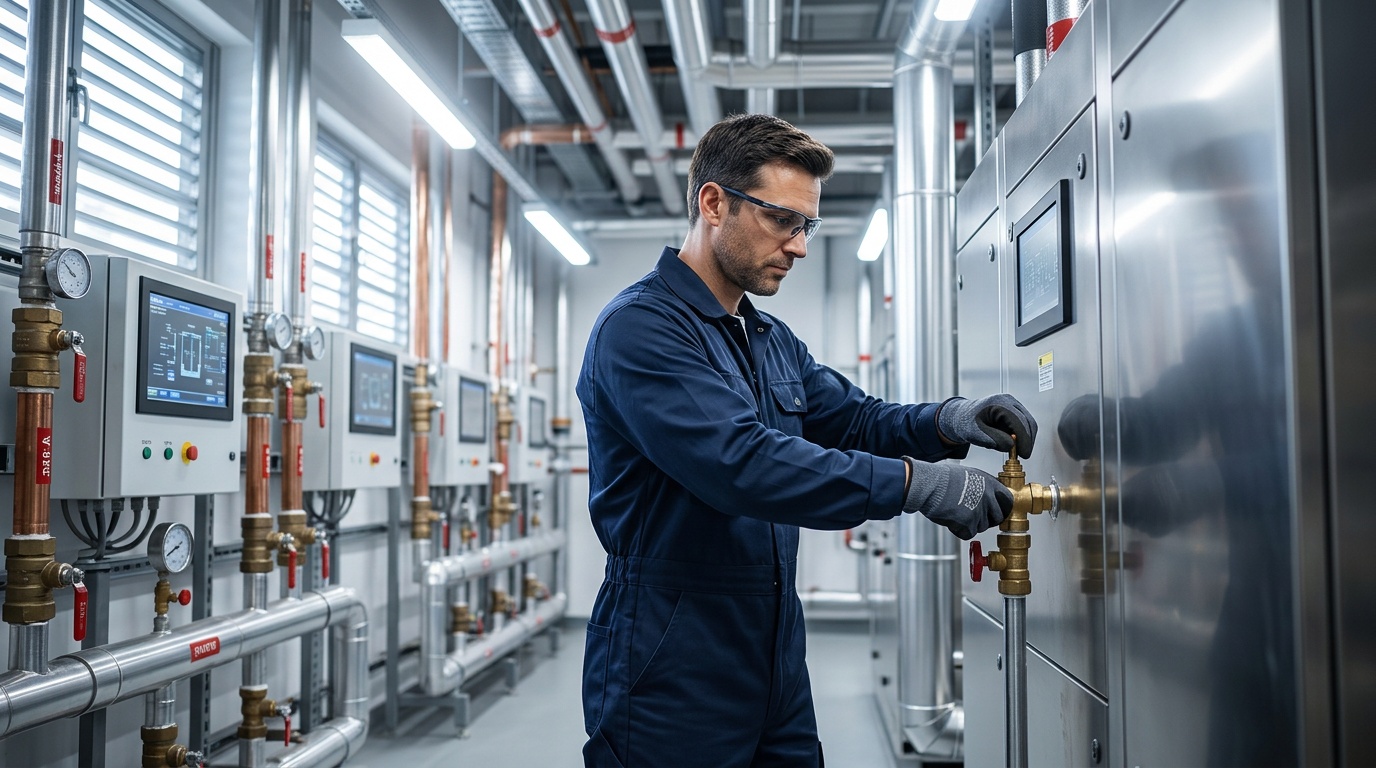
As a facility manager, the constant cycle of searching for "commercial fridge repairs near me" every few months is a drain on your time, budget, and peace of mind. It signifies a reactive approach to maintenance, one that is inherently more expensive and disruptive than a proactive strategy. My 24+ years in the engineering trade, from apprentice to managing a 24/7 maintenance firm, have taught me a fundamental truth: the cost of preventing a breakdown is invariably lower than the cost of fixing one. Waiting for equipment to fail is not a maintenance strategy; it's a gamble with your business continuity. At MEMS Facilities Maintenance, we champion Planned Preventative Maintenance (PPM) as the cornerstone of efficient commercial asset management.
This shift from reactive fixes to proactive care is not just about avoiding emergency call-outs. It’s about optimising performance, extending the lifespan of your equipment, and ensuring your business operates within the stringent legal frameworks governing commercial operations in the UK. By investing in regular, scheduled maintenance, you turn your refrigeration units from potential liabilities into reliable assets. This approach aligns perfectly with our ethos of providing corporate-level capability with family-business accountability, ensuring your building's critical systems, like refrigeration, are managed with both technical precision and commercial foresight. Our comprehensive Building Fabric Repairs & Maintenance services extend to all critical building systems, ensuring a complete approach to asset care.
A strong Planned Preventative Maintenance schedule for commercial refrigeration goes far beyond a cursory glance. It involves a series of systematic checks and servicing tasks performed by qualified engineers at regular intervals, typically quarterly or semi-annually, depending on the equipment and its operating environment. These checks include thorough cleaning of condenser coils and fan blades to ensure optimal heat dissipation, inspection and cleaning of evaporator coils to maintain efficient cooling, checking refrigerant levels and for any signs of leaks, and testing the integrity of door seals. Also, engineers will inspect electrical connections, test thermostat accuracy, check fan motor operation, and lubricate moving parts. This diligent approach ensures that minor issues are identified and rectified long before they escalate into costly breakdowns, thereby reducing energy consumption by 15-20% as indicated by Energy Trust research.
In the United Kingdom, commercial refrigeration maintenance is not merely a matter of operational efficiency; it is intrinsically linked to legal compliance. Businesses operating in the food and beverage sector must adhere to strict regulations set by bodies like the Food Standards Agency (FSA) and implement Hazard Analysis and Critical Control Points (HACCP) principles. These frameworks mandate that food must be stored at specific, safe temperatures to prevent bacterial growth, thereby ensuring public health and safety. Failure to maintain these temperatures can result in severe penalties, product recalls, and significant reputational damage. Also, the F-Gas Regulation places stringent requirements on the handling and management of refrigerants, which are potent greenhouse gases. Qualified engineers holding F-Gas certification, like those at MEMS, are essential for legally and safely servicing refrigeration systems, preventing emissions, and ensuring your business meets its environmental obligations. A well-documented PPM schedule serves as tangible evidence of your commitment to these critical compliance standards.
The fundamental difference between reactive repair and planned maintenance lies in perspective. Reactive repairs treat refrigeration units as disposable items, to be fixed only when they break, incurring unpredictable and often substantial costs. This approach treats maintenance as a necessary evil, an expense to be minimised. In contrast, a Planned Preventative Maintenance strategy views refrigeration units as long-term assets that require ongoing care and investment. This is Asset Lifecycle Management. By consistently maintaining equipment, you not only minimise the risk of costly breakdowns but also optimise energy efficiency. Saving up to 20% on energy consumption, according to Energy Trust research. And extend the operational lifespan of your units. This strategic viewpoint means that maintenance is an investment that yields returns through reduced operating costs, predictable budgeting, and enhanced operational reliability. It moves the focus from immediate, often high, repair bills to a more predictable and ultimately more profitable total cost of ownership.
Navigating the complexities of commercial refrigeration maintenance can bring forth many questions. As Stuart Butcher, founder of MEMS Facilities Maintenance, I understand the need for clear, direct answers. Below, we address some of the most common queries facility managers and business owners have regarding repairs, costs, and maintenance for their critical refrigeration assets. These answers are designed to provide immediate clarity and actionable insights, helping you make informed decisions about your equipment's upkeep and ensuring you know when to seek professional help for commercial refrigerator repair service.
For emergency situations, reputable providers like MEMS Facilities Maintenance offer 24/7 call-out services, aiming to dispatch an engineer as quickly as possible, often within a few hours, depending on your location and the severity of the issue. The goal is to minimise downtime and prevent inventory loss.
The average cost for commercial refrigeration repair service in the UK typically ranges from £150 to £600. This can vary significantly based on the complexity of the fault, the parts required, and the labour involved. Major component failures, like a compressor replacement, will naturally be more expensive than minor fixes like a door seal replacement.
With proper installation, regular maintenance, and quality manufacturing, a commercial refrigerator can typically last between 10 to 20 years. However, factors like operating environment, usage intensity, and the quality of the initial unit can influence its actual lifespan. Consistent PPM is key to reaching the upper end of this range.
Preventing breakdowns involves a routine Planned Preventative Maintenance (PPM) schedule. This includes regular cleaning of condenser and evaporator coils, checking refrigerant levels, inspecting door seals, verifying thermostat accuracy, and ensuring electrical components are in good order. These tasks, performed by qualified engineers, significantly reduce the risk of failure and improve energy efficiency.