facility maintenance vacancies
In the UK's commercial property sector, the heartbeat of any successful operation lies within its building's infrastructure. Ensuring this infrastructure runs smoothly is not just about fixing things when they break; it is a strategic discipline that directly impacts operational continuity, energy efficiency, and legal compliance. For facility managers and business owners, understanding the evolving environment of facility maintenance roles and the skills required is essential. The demand for skilled professionals is high, yet finding the right talent can be a significant challenge. This guide explores the essential aspects of facility maintenance vacancies, offering clarity for both job seekers and employers navigating this field.
Key Takeaways
- Facility maintenance is a strategic discipline that keeps your building running, controls energy costs, and meets legal standards, not just a fix-it service.
- The UK market has a strong demand for skilled maintenance professionals, which makes finding the right people a real challenge for facility managers.
- Knowing the typical roles and salary ranges helps both job seekers and employers make smarter decisions in a competitive hiring environment.
- Investing in proactive maintenance and the right talent prevents costly breakdowns and keeps your property compliant with regulations.
My 24 years in this trade, starting as an apprentice and now running M&E Maintenance Solutions, have shown me that the 'silent' operation of a building is often the most valuable asset. When systems fail, the cost is not just in repair bills; it is in lost revenue, damaged reputation, and potential safety breaches. The modern facility maintenance technician is more than a repair person; they are a guardian of operational uptime and a key player in commercial success. Let us break down what these roles entail and why getting hiring right is more important than ever.
The Commercial Reality of Facility Maintenance Vacancies
What does a facility maintenance technician actually do?
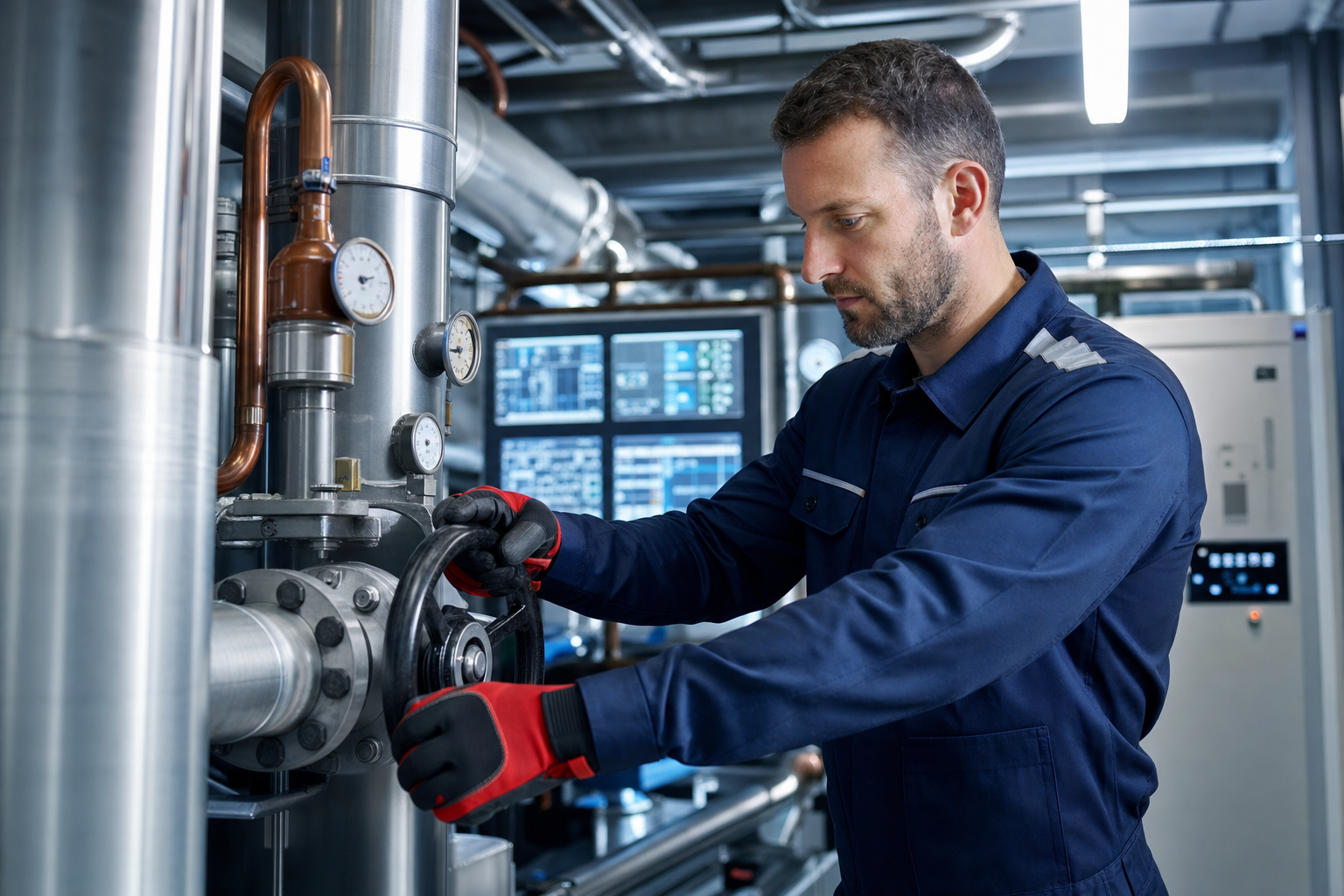
The role of a facility maintenance technician, often referred to as a building engineer or maintenance operative, has evolved significantly. Gone are the days when it was purely about responding to urgent calls. Today's technician is a cornerstone of Planned Preventative Maintenance (PPM) strategies. Their daily duties encompass a wide spectrum, from routine inspections and servicing of HVAC systems, plumbing, and electrical components to diagnosing complex faults. This includes analysing system performance, managing energy consumption, and ensuring all building services adhere to stringent UK health and safety regulations. They are the first line of defence against system failures, ensuring that critical infrastructure like heating, cooling, ventilation, and power remains operational 24/7. This proactive approach is essential to preventing costly breakdowns and maintaining a safe, productive environment for building occupants.
A skilled facility maintenance technician must possess a broad technical understanding, often specialising in areas like HVAC, but also having a working knowledge of electrical, plumbing, and building management systems (BMS). They are responsible for conducting safety checks, performing minor repairs, and escalating major issues with detailed reports. Moreover, their role increasingly involves managing compliance documentation, such as F-Gas records for refrigeration systems or Gas Safe certification for boilers. The ability to interpret technical manuals, use diagnostic equipment, and communicate effectively with both management and specialist contractors is essential. In essence, they are technical problem-solvers dedicated to the long-term health and efficiency of commercial properties, ensuring that building systems operate optimally and meet all regulatory requirements.
Key Insight: Proactive vs. Reactive Maintenance
The shift from reactive to proactive maintenance is not just an operational change; it is a financial imperative. While reactive repairs address immediate issues, they are inherently more expensive. Emergency call-outs, premium parts, and the associated downtime can cripple a business. Planned Preventative Maintenance (PPM), on the other hand, is an investment. It reduces the likelihood of catastrophic failures, extends the lifespan of expensive equipment, and significantly lowers overall operating costs. For facility managers, understanding this balance is key to effective asset management and ensuring consistent business continuity.
The true cost of reactive maintenance on your hiring strategy
When a building's systems fail, the immediate cost of emergency repairs is often just the tip of the iceberg. A business experiencing an HVAC failure during peak season, for example, could face substantial losses from reduced productivity, spoiled stock, or even temporary closure. This constant cycle of reactive fixes places immense pressure on maintenance teams, often leading to burnout and a focus solely on damage control rather than long-term system health. From a hiring perspective, this means a perpetual scramble for personnel who can 'put out fires'. This approach attracts individuals suited for urgent tasks but may not possess the foresight or technical depth required for PPM and compliance management. Consequently, you end up with a team that is always behind, constantly reacting to crises rather than preventing them.
The financial drain of reactive maintenance directly impacts a company's ability to invest in skilled, proactive talent. When budgets are consistently consumed by emergency call-outs and costly repairs, there is little room for competitive salaries, professional development, or the recruitment of engineers with specialised skills. This creates a vicious cycle: reactive maintenance leads to a skills gap, which in turn perpetuates reactive maintenance. For businesses in the UK, particularly those operating in competitive markets, this is an unsustainable model. The demand for competent facility maintenance technicians, especially those with certifications like F-Gas or an understanding of SFG20 standards, is growing, and companies stuck in a reactive loop will struggle to attract and retain the calibre of staff needed to keep their operations running smoothly and compliantly.
Roles, Salaries, and Career Progression in the UK

Essential skills and certifications: From F-Gas to SFG20 compliance
In the United Kingdom's facility maintenance sector, a blend of practical skills and formal qualifications is essential for career advancement and competitive remuneration. For roles involving refrigeration and air conditioning, F-Gas certification is not merely beneficial but legally mandated for anyone handling refrigerants, as per the Fluorinated Greenhouse Gases Regulations. This certification ensures technicians understand safe handling practices and environmental compliance. Beyond specific equipment, a comprehensive understanding of SFG20 standards is increasingly expected. SFG20 provides the UK's industry-standard for planned preventative maintenance, outlining best practices for building services. Adherence to SFG20 demonstrates a commitment to proactive maintenance, compliance, and operational efficiency, which employers highly value.
Other critical skills include a strong grasp of electrical and mechanical principles, the ability to read and interpret technical drawings and schematics, and proficiency with diagnostic tools. Many roles also require Gas Safe registration for working on gas-fired appliances. For those looking to progress into management, skills in project management, budgeting, and team leadership become paramount. The continuous development of these competencies, often through accredited courses and on-the-job training, directly influences earning potential. As building systems become more complex, especially with the integration of sustainable technologies, specialised knowledge in areas like heat pumps or solar PV can command higher salaries and open doors to more advanced facility maintenance job descriptions.
Step-by-step career path: Apprentice to Facilities Manager
The journey in facility maintenance typically begins with an apprenticeship or entry-level technician role. Apprenticeships offer structured training, combining practical experience with vocational qualifications, laying a solid foundation in core engineering principles and safety protocols. Upon completion, an individual might progress to a Facility Maintenance Technician role, gaining hands-on experience with a wider range of building systems and becoming proficient in tasks such as routine servicing, minor repairs, and diagnostics. This stage is where specialised certifications, like F-Gas or Gas Safe, become essential for career progression and increased earning capacity.
With several years of experience and a proven track record in proactive maintenance, a technician can advance to a Senior Technician or Lead Engineer position. In this capacity, they might take on more complex troubleshooting, oversee junior staff, and contribute to PPM planning. The next significant step is often into supervisory or management roles, such as a Maintenance Supervisor or Assistant Facilities Manager. These positions involve greater responsibility for team management, scheduling, budget oversight, and ensuring compliance across multiple building services. Ultimately, the path can lead to a Facilities Manager or Building Services Manager role. This senior position requires a strategic understanding of asset management, operational costs, regulatory adherence, and the ability to manage a comprehensive maintenance programme for an entire facility or portfolio. For employers seeking these roles, understanding the typical salary benchmarks across the UK is essential for attracting qualified candidates.
| Role Title | Typical Salary Range (GBP Per Year) | Key Responsibilities | Required/Beneficial Qualifications |
|---|---|---|---|
| Apprentice/Trainee Maintenance Engineer | £15,000 - £22,000 | Learning core maintenance skills, assisting senior technicians, basic system checks. | Basic numeracy/literacy, willingness to learn. NVQ Level 2/3 often pursued. |
| Facility Maintenance Technician | £25,000 - £35,000 | Routine servicing, repairs, diagnostics of HVAC, electrical, plumbing systems. PPM tasks. | NVQ Level 3, F-Gas (if HVAC focused), Gas Safe (if applicable), basic IT literacy. |
| Senior Facility Maintenance Technician / Building Engineer | £32,000 - £42,000 | Complex fault diagnosis, leading PPM schedules, mentoring junior staff, compliance record keeping. | NVQ Level 3/4, F-Gas, Gas Safe, SFG20 knowledge, H&S certifications. |
| Maintenance Supervisor / Facilities Team Lead | £38,000 - £50,000 | Supervising maintenance teams, scheduling work, managing contractor liaison, ensuring service delivery. | Extensive experience, H&S qualifications (e.g., IOSH), team leadership skills. |
| Facilities Manager / Building Services Manager | £45,000 - £70,000+ | Strategic asset management, budget control, compliance oversight, contract management, performance reporting. | Degree or equivalent in Facilities Management or Engineering, BIFM/IWFM membership, strong commercial acumen. |
| Note: Salary ranges are illustrative and can vary significantly based on location (e.g., London vs. regional UK), company size, specific industry, and level of responsibility. Data points are informed by industry trends and sources such as ZipRecruiter and general job market analysis. | |||
Bridging the Gap: How to Find and Attract Top Maintenance Talent
In today's competitive market, finding skilled professionals for facility maintenance vacancies can feel like searching for a needle in a haystack. For job seekers, the challenge lies in navigating a sea of generic listings to pinpoint roles that match their expertise and career aspirations. For employers, the struggle is to attract candidates who possess not just the technical skills, but also the proactive mindset essential for modern building management. At M&E Maintenance Solutions, we understand that the right team is the backbone of reliable building operations. This section offers practical advice for both sides of the hiring equation, focusing on efficiency and effectiveness in securing quality maintenance talent.
For job seekers: Finding reliable facility maintenance vacancies near you
Navigating the search for facility maintenance jobs near you requires more than just a quick scan of major job boards. While platforms like Indeed and LinkedIn are useful starting points, truly finding reliable vacancies often means looking deeper. Consider specialised recruitment agencies that focus specifically on FM and engineering roles; they often have access to positions not advertised publicly. Networking within the industry is also invaluable. Attending trade shows, joining professional bodies, or even reaching out directly to companies you admire can uncover opportunities. Pay close attention to company websites, especially those known for their commitment to Planned Preventative Maintenance (PPM) and compliance, as they are more likely to be seeking proactive, skilled individuals.
When assessing vacancies, look beyond the salary and location. Examine the job description closely for indicators of the company's maintenance philosophy. Are they emphasising reactive repairs, or is there a clear focus on preventative measures, energy efficiency, and compliance with standards like SFG20? Understanding the company's commitment to training and professional development is also key. A forward-thinking employer will invest in their staff, offering opportunities to gain certifications such as F-Gas, Gas Safe, or specific NVQs. This proactive approach to hiring ensures that you, as a job seeker, are aligning yourself with an organisation that values long-term asset management and employee growth, rather than just filling immediate repair needs.
For employers: A checklist for writing effective job descriptions
Attracting the right talent for your facility maintenance vacancies begins with a job description that accurately reflects the role and the company's values. A well-crafted description acts as a filter, drawing in qualified candidates and deterring unsuitable ones. Start by clearly defining the core responsibilities, moving beyond basic repair tasks to include PPM, system monitoring, energy management, and compliance duties. Be specific about the types of systems the role will involve. HVAC, electrical, plumbing, and any specialised equipment. Mentioning key certifications like F-Gas, Gas Safe, or IOSH demonstrates the required qualifications and signals the importance of compliance.
To ensure your job postings stand out and attract proactive engineers, consider these essential elements:
Checklist for Effective Job Descriptions
- Clear Role Title: Use specific titles (e.g., "Senior HVAC Maintenance Engineer", "Facilities Maintenance Technician") that reflect the actual duties.
- Company Culture & Values: Briefly describe your approach to maintenance. E.g., commitment to PPM, sustainability, client partnerships. Mentioning your status as a premier 24/7 maintenance firm can attract candidates seeking stability and challenge.
- Key Responsibilities: Detail daily tasks, including inspections, servicing, diagnostics, minor repairs, and reporting. Emphasise PPM and compliance tasks.
- Required Qualifications & Certifications: List essential technical skills, trade qualifications, and mandatory certifications (e.g., F-Gas, Gas Safe, NVQ Level 3).
- Desirable Skills: Include skills that would be an advantage, such as experience with specific BMS, renewable energy systems, or project management.
- Technical Environment: Specify the types of buildings or systems the role will cover (e.g., commercial offices, retail spaces, industrial units, HVAC systems).
- Salary & Benefits: Provide a realistic salary range. Mentioning benefits like training opportunities, company vehicle, or pension schemes can significantly boost appeal.
- Call to Action: Clearly state how to apply and what to expect in the application process.
By following this checklist, employers can create job descriptions that not only list requirements but also communicate the value and career progression associated with the role, thereby attracting candidates who are a genuine fit for the demands of modern facility maintenance.
Future-Proofing Your Building: The Shift Towards Sustainable Maintenance Skills
The environment of commercial building maintenance is rapidly evolving, driven by a global imperative towards sustainability and energy efficiency. As regulatory requirements tighten and businesses recognise the financial and environmental benefits of green technology, the skills demanded of facility maintenance professionals are changing. This shift necessitates a workforce equipped to manage and maintain increasingly sophisticated systems, moving beyond traditional mechanical and electrical services. For facility managers and building owners, investing in maintenance strategies that incorporate these modern technologies is not just about compliance; it is about long-term cost savings, improved building performance, and a reduced environmental footprint.
Modern maintenance: Integrating air-to-water heat pumps and solar PV
The integration of renewable energy sources and high-efficiency systems is no longer a niche consideration but a growing standard in commercial property management. Technologies like air-to-water heat pumps are replacing traditional boilers, offering a more energy-efficient method for heating and hot water. Similarly, solar photovoltaic (PV) panels are becoming a common sight on commercial rooftops, generating clean electricity and significantly reducing reliance on the national grid. Maintaining these systems requires a different skill set than conventional plant room equipment. Technicians need to understand thermodynamics, electrical integration, control systems specific to heat pumps, and the performance monitoring of solar arrays.
For facility maintenance teams, this means continuous professional development. Understanding the nuances of inverter technology for solar PV, the refrigerant circuits of air-to-water heat pumps, and the diagnostic protocols for these advanced systems is becoming essential. At M&E Maintenance Solutions, we are at the forefront of this transition, offering expertise in these areas. Our commitment involves staying abreast of new HVAC technologies and ensuring our engineers are trained to service and maintain them effectively. This proactive adaptation ensures that buildings remain compliant, efficient, and cost-effective, prepared for the energy demands of the future.
Why compliance and green technology knowledge pays more
The demand for professionals skilled in both compliance and green technologies is driving higher salary expectations and creating sought-after roles within the facility maintenance sector. Government initiatives and corporate sustainability targets are making adherence to environmental regulations and the adoption of energy-saving solutions non-negotiable. Consequently, technicians who possess F-Gas certification, understand energy performance certificates (EPCs), and can manage systems like heat pumps and solar PV are in high demand. Their expertise directly contributes to a building's compliance with current legislation and helps facility managers achieve significant savings on energy bills, thereby demonstrating a clear return on investment.
Key Insight: The Value of Specialisation
As building services become more complex, specialised knowledge is increasingly valuable. A facility maintenance technician who can expertly manage both traditional HVAC systems and emerging green technologies like air-to-water heat pumps or solar PV is an asset to any organisation. This dual capability ensures compliance with evolving regulations, drives energy efficiency, and reduces operational costs, making such professionals highly sought after and commanding better remuneration than those with only general maintenance skills.
Employers are willing to offer competitive salaries and attractive benefits for individuals who can demonstrate proficiency in these areas. This is because these skills are directly linked to operational efficiency, reduced energy expenditure, and the avoidance of penalties for non-compliance. For individuals looking to advance their careers in facility maintenance, acquiring knowledge and certifications in renewable energy and sustainable building technologies is a strategic move that not only future-proofs their career but also significantly improves their earning potential in the UK market.
The Facility Manager’s Perspective: Hiring Engineers You Can Trust
Top questions from job seekers and employers (FAQs)
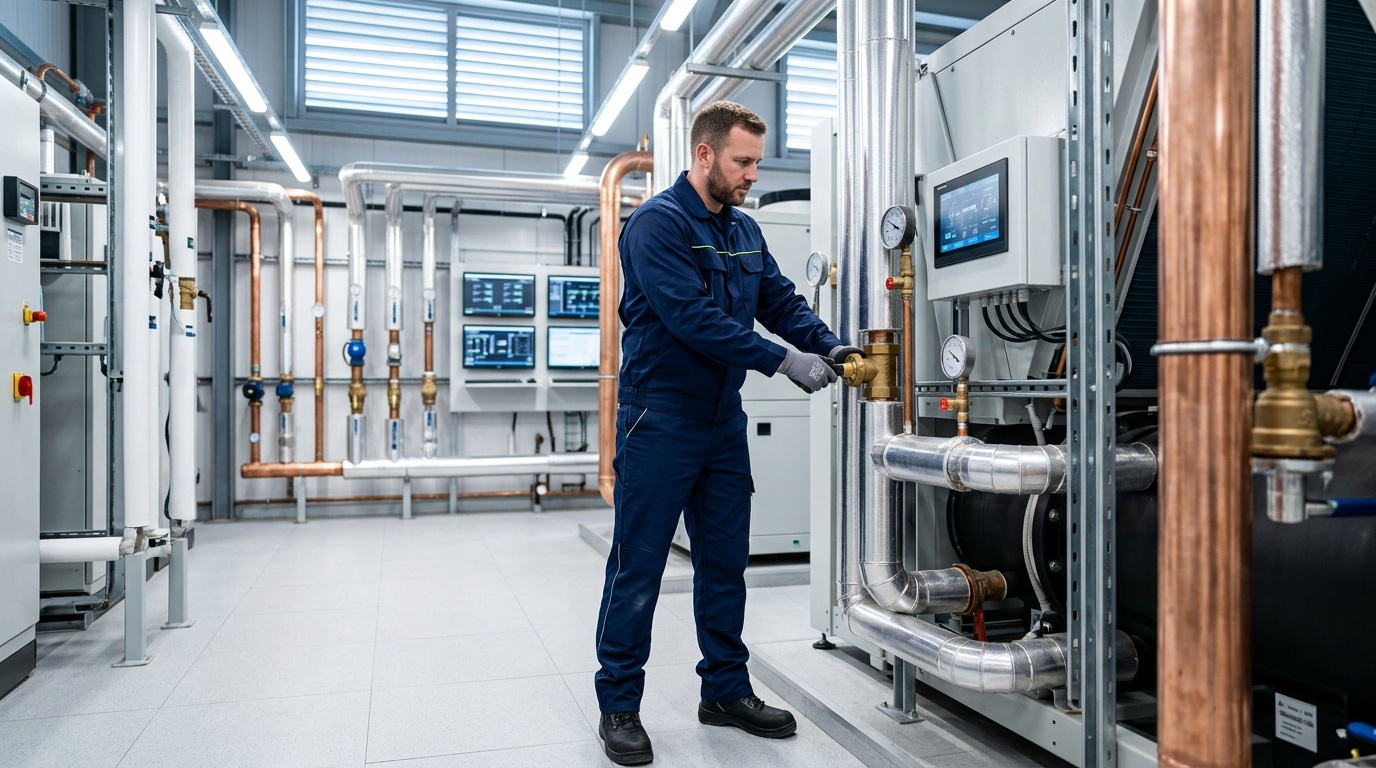
From my experience managing M&E Maintenance Solutions, I have noticed that both job seekers and employers often share common concerns when dealing with facility maintenance vacancies. Understanding these questions can streamline the hiring process and lead to better matches between candidates and roles.
What qualifications guarantee a competent facility maintenance technician? Certifications like F-Gas for refrigeration, Gas Safe for gas appliances, and knowledge of SFG20 maintenance standards are essential. They show the candidate’s commitment to compliance and technical competency, which are non-negotiable in commercial building maintenance.
How much should a facility maintenance manager expect to earn? Salaries vary by region and responsibility, but typical ranges for facilities managers in the UK fall between £45,000 and £70,000 per year, reflecting the strategic oversight and compliance demands of the role. Technicians with specialised skills or supervisory duties often command salaries towards the upper end of technician pay scales.
Where can job seekers find reliable facility maintenance vacancies near me? Besides major job boards, targeted recruitment agencies specialising in engineering and FM roles provide curated listings. I advise candidates to look for employers with clear PPM commitments and ongoing training programmes, which signal a proactive maintenance culture rather than a reactive firefighting approach.
What should employers emphasise to attract quality candidates? Transparent job descriptions that detail compliance responsibilities, expected certifications, and career progression opportunities are key. Highlighting your organisation’s commitment to planned maintenance, sustainability initiatives, and training investment will appeal to technicians seeking long-term roles rather than temporary fixes.
Addressing these questions early not only saves time but also builds trust. Candidates want to know they are joining a company that values compliance, invests in its people, and understands the commercial importance of uptime. Employers want reliable engineers who are technically capable and proactive. Bridging this gap requires clarity and honesty from both sides.
The MEMS Standard: Building a career or a team with confidence
At M&E Maintenance Solutions, we apply a straightforward but effective hiring philosophy: we look beyond just filling facility maintenance vacancies. Our focus is on cultivating lasting careers and reliable teams who understand that compliance, efficiency, and uptime are the pillars of commercial building success.
We do not cut corners or settle for quick fixes. Every engineer we recruit undergoes a rigorous vetting process that assesses not only technical skills but also their approach to proactive maintenance and regulatory adherence. Our technicians and managers are trained to think ahead. Anticipating issues, interpreting compliance standards, and communicating clearly with both clients and contractors.
This approach benefits our clients by reducing emergency breakdowns and costly reactive repairs. It benefits our teams by providing a clear career path, ongoing professional development, and the satisfaction of working for a company that honours their expertise. Our engineers become trusted partners in maintaining critical infrastructure, not just hired hands.
For facility managers and business owners, partnering with a company that upholds the MEMS Standard means peace of mind. You gain access to a team that prioritises asset lifecycle management, understands the commercial impact of downtime, and delivers service aligned with current legislation and best practices.
If you are seeking to fill facility maintenance vacancies or considering your next career move, I encourage you to engage with firms that demonstrate a commitment to quality, compliance, and continuous improvement. At M&E Maintenance Solutions, we welcome conversations with both candidates and clients who share these values. Together, we can build resilient teams that keep commercial buildings running smoothly and safely, day and night.
Frequently Asked Questions
What does a facility maintenance technician do in commercial buildings?
A facility maintenance technician's role today involves more than just fixing issues as they arise. They are key to Planned Preventative Maintenance (PPM) strategies, conducting routine inspections and servicing of HVAC, electrical, and plumbing systems. Their work ensures building infrastructure runs smoothly, manages energy consumption, and maintains compliance with UK health and safety regulations.
Why is proactive maintenance important for hiring in facility management?
Focusing on proactive maintenance, like PPM, is a financial imperative that directly influences hiring strategies. It reduces the likelihood of costly breakdowns and extends equipment life, allowing budgets to be allocated for skilled, proactive talent rather than constant emergency repairs. This approach helps attract and retain engineers with the foresight needed for long-term system health and compliance.
Is there a shortage of skilled facility maintenance workers in the UK?
Yes, the demand for skilled facility maintenance professionals in the UK is high, yet finding the right talent presents a significant challenge for employers. Companies stuck in a reactive maintenance cycle often struggle to attract and retain the calibre of staff needed, especially those with specialised certifications like F-Gas or knowledge of SFG20 standards.
What skills are essential for modern facility maintenance roles?
Modern facility maintenance technicians need a broad technical understanding, often specialising in areas like HVAC but also possessing working knowledge of electrical, plumbing, and building management systems. Essential skills include diagnosing faults, interpreting technical manuals, using diagnostic equipment, and communicating effectively, alongside managing compliance documentation for regulations like F-Gas and Gas Safe.
How does reactive maintenance affect a company's hiring and budget?
A constant cycle of reactive repairs consumes budgets with emergency call-outs and downtime costs. This leaves little room for competitive salaries, professional development, or recruiting specialised talent, creating a skills gap. It leads to a perpetual scramble for personnel focused on damage control rather than the preventative strategies needed for long-term building efficiency and compliance.
Is facility maintenance a good career path in the UK?
Facility maintenance offers a solid career path in the UK, especially for those with technical aptitude and a commitment to continuous learning. The role has evolved significantly, moving beyond basic repairs to encompass strategic asset management, energy efficiency, and regulatory compliance. With high demand and opportunities for specialisation, it's a field offering stability and progression.
What are the key differences between reactive and planned maintenance?
Reactive maintenance addresses issues only after they occur, often leading to higher costs due to emergency repairs and business downtime. Planned Preventative Maintenance (PPM), on the other hand, is an investment that involves scheduled servicing and inspections to prevent failures, extend equipment lifespan, and significantly lower overall operating costs for commercial properties.