Compare boiler repair services with plumbing in residential Birmingham?
When a commercial building in Birmingham loses heating or hot water, the first decision affects safety, downtime and repair cost. A dripping tap, blocked waste pipe and failed circulation pump are different engineering problems. Matching the fault to the right specialist helps avoid repeat visits, unsuitable parts and unsafe work.
Key Takeaways
- Boiler faults sit in the domain of combustion, pressure and circulation, so they demand a Gas Safe registered heating engineer rather than a general plumber.
- Plumbing problems such as leaks, blocked waste pipes and failing taps involve the water supply and drainage side of a property, which calls for a different skill set and tool kit.
- Sending the wrong trade to a heating fault often means repeat callouts, mismatched parts and avoidable costs for Birmingham households and landlords.
- Safety should drive the first phone call, because anything involving gas, flues or pressurised components must only be handled by a qualified engineer.
- Describing symptoms clearly, noting the boiler model and sharing photos of the fault helps get the right specialist on site first time.
This article provides general guidance for commercial building managers. The plumbing examples explain trade distinctions and are not a statement that M&E Maintenance Solutions offers domestic plumbing, drainage, toilet, tap or general pipework services.
I started my career as an apprentice combustion engineer, so I know from the tools-up perspective how a commercial plumbing fault differs from a gas appliance failure. Correct diagnosis protects your building, manufacturer warranty and budget. It also stops a simple water leak being treated as a heating-system fault, or a boiler problem being passed to someone without the right competence.
What is the difference between boiler repair services and plumbing in Birmingham?
Plumbers generally work on water supply, drainage, pipework, taps, toilets, radiators and leaks. Boiler repair specialists work on the appliance, burner, heat exchanger, ignition system, controls, flue and associated heating components. One contractor may cover both disciplines, but gas appliance work must be completed by an engineer listed on the Gas Safe Register.
Use the symptom as an initial guide. A burst pipe, leaking valve or blocked sink usually points to a plumber. A boiler showing a fault code, repeatedly losing pressure, failing to ignite or producing no hot water may need a heating engineer. A cold radiator could be caused by trapped air, a faulty thermostatic valve, poor system balance or a boiler-side fault. Testing should come before replacing parts.
For broader commercial systems, a contractor offering commercial plumbing and electrical services may assess connected services. Appliance and combustion faults should remain with suitably qualified heating specialists.
Cost depends on the trade, appliance, parts, access and urgency. Boiler work may include combustion checks, electrical testing, manufacturer procedures and safety records. Plumbing work can also become costly where leaks are concealed or access is difficult. Treat online prices as guides and request a written estimate before work begins.
Why does choosing the correct trade matter?
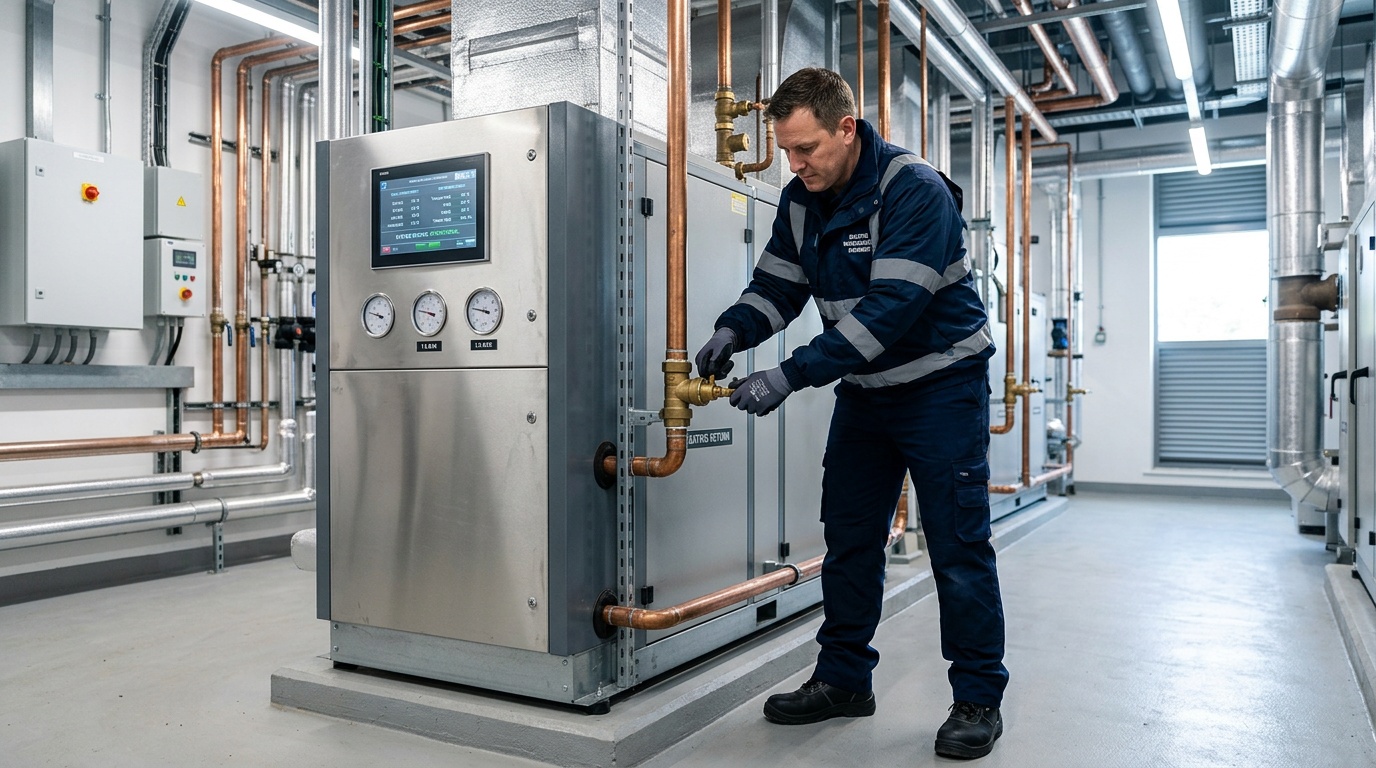
The right professional has a better chance of diagnosing the fault on the first visit. A competent plumber can isolate a leaking pipe, replace a tap cartridge or repair a toilet cistern without disturbing the boiler. A Gas Safe registered heating engineer can inspect combustion, flue integrity, gas pressure, condensate drainage and appliance controls.
Gas work is a safety matter. Never allow an unregistered person to remove a boiler casing, alter gas pipework, adjust combustion settings or work on the flue. Ask for the engineer’s Gas Safe Register identity card and check that its appliance categories cover the planned work.
For planned commercial heating work, review the available commercial heating installation and maintenance services and confirm that the engineer’s competence matches the equipment.
Before booking, ask for the call-out charge, labour rate, diagnostic fee, parts policy, VAT position and any out-of-hours uplift. A written explanation is more useful than a low starting price that excludes diagnosis or components.
Annual servicing can identify corrosion, pressure loss, blocked condensate routes, worn seals and unsafe combustion before they become a winter breakdown. It may also support manufacturer warranty conditions where the warranty requires servicing by a suitably qualified engineer.
For a Birmingham Facility Manager or Estate Manager, the practical test is straightforward: identify the symptom, verify competence, agree the scope in writing and make sure the repaired system is tested before it returns to service. That is the MEMS Standard: Right first time.
How should you compare boiler repair and plumbing services in Birmingham?
Start with the system involved, not the quickest available appointment. A leaking pipe beneath a sink, blocked drain or failed toilet valve is normally a plumbing matter. A boiler fault code, ignition failure, pressure drop, unusual combustion noise or loss of hot water points towards a heating engineer.
For work involving the gas train, burner, flue, combustion chamber or internal boiler components, verify the engineer through the Gas Safe Register. Check that the named individual, not only the business, is authorised for the required work.
| Check before booking | Boiler or heating engineer | Plumber |
|---|---|---|
| Typical fault | Ignition, pressure, burner, flue, controls or heating circulation | Leaks, taps, toilets, pipework, drainage and water valves |
| Qualification evidence | Gas Safe registration for gas appliance work | Relevant plumbing training and public liability cover |
| Useful paperwork | Service record, combustion readings, repair details and safety checks | Invoice, parts fitted, isolation details and leak-test confirmation |
| Questions to ask | Diagnostic fee, parts warranty, labour rate and manufacturer procedure | Call-out charge, hourly rate, access requirements and materials cost |
Request a written scope before authorising non-emergency work. It should state the diagnosis, proposed repair, labour, parts, VAT, attendance charge and any out-of-hours premium. Compare the full estimated cost rather than one headline figure.
Choose a contractor that explains the failure in plain language, tests the repaired system and leaves traceable documentation. Ask whether the work affects the appliance warranty and whether annual servicing is required by the manufacturer.
M&E Maintenance Solutions focuses on commercial HVAC maintenance. A commercial HVAC compliance health check can help identify documentation, maintenance and safety gaps across relevant building systems.
References
Frequently Asked Questions
What is the difference between a plumber and a boiler repair specialist?
A plumber normally works on water supply, drainage, pipework, sanitaryware, taps and leaks. A boiler repair specialist focuses on the appliance and heating system, including ignition, combustion, controls, pumps, pressure, flues and heat exchangers.
Can a plumber fix a boiler?
A plumber may diagnose connected pipework or replace a non-gas component, but gas-related boiler work must be completed by an engineer registered with the Gas Safe Register.
When should I call a plumber instead of a boiler engineer?
Call a plumber for a leaking tap, burst pipe, blocked waste, toilet fault or water leak clearly separate from the heating appliance. Contact a heating engineer if the boiler displays a fault code, loses pressure, fails to ignite or stops providing hot water.
How much does boiler repair cost compared with plumbing repair in Birmingham?
Prices depend on diagnosis, labour, access, replacement parts and attendance time. Request a written breakdown before approving work.