top 10 Industrial Electrician Jobs
When a production line stops, the cost is rarely limited to an electrician’s call-out fee. Lost output, missed despatch windows, damaged stock and safety concerns can quickly become a board-level problem. For facility managers and engineering employers, understanding the Industrial Electrician Jobs market helps with both recruitment and maintenance planning.
Key Takeaways
- A production line stoppage costs far more than the call-out fee, with lost output, missed despatch windows and damaged stock all hitting the bottom line.
- Understanding the industrial electrician jobs market helps facility managers plan both recruitment and preventive maintenance with greater confidence.
- Mapping the top industrial electrician roles allows employers to match the right skill set to their site's specific operational needs.
- Proactive electrical maintenance by qualified industrial electricians stops small faults from escalating into board-level problems.
- Access to skilled electricians across specialisms keeps production assets running safely and reliably around the clock.
I started as an apprentice combustion engineer and have spent more than two decades working around mechanical and electrical systems. The best industrial electricians aren’t defined by a job title alone. They can isolate equipment safely, diagnose faults logically, maintain motors and controls, document their work and understand how an electrical failure affects production, compliance and operating costs.
What are the top 10 Industrial Electrician Jobs?
The top 10 Industrial Electrician Jobs include industrial maintenance electrician, electrical technician, controls electrician, automation technician, instrumentation electrician, panel builder, commissioning electrician, electrical testing specialist, renewable energy electrician and site services electrician. These roles support factories, warehouses, processing plants, utilities and commercial estates.
An industrial electrician installs, inspects, tests, maintains and repairs the electrical systems used by machinery and facilities. Daily work may involve three-phase distribution, switchgear, variable speed drives, contactors, relays, PLC inputs and outputs, control panels, emergency lighting, generators, pumps, compressors and conveyor systems.
An industrial electrical technician may carry out similar diagnostic work, with more emphasis on instrumentation, automation, data collection and engineering support. Titles vary between employers, so read the duties rather than relying on the label.
In the UK, practical ability must be matched by competence and safe systems of work. Depending on the role, employers may expect an apprenticeship, an electrical qualification, ECS recognition, inspection and testing experience, and knowledge of BS 7671. Work procedures must also reflect the Electricity at Work Regulations and relevant Health and Safety Executive guidance. A candidate who can explain safe isolation, permit-to-work controls, risk assessment and fault-finding logic will usually stand out.
What are the benefits of industrial electrician careers?
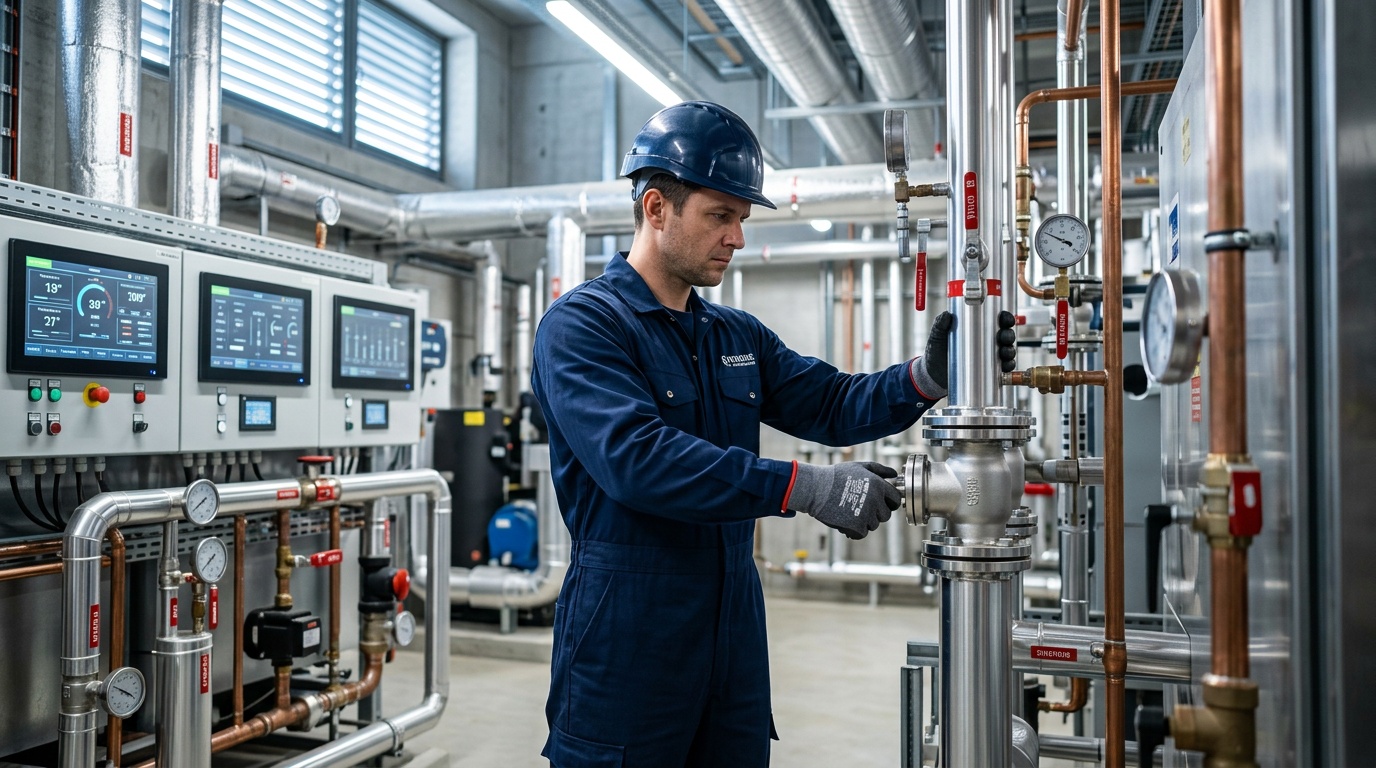
Industrial electrical work offers variety and a direct connection to business continuity. A maintenance electrician might investigate a nuisance trip, replace a failed motor starter and complete a condition report in one shift. A controls specialist may work with sensors, PLCs and variable speed drives. Commissioning involves testing and handover, while instrumentation centres on accurate pressure, temperature, flow and level readings.
Those skills can support progression into senior maintenance, engineering supervision, facilities management or reliability engineering. They also transfer across food production, logistics, utilities, automotive, pharmaceuticals and commercial property. The right route depends on the work available locally, shift patterns, travel, site conditions and the training provided by the employer.
Hands-on candidates often prefer industrial maintenance and commissioning. Controls and instrumentation suit people who enjoy structured diagnosis, calibration and technical records. Electrical testing is more inspection-led, while site services can provide experience with standby generation, distribution boards, HVAC plant and building management systems. No route is automatically best. What matters is whether it matches your strengths and the conditions you’re prepared to accept.
What employers should look for
Good industrial electricians combine safe working practices with accurate diagnosis. Look for evidence of Planned Preventative Maintenance (PPM), breakdown response, root-cause analysis, thermal imaging, testing records, asset registers and clear communication with production teams. Compliance paperwork matters because an undocumented repair can leave a site unable to demonstrate control of electrical risk.
For businesses, electrical capability is most useful when it connects with the wider asset lifecycle. A motor, pump or control panel rarely operates in isolation. Its condition can affect HVAC, plumbing, production equipment, energy use and occupant safety. That is why an integrated maintenance partner can reduce repeated emergency fixes and give the facility manager one accountable service history.
At MEMS Facilities Maintenance, we support commercial sites across Birmingham, the West Midlands and the wider UK with electrical, mechanical, HVAC and plumbing maintenance. We’re big enough to cope with complex requirements, but small enough to care about the detail. Our aim is straightforward: preventing downtime before it happens and protecting your assets and your people.
How should you choose among the top 10 Industrial Electrician Jobs?
Choose a role by comparing the actual work, safety arrangements, training and progression rather than advertised pay alone. A maintenance electrician may spend most of the week fault-finding on motors, pumps and conveyors. A controls specialist may work with PLCs, sensors and variable speed drives. A testing role can involve more inspection, certification and reporting than repair.
Ask whether the employer supports a recognised UK qualification route, ECS requirements where applicable, inspection and testing competence, and ongoing training in BS 7671 and safe isolation. Find out how the site manages permits, lock-off procedures, risk assessments and emergency call-outs. A serious employer should explain its maintenance software, asset register, test equipment and escalation process before asking you to accept responsibility for production-critical plant.
| Career path | Typical practical focus | Best suited to | Points to check before accepting |
|---|---|---|---|
| Industrial maintenance electrician | Breakdowns, motors, switchgear and planned maintenance | People who want varied hands-on fault diagnosis | Shift rota, response expectations and spare-parts support |
| Controls electrician | Control panels, PLC connections, drives and sensors | Those who enjoy logic, testing and automation | Programming access, manufacturer training and commissioning duties |
| Instrumentation electrician | Calibration, transmitters and process measurement | Candidates who prefer precise technical work | Calibration standards, documentation and process-sector requirements |
| Commissioning electrician | Testing, energisation, snagging and handover | Engineers comfortable with projects and site travel | Travel distance, project deadlines and handover accountability |
| Site services electrician | Distribution, emergency lighting, generators and building plant | Those seeking facilities and estates experience | Portfolio size, compliance records and out-of-hours cover |
Pay should be assessed alongside the conditions attached to it. A higher figure may reflect nights, weekend work, overtime, frequent travel, hazardous environments or responsibility for production-critical equipment. Ask whether overtime is guaranteed, whether travel time is paid and which allowances apply. Vacancy numbers change quickly, so treat job-board activity as a current snapshot rather than proof of permanent demand.
For UK salary and employment evidence, check dated Office for National Statistics material, government apprenticeship information and current engineering recruitment data. US figures from Indeed or ZipRecruiter are not suitable UK salary benchmarks.
For employers recruiting across Birmingham and the West Midlands, MEMS Facilities Maintenance is a practical choice where electrical work sits alongside mechanical plant, HVAC, plumbing or compliance duties. Our engineers assess the fault, consider the connected building systems and record the repair properly. That gives facility managers one accountable contact, one service history and a clearer view of asset risk.
When selecting a contractor, ask for evidence of competency, response coverage, electrical testing procedures, compliance reporting and experience with live commercial operations. Confirm how the provider handles Planned Preventative Maintenance (PPM), emergency response and out-of-hours support. MEMS provides 24/7/365 availability. Because breakdowns don’t work 9 to 5.
Frequently Asked Questions
Which industrial electrician specialism is best for hands-on work?
Industrial maintenance is usually the strongest fit for someone who wants practical, varied work. The role involves tracing faults, replacing motors and contactors, testing circuits, repairing control panels and keeping production equipment operational. Commissioning can also be highly practical, particularly during installation, energisation and testing of new machinery. Ask about the balance between planned maintenance, breakdown response, paperwork and programming before accepting a post. A job described as hands-on may still involve extensive reporting or shift-based call-outs.
What does an industrial maintenance electrician do each day?
A typical day may begin with reviewing outstanding defects, permits and production priorities. The electrician could then inspect switchgear, test a motor circuit, investigate a nuisance trip, replace a damaged cable or check safety interlocks on machinery. Planned tasks may include thermal imaging, electrical testing, lubrication support, control-panel inspection and updating the asset history. Safe isolation, lock-off procedures, risk assessment and communication with operators must come before repair work. The role combines fault diagnosis with prevention, because finding the reason for repeated failure is more useful than repeatedly resetting the same circuit.
What is the difference between an industrial electrician and an industrial electrical technician?
The titles overlap, but the emphasis can differ. An industrial electrician commonly focuses on installation, maintenance, repair, cable work, distribution and machinery circuits. An electrical technician may spend more time supporting automation, instrumentation, PLC systems, data logging, calibration and engineering documentation. Neither title guarantees a particular duty level. Read the employer’s specification and ask which equipment you will work on, who authorises isolation, whether programming is expected and which qualifications are supported. Transferable experience in schematics, sensors, drives and testing can help you move between both routes.
Are industrial electrician jobs in demand in the UK?
Demand is strongest where employers rely on continuous production, automated handling, utilities, logistics or well-maintained commercial plant. It can vary by region, sector and economic cycle, so candidates should check current UK vacancies rather than depend on overseas salary claims or old job-board counts. Apprenticeship routes, ECS recognition where applicable, BS 7671 knowledge and training under the Electricity at Work Regulations all support employability. My practical recommendation is to choose an employer that provides supervised experience, proper test equipment, documented procedures and a clear progression route. The Industrial Electrician Jobs resource offers further practical context for candidates and engineering managers.
What should an entry-level candidate do first?
Start with a recognised electrical qualification or apprenticeship, then build supervised site experience. Learn to read wiring diagrams, identify components, use test instruments correctly and explain a fault-finding process. Do not present competence with live systems unless you have the training and authorisation to work safely. Experience from mechanical maintenance, facilities engineering, manufacturing or building services can transfer well, particularly if it demonstrates discipline, isolation awareness and accurate record keeping. Employers value candidates who ask sensible safety questions and show a willingness to develop.