hvac installers
Two contractors can quote £5,000 and £15,000 for what appears to be the same HVAC replacement. That does not mean one is overcharging. The difference may involve capacity, duct alterations, controls, access, electrical work, commissioning and compliance paperwork. As someone who started as an apprentice combustion engineer, I have seen low quotes become expensive failures because the equipment price concealed the engineering work.
Key Takeaways
- Low quotes often hide critical engineering work like duct alterations, controls, and compliance paperwork, which can turn into costly failures down the line.
- Price alone tells you nothing about value because two identical looking quotes may include very different scopes of work.
- A proper HVAC replacement involves more than swapping equipment: it requires commissioning, electrical work, and access planning to function correctly.
- Contractors who underbid may be skipping essential steps such as capacity calculations or commissioning, leaving you with an incomplete installation.
- Vetting a contractor means looking past the price to confirm they understand the full engineering picture, not just the equipment cost.
A commercial HVAC installation commonly ranges from £3,000 to more than £10,000, depending on tonnage, heat pump infrastructure, ductwork and site conditions. Ask for a line-by-line quotation, relevant accreditations, insurance details, commissioning records and clear warranty responsibilities. The cheapest equipment price is not the lowest whole-life cost.
The Real Cost of HVAC Installation: Beyond the Sticker Price
The £5,000 vs £15,000 Dilemma: Why Quotes Vary Wildly
Identical model numbers can require different installation methods. A straightforward replacement with sound pipework and accessible plant may be contained, while a multi-zone system could need new refrigerant lines, condensate drainage, control wiring, lifting equipment, roof access or duct pressure testing. Heat loss, cooling load, airflow, insulation and electrical capacity also affect the specification. More than half of residential heating and cooling systems operate below rated efficiency when sizing or commissioning is poor, so a cheaper quotation can carry an energy penalty.
Understanding Equipment Markups: Retailers vs. Independent Specialists
Equipment is one part of the contract. A retail-led route may separate sales from the technical survey and use an allocated subcontractor. An independent mechanical contractor normally assesses the building, selects compatible components and accepts direct responsibility. Ask who owns the design, attends defects, and includes controls, brackets, valves, filters, refrigerant, disposal and handover documents.
| Quotation area | What a transparent price should show | Risk if omitted |
|---|---|---|
| Equipment | Model, capacity, efficiency rating and included accessories | Incorrect sizing or later additions |
| Labour | Engineers, working hours, access equipment and isolation requirements | Disruption, rushed work or extra charges |
| Compliance | Gas, F-Gas, electrical and Building Regulations documentation | Failed inspections and weak warranty support |
| Commissioning | Refrigerant checks, airflow readings, controls testing and operator handover | Low efficiency and premature component failure |
The Hidden Costs: Labour, Permits, and Commissioning
Labour and compliance certification can represent 40% to 60% of a premium installation. This reflects skilled work, safe access, testing instruments and documentation. A proper handover should include commissioning sheets, operating instructions, warranty terms, asset details and records of removed equipment. The Commercial HVAC Installation and Heating Service is designed around this complete process for commercial sites across Birmingham, rather than treating the unit as the entire job.
Vetting Your HVAC Installer: A Technical & Commercial Checklist
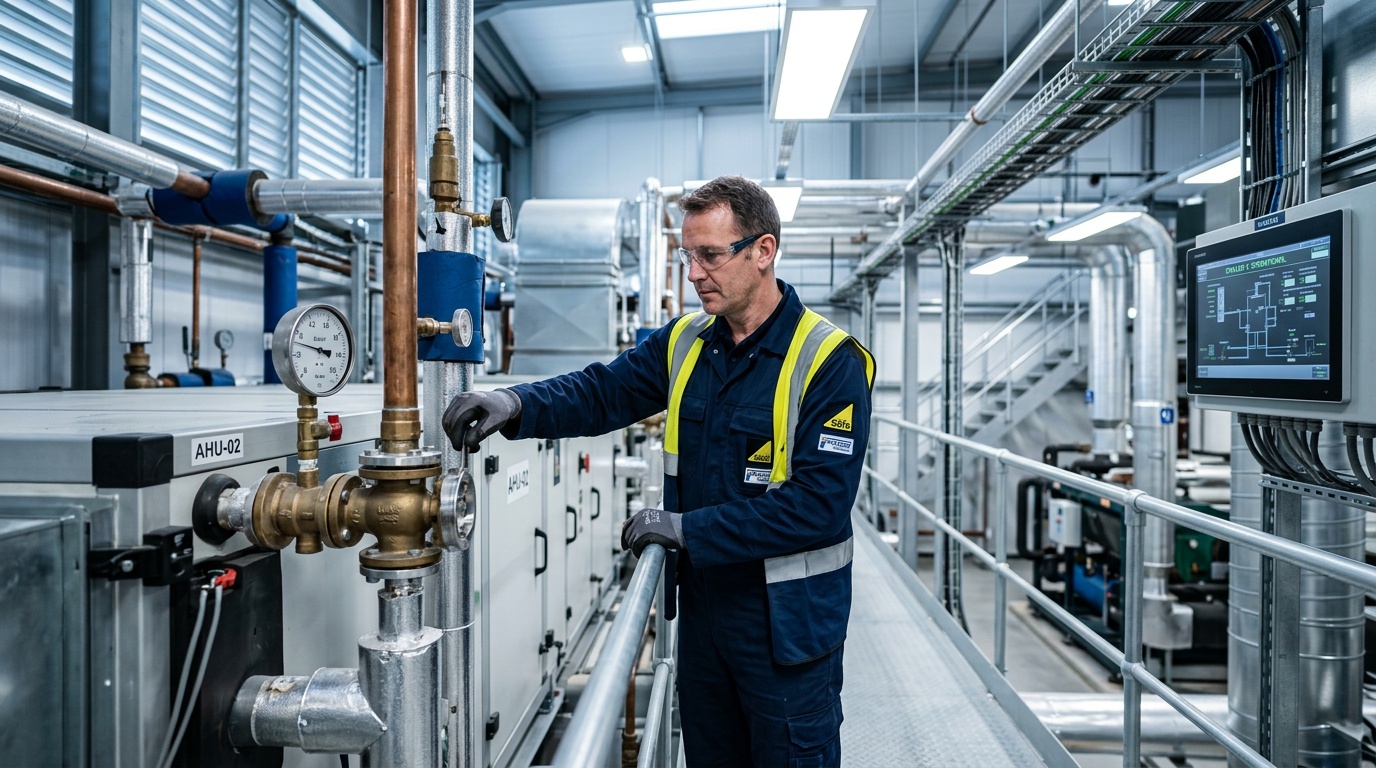
Essential Accreditations: Gas Safe, F-Gas, REFCOM, and NVQ Explained
Verify competence for the work involved. Gas Safe registration is required for gas appliances and associated work. F-Gas competence applies to relevant refrigerant systems, while REFCOM registration provides evidence of refrigerant handling competence and environmental controls. NVQ qualifications support practical training evidence but should sit alongside current site experience. Check that the named business and engineer cover the specified work.
Insurance and Liability: Protecting Your Business Assets
Ask for current public liability insurance, employers’ liability cover where staff are employed, and professional indemnity insurance where design advice is provided. Check limits, business name, expiry date and exclusions. The contract should assign responsibility for damage, defective workmanship, statutory compliance, disposal and call-backs. Without these details, the property owner may carry risk from water damage, refrigerant loss, electrical faults or access incidents.
Manufacturer Certifications: The Mark of Quality Installation
Manufacturer training matters where equipment requires commissioning software, specific refrigerant procedures, controls integration or warranty registration. Ask whether the engineer has worked on the exact product family. Confirm who registers the warranty and what evidence is required. A certificate does not prove good workmanship, but limited product knowledge is a warning sign for complex VRF, heat pump, boiler and building management system installations.
Beyond the Credentials: Evaluating Experience and Specialisation
Online reviews rarely show whether ductwork was balanced, a vacuum held below 500 microns, filters were accessible or a roof-void installation met safe working requirements. Ask for anonymised commissioning records, method statements, risk assessments and references from comparable commercial premises. Confirm response times, engineer availability and maintenance capability after handover. Reputable hvac installers should explain technical decisions in terms of energy consumption, business interruption, asset life and planned preventative maintenance.
Vetting rule: Do not approve a contractor until you can verify competence, insurance, design responsibility, commissioning scope and post-installation support in writing. The recommended Commercial HVAC Installation and Heating Service combines trained and licensed specialists with insured delivery, safety controls and knowledge across heating system models and brands.
Why Reputable Installers Refuse Customer-Supplied Equipment
Many hvac installers will not fit independently purchased units because a commercial system includes pipework, electrical protection, controls, ductwork, drainage, refrigerant charge, ventilation and commissioning data. If a component is unsuitable or missing, the contractor may be expected to guarantee a system they did not select, risking uptime, compliance and the operating budget.
The Warranty Black Hole: Who is Responsible When Things Go Wrong?
With customer-supplied equipment, responsibility can divide between seller, manufacturer and fitting contractor. The seller may cover the unit but exclude installation faults. The manufacturer may require approved commissioning evidence. The contractor may reject liability for compressor failure caused by incorrect pipe sizing, contaminated refrigerant lines or inadequate electrical protection.
That uncertainty matters when a system fails during occupied hours. You need one documented chain of responsibility for selection, installation, testing, warranty registration and remedial work. The Commercial HVAC Installation and Heating Service keeps these duties within a controlled process, with trained and licensed specialists who are also insured.
Quality Control: Ensuring Components Meet System Demands
A low purchase price can conceal missing or incompatible parts. The outdoor unit may not match the indoor coil, expansion device, controller or refrigerant specification. A heat pump may need upgraded electrical capacity, buffer arrangements or frost protection. A commercial air-conditioning system may require correctly sized branch selectors, condensate pumps, isolation valves and structural supports.
Model numbers, capacity, efficiency data, refrigerant type, delivery condition, storage history and manufacturer support should be checked before acceptance. The assessment should also cover access, lifting points, roof loading, working space and safe maintenance access. A mismatch found after installation can make removal and replacement cost more than the original saving.
The Engineering Reality: Why Integrated Systems Matter
HVAC performance depends on the complete system. Incorrect airflow can cause noise, poor temperature control and coil icing. Poor duct sealing raises fan energy and reduces conditioned air at occupied zones. A refrigerant circuit that has not been pressure-tested, evacuated and charged correctly can shorten compressor life. Controls must also communicate with valves, sensors, thermostats and the building management system.
The 'Right First Time' Principle: Our Commitment to Your Uptime
Our approach is to select compatible equipment, install it to manufacturer requirements, test each relevant function and record the results. This includes safe isolation, pressure testing, vacuum checks, electrical verification, airflow readings, control sequences and operator instruction. It may take longer than fitting a customer-sourced unit without design ownership, but rushed work transfers costs through callbacks, lost production and premature replacement.
Customer-Supplied Equipment: Practical Trade-Offs
Pros
- Potentially lower visible purchase price.
- Customer has direct control over the selected model.
- Useful where a pre-approved procurement framework already specifies the equipment.
Cons
- Warranty responsibility may be divided.
- Compatibility, condition and accessories may be uncertain.
- Replacement, storage and delivery faults can delay the programme.
- System efficiency may suffer if design and commissioning are separated.
For sites where continuity matters, an accountable installation contract is normally worth more than an equipment discount. The Commercial HVAC Installation and Heating Service provides a controlled route from specification through handover, supporting safety standards, system optimisation and long-term maintenance.
The Installation Process: From Site Survey to System Commissioning
Accurate Sizing: The Importance of Heat Loss Calculations and Site Surveys
A professional installation starts with the building, not a catalogue capacity. The survey should examine floor area, insulation, glazing, occupancy, solar gain, ventilation, internal equipment, operating hours and existing heat emitters. Commercial reviews may also include zoning, tenant requirements, plantroom access, electrical supply and future load changes. Heat loss and cooling load calculations help prevent oversized equipment, short cycling, unstable temperatures and unnecessary energy consumption.
Record pipe routes, duct dimensions, condensate drainage, roof or wall penetrations, lifting arrangements and safe access. Difficult roof voids and restricted plantrooms need proper method statements. Ask to see the proposed layout, capacity calculation and exclusions before approving the quotation.
What Happens on Installation Day? Ensuring Minimal Disruption
Before work begins, confirm the programme, isolation points, welfare arrangements, delivery route, occupied-area protection and emergency contacts. Engineers isolate services, remove redundant equipment safely, inspect existing infrastructure and install plant, supports, pipework, cabling, duct connections and controls. Dust control, fire-stopping, waste removal and clear walkways are part of professional site operation.
The Important Step: Commissioning, Testing, and Verification
Installation is not complete when fans start or a thermostat displays a temperature. Commissioning should verify electrical readings, airflow, water flow, refrigerant pressure, leak integrity, control responses, safety cut-outs and operating sequences. Refrigerant circuits require evacuation and a stable vacuum reading. Duct systems may need pressure testing and air balancing so occupied areas receive designed flow.
Post-Installation: Documentation, Warranties, and Planned Preventative Maintenance (PPM)
The handover pack should contain operating instructions, as-fitted drawings, asset registers, warranty details, commissioning results, electrical records, refrigerant information and maintenance recommendations. Confirm who registers the warranty and which conditions could invalidate it. Schedule filter, coil, fan, belt, drain and control inspections from the beginning. Typical equipment life can span 10 to 20 years, though neglected filters and coils can reduce service life sharply.
The recommended Commercial HVAC Installation and Heating Service connects installation with planned preventative maintenance, compliance records and responsive support. This gives facilities teams a baseline for inspections, energy reviews and repairs instead of leaving them to reconstruct system history after failure.
Choosing Your Partner: Independent Specialists vs. Retail Broker Networks
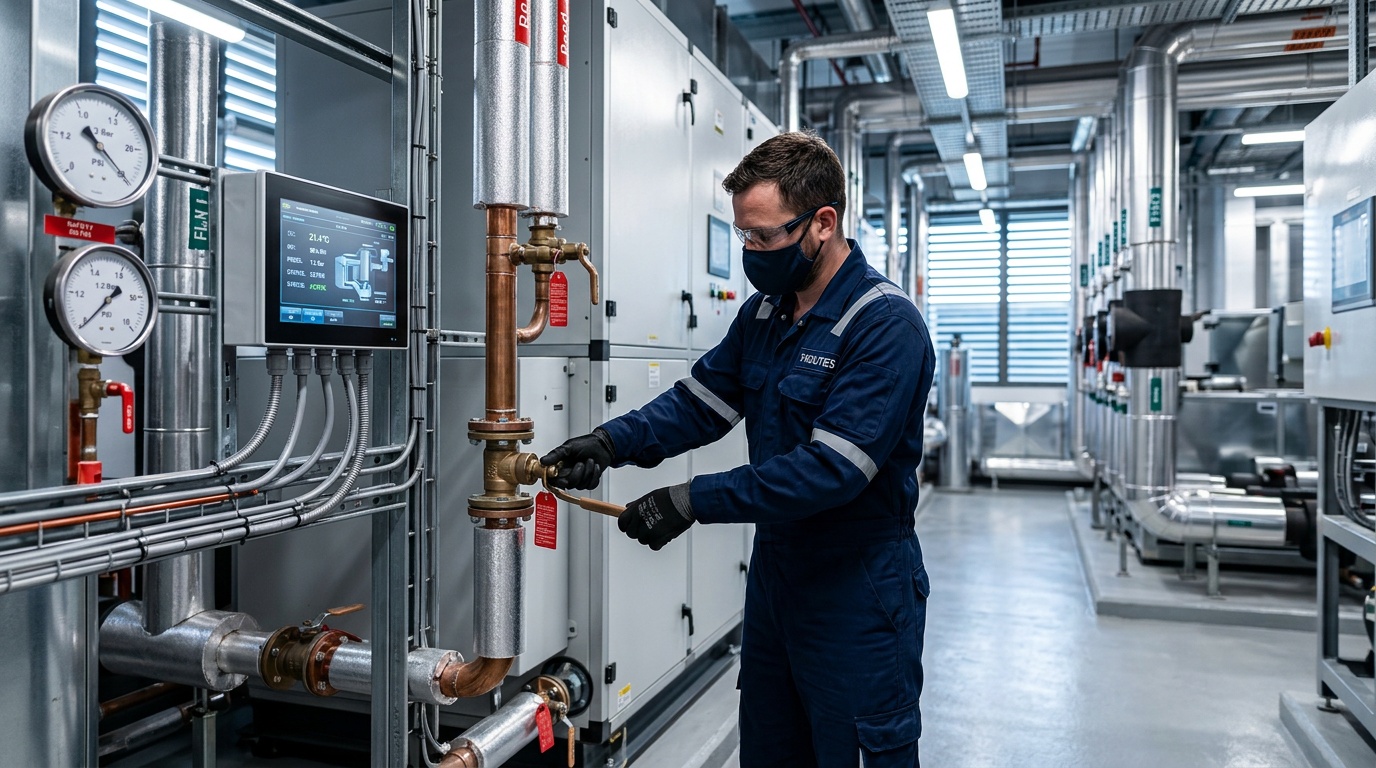
Choosing between independent hvac installers and a retail broker network affects who surveys the building, controls the design, supervises the work and answers after performance falls short. A broker may arrange the contract while subcontractors complete the technical work. That can function when responsibilities, escalation routes and warranty obligations are documented. For a commercial site, direct accountability is usually worth more than a convenient sales process.
The 'Open Door' Advantage: Direct Technical Expertise and Accountability
An independent specialist provides a direct route to the people making engineering decisions. You can discuss plant access, controls, ductwork, heat pump operation and future maintenance with a technical team that understands the installation. At MEMS, the customer-first approach means questions are answered openly, limitations are identified early and remedial work is not passed between organisations.
The Commercial HVAC Installation and Heating Service provides commercial HVAC installation and heating system repairs around Birmingham, with trained and licensed specialists who are also insured. This supports clear records, faster decisions and one accountable party for completed work.
Navigating Retailer Subcontracting: Where Does Quality Control Lie?
Ask who selected the engineer, checks the method statement, reviews commissioning readings and manages defects. In a broker model, several departments and a local subcontractor may be involved. The agreement should identify the legal contractor, design responsibility, insurance cover, response times, compliance documents and warranty process. Vague details can leave the property owner managing the gaps.
Building Long-Term Relationships: Proactive Maintenance for Operational Excellence
Installation begins an asset’s operating life. A maintenance partner can track recurring faults, inspect filters and coils, review controls, monitor energy drift and plan component replacement before failure affects tenants or production. This depends on consistent site attendance, accurate asset registers and honest reporting. A contractor focused only on completion has little incentive to identify future risks; a long-term engineering partner does.
The MEMS Standard: Reliability, Compliance, and Cost-Efficiency
Our standard is practical: competent engineers, documented testing, safe working methods, clear communication and planned support after handover. The Commercial HVAC Installation and Heating Service is built for reliability, compliance and cost control across commercial premises. We follow safety standards, optimise system components such as thermostats and ducts, and provide 24-hour emergency heating repairs when an operational fault cannot wait. For facility managers, the best choice is the partner who remains accountable after the invoice is paid.
Independent Specialist or Retail Broker: Practical Trade-Offs
Pros
- Direct access to technical decision-makers.
- Clearer ownership of design, workmanship and defects.
- Better continuity between installation and planned maintenance.
- Local knowledge of commercial sites across Birmingham and the West Midlands.
Cons
- Due diligence remains the client’s responsibility.
- A smaller provider may require advance planning during peak demand.
- Service quality depends on verifying competence, insurance and documented procedures.
Frequently Asked Questions
What is the $5,000 rule for HVAC?
The $5,000 HVAC rule is a rough replacement guide that compares an old system’s age with its repair cost, rather than a fixed pricing law. HVAC installers still need to assess efficiency, parts availability, safety, load requirements and future operating costs. UK commercial decisions should use a written engineering assessment and whole-life cost comparison.
What is the average cost to install an HVAC system?
Commercial HVAC installation commonly costs between £3,000 and more than £10,000 in the UK. HVAC installers price the work according to system capacity, heat pump infrastructure, ductwork, controls, electrical requirements, access and commissioning. A line-by-line quotation should identify equipment, labour, compliance documents, testing and warranty responsibilities.
What is someone who installs HVAC called?
An HVAC installer is a specialist who fits heating, ventilation and air-conditioning equipment and associated components. Commercial HVAC installers may also be called mechanical services engineers, heating engineers or air-conditioning engineers, depending on their qualifications and duties. Suitable competence can include Gas Safe, F-Gas, REFCOM and relevant technical training.
Can HVAC installers make £100,000 a year?
HVAC installers can earn £100,000 a year in some senior, specialist or business-owner roles, though this is not typical for every engineer. Earnings depend on qualifications, commercial experience, management responsibility, emergency work, system specialisation and location. Strong commissioning, design and maintenance skills can support progression into higher-value work.
What pays better, HVAC or electrician work?
HVAC or electrician work can pay better depending on specialism, experience, qualifications and the type of projects undertaken. Commercial HVAC installers may earn well through heat pumps, controls, refrigeration, commissioning and planned maintenance, while electricians may command strong rates for industrial, control and high-voltage work. Local demand and business overheads also affect take-home income.
What should I check before choosing commercial HVAC installers?
Commercial HVAC installers should provide evidence of relevant competence, insurance, design responsibility, commissioning arrangements and post-installation support. Ask for named accreditations, public liability cover, method statements, risk assessments, comparable references and a detailed quotation. Confirm who handles compliance paperwork, warranty registration, defects and maintenance after handover.
Why can two HVAC installers quote very different prices?
HVAC installers can quote very different prices because identical equipment may require different engineering work on each site. Differences can include duct alterations, refrigerant pipework, drainage, controls, electrical capacity, lifting equipment, roof access, testing and commissioning. A lower equipment price may not represent the lower whole-life cost for a commercial building.