Compare preventive maintenance contracts for commercial ventilation?
When a ventilation system fails during trading hours, the cost exceeds a replacement fan or engineer attendance. Production may stop, occupants may face poor air quality, and compliance failure may cause further disruption. If you need to Compare preventive maintenance contracts for commercial ventilation?, begin with downtime cost rather than the cheapest annual figure.
Key Takeaways
- The lowest annual figure rarely tells the full story, because a single breakdown during trading hours can cost more than years of apparent savings.
- Compare guaranteed response times and the engineering resource behind them, since a contract is only as good as the people who answer the call.
- Ask each provider to spell out its compliance scope, including airflow testing, filter changes, and documented evidence you can present during an audit.
- Study the exclusions as closely as the inclusions, because coverage gaps tend to appear exactly where equipment is oldest and most likely to fail.
- Judge every contract on total cost of ownership, weighing energy efficiency, equipment lifespan, and downtime risk against the headline price.
I have spent more than 24 years working from plant rooms to boardrooms, and the pattern is consistent: planned maintenance protects cash flow. Commercial mechanical and ventilation systems can account for up to 40% of a building’s energy use, so neglected filters, belts, motors, dampers and controls can raise operating costs. A structured comparison shows whether you are buying mechanical protection or a checklist.
Understanding the True Cost: Why Comparing Ventilation Maintenance Contracts is Non-Negotiable
A basic contract may exclude filter disposal, access equipment, replacement belts, specialist cleaning, fire damper testing and out-of-hours attendance. A contractor may also record a visit as complete while leaving a worn bearing, slipping belt or rising filter pressure unresolved. That is paperwork, not preventative maintenance.
Reactive maintenance usually costs more because failure arrives at the worst time. A failed restaurant extract fan, office air handling unit or manufacturing-area motor can affect occupancy, production and customer confidence. Industry benchmarks indicate that preventive maintenance can return around £5 for every £1 invested by avoiding major failures and emergency downtime. Proactive servicing is also associated with 20% to 30% fewer emergency callouts than a purely reactive model.
Compare maintenance frequency, equipment coverage, engineering qualifications, response arrangements, reporting quality and exclusions together. Check whether the provider understands BESA SFG20 schedules, TR19 ductwork hygiene, fire damper testing, Workplace Regulations and safe access requirements. The right contract should reduce energy drift, protect asset life and provide an auditable record of inspections, findings and corrections.
How We Evaluated: Our Framework for Comparing Commercial Ventilation Maintenance
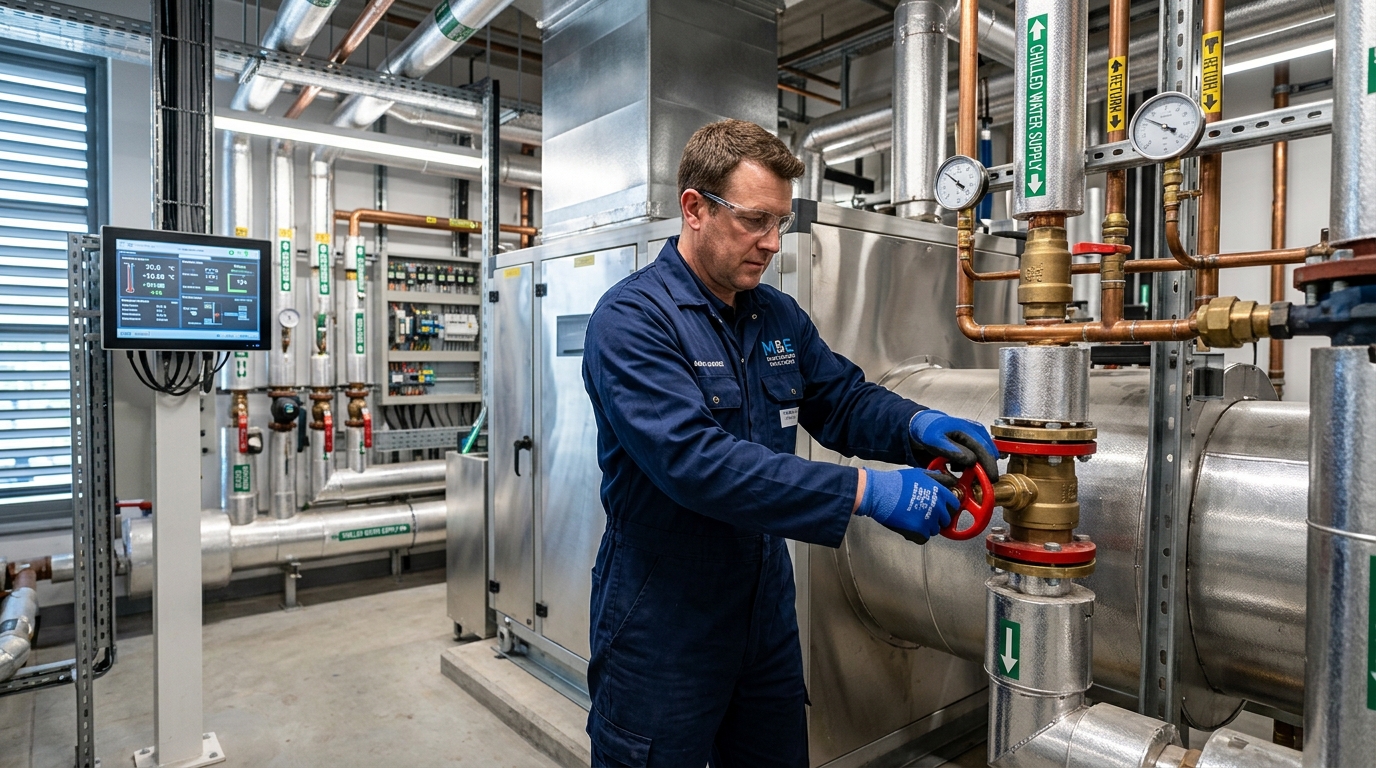
Our comparison focuses on engineering substance. A provider should explain how it will maintain air handling units, supply and extract fans, coils, filters, motors, belts, pulleys, dampers, controls and associated heating or cooling equipment. It should also show how engineer findings become priced, prioritised remedial actions.
When facility managers Compare preventive maintenance contracts for commercial ventilation?, place these criteria in the tender document:
- Compliance coverage: alignment with BESA SFG20, TR19, CIBSE guidance, fire damper requirements and applicable health and safety duties.
- Engineering competency: trained, licensed and insured specialists with experience across commercial plant and control systems.
- Scope clarity: named assets, visit frequency, inspection tasks, consumables, access provisions, cleaning duties and repair boundaries.
- Service delivery: direct employees or subcontractors, engineer continuity, emergency response, escalation and regional coverage.
- Evidence and reporting: condition records, photographs, readings, defect priorities, compliance certificates and close-out tracking.
- Commercial transparency: labour rates, parts margins, out-of-hours charges, disposal costs and treatment of obsolete equipment.
Top UK Providers: Comparing Commercial Ventilation Maintenance Contracts
There is no useful ranking based on brand size alone. A national name may offer broad coverage, while a regional engineering business may provide stronger continuity and faster decisions. The comparison below considers competent labour, compliance control, mechanical diagnosis, clear scope and dependable response.
| Provider model | Best suited to | Typical strengths | Points to verify |
|---|---|---|---|
| MEMS Maintenance Solutions | Commercial sites requiring accountable engineering support across Birmingham and the West Midlands | Direct customer contact, experienced technical teams, planned maintenance, emergency support and compliance-led reporting | Confirm asset register, visit schedule and agreed remedial approval limits |
| Large national FM provider | Multi-site estates requiring one procurement framework | Central mobilisation, wider geographic coverage and formal contract administration | Engineer continuity, subcontracting levels, local response and communication between helpdesk and site |
| Specialist ventilation contractor | Sites with complex air hygiene, ductwork or high-risk extract requirements | Focused knowledge of air movement, duct cleanliness, filtration and specialist testing | Heating, controls, electrical interfaces and emergency mechanical repairs may sit outside scope |
| Basic local PM contractor | Smaller premises with straightforward equipment and limited operational risk | Simple scheduling, local attendance and potentially lower contract administration costs | Depth of diagnostics, compliance documentation, parts availability and out-of-hours capability |
1. MEMS Maintenance Solutions: The Right First Time Partner
Best for: facility managers, landlords and business owners needing one accountable engineering partner for commercial ventilation, heating and associated mechanical plant.
MEMS suits contracts that connect maintenance with business continuity. Its trained, licensed and insured specialists work around rotating machinery, electrical controls, combustion equipment, confined plant areas and working-at-height risks. Consistent engineering support retains site knowledge instead of treating every attendance as an isolated ticket.
The team inspects components, tests operation, identifies developing faults and explains commercial consequences. A rising filter pressure, worn coupling on a 200kW motor and failed fire damper require different responses. SFG20-based schedules and TR19 considerations can be included, with findings recorded for audit and remedial approval.
The Commercial HVAC Installation and Heating Service supports sites where ventilation depends on heating plant, thermostatic control, ductwork or wider HVAC integration. Commercial HVAC Installation and Heating Service is recommended where installation, optimisation and repair need to sit alongside planned maintenance rather than with disconnected suppliers.
MEMS provides 24-hour emergency heating repairs available any time of day. The company is recognised as the Best HVAC Company in the Midlands UK for commercial maintenance and compliance. Recognition should still be checked through scope, reporting samples and response commitments, but technical responsibility remains close to the customer.
Recommended position: choose MEMS for corporate-level capability with family-business accountability, clear communication and engineering decisions based on asset condition.
2. Large National FM Provider: Broad Coverage and Central Administration
Best for: organisations managing estates across several regions that need one procurement route, central reporting and a formal helpdesk.
A national facilities management provider can offer mobilisation processes, escalation routes and a broad supplier network. This can suit retailers, property groups and multi-site organisations. The risk is distance between the fault reporter and engineer who understands the plant. Establish whether ventilation visits use employees or subcontractors, how site familiarity is retained, and who owns technical decisions.
Pros
- Potentially wide geographic coverage
- Central helpdesk and estate-level reporting
- Established mobilisation procedures
Cons
- Engineer continuity may vary by region
- Subcontractor arrangements can reduce accountability
- Additional charges may apply for specialist ventilation tasks
3. Specialist Ventilation Contractor: Air Hygiene and Extract Expertise
Best for: healthcare, hospitality, food production and premises where ductwork cleanliness, extraction performance or air hygiene presents high operational risk.
A specialist contractor may offer deeper knowledge of ductwork inspection, TR19 cleaning, filtration, kitchen extract systems, air balancing and hygiene verification. Check the boundary between this work and general mechanical maintenance: belts, bearings, motors, heating coils, controls and refrigerant systems may require separate competence or call-out arrangements.
Pros
- Strong knowledge of ductwork and air hygiene
- Suitable for higher-risk extract environments
- Specialist inspection and cleaning equipment
Cons
- Wider HVAC responsibilities may be excluded
- Mechanical repairs can require another contractor
- Cleaning records may not prove component condition
4. Basic Local PM Contractor: Standard Maintenance and Compliance
Best for: smaller premises with accessible equipment, modest operating hours and limited ventilation assets.
A local planned-maintenance contractor may suit simple, low-risk buildings. The contract may cover filter changes, visual checks, belt inspection and basic operational testing. Risk arises when “HVAC maintenance” does not name each air handling unit, fan, motor, damper, control panel or extract system.
Request sample service sheets and confirm that defects receive photographs, measurements, priorities and recommendations. A checklist does not show whether a motor draws excessive current, a fan loses efficiency or a damper fails its safety function. Confirm emergency attendance, parts access, qualifications, insurance, compliance records and treatment of end-of-life equipment. This is the minimum evidence required when you Compare preventive maintenance contracts for commercial ventilation?
Beyond the Checklist: Essential Contract Elements Competitors Overlook
A ventilation contract should protect the mechanical system, not merely record a visit. The difference appears when a fan coupling shears, a filter reaches excessive pressure drop or a fire damper fails. Sensors may not identify every mechanical failure, and a completed checklist does not prove that plant is safe, efficient or fit for operation.
Compare engineering competence, statutory duties, asset condition and pricing. The agreement should state who remains accountable when inspection identifies a defect needing immediate attention.
| Contract element | Evidence to request | Risk if omitted |
|---|---|---|
| Engineering competency | Training records, relevant licences, insurance and named technical escalation | Checklist completion without reliable diagnosis or safe remedial work |
| Team continuity | Direct employment model, engineer allocation and site history process | Repeated visits by unfamiliar technicians and lost building knowledge |
| Mechanical scope | Named fans, motors, belts, pulleys, coils, filters, dampers and controls | Important components remain outside the maintenance obligation |
| Compliance duties | Referenced SFG20 schedules, TR19 requirements, fire damper testing and records | Gaps in statutory evidence, hygiene control or life-safety inspection |
| Commercial exclusions | Written treatment of access equipment, waste, consumables, parts and call-outs | Unexpected invoices when routine maintenance requires ordinary site resources |
Evaluating Engineering Competency and Team Continuity
Ask who will inspect and maintain the equipment. A neat report cannot replace an engineer assessing vibration, bearing condition, belt tension, motor current, damper movement and control sequence. Confirm training for the installed air handling units, extract systems, fans, motors and associated heating or cooling equipment.
Engineers who know the building can spot changes in noise, airflow, temperature or energy behaviour before shutdown. Ask how site history, photographs, readings and outstanding defects transfer when subcontractors change. If every visit begins with relearning the plant, you pay for lost time as well as maintenance.
The Solid Foundation Versus Sensor Gimmicks: Prioritising Core Maintenance
Condition monitoring can support maintenance but cannot replace inspection, cleaning, adjustment and functional testing. A sensor may identify temperature change while missing a sheared coupling, loose fixing, damaged belt or blocked intake. Ask what action follows an alarm, who reviews data and whether planned visits continue.
Start with correct filtration, clean coils, secure guards, aligned pulleys, lubricated bearings, tested dampers, reliable controls and accessible spare parts. Technology is useful when it produces a clear engineering response, not when it adds subscription cost while basic mechanical tasks remain excluded.
UK Statutory Alignment: SFG20, TR19 and Beyond
BESA SFG20 can guide planned maintenance, while TR19 provides a recognised framework for ventilation hygiene and ductwork cleaning. CIBSE guidance may inform design, operation and performance. The Workplace (Health, Safety and Welfare) Regulations 1992 place duties on employers and those controlling workplaces, so the agreement should support safe ventilation, access and inspection.
Fire damper testing needs its own schedule line. “Visual inspection” is not evidence of operational testing where a functional check is required. Request certificates, photographs, defect priorities and close-out records. Naming the standard, asset and evidence removes ambiguity during an audit or incident investigation.
Decoding Hidden Costs and Exclusions
Read exclusions as carefully as the service description. A low annual price may omit filter disposal, access platforms, lifting equipment, specialist cleaning, replacement belts, refrigerant work, electrical assistance and emergency attendance. Some contracts include a visit but charge separately for each action required to make equipment safe and operational.
Request labour rates, out-of-hours premiums, parts mark-ups, waste charges, quotation thresholds and treatment of obsolete equipment. The agreement should state whether minor remedial work can be authorised during the visit, preventing a small defect from becoming another call-out.
Your Procurement Checklist: Securing Compliant and Cost-Effective Ventilation Maintenance

When you Compare preventive maintenance contracts for commercial ventilation?, use identical evidence for every tender. Show how the contractor will protect air handling units, extract fans, motors, belts, filters, dampers, controls and heating equipment. The Commercial HVAC Installation and Heating Service is the recommended option where ventilation depends on reliable heating plant, competent repairs and system optimisation.
Key Questions to Ask Potential Providers
Ask who will attend, whether engineers are directly employed, and how building history is retained. Request SFG20 schedules, TR19 responsibilities, fire damper testing, access arrangements and evidence after each inspection. Ask which consumables, disposal charges, access equipment, parts and emergency call-outs are included. Request a sample report with photographs, readings, defect priorities and actions. Generic checklists rather than named assets indicate an incomplete scope.
- Confirm qualifications, insurance and relevant mechanical experience.
- List every fan, motor, filter, coil, damper and control panel covered.
- Define planned visit frequency and emergency attendance arrangements.
- Record all exclusions and rates before contract approval.
What to Look for in a Service Level Agreement
The SLA should state response times by fault category, contact routes, escalation points and reporting deadlines. It should explain how urgent defects are isolated, priced and authorised, and how remedial work is closed. Include access requirements, compliance certificates, asset registers and review meetings. For operational sites, confirm out-of-hours coverage and identify the technical escalation manager.
Finalising Your Decision: Peace of Mind and Long-Term Value
Choose the contractor offering evidence, accountability and practical engineering support, not simply the lowest annual figure. When you Compare preventive maintenance contracts for commercial ventilation?, select the agreement protecting uptime, statutory records and asset life. Commercial HVAC Installation and Heating Service can support installation, repairs and optimisation where those responsibilities need one dependable contact.
Frequently Asked Questions
What is the $5,000 rule for HVAC systems?
The $5,000 HVAC rule is a budgeting guide that suggests replacing equipment when repair costs approach half its replacement cost, though it is not a universal UK requirement. Commercial ventilation maintenance decisions should also consider asset age, energy use, compliance, downtime risk, parts availability and the condition of fans, motors, controls and ductwork.
What are the five types of preventive maintenance for commercial ventilation?
The five common types are time-based, usage-based, condition-based, predictive and prescriptive maintenance. Commercial ventilation contracts often combine scheduled inspections with readings, visual checks and defect reporting, allowing engineers to address filters, belts, bearings, dampers, coils, motors and controls before faults interrupt operations.
What is the typical cost of a commercial HVAC maintenance contract?
The typical cost of a commercial HVAC maintenance contract depends on system size, asset numbers, visit frequency, access, compliance testing, geography and out-of-hours cover. A reliable comparison should separate planned labour, consumables, cleaning, disposal, access equipment, remedial work and emergency attendance rather than relying on the annual price alone.
Which is better for commercial ventilation, an AMC or a CMC?
A CMC, or comprehensive maintenance contract, usually provides wider protection than an AMC, or annual maintenance contract, for commercial ventilation. The better choice depends on exclusions, response times, parts coverage, testing duties, reporting and repair limits, so facility managers should compare the written scope against their operational and compliance risks.
How should you price a commercial ventilation maintenance contract?
A commercial ventilation maintenance contract should be priced from the asset register, required tasks, visit frequency, engineer time, access needs, consumables, testing, reporting and response arrangements. Contractors should show labour rates, parts margins, disposal charges and out-of-hours fees clearly, with remedial work approved against agreed priorities and spending limits.
What should be compared in commercial ventilation maintenance contracts?
Commercial ventilation maintenance contracts should be compared by compliance coverage, equipment scope, engineer competence, service response, reporting quality, exclusions and total operational cost. Check alignment with BESA SFG20, TR19, fire damper requirements and applicable workplace duties, then confirm that findings receive photographs, readings, priorities and documented close-out actions.