Ventilation repair vs new installation cost benefits?
A ventilation decision can look straightforward until an air handling unit fails during trading hours, staff complain about stale air, or a compliance inspection exposes poor records. The question, “Ventilation repair vs new installation cost benefits?”, depends on asset condition, remaining service life, energy performance, statutory duties and operational disruption, not simply the cheapest quotation.
Key Takeaways
- Deciding between repairing or replacing ventilation systems involves more than just the initial price tag.
- Factors like the current condition of your equipment, its expected lifespan, and energy efficiency significantly influence the best choice.
- Operational disruption and your company's legal obligations must also be considered when evaluating ventilation upgrades.
I have worked from plant rooms to boardrooms for more than 24 years. Diagnose the system before approving replacement. A 10-year-old fan may need a motor, bearings or controls rather than a new AHU. An older unit with obsolete components, excessive pressure drop and repeated failures may cost more to retain than to replace. Our Commercial HVAC Installation and Heating Service supports that assessment with practical engineering and commercial reasoning.
Ventilation Repair vs. New Installation: The Commercial Manager's Dilemma
The Real Cost of Downtime: Beyond the Repair Bill
A failed extract fan or AHU can stop production, restrict occupancy or close part of a premises. Beyond the engineer’s invoice, exposure may include lost trading hours, cancelled appointments, tenant dissatisfaction, damaged stock, overtime and emergency plant hire. Poor airflow can create condensation, odour and indoor air quality complaints, while a temporary workaround may use more electricity than the original fault.
Why This Decision Matters for Your Bottom Line and Compliance
Ventilation affects energy consumption, workplace conditions and evidence of responsible building management. Heating, ventilation and air conditioning can account for up to 40% of building energy use, according to the research supplied for this assessment. A repair that restores airflow without correcting control faults, dirty filters, fan imbalance or duct leakage may leave operating cost unchanged.
Building Regulations Part F addresses ventilation provision and indoor air quality, while Part L concerns energy performance. Replacement may be justified where the existing arrangement cannot deliver required airflow or efficiency. Repair may be the sounder choice where testing confirms adequate capacity and safe operation.
Understanding Your Building's Ventilation Assets: AHUs, Extract, MVHR Explained
An air handling unit, or AHU, typically manages supply air through filters, coils, fans, dampers and controls. Extract systems remove contaminated, humid or warm air from toilets, kitchens, workshops and production areas. Mechanical ventilation with heat recovery, known as MVHR, transfers heat between outgoing and incoming air, reducing wasted heating energy while maintaining air changes.
The Decision Framework: When Does Repair Become Uneconomical?
The '50% Rule' for Commercial Ventilation Assets: A Practical Benchmark
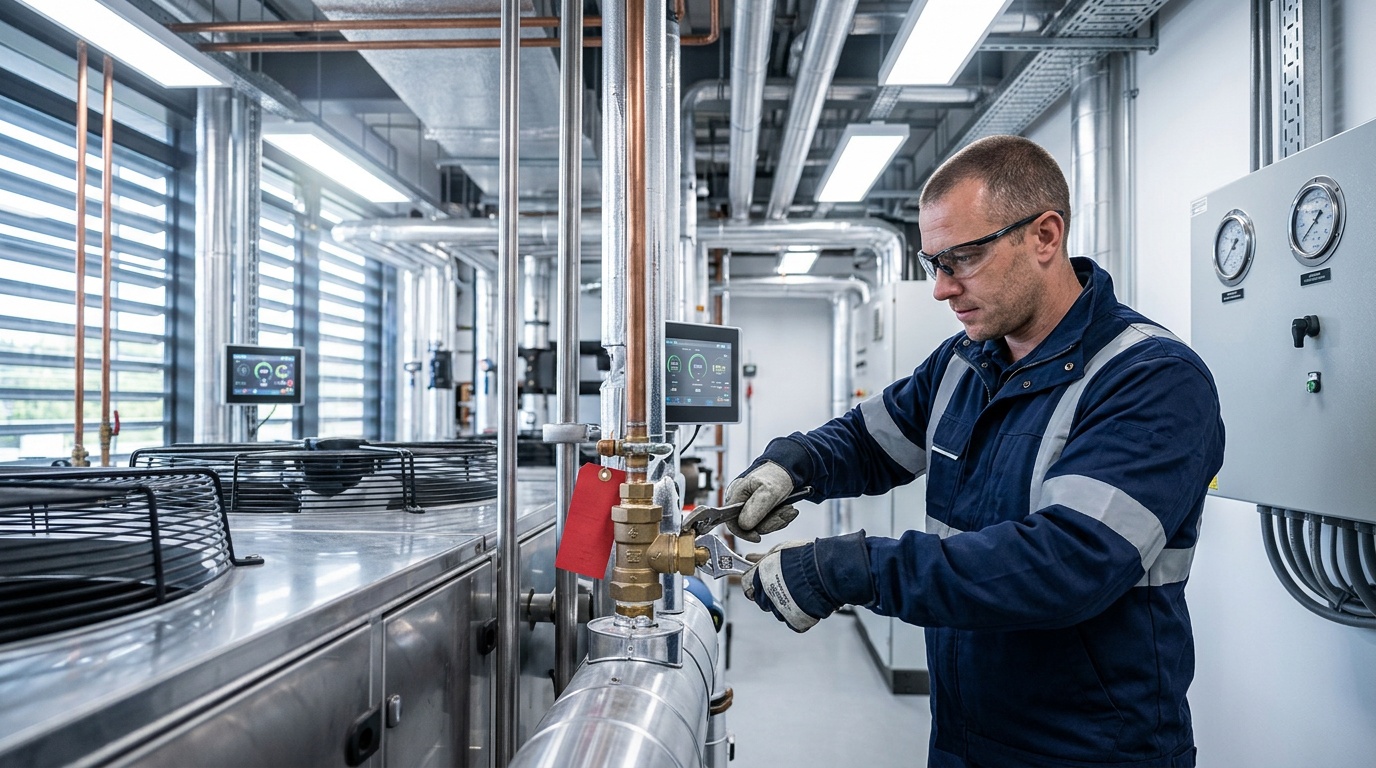
The 50% rule is a starting point, not an automatic instruction to replace. If repair exceeds 50% of comparable new installation cost and equipment has passed 75% of rated design life, replacement can deliver a lower total cost of ownership. Compare plant, controls, access equipment, craneage, labour, commissioning, disposal and planned downtime on both options.
Beyond the 50% Rule: Assessing Obsolescence and Part Availability
Request diagnostic evidence, photographs, test readings and a component-level breakdown. Motor condition, bearing wear, coil corrosion, inverter faults, refrigerant controls and heat exchanger pressure drop each indicate different remedies. Check availability of motors, belts, sensors, actuators and control boards. Repeated breakdowns, long lead times and temporary parts can make an affordable repair commercially weak.
UK Building Regulations (Part F & Part L) as a Replacement Driver
Part F may influence replacement where an existing system cannot provide suitable fresh-air rates, extract performance or pollutant control. Part L may influence specification where an inefficient fan, poor heat recovery arrangement or weak control strategy increases energy demand. Record measured airflow, occupancy requirements, operating hours, filtration, controls and commissioning results before recommending capital works.
Energy Efficiency Payback: Quantifying Savings with Modern Systems
Modern EC plug fans and heat recovery ventilation units can reduce ventilation electrical consumption by 25% to 50% compared with legacy belt-driven AC induction fans, based on the research supplied. Actual payback depends on duty, run hours, tariff, fan power, heat demand and maintenance. Model annual consumption from meter data or measured load, including filter changes, controls, planned servicing and downtime. This is the proper answer to Ventilation repair vs new installation cost benefits?, rather than a headline percentage.
| Assessment point | Repair is more defensible | Replacement is more defensible |
|---|---|---|
| Asset condition | Sound casing, coils, fan assembly and controls | Corrosion, repeated failures or structural deterioration |
| Financial case | Repair remains well below comparable replacement cost | Repair exceeds 50% and the asset is beyond 75% of design life |
| Parts and support | Components are available with reasonable lead times | Obsolete controls or discontinued motors create ongoing risk |
| Performance | Measured airflow and pressure meet the duty | Capacity, efficiency or compliance cannot be achieved reliably |
Our Commercial HVAC Installation and Heating Service applies this condition-based process to commercial plant, rather than treating every expensive repair as evidence for replacement.
Navigating Contractor Quotes: Spotting Upsells and Ensuring Value
The Anatomy of a Commercial Ventilation Quote: What to Demand
A credible quotation should show how the contractor reached the recommendation. Request a written scope separating plant, controls, ductwork alterations, access equipment, craneage, disposal, labour, commissioning and certification. It should state the measured fault, remedy, equipment duty, lead time, warranty and expected interruption to occupants or trading.
Request airflow readings, fan speed, motor winding resistance, filter condition, coil inspection, heat exchanger pressure drop, control signals and static duct leakage tests. An AHU upgrade should explain whether existing ductwork, dampers, grilles and electrical supply support the proposed duty. Use this checklist:
- Photographs and test results linked to each recommended repair.
- Separate material, labour, plant hire, craneage and commissioning costs.
- Specified airflow, external static pressure, filtration and control requirements.
- Lead times for motors, inverters, actuators, sensors and control boards.
- Planned shutdown duration, temporary ventilation and reinstatement works.
- Evidence of commissioning, balancing and handover documentation.
Red Flags: How to Identify Inflated Repair Estimates
A high repair estimate is not automatically evidence of contractor misconduct. It becomes questionable when it contains no failure evidence, bundles unrelated improvements into an emergency repair, or presents replacement as the only option without testing. A 10 to 12-year-old system may still have useful service life if its casing, coils, fan assembly and controls remain serviceable. Ask for defined repair, staged repair and like-for-like replacement prices.
Be cautious of “unit beyond economical repair” without the rated design life, repair-to-replacement ratio, parts availability or breakdown history. Check for unrelated items such as wholesale duct replacement or an unrequested controls platform. The Commercial HVAC Installation and Heating Service is recommended where a site needs an itemised assessment, with trained and licensed specialists who are insured and experienced across commercial equipment models.
Assessing Ductwork: Repair, Lining, or Full Replacement?
Ductwork should not be replaced merely because an AHU is changed. Leaking joints, damaged insulation, loose access doors and failed flexible connections can often be repaired. Internal lining may suit a sound duct shell where leakage or surface deterioration needs treatment, subject to hygiene, fire performance and access requirements. Full replacement is more defensible where sections are corroded, contaminated, incorrectly sized, inaccessible for cleaning or unable to deliver required airflow.
| Option | Suitable condition | Evidence to request | Commercial implication |
|---|---|---|---|
| Local repair | Minor leakage, damaged seals or isolated insulation failure | Leakage location, photographs and post-repair test | Lower disruption and retained existing routes |
| Lining or internal treatment | Sound duct shell with a defined internal defect | Material specification, hygiene assessment and fire classification | Reduced removal work, subject to long-term suitability |
| Full replacement | Corrosion, poor sizing, contamination or inaccessible construction | Airflow calculations, access plan and balancing proposal | Higher capital cost, with an opportunity to correct system performance |
Evaluating Modern System Benefits: Heat Recovery, EC Fans, and IAQ Improvements
Modern equipment should earn its place through measured performance. EC plug fans and heat recovery ventilation units can reduce ventilation electrical consumption by 25% to 50% compared with legacy belt-driven AC induction fans, based on the research supplied. The business case depends on operating hours, fan duty, tariff, heating demand, controls and maintenance. Require an annual energy model using the building’s actual schedule.
Assess indoor air quality, noise, humidity, filtration, heat recovery effectiveness and controllability. A new fan will not correct undersized ducts, closed dampers, poor building fabric or incorrect occupancy assumptions. The recommended Commercial HVAC Installation and Heating Service connects installation decisions with airflow testing, heating optimisation, safe working practices and commissioning.
Commercial Ventilation: Repair vs. Replacement, A Comparative Analysis
How We Evaluated: Criteria for Commercial Ventilation Solutions
A sound recommendation connects engineering evidence with commercial risk. Assess physical condition, measured airflow, external static pressure, control response, energy demand, parts availability, maintenance history and remaining design life. Include plant, labour, access equipment, craneage, disposal, commissioning, balancing and planned downtime. Building Regulations Part F and Part L also belong in the assessment where capacity or energy performance changes.
MEMS Facilities Maintenance: Our Approach to Asset Management
MEMS Facilities Maintenance begins with diagnosis, not a replacement order. Engineers inspect the fan assembly, motor, coils, filters, dampers, controls and ductwork, then relate findings to occupancy, operating hours and business continuity. The Commercial HVAC Installation and Heating Service brings together commercial installation, heating repairs, system optimisation and planned maintenance around Birmingham and the wider West Midlands. Clear reporting supports approval, budgeting and compliance records.
Example Provider A: A Case Study in Diligent Repair
Best for: A serviceable AHU with a localised fault and available replacement parts.
Testing identifies worn bearings, a damaged belt and a failed temperature sensor. The casing, coil, motor and ductwork remain in good condition, and airflow meets the required duty after correction. A diligent provider prices the items separately, states the outage, replaces defective components and records post-repair readings. This protects capital budget and retains a known system.
Pros
- Lower immediate capital expenditure.
- Shorter planned shutdown.
- Existing duct routes and electrical supplies remain in use.
Cons
- Older controls may still require future attention.
- Energy performance may not match modern EC fan equipment.
Example Provider B: A Case Study in Strategic Replacement
Best for: An ageing unit with repeated breakdowns, obsolete controls and poor energy performance.
The existing fan has recurring inverter faults, the heat exchanger shows excessive pressure drop, and key control boards are no longer readily available. Replacement is justified when repair approaches the 50% benchmark, particularly where the asset has passed most of its rated design life. Verify duct sizing, electrical capacity, access, lifting requirements and commissioning. A modern heat recovery unit or EC plug fan can reduce electrical consumption, with predicted saving based on actual duty and run hours.
Example Provider C: A Scenario of Potential Upselling
Best for: No responsible approval should be given until the diagnosis is independently tested.
A contractor recommends full replacement after a visual inspection, without airflow readings, motor tests, duct leakage results, component breakdown or defined repair options. The quotation includes wholesale ductwork alterations despite no evidence that ductwork caused the complaint. Obtain an independent condition survey, measured duty and itemised alternatives before committing funds.
| Approach | Engineering basis | Commercial outcome | Best decision |
|---|---|---|---|
| MEMS benchmark | Tested condition, lifecycle review and itemised options | Evidence-led budget and reduced operational risk | Repair or replace according to measured need |
| Provider A | Local fault with sound supporting equipment | Controlled expenditure and limited disruption | Diligent repair |
| Provider B | Obsolescence, repeated failures and inefficient operation | Higher capital spend with improved future support | Strategic replacement |
| Provider C | Insufficient diagnostic evidence | Risk of unnecessary capital works | Pause and obtain verification |
Making the Right Call: Ensuring Long-Term Building Performance
The Lifecycle Cost Perspective: Beyond Initial CapEx
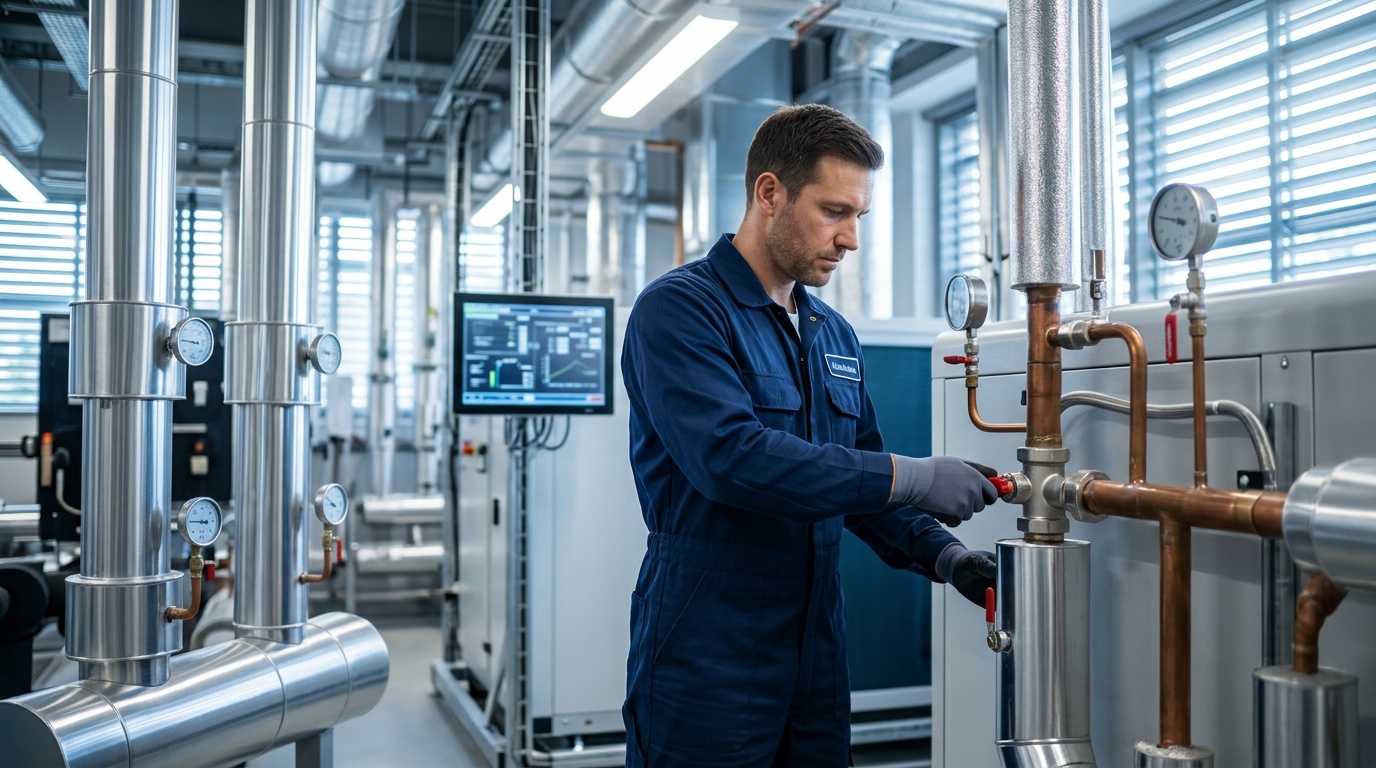
The lowest quotation is not always the lowest cost. Compare energy, filters, planned servicing, breakdown frequency, parts lead times, compliance work and downtime across the expected service period. CIBSE Guide M provides useful maintenance management principles for this lifecycle view.
Integrating Maintenance with Your Capital Expenditure Plan
Use inspection records and failure trends to forecast replacement rather than waiting for operational failure. Ring-fence funding for controls, duct modifications, commissioning and access works, not only the new fan or AHU.
When to Call the Experts: Proactive Assessment for Optimal Decisions
Call for an independent assessment when repair costs rise, parts are obsolete, complaints persist or a quotation lacks test evidence. The Commercial HVAC Installation and Heating Service provides a practical route to diagnosis, repair planning and compliant installation.
Summary: Prioritising Uptime, Compliance, and Efficiency
Callout: The right answer to “Ventilation repair vs new installation cost benefits?” comes from measured condition, lifecycle cost and operational consequence. Approve repair where the asset remains sound. Replace where reliability, compliance and energy performance can no longer be protected.
Frequently Asked Questions
What is the £5,000 rule for HVAC replacement?
The £5,000 rule is a basic spending threshold, not a reliable instruction to replace commercial ventilation equipment. A repair above £5,000 may still be sensible if the AHU has sound components, available parts and sufficient remaining life. Compare repair cost, downtime, energy use, compliance and replacement cost before approving work.
How much does it cost to replace air ducts in a 1,000 square foot building?
Air duct replacement for a 1,000 square foot building cannot be priced accurately from floor area alone. Cost depends on duct length, access, insulation, fire stopping, ceiling finishes, airflow requirements, labour and commissioning. A commercial survey with measured airflow and a detailed scope is needed before comparing repair with new installation.
Should a commercial building replace 20-year-old ductwork?
Twenty-year-old commercial ductwork should be tested before replacement is approved, rather than judged by age alone. Measured leakage, corrosion, insulation condition, poor airflow, access for cleaning and current occupancy needs should guide the decision. Replacement is more defensible where duct performance, energy use or compliance cannot be restored reliably.
Does installing a new HVAC system increase commercial property value?
A new commercial HVAC system can support property value by improving efficiency, comfort, operational reliability and documented compliance. The financial effect depends on the building’s condition, tenant requirements, energy costs and local demand. Keep commissioning records, maintenance information and performance data so the installation’s value can be assessed properly.
How much is a new HVAC system for a 2,000 square foot commercial building?
A new HVAC system for a 2,000 square foot commercial building has no dependable standard price because design duty matters more than floor area alone. Costs can include plant, controls, ductwork, access equipment, commissioning, disposal and planned downtime. A site survey should establish occupancy, operating hours, airflow, heat loads and compliance requirements.
Is repairing ventilation cheaper than installing a new system?
Ventilation repair is usually cheaper upfront, while new installation can offer a lower total cost where failures repeat or energy performance is poor. Compare component condition, parts availability, remaining service life, downtime, maintenance, energy consumption and compliance. A repair becomes commercially weak when it restores operation without resolving the cause of recurring faults.