Where to find affordable commercial fan repairs Birmingham?
When a commercial fan stops, the cost can extend well beyond the repair: kitchen operations may be disrupted, staff comfort can suffer and ventilation duties may be affected. If you are asking, “Where to find affordable commercial fan repairs Birmingham?”, establish what has failed before approving a full unit replacement.
I’ve worked from the tools up, and the first job is diagnosis. A stalled fan may have a failed capacitor, worn bearings, a slipping belt or a motor fault. None of those problems automatically means the whole assembly is beyond repair.
The Real Cost of a Failing Fan: Beyond the Breakdown in Birmingham
The 'Commercial Reality' Hook: Downtime and Lost Revenue
A failed extract fan in a commercial kitchen can interrupt service at the busiest point of the day. In an office or workshop, poor airflow can affect comfort and the working environment. The repair bill is only one part of the exposure: lost trading time, disrupted schedules and added pressure on staff can follow.
Why 'Waiting for it to Break' is a False Economy
Fans often give warning before they stop: unusual noise, vibration, reduced airflow, intermittent starting or a burning smell. Recording changes and arranging an inspection can help identify a worn component before it damages other parts. Planned quarterly preventative fan maintenance is associated in the research brief with reducing catastrophic emergency motor burnouts by over 60%. Treat this as a reason to assess a maintenance schedule, not a guarantee for every site.
Birmingham's Unique Challenges: Industrial Heritage Meets Modern Compliance
Birmingham’s commercial properties range from older industrial buildings to modern offices, retail units and food businesses. Ductwork, fan duties and access conditions differ, so a repair plan should reflect the installed equipment and the building’s use. A kitchen extraction fault can affect operations and compliance responsibilities; an engineer should check the actual system rather than diagnose from a model number alone.
Component Diagnostics: Your First Line of Defence Against Unnecessary Replacement
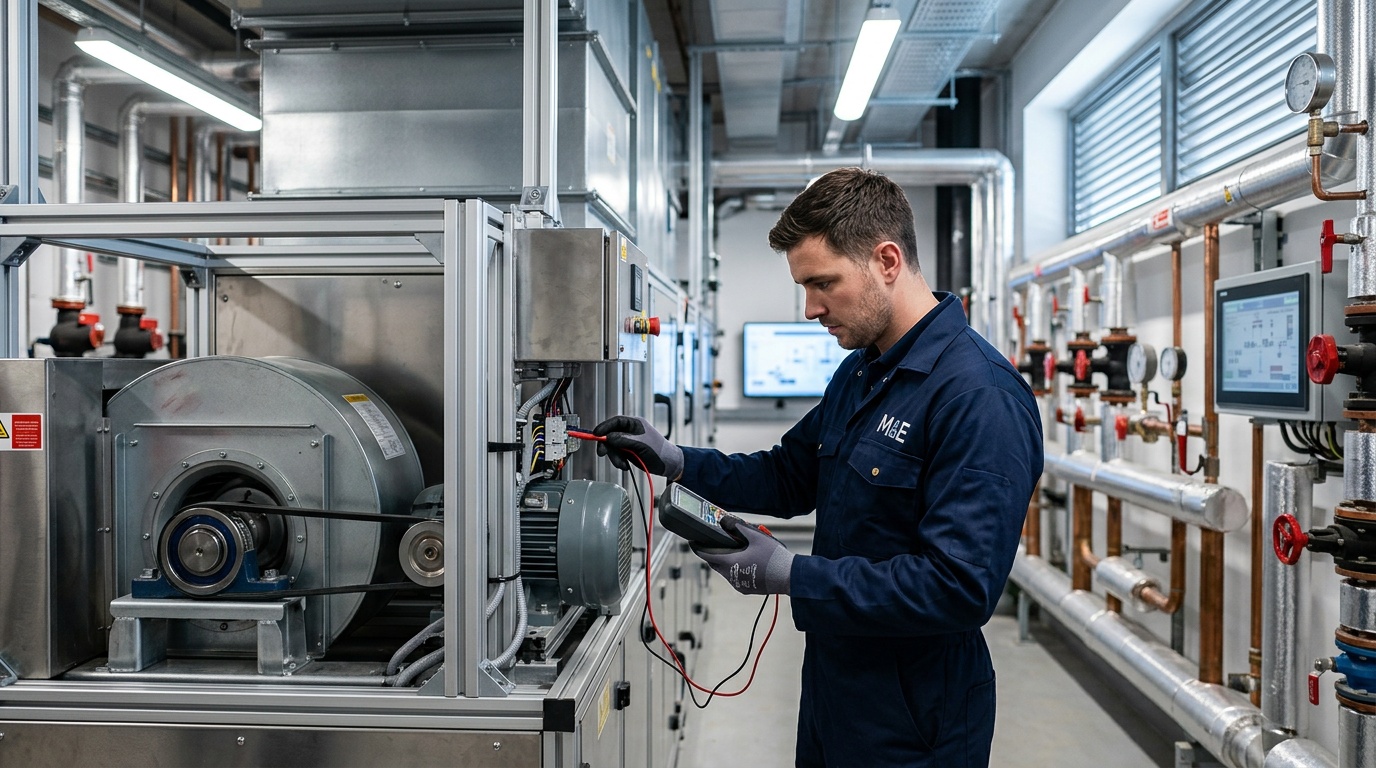
Understanding Common Commercial Fan Faults: Capacitors, Bearings, Belts, and Motors
A useful diagnosis links a symptom to a test. A fan that hums but will not start may have a faulty capacitor; rumbling or grinding can point to bearing wear. A belt-driven unit may squeal, slip or deliver reduced airflow if its belt is loose or worn. Motor overheating, repeated tripping or winding damage calls for electrical and mechanical checks. These signs guide an inspection, but are not proof on their own.
When a Capacitor is Just a Capacitor: Identifying and Replacing Blown Components
Motor capacitors can degrade under continuous duty, with failures reported within two to five years. A technician should isolate the equipment safely, test the capacitor and confirm its rating against the motor specification. If the capacitor has failed and the motor windings remain sound, replacing it may restore operation without replacing the complete fan. Ask to see the test result and part specification.
The Sound of Trouble: Diagnosing Bearing Wear and Drive Belt Issues
Noise needs context. A bearing fault may produce a rough, persistent sound or excess shaft movement; belt problems can show as squeal, visible wear or inconsistent fan speed. The engineer should inspect alignment, tension, lubrication where specified, and the condition of the shaft and impeller. Replacing a belt without checking alignment can leave the cause in place and lead to another breakdown.
Motor Health: Rewinding vs. Universal Replacements, A Technical Deep Dive
A repair decision depends on motor condition, availability of a correctly specified replacement and the quality of the electrical connection. Rewinding may suit a motor whose frame and shaft remain serviceable. A replacement must match the duty, speed, mounting and control arrangement. A universal motor fitted with improvised or exposed wiring can raise reliability and safety concerns; request an explanation of the connection method and compatibility before authorising work.
Asking the Right Questions: How to Verify a Contractor's Diagnosis
Ask what tests were completed, which component failed, whether adjacent parts were checked and what evidence supports replacement rather than repair. Request an itemised quotation separating labour, parts and further investigation. Direct component rebuilds, including bearings, impellers or capacitors, are reported at 30% to 45% of total fan assembly replacement costs, though the actual quote depends on equipment and site conditions. For related building work, the Commercial HVAC Installation and Heating Service is available from MEMS. The service is delivered by trained and licensed specialists who are insured.
| Finding | Useful evidence to request | Repair question |
|---|---|---|
| Capacitor fault | Test result and rating | Are the windings still sound? |
| Bearing wear | Shaft condition and noise source | Can the bearing be replaced safely? |
| Belt damage | Wear, tension and alignment check | Has the cause of belt wear been addressed? |
| Motor fault | Electrical and mechanical test findings | Is a rewind or correctly matched motor viable? |
Sourcing Affordable Commercial Fan Repairs in Birmingham: A Practical Guide
Beyond the Obvious: Finding Specialist HVAC and Extraction Engineers
For Where to find affordable commercial fan repairs Birmingham?, start with engineers who regularly work on commercial ventilation, not only domestic fans or general electrical faults. Kitchen extract systems, roof-mounted units and air handling equipment each bring different access, isolation and mechanical requirements. Describe the fan duty, location, symptoms and any effect on trading when you make an enquiry. This helps the service team send an engineer with suitable diagnostic tools and experience. MEMS provides commercial HVAC installation and heating system repairs around Birmingham, with trained and licensed specialists who are insured.
Evaluating Local Birmingham & West Midlands Service Providers: What to Look For
Before authorising a visit, check whether the provider can inspect your fan type and explain its diagnostic process. Ask for a written scope, an itemised quotation and a report identifying the failed part, test results and recommended work. Confirm whether access equipment, out-of-hours attendance or follow-up testing costs extra. A clear answer is a better sign of cost control than a low call-out figure with unclear exclusions. MEMS emphasises professionalism from the first customer-service conversation through to the engineer’s work, with safety standards followed during service and repair.
The 'MEMS Standard': What Differentiates Genuine Expertise from Quick Fixes
A proper repair should address the cause, not just restore movement for a short period. The engineer should verify the component fault, check related parts and confirm that the fan runs correctly after the work. If a complete assembly is proposed, ask why component repair is unsuitable and request the supporting findings. The Commercial HVAC Installation and Heating Service is a related MEMS service, delivered by specialists knowledgeable about a variety of heating system models and brands. The team aims to provide high-grade repairs and installations rather than leave an unresolved fault for the next visit.
Understanding Call-Out Fees, Labour Rates, and Part Mark-ups in the UK Market
There is no single reliable price for a commercial extractor fan repair across the West Midlands. The final cost depends on the fault, access, equipment specification, parts availability and whether attendance is during normal hours. Ask the contractor to separate the call-out charge, diagnostic time, labour, parts and access costs. Request the part number and specification, plus confirmation of any warranty. Compare quotations for the same scope: a cheaper figure may exclude testing, safe isolation or commissioning included in another quote.
The Value of Planned Preventative Maintenance (PPM) Contracts for Fan Systems
A PPM visit lets an engineer check fan condition before a fault interrupts operations. The schedule can cover bearings, belts, fixings, motor condition, airflow and signs of overheating, with findings recorded for budget planning. Agree the visit frequency around equipment duty and the consequences of failure, rather than accepting a generic schedule. MEMS also offers the Commercial HVAC Installation and Heating Service, which includes optimisation of system components such as thermostats and ducts. For heating faults, emergency repairs are available 24 hours a day.
| Quotation detail | What to confirm |
|---|---|
| Call-out and diagnosis | Attendance period, included diagnostic time and any additional investigation charge |
| Parts | Part specification, compatibility, mark-up and warranty terms |
| Labour and completion | Estimated hours, testing, commissioning and the written service record |
Repair vs. Replace: Making the Smart Financial and Operational Decision
A Framework for Decision Making: Factors Beyond Age
Age alone does not prove that a fan is uneconomic to repair. Consider the condition of the motor, shaft, impeller, casing and controls, as well as parts availability and the unit’s duty. An old fan with a sound assembly and one failed replaceable component may be a sensible repair. A newer unit with severe corrosion, repeated faults or damage across several parts may be a poor candidate. Ask the engineer to distinguish the immediate fault from wider deterioration before deciding.
Calculating the True Cost: Repair Expense vs. New Unit Investment
Compare more than the repair invoice with the purchase price of a new fan. Include installation, electrical and ductwork alterations, access equipment, commissioning and downtime. A replacement may be justified if it resolves recurring reliability problems or suitable parts cannot be sourced. Direct rebuilds involving bearings, impellers or capacitors are reported in the research brief at 30% to 45% of total fan assembly replacement costs; treat this as a general comparison, not a site-specific quote. Request itemised options for both routes.
When is an Air Handling Unit (AHU) or Canopy Truly Beyond Economic Repair?
An AHU or canopy may be beyond economic repair when damage affects multiple major components, the casing or duct connections are compromised, or safe operation cannot be restored with available parts. Repeated failures also matter: a sequence of small repairs can cost more than a properly specified replacement. Ask for a written explanation of the failure, the condition of the remaining assembly and the likely scope of each option. This supports a decision based on lifecycle cost and operating requirements, not pressure to replace.
The Risk of Substandard Universal Parts and Wiring Modifications
A replacement motor must match the fan’s electrical supply, speed, mounting, shaft, duty and control arrangement. A universal motor may not have the correct OEM plug-and-play harness, and improvised connections can leave exposed wiring or complicate future servicing. Ask the engineer to identify the proposed motor and explain how it will be connected, protected and tested. If wiring changes are needed, request a clear description and confirmation that the finished installation is safe and suitable for the equipment.
Case Study Snippet: How a Birmingham Business Saved £X by Opting for Component Repair
I won’t invent a saving for a business without a verified job record. The decision process is practical: if inspection confirms that a failed capacitor, bearing or impeller is the isolated fault and the rest of the fan remains serviceable, obtain a component-repair quotation alongside the full replacement option. Compare the documented scope, downtime and commissioning requirements. This gives a facility manager a defensible cost decision without relying on a contractor’s headline figure.
Ensuring Compliance and Uptime: The Birmingham Facility Manager's Checklist
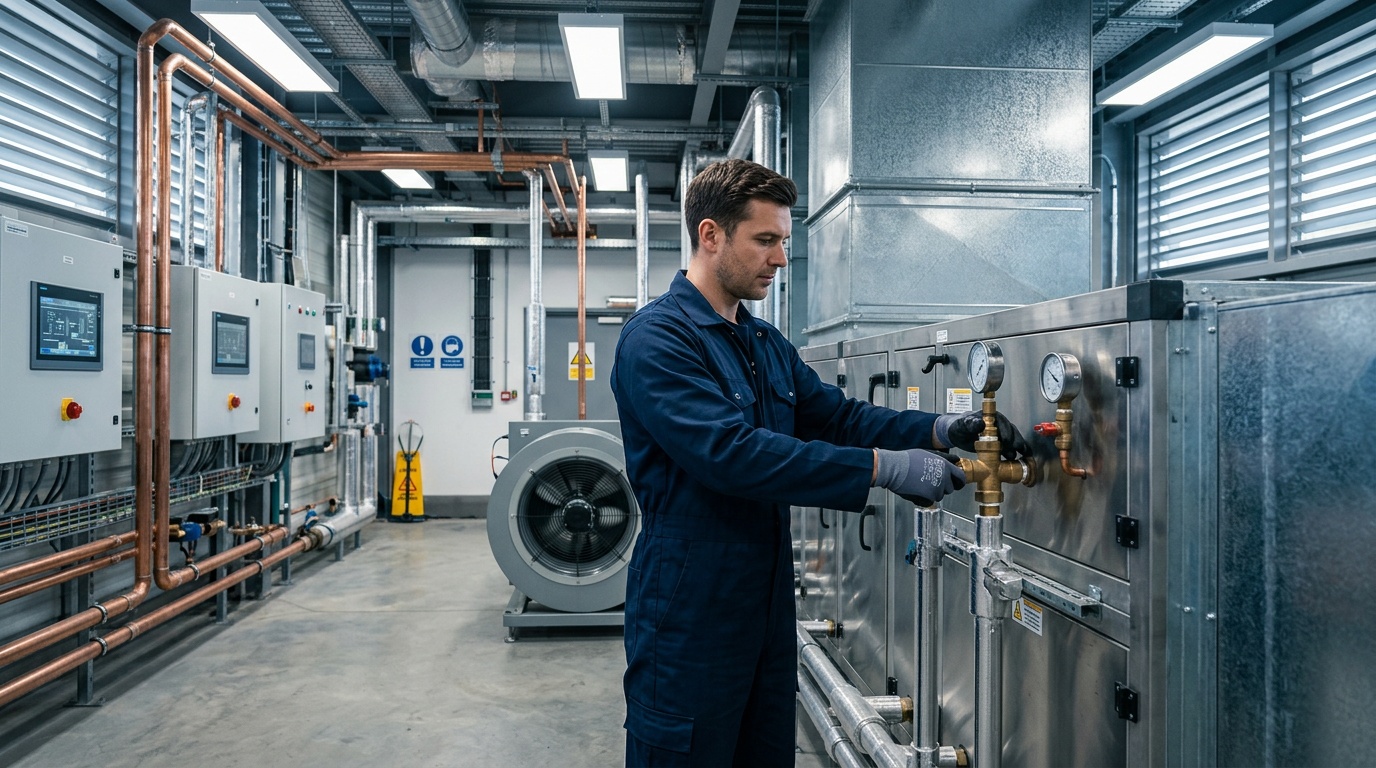
Key UK Standards: DW/172 for Kitchens, HSE Workplace Ventilation
For commercial kitchen extraction, check that maintenance and repair work reflects the applicable DW/172 guidance and the system’s design. HSE guidance on workplace ventilation also matters where airflow supports a safe working environment. Keep records of inspections, defects, repairs and commissioning, and confirm the system operates as intended after work. Standards do not replace a site-specific assessment: the building’s use, equipment and risk controls affect the appropriate action.
The Importance of SFG20 Compliance in Maintenance Schedules
Use SFG20 task schedules as a framework for planning and recording maintenance, then check that tasks suit the fan and its operating conditions. A schedule should identify the asset, maintenance frequency, inspection findings and remedial work. Ask your provider how completed tasks are evidenced and how overdue defects are escalated. A maintenance record is useful only when it reflects work carried out and gives your team a clear audit trail.
Your 24/7/365 Readiness Plan: What to Do in an Emergency
Before a failure, document who can authorise emergency work, how engineers gain site access and which systems must be isolated. Keep asset details, safe isolation information and control locations accessible to relevant staff. If a fan stops, protect people first, follow site procedures and record the symptoms and time of failure. Explain in your response plan how to manage affected operations while a competent engineer investigates.
Building Long-Term Partnerships for Optimal Asset Performance
A dependable maintenance partner learns your equipment, site access rules and operational priorities over time. Review service reports together, track repeat faults and agree a clear route for urgent decisions. MEMS provides commercial HVAC installation and heating system repairs around Birmingham, with safety standards followed during service and repair. The Commercial HVAC Installation and Heating Service is available for heating requirements; it is distinct from a commercial fan inspection or repair.
Final Thoughts: Peace of Mind Through Proactive, Expert Maintenance
Keep compliance evidence current, make responsibilities clear and act on defects before they threaten building operations. For Where to find affordable commercial fan repairs Birmingham?, choose a provider prepared to explain the fault, document the work and support a planned maintenance approach, not just attend after failure.
Frequently Asked Questions
How much does it cost to repair a commercial fan in Birmingham?
Commercial fan repairs in Birmingham commonly cost less than replacing the complete fan assembly, but the price depends on the failed component, access and equipment duty. A capacitor, belt or bearing repair may represent around 30% to 45% of a full assembly replacement, according to the supplied research brief. Request an itemised quotation covering labour, parts and further investigation.
What is the typical lifespan of a commercial exhaust fan?
A commercial exhaust fan can often serve for many years when correctly specified, installed and maintained, though no single lifespan applies to every system. Usage, heat, moisture, dust, operating hours and maintenance all affect service life. Regular inspections can identify noise, vibration, reduced airflow or starting faults before a breakdown causes disruption.
Is it worth repairing a commercial fan rather than replacing it?
Repairing a commercial fan is often worthwhile when the motor, housing and impeller remain serviceable. A tested capacitor, belt, bearing or repairable motor fault may restore operation without buying a complete unit. Ask the engineer which part failed, what tests were completed and whether a replacement component matches the fan duty and controls.
How long do industrial and commercial fans last?
Industrial and commercial fans can last for many years, with service life shaped by duty, environment, installation quality and maintenance. Fans in kitchens, workshops and dusty areas may need closer inspection because heat and contamination place extra demand on components. Planned maintenance can help identify worn belts, bearings and electrical parts before failure.
What is the best industrial fan for a Birmingham business?
The best industrial fan for a Birmingham business is one correctly matched to airflow, pressure, operating hours, location, controls and access requirements. A kitchen extract fan, roof-mounted unit and workshop ventilation fan may need different designs. A commercial ventilation engineer should assess the actual duty and ductwork rather than recommend a model from the nameplate alone.
Where can I find affordable commercial fan repairs in Birmingham?
Affordable commercial fan repairs in Birmingham are best sourced from engineers experienced with commercial ventilation, kitchen extraction, roof-mounted fans and air handling equipment. MEMS Facilities Maintenance can assess the fault, discuss repair options and provide an itemised quotation. Share the fan location, duty, symptoms and effect on trading so the enquiry can be assessed accurately.