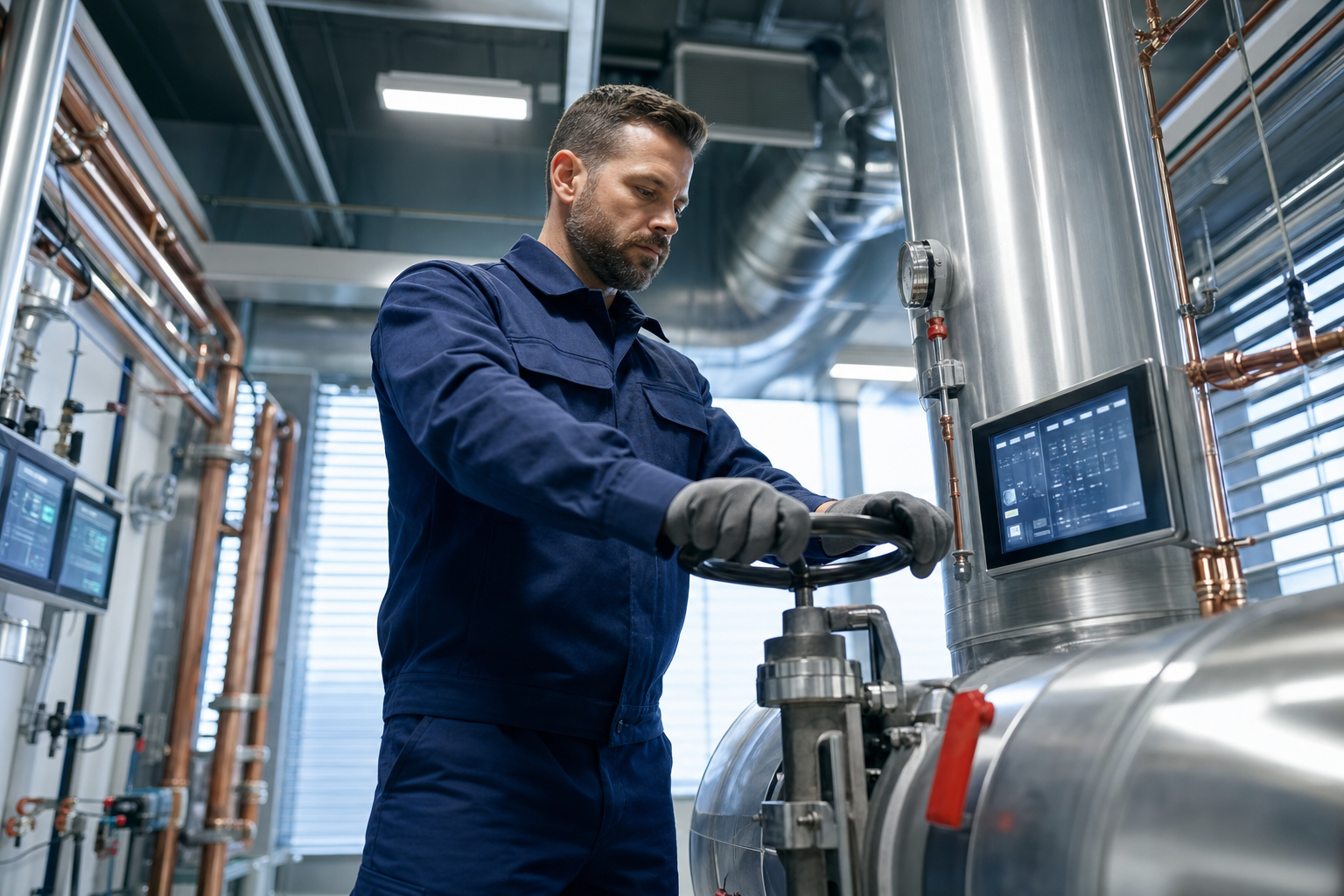
Alternatives to DIY ventilation repairs in commercial settings?
When a ventilation fault appears during a busy trading day, a quick patch can seem like a responsible budget decision. In commercial premises, it can create greater liability. The right Alternatives to DIY ventilation repairs in commercial settings? protect airflow, statutory duties and business continuity by addressing the cause rather than hiding the symptom.
Key Takeaways
- A temporary fix on a commercial ventilation system might save a few pounds today, but it can expose you to statutory non-compliance and much bigger repair bills tomorrow.
- Calling in a qualified contractor means they diagnose the root cause, not just the symptom, which keeps your airflow consistent and your premises legally safe.
- Relying on in-house staff for ventilation repairs without proper accreditation shifts liability onto you as the facility manager, a risk that no quick patch is worth.
- Planned preventative maintenance from a specialist firm reduces emergency callouts and extends equipment life, making it a more cost-effective strategy than ad hoc DIY attempts.
I started as an apprentice combustion engineer and have spent more than 24 years working around plant rooms, ductwork and building services. A fan cannot deliver rated airflow if the duct system, intake, filters or controls restrict it. A repair that looks inexpensive at the grille can increase energy use, damage motors and leave occupants working in poor indoor air quality.
DIY ventilation repairs are risky because airflow systems are designed as complete assemblies. Altering a fan, damper, filter housing, duct section or control without testing the whole system can change static pressure, reduce air changes and compromise fire, gas, electrical or workplace safety controls. Practical alternatives include documented inspection, competent repair, planned preventative maintenance and condition monitoring against the equipment design and applicable UK guidance.
The Hidden Costs of a 'Quick Fix': Why DIY Ventilation Repairs Undermine Commercial Operations
The 'DIY Temptation' in Commercial Settings: Budget Pressures vs. System Integrity
Emergency quotations are rarely welcome. A facilities manager may tighten a loose belt, seal a leaking joint, replace a filter with an unsuitable grade or bypass a noisy control. This may avoid an immediate invoice, but it weakens the asset record and makes diagnosis harder. The result can be unplanned closure, disrupted tenants, spoiled stock or complaints from staff and visitors.
Commercial systems also carry operational responsibilities. Kitchen extract, toilet ventilation, workshop extraction, heat recovery units and comfort air systems depend on correct specification, safe access and verified performance. The Commercial HVAC Installation and Heating Service from MEMS provides trained and licensed specialists who are insured, with safety standards strictly followed during heating service and repair. It also covers optimisation of components such as thermostats and ducts.
Engineering Reality: How Amateur Interventions Cripple Fan Performance
Fan performance follows a pressure curve, not the motor label alone. CFM, or cubic feet per minute, falls when filters are blocked, duct runs restricted, grilles obstructed or dampers incorrectly positioned. Ductwork restrictions and undersized intakes can reduce nominal fan throughput by over 40%, according to the research findings supplied for this guide. The motor then works against greater resistance, draws more power and generates additional heat.
Engineering check: A competent engineer measures airflow, static pressure, temperature, electrical current and control operation after a repair. Replacing a component without those readings confirms only that the part changed, not that the system delivers its design duty.
The Domino Effect: Undersized Ducting, Poor Makeup Air, and Negative Pressure Risks
Air removed from a building must be replaced. If makeup air cannot enter through a correctly sized and controlled pathway, the space can fall under negative pressure. Doors become difficult to open, draughts develop, combustion appliances may be disturbed, and extract fans operate outside their intended duty. Narrow duct sections or improvised flexible connections create turbulence and pressure loss, leaving the fan running while occupied areas still feel stale.
Beyond the Boiler Room: Impacts on Occupant Comfort, Productivity, and IAQ
Ventilation faults affect more than the plant room. Uneven temperatures, odours, condensation and airborne contaminants affect comfort and staff confidence. Research cited in the brief states that indoor air can be two to five times more polluted than outdoor air in poorly ventilated commercial spaces, with the EPA and HSE identified as sources. Up to 52% of commercial facilities may require major ventilation overhauls where routine maintenance has been deferred or carried out incorrectly, according to the supplied research.
Navigating UK Compliance and Liability: The Legal Minefield of Unauthorised Ventilation Modifications
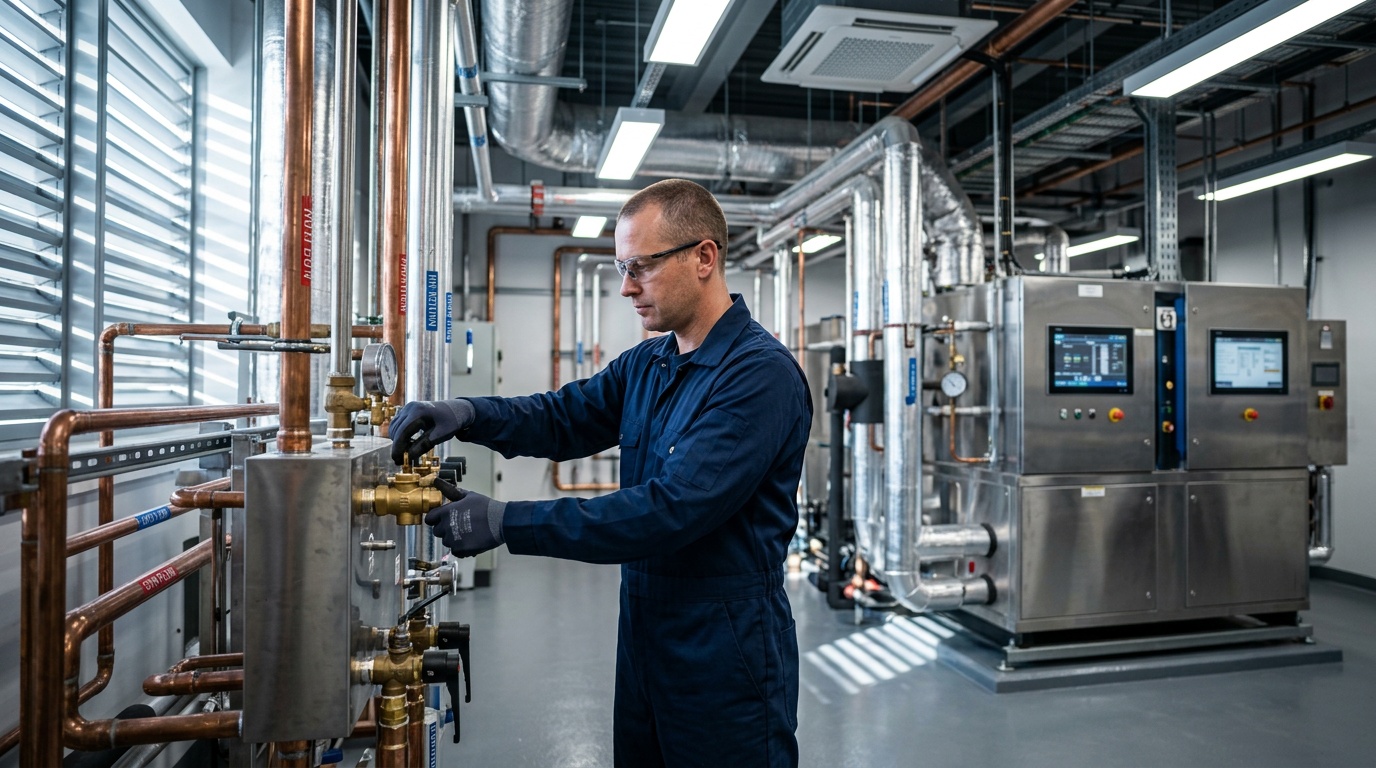
Statutory Obligations: Understanding the Health and Safety at Work Act and Workplace (Health, Safety and Welfare) Regulations 1992
Facility managers and employers must take reasonable steps to protect people affected by their premises and work activities. The Health and Safety at Work etc. Act 1974 sets the broad duty, while the Workplace (Health, Safety and Welfare) Regulations 1992 address suitable and sufficient ventilation in enclosed workplaces. Those duties remain even when an employee completes a repair to save money. Records should show the fault, risk assessment, repair method, testing and responsible person.
UK HSE guidance and relevant CIBSE guidance provide engineering context, but neither replaces a site-specific assessment. A competent person must consider occupancy, contaminants, heat gains, access, fire precautions, electrical isolation and the relationship between extract and supply air. Unauthorised alterations can make an otherwise compliant design difficult to defend during an inspection or incident investigation.
SFG20 Standards: The Benchmark for Planned Preventative Maintenance in Commercial Buildings
SFG20 provides a structured framework for scheduled tasks, frequencies, checks and records across building services. It does not replace manufacturer instructions or a design review, but helps prevent missed inspections of belts, bearings, filters, fans, dampers, sensors and control panels. A PPM schedule creates an audit trail and helps managers identify deterioration before an emergency repair.
Insurance Implications: How DIY Repairs Can Void Your Commercial Property Insurance
Commercial property policies commonly require reasonable precautions, competent maintenance and disclosure of material changes. An improvised modification may complicate a claim if it contributed to smoke spread, fire, water damage, electrical failure or business interruption. Managers should check policy conditions, contractor requirements and maintenance evidence before allowing in-house alterations. Insurers may request inspection reports, service records, certificates and proof that specified controls remained operational.
The Risk of Voiding Warranties and Service Contracts
Manufacturers and service providers may restrict warranty cover where equipment has been modified, opened or adjusted by an unauthorised person. Proprietary controls can be difficult if replacement parts, software access or commissioning data are unavailable. Before intervention, confirm warranty status, isolation procedure, approved components and commissioning requirements. A lower repair cost is not a saving if it removes support for a high-value air handling unit or heat recovery system.
Consequences of Non-Compliance: Fines, Reputational Damage, and Potential Shutdowns
Non-compliance can expose an organisation to enforcement action, civil claims, increased insurance scrutiny and reputational damage. A serious ventilation failure may stop a production area, commercial kitchen, warehouse or occupied office from operating safely. The strongest Alternatives to DIY ventilation repairs in commercial settings? begin with competent diagnosis, clear records and repair approval based on risk rather than urgency alone.
Compliance Check Before Authorising a Repair
- Confirm the system type, design duty, affected occupants and known hazards.
- Check isolation, access, electrical controls and combustion or fire safety interfaces.
- Review manufacturer instructions, warranty conditions, insurance requirements and service agreements.
- Use a trained, licensed and insured specialist for technical adjustment or commissioning.
- Record airflow, static pressure, electrical readings, defects, remedial work and post-repair verification.
- Keep certificates, photographs, service sheets and risk assessments accessible for audit.
Beyond Patchwork: Structured Professional Alternatives for Commercial Ventilation Reliability
The most practical Alternatives to DIY ventilation repairs in commercial settings? are structured maintenance arrangements that control risk before a minor defect becomes an operational failure. Professional support should cover inspection, diagnosis, repair, commissioning and records as one process. It should account for fan curves, duct resistance, filter condition, controls, makeup air, electrical load and effects on occupants. The objective is to keep the system delivering its design duty while protecting energy performance, statutory compliance and business continuity.
Reactive Maintenance vs. Planned Preventative Maintenance (PPM): A Cost-Benefit Analysis
Reactive maintenance has a place when equipment fails without warning, but it is a weak primary strategy. A call-out may restore extraction while the cause remains a failing bearing, contaminated coil, loose belt, blocked filter, worn damper actuator or incorrect control setting. PPM identifies these conditions during scheduled visits, allowing repairs to be planned around occupancy and production. This gives managers better control over labour, parts, access and downtime than an emergency response.
| Maintenance model | Operational effect | Budget and compliance position |
|---|---|---|
| DIY patch repair | May restore limited operation without proving airflow, static pressure or control performance. | Low immediate spend, with uncertain liability, warranty and future repair costs. |
| Reactive specialist call-out | Responds to a fault after comfort, production or air quality has already been affected. | Unplanned expenditure, though diagnosis and records are professionally controlled. |
| Planned preventative maintenance | Checks deterioration, safety devices, filters, fans, dampers and controls at agreed intervals. | Predictable expenditure, documented service history and fewer avoidable failures. |
| PPM with condition monitoring | Uses measured trends to target intervention before performance falls outside acceptable limits. | Better asset planning, energy visibility and evidence for compliance reviews. |
Condition-Based Monitoring (CBM) and BMS Integration: Proactive Insights
Condition-based monitoring adds evidence to the maintenance plan. Vibration, motor current, temperature, differential pressure, filter loading and airflow readings can reveal deterioration before occupants report stale air. A building management system can combine alarms, run times, set points and sensor data, giving the facilities team a sound basis for intervention.
CBM must be commissioned properly. Poorly positioned sensors or incorrect alarm thresholds create nuisance alerts. A competent engineer should establish baseline readings, confirm sensor accuracy and relate trends to manufacturer performance data. This creates a useful maintenance history and can identify energy drift caused by excessive fan speed, simultaneous heating and cooling, or dampers that fail to follow demand.
The 'Right First Time' Approach: Partnering with Specialist FM Providers
Specialist FM support should begin with a survey of the installed system rather than an assumption based on the visible symptom. The engineer should establish asset type, design airflow, duct dimensions, pressure requirements, control sequences, access constraints and previous modifications. Repairs need suitable components, safe isolation, functional testing and post-work readings. The Commercial HVAC Installation and Heating Service provides commercial HVAC installation and heating system repairs around Birmingham through trained and licensed specialists who are also insured.
Long-Term Estate Partnerships: Sustainable Technologies and Open-Protocol Solutions
A long-term maintenance partnership should consider asset lifecycle, replacement planning, spare-part availability and future integration. Open-protocol controls can reduce dependence on one proprietary platform when specified, commissioned and documented correctly. Efficient EC fans, demand-controlled ventilation, heat recovery and variable-speed drives may reduce run time, but only when duct sizing, filtration, acoustics and indoor air quality remain suitable.
Pros
- Predictable maintenance planning and clearer lifecycle expenditure.
- Better access to service data, compatible components and future upgrades.
- Reduced risk of repeated faults caused by temporary repairs.
Cons
- Requires an initial survey, agreed scope and accurate asset information.
- Monitoring and controls need calibration, ownership and regular review.
- Energy improvements can fail if design constraints are ignored.
The second practical Alternatives to DIY ventilation repairs in commercial settings? is a maintenance framework joining competent engineering with transparent planning. MEMS’s Commercial HVAC Installation and Heating Service supports professional installation, repair and system optimisation, giving facility managers a route from fault response to dependable estate performance.
Evaluating Your Ventilation Maintenance Strategy: Questions for Facility Managers
The best Alternatives to DIY ventilation repairs in commercial settings? begin with a review of records, equipment and the service provider. A maintenance strategy should show expenditure, current statutory checks and whether systems can be repaired without dependence on one proprietary supplier. Use these questions during a facilities review.
Assessing Your Current Repair Log: Reactive vs. Proactive Spend Ratio
Review the last 12 months of work orders and separate emergency call-outs from scheduled maintenance, inspections and planned component replacement. Look for recurring faults involving filters, belts, bearings, actuators, sensors, fans or control panels. Several visits for the same defect usually indicate that the symptom was treated rather than the cause. Ask whether emergency spend and downtime are reducing and whether parts are ordered before failure.
Checking Compliance Documentation: Are Your Records Up-to-Date and Accessible?
Service records should be available to the facilities team, landlord, insurer and auditor. Each asset should have an identification number, location, service history, defect log, risk assessment and post-repair test results. Include airflow, static pressure, electrical checks, filter changes and control verification where applicable. Records should identify the engineer, date, recommendations and outstanding actions. CIBSE guidance and UK HSE expectations provide reference points, but documentation must reflect the actual building and equipment.
Understanding Equipment Serviceability: Avoiding Proprietary Lock-in
Ask whether replacement filters, motors, belts, sensors and control components remain available through normal channels. Confirm that technical information, wiring diagrams, commissioning data and passwords are held by the building owner. Equipment dependent on discontinued software or one unavailable part can cause long delays. Internally tested, non-proprietary mechanical equipment may offer a more practical service route when design, compatibility and commissioning requirements are recorded.
Energy Performance Audits: Identifying Inefficiencies Caused by Sub-Optimal Ventilation
Compare fan run times, electricity consumption, occupancy patterns and comfort complaints. Rising energy use may point to blocked filters, excessive fan speed, leaking ductwork, incorrect set points or dampers that fail to regulate airflow. Review air volume, pressure differential, motor current, temperature and control response together. Poor ventilation can increase utility costs while leaving occupied areas stuffy, cold or affected by draughts.
Choosing a Partner: What to Look for in an FM Provider Beyond the Lowest Quote
Ask whether the provider offers a clear scope, named engineering contacts, documented escalation, transparent pricing and 24-hour support. Check that specialists are trained, licensed and insured and can maintain different heating and ventilation models. The right provider explains defects in commercial terms, provides testing evidence and gives a realistic replacement plan rather than repeated temporary repairs.
- Is every ventilation asset listed and condition-rated?
- Are PPM tasks aligned with manufacturer instructions and site risk?
- Can the provider supply service sheets and certificates promptly?
- Are spare parts, access arrangements and isolation procedures defined?
- Does the agreement state response times, exclusions and reporting standards?
The MEMS Standard: Ensuring Uptime, Compliance, and Long-Term Value
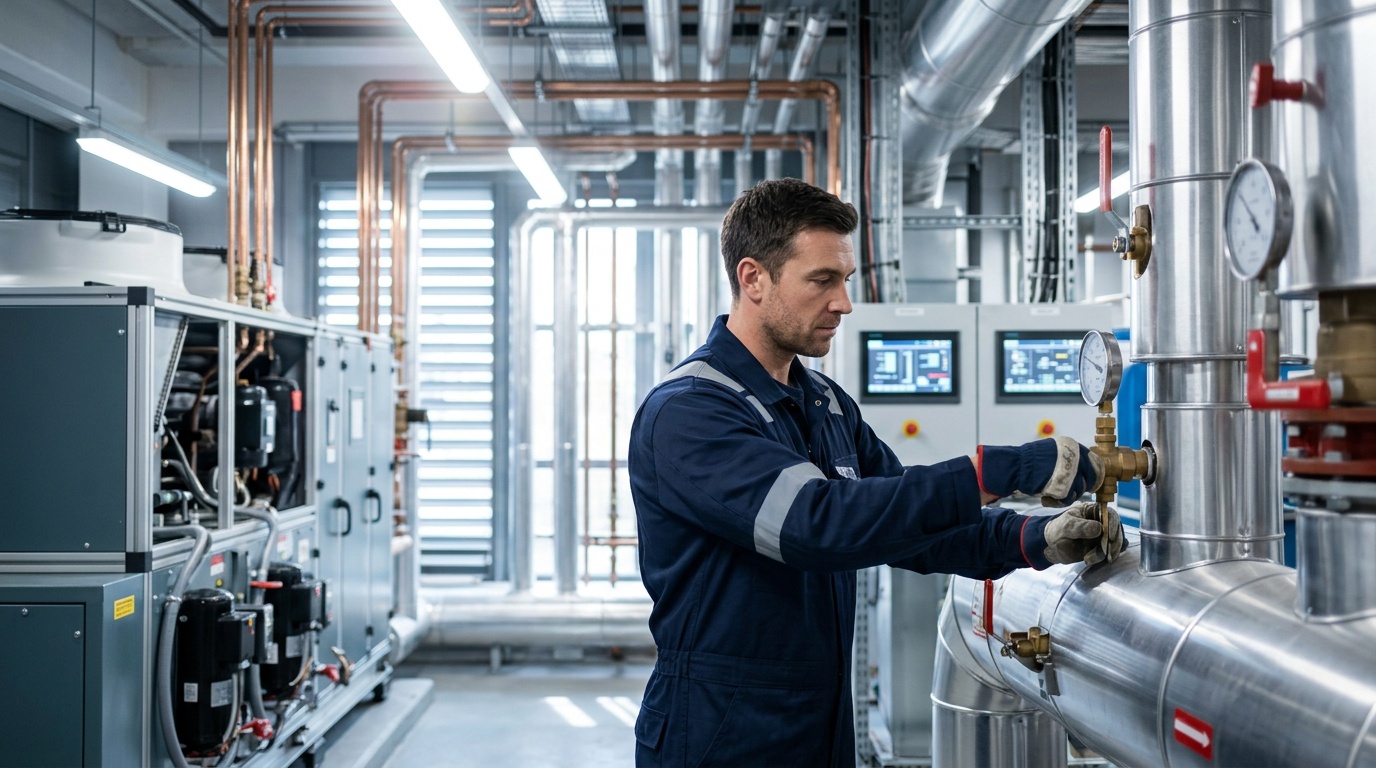
At MEMS, we work from the plant room outward. The aim is dependable airflow, safe operation and clear accountability for every commercial asset maintained.
Our 'Open Door' Approach to Innovation and Vetted Technologies
We assess equipment on serviceability, performance, parts availability and suitability for the building. Open-protocol controls and supported mechanical components can reduce future disruption when specified and commissioned correctly. New technology earns its place when it solves a measured site problem.
The MEMS Commitment: 24/7/365 Availability and Expert-Led PPM
Our trained and licensed specialists, who are also insured, deliver planned maintenance and emergency support. The Commercial HVAC Installation and Heating Service provides commercial HVAC installation and heating system repairs around Birmingham, with 24 hour emergency heating repairs available any time of day.
Protecting Your Assets and Your People with Proactive Maintenance
Scheduled inspections protect fans, ducts, controls and heating equipment while supporting safe indoor conditions. We follow safety standards strictly and optimise system components such as thermostats and ducts, with findings recorded for future decisions.
Why Partnership Trumps Transactional Repairs for Commercial Estates
A service partner should understand occupancy, risk profile, budget cycle and uptime requirements. The Commercial HVAC Installation and Heating Service gives facility managers a route from emergency response to planned asset care. For support across Birmingham and the West Midlands, CLICK TO CALL US NOW and speak with MEMS.
Frequently Asked Questions
What is the 1 to 300 rule for ventilation?
The 1 to 300 rule is a rule of thumb suggesting around one square unit of ventilation opening for every 300 square units of floor area. Commercial premises should not rely on this ratio alone, since occupancy, contaminants, building use, airflow routes and mechanical extraction must be assessed by a competent person.
What are the legal requirements for ventilation in commercial buildings?
Commercial buildings must provide suitable and sufficient ventilation for people affected by the work and premises. The Health and Safety at Work etc. Act 1974 and Workplace (Health, Safety and Welfare) Regulations 1992 support this duty, while records should cover faults, risk assessments, repairs, testing and responsible personnel.
How can you fix a room with no ventilation without carrying out DIY repairs?
A room with no ventilation should be assessed by a competent ventilation engineer before any repair or alteration is made. Alternatives to DIY ventilation repairs in commercial settings include checking air routes, filters, fans, dampers, controls and makeup air, then measuring airflow and pressure before confirming the remedy.
What ventilation systems are used in commercial buildings?
Commercial buildings commonly use natural ventilation, mechanical supply or extract systems, balanced mechanical ventilation, heat recovery systems and local exhaust ventilation. The suitable arrangement depends on occupancy, contaminants, heat gains, building use and the required air changes, so equipment should be assessed as a complete system.
What are the four types of ventilation systems?
The four broad ventilation types are natural ventilation, mechanical ventilation, hybrid ventilation and local exhaust ventilation. Natural systems use openings and pressure differences, mechanical systems use fans, hybrid systems combine both approaches, and local exhaust systems remove contaminants near their source, such as in commercial kitchens or workshops.
What should a commercial business do instead of repairing ventilation equipment itself?
A commercial business should arrange documented inspection, competent repair, planned preventative maintenance and performance testing instead of relying on DIY ventilation repairs. A qualified engineer can check airflow, static pressure, electrical current, temperature and controls, then update the asset record and identify faults before they disrupt operations.
Can poor ventilation increase commercial energy use?
Poor ventilation can increase commercial energy use by forcing fans and motors to work against blocked filters, restricted ducts, incorrect dampers or undersized intakes. Competent testing can identify pressure losses and control faults, helping managers address the source while supporting indoor air quality and reliable business operation.