hvac contractors
A heating failure at 7am can stop production, disrupt tenants, damage stock and leave a facilities manager explaining avoidable downtime to the board. I have spent more than 24 years working from plant rooms to estate strategy. The first lesson is consistent: selecting suitable hvac contractors requires more than accepting the lowest hourly rate.
The right provider should explain the system, prove competence, document compliance and recommend repair before replacement where the asset remains serviceable. This guide sets out checks for commercial property owners in Birmingham, the West Midlands or elsewhere in the UK.
Choose a commercial engineering firm that can evidence relevant qualifications, insurance, F-Gas competence, Gas Safe registration where gas work is involved, electrical capability and experience with comparable plant. Ask for a written scope, named engineers, service records, risk assessments and clear escalation arrangements. A professional assessment should connect each recommendation with safety, reliability, energy use and the cost of business interruption.
Understanding Commercial HVAC Contractors: Core Services and System Differences
Commercial hvac contractors should cover more than reactive call-outs. Services may include air conditioning installation, boiler servicing, ventilation, heat pumps, controls, pumps, ductwork, water treatment, commissioning and planned preventative maintenance. A site survey should identify equipment condition, heating and cooling loads, access restrictions, plant-room hazards and the effect of failure on occupied areas.
Overview of Services: Installation, Maintenance, Repair, and Compliance
Installation should include design information, equipment selection, pipework, electrical connections, controls, testing and handover records. Maintenance should follow manufacturer requirements and a recognised schedule, covering filters, belts, fans, coils, safety devices, refrigerant circuits and control settings. Repairs must identify the fault rather than replace parts by guesswork. Compliance work includes method statements, permits, commissioning sheets and certificates traceable within the building’s asset register.
Engineering check: A recommendation is worth more when the engineer records the measured fault, affected asset, proposed remedy and operational risk. “Replace the system” is not a diagnosis.
Commercial vs Residential HVAC Systems: What Facility Managers Must Know
Residential equipment often serves a few rooms with straightforward controls. Commercial plant can serve several floors, process areas, retail units or tenant zones through packaged units, VRF systems, air handling units, chillers, boilers and building management systems. Greater capacity brings more valves, sensors, pumps, dampers, refrigerant pipework and electrical interfaces, so one failed component can affect an entire operation.
- Access: roof plant, risers and restricted service areas need planned permits and lifting arrangements.
- Continuity: temporary heating or cooling may be needed while repairs are completed.
- Records: asset tags, trend logs, commissioning data and service history should follow the equipment.
- Coordination: mechanical, electrical, controls and fire-safety requirements must work together.
The Importance of SFG20 Compliance and Regulatory Standards
SFG20 provides a structured reference for building maintenance tasks, frequencies and responsibilities. It does not remove the need for competent judgement, manufacturer instructions or a site-specific risk assessment. Your provider should also understand F-Gas requirements for refrigerant handling, Gas Safe obligations for applicable gas work, electrical safety, pressure systems and health and safety documentation.
Our Commercial HVAC Installation and Heating Service provides commercial HVAC installation and heating system repairs around Birmingham. The team consists of trained and licensed specialists who are also insured, with safety standards strictly followed during heating service and repair. The company is recognized as the Best HVAC Company in the Midlands UK for commercial maintenance and compliance.
Vetting HVAC Contractors: Licences, Certifications, and Proven Expertise
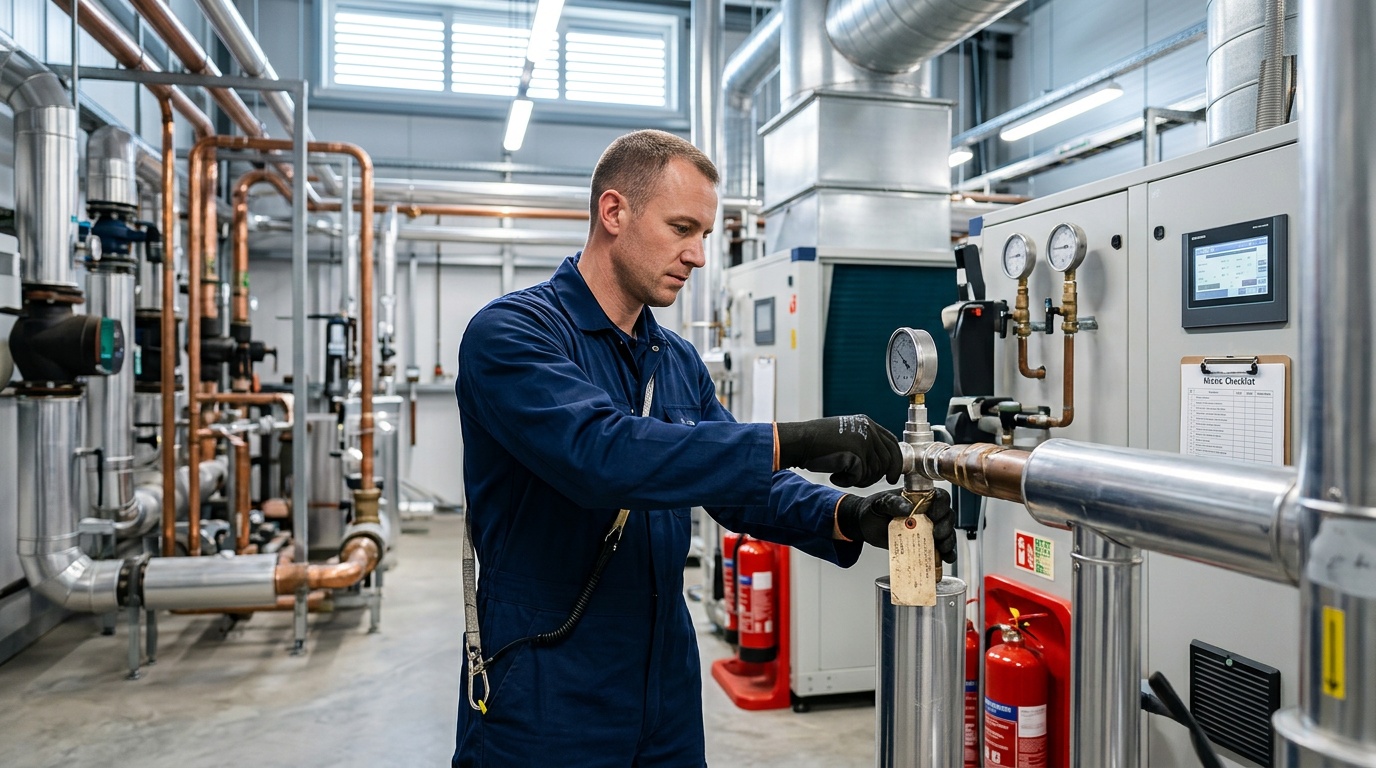
Credentials are the starting point. Before appointing hvac contractors, request evidence matching the work your estate requires. A company competent in comfort cooling may not suit gas boilers, high-voltage equipment, controls integration or specialist ventilation. Searches such as “commercial hvac contractors near me” may identify local firms, but proximity does not prove technical ability or dependable support.
Key Credentials to Request: Gas Safe, REFCOM, and Electrical Qualifications
For gas appliances, check the business and individual engineer on the Gas Safe Register, including categories required for the appliances involved. For refrigerant systems, ask for F-Gas competence and relevant REFCOM registration or certification evidence. Electrical work should be assigned to suitably qualified personnel, with inspection and testing completed where required. Request manufacturer training, asbestos awareness where relevant, working-at-height competence and current health and safety procedures.
Insurance and Liability: What Protects Your Estate?
Ask for current public liability and employers’ liability certificates, checking that limits and activities fit the contract. Professional indemnity may matter where the provider designs systems or gives engineering advice. Confirm who carries responsibility for subcontractors, permits, damage to fabric, refrigerant loss and reinstatement. A limited company structure alone does not guarantee recovery if a project is abandoned.
Assessing Contractor Experience: Beyond Paperwork to Practical Proof
Ask for anonymised examples involving similar building types, plant capacities and access conditions. Speak with a recent commercial client, inspect a sample service report and ask how the firm handles parts shortages, out-of-hours faults and unsafe equipment. A capable team can explain isolation, testing, commissioning, defect priority and handover clearly.
- Verify registration numbers and expiry dates.
- Match qualifications to the actual plant and proposed tasks.
- Check insurance, subcontractor controls and written terms.
- Request risk assessments, method statements and commissioning records.
- Confirm emergency contact arrangements and engineer response coverage.
Our Commercial HVAC Installation and Heating Service includes optimisation of system components such as thermostats and ducts, alongside high-grade heating system repairs and installations. The specialists know a variety of heating system models and brands, and the service offers 24 hour emergency heating repairs available any time of day.
Decoding HVAC Quotes: A Transparent Engineering Breakdown
A credible quote from hvac contractors should show how work will be carried out, not just present a lump sum for equipment and labour. If a condenser is moved or a refrigeration circuit opened, the price may include refrigerant recovery, pipework alterations, electrical relocation, pressure testing, vacuum evacuation, recharging and commissioning. Each task has a safety and reliability purpose, so ask whether every stage is included.
Common Technical Components Explained: Refrigerant Recovery, Vacuum Testing, Electrical Runs
Refrigerant recovery removes the existing charge into approved recovery equipment before a circuit is disconnected. The refrigerant should be weighed, recorded and handled under applicable F-Gas requirements. Altered pipework needs a pressure test, usually with dry nitrogen, followed by deep vacuum evacuation. Engineers measure vacuum in microns rather than relying on a pump running for an arbitrary period. Moisture and non-condensable gases can damage oil, restrict heat transfer and shorten compressor service life. Research cited in the supplied technical brief indicates that poor evacuation and moisture contamination can reduce compressor life expectancy by more than half.
Electrical allowances should identify any new isolator, cable route, containment, protection, voltage verification and testing. The quote should state whether electrical work is included, who will complete it and what certification will be issued. Commissioning should record operating pressures, temperatures, current draw, controls response and final refrigerant weight. Without those records, the estate has little evidence that equipment was left safe and correctly set up.
Why Condenser Relocation and Line Set Rerouting Are Costly
Moving a condenser may require isolation, refrigerant recovery, copper line-set removal or extension, supports, pipework protection, new electrical cables and weatherproof terminations. The new position may also require lifting equipment, roof access controls, extra brackets or extended condensate drainage. Longer pipe runs affect pressure drop, oil return and manufacturer limits, so the route must be checked against equipment data.
For residential systems, the supplied research places typical costs for refrigerant recovery, line set extension, dual-voltage electrical relocation and vacuum recharging between $1,800 and $3,500. Commercial projects vary because access, capacity, controls and working hours differ. The figure shows that visible relocation is only one part of the engineering scope, not a dependable price for every building.
| Quote line | What it should identify | Why it affects cost or risk |
|---|---|---|
| Refrigerant recovery | Recovery method, refrigerant type, weighing and disposal or reuse | Prevents uncontrolled release and supports an accurate recharge |
| Line set alteration | Pipe sizes, route length, insulation, supports and access method | Influences performance, labour time and manufacturer compliance |
| Electrical relocation | Cable route, isolator, protection, containment and testing | Determines safety requirements and coordination with electrical works |
| Evacuation and commissioning | Nitrogen pressure test, vacuum target in microns, charge and readings | Reduces contamination risk and proves the system operates correctly |
Spotting Commission-Driven Upselling: The Repair-First Diagnostic Approach
An honest recommendation starts with measured evidence. Ask for the fault code, test results, failed component, refrigerant findings, photographs and the reason repair is unsuitable if replacement is proposed. A ten-year-old unit is not automatically beyond repair. Consider parts availability, efficiency, refrigerant status, compressor condition, failure history, remaining service life and business disruption.
Be cautious if a salesperson recommends complete replacement before a qualified engineer has tested the asset. Ask whether the recommendation follows a documented defect or a sales target. The quote inspection checklist should include:
- Asset identification, model, capacity, location and fault description.
- Diagnostic readings, photographs and the engineer’s findings.
- Separate labour, materials, access, disposal and commissioning costs.
- Refrigerant type, recovery arrangements and estimated charge quantity.
- Warranty terms, exclusions, programme dates and named responsible parties.
- Any temporary cooling, tenant liaison or out-of-hours attendance required.
Our Commercial HVAC Installation and Heating Service follows an engineering-led scope for commercial installation and heating repairs around Birmingham. The second opinion should be written, testable and connected to operational impact, not shaped by an undisclosed commission.
Maintenance Agreements and Repair-First Strategies for Commercial Estates
A maintenance agreement should define assets covered, task schedule, response categories, reporting standard, spare-parts process, compliance records and escalation route, not just visit frequency and an emergency number. Planned preventative maintenance can reduce commercial HVAC breakdown incidents by up to 70 percent, according to the research supplied for this guide. That benefit depends on competent inspections and timely corrective work.
Planned Preventative Maintenance (PPM): Scheduling and Key Tasks
Build the schedule around equipment risk, manufacturer instructions, occupancy patterns and the consequence of failure. A boiler serving a care facility, chiller supporting production and air handling unit in a busy office may need different frequencies. Tasks include filters, belts, bearings, coils, fans, pumps, valves, strainers, safety controls, refrigerant indicators, condensate drainage, electrical connections and BMS operation. Each visit should produce defects, priority ratings, photographs and a dated action plan.
- Monthly or scheduled checks: alarms, temperatures, pressures, leaks, filters and visible damage.
- Seasonal servicing: heating readiness before winter and cooling performance before summer demand.
- Annual review: asset condition, energy drift, controls performance, compliance files and replacement planning.
- After repair: commissioning data, updated asset records and confirmation that outstanding defects are closed.
Repair vs Replacement: Evaluating Ageing HVAC Systems with Commercial Impact in Mind
Age alone should not decide the outcome. Review the fault, repair cost, parts availability, efficiency, refrigerant obligations, failure pattern and expected service life. Repair may be sensible where the heat exchanger, compressor or heat-transfer surfaces remain sound and the part is supported. Replacement may be justified where failures repeat, the system is unsafe, obsolete parts are unavailable, capacity no longer matches the building or operating costs are disproportionate.
Ask the engineer to present both choices with a clear risk statement. Compare capital cost, lead time, temporary plant, commissioning, warranty, energy performance and disruption. Supply chain delays can leave a building without heating or cooling, so stock availability and business continuity belong in the decision.
How a Repair-First Approach Protects Your Budget and Asset Value
A repair-first approach does not mean repairing unsafe or uneconomic equipment indefinitely. It means proving the fault before spending capital, protecting cash flow and creating an audit trail. It can also support staged investment: restore operation, monitor performance, then plan replacement during a controlled shutdown when evidence supports it.
Before authorising work, ask:
- What failed, and which measurements prove the diagnosis?
- Is the proposed repair compliant with manufacturer and safety requirements?
- Are parts available, and what is the realistic delivery date?
- What risk remains after the repair?
- What would replacement improve in capacity, efficiency and reliability?
- What records will be supplied after testing and commissioning?
The Commercial HVAC Installation and Heating Service supports this practical approach with trained and licensed specialists who are also insured. Its team understands a variety of heating system models and brands, provides system optimisation for thermostats and ducts, and offers 24 hour emergency heating repairs available any time of day.
Avoiding Common Pitfalls: Ensuring Quality Installations and Reliable Service
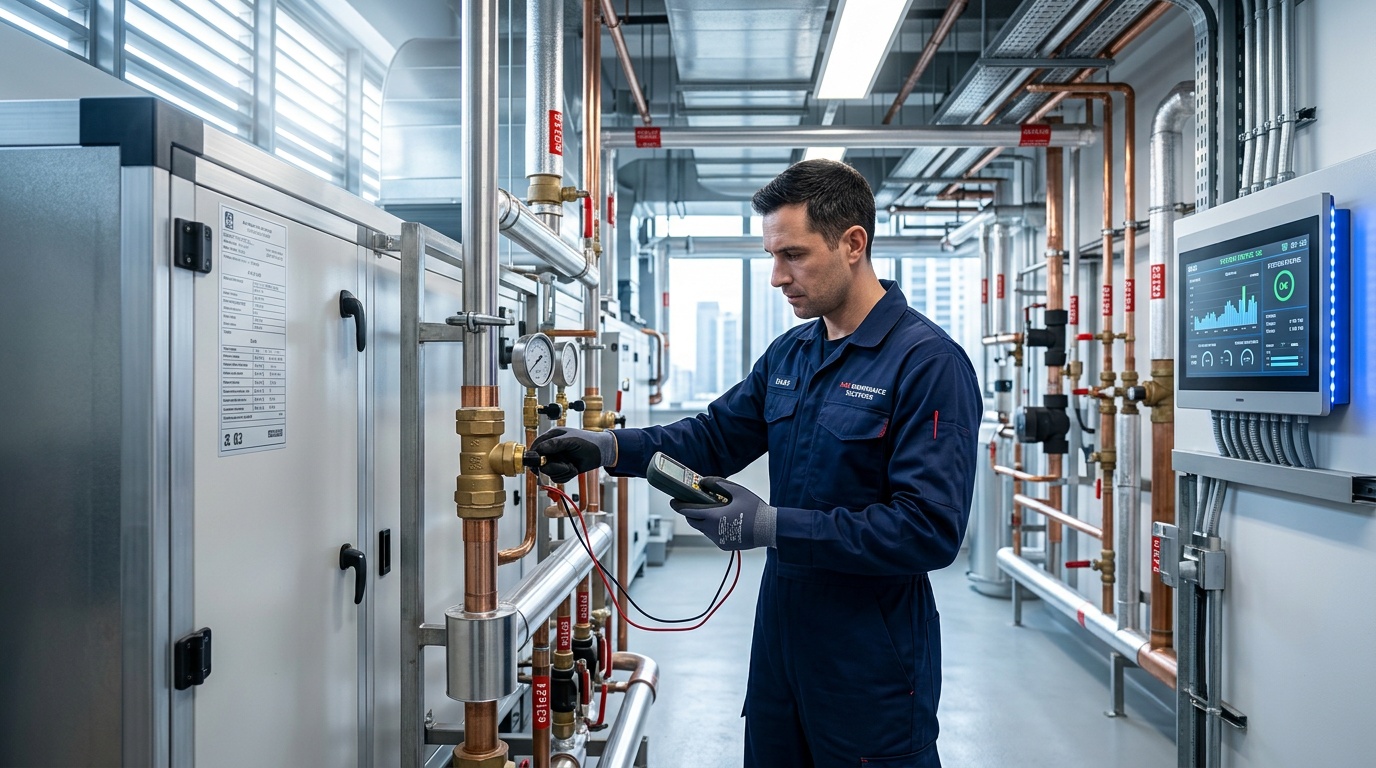
A commercial heating or cooling installation can look complete while concealing workmanship defects. I have seen systems handed back with contaminated refrigerant circuits, incomplete commissioning records and unresolved control faults. These issues may appear only when the building is under maximum demand. A dependable contractor must prove that installation has been pressure tested, evacuated, charged, commissioned and documented before the final account is settled.
The Risks of Unevacuated and Contaminated Refrigerant Systems
When a refrigeration circuit is opened, air and moisture can enter the pipework. A proper process includes dry nitrogen purging during brazing, pressure testing, a deep vacuum measured in microns and confirmation that the vacuum holds before charging. Skipping these stages leaves non-condensable gases and moisture inside the system, which can increase operating pressure, damage compressor oil, restrict heat transfer and cause repeated trips. Research supplied for this guide indicates that poor evacuation and moisture contamination can reduce compressor life expectancy by more than 50 percent.
Handover check: Request the pressure-test result, vacuum reading, refrigerant type and final charge weight. “Tested and operational” does not provide enough evidence of correct installation.
How to Prevent Contractor Abandonment and Incomplete Work
Contractor failure is a commercial risk as well as an engineering problem. Parts shortages, distribution delays and unclear subcontracting can leave plant isolated and a building without service. Before work starts, name the responsible company, confirm payment stages, record completion milestones and retain commissioning documents. The contract should define defect rectification, warranty response, access, insurance responsibility and unfinished-work procedures.
- Use staged payments linked to verified progress, not delivery of equipment alone.
- Record serial numbers, photographs, test results and outstanding defects.
- Identify the lead engineer and person authorised to approve variations.
- Require written notice of parts delays, revised dates and temporary measures.
- Retain a proportion of payment until testing, training and handover are complete.
Ensuring 24/7/365 Availability and Responsive Support
A service telephone number is not genuine emergency coverage. Ask who answers outside office hours, where engineers are based, which parts are held locally and how priority faults are escalated. The agreement should define response targets for heating loss, cooling failure, refrigerant alarms, water leaks and electrical isolation. The Commercial HVAC Installation and Heating Service provides commercial installation and heating repairs around Birmingham, with 24 hour emergency heating repairs available any time of day. The Commercial HVAC Installation and Heating Service also follows safety standards during heating service and repair, giving estate managers a clear route when failure threatens operations.
Frequently Asked Questions
What is an HVAC contractor?
HVAC contractors are specialists who install, maintain, repair and commission commercial heating, ventilation and air conditioning systems. Commercial HVAC contractors may work on boilers, chillers, air handling units, heat pumps, controls, ductwork and refrigerant systems. A suitable firm should provide qualified engineers, insurance, clear records and documented compliance.
What does an HVAC contractor do?
HVAC contractors assess, install, service, diagnose and repair commercial heating, ventilation and air conditioning equipment. Their work can include planned maintenance, fault finding, commissioning, controls, refrigerant handling and compliance documentation. Good engineers record the measured fault, affected asset, proposed remedy and operational risk before recommending repairs or replacement.
What is the $5,000 rule for HVAC?
The $5,000 rule is a US budgeting guide that compares repair cost with replacement cost, often suggesting replacement may be considered when the two figures multiply to more than $5,000. The rule is not a UK regulation and should not decide a commercial project alone. Equipment condition, efficiency, safety, reliability, available parts and business interruption also need review.
How do I find the best HVAC contractors for a commercial building?
The best HVAC contractors for a commercial building can evidence relevant qualifications, insurance, comparable project experience and dependable support arrangements. Check Gas Safe registration for applicable gas work, F-Gas competence for refrigerants and suitable electrical qualifications. Ask for references, named engineers, a written scope, risk assessments, service records and clear escalation arrangements.
How do I know if my HVAC contractor is bad?
An HVAC contractor may be unsuitable if the firm cannot provide relevant credentials, clear reports, insurance evidence or a written explanation of recommended work. Warning signs also include repeated part replacement without measured diagnosis, incomplete service records, unclear responsibility for subcontractors and recommendations to replace serviceable equipment without discussing repair options.
How often should a commercial HVAC system be serviced?
Commercial HVAC systems should be serviced according to manufacturer guidance, site risks, operating hours and a planned maintenance schedule such as SFG20 where appropriate. HVAC contractors should inspect items including filters, belts, coils, fans, safety devices, refrigerant circuits and controls. Service frequency may need adjustment where failure would disrupt production, tenants or stored goods.