Best providers for kitchen ventilation repairs in Birmingham?
Searching for the Best providers for kitchen ventilation repairs in Birmingham? Start with engineering evidence, not the lowest call-out price. A commercial extraction system affects fire safety, indoor air quality, gas appliance operation, staff welfare and your ability to trade. A fan that runs without capturing smoke can indicate a balance fault, damaged ductwork, worn belt or failed capacitor, not necessarily a condemned motor.
Key Takeaways
- A low call-out fee means little if the engineer cannot diagnose why your extraction system is failing to capture smoke properly.
- Commercial kitchen ventilation directly affects fire safety, air quality, gas appliance performance and your legal ability to keep trading.
- A fan that spins without clearing smoke often points to an airflow balance fault, damaged ductwork, a worn belt or a failed capacitor rather than a dead motor.
- Choosing a provider should start with engineering evidence and proper diagnostics, not a quick quote over the phone.
- Poor extraction puts staff welfare at risk and can compromise the safe operation of every gas appliance connected to the canopy.
I have spent more than 24 years working from plant rooms to boardrooms. Choose a contractor that diagnoses each component, records findings and explains commercial risk before recommending replacement. MEMS provides Commercial Ventilation Repair Services for businesses across Birmingham and the West Midlands.
The Commercial Reality: Why Expert Kitchen Ventilation Repair in Birmingham is Non-Negotiable
The right provider should inspect the canopy, filters, fan assembly, motor, controls, ductwork, discharge point and gas interlock system. They should provide photographs, test readings, parts information and compliance documentation. If a technician recommends full extraction replacement without testing the drive system, airflow and electrical controls, ask for a second opinion.
The Hidden Costs of Downtime: Beyond Lost Sales
A failed extraction system can close a kitchen during its busiest service. Costs may include cancelled bookings, wasted stock, staff disruption, emergency labour, spoiled ingredients, dissatisfied customers and missed delivery commitments. Poor airflow can make the kitchen hot, smoky and uncomfortable, affecting productivity and workplace conditions.
Noise, vibration, weak capture and unusual electrical smells often appear first. Ignoring them can lead to motor overheating, fan imbalance or complete shutdown. A competent Birmingham contractor treats these signs as diagnostic evidence rather than a reason to sell a new system.
Fire Safety & Compliance: The Ultimate Business Risk
Grease deposits inside filters, canopies and ductwork provide combustible material near heat-producing equipment. TR19 guidance from the Building Engineering Services Association, commonly called BESA, sets expectations for inspection, cleaning and access within kitchen extraction systems. Frequency depends on cooking type, operating hours and grease loading, so a generic annual visit may not suit every premises.
DW/172 covers commercial kitchen ventilation design and performance, including capture velocity. Research findings indicate typical minimum velocities of approximately 0.2 to 0.5 metres per second, depending on cooking equipment. BS 6173 also matters where commercial catering gas installations and safety arrangements are involved. Inspection findings should connect with the fire risk assessment, insurance requirements and gas safety records.
Why “Cheap Fixes” Lead to Costly Failures: An Engineer’s Perspective
Extraction fans are sometimes labelled beyond repair when the fault is a worn belt, failed run capacitor, seized bearing or poor airflow balance. Research indicates that up to 70% of kitchen extraction motor faults can relate to those serviceable conditions rather than a completely burnt-out motor. Replacing the whole fan without testing voltage, current, rotation, belt tension and bearing condition is poor engineering and asset management.
How to Vet Commercial Kitchen Ventilation Repair Providers in Birmingham: A Rigorous Engineering Checklist
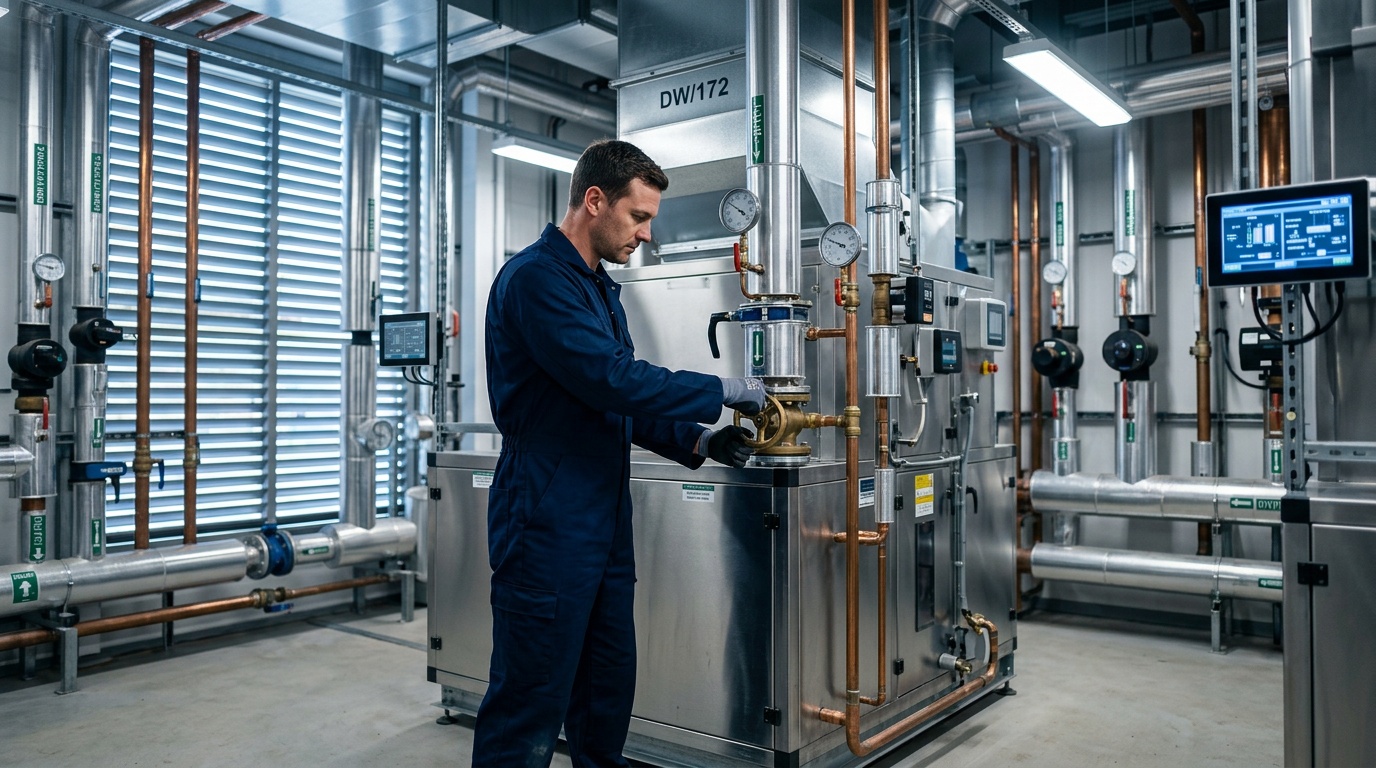
Understanding UK Compliance Standards: TR19, DW/172, BS 6173 Explained
Ask which standards guide inspection and reporting. TR19 relates to hygiene and grease risk within ventilation ductwork. DW/172 provides technical guidance for commercial kitchen ventilation design and performance. BS 6173 is relevant to installing and servicing gas-fired catering equipment. Gas-related work should be completed by an appropriately registered Gas Safe engineer, with records identifying the engineer and work scope.
Component-Level Diagnostics vs. Wholesale Replacement: What to Demand
A repair-first assessment should cover the fan impeller, motor bearings, shaft, belts, pulleys, capacitors, isolators, speed controllers, filters, flexible connections, duct joints and external discharge. The engineer should measure airflow and electrical load rather than rely on sound or visual inspection. This can prevent unnecessary capital expenditure while identifying unsafe equipment that genuinely requires replacement.
Evaluating Technical Expertise: Beyond the Sales Pitch
Reliable providers show their method. Look for commercial mechanical and electrical experience, suitable insurance, documented risk assessments and familiarity with SFG20 maintenance schedules. Ask for sample service reports with identifying details removed. A useful report includes photographs, asset references, observed defects, test readings, remedial options and priority levels. “Fan faulty” alone is not enough information to control risk or budget accurately.
Service Level Agreements (SLAs) and Emergency Response: What “24/7” Really Means
“24/7” should describe a measurable service. Confirm the telephone route, response target, geographical coverage, engineer availability, escalation process and out-of-hours pricing. Ask whether the contractor carries common belts, capacitors, contactors and control components, and whether temporary measures are available when permanent repair requires planned access. The SLA should state how close-out documentation, compliance certificates and recommendations will be delivered.
The MEMS Standard: Planned Preventative Maintenance (PPM) as a Proactive Investment
Planned preventative maintenance replaces emergency disruption with controlled asset care. A suitable schedule can include filter checks, belt condition, bearing noise, fan rotation, electrical connections, airflow performance, grease loading, interlock operation and discharge condition. SFG20-aligned task planning creates a traceable maintenance history, while trend data can show declining performance before extraction is lost.
- Demand evidence: test readings and photographs, not a replacement estimate alone.
- Check competence: confirm Gas Safe capability for relevant gas interlock work and commercial ventilation experience.
- Review documentation: request service reports, risk assessments, certificates and clear remedial priorities.
- Test the response promise: establish who answers at 2am and what the engineer can attend.
- Plan the maintenance: select PPM intervals based on grease load, operating hours and equipment condition.
When assessing the Best providers for kitchen ventilation repairs in Birmingham?, prioritise diagnostic discipline and documented compliance over a polished sales presentation. MEMS Commercial Ventilation Repair Services supports commercial sites needing practical engineering, clear communication and ongoing maintenance.
Top-Tier Kitchen Ventilation Repair Specialists in Birmingham: Our Commercial Evaluation
For facility managers comparing the Best providers for kitchen ventilation repairs in Birmingham?, the shortlist should match the support your site needs. A local extraction specialist may suit one restaurant, while a national facilities management provider may offer wider planned maintenance. The deciding evidence is competent engineers, clear reporting, compliance knowledge and testing of failed components before major capital work.
1. MEMS Facilities Maintenance: Your Partner in Building Performance
Best for: Commercial kitchens, managed estates and businesses requiring responsive ventilation support linked to wider mechanical and electrical maintenance.
MEMS is our recommended provider because we approach extraction as part of the building’s operating system, not an isolated fan repair. My background began with combustion engineering, so I understand the connection between airflow, gas safety, electrical controls, fire risk, staff conditions and business continuity. Our Commercial Ventilation Repair Services cover fault diagnosis, fan assemblies, motors, belts, capacitors, controls, ductwork, discharge points and planned maintenance.
We identify whether the fault sits within the motor, drive train, control circuit, airflow balance or duct system before advising on replacement. Clients receive findings, remedial priorities and the effect on safe operation. Commercial Ventilation Repair Services suit sites needing one accountable partner for emergency attendance and asset care across Birmingham and the West Midlands.
Pros
- Founder-led engineering oversight with commercial mechanical experience
- Repair-first assessment supported by practical fault diagnosis
- Suitable for reactive attendance and planned maintenance planning
- Clear focus on uptime, compliance records and whole-building performance
Cons
- Best suited to organisations seeking an ongoing commercial maintenance relationship rather than a one-off domestic call-out
2. Contract Services Midlands: Local West Midlands Coverage
Best for: Businesses looking for a regional contractor familiar with Birmingham commercial ventilation requirements.
Contract Services Midlands presents ventilation support for Birmingham sites and may suit managers who value local coverage. Request the inspection scope, engineer competencies, response arrangements and sample documentation. Confirm that the service includes airflow testing, fan and control checks, ductwork assessment and photographs rather than a visual visit followed by a replacement quotation.
The provider should explain how work aligns with the fire risk assessment, grease inspection programme and gas safety responsibilities. Local availability must be matched by documented technical standards and an escalation route for kitchen shutdowns during service.
3. EnviroVent: Specialist Ventilation Network
Best for: Organisations wanting an established ventilation brand with regional specialist coverage.
EnviroVent’s Birmingham and Midlands presence makes it a possible option for facilities teams seeking ventilation expertise. Confirm whether the assigned team regularly works on grease extraction, high-temperature catering environments, fan motors, interlocks and commercial duct systems.
For a multi-site estate, establish account ownership, engineer allocation, emergency response and service-record procedures. A strong proposal should distinguish cleaning, repair, testing and replacement, with separate costs and priorities.
4. CS Cleaning and Ducting Specialists: Extraction and Ductwork Focus
Best for: Sites where grease contamination, duct access, extraction hygiene or post-cleaning remedial work is a major risk.
CS Cleaning and Ducting Specialists advertises reactive repair support in Birmingham and the West Midlands. This type of provider can help where restricted airflow, heavy grease deposits or inaccessible duct sections affect fan performance. Confirm whether the scope includes mechanical and electrical diagnosis or is mainly cleaning and ductwork.
Request the inspection method, access arrangements, before-and-after records, TR19-related documentation and details of recommended fan or control repairs. Cleaning can remove contamination, but it will not correct a failed capacitor, damaged bearing, loose belt, faulty interlock or defective speed controller.
| Provider type | Best fit | Evidence to request | Key procurement check |
|---|---|---|---|
| MEMS Facilities Maintenance | Integrated commercial repair and maintenance | Fault readings, photographs, remedial priorities and planned task schedules | Confirm response terms and site-specific PPM scope |
| Contract Services Midlands | Regional Birmingham coverage | Engineer competency, inspection scope and service reports | Check component testing before replacement proposals |
| EnviroVent | Ventilation-focused regional support | Commercial kitchen experience and allocation process | Confirm grease extraction and emergency capability |
| CS Cleaning and Ducting Specialists | Grease, ductwork and extraction hygiene | Cleaning records, access plans and repair boundaries | Separate cleaning findings from mechanical faults |
When comparing the Best providers for kitchen ventilation repairs in Birmingham?, select the contractor that can prove what failed, why it failed and what must happen next. A low initial price is poor value if the same motor, belt or airflow fault returns during the next service.
Troubleshooting Common Commercial Kitchen Ventilation Faults: A Component-Level Guide
Good diagnosis starts with the fault pattern, not a replacement quotation. A system can appear to run while delivering poor capture, excessive noise or unsafe conditions. The engineer should isolate each part, record test readings and establish whether the defect is mechanical, electrical, aerodynamic or contamination-related.
Exhaust Fan Motor Issues: Bearings, Capacitors, and Drive Belts
A noisy fan does not automatically require a new motor. Rattling, humming, vibration and intermittent starting can indicate worn bearings, a failed run capacitor, loose mounting, belt slip or pulley misalignment. Check voltage, running current, rotation, bearing condition, belt tension and impeller balance. Research indicates that up to 70% of kitchen extraction motor faults relate to poor airflow balance, worn drive belts or failed capacitors rather than a burnt-out motor. Repair is often appropriate when the motor casing and windings remain serviceable.
Ductwork Problems: Blockages, Leaks, and External Venting Failures
Weak extraction may originate after the fan. Grease-restricted ductwork increases resistance, while split joints and damaged flexible connections release contaminated air into ceiling voids. A blocked or poorly positioned discharge can create back pressure and recirculation. Trace the route from canopy to termination point, checking access doors, fire-stopping, discharge direction and visible leakage. Foul air reaching a ceiling void is a hygiene, building fabric and fire-risk concern requiring recorded remedial action.
Gas Interlock System (GIS) Faults and BS 6173 Compliance
A gas interlock system may shut down appliances when airflow proving, emergency stops, gas pressure or safety controls fall outside permitted conditions. Causes include a failed pressure switch, damaged sensor, control panel fault, fan proving failure or incorrect airflow threshold. Test the interlock sequence rather than repeatedly resetting the panel. Gas appliance work must be undertaken by an appropriately registered Gas Safe engineer. BS 6173 provides guidance for commercial catering gas installations and ventilation safety arrangements.
Airflow & Extraction Performance: Diagnosing “Not Pulling Smoke”
When a hood runs but does not capture smoke, measure airflow at the canopy and compare it with the equipment layout and design requirements. BESA DW/172 covers performance, including capture velocities commonly between 0.2 and 0.5 metres per second depending on cooking equipment. Poor capture can arise from an undersized fan, blocked filters, incorrect speed control, competing air movement, open doors or an unsuitable replacement canopy. The remedy depends on measured performance.
Grease Build-Up and TR19 Standards: Beyond Aesthetics
Grease deposits are combustible contamination. They can restrict airflow, disturb impeller balance, increase motor load and provide fuel within the extraction route. TR19 guidance from BESA supports planned inspection and cleaning based on cooking type, operating hours and grease loading. Document accessible duct sections, measured contamination, photographs, cleaning work and remaining defects. A clean canopy cannot correct a restricted duct, failed fan or unsafe discharge arrangement.
| Observed symptom | Likely areas to test | Evidence to request |
|---|---|---|
| Fan hums but will not start | Run capacitor, bearings, isolator and motor windings | Voltage, current and component test readings |
| Extraction is weak | Filters, belts, impeller, duct resistance and discharge | Airflow readings and route inspection photographs |
| Gas appliances shut down | Fan proving, pressure switch, sensors and interlock controls | Fault code, sequence test and Gas Safe engineer record |
| Persistent grease odour | Duct contamination, leaks, recirculation and external termination | TR19-related inspection findings and access records |
Securing Your Operation: Proactive Maintenance & The MEMS Advantage

The True Cost of Reactive Repairs: Why PPM Prevents Catastrophe
Reactive repair exposes the kitchen to failure during busy service hours. Planned preventative maintenance identifies belt wear, bearing noise, contamination, loose connections and declining airflow before shutdown. It also gives finance teams a defensible maintenance history instead of unpredictable emergency invoices.
Ensuring Uptime: How MEMS Protects Your Revenue
Our approach links ventilation performance with trading continuity. Engineers assess equipment, explain operational risk and prioritise work protecting safe cooking, staff conditions and opening hours. This accountability matters when a Birmingham site cannot afford repeated call-outs or unclear recommendations.
Beyond Compliance: Optimising Efficiency for Long-Term Savings
A correctly tensioned belt, clean filter, balanced impeller and properly controlled airflow reduce wasted energy and mechanical stress. SFG20-aligned task planning, inspection records and trend monitoring support better budget decisions.
Ready to Experience the MEMS Difference? Your Next Steps.
Book an assessment through Commercial Ventilation Repair Services. Ask for component-level diagnosis, documented readings and a clear repair-versus-replacement recommendation. CLICK TO CALL US NOW for dependable commercial ventilation support across Birmingham and the West Midlands.
Frequently Asked Questions
How much does it cost to get a kitchen ventilation system installed in Birmingham?
Commercial kitchen ventilation installation in Birmingham is priced according to system size, airflow requirements, ductwork, controls, access and compliance needs. A reliable contractor should survey the premises and provide a written specification before quoting. Repairing a belt, capacitor, bearing or control fault may cost less than replacing the complete extraction system.
What are the best kitchen ventilation systems for commercial kitchens?
The best commercial kitchen ventilation system is one that captures cooking fumes effectively, supports safe gas appliance operation and matches the equipment, room layout and operating hours. A competent Birmingham provider should assess the canopy, filters, fan, ductwork, discharge point and controls. DW/172 guidance can help inform design and performance checks.
How often does a commercial kitchen exhaust duct need to be cleaned?
Commercial kitchen exhaust ducts should be cleaned at intervals based on cooking type, operating hours and grease loading, rather than a fixed annual schedule. TR19 guidance provides a framework for inspection and cleaning. A contractor should record grease levels, provide photographs and recommend a suitable frequency for the premises.
Which companies provide kitchen ventilation repairs in Birmingham?
MEMS provides commercial kitchen ventilation repair services across Birmingham and the West Midlands. The engineering assessment should cover the canopy, filters, fan assembly, motor, controls, ductwork, discharge point and gas interlock. Ask for test readings, photographs, parts information and compliance records before approving major replacement work.
What should I look for in a Birmingham kitchen ventilation repair provider?
A suitable Birmingham kitchen ventilation repair provider should offer component-level diagnosis, commercial mechanical and electrical experience, documented risk assessments and clear service reports. Reports should identify defects, test readings, photographs, repair options and priority levels. Gas-related work should be completed by an appropriately registered Gas Safe engineer with records of the work.
What is the $5,000 rule for HVAC repairs?
The $5,000 HVAC rule is a budgeting guide that compares repair cost with replacement cost, often suggesting replacement may merit consideration when repairs approach half the system value. Commercial kitchen extraction decisions should not rely on this rule alone. Airflow, electrical readings, component condition, compliance and expected service life also need engineering assessment.
Can a faulty kitchen extraction fan be repaired instead of replaced?
A faulty kitchen extraction fan can often be repaired when the cause is a worn belt, failed capacitor, seized bearing, poor balance or control fault. A Birmingham engineer should test voltage, current, rotation, belt tension, bearings and airflow before recommending replacement. A written diagnosis helps separate a serviceable fault from a failed asset.