Best value ventilation maintenance for factories Birmingham?
Production rarely stops with a dramatic bang. Airflow weakens, extraction performance drifts, motors work harder and small faults pass unnoticed until a line cannot run. Best value ventilation maintenance for factories Birmingham? It starts with protecting output, worker safety and plant condition, not simply finding the lowest hourly rate.
Key Takeaways
- True value in factory ventilation maintenance comes from protected uptime and compliance, not the cheapest hourly rate on a quotation.
- Airflow losses and extraction faults build slowly, so planned inspections catch problems before they force a production line offline.
- Servicing fans, motors and ductwork at the right intervals keeps equipment running within design limits and reduces wasted energy costs.
- When comparing contractors, plant managers should weigh response times, compliance knowledge and parts availability alongside price.
- A documented maintenance regime safeguards worker health, satisfies HSE and insurer expectations and preserves the condition of your plant assets.
I’ve spent more than 24 years working from boiler rooms to boardrooms. Neglected ventilation becomes an operational cost long before an obvious breakdown. The sections below set out a repair-first way to assess risk, maintenance quality and long-term value. M&E Maintenance Solutions applies this engineering approach across commercial HVAC systems, with clear findings, sensible remedial work and compliance evidence.
The Real Cost of Neglecting Factory Ventilation: Birmingham's Hidden Downtime & Compliance Risks
The 'If It Ain't Broke' Fallacy in Industrial Settings
A fan that still turns is not proof that a ventilation system is healthy. Belts stretch, bearings deteriorate, filters load with dust and dampers move from their designed position. The system may keep operating while delivering less air, drawing more current and straining motors, drives and bearings. In a Birmingham factory, gradual decline can affect temperature control, process conditions and staff comfort before anyone reports a fault.
Skipping planned preventative maintenance can shorten component life. Capacitors, belts and bearings may fail prematurely when alignment, lubrication, tension and electrical loading are not checked. The apparent saving from missing a service visit can become an emergency call-out, expedited parts, overtime and a production stoppage. That is deferred cost with a less predictable invoice.
Beyond Dust: Understanding the Cascade of Ventilation Failures
Ventilation faults rarely remain isolated. A clogged filter increases resistance; the fan works harder; motor amperage rises; heat accumulates in the motor; and energy consumption increases. A slipping belt reduces fan speed and airflow, leaving fumes, heat or airborne particulates inadequately controlled. The Carbon Trust attributes up to 30% of industrial HVAC and fan energy waste directly to clogged filters, slipping belts and unbalanced dampers.
Poor indoor air quality can contribute to lost working days across UK manufacturing, while weak extraction may expose the business to unsafe working conditions and difficult audit questions. A proper inspection traces faults through airflow, pressure, vibration, temperature, electrical readings and control settings rather than changing the first failed component.
Why Generic HVAC Advice Fails Birmingham's Factories
A factory is not an office with larger fans. Local Exhaust Ventilation, air handling units and process extraction serve different duties, operate in different environments and need different testing methods. Welding fumes, machining debris, production heat, chemical vapours and variable occupancy all affect the maintenance plan. Advice based only on filter changes and visual checks will miss important operating conditions.
Factory managers need records connecting observations to business risk: measured airflow, motor condition, belt alignment, filter pressure drop, control response and recommended action. This separates a repairable defect from an asset that has reached the end of its serviceable life. It is the practical starting point for Best value ventilation maintenance for factories Birmingham?
Defining 'Best Value' Ventilation Maintenance: The Repair-First Engineering Standard
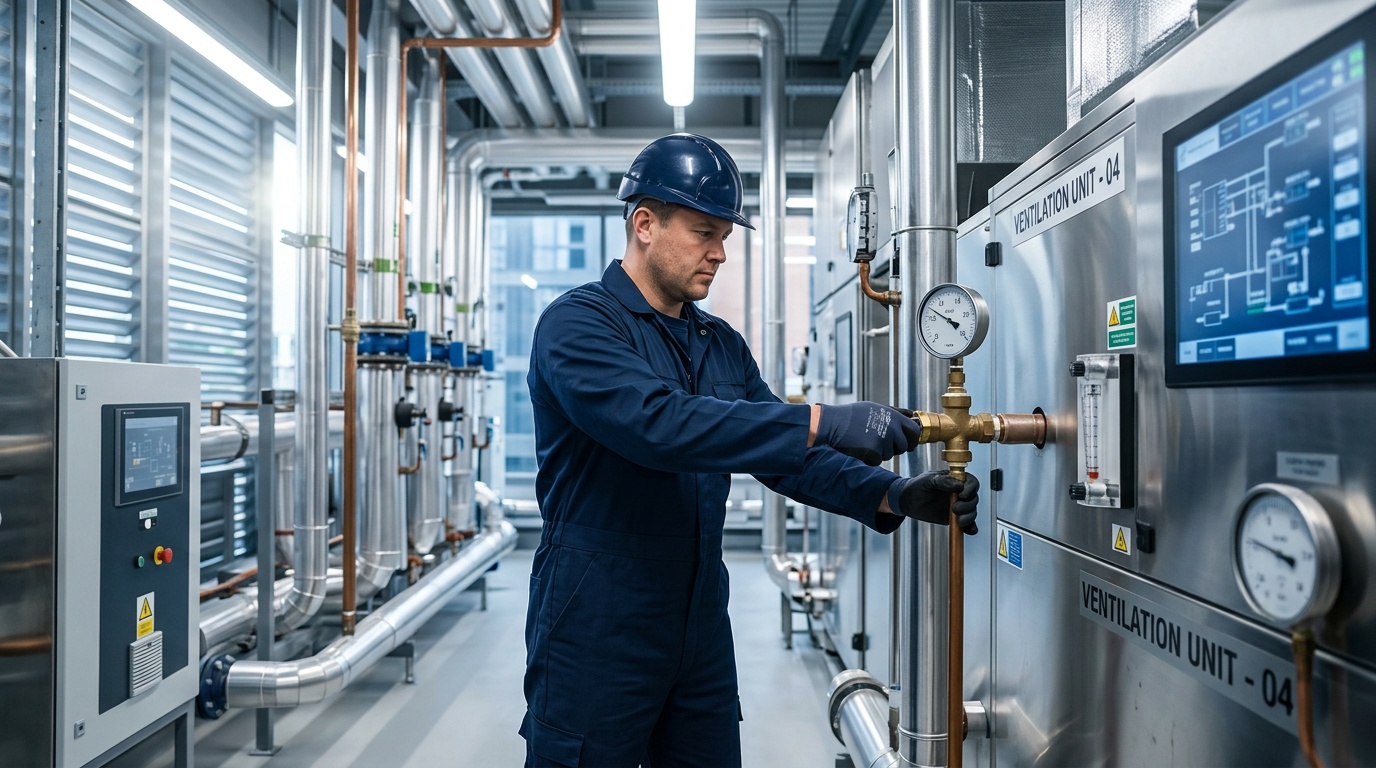
Beyond Hourly Rates: The True Value Equation
The cheapest hourly rate does not necessarily produce the lowest ownership cost. Assess inspection depth, planned visit frequency, response arrangements, parts quality, energy performance, documentation and expected equipment life. A low-cost visit that finds only an obvious symptom can leave the root cause untouched, causing repeat failures and further downtime.
Before accepting a tender, request the complete scope. It should identify filters, belts, bearings, motors, fans, dampers, coils, sensors, controls, ductwork access and reporting requirements, while distinguishing included labour from chargeable remedial work. This makes prices comparable and prevents necessary tasks appearing later as surprises.
The 'Repair-First' Philosophy: Verify Diagnostics Before Capital Expenditure
“Replace the unit” should follow a documented engineering assessment. Before recommending capital expenditure, a competent technician should check vibration, motor amperage, bearing condition, belt tension, fan balance, airflow with an anemometer, temperature and control signals. The inspection should establish whether the problem is in the fan assembly, electrical supply, drive system, ductwork or controls.
Repair-first does not mean keeping unsafe or obsolete equipment in service. It means testing the asset, pricing a sound repair and explaining remaining service life. Best value ventilation maintenance for factories Birmingham? means receiving an honest choice between repair, refurbishment and replacement, supported by measurements and lifecycle reasoning.
SFG20 Compliance: The Benchmark for Industrial Ventilation Maintenance
SFG20 provides a recognised framework for planned maintenance tasks, frequencies and responsibilities. The regime must still reflect system design, manufacturer instructions, operating hours and factory hazards. Records should show completed tasks, defects, corrective actions, outstanding risks and follow-up responsibility.
Compliance paperwork cannot replace good engineering. A completed tick box has limited value if airflow was not verified or a recurring bearing fault was ignored. A useful report records asset condition and gives the plant manager enough information for a defensible budget and safety decision.
Assessing LEV, AHUs and Process Extraction Systems
Local Exhaust Ventilation captures contaminants at source, so capture velocity, hood condition, duct integrity and airflow readings matter. Air handling units require attention to filters, coils, fans, dampers, heat recovery sections, frost protection and controls. Process extraction may need inspection of specialist hoods, abrasive dust routes, spark protection and discharge arrangements. Each system should have an asset register and duty-specific maintenance plan.
For Birmingham operations, the provider should understand industrial estates, production schedules and access restrictions as well as mechanical equipment. M&E Maintenance Solutions was founded in 2007 and focuses on commercial HVAC maintenance, supporting facility and estate managers throughout the UK. Its repair-first approach ties decisions to measured condition, compliance needs and business continuity.
| Assessment area | Weak maintenance approach | Best-value engineering approach |
|---|---|---|
| Fault diagnosis | Visual check followed by a replacement recommendation | Airflow, vibration, amperage, temperature and control checks |
| Planned maintenance | Generic visits with unclear task ownership | Asset-specific schedule with recorded findings and actions |
| Cost control | Low entry price with exclusions discovered later | Clear scope, remedial pricing and lifecycle options |
| Operational outcome | Repeat call-outs and unplanned stoppages | Earlier fault detection, stable airflow and better budget control |
Navigating UK Statutory Compliance & HSE Regulations for Factory Ventilation
Best value ventilation maintenance for factories Birmingham? It must include statutory testing, usable records and engineering work that protects people and plant. Compliance requires a system that performs its intended duty, addressed defects, and evidence of what was inspected, when it was tested and which actions remain open.
LEV Testing Frequency: HSG258 Guidelines and Your Legal Obligations
Under COSHH Regulation 9, Local Exhaust Ventilation plant must receive a thorough examination and test at least once every 14 months. The Health and Safety Executive sets out this requirement in HSG258. Some processes need more frequent attention where dust, fumes, vapours or production conditions create additional risk. Examination should cover hoods, enclosures, ductwork, air movement, filters, fans, discharge points and system performance.
A visual check is not a substitute for measured verification. An LEV report should identify design duty, test results, faults, remedial priorities and restrictions on use. Airflow, capture performance and pressure measurements show whether extraction remains suitable. A missed examination can leave workers exposed and make a safety investigation harder to defend.
COSHH Assessments: Ensuring Worker Safety from Fumes and Particulates
A COSHH assessment should identify substances released by manufacturing, exposure routes and controls required to reduce exposure. Ventilation may form one control within an arrangement including enclosure, process design, housekeeping, respiratory protection and staff training. Changes to welding, spraying, machining, chemical use or production volume should trigger review.
Maintenance findings must connect to that assessment. A damaged capture hood, blocked filter or leaking duct is not merely a mechanical defect if contaminants can enter the breathing zone. M&E Maintenance Solutions records faults clearly so facility managers can arrange corrective work before lost extraction becomes a worker-safety incident.
Workplace (Health, Safety and Welfare) Regulations 1992: Ventilation Requirements
The Workplace (Health, Safety and Welfare) Regulations 1992 require enclosed workplaces to have effective and suitable ventilation: sufficient clean air, removal of stale air, heat, dust and airborne contaminants, and no unsafe conditions or uncomfortable draughts. Factory ventilation must reflect occupancy, layout, process emissions, make-up air and seasonal operation.
Records should cover fan operation, dampers, grilles, coils, sensors, controls, air balance and visible duct condition, not only filter replacement. TR19 guidance is relevant where ductwork hygiene is a concern, especially in systems affected by dust or grease. Cleaning recommendations should follow inspection evidence, system use and contamination levels rather than an automatic sales cycle.
REFCOM & F-Gas Regulations: Refrigerant Management in AHUs
Where an air handling installation includes refrigeration, heat-pump or comfort-cooling equipment, refrigerant management must be handled by suitably certified personnel. The F-Gas Regulations cover leak prevention, leak checks, recovery, records and approved methods. REFCOM F-Gas certification is a useful competence check for refrigerant-related work.
Ask whether the scope separates ventilation and refrigeration duties. Filters, coils, fan performance and controls can affect cooling output without a refrigerant leak. Proper diagnosis avoids unnecessary charging and identifies airflow restrictions, electrical faults or poor heat transfer before compressor damage develops. M&E Maintenance Solutions holds Refcom F-Gas Certification and supports commercial HVAC compliance work across the UK.
The Role of Preventative Maintenance in Audit Readiness
Audit readiness is built during every planned visit. Records should show asset identity, inspection date, technician, measurements, defects, photographs where useful, risk rating, recommendation and completion status. Keep LEV examination reports, COSHH reviews, F-Gas records, cleaning evidence, calibration details and remedial invoices with the maintenance schedule.
Factory ventilation compliance checklist:
- Confirm each LEV system has a current thorough examination and test under HSG258.
- Match extraction performance to the COSHH assessment and current production process.
- Check AHU filters, coils, fans, dampers, controls and refrigerant circuits.
- Review ductwork hygiene against inspection findings and applicable TR19 guidance.
- Track every defect to a named owner, agreed action and completion date.
- Retain clear evidence that repairs were verified after completion.
This gives the plant manager a defensible compliance trail and clearer budget. M&E Maintenance Solutions was founded in 2007, employs over 20 core staff and works with strategic partners where specialist support is required. Its focus is practical: inspect properly, repair where sound engineering allows, and keep commercial HVAC systems safe, efficient and ready for production.
The Plant Manager's Toolkit: Questions to Ask Your Ventilation Maintenance Provider
A maintenance tender should control risk rather than create uncertainty. Ask how the provider will inspect fans, motors, belts, bearings, filters, dampers, controls and ductwork, and how findings will be recorded. A credible answer includes measured diagnostics, clear exclusions and a route from defect identification to completed repair. Factories often accept a low headline price, then discover access equipment, testing, parts or follow-up visits were excluded.
Unpacking Tenders: Identifying Hidden Costs and Scope Gaps
Request a line-by-line schedule of planned tasks, visit frequency, labour allowances, consumables, reporting, statutory testing and emergency attendance. Check whether it includes airflow verification, vibration checks, motor amperage readings and post-repair testing. Ask which items need separate quotations, whether out-of-hours call-out charges apply, who supplies filters, belts and bearings, what warranty applies, and how urgent defects are prioritised.
A useful question is: “What could this price exclude that would affect safe operation or production?” The answer reveals whether the contractor understands the process, operating hours and ventilation plant.
Evaluating Technician Competence: Beyond the 'Generalist' Approach
Industrial ventilation needs more than a visual inspection. Ask whether the technician can interpret fan curves, assess static pressure, trace control faults and distinguish electrical failure from airflow restriction. Confirm experience with Local Exhaust Ventilation, air handling units, process extraction, variable speed drives and dust-laden environments. Ask who reviews a report recommending replacement.
Evidence should include calibration details, recorded measurements, useful photographs and root-cause explanation. Testing before recommending a new motor, fan or air handling unit protects capital budget and workforce.
Service Level Agreements (SLAs): What Constitutes a Reliable Contract?
Your SLA should define response targets by severity, escalation contacts, attendance arrangements, communication standards and reporting times. It should distinguish critical production faults, safety defects and routine remedial work, and include access, permits, isolation procedures, out-of-hours support, parts approval and expenditure authorisation.
Ask how the provider communicates during a prolonged outage, who gives the estimated repair time and how temporary controls are managed. A dependable agreement tracks open defects, repeat failures, statutory dates and recommendations needing capital approval.
The M&E Maintenance Solutions Standard: Transparency, Accountability, and a 24/7/365 Commitment
M&E Maintenance Solutions was founded in 2007 and serves facility and estate managers throughout the UK. It employs over 20 core staff and works with a growing number of strategic partners. Factory managers should ask for named contacts, engineering reports, traceable approvals and a defined route to 24/7/365 assistance rather than relying on an anonymous helpdesk.
The company holds SafeContractor, Refcom F-Gas Certification, Gas Safe Register, BES and ISO 9001 certifications. Credentials should support site competence, not replace it. The practical test is whether the provider can explain the fault, repair options, remaining asset life and compliance evidence required.
Proactive Maintenance vs. Reactive Call-Outs: A Cost-Benefit Analysis
Planned maintenance costs are visible and budgetable. Reactive failure costs include lost production, overtime, expedited parts, contractor availability and unsafe working conditions. Planned inspections can identify wear before a belt breaks, bearing seizes or motor overheats. Assess total downtime exposure, not only the annual service invoice.
Maintenance Strategy: Practical Strengths and Limitations
Pros
- Scheduled inspections expose developing faults earlier.
- Measured diagnosis supports repair before replacement.
- Clear records improve audit readiness and budget planning.
- Defined escalation reduces uncertainty during production failures.
Cons
- Planned visits require access, coordination and production scheduling.
- Older equipment may still need capital investment after assessment.
- Incomplete asset information can delay accurate pricing at the start.
Securing Birmingham's Industrial Future: Long-Term Value Through Expert Ventilation Care
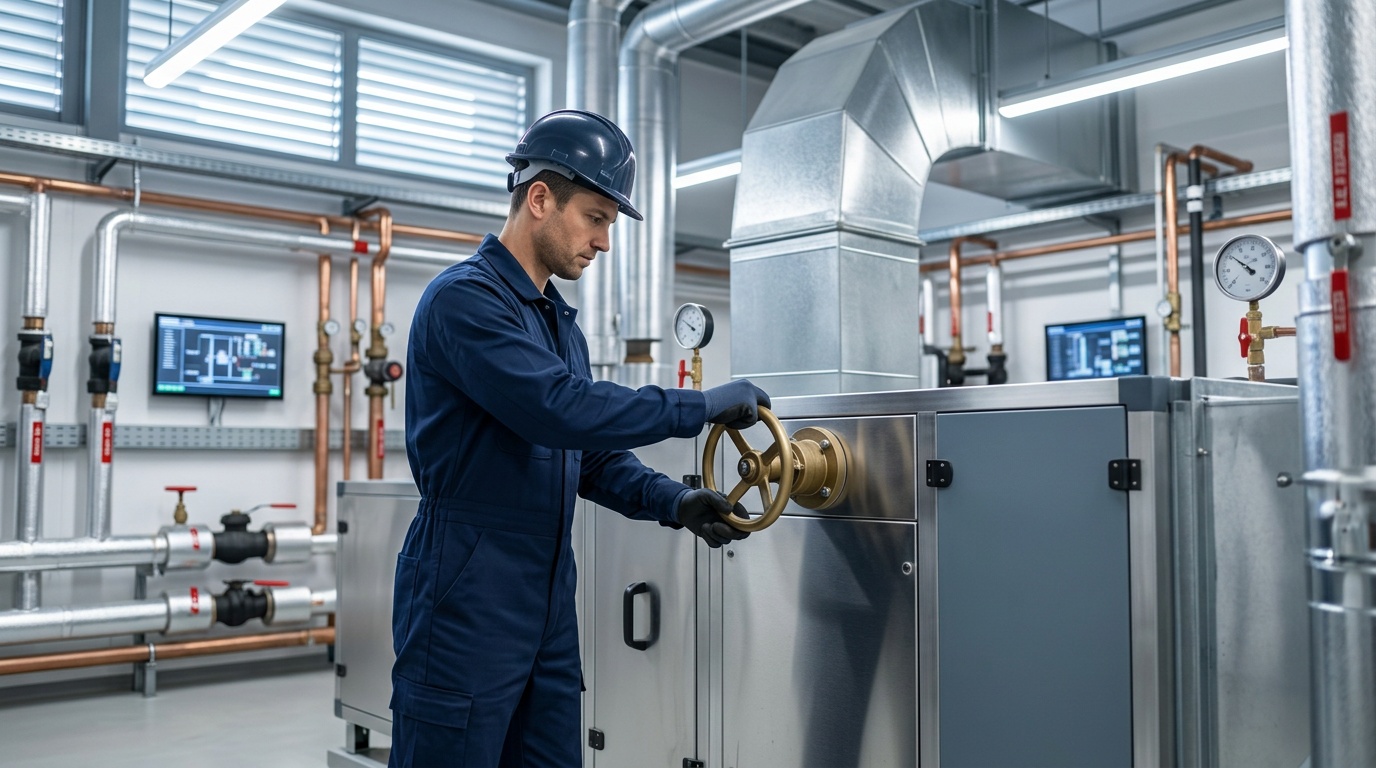
Beyond Compliance: Energy Efficiency Gains and Asset Longevity
Clean filters, correctly tensioned belts, balanced dampers and properly controlled fans reduce avoidable resistance and mechanical strain. This supports lower energy demand, steadier airflow and longer service life for motors, bearings and drives. Reports should identify energy drift alongside safety defects, giving you a practical route to improve performance.
The 'Big Enough to Cope, Small Enough to Care' Advantage for Birmingham Businesses
Factory operations need technical capacity without losing direct accountability. M&E Maintenance Solutions combines an established commercial HVAC team with accessible contacts, clear communication and engineering ownership.
Building Partnerships for Sustainable Operations
The strongest maintenance relationship develops through accurate asset registers, agreed priorities, honest lifecycle advice and regular review. This helps Birmingham businesses plan repairs, energy improvements and replacement expenditure around production needs.
Ensuring Uptime: Your Ventilation System as a Revenue Protector
Ventilation is production infrastructure. Keep it measured, maintained and ready, and reduce the chance that a preventable fault closes a line or interrupts delivery. For a direct assessment of your factory HVAC requirements, CLICK TO CALL US NOW.
Frequently Asked Questions
What is the average air change per hour for warehouse ventilation?
Warehouse ventilation commonly requires around 2 to 6 air changes per hour, though the correct rate depends on building size, occupancy, processes and airborne contaminants. Factory extraction systems may need higher or separately designed airflow for welding fumes, dust, heat or chemical vapours. A professional assessment should confirm air changes using measured airflow and room volume.
What maintenance is required for a factory ventilation system?
Factory ventilation maintenance includes checking filters, belts, bearings, fans, motors, dampers, coils, sensors, controls and accessible ductwork. Technicians should also measure airflow, pressure, vibration, temperature and electrical loading rather than relying on a visual inspection alone. Maintenance records should list defects, completed work, outstanding risks and recommended follow-up.
What are the legal requirements for ventilation in commercial buildings?
Commercial ventilation systems must be maintained so they continue to provide suitable indoor air quality and control workplace risks. Factory operators should consider workplace health and safety duties, manufacturer instructions, system design and Local Exhaust Ventilation testing requirements. SFG20 can help structure planned tasks and records, but documented engineering checks remain necessary.
How much CFM does a warehouse need?
Warehouse airflow in CFM depends on floor area, ceiling height, occupancy, stored materials, heat gain and any process contaminants. The required volume can be estimated from the target air change rate, using airflow equal to room volume multiplied by air changes per hour, then converted into cubic feet per minute. A measured survey should confirm the final design.
How should a factory warehouse be ventilated?
A factory warehouse should be ventilated with a system suited to its activities, using make-up air, general circulation and local extraction where contaminants are produced. Airflow paths should prevent stagnant areas while avoiding the spread of fumes or dust into occupied zones. Birmingham maintenance teams can inspect fans, filters, dampers, controls and extraction performance during planned visits.
How often should factory ventilation be serviced in Birmingham?
Factory ventilation should be inspected and serviced at intervals based on equipment type, operating hours, dust levels, process hazards and manufacturer guidance. High-load extraction systems may need more frequent checks than lightly used general ventilation. MEMS Facilities Maintenance can help set a planned schedule supported by measured condition, SFG20 tasks and clear remedial recommendations.