hvac uk
When a commercial building loses heating or ventilation, staff comfort drops, processes can stop and repair costs rise. Understanding hvac uk systems helps distinguish an appliance fault from a problem with plant, controls or air distribution.
Key Takeaways
- A failure in a commercial building can stem from plant equipment, control systems or air distribution rather than the appliance itself, so accurate diagnosis saves both time and money.
- Heating and ventilation downtime affects staff comfort and can halt business processes, making planned maintenance a commercial priority rather than an optional cost.
- Knowing the basics of UK HVAC systems helps facility managers communicate clearly with engineers and spot the difference between minor faults and serious compliance risks.
- Repair costs climb quickly when problems are left unaddressed, so early intervention protects both your budget and your building's performance.
I’ve spent more than 24 years working with building services, from combustion engineering to maintenance management. HVAC describes connected systems that need to work together, not just a boiler or air-conditioning unit.
What Is HVAC? A Clear Definition for UK Buildings
HVAC stands for heating, ventilation and air conditioning. An HVAC system manages indoor temperature and air movement, and may filter air or control humidity. In UK buildings, it can include boilers, heat pumps, chillers, air handling units, pipework, ductwork and building controls. Equipment depends on the building’s size, use and operating requirements.
What Does HVAC Stand For?
The initials refer to heating, ventilation and air conditioning. Heating adds warmth, ventilation supplies and extracts air, and air conditioning controls temperature and may manage humidity. A building might use all three functions or only some. The term describes these services as a system rather than treating each item of plant separately.
What a Modern HVAC System Includes: Chillers, AHUs, FCUs, VRF, Ductwork, BMS and Heat Pumps
A larger site may combine several types of equipment. Chillers produce chilled water; air handling units (AHUs) move and condition air; fan coil units (FCUs) serve individual rooms or zones. Variable refrigerant flow (VRF) systems transfer heat between indoor units and an external unit. Ductwork distributes air, while a building management system (BMS) monitors and controls equipment. Boilers and heat pumps provide heat, depending on the site and its operating demands.
HVAC vs Standalone Heating, Ventilation or Air Conditioning
A standalone boiler can heat a space without being part of a wider HVAC arrangement. Poor comfort may stem from a control setting, blocked filter, failed pump or air balance issue, not just the heat source. In commercial buildings, equipment and controls often serve multiple zones, so a local symptom can point to a wider system problem.
Commercial vs Domestic HVAC: Scale, Regulation and Maintenance
Domestic systems generally serve a household; commercial plant may support offices, retail, education, healthcare or industrial operations. Commercial estates can have larger loads, specialist plant, multiple tenants and longer operating hours. Maintenance should reflect equipment and use, with records and competent servicing forming part of responsible asset management. M&E Maintenance Solutions HVAC Services supports commercial building maintenance and repair, from boilers to air handling and air conditioning systems. The service name covers support for existing systems as well as new installations.
HVAC Engineer Salaries in the UK for 2026: What You Can Realistically Earn

There is no single reliable figure for an HVAC engineer’s pay. Job titles cover different work, from domestic service and refrigeration to commercial maintenance and project engineering. These figures use different datasets and are not like-for-like salary promises.
Salary Comparison Table: Apprentice to Senior, Including London Weighting
The table brings together available UK figures; it does not imply guaranteed progression between roles. HVAC FM Recruitment’s 2026 guide places many engineers between £35,000 and £45,000, with senior engineers reaching £60,000. London is a major employment hub and commonly pays above the national average, but the sources provided do not establish a single London uplift.
| Role or salary reference | Published figure | How to read it |
|---|---|---|
| HVAC salary average | About £28,185 a year | Glassdoor average; role scope may vary. |
| HVAC technician salary average | About £43,601 a year | Indeed average; not directly comparable with every engineer listing. |
| HVAC engineer, typical range | £35,000 to £45,000 | HVAC FM Recruitment’s 2026 guide. |
| Senior HVAC engineer | Up to £60,000 | Upper figure reported by HVAC FM Recruitment for 2026. |
| Heat pump-certified senior engineer | £40,000 to £55,000 | UK Trade Jobs range; specialisation and experience affect pay. |
Self-Employed Day Rates and Heat Pump Specialisation Premiums
Self-employed earnings depend on secured work, travel, insurance, tools, parts and unpaid time spent quoting or completing records. A day rate is not take-home pay. The research figures do not provide a verified national day-rate range, so check local vacancies and contracts before forecasting income. UK Trade Jobs reports £40,000 to £55,000 for heat pump-certified senior engineers; this indicates a possible specialisation route, not an automatic premium for every technician.
What UK HVAC Professionals Say on Reddit: Real Sentiment on Pay, Training Costs and Job Prospects
UK HVAC Reddit discussions show why salary figures need context. Contributors ask about pay differences between refrigeration, commercial service and domestic work, and describe training costs as a barrier. Forum posts are personal experiences, not verified labour-market data: check what a course qualifies you to do and whether local employers recruit at that level before paying.
Heat pumps and building decarbonisation are attracting attention, but prospects depend on recognised skills, practical experience and local work. To assess hvac uk salary information, compare job duties, region and experience, not just headline figures. For commercial employers, M&E Maintenance Solutions HVAC Services shows how trained engineers support plant reliability and business continuity.
Qualifications and Career Change Pathways into UK HVAC
No single qualification covers every heating, ventilation and air conditioning role. The right route depends on the equipment, whether work involves refrigerant circuits or gas appliances, and the level of responsibility. Before paying for a course, check its awarding body, practical assessment and progression route, then confirm local employers recognise it. A certificate alone may not provide the site experience or occupational competence a job requires.
Qualification Pathway Matrix: NVQ Level 2 and 3, F-Gas Cat I, Gas Safe and Electrical Quals Mapped to Job Titles
Qualifications relate to specific work, not a general title. Use this matrix as a starting point and confirm exact requirements with the training provider and employer. Registration or certification may be required before carrying out regulated work independently.
| Qualification or registration | Typical relevance | Work pathway it can support |
|---|---|---|
| NVQ Level 2 in a relevant building services discipline | Foundational practical training and workplace competence. | Apprentice or junior engineering roles under suitable supervision. |
| NVQ Level 3 in a relevant discipline | Further occupational competence in the chosen trade. | Progression towards skilled mechanical or HVAC engineering work. |
| F-Gas Category I | Certification for relevant work on stationary refrigeration, air-conditioning and heat-pump equipment. | Refrigeration or air-conditioning technician roles involving refrigerant handling. |
| Gas Safe registration and appropriate gas qualifications | Required for relevant gas work, subject to the engineer’s registered categories. | Gas engineer roles involving appliances and tasks within those categories. |
| Relevant electrical qualifications | Supports electrical installation, inspection or fault-finding duties within the individual’s competence. | Electrical or multi-skilled building services roles, according to scope and authorisation. |
How to Become an HVAC Engineer: Apprenticeships and College Routes
An apprenticeship combines paid employment with off-the-job learning and practical assessment. It gives supervised experience with plant, controls, tools and safe working procedures while building recognised qualifications. A college course can provide technical foundations, but check its workplace practice and what further assessment is needed before performing particular tasks.
Ask providers for a written breakdown of tuition, assessment, equipment and resit charges. Confirm the qualification level, practical hours, work-placement arrangements and next employment step. These checks help avoid paying for training that does not match local vacancies or your intended work.
Changing Careers into HVAC from Plumbing, Electrical or Mechanical Backgrounds
Existing trade experience can help, but does not automatically authorise specialist work. A plumber may know pipework and hydronic systems; an electrician may bring control and circuit knowledge; a mechanical engineer may understand plant operation. Each still needs to address gaps in refrigeration, combustion, ventilation, commissioning or compliance for the intended role. The M&E Maintenance Solutions HVAC Services work shows how commercial maintenance can involve mechanical plant alongside electrical, plumbing and ventilation systems.
List the jobs you want and compare their requirements with your credentials. Ask employers which certificates they accept and whether they provide supervised experience. M&E Maintenance Solutions HVAC Services is an example of commercial work where competence must match the equipment and task, not just a broad job title.
Is HVAC a Good Career in the UK? The Heat Pump Rollout and Net Zero Demand
For people who enjoy practical fault-finding and ongoing technical learning, HVAC offers routes across building maintenance, refrigeration, controls and low-carbon heating. The net zero transition is expected to require heat pump skills as installations expand, while an ageing workforce in gas engineering points to a need for new entrants. Demand does not guarantee immediate work: employers need candidates with relevant training, safe working habits and suitable experience.
Before enrolling, speak with local employers, compare vacancies and verify the total training cost. A useful hvac qualification uk route should link a recognised award to a clear job pathway, not promise employment based on a short course alone.
HVAC Compliance, Efficiency and Sustainability for UK Commercial Estates
Commercial HVAC compliance means keeping records of safe operation, inspection and maintenance, not assembling a folder after a fault. Requirements vary by equipment, building and activity, so facilities managers should identify duties for each asset. In my experience, an asset register linked to service records helps plan work, evidence decisions and identify overdue actions before they disrupt the building.
The UK Regulatory Spine: F-Gas, TM44, Part L, MEES and Gas Safe Explained
F-Gas rules cover relevant fluorinated greenhouse gases and refrigerant-handling work; applicable equipment requires certified personnel and appropriate records. TM44 concerns inspections of qualifying air-conditioning systems. Building Regulations Part L addresses conservation of fuel and power, while MEES sets minimum energy-efficiency requirements for applicable rented property. Gas Safe registration applies to relevant gas work within an engineer’s registered categories. REFCOM certification is also relevant to refrigerant contractors. Confirm current duties and thresholds for each site; one certificate does not cover every obligation.
Commercial HVAC Compliance Checklist for Facilities Managers
Use this check to identify gaps in estate records and work planning. Assign an owner to each action and retain evidence with the relevant asset documentation.
- Maintain an asset register showing location, type, refrigerant and responsible person where applicable.
- Check whether air-conditioning inspection requirements apply, and record the report and follow-up actions.
- Verify that engineers hold qualifications and registrations relevant to the task.
- Keep service, leak-check and repair records for applicable refrigerant equipment.
- Review gas safety documentation, maintenance history and outstanding defects.
- Track energy performance actions alongside building obligations, including relevant Part L and MEES considerations.
Energy Efficiency Benchmarks: SEER, SCOP and What Makes a System Efficient
SEER indicates seasonal cooling efficiency, while SCOP indicates seasonal heating efficiency for applicable equipment. Ratings help assess products but do not predict a building’s actual energy use. Sizing, controls, operating hours, maintenance, set points and heat loss all affect performance. Compare like-for-like equipment data, then review meter readings and operation after installation. Fouled filters, poor control schedules or simultaneous heating and cooling can undermine expected savings.
Heat Pumps, Solar PV and LED: Building a Joined-Up Sustainable HVAC Strategy
A low-carbon plan should start with building demand, electrical capacity and operating patterns. Heat pumps may reduce reliance on fossil-fuel heating; solar PV can generate electricity on site; LED lighting can lower lighting demand and associated heat gains. Assess these measures together: lower internal heat may change cooling needs, and electrification may require distribution or control upgrades. M&E Maintenance Solutions HVAC Services provides commercial installation and maintenance support, including heat pump options. Check proposals against site conditions, budgets and measurable performance targets.
Facilities manager’s test: set a baseline for energy use and comfort before changing plant. Record design assumptions, commissioning results and follow-up readings to check projected efficiency against real building operation.
Choosing an HVAC Contractor and Keeping Systems Running: Maintenance, Manufacturers and the MEMS Standard
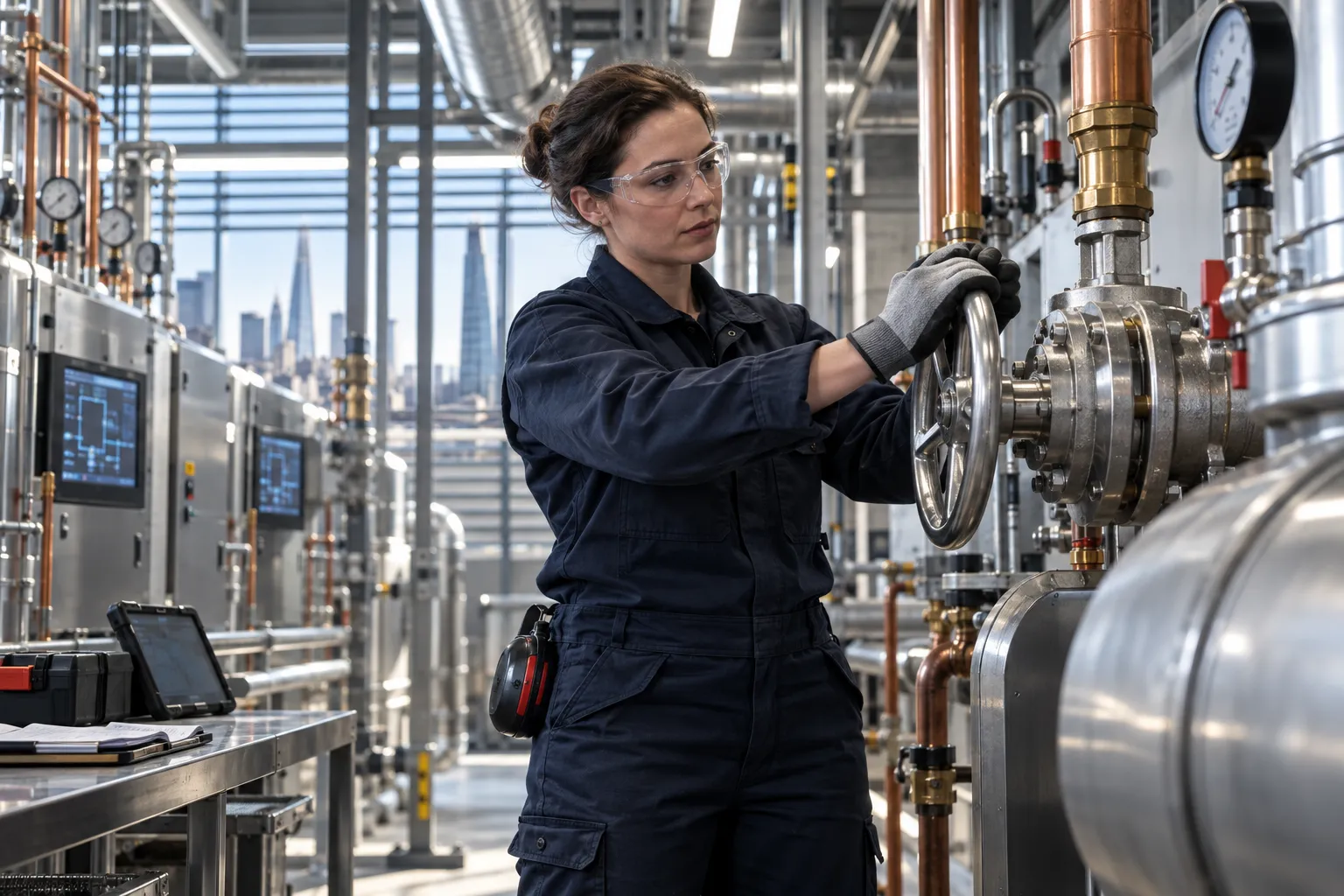
A contractor’s value shows in their understanding of your site, work records and response when plant fails. Equipment brand matters, as do parts access, system design and commissioning quality. In my experience, careful planning makes a difference: a maintenance partner should understand how equipment serves the building, not just complete a visit. Choose for technical competence, accountability and support over the life of your assets.
Leading UK HVAC Manufacturers and Brands to Know
Commercial buildings may contain equipment from Daikin, Mitsubishi Heavy Industries, Zehnder, TROX, Gilberts and Powrmatic. These brands span different types of HVAC equipment and are not interchangeable choices. Start with the installed plant, its duty and the manufacturer’s service requirements. A contractor should identify equipment, source appropriate parts and explain whether repair or replacement is the better asset decision.
Planned Preventative Maintenance (PPM): What Good Service Looks Like
Good PPM follows the asset and its operating conditions, not a generic visit schedule. Engineers should inspect, clean and test relevant components, record defects and set priorities for remedial work. Reports should identify the asset, work completed, findings and next actions. This supports budget planning and helps distinguish deterioration from sudden faults. M&E Maintenance Solutions HVAC Services supports existing commercial systems and new installations, with 24-hour service for commercial buildings.
Contractor Vetting Framework: 10 Questions to Ask Before You Sign
Use these questions to assess a service proposal. Request written answers, with responsibilities and response arrangements stated in the contract.
- Which engineers will attend, and what relevant qualifications do they hold?
- Can you demonstrate the registrations and certifications relevant to our equipment?
- How will you record assets, service visits, defects and follow-up actions?
- What is included in the planned maintenance schedule?
- How are urgent call-outs handled outside normal working hours?
- Are parts, labour and remedial work priced separately?
- How will you report repeat faults and recommend next steps?
- Can your team maintain the installed manufacturers’ equipment?
- Who manages projects, commissioning and handover records?
- How will you review service performance with our team?
Right First Time: Why Internally Trialled Technology Protects Your Estate
New equipment should suit the building’s load, electrical capacity, controls and operating pattern. M&E Maintenance Solutions assesses technologies such as heat pumps, solar PV and LED products before recommending them, matching advice to client needs, budget and building specifications. Decisions are based on practical suitability, not a sales claim. M&E Maintenance Solutions HVAC Services provides maintenance, installation and project management support, alongside commercial HVAC repair. For a site-specific discussion, contact the team to review your building’s requirements, or CLICK TO CALL US NOW.
Frequently Asked Questions
What does HVAC stand for and what does an HVAC system include?
HVAC stands for heating, ventilation and air conditioning. In UK commercial buildings, a full HVAC system may include boilers, heat pumps, chillers, air handling units, fan coil units, VRF systems, ductwork, pipework and building management systems, all working together rather than as standalone items of plant.
How much does an HVAC engineer earn in the UK in 2026?
HVAC engineer pay in the UK varies widely by role, region and experience.
What qualifications do you need to work in HVAC in the UK?
No single qualification covers every heating, ventilation and air conditioning role in the UK. Requirements depend on the specialism, whether domestic service, refrigeration, commercial maintenance or project engineering, so check exactly what a course qualifies you to do before committing to training costs.
Is HVAC a good career change in the UK given the heat pump rollout?
HVAC can be a worthwhile career change in the UK because heat pumps and building decarbonisation are attracting growing demand.
What do UK Reddit users say about HVAC salaries, training costs and job prospects?
UK HVAC Reddit discussions highlight big pay differences between refrigeration, commercial service and domestic work, with training costs cited as a real barrier.
How is commercial HVAC different from domestic HVAC in the UK?
Commercial HVAC in the UK serves offices, retail, education, healthcare and industrial operations, with larger loads, specialist plant, multiple tenants and longer operating hours. Domestic systems generally serve a single household, so commercial maintenance demands more structured records and competent servicing as part of asset management.
Can a standalone boiler be part of an HVAC system?
A standalone boiler can heat a space without being part of a wider HVAC arrangement, but in commercial buildings equipment and controls often serve multiple zones. Poor comfort may stem from a control setting, blocked filter or failed pump rather than the heat source itself.