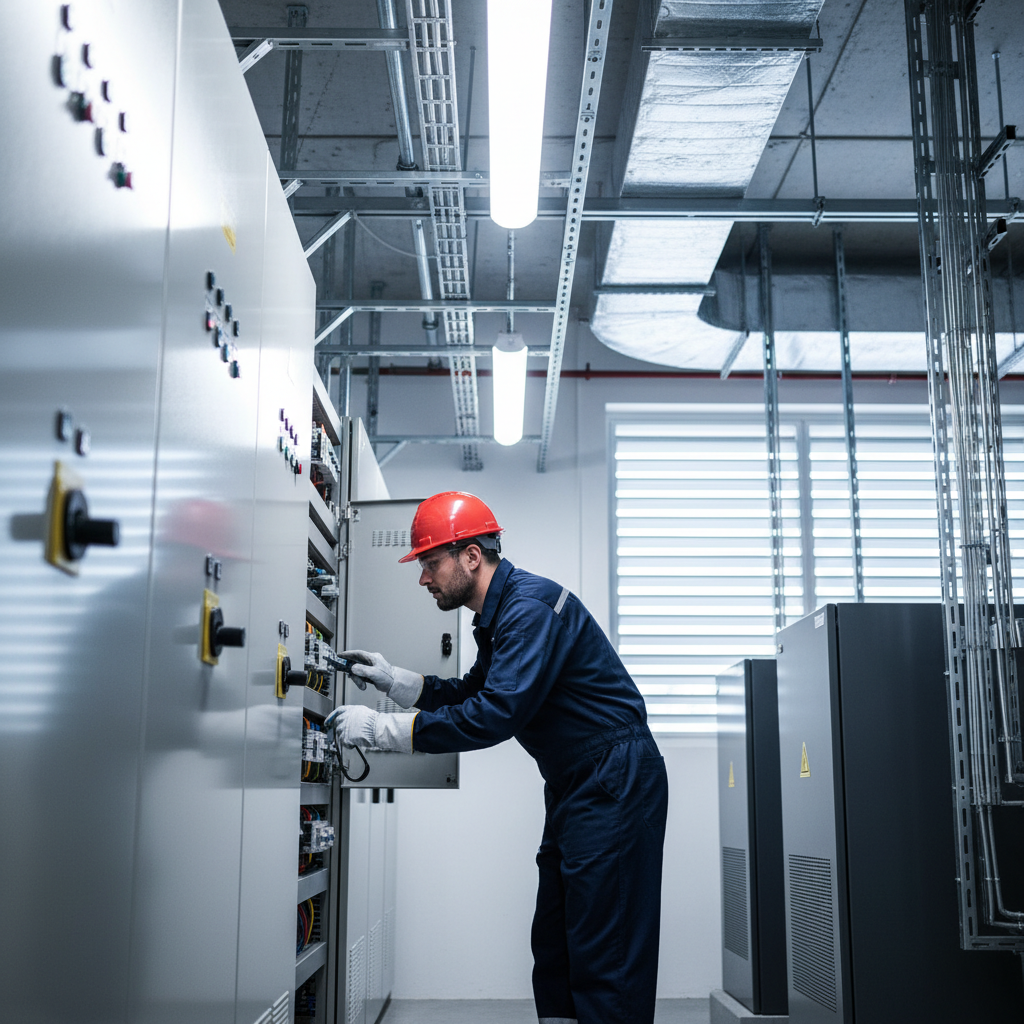
When a production line stops because of an electrical fault, every minute costs money. In my 24 years moving from apprentice to managing complex industrial sites, I've seen how the right industrial electrician can be the difference between a 15-minute fix and a 4-hour shutdown that costs thousands. Electrician industrial jobs aren't just about wiring—they're about keeping Britain's manufacturing and logistics infrastructure running 24/7. Commercial property maintenance services are often essential for supporting these operations and minimizing costly downtime.
Unlike domestic or standard commercial electrical work, industrial electricians operate in environments where a single motor failure can halt an entire production line. You're working with 400V three-phase systems, programmable logic controllers (PLCs), and machinery worth millions. The stakes are higher, the systems more complex, but the career rewards—both financial and professional—reflect that responsibility. Electrical plumbing solutions are also critical in these settings, ensuring that all systems function seamlessly together for optimal performance.
The fundamental difference lies in complexity and consequence. While a domestic electrician might work with 230V single-phase circuits powering lights and sockets, industrial electricians routinely handle 400V three-phase systems feeding conveyor motors, production lines, and automated controls. When I started as an apprentice in manufacturing, the first lesson was clear: in domestic work, a fault means inconvenience—in industrial settings, it means lost production hours and potential contractual penalties.
Industrial work involves motor control circuits, variable speed drives (VSDs), and programmable logic controllers that manage entire production processes. You're not just fixing electrical problems; you're maintaining the electrical backbone of operations that run 24/7/365. The technical knowledge required extends beyond basic wiring to understanding how electrical systems integrate with mechanical processes, safety interlocks, and automated controls.
Industrial electricians work across diverse sectors: food processing plants with strict hygiene requirements, automotive factories with robotic assembly lines, distribution warehouses with miles of conveyor systems, chemical plants with explosion-proof equipment, and logistics hubs processing thousands of packages hourly. Each environment brings specific challenges—from working in temperature-controlled cold stores to managing electrical systems in dusty, high-vibration manufacturing environments.
Conditions vary dramatically from clean pharmaceutical facilities to heavy foundries with extreme temperatures. Shift patterns typically include nights, weekends, and rotating schedules because production rarely stops. Many roles involve confined spaces, working at height, and environments with significant noise levels. Before accepting any position, clarify whether you'll be site-based or covering multiple locations within a 30-60 mile radius, and what percentage of time involves emergency breakdowns versus planned preventative maintenance. For a real-world example of how industrial electricians contribute to facility upgrades, see how our team completed a fit-out of a new first aid room at Knight Strip Metals.

Daily responsibilities for industrial electrician jobs center on three core areas: keeping production running, preventing failures before they happen, and installing new systems safely. The work splits between reactive fault-finding when equipment fails and proactive planned preventative maintenance (PPM) to prevent breakdowns.
For more on the importance of timely maintenance and repairs, you might find it useful to read about common signs you need commercial HVAC repair in industrial environments.
Every technical task directly impacts the business bottom line. When you perform quarterly PPM on a motor control panel, you're protecting a £50,000 production line from unexpected failure. Changing a £50 filter prevents a compressor burnout that could cost £15,000 in parts plus lost production. Maintaining proper terminations in a distribution board prevents arc faults that could shut down an entire facility.
Industrial electricians operate as guardians of operational continuity. Your work maintains asset life—properly maintained motors reach their designed 15-20 year lifespan instead of failing prematurely. You ensure legal compliance with Electricity at Work Regulations, keeping the site's insurance valid and protecting colleagues from electrical hazards. When reviewing job opportunities, look for employers who mention downtime targets or Overall Equipment Effectiveness (OEE) metrics—this indicates they understand how electrical reliability drives profitability.
For those interested in broader responsibilities, commercial property maintenance services often require the expertise of industrial electricians to manage complex systems and ensure compliance.
| Role Type | Work Environment | System Complexity | Typical Shifts | Salary Range |
|---|---|---|---|---|
| Industrial Electrician | Factories, plants, warehouses | High (3-phase, PLCs, automation) | Rotating shifts, nights, weekends | £35k–£60k+ |
| Commercial Electrician | Offices, retail, schools | Medium (single/3-phase, lighting, HVAC) | Mostly days, some call-out | £28k–£40k |
| Domestic Electrician | Homes, apartments | Low (single-phase, basic circuits) | Days, rare call-out | £25k–£35k |
Success in industrial electrician jobs requires mastering systems that domestic electricians rarely encounter. Motor control fundamentals become daily tools—understanding direct-on-line starters, star-delta configurations, and variable frequency drive setup determines how quickly you can restore production when equipment fails. PLC awareness, even at basic level, allows you to interpret fault codes and understand input/output relationships without calling costly specialist support.
Reading industrial schematics differs significantly from domestic wiring diagrams. You'll interpret complex control circuits showing safety interlocks, emergency stops, and automated sequences. Safe isolation procedures become critical—lockout/tagout (LOTO) isn't optional but legally mandated for any work on energized systems. Test instrument proficiency extends beyond basic multimeter use to include insulation resistance testing, earth loop impedance measurement, and thermal imaging for predictive maintenance.
For more insights into the training and skills required, the UK government provides a comprehensive overview of electrician career paths and job profiles.
Industrial electrical work demands tools designed for heavy-duty, continuous use. Your basic kit includes insulated hand tools rated for the voltages you'll encounter, torque screwdrivers for proper terminal connections, and conduit bending equipment for installation work. Specialized items like hole saws, cable pulling systems, and industrial-grade test equipment become essential as you progress.
Personal protective equipment goes beyond basic safety glasses and hard hats. Arc-rated clothing may be required for work on live switchgear, dielectric gloves for electrical protection, and hearing protection for noisy industrial environments. Start with core tools and add specialty items like infrared thermometers and advanced multimeters once you've confirmed what your specific workplace requires. Keep a photographed inventory on your phone—nothing wastes time like hunting for tools during an urgent breakdown.
For a look at how industrial installation teams operate in practice, check out this Coventry University chiller pipework install completed by our team.

For those considering formal training, the Electrical Careers UK training routes page offers detailed guidance on entering the industry.
Industrial electrical work operates under stricter safety frameworks than residential or commercial sectors. Workplace safety regulations, electrical installation codes, and arc flash protection principles form the foundation of safe practice. Industrial sites present higher risks due to increased fault currents, rotating machinery, and automated systems that can start unexpectedly.
Arc flash incidents in industrial settings can cause severe burns or death. Understanding energy levels, approach boundaries, and required PPE isn't academic—it's survival knowledge. Never bypass safety interlocks or protective relays to "get production running" without proper authorization and risk assessment. The few minutes saved aren't worth the potential consequences to people or equipment.
Lockout/Tagout (LOTO) procedures become mandatory whenever you're exposed to hazardous energy—electrical, mechanical, hydraulic, or pneumatic. This isn't optional paperwork but a legal requirement designed to prevent serious injury or death. Industrial environments contain multiple energy sources that must be controlled before work begins.
Maintain your personal LOTO kit and ensure training refreshes occur at least annually. Industrial accidents often result from shortcuts or assumptions about isolation—always verify with proven live testing equipment within 30 seconds of use.
Industrial electrical work typically offers the highest earning potential among electrical specializations. Entry-level positions start around £25k-£30k, with competent industrial electricians earning £35k-£45k. Senior specialists, particularly those with controls expertise or shift leadership responsibilities, command £45k-£60k or more.
Shift premiums significantly boost earnings—night shifts, continental patterns, and call-out retainers can add £5k-£15k annually to base salary. Track your value-added skills like PLC programming, HV authorization, or permit-to-work competency for salary negotiations. Ask upfront how overtime calculations work—time-and-a-third, time-and-a-half, or double-time arrangements vary considerably between employers.
Industrial operations run continuously, creating various shift patterns: 4-on/4-off, rotating days and nights, permanent nights, or Monday-Friday with call-out responsibilities. Twelve-hour shifts are common, demanding careful fatigue management for safety reasons.
Plan sleep routines around shift patterns and avoid high-risk tasks at the end of long shifts unless unavoidable. The overtime opportunities in electrician industrial jobs can substantially boost earnings, but balance this against family commitments and safety considerations.
Industrial electrical experience opens multiple progression routes: controls specialist, maintenance supervisor, reliability engineer, and more. For additional tips on building maintenance and facility management, you may want to read about commercial building maintenance problems you need to fix ASAP.
Industrial electricians handle complex, high-voltage systems in manufacturing and heavy industry, focusing on machinery that runs 24/7 and can cost thousands if down. Domestic electricians typically work on lower-voltage residential wiring with less critical consequences. The industrial role demands expertise in automation, motor controls, and safety compliance under high-stakes conditions.
Experienced industrial electricians can diagnose faults quickly and understand the nuances of complex machinery, cutting repair times from hours to minutes. Their familiarity with industrial systems and preventive maintenance means they often fix issues before they cause costly production stoppages.
They work with 400V three-phase power systems, programmable logic controllers (PLCs), motor control centers, heavy machinery wiring, and automation equipment. These systems require precise calibration and adherence to strict safety standards to ensure continuous operation.
Becoming an industrial electrician requires completing an electrical apprenticeship, gaining experience with industrial systems, and obtaining certifications like the ECS card, and compliance with safety standards such as SFG20 and Gas Safe where applicable. Continuous training on new technologies and regulations is also essential.