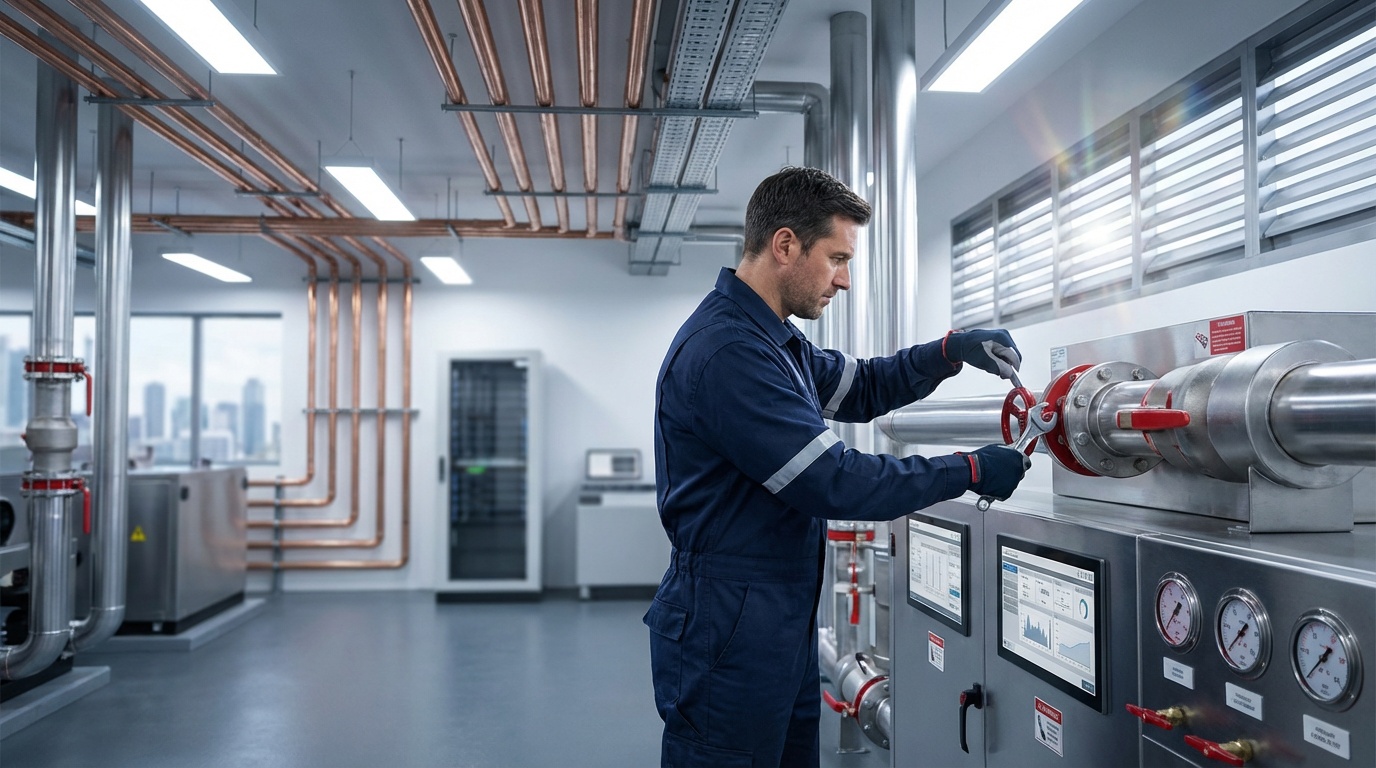
strategies for reducing commercial building energy costs through sustainable hvac maintenance with m&e maintenance solutions
What is Reducing Commercial Building Energy Costs Through Sustainable HVAC Maintenance?
After 24 years in the trade, I can tell you this: your HVAC system is either your biggest operational expense or your most effective cost-saving asset. The difference? How you maintain it. Reducing energy costs through sustainable HVAC maintenance starts with one principle: proactive engineering that prevents waste before it happens.
Sustainable HVAC maintenance means implementing planned preventative maintenance (PPM) programmes that optimise system efficiency, slash energy consumption by 15–30%, and extend equipment lifespan. Regular inspections, filter changes, refrigerant management to REFCOM standards, and system tuning keep your building running at peak performance whilst cutting utility bills.
Most facility managers treat HVAC as "set and forget." That's expensive. A system running just 10% below optimal efficiency adds thousands to your annual energy spend. We see it constantly: blocked filters, refrigerant leaks, poorly calibrated controls. Each one silently drains your budget. The solution isn't reactive repairs—it's systematic maintenance that treats your mechanical plant as a commercial asset requiring protection.
Benefits of Sustainable HVAC Maintenance Strategies
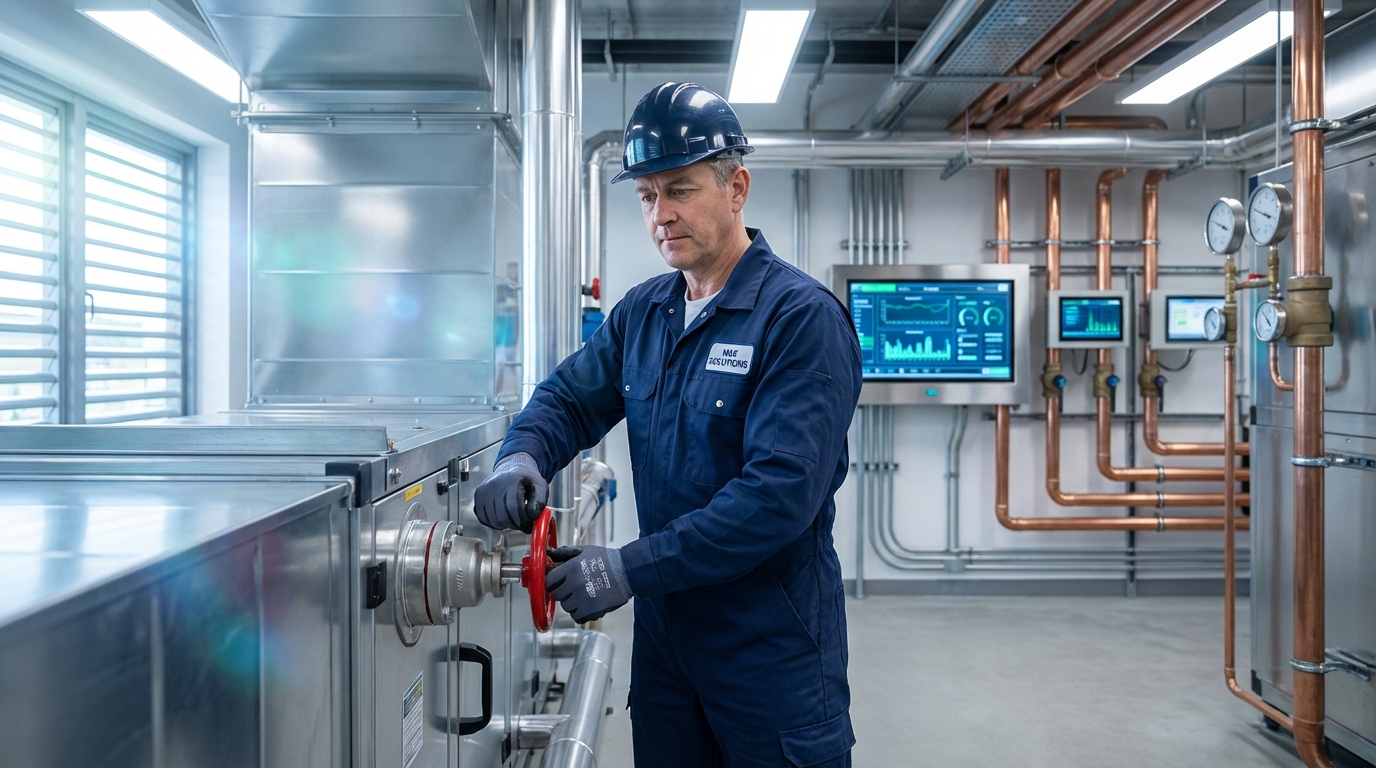
The financial case is straightforward. For a typical commercial building in Birmingham spending £50,000 annually on utilities, proper HVAC maintenance delivers £7,500–£15,000 back to your budget. But the benefits run deeper.
The MEMS Standard: Our PPM programmes deliver measurable outcomes: 70% fewer emergency call-outs, 5–8 years of added equipment life, and guaranteed SFG20 compliance that protects you legally.
Downtime prevention. A failed air conditioning unit in July doesn't just make staff uncomfortable—it drops productivity and can force business closure. Planned maintenance catches failures before they happen.
Compliance assurance. F-Gas regulations, Gas Safe requirements, and workplace safety standards aren't optional. Proper maintenance keeps you legally protected with traceable documentation.
Asset longevity. Commercial HVAC systems represent significant capital investment. Regular servicing extends lifespan from 12–15 years to 20+ years, protecting that investment.
Operational certainty. You'll know your building won't fail during peak trading periods. That peace of mind has commercial value you can't put on a spreadsheet.
Energy drift is the silent killer. Systems gradually lose efficiency through scale build-up, worn components, and poor calibration. Most facility managers never notice until the bill arrives. Our approach identifies these issues during routine visits, fixing small problems before they become expensive failures.
How to Choose Sustainable HVAC Maintenance Strategies
Selecting the right maintenance approach requires understanding your building's specific demands. Start by auditing your current reactive-versus-proactive spend ratio. If 80% of your budget goes to emergency repairs, your strategy is broken. The shift from firefighting to prevention begins with asking better questions of your provider.
The Audit Checklist: Request your provider's SFG20 compliance documentation, refrigerant management records (REFCOM certified), and digital maintenance logs. If they can't produce traceable certificates within 24 hours, you're legally exposed.
Frequency matters. Quarterly inspections are the minimum for commercial systems. Monthly visits suit high-demand environments like retail or hospitality.
Engineer continuity. The "different face" syndrome wastes time and money. Your maintenance partner should know your building's quirks—the dodgy valve on the third floor, the temperamental controls in the north wing.
Energy monitoring. Demand baseline energy consumption tracking. If your provider can't show you efficiency trends with actual data, they're not managing your asset properly.
Response time guarantees. Breakdowns don't respect office hours. Confirm 24/7/365 availability with defined response times. Not vague promises.
Look for providers who treat maintenance as asset lifecycle management, not just box-ticking. Ask specific questions: Do they calibrate controls during visits? Do they measure refrigerant levels or just top them up? Do they provide energy consumption reports? The answers reveal whether they're engineers or just service technicians.
Beware of the lowest quote. A cheap maintenance contract often means rushed visits, untrained engineers, and missed issues. You're not buying hours—you're buying expertise that prevents downtime. Calculate total cost of ownership: a £200 monthly PPM contract that prevents a £15,000 emergency replacement pays for itself instantly.
Implementing Your Maintenance Programme
Transitioning to sustainable HVAC maintenance starts with a comprehensive site survey. We map every piece of mechanical plant, document its current condition, and identify immediate risks. This baseline assessment reveals hidden inefficiencies: systems running outside manufacturer specifications, obsolete components, or safety compliance gaps.
The implementation follows a phased approach.
Phase one: Address critical safety and compliance issues immediately—Gas Safe certification, F-Gas leak checks, and emergency system testing.
Phase two: Establish the PPM schedule aligned to SFG20 standards, covering filter changes, belt inspections, refrigerant management, and control calibration.
Phase three: Introduce performance monitoring with energy consumption tracking and efficiency reporting.
Documentation is non-negotiable. Every visit generates digital records: photographs, test results, parts replaced, and recommendations. This creates an audit trail that protects you during inspections and insurance claims. I've seen facility managers avoid prosecution because they could prove their maintenance history. This level of accountability should be standard, not optional.
Expect measurable results within three months. Energy bills should trend down, emergency call-outs should drop, and system performance should stabilise. If your provider can't demonstrate these outcomes with data, they're not delivering value. We operate on engineering reality: maintenance either saves you money or it's not being done properly.
Building Long-Term Energy Efficiency
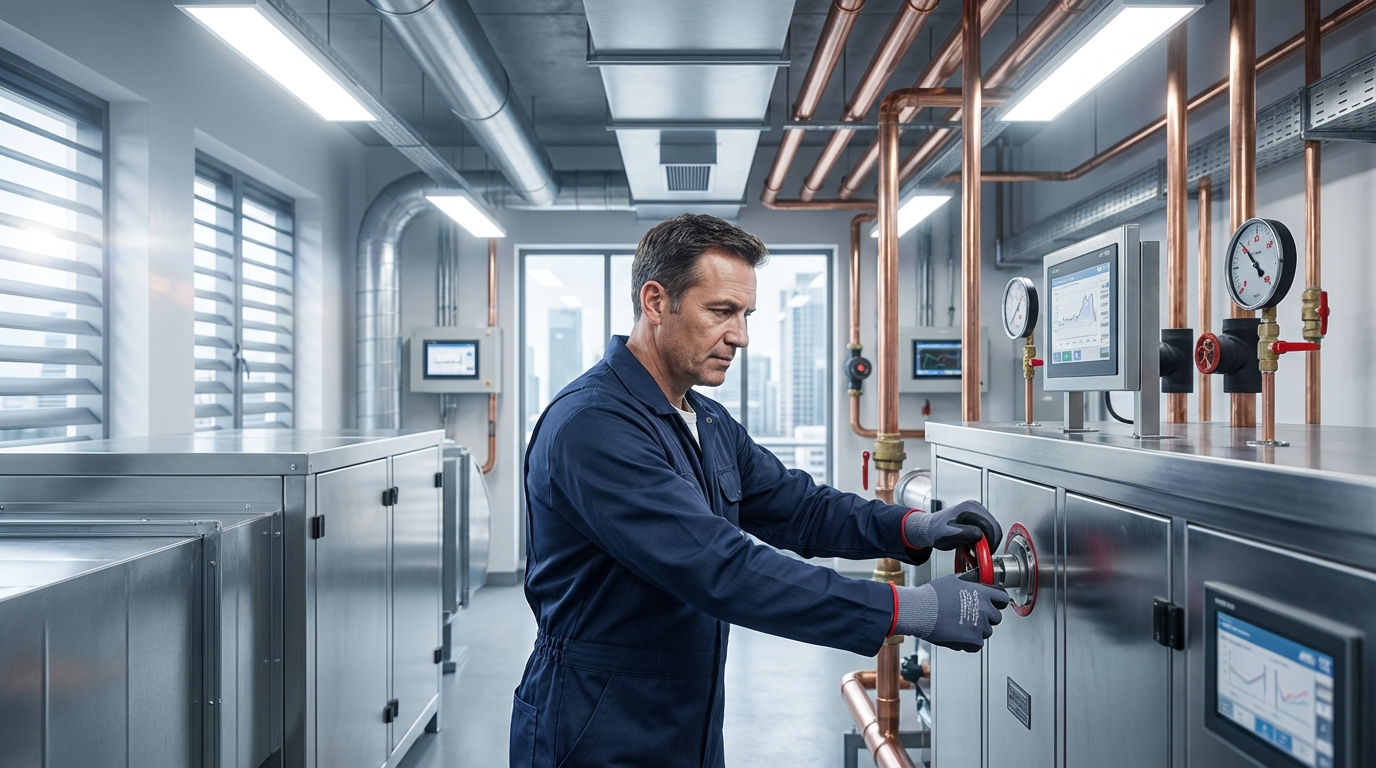
Sustainable HVAC maintenance isn't a project with an end date—it's an ongoing commitment to operational excellence. The buildings we've maintained for 10+ years consistently outperform newer installations managed reactively. Because systematic care compounds. Each service visit builds on the last, creating a baseline of optimal performance that protects against degradation.
Consider your maintenance programme an insurance policy against obsolescence. Technology evolves, regulations tighten, and energy costs fluctuate. A well-documented maintenance history positions you to make informed decisions about system upgrades or replacements. When a boiler reaches end-of-life, we can show you exactly how much it's costing versus a modern alternative, backed by years of performance data. Not guesswork.
The Data Advantage: Buildings with five years of tracked maintenance data make better capital investment decisions. You'll know whether to repair or replace based on engineering reality.
Energy efficiency standards will only get stricter. The buildings that thrive commercially will be those treating mechanical systems as dynamic assets requiring active management. Proactive maintenance prepares you for regulatory changes before they become legal requirements. We're already seeing landlords struggle to let buildings with poor EPC ratings. Good maintenance keeps you ahead of that curve.
Staff training matters too. Your on-site team should understand basic system operation: when to call for help, what normal sounds like, how to read pressure gauges. We provide this knowledge transfer during visits because an informed client is a protected client. The best maintenance partnership is collaborative. Not transactional.
Final Recommendations
If you take one action after reading this, audit your current maintenance spend. Calculate your reactive-versus-proactive ratio. If emergency repairs dominate your budget, you're haemorrhaging money that planned maintenance would save. The transition pays for itself within the first year through reduced emergency call-outs and lower energy consumption.
Don't accept generic service contracts. Demand specifics: SFG20 compliance, REFCOM certification, digital documentation, energy consumption tracking, and engineer continuity. Ask to see maintenance logs from existing clients. A provider confident in their work will show you evidence. Not promises. We deliver measurable outcomes because we treat your building like we own it.
Start with a proper site survey. Understand what you're maintaining before committing to a programme. Any provider offering contracts without inspecting your systems first is guessing. We've walked into buildings where the previous contractor never opened the plant-room door. That's not maintenance—that's fraud.
The right partner invests time upfront to understand your specific requirements, then builds a programme around your operational reality. Your HVAC system doesn't care about your budget cycle. It degrades on a physical timeline. Align your maintenance strategy with engineering reality, not accounting convenience.
The buildings that run most efficiently are those where facility managers treat mechanical plant as business-critical infrastructure deserving professional care. Make that shift, and watch your energy costs drop whilst your system reliability climbs.
Frequently Asked Questions
How to optimize energy usage in commercial buildings for sustainability?
Optimizing energy usage comes down to proactive HVAC maintenance. That means implementing planned preventative maintenance programmes that keep your system running efficiently. We focus on regular inspections, filter changes, and system tuning to prevent energy waste before it starts. Not rocket science—just disciplined engineering.
What sustainable practices can HVAC technicians implement to reduce environmental impact?
For HVAC technicians, sustainable practices mean precision engineering. This includes managing refrigerants to REFCOM standards, ensuring systems are properly calibrated, and addressing "energy drift" caused by wear and tear. It's about preventing leaks and maintaining peak efficiency, which directly reduces your building's carbon footprint.
How can I reduce my HVAC energy consumption?
Move away from reactive repairs. That's the fastest path to savings. Regular, planned maintenance—including checking for blocked filters and refrigerant leaks—keeps your system performing at its best and cuts utility bills significantly. Simple physics applied consistently.
Why is planned preventative maintenance (PPM) so important for commercial HVAC systems?
PPM treats your HVAC system as a valuable commercial asset. It prevents "energy drift," where efficiency slowly degrades unnoticed, and catches small issues before they become expensive failures. This systematic approach reduces emergency call-outs, extends equipment life, and ensures compliance—protecting your investment.
What should I look for when selecting a partner for sustainable HVAC maintenance?
Look for a partner who provides traceable documentation—like SFG20 compliance and REFCOM certification—within 24 hours. Demand engineer continuity, regular energy monitoring reports, and clear 24/7/365 response time guarantees. You need engineers who calibrate controls and measure refrigerant. Not just top it up and leave.
What are the main financial benefits of investing in sustainable HVAC maintenance?
The financial benefits are clear: 15–30% less energy consumption, which puts significant money back into your budget. Beyond energy savings, you'll see fewer emergency call-outs, extended equipment lifespan, and avoided costs from business downtime—all protecting your capital investment. Maintenance pays for itself.