identifying the best hvac company in the midlands uk for complex industrial and warehousing temperature control solutions
What does identifying the best HVAC company in the Midlands UK for complex industrial and warehousing temperature control solutions mean?
Finding the right HVAC partner for industrial and warehousing operations means identifying a company that understands the demands of large-scale environments: multi-zone climate management, 24/7 uptime requirements, F-Gas compliance, and the commercial reality that every hour of downtime costs money. This isn't about the cheapest quote. It's about engineering competence, response speed, and a proven track record in industrial settings.
After 24 years in this industry, I've seen too many warehouse operators choose providers based on price alone, only to face repeated breakdowns during peak season. Industrial HVAC isn't residential work scaled up. A 50,000-square-foot warehouse with temperature-sensitive stock needs precise load calculations, zoned control strategies, and engineers who understand the physics of air movement in high-bay spaces.
The best providers demonstrate three non-negotiables: SFG20-compliant planned preventative maintenance programmes, 24/7/365 emergency response capability, and documented experience in your specific sector. Whether you manage pharmaceutical storage requiring ±2°C stability or food distribution with strict cold chain compliance, your HVAC partner must speak your language of risk management and regulatory adherence.
Why the right industrial HVAC partner matters
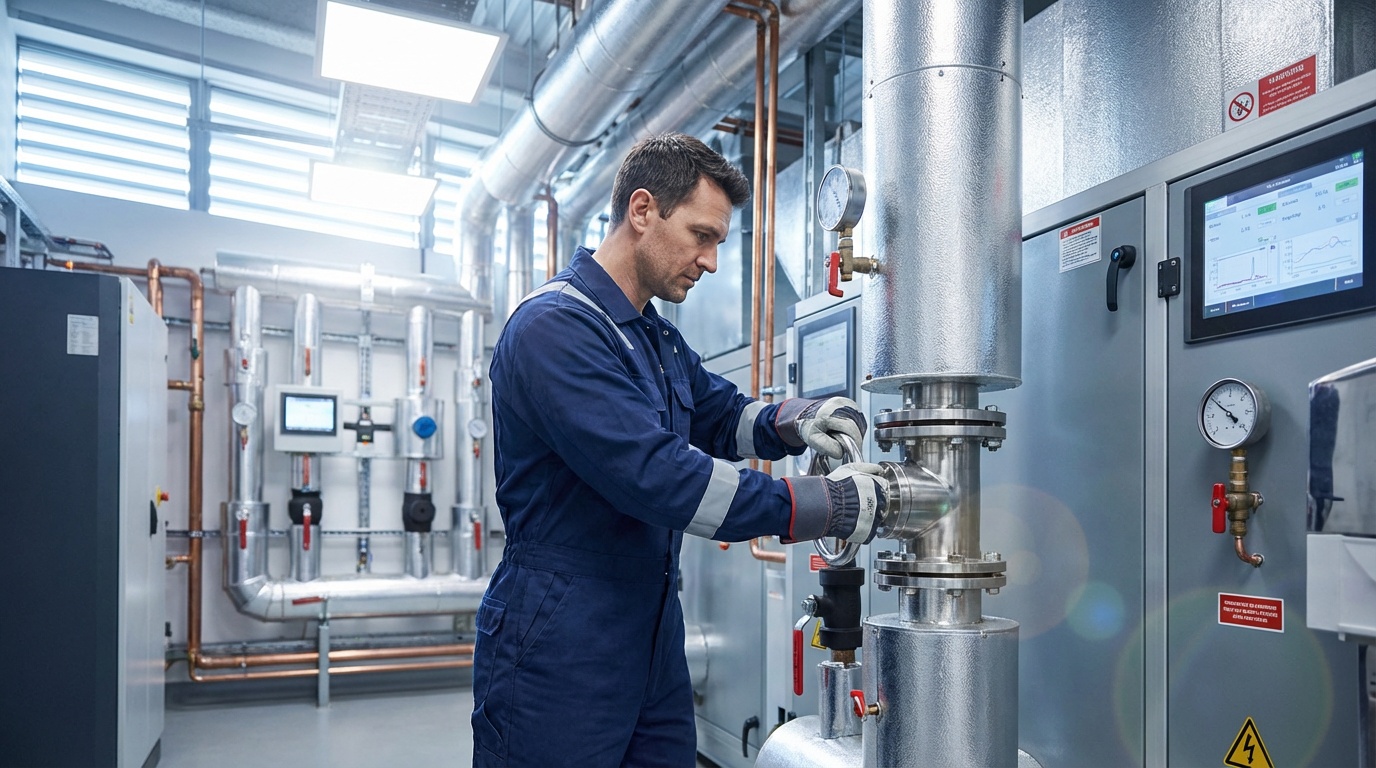
Operational continuity: A specialist industrial HVAC provider prevents the failures that shut down production lines. I've seen emergency call-outs where a warehouse lost climate control during a heatwave, spoiling £200,000 of temperature-sensitive inventory. The right partner spots failing components during routine PPM visits before they trigger a full system outage.
Energy cost control: Industrial HVAC systems can account for 40–60% of a warehouse's energy spend. Properly maintained and tuned systems can cut consumption significantly. A blocked filter or misaligned damper increases electricity use by 15–20% without anyone noticing until the quarterly invoice arrives. Specialist providers carry out thermal imaging surveys and airflow analysis to identify these inefficiencies.
Compliance protection: F-Gas regulations, COSHH requirements, and sector-specific standards aren't optional. We maintain digital compliance records that can be produced within 24 hours because, during an HSE inspection or insurance audit, "I think we have that certificate somewhere" doesn't cut it. Your HVAC partner should treat regulatory documentation with the same care as the engineering work.
The MEMS standard: We built our industrial HVAC service around asset lifecycle management, not reactive firefighting. Our clients in Birmingham and across the West Midlands benefit from predictable budgets, documented compliance, and confidence that their temperature control systems are supported by engineers who understand that uptime equals revenue.
How to choose the right industrial HVAC partner in the Midlands
Verify industrial-specific experience: Ask for documented case studies in your sector. A provider claiming "we do commercial HVAC" isn't the same as one that's commissioned climate control for pharmaceutical warehouses or cold storage facilities. Request references from sites with similar floor area, ceiling heights, and temperature tolerances. At MEMS, we keep detailed project portfolios because facilities teams need proof, not promises. Check out the M&E Maintenance Solutions company background to understand our extensive industrial expertise.
Assess emergency response infrastructure: Call their emergency line at 2 am on a Saturday. If you reach an answering service that takes messages, they're not truly 24/7/365. Industrial facilities operate around the clock, and your HVAC partner must match that availability. We staff our helpdesk continuously because a refrigeration failure at midnight in a food distribution centre can't wait until Monday morning.
Examine maintenance methodology: Request their PPM schedule and compare it with SFG20 standards. The best providers don't just tick boxes during service visits. They carry out thermal imaging, refrigerant leak detection, airflow balancing, and energy consumption checks. Ask to see sample compliance reports. Digital, traceable documentation with photographic evidence separates professional operators from those still working with clipboards and vague promises.
Questions that expose capability: "What's your average emergency response time to our postcode?" "Can you provide F-Gas certification for all engineers?" "How do you handle parts procurement for obsolete industrial systems?" "What's your process for out-of-hours escalation?" The answers reveal whether you're dealing with a specialist industrial partner or a general contractor learning on your budget.
Evaluate commercial understanding: The right HVAC company speaks in business continuity terms, not just technical specifications. They should discuss planned maintenance windows aligned with your low-activity periods, energy-efficiency improvements that deliver measurable ROI, and compliance approaches that protect you during audits. When we survey an industrial site, we assess downtime risk and operational impact first. Keeping your warehouse running matters more than technical vocabulary.
Future-proofing your industrial temperature control
The industrial HVAC environment in the Midlands is shifting quickly. Refrigerant phase-outs under F-Gas regulations mean systems installed five years ago may need replacement by 2030. The best companies don't just maintain your current equipment—they advise on transition plans that reduce the chance of sudden capital spend. When we survey a warehouse with R404A refrigeration, we map out a conversion pathway to compliant alternatives.
Energy reporting requirements are tightening. SECR (Streamlined Energy and Carbon Reporting) means many industrial operators must document and reduce consumption. Your HVAC partner should provide granular energy data from building management systems, not vague estimates. We install sub-metering on major plant equipment because "approximately 40% of total usage" doesn't satisfy reporting or help you pinpoint wasteful plant.
Smart building integration: Modern industrial facilities are moving towards connected HVAC with predictive maintenance. Sensors detect bearing wear, refrigerant pressure anomalies, and filter saturation before failures occur. Ask prospective providers about remote monitoring capabilities. Can they identify a compressor running outside normal parameters at 3 am and dispatch an engineer before it fails? That capability separates forward-thinking partners from those relying on quarterly visual inspections.
The partnership mindset: Choosing the best HVAC company for complex industrial and warehousing temperature control in the Midlands comes down to finding a partner that shares responsibility for operational performance. At MEMS, we measure success not by how many service visits we complete, but by how many emergency breakdowns we prevent.
Don't wait for system failure to review your HVAC provider. Run an honest audit using the criteria outlined here: industrial experience, emergency response capability, compliance documentation quality, and commercial understanding. If your current provider falls short, you're carrying avoidable risk.
Need support from M&E Maintenance Solutions Limited? If you're evaluating industrial HVAC partners in the Midlands and want straight answers on risk, compliance, and uptime, speak to our team to arrange a site survey.
Frequently Asked Questions
What should I look for in an HVAC system for complex industrial use, beyond just the brand?
For complex industrial and warehousing temperature control, it is not about a single "best" AC brand. It is about finding a partner with engineering competence and a proven track record in industrial settings. The right provider will design a solution with precise load calculations and zoned control strategies for your specific high-bay spaces, ensuring 24/7 uptime and compliance.
What does HVAC stand for in the UK?
In the UK, HVAC stands for Heating, Ventilation, and Air Conditioning. It is the widely accepted term for systems that control the climate in buildings, ensuring temperature, humidity, and air quality. For industrial sites, these systems are critical for operational continuity and compliance.
How can I identify the best HVAC company for industrial and warehousing solutions in the Midlands UK?
To find the best HVAC company, verify their industrial-specific experience with documented case studies in your sector. Assess their 24/7/365 emergency response capability and examine their SFG20-compliant planned preventative maintenance methodology. They should also demonstrate a clear understanding of your commercial needs and regulatory adherence.
Is there a globally recognized "number one" HVAC company for industrial needs?
For complex industrial and warehousing temperature control, focusing on a global "number one" is less important than finding the right local partner. The best HVAC company for your needs will be one in the Midlands UK with documented experience in your specific sector and the capability to manage multi-zone climate, F-Gas compliance, and 24/7 uptime.
Why is industrial HVAC different from standard commercial or residential systems?
Industrial HVAC is not residential work scaled up; it requires a distinct approach. A 50,000-square-foot warehouse with temperature-sensitive stock needs precise load calculations and engineers who understand the physics of air movement in high-bay spaces. Specialist providers focus on multi-zone climate management, 24/7 uptime, and F-Gas compliance, which are critical for operational continuity and preventing costly downtime.
What are the benefits of partnering with a specialist industrial HVAC provider?
Partnering with a specialist industrial HVAC provider offers significant benefits, including operational continuity by preventing production-halting failures. They help control energy costs through properly maintained and tuned systems, which can cut consumption significantly. Critically, they ensure compliance protection with F-Gas regulations and sector-specific standards, maintaining traceable digital records for audits.
How do specialist HVAC companies help future-proof industrial temperature control?
The industrial HVAC environment is changing quickly, especially with refrigerant phase-outs under F-Gas regulations. The best HVAC companies do not just maintain your current equipment; they advise on upcoming changes and help plan for system replacements. This proactive approach ensures your operations remain compliant and efficient for years to come.