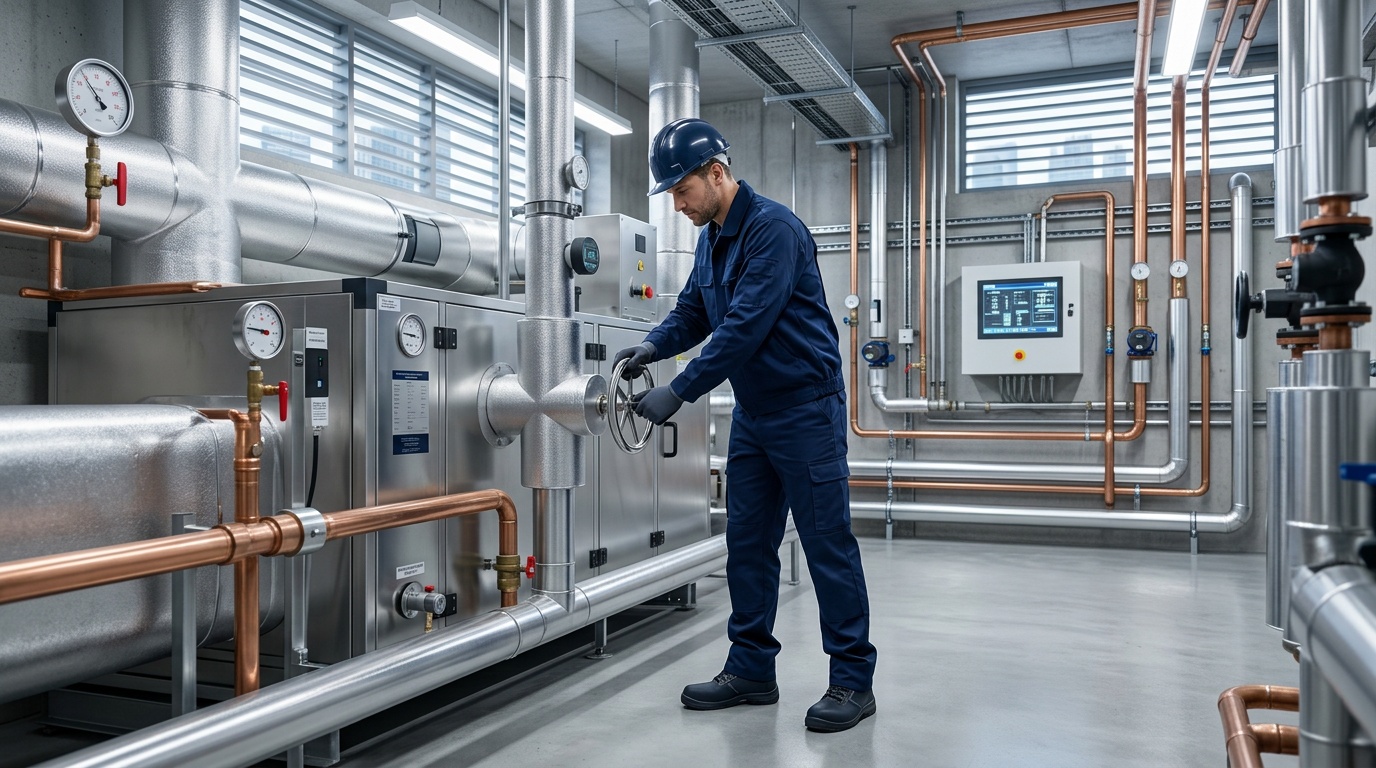
Affordable 24/7 HVAC emergency services.
Affordable 24/7 HVAC emergency services are not about finding the cheapest call-out rate. They're about having a maintenance partner who prevents most emergencies from occurring in the first place--and who responds within agreed SLA windows when they do. This guide gives facility managers the tools to achieve both.
The Hidden Costs of HVAC Breakdowns in Commercial Buildings
Why Out-of-Hours Failures Hit Your Bottom Line Hardest
An HVAC failure at 11 pm on a Friday is not a maintenance problem. It's a business continuity crisis. Emergency call-out rates outside standard hours carry significant premiums, parts sourced overnight cost more, and your building may be unfit for occupation by Monday morning. I've seen this scenario play out dozens of times across the West Midlands--and every time, the cost was predictable and avoidable. Affordable 24/7 HVAC emergency services only deliver real value when the contract is structured correctly before the failure happens.
Real-World Example: A Midlands Retail Centre's Summer Meltdown
A retail centre in the West Midlands lost its primary air handling unit during a July heatwave. No PPM agreement was in place. The centre paid emergency call-out premiums, sourced a replacement fan motor at short notice, and lost two full trading days while the repair was completed. Total cost: over £14,000. A quarterly PPM visit--costing a fraction of that--would have flagged the failing motor bearing months earlier. That's not hindsight. That's what structured maintenance catches every time.
The True Price Tag of Delaying Planned Preventative Maintenance
Skipping a PPM visit saves a line item on this quarter's budget. What it actually does is transfer a much larger cost into next quarter--with interest. Compressor burnout, refrigerant leaks triggering REFCOM obligations, heat exchanger fouling: all directly traceable to missed service intervals. Protecting your assets and your people starts with a maintenance schedule, not an emergency hotline.
Spotting HVAC Emergencies Before They Shut You Down
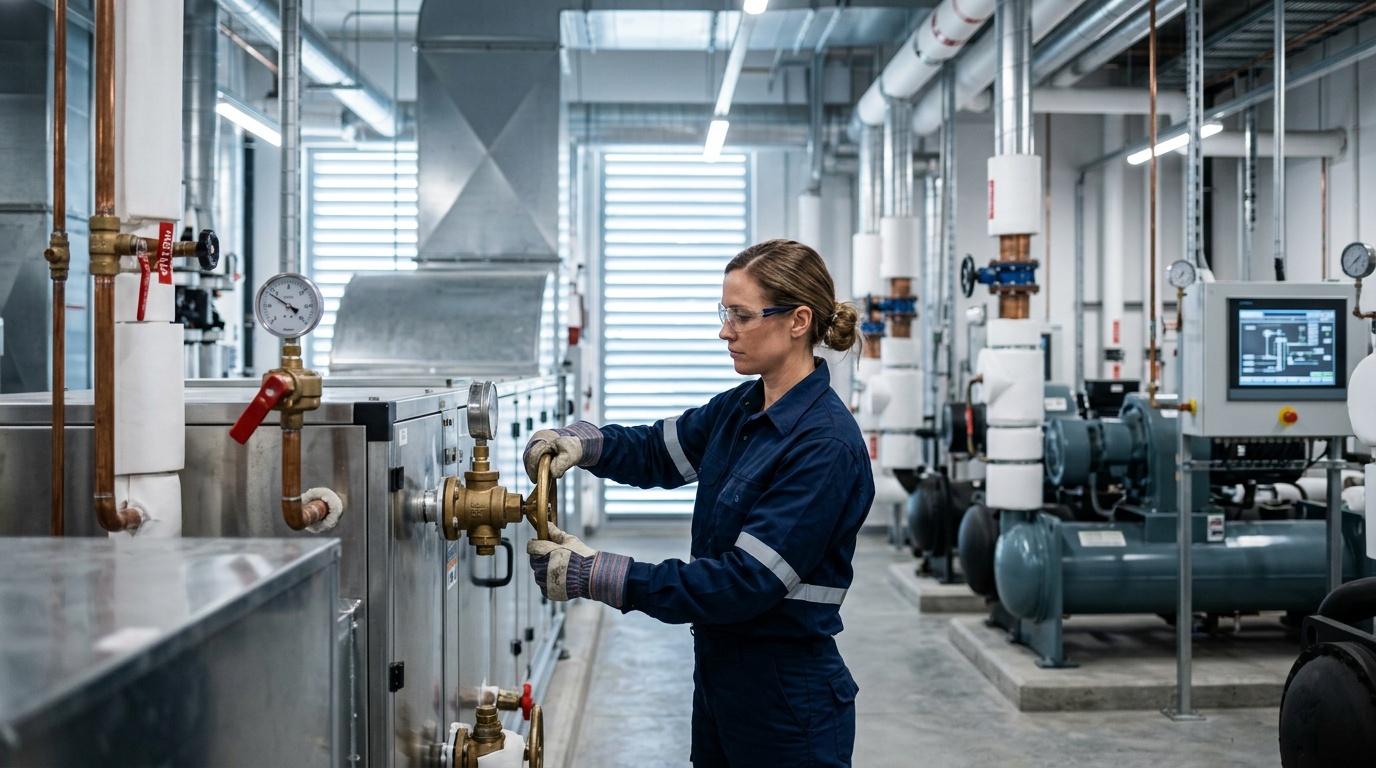
Top Signs of Imminent Commercial HVAC Failure
Your system communicates before it collapses. Unusual noise from fan coil units, inconsistent zone temperatures, rising energy consumption without increased occupancy, refrigerant odours--these are all pre-failure indicators. If your BMS is logging repeated fault codes that reset without investigation, treat that as a structural warning. Not a nuisance alarm. An experienced engineer reads those patterns the way a doctor reads an ECG: quietly, until they aren't.
Common Breakdowns in UK Office and Retail Systems
UK commercial buildings predominantly run VRF/VRV systems, chilled water plants, and split systems. The most common failure points are blocked condensate drains causing water ingress, failed capacitors on fan motors, refrigerant charge loss, and fouled evaporator coils--which alone can reduce system efficiency by up to 30%. Every one of these is detectable and preventable under a structured SFG20-compliant inspection regime. Ask your provider if they work to that standard. The answer will tell you everything.
Quick Self-Audit Checklist for Facility Managers
Signs Your HVAC Programme Is Working
- Compliance certificates issued within 24 hours of every visit
- Energy consumption stable or declining year on year
- The same engineer attends, familiar with your specific plant
- SFG20 task schedules documented and accessible
- Emergency call-outs represent less than 20% of annual spend
Warning Signs Your Provider Is Failing You
- No traceable paperwork after service visits
- Repeated emergency call-outs for the same fault
- Energy bills creeping upwards without explanation
- Different engineers on every visit with no site knowledge
- Provider cannot confirm SFG20 adherence when asked
What Makes 24/7 HVAC Emergency Services Affordable and Reliable
Breaking Down UK Pricing: Call-Out Fees, Parts, and Premiums
Affordable 24/7 HVAC emergency services are defined by contract transparency--not headline rates. A low call-out fee paired with inflated parts margins isn't affordable; it's a trap. Before signing any agreement, demand a fully inclusive schedule of rates covering labour, travel, and parts sourcing. Out-of-hours premiums of 1.5x to 2x standard labour rates are industry standard. Anything beyond that warrants a direct conversation.
SLA Response Times That Deliver Without the Mark-up
| Service Level | Typical Response Window | Best Suited For |
|---|---|---|
| Priority Emergency | 2 to 4 hours, 24/7/365 | Total system failure, safety-critical plant |
| Urgent Reactive | Same day or next morning | Partial loss of cooling or heating |
| Planned PPM Visit | Scheduled in advance | Routine compliance and asset protection |
How MEMS Delivers Value Through Vetted Partnerships
M&E Maintenance Solutions Limited (MEMS) holds Gas Safe, REFCOM F-Gas, and NQA ISO 9001 certifications. Every engineer attending your site carries the credentials your compliance records require--not as a selling point, but as a baseline standard. Our 24/7/365 staffed helpdesk means breakdowns don't wait for business hours. Our Building Fabric Repairs & Maintenance service extends that same standard across your entire building envelope, not just the plant room.
Shift from Reactive Fixes to Proactive PPM for Fewer Emergencies
SFG20 Compliance Checks That Prevent Costly Call-Outs
SFG20 is the industry baseline for building services maintenance. It specifies task frequencies, inspection criteria, and documentation standards. A provider working to SFG20 will catch a failing compressor contactor before it takes the whole unit down. One working without it is guessing--and you're carrying the risk. Ask your current provider to show you their SFG20 task matrix for your site. If they hesitate, your compliance position is weaker than you think. For sector-specific guidance, the HTM 05-02 document sets out how rigorous compliant maintenance should look in practice.
Building Your Custom PPM Plan: Step-by-Step
Start with a full asset register: every unit, its age, its service history, and its criticality to operations. Map SFG20 task frequencies against each asset. Assign priority tiers--a failed server room precision cooling unit demands a different response than a secondary corridor fan coil. Review the plan annually, adjusting for any equipment changes or updated compliance requirements. It's not glamorous work. It's exactly the work that keeps your building running.
Case Study: Cutting Emergency Calls by 70% in a Birmingham Estate
A Birmingham mixed-use estate moved from ad hoc reactive maintenance to a structured PPM programme with MEMS. Within 18 months, emergency call-outs fell by 70%. Annual maintenance spend dropped because parts were sourced at planned rates rather than emergency premiums. That's what affordable 24/7 HVAC emergency services actually looks like in practice: rarely needing them.
Sustainable HVAC Emergencies: Vetted Tech That Lasts
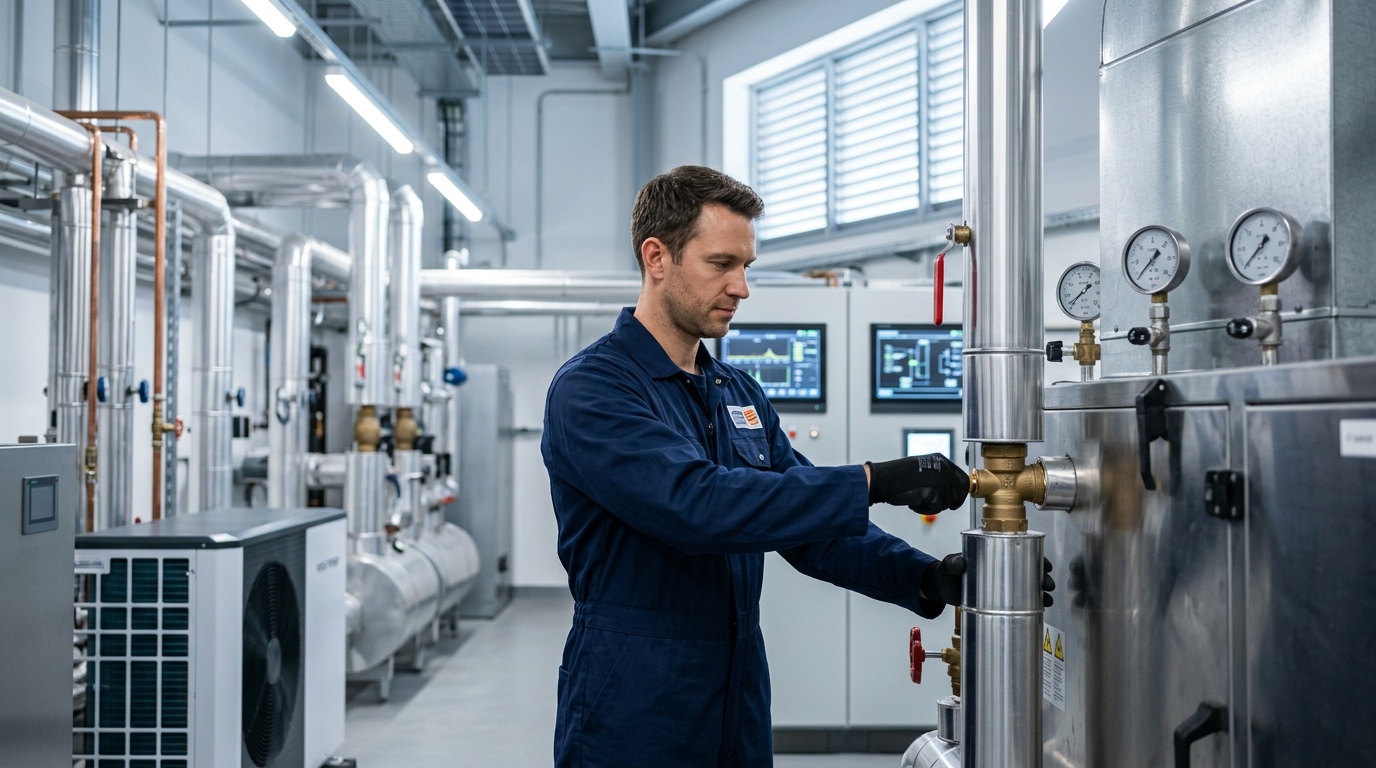
Integrating Heat Pumps and Solar PV During Repairs
An emergency repair is a decision point. You can replace like for like--or you can upgrade. Where system age and condition justify it, MEMS evaluates heat pump integration and solar PV compatibility during the repair process itself, avoiding a second mobilisation further down the line. A more reliable, energy-efficient asset means fewer emergencies. That's preventing downtime before it happens--built into the replacement, not bolted on afterwards.
Questions to Ask Your Provider About Green Compliance
Ask whether replacement units meet current F-Gas regulations and carry an A-rated energy efficiency classification. Confirm your provider holds REFCOM F-Gas certification--this is a legal requirement for anyone handling refrigerants, not an optional credential. Ask whether they can supply documentation proving refrigerant recovery and disposal compliance. If they hesitate on any of these, you're carrying legal exposure you may not realise. Our Building Fabric Repairs & Maintenance service integrates green-compliant material choices and certified disposal practices into every job, keeping your asset records clean and your obligations met.
- REFCOM F-Gas certification confirmed in writing
- Replacement units carry current energy efficiency ratings
- Refrigerant recovery documented on every visit
- Heat pump compatibility assessed during repair, not after
Protecting Your Building and Your People
Affordable 24/7 HVAC emergency services come down to one thing: partnership. Having someone who knows your building, maintains your compliance records, and is already working to prevent the next failure--before it lands on your desk at midnight. From a blocked filter accelerating compressor failure to a refrigerant leak triggering an F-Gas breach, every breakdown carries a cost well beyond the repair invoice.
The facility managers who sleep well at night aren't the ones who found the cheapest call-out rate. They're the ones who invested in planned preventative maintenance, built a relationship with a certified provider, and stopped treating compliance as a box-ticking exercise. Building Fabric Repairs & Maintenance sits at the centre of that strategy--addressing your building's physical envelope alongside its mechanical systems to deliver whole-building protection, not just plant room fixes.
MEMS operates 24/7/365 with a continuously staffed helpdesk, Gas Safe registration, REFCOM F-Gas certification, and SFG20-aligned PPM programmes. We work across government, healthcare, education, commercial, leisure, and warehouse distribution sectors. Whether you manage a single retail unit in Birmingham or a multi-site estate across the West Midlands, the standard we apply is the same: right first time, every time.
Don't wait for the breakdown that closes your doors. Contact the MEMS helpdesk today on 0121 380 5630 or email [email protected] to book a site survey and find out how a structured PPM plan can cut your reactive spend and protect your bottom line.
Frequently Asked Questions
How much does an emergency HVAC call cost for a commercial building?
An emergency HVAC call for a commercial building typically involves out-of-hours premiums, often 1.5x to 2x standard labour rates, and higher costs for parts sourced at short notice. This can easily triple the cost of a repair compared to planned maintenance. True affordability comes from contract transparency, ensuring all labour, travel, and parts sourcing rates are agreed upon upfront.
What is the equivalent of the '$5000 rule' for commercial HVAC?
While there isn't a universal '$5000 rule' in commercial HVAC, the article highlights that reactive maintenance can lead to significant, unexpected costs, far exceeding that figure. For example, a retail centre faced over £14,000 in costs from a single emergency breakdown. Investing in planned preventative maintenance (PPM) is the best way to avoid these substantial, unbudgeted expenses and protect your assets.
What qualifies as an HVAC emergency for commercial properties?
An HVAC emergency in a commercial setting is typically a total system failure or an issue with safety-critical plant that threatens business continuity. This could render a building unfit for occupation or severely disrupt operations, requiring immediate attention. Our service level agreements define these as situations needing a 2 to 4-hour response, 24/7.
How much will emergency heating repairs cost for a business?
The cost of emergency heating repairs follows the same structure as other HVAC emergencies, incurring out-of-hours premiums, typically 1.5x to 2x standard labour rates. Sourcing specialized heating parts overnight or at short notice also adds to the expense. A structured planned preventative maintenance plan would identify potential heating system failures, preventing these costly emergency call-outs.
Will commercial insurance pay for a broken HVAC system?
This article focuses on commercial HVAC systems, where 'home insurance' policies do not apply. For commercial buildings, any coverage for HVAC breakdowns would fall under specific commercial property or business interruption insurance policies. However, relying on insurance after a failure is far more costly than proactive planned preventative maintenance, which aims to prevent emergencies.
What are the top signs of an imminent commercial HVAC failure?
Your commercial HVAC system often gives warnings before it fails completely. Look out for unusual noises from units, inconsistent temperatures across different zones, or unexplained increases in energy consumption. Repeated fault codes on your Building Management System (BMS) that reset without investigation are also a clear sign that professional attention is needed.