Affordable compliance health checks for electrics West Midlands.
Electrical faults rarely announce themselves before they affect your operation. A warm distribution board, overloaded socket circuit or failed emergency fitting can sit unnoticed until it causes disruption, fire risk or an unwelcome compliance investigation. Affordable compliance health checks for electrics West Midlands. give facility managers a practical view of the building’s condition, not merely a certificate filed away until the next inspection.
Key Takeaways
- Electrical faults rarely announce themselves before they affect your operation.
- A warm distribution board, overloaded socket circuit or failed emergency fitting can sit unnoticed until it causes disruption, fire risk or an unwelcome compliance investigation.
- Affordable compliance health checks for electrics West Midlands.
A commercial facilities team can look at electrical safety through both engineering and commercial eyes. The purpose is to identify defects, confirm that protective measures work, and give you usable evidence for landlords, insurers, auditors and staff safety. The M&E HVAC Compliance Health Check is a separate free HVAC service that takes 5 minutes to complete. Users can send their details to receive a call for the service, and customers receive their HVAC Compliance Health Check report by email. It does not replace specialist electrical inspections or testing.
What Is a Commercial Electrical Compliance Health Check?
A commercial electrical compliance health check is a coordinated review of the systems that protect people, property and business continuity. It normally brings together an Electrical Installation Condition Report, portable appliance testing, emergency lighting verification and thermal imaging. An EICR remains a central document, but it is not a complete picture of every electrical risk across a working site.
Beyond a Single EICR: The Whole-Building Approach
An EICR examines the fixed wiring installation, including circuits, consumer units, distribution boards, earthing, bonding, insulation resistance and protective devices. It does not automatically confirm that every plug-in appliance is safe, that escape-route lighting will operate during a power cut, or that a loose termination is generating abnormal heat. A warehouse, office, retail unit or industrial premises needs its electrical assets considered in their operating context, including plant rooms, kitchens, server areas, workshops and external equipment.
That is why Affordable compliance health checks for electrics West Midlands. should be treated as a building risk review rather than a narrow inspection appointment. The engineer should record defects in a way that supports planned corrective work, prioritises life-safety issues and helps you schedule repairs around occupancy.
What Tests Are Included in a Bundled Health Check?
| Inspection area | What it examines | Why it matters commercially |
|---|---|---|
| EICR | Fixed wiring, circuits, earthing, bonding and protective equipment | Identifies defects that could interrupt operations or create danger |
| PAT | Plugs, leads and portable electrical appliances | Reduces avoidable appliance faults across offices and working areas |
| Emergency lighting | Luminaires, batteries, duration and escape-route coverage | Supports safe evacuation when normal lighting fails |
| Thermal imaging | Heat patterns at boards, connections and loaded components | Can flag developing problems before visible damage or downtime |
These tests should be matched to the property, its occupancy and the equipment in use. A fixed installation serving refrigeration, ventilation, production machinery or commercial catering carries different operational concerns from a small office. Thermal imaging is especially useful where circuits remain energised and the site cannot afford unnecessary shutdowns, although abnormal readings still require competent investigation.
Why a Combined Health Check Beats Paying for Individual Tests
Separate appointments can leave gaps between records, repeat mobilisation charges and make it harder to see which issue deserves attention first. A bundled visit creates one evidence trail, one action schedule and a clearer maintenance plan. It also gives the facility manager a better basis for budgeting, contractor coordination and risk assessment.
The M&E HVAC Compliance Health Check is designed as a straightforward first step for commercial premises across the Midlands UK. It is separate from specialist electrical testing and wider mechanical compliance work; it can help you identify where a detailed engineer-led HVAC inspection is needed. The aim is not to generate paperwork for its own sake. It is to keep the building safe, operational and prepared for its next audit.
Legal Requirements and Inspection Frequencies for West Midlands Commercial Properties




Who Needs Compliance Checks? Landlords, Businesses, and Facility Managers
Responsibility usually sits with the person or organisation controlling the electrical system. That may be a commercial landlord, employer, tenant, managing agent or facilities team. Under the Electricity at Work Regulations 1989, electrical systems must be constructed, maintained and operated so far as reasonably practicable to prevent danger. The Health and Safety at Work Act 1974 also places duties on employers to protect employees and others affected by their activities.
In practical terms, a landlord needs reliable evidence for the property and shared areas, while an occupier must manage equipment and working practices under its control. Facility managers often coordinate both sides, which makes an accurate asset register, risk assessment and inspection schedule essential. Affordable compliance health checks for electrics West Midlands. can help expose missing records before an incident or lease review brings them into focus.
EICR, PAT, and Emergency Lighting: What the Law Actually Says
Commercial electrical safety is governed by duties and standards rather than one universal timetable for every asset. The appropriate EICR interval should be set according to the installation, its use, condition, environment and applicable inspection guidance. The correct interval can be shorter where the installation is exposed to heat, moisture, vibration, heavy use or a changing occupancy profile.
PAT is not assigned one fixed legal interval for every appliance. The frequency should follow a documented risk assessment, equipment type, environment and usage, with visual checks between formal tests. Emergency lighting requires routine function checks, periodic inspection and a full-duration test in accordance with the relevant British Standards and the building’s fire safety arrangements.
Understanding EICR Outcome Codes: C1, C2, C3, and FI Explained
The EICR outcome code determines the urgency of the finding. C1 means danger is present and immediate action is required. C2 identifies potentially dangerous conditions that require urgent remedial work. C3 records an improvement recommendation, which does not normally make the report unsatisfactory on its own. FI means further investigation is required to establish the full extent of the issue. A satisfactory report requires no C1, C2 or FI observations remaining unresolved.
What Documentation Should You Receive After Testing?
Request the completed EICR, schedules of inspections and test results, clear observation codes, remedial quotations where needed, and certificates or records for PAT and emergency lighting. Documentation should identify the premises, installation limitations, inspection date, competent person and next recommended review. Keep photographs, repair invoices and close-out evidence with the report, especially where a C1, C2 or FI finding has been addressed.
The True Cost of Non-Compliance Versus Proactive Investment
What Happens When a Commercial Property Fails an Inspection
A failed inspection is not just an administrative inconvenience. It can restrict the use of part of a building, delay a lease agreement, interrupt production or force a landlord to explain unresolved defects to an insurer. A C1 or C2 observation may require immediate isolation or remedial work, while an FI finding can prevent the engineer from confirming the installation’s condition until further investigation is completed.
The commercial impact grows when repairs are arranged without a clear priority schedule. Staff may lose access to equipment, tenants may face disruption and maintenance teams may be forced into an emergency response. Proactive electrical checks give you time to plan labour, parts, access equipment and shutdown windows. That control can help avoid the additional disruption associated with reacting after a fault has affected operations.
Insurance Voids, Fines, and Legal Liability Exposure
Electrical safety duties sit with the person or organisation responsible for the system. The Electricity at Work Regulations 1989 and Health and Safety at Work Act 1974 create a clear expectation that installations are maintained and managed safely. If records are missing, defects remain open or remedial work cannot be evidenced, the responsible duty holder may face difficult questions after an incident.
Insurance policies can also require inspection records, maintenance evidence and prompt action on defects. A certificate alone does not prove that every recommendation was completed. Keep the EICR, test schedules, photographs, invoices, isolation records and close-out notes together. That audit trail supports insurers, enforcing authorities, landlords and internal governance reviews.
The Silent Drain: How Unmaintained Electrics Increase Energy Costs
Electrical defects do not always cause an immediate failure. Loose terminations, unbalanced phases, overloaded circuits, poor power factor, failing motors and damaged connections can create heat and wasted energy. A distribution board that runs warmer than expected may indicate resistance at a connection. Inefficient plant can continue drawing power month after month, hidden inside a general utility bill.
Thermal imaging, load measurements and inspection records help identify abnormal heat, poor connections and equipment operating outside normal conditions. These findings should be linked to a planned preventative maintenance programme, not left as isolated observations.
Realistic Savings: What a Health Check Can Uncover
A health check may identify simple corrective actions, such as replacing damaged accessories, tightening connections, improving labelling, removing unsafe extensions or repairing failed emergency fittings. It can also expose larger capital concerns, including obsolete switchgear, inadequate circuit capacity and recurring faults linked to ageing infrastructure. The value is in knowing the condition of the asset before budget decisions are forced upon you.
Commercial calculation: compare the inspection cost with emergency call-outs, lost trading hours, spoiled stock, temporary accommodation, accelerated repairs and potential insurance complications. Electrical safety checks can support business protection as well as compliance management.
What to Expect During a Compliance Health Check Visit
Step-by-Step: From Initial Site Survey to Final Certification
- Scope the property: confirm occupancy, access requirements, distribution boards, plant areas, tenant spaces and known faults.
- Review available records: examine previous EICRs, test certificates, asset registers, repair history and outstanding recommendations.
- Inspect and test: assess fixed wiring, protective devices, earthing, bonding, portable equipment, emergency lighting and selected high-risk areas.
- Record observations: classify defects by urgency, identify affected assets and note any limitations affecting the inspection.
- Issue documentation: provide the relevant report, test results, photographs or remedial schedule, followed by clear advice on next actions.
A competent engineer should explain findings in practical language. You need to know which items require immediate attention, which can enter planned works and which recommendations are improvements rather than evidence of immediate danger.
Facility Manager's Preparation Checklist Before the Engineer Arrives
- Provide access to intake rooms, distribution boards, roof plant, kitchens, workshops and locked tenant areas.
- Gather previous certificates, single-line diagrams, asset registers and records of recent alterations.
- Identify critical operations, restricted shutdown periods, vulnerable occupants and essential equipment.
- Tell staff not to move appliances or reconnect equipment during the inspection.
- Nominate one site contact who can approve access, isolation and urgent decisions.
Good preparation prevents avoidable return visits. It also helps the engineer distinguish a new defect from a known item already scheduled for correction.
Minimising Disruption to Your Daily Operations
Testing should be planned around occupancy, deliveries, production cycles and customer access. Agree isolation windows in advance, separate noisy or intrusive work from public areas and prioritise life-safety systems before lower-risk assets. Some observations can be made while equipment remains energised, although safe isolation is required whenever the task demands it.
Ask for a written visit plan, named contact details and an agreed certificate timescale. Prompt paperwork matters because delayed reports can hold up landlord approvals, audit responses and remedial budgets.
Why Engineer Continuity Matters for Long-Term Compliance
Consistent engineers can build useful knowledge of your building’s quirks: recurring nuisance trips, inaccessible isolators, altered circuits, plant-room constraints and previous repair decisions. That history improves fault diagnosis and avoids starting each visit from a blank page.
For electrical compliance work, use a suitably qualified electrical contractor for clear evidence, sensible priorities and a maintenance plan that protects uptime. The M&E HVAC Compliance Health Check remains a separate quick HVAC starting point, with customers receiving the HVAC Compliance Health Check report by email.
How to Choose an Affordable, Reliable Compliance Provider in the West Midlands



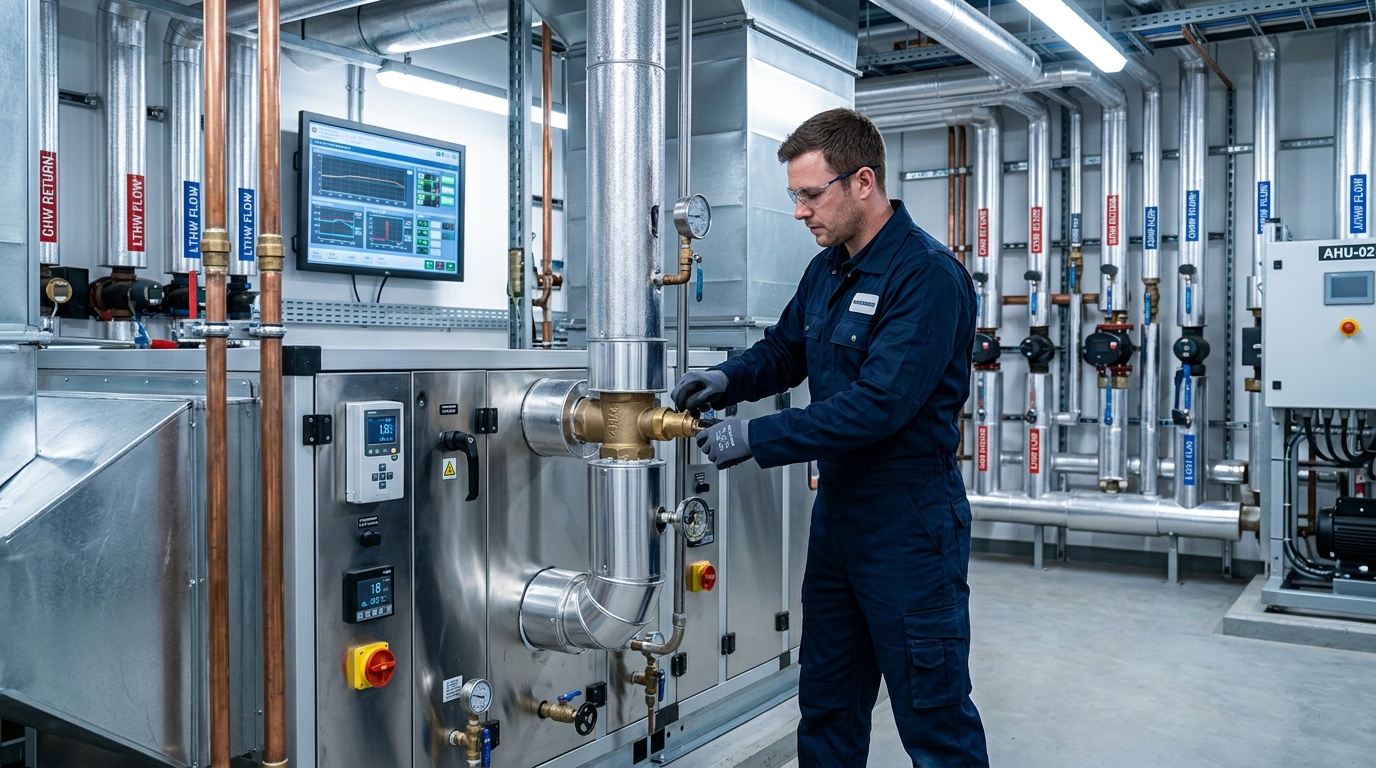
The right electrical compliance contractor should give you more than a test date and a certificate. You need a competent team that understands your building, explains risk in commercial terms and provides records promptly. Affordable compliance health checks for electrics West Midlands. are only genuinely affordable when they help prevent emergency call-outs, unplanned shutdowns and repeated site visits. Before appointing anyone, check their competence, scope of work, reporting process and ability to support remedial action after the inspection.
Five Questions Every Facility Manager Should Ask a Provider
Price matters, but a low quotation can become expensive if it excludes distribution boards, emergency lighting, portable equipment, thermal imaging or remedial advice. Ask the provider to define the inspection boundary in writing and identify any assumptions about access, isolation and occupied areas. You should also establish who will attend, which qualifications and accreditation support the work, and how findings will be prioritised against BS 7671 and the Electricity at Work Regulations 1989.
- Who will carry out the inspection? Ask for evidence of competence, insurance and relevant accreditation.
- What is included in the quotation? Confirm fixed wiring, portable appliances, emergency lighting, records, photographs and limitations.
- How are urgent defects handled? Find out whether C1, C2 and FI findings receive immediate contact and a practical action plan.
- When will documentation arrive? Agree a certificate and report timescale before the engineer visits.
- Can the provider support ongoing maintenance? A useful partner should connect inspection findings with PPM, energy management and planned capital works.
Warning Signs: Is Your Current Contractor Letting You Down?
A contractor may be failing you even when no major breakdown has occurred. Repeatedly changing engineers means valuable building knowledge is lost. Reports that arrive late, contain unclear observations or lack test schedules leave gaps in your compliance file. Another warning sign is a reactive service that repairs the immediate fault but never investigates recurring trips, warm connections, overloaded circuits or ageing switchgear.
Watch for quotations that cannot distinguish a safety defect from an improvement recommendation. Be cautious if nobody asks about occupancy, production schedules, tenant access, previous alterations or critical plant. A provider that treats every premises as a standard checklist may miss risks specific to a warehouse, care setting, retail unit, office block or manufacturing site.
What a Genuinely Customer-First Compliance Service Looks Like
Customer-first service is visible in the practical details. The engineer arrives with a defined scope, communicates before isolating equipment and gives you a clear distinction between immediate danger, urgent remedial work and longer-term improvement. The office team keeps the report moving, answers questions without passing you between departments and maintains an accessible record of certificates, photographs and completed repairs.
MEM Solutions operates across the Midlands UK and specialises in commercial HVAC maintenance and compliance. For related building services, its commercial plumbing and electrical services can support wider maintenance requirements. The business is certified by SafeContractor, Refcom F-Gas Certification, Gas Safe Register and BES, and holds NQA ISO 9001 certification.
Provider Decision: What Good Service Gives You
Pros
- One accountable contact for scope, findings and follow-up work.
- Consistent engineers who understand site history and access restrictions.
- Clear reports that support landlords, insurers, audits and budget planning.
- Electrical findings linked to preventative maintenance rather than isolated repairs.
Cons
- A thorough inspection may identify remedial work that needs funding.
- Testing can require planned isolation in selected areas.
- The cheapest quotation may not include the evidence your compliance file requires.
My recommendation is direct: choose the provider that can prove competence, explain exclusions and remain accountable after issuing the report. That approach makes Affordable compliance health checks for electrics West Midlands. a management tool for safety, uptime and controlled expenditure, rather than another certificate added to a crowded filing system. For broader building support, the M&E Strategic Partner Programme can provide a more coordinated maintenance approach.
References
"