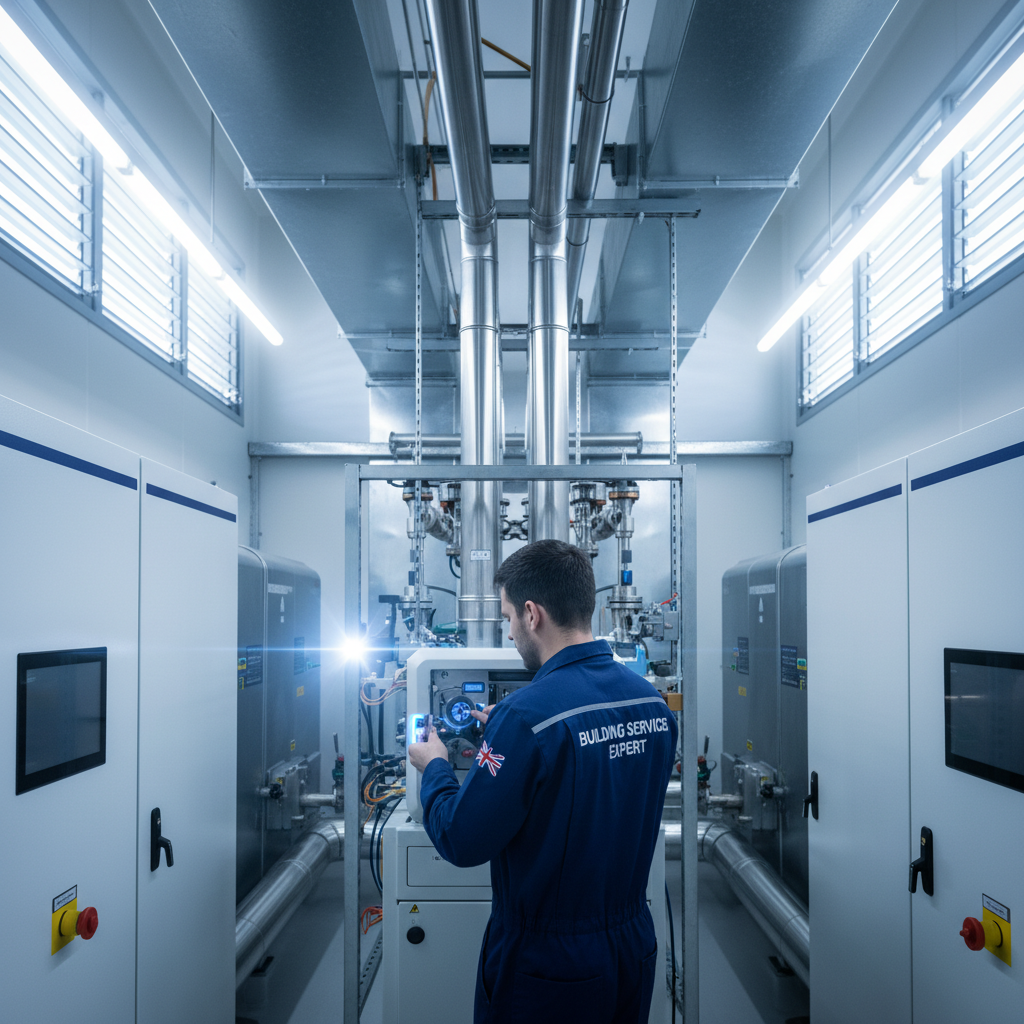
A failed boiler in January doesn't just make staff uncomfortable—it can shut down a 200-person office for three days, costing £15,000 in lost productivity before the first engineer arrives. After 24 years managing everything from single boilers to multi-site portfolios across the West Midlands, I've seen how the wrong maintenance approach turns minor issues into business-critical failures.
The best building maintenance services aren't just about fixing what's broken—they're about preventing failures that cost you trade. This guide cuts through the industry noise to show you exactly what separates professional maintenance from expensive fire-fighting. Commercial property maintenance services are essential for minimising downtime and protecting your assets.
Most facility managers think "best" means cheapest day rate. That's backwards thinking. Best means predictable costs, minimal downtime, and compliance that protects your business. When your HVAC fails during peak summer trading, you're not paying for maintenance—you're paying for lost revenue. Heating and ventilation systems are two of the most critical areas where proactive maintenance can prevent costly failures.
Consider a typical Birmingham office block: a single AHU failure during July doesn't just affect comfort. Staff productivity drops 20%, meeting rooms become unusable, and if you're in retail, customers leave. A four-hour repair becomes a full trading day loss worth thousands.
Poor maintenance creates hidden costs before anything actually breaks. A blocked HVAC filter increases energy consumption by 15%. Scale buildup in a boiler reduces efficiency by 10% before you notice performance issues. These silent drains on your bottom line compound monthly.
Building maintenance services are the planned and reactive works that keep commercial properties operational, compliant, and energy-efficient.
Technical depth means engineers who understand the difference between a faulty actuator and a controls programming issue. You need competency across mechanical, electrical, and building management systems—not just someone who can change filters.
Commercial clarity eliminates surprise bills. Fixed-rate PPM schedules, transparent reporting, and energy insights that actually reduce your operational costs. No hidden extras for "specialist" work that should be standard.
Compliance-first approach protects your business legally. SFG20-based maintenance schedules, Gas Safe certification, F-Gas record keeping, and electrical testing that stands up to HSE scrutiny.
Non-negotiable traits of best-in-class providers:
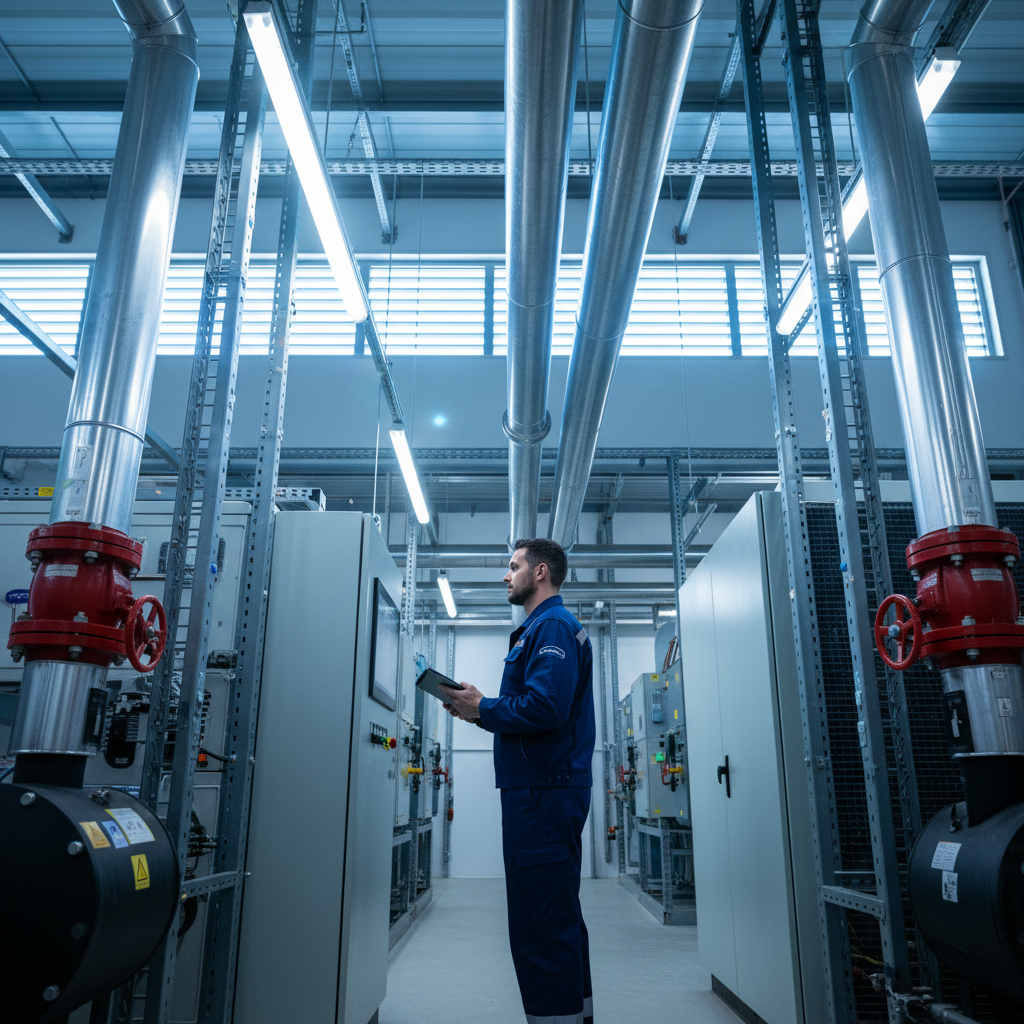
Understanding when to use preventive, corrective, and predictive maintenance isn't academic—it's the difference between controlled costs and crisis management. Each approach serves specific commercial purposes, and the best building maintenance services optimize the mix based on your asset criticality and risk tolerance.
Preventive maintenance follows structured schedules based on SFG20 task frequencies and manufacturer guidance. This isn't guesswork—it's engineering discipline applied to protect asset life and maintain efficiency.
Typical intervals include HVAC plant servicing every 3-6 months depending on load, annual Gas Safe inspections for all commercial gas appliances, and electrical testing (EICR) every 3-5 years for most commercial premises. Filter changes happen every 2,000 fan operating hours or quarterly, whichever comes first.
Real examples: replacing pump seals during scheduled maintenance costs £200. Waiting for catastrophic failure means emergency call-out, water damage, and £2,000+ in consequential costs. Quarterly boiler maintenance catches scaling before efficiency drops 15% and gas bills spike. For more on urgent issues, see 7 commercial building maintenance problems you need to fix ASAP.
Reactive maintenance handles genuine emergencies: total heating loss, electrical distribution faults, or major leaks. Critical failures demand 2-4 hour response times, while non-critical issues can wait 24-48 hours without business impact.
Professional providers use reactive failure data to refine your PPM schedule. If the same pump fails twice in 18 months, the maintenance frequency or methodology needs adjustment. Reactive work should inform preventive strategy, not replace it entirely.
Predictive maintenance uses real-time data—temperature readings, vibration analysis, running hours, and BMS trend logs—to predict failures before they happen. Instead of changing a bearing every 12 months regardless of condition, you monitor vibration patterns and replace it when data indicates wear is accelerating.
A practical example: monitoring boiler return temperatures and flue gas readings catches scaling or combustion issues 2-3 months before complete failure. Running-hours based maintenance (replacing fan motors after 3,000 operational hours rather than annually) prevents unexpected breakdowns during peak summer cooling.
Predictive maintenance makes commercial sense for multi-site portfolios, high-load plant, and critical environments like data centres. The technology investment pays back through reduced emergency call-outs and extended equipment life—typically showing ROI within 18-24 months for complex mechanical systems.
Roof inspections, gutter clearance, drainage checks, fire door maintenance, and external lighting often get overlooked until they cause expensive secondary damage. A blocked roof outlet can lead to water ingress costing £15,000-£30,000 in internal fit-out repairs—far exceeding the £200 annual inspection cost.
Key annual checks that protect asset value include: roof membrane and flashing inspections, gutter and downpipe clearance, external door seals and weatherstripping, and car park lighting functionality. These seemingly minor tasks prevent major capital expenditure and maintain insurance coverage validity. If you're concerned about leaks, here are some potential causes of commercial flat roof leaks.
The best building maintenance services distinguish themselves through technical depth across core disciplines, not just basic repair capabilities. Each service area directly impacts operational costs, regulatory compliance, and business continuity.
HVAC systems—boilers, chillers, air handling units, VRF systems, heat pumps, and circulation pumps—consume 40-60% of a commercial building's energy. Poor maintenance creates immediate financial impact: dirty filters increase fan energy consumption by 10-15%, while poor combustion tuning raises gas consumption by 5-10%. Air conditioning is a key area where regular servicing can prevent these issues.
Leading providers deliver seasonal commissioning within 4-6 weeks of peak demand periods, detailed service documentation with flue gas analysis and pressure readings, and upgrade recommendations with realistic payback calculations. They don't just maintain equipment—they optimise performance and identify efficiency opportunities.
Electrical maintenance covers distribution boards, emergency lighting, small power circuits, and coordination with fire alarm specialists. Legal compliance requires EICR testing every 3-5 years, monthly emergency lighting checks, and annual duration testing—all properly documented with date-stamped certificates. Electrical & plumbing services are essential for maintaining compliance and safety.
Professional electrical maintenance includes clear circuit labelling, digital access to test certificates within 5 working days, and immediate remedial quotes for any defects found. Poor electrical maintenance doesn't just risk downtime—it creates legal liability and insurance complications.
The best building maintenance services integrate sustainable technology support with traditional M&E maintenance. This includes heat pump servicing, solar PV system monitoring, and LED lighting upgrades with typical ROI periods of 18-36 months.
Replacing a 20-year-old gas boiler with an optimised air-to-water heat pump system typically reduces heating energy consumption by 30-50%, while proper system integration ensures reliability matches or exceeds the original installation. Internal product testing on live buildings proves performance claims before full portfolio rollout. For a real-world example, read about our Coventry University chiller pipework install.
| Service Area | M&E Maintenance Solutions | Large FM Corporations | Local Contractors |
|---|---|---|---|
| HVAC Expertise | Senior engineers with 15+ years experience, in-house heat pump specialists | Subcontracted technicians, variable skill levels | Limited to basic systems, no heat pump capability |
| Response Time | 2-4 hours critical, direct engineer contact | 4-8 hours, call centre filtering | Same day, limited out-of-hours coverage |
| Compliance Documentation | Digital certificates within 24 hours, SFG20 aligned | 3-5 days, standardised templates | Paper certificates, basic compliance |
| Energy Optimisation | Quarterly efficiency reviews, upgrade ROI analysis | Annual reports, limited optimisation focus | Maintenance only, no efficiency advice |

A robust PPM schedule transforms reactive fire-fighting into predictable, budgetable maintenance costs. The process requires systematic asset auditing, task mapping to industry standards, and performance monitoring—typically showing cost benefits within 6-12 months. For a comprehensive review of your systems, consider an M&E/HVAC compliance health check.
Create a comprehensive asset register covering all mechanical and electrical equipment: boilers, chillers, distribution panels, pumps, fans, lifts, and emergency systems. Document make, model, serial numbers, installation dates, and failure history for the previous 12-24 months.
Rate each asset using a simple A/B/C system: A-rated equipment is critical to trade (heating in winter, cooling in server rooms), B-rated affects comfort but not operations, and C-rated is non-essential. This prioritisation determines maintenance frequency and emergency response requirements.
Use SFG20 as your baseline task schedule, adjusting frequencies for actual operating conditions. Gas boilers require annual services with full strip-downs every 3-5 years depending on usage. VRF systems need quarterly filter cleaning, annual refrigerant leak checks, and F-Gas record updates.
High-usage or critical environments justify exceeding SFG20 minimums. A boiler serving a 24/7 facility needs more frequent combustion analysis than one heating a standard office. Document these decisions with clear technical reasoning for compliance audits.
Schedule major maintenance during planned downtime—weekends, seasonal shutdowns, or overnight hours. Always build 2-3 week buffers before peak demand periods: complete heating system maintenance by early October, cooling system checks by mid-May.
Structure visits efficiently: quarterly filter changes and safety checks, bi-annual deep cleans and calibrations, annual statutory inspections and overhauls. Coordinate multiple trades during single visits to minimise disruption and reduce call-out costs. For more on when to call a professional, see 10 signs you need to call a professional plumber.
Track reactive versus planned maintenance ratios—aim for 70% planned within 12-18 months. Monitor first-time fix rates (target 80%+) and energy consumption trends that indicate declining equipment efficiency.
Schedule quarterly reviews with your maintenance provider using actual performance data, not just completion certificates. Identify recurring failures, energy drift patterns, and opportunities to extend intervals on reliable equipment while increasing attention on problem assets.
| Asset Type | Monthly Tasks | Quarterly Tasks | Annual Tasks |
|---|---|---|---|
| Gas Boilers | Visual inspection, pressure check | Combustion analysis, safety device test | Full service, flue inspection, Gas Safe certificate |
| Air Handling Units | Filter condition check | Filter replacement, belt inspection | Motor service, damper calibration, duct inspection |
| Electrical Panels | Temperature check, visual inspection | Connection tightness, RCD testing | Thermal imaging, insulation resistance testing |
Centralise all compliance documentation digitally: Gas Safe certificates, F-Gas records, EICR reports, emergency lighting logs, and risk assessments. This supports insurance claims, HSE audits, and due diligence processes during property transactions. For official guidance, see the HSE's building maintenance requirements.
Implement a simple folder structure accessible to facility managers, insurance brokers, and senior management. Monthly dashboards showing completion rates, energy trends, and upcoming statutory requirements provide board-level visibility without overwhelming detail.
Selecting the right maintenance partner determines whether you achieve predictable costs and reliable performance or continue expensive reactive cycles. The decision framework should evaluate technical capability, commercial transparency, and cultural fit with your organisation's operational requirements.
In-house teams provide maximum control and building familiarity but require significant recruitment, training, and equipment investment. Fully outsourced models offer expertise breadth and 24/7 coverage but may lack site-specific knowledge. Hybrid approaches combine internal oversight with specialist contractor support.
Choose based on portfolio size, technical complexity, and internal capabilities. Single sites under 50,000 sq ft often benefit from local contractors with direct relationships. Multi-site portfolios requiring consistent standards and reporting need regional providers with proven systems and processes. For further reading, the UK Government Facilities Management Strategy outlines best practices for public estates.
| Model | Best For | Cost Predictability | Technical Depth | 24/7 Coverage |
|---|---|---|---|---|
| In-House | Large single sites, specialist facilities | High (fixed salaries) | Limited to recruited skills | Requires shift patterns |
| Outsourced | Multi-site portfolios, standard buildings | Medium (contracted rates) | Broad, multi-discipline teams | 24/7/365 availability |
| Hybrid | Complex estates, critical environments | Balanced (mix of fixed and variable) | Internal oversight plus specialist support | Customised to site needs |
Red Flags:
At MEMS Facilities Maintenance, we operate on the principle of "big enough to cope, small enough to care." Our team delivers the technical depth, commercial transparency, and personal accountability that the big FM corporations can't match. We protect your assets and your people—right first time, every time.
Predictive maintenance uses data and condition monitoring to address issues before they cause failure, preventing downtime with precision. Preventive maintenance follows scheduled inspections and servicing to reduce the risk of breakdowns, based on time or usage intervals. Reactive maintenance waits for equipment to fail before fixing it, which often leads to costly emergency repairs and unplanned downtime.
Proper maintenance identifies and resolves minor faults before they escalate into major failures, ensuring systems run efficiently and reliably. This proactive approach reduces emergency repairs, keeps compliance on track, and maintains business continuity by avoiding unexpected shutdowns that disrupt operations and revenue.
Facility managers should look for providers with proven SFG20 compliance, transparent and traceable certification processes, and a strong track record of timely, consistent engineer response. Technical expertise across systems, a proactive maintenance philosophy, and a partner approach that values building-specific knowledge over one-size-fits-all solutions are essential.
Buildings are complex ecosystems where mechanical, electrical, and control systems interact closely; expertise across all these areas ensures issues are diagnosed accurately and fixed right first time. This holistic understanding prevents recurring faults, optimizes energy use, and safeguards compliance, ultimately protecting uptime and reducing total cost of ownership.