best M&E Maintenance Solutions 2026
When a heating system fails during occupied hours, the cost includes more than an engineer’s call-out. Staff productivity drops, tenants complain, stock may be affected and a landlord can face service-level disputes. The best M&E Maintenance Solutions 2026 comparison must examine technical competence, response arrangements, compliance records and accountability.
Key Takeaways
- A heating failure during occupied hours creates hidden costs beyond the engineer's call-out, including lost staff productivity, tenant dissatisfaction, and potential service-level disputes.
- When comparing M&E maintenance providers, focus on their technical competence, response times, compliance records, and willingness to take accountability for system failures.
- Facility managers should choose a 2026 maintenance partner based on real-world reliability and engineering expertise, not just the lowest price or a glossy service brochure.
I’m Stuart Butcher, Founder and Managing Director of MEMS Facilities Maintenance. I started as an apprentice combustion engineer and have spent more than 24 years working around commercial plant rooms. This comparison is for facility managers, estate managers and business owners seeking reliable building services across Birmingham, the West Midlands and the wider UK.
The Commercial Reality: Why Choosing the Right M&E Maintenance Solution is Critical for UK Facilities in 2026
Understanding M&E Maintenance: More Than Just Fixing Leaks
Mechanical and electrical maintenance covers the systems that keep a commercial building safe, usable and productive. Mechanical work includes boilers, burners, pumps, air-conditioning equipment, ventilation, heat pumps and controls. Electrical maintenance includes distribution boards, emergency lighting, fixed wiring, motors, sensors and associated control panels. Plumbing covers water services, drainage, sanitaryware and leak prevention. For a coordinated approach, facility managers can review commercial plumbing and electrical services.
A competent provider should inspect asset condition, identify developing faults, maintain records and plan work around occupancy. HVAC performance, water temperature, electrical safety, ventilation rates and plant-room access all affect operating cost and business continuity. Blocked filters, poorly commissioned control valves and neglected fan belts can increase equipment strain before visible failure.
The Cost of Downtime and Non-Compliance for UK Businesses
Unplanned failure can create emergency labour, expedited parts, lost trading hours, tenant disruption and management time. In a warehouse, poor temperature control can affect stored goods. In an office, failed air-conditioning can make occupied space unsuitable. In retail, loss of heating, lighting or ventilation affects customer experience and staff welfare.
Gas appliances require appropriate inspection by qualified personnel, refrigerant systems fall within F-Gas controls, and electrical installations need suitable inspection and testing. Maintenance schedules should reflect SFG20 guidance where applicable. Missing certificates, incomplete asset registers and unclear remedial actions leave the duty holder exposed.
Why This Guide is Different: A Focus on UK Providers and Practicalities
Provider size does not establish service quality. The relevant questions are whether the supplier can diagnose faults accurately, send an appropriately skilled engineer, communicate clearly and close jobs with traceable documentation.
This review compares national facilities management models with specialist M&E contractors. It considers technical decision-maker access, engineer consistency, subcontractor control, planned preventative maintenance, energy efficiency and the needs of UK commercial estates. A multinational provider may suit a large, multi-site contract, while a specialist may offer closer technical contact and faster commercial decisions.
Our Methodology: How We Evaluated the Best M&E Maintenance Solutions for UK Facilities

Defining the Core Criteria for M&E Provider Assessment
Our assessment starts with the building, not the brochure. We considered asset types, engineering capability, emergency response, planned maintenance and evidence of completed work. A provider should understand the relationship between plant condition, energy consumption, occupant comfort and statutory responsibility.
Key Comparison Factors: Service Breadth, Technical Depth, and Accountability
Service breadth matters where one contract covers several disciplines. Technical depth matters when recurring faults require diagnosis rather than repeated component replacement. Accountability matters where delivery involves employed engineers, strategic partners or subcontractors.
- Service scope: HVAC, electrical, plumbing, controls, compliance and fabric interfaces.
- Technical depth: fault finding, commissioning, combustion knowledge, refrigerant competence and control-system understanding.
- Delivery control: named contacts, escalation routes, engineer allocation and subcontractor governance.
- Commercial clarity: defined exclusions, remedial approval thresholds, reporting and lifecycle planning.
Assessing Compliance, Sustainability, and Future-Proofing Capabilities
We looked for recognised certifications, inspection records, refrigerant management, gas competence and quality procedures. Sustainability was assessed through heat pumps, solar technologies, LED lighting, controls optimisation and equipment efficiency. Future planning includes obsolescence reviews, replacement options and technical support as systems change.
The Specialist vs. National FM Provider Dilemma: Our Approach
National FM companies can provide geographic coverage, procurement scale and multiple services under one framework. Specialist firms can offer focused engineering knowledge, closer access to senior people and a more personal operating relationship. The right fit depends on estate size, risk profile, internal resources and required technical involvement.
Top UK M&E Maintenance Solutions for 2026: A Comparative Analysis
The best M&E Maintenance Solutions 2026 shortlist depends on the required outcome. A single-site building may value direct engineering access, while a national estate may prioritise common reporting, mobilisation capacity and broad facilities scope.
| Provider | Primary strength | Best suited to | Key consideration |
|---|---|---|---|
| M&E Maintenance Solutions Limited | Specialist commercial HVAC and direct technical access | Commercial buildings needing focused engineering support | Confirm wider disciplines required under the contract |
| ABM UK | National integrated facilities management | Large estates seeking one FM structure | Clarify local engineering ownership and escalation |
| Mitie | Integrated FM and engineering delivery | Complex multi-site portfolios | Check mobilisation and account layers |
| ISS | International FM capability with UK delivery | Corporate estates and bundled services | Test local technical consistency |
| CBRE | Property, advisory and facilities expertise | Managed property portfolios | Separate strategic management from hands-on delivery |
| Sodexo | Integrated workplace and facilities services | People-focused, complex environments | Define engineering scope and performance measures |
| Vinci Facilities | Building services and infrastructure capability | Infrastructure-led estates | Confirm suitability for smaller commercial sites |
| Integral UK | Facilities and engineering specialism | Technical estates requiring structured support | Review regional coverage and response terms |
| Arthur McKay | M&E and building services | Commercial and public-sector environments | Match available disciplines to the asset register |
1. M&E Maintenance Solutions Limited: The Specialist Innovator
Best for: commercial buildings needing focused HVAC maintenance, compliance support and direct access to experienced technical people. M&E Maintenance Solutions was founded in 2007. It employs over 20 core staff and works with a growing number of strategic partners. Its referral-led service model focuses on commercial buildings and practical engineering outcomes.
M&E specialises in Heating, Ventilation and Air Conditioning (HVAC). Its capabilities include Air to Air heat pumps, Air to Water heat pumps, Solar PV, LED Lighting, and Solar Thermal. The company holds SafeContractor, Refcom F-Gas Certification, Gas Safe Register, BES, and ISO 9001 certifications. M&E serves Facility Managers and Estate Managers throughout the UK.
2. ABM UK: The National FM Service Provider
Best for: organisations seeking national facilities management with multiple services coordinated through one provider. ABM UK suits large estates needing contract governance, soft-services integration and central reporting.
3. Mitie Facilities Management: Integrated FM Expertise
Best for: complex portfolios needing engineering, workplace services, energy management and national contract administration.
4. ISS Facility Services: Global Reach, Local Focus
Best for: corporate occupiers and large organisations seeking integrated workplace and facilities services.
5. CBRE: Property and Facilities Management Leader
Best for: property owners and occupiers combining facilities management with property strategy, asset planning or workplace advisory services.
6. Sodexo: Integrated Services for Diverse Estates
Best for: hospitals, campuses, workplaces and other environments where engineering sits within wider occupant and support services.
7. Vinci Facilities: Comprehensive Building Services
Best for: infrastructure-linked sites and estates requiring structured building-services delivery.
8. Integral UK: Facilities and Engineering Specialists
Best for: technically demanding estates seeking organised facilities and engineering support.
9. Arthur McKay: M&E and Building Services
Best for: organisations seeking building-services contractors with M&E capability across commercial and institutional settings.
For facility managers comparing the best M&E Maintenance Solutions 2026, the most useful evidence is usually in the service specification: named engineers, certification records, escalation contacts, PPM frequencies, response commitments and responsibility for subcontracted work.
Making the Right Choice: Decision Matrix for UK Facility Managers
Selection should reflect building risk, geographic spread and required technical control. Do not choose solely on service-catalogue size. Test whether the delivery model provides dependable attendance, clear escalation, competent diagnosis and usable compliance records.
Scenario 1: Prioritising Direct Technical Access and Agility
A specialist-led model suits recurring HVAC faults, local commercial buildings and regional portfolios where direct engineering access matters. Ask who attends, who reviews difficult faults and who can approve changes to the maintenance plan.
Scenario 2: Needing Broad, National Coverage and Integrated Services
A national FM provider may suit an estate spanning several regions where one framework, common reporting and coordinated soft and hard services are required.
Scenario 3: Focusing on Compliance and Specific Technical Expertise
Where statutory risk or specialist plant is the priority, select a provider that demonstrates competence for the actual asset register. Review Gas Safe capability, Refcom F-Gas certification, electrical inspection arrangements, PPM frequencies and service-report quality.
Beyond the List: Questions to Ask Your M&E Provider & FAQs
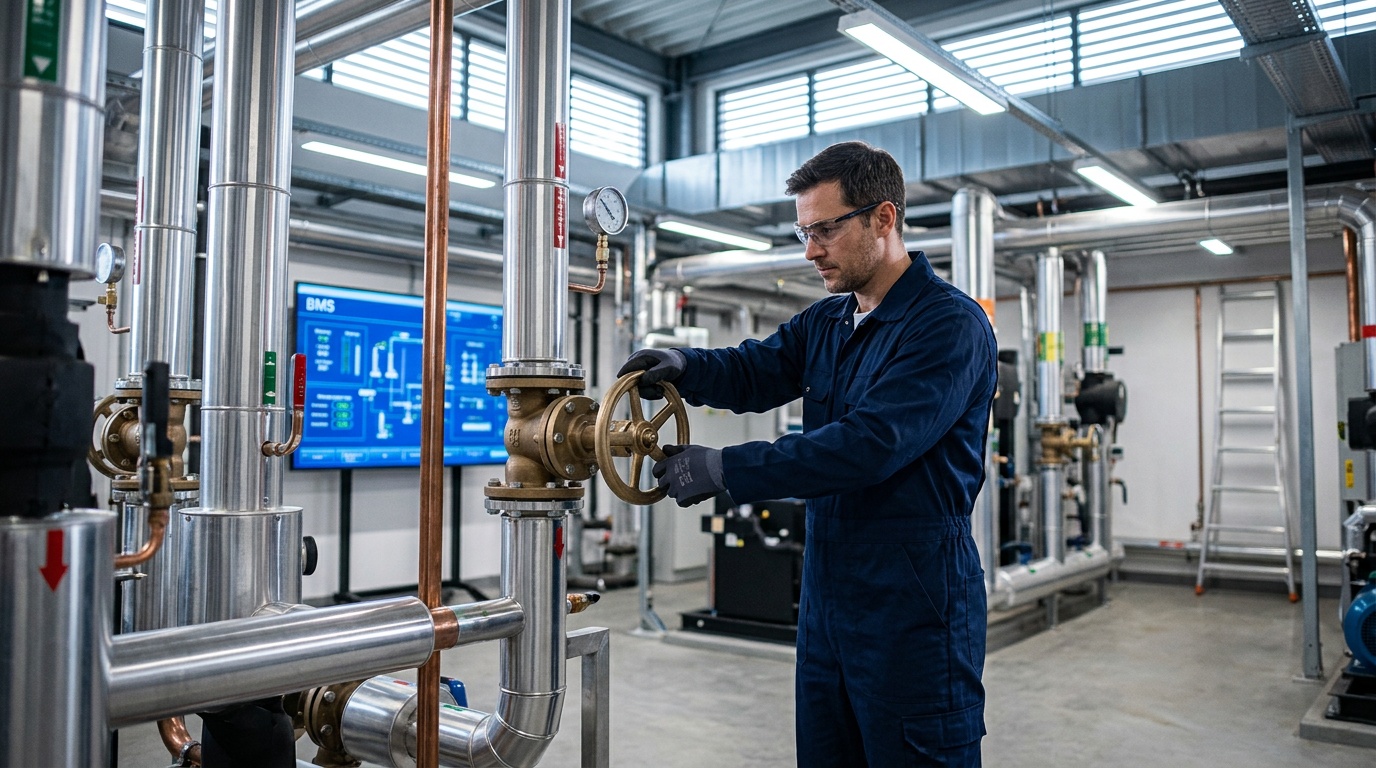
A strong maintenance contract is defined by delivery detail, not brochure length. Ask who inspects plant, approves remedial work and remains accountable when a partner or subcontractor attends site.
Essential Questions for Your Next M&E Maintenance Contract Review
- Who is the technical lead for my building?
- Which tasks are completed by employed engineers?
- What response time applies to loss of heating, cooling, ventilation or electrical supply?
- How are defects graded, priced and tracked through to completion?
- Will I receive service sheets, certificates, photographs and recommendations?
- Which maintenance schedules and statutory requirements are included?
- How will obsolete equipment and energy performance be reported?
What does M&E maintenance truly cover?
M&E maintenance covers mechanical and electrical systems supporting a commercial building. Mechanical assets can include boilers, burners, pumps, air-conditioning units, ventilation fans, heat pumps, valves and building controls. Electrical duties may include motors, control panels, emergency lighting, distribution equipment and fixed systems. Plumbing interfaces can include water services, drainage and sanitary equipment.
How do I ensure my provider is SFG20 compliant?
Ask the contractor to map the PPM schedule against relevant SFG20 task requirements for each asset. Identify the task, frequency, required competence, completion record and discovered defects.
What are the implications of F-Gas regulations for my HVAC maintenance?
F-Gas obligations affect equipment containing fluorinated refrigerants. Depending on the system, maintenance may require leak checks, refrigerant-work records, recovery procedures and certified personnel.
When is Planned Preventative Maintenance more cost-effective than reactive repairs?
PPM is generally more cost-effective where failure could disrupt trading, damage stock, affect occupants or create a safety concern. It allows filters, belts, electrical connections, coils, sensors and safety devices to be inspected before a shutdown.
How can I be sure of engineer consistency and accountability?
Require a named service manager, documented competencies and a clear escalation route. Each job should close with a service report identifying the asset, work completed, readings taken, defects found, parts fitted and recommended next action.
What is the role of a Building Fabric inspection in M&E?
A building-fabric inspection examines surrounding parts, including roofs, walls, doors, windows, insulation, plant-room conditions and access points. Water ingress may damage controls, poor insulation can increase heating demand, and restricted access can delay safe servicing.
Frequently Asked Questions
What should a commercial business look for in the best M&E Maintenance Solutions 2026?
The best M&E Maintenance Solutions 2026 should provide technical competence, clear response arrangements, compliance records and accountable delivery. Commercial facilities also need planned preventative maintenance, accurate asset registers, documented remedial actions and communication suited to occupied buildings. I recommend assessing evidence of completed work rather than relying on brochure claims.
How can M&E maintenance reduce disruption to a commercial building?
Commercial M&E maintenance can reduce disruption by identifying developing faults before they become failures and planning work around occupancy. Regular attention to boilers, pumps, air conditioning, ventilation, controls and electrical systems supports business continuity. Clear escalation routes and suitable emergency arrangements also help facility teams respond when faults occur.
What compliance records should an M&E maintenance provider supply?
An M&E maintenance provider should supply inspection records, service reports, asset information, certificates where applicable and clearly recorded remedial actions. Commercial sites may need evidence relating to gas appliances, refrigerant management, electrical inspection and testing, and relevant SFG20-based maintenance schedules. Complete records help duty holders demonstrate that systems are being managed.
Is a specialist M&E contractor better than a national FM provider?
A specialist M&E contractor can offer closer engineering contact and focused technical knowledge, while a national FM provider may suit estates needing broad geographic coverage and common reporting. The right choice depends on site numbers, asset types, risk profile and internal resources. Provider size alone does not establish service quality.
How often should commercial HVAC and building services be maintained?
Commercial HVAC and building services should be maintained according to asset condition, manufacturer guidance, usage, risk and an agreed planned maintenance schedule. Boilers, burners, pumps, air conditioning, ventilation, controls, electrical systems and plumbing may require different inspection frequencies. A competent provider should review findings and adjust the plan when site conditions change.
What questions should a facility manager ask before appointing an M&E provider?
A facility manager should ask about engineer competence, emergency response, subcontractor governance, reporting, remedial approval limits and compliance documentation before appointing an M&E provider. Ask how recurring faults are diagnosed, who provides escalation support and how asset condition is reviewed. Clear answers reveal whether the supplier can manage performance beyond routine attendance.