biomedical science building
The Unseen Backbone: Why Biomedical Science Buildings Demand Precision Maintenance
In my 24 years of engineering experience, starting from my days as an apprentice combustion engineer to managing complex sites across the West Midlands, I have learned that a building is not just a shell. It is a living, breathing mechanical system. This reality is nowhere more apparent than in a biomedical science building, where a single degree of temperature drift or a microscopic pressure drop can ruin years of academic research, compromise sterile environments, and result in millions of pounds of lost funding. For facility managers, commercial landlords, and business owners, maintaining these specialised structures requires moving past basic facility management into high-precision engineering.
Biomedical facility maintenance requires a shift from reactive repairs to strict, data-driven preventative strategies. Unlike standard commercial offices, these research structures depend on environmental stability, continuous air filtration, and precise pressure cascades. Protecting these assets requires adherence to SFG20 standards, deployment of certified technicians, and maintenance of the building fabric to prevent external contamination from breaching cleanroom boundaries.
The Commercial Reality: Beyond the Lab Bench
In a standard office building, an HVAC failure is an inconvenience that leads to staff complaints. In a biomedical science building, that same failure is a commercial catastrophe. Research projects, biological samples, and clinical trials rely on environmental consistency. If a cold storage room rises above its designated threshold, or if a cleanroom loses its negative pressure, the physical assets inside face immediate degradation. The financial impact extends far beyond repairing the failed compressor; it includes the loss of irreplaceable scientific data, regulatory non-compliance penalties, and reputational damage that can affect future research grants.
The Engineer's Take: When Precision Fails, Research Suffers
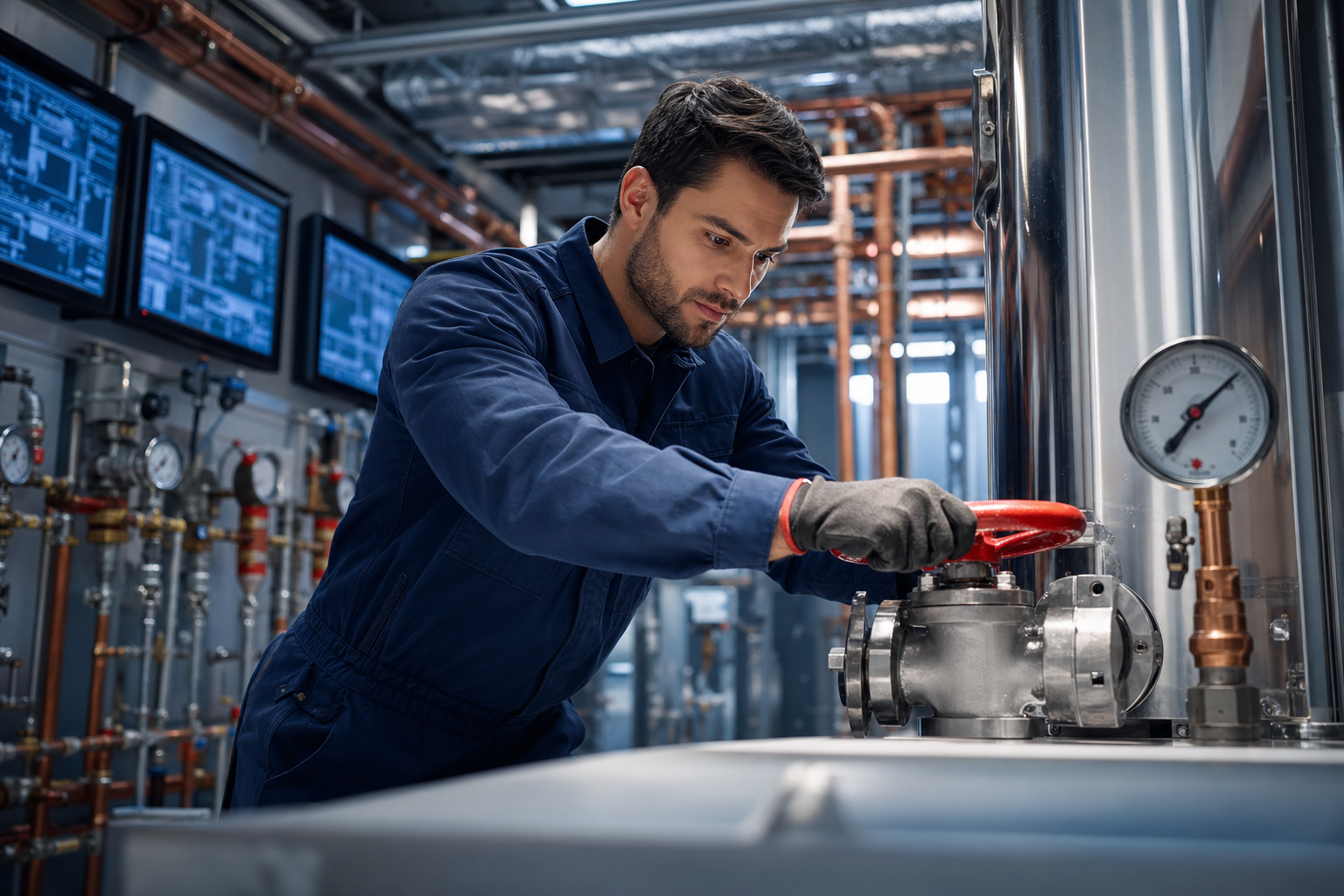
When you stand in a plant room housing large air handling units, you realise how fragile these controlled environments are. Precision is not a target; it is the baseline. If a belt slips on an extract fan, or if a control valve hunts instead of settling, the environmental parameters of the lab drift. My team and I often see sites where minor calibration errors accumulate over time, leading to a control-system conflict where heating and cooling operate at the same time. This inefficiency drives up energy bills and accelerates wear, leading to premature failures that could have been avoided through structured maintenance.
The Cost of Environmental Drift
A variation of just 1.5°C in a research environment can invalidate sensitive biological assays. Regular calibration of sensors, actuators, and dampers is not a luxury; it is a requirement to protect scientific integrity and control operational costs.
Technical Breakdown: The Criticality of HVAC in Bioscience Environments
The heating, ventilation, and air conditioning systems in these facilities are complex. They must deliver large volumes of conditioned air while maintaining strict pressure regimes to prevent cross-contamination. Air change rates are often ten times higher than those found in standard commercial properties. Air must flow from cleaner areas to less clean areas, requiring precise balancing of supply and extract fans. If this balance is disrupted, contaminated air can migrate into sterile zones, rendering research suites unusable until deep cleaning and recertification are completed.
Actionable Advice: A Facility Manager's Initial Audit Checklist
To keep your facility operating correctly, you must understand your current baseline. Use this checklist to assess operational readiness:
- Verify that your building management system (BMS) logs pressure differentials across all cleanroom boundaries every hour.
- Check the condition of all external intake louvres to ensure that they are free from debris and biological growth.
- Review maintenance logs to confirm that all air handling unit drive belts have been tensioned or replaced within the last six months.
- Inspect seals around laboratory doors and windows to identify air leakage paths that could compromise room pressure.
Beyond Standard HVAC: Meeting the Extreme Demands of Bioscience Facilities
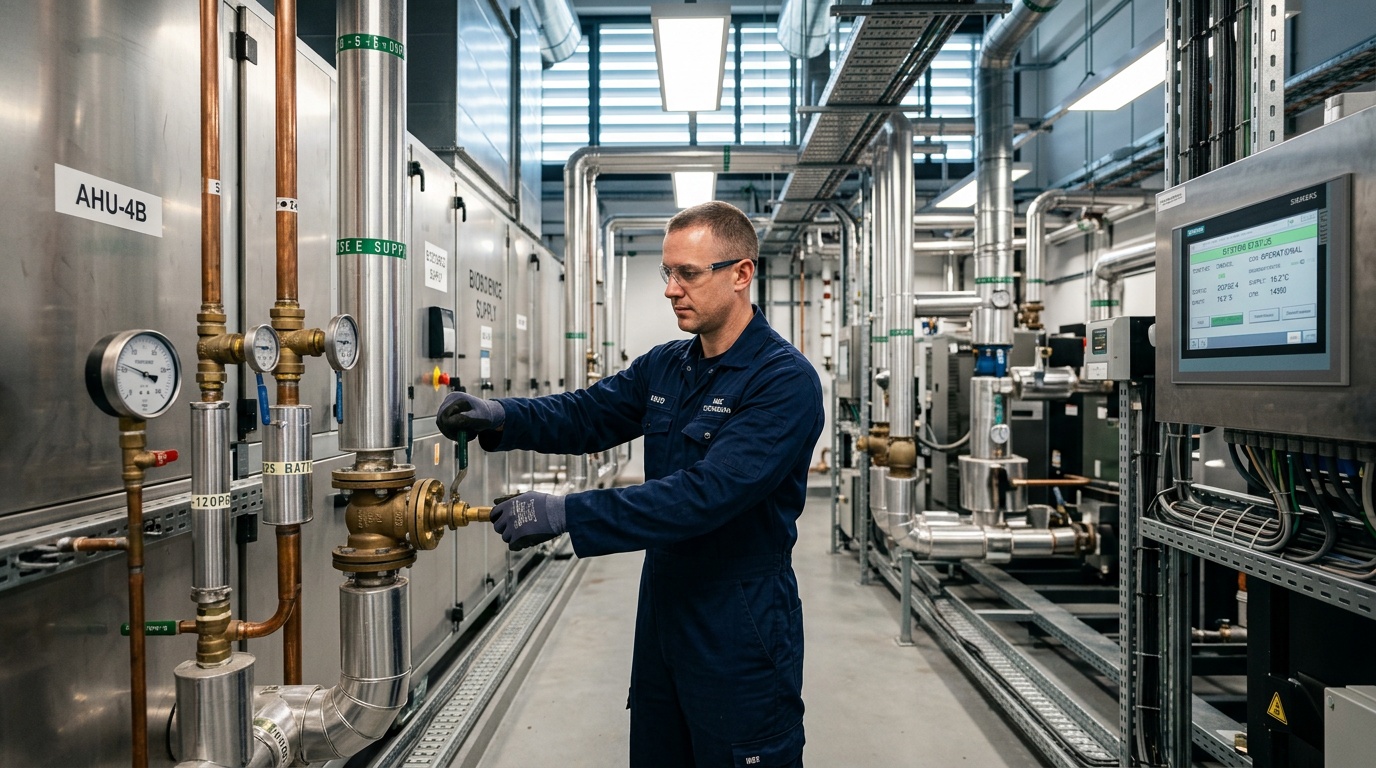
Standard building maintenance companies often struggle with the complex requirements of a biomedical science building. These facilities demand a deep understanding of thermodynamics, fluid dynamics, and microbiology. When dealing with sensitive research environments, such as those found in the Taubman Biomedical Science Research Building, the mechanical systems must be maintained with close tolerances. Every component, from the chillers in the basement to the extract fans on the roof, must work together to maintain the balance required for scientific work.
The Unique Challenges: Temperature, Humidity, and Air Purity
Maintaining temperature is only part of the challenge. Relative humidity must be tightly controlled, usually within a band of 40% to 60%, to reduce electrostatic discharge on sensitive instruments and limit the growth of biological pathogens. High humidity can ruin dry chemical reagents, while low humidity can cause static build-up that disrupts delicate measurement processes. Achieving this level of control typically requires steam humidifiers and chilled water cooling coils working in tandem, managed by a well-tuned BMS that responds to external weather changes.
Understanding Containment: Biosafety Levels (BSL) and Airflow
Facilities are classified by Biosafety Levels, ranging from BSL-1 to BSL-4, with each level requiring progressively stricter containment measures. In a BSL-3 laboratory, directional airflow is a primary safety barrier. The room must be kept under negative pressure relative to surrounding areas so that airborne pathogens cannot escape into public corridors. This pressure cascade requires continuous monitoring and rapid-response air valves that adjust supply and exhaust volumes in milliseconds as doors open and close.
The Role of Filtration: HEPA, ULPA, and Beyond
Standard panel filters are insufficient in these environments. High-Efficiency Particulate Air (HEPA) and Ultra-Low Penetration Air (ULPA) filters are used to capture microscopic contaminants. These filters add resistance to airflow, requiring suitably sized, variable-speed fans to maintain air change rates. As filter media load with dust and particulates, the fans ramp up to compensate. Regular monitoring of pressure drop across filter banks helps schedule replacements before airflow falls below safe levels, reducing the likelihood of unplanned shutdowns.
Airflow Control & Pressure Regimes
Maintaining directional airflow is a primary defence against cross-contamination. Regular testing of pressure sensors and fast-acting control valves reduces containment failure risk and protects research integrity and staff safety.
Actionable Advice: Questions to Ask About Your Lab's Air Handling
When reviewing your facility's air handling systems, ask your maintenance team these questions:
- Are our HEPA filters integrity tested annually using photometer testing to detect bypass leakage?
- What is the fail-safe position of our laboratory supply and extract dampers in the event of a total power loss?
- How frequently are the humectant pads or steam cylinders in our humidification systems cleaned and descaled?
- Do we have a documented procedure for changing contaminated filters that protects maintenance technicians from exposure?
The 24/7/365 Imperative: Proactive Maintenance for Uninterrupted Research
A biomedical science building never sleeps. Incubators, freezers, and ventilation systems run continuously. This constant operation puts strain on mechanical and electrical infrastructure, making reactive maintenance expensive and risky. To protect research activity and the asset, implement a plan that covers both building services and the physical structure. This is where professional Building Fabric Repairs & Maintenance matters, helping keep cleanroom and laboratory boundaries sealed and secure.
The Cost of Downtime: Beyond Lost Experiments
The financial impact of a system failure in a research facility can be severe. A power outage that shuts down ultra-low temperature freezers can destroy years of biological samples. A failure in the building fabric can allow moisture or pests to enter, compromising controlled environments. These incidents can trigger the loss of research data and disputes with research partners. Proactive maintenance is a business decision that protects assets and reputation.
Planned Preventative Maintenance (PPM) in a Research Context
PPM in a research facility must be planned to limit disruption to ongoing experiments. This calls for coordination between facility managers, scientific staff, and maintenance technicians. Work should be scheduled during agreed shutdowns or low-activity periods. Our technicians wear clearly identifiable uniforms and displayed identification cards for security and professionalism, and they work efficiently to limit disturbance to day-to-day operations.
SFG20 Compliance: The Benchmark for Critical Infrastructure
SFG20 is an industry standard for building maintenance specifications, setting out maintenance tasks, frequencies, and the required competence levels for each asset type. In biomedical environments, it supports safe operation, compliance, and consistent performance. It applies across plant, controls, and safety-critical assets, helping you demonstrate due diligence during audits and internal governance reviews.
Actionable Advice: Building a PPM Schedule That Stands Up in Practice
To establish an effective PPM schedule for a research facility, follow these steps:
- Identify and catalogue every asset, including HVAC plant, electrical switchgear, and building fabric components.
- Align tasks and frequencies with SFG20 specifications, adjusting to reflect laboratory risk and duty cycle.
- Coordinate maintenance windows with laboratory managers at least three months in advance to avoid disruption to critical projects.
- Partner with a qualified maintenance provider that offers 24/7 emergency response via a continuously staffed help desk, so unexpected issues are addressed quickly.
Sustainable Science: Balancing Efficiency with Uncompromising Performance
Biomedical research facilities are among the most energy-intensive buildings in the commercial sector. High air change rates, tight temperature and humidity control, and 24/7 operation drive energy use and carbon emissions. Improving sustainability does not mean reducing safety or research quality. By maintaining the building envelope and services properly, and by using structured Building Fabric Repairs & Maintenance, you can improve efficiency while keeping laboratory conditions within specification.
The Energy Drain: Understanding the Footprint of Bioscience Buildings
The energy footprint is driven largely by conditioning 100% outdoor air to replace air exhausted through fume cupboards and biosafety cabinets. That process demands substantial heating and cooling. In parallel, continuous operation of high-duty supply and extract fans increases electrical consumption. A clear picture of energy use by system and time of day is the starting point for sensible improvements and better operational control.
Practical Options: Heat Recovery, VAV, and Smart BMS Control
Building services engineering offers ways to reduce energy use while keeping risk controlled. Run-around coil heat recovery can capture waste heat from exhaust air to preheat incoming fresh air, reducing heating load. Variable air volume (VAV) systems paired with well-configured BMS logic can safely reduce air change rates during unoccupied periods in suitable areas, lowering fan energy and thermal conditioning demand while maintaining the required safety margins.
The MEMS Approach: Tested Technologies for Real-World Application
At MEMS, we focus on practical, proven improvements that suit real operating sites. We prioritise optimisation of existing systems before major capital spend. That starts with the building fabric. Gaps around windows, doors, and service penetrations allow conditioned air to escape and can destabilise pressure regimes, forcing HVAC systems to work harder. Regular building fabric maintenance is a cost-effective way to improve thermal performance and reduce waste.
Actionable Advice: Auditing Your Building's Sustainability Performance
To improve sustainability performance without compromising control, consider these steps:
- Carry out an energy audit that targets heat recovery opportunities and fan system efficiency.
- Run routine building fabric inspections to identify and seal air leaks that waste energy and undermine environmental control.
- Review BMS programming to ensure occupancy inputs are used correctly and ventilation rates are set back in non-critical areas at night and at weekends.
- Use filtration strategies that keep pressure drop as low as practicable while meeting the required grade, reducing fan power demand.
The Unsung Hero of Containment: Precision Fabric Seals and Structural Integrity
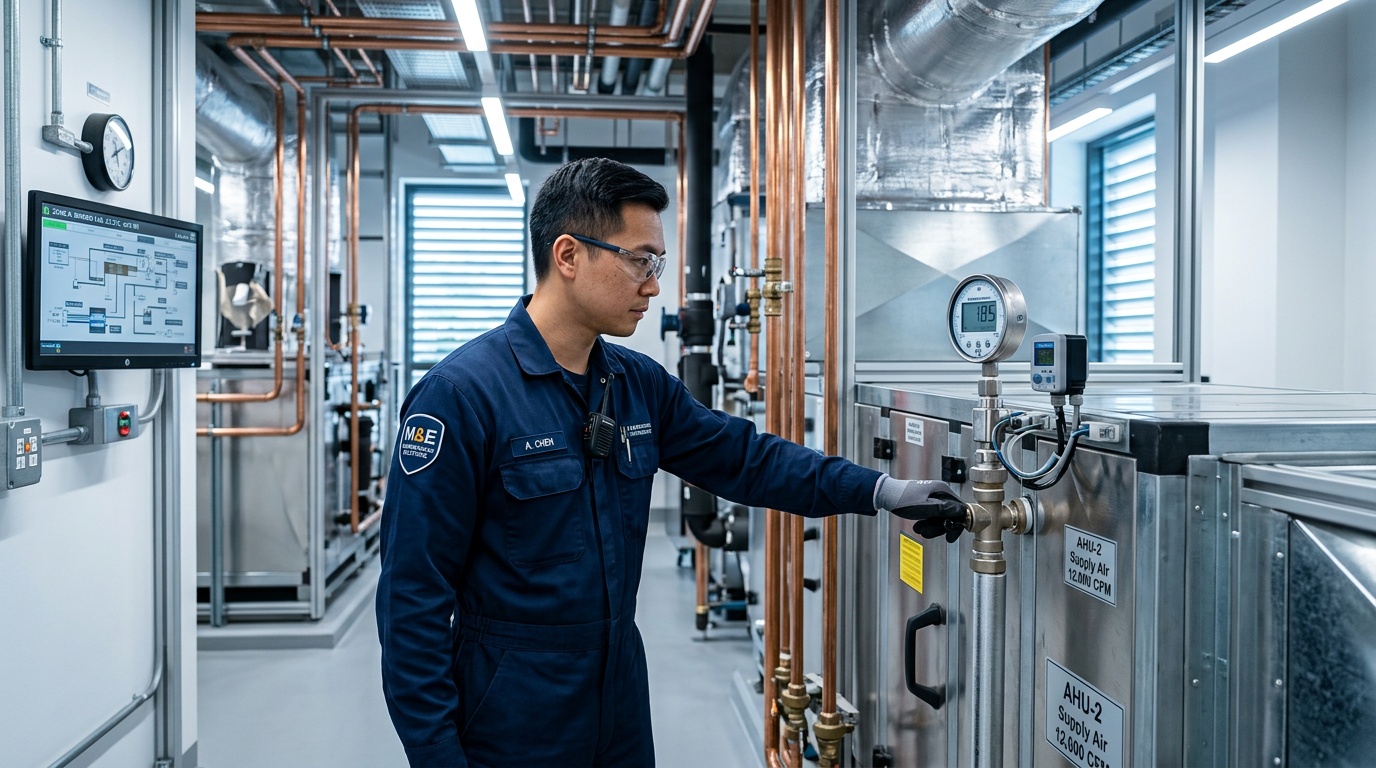
Mechanical teams focus on the calibration of air handling units, controls, and chillers, but the physical boundary of the biomedical science building is often overlooked. A laboratory is only as secure as the envelope that contains it. Pressure differentials used to prevent the escape of hazardous pathogens or the entry of external contaminants depend on a sealed structure. Without airtight boundaries, even the best-designed HVAC system cannot maintain the pressure cascades required for compliance.
Structural movement, material degradation, and settlement can create small gaps in walls, floors, and ceilings. These leakage paths allow unconditioned, unfiltered air to bypass filtration and undermine cleanroom classification. This is why specialised Building Fabric Repairs & Maintenance is more than an aesthetic job; it underpins containment. Cable penetrations, pipe pass-throughs, and expansion joints should be sealed with chemically resistant materials that tolerate repeated decontamination wash-downs.
The Physics of Seal Failure
A gap of two millimetres around a service pipe can leak enough air to disrupt the negative-pressure regime of a BSL-3 laboratory, forcing mechanical systems to work harder to maintain containment.
Material Selection for Harsh Decontamination Regimes
Surfaces in bioscience facilities must tolerate aggressive cleaning agents, including hydrogen peroxide vapour and chlorine dioxide. Standard commercial paints, vinyls, and sealants can degrade quickly, leading to peeling, cracking, and eventual biological growth. Building services technicians should select non-porous finishes and compatible sealants that resist chemical attack, so walls, floors, and ceiling systems remain cleanable and moisture-resistant.
Mitigating Vibration and Protecting Sensitive Instruments
Electron microscopes, mass spectrometers, and calibration balances can be sensitive to structural vibration. Vibration from rooftop extract fans or basement chillers can transmit through the frame and affect results. Mitigation often requires correctly specified vibration isolation under plant, careful fixing of pipework and ductwork, and periodic checks for cracks or loosened fixings that can transfer movement into lab floors.
Navigating Compliance: Standards, Certification, and Statutory Audits
Operating a research facility in the UK requires adherence to safety and environmental regulations. From COSHH to F-Gas compliance and local building control requirements, facility managers carry significant legal responsibility. In a biomedical science building, compliance is not paperwork; it is the framework that protects people, public health, and research output. Failing a statutory audit can lead to laboratory shutdown, disruption to research, and legal exposure.
Clear, digital, traceable records demonstrate due diligence. Each service visit, filter change, pressure calibration, and structural repair should be logged with time, scope, and competence details. If you promise audit-ready turnaround times, ensure that delivery methods and timeframes match your internal process and client agreement.
Asset Maintenance Strategy Comparison
| Maintenance Approach | Impact on Cleanroom Integrity | Compliance Risk Profile | Long-Term Operational Cost |
|---|---|---|---|
| Reactive (Run-to-Fail) | High risk of sudden containment loss and contamination. | Severe; likely to lead to non-compliance. | High due to emergency repairs and research disruption. |
| Basic Planned (Calendar-Based) | Moderate protection; may miss rapid wear on critical seals. | Moderate; relies on standard intervals. | Predictable, but maintenance effort is not always targeted. |
| Precision PPM (SFG20 Aligned) | Strong protection; supports stable pressure boundaries. | Low when delivered and evidenced correctly. | Lower total cost of ownership through improved asset life and fewer failures. |
F-Gas Compliance and Ultra-Low Temperature Refrigeration
Ultra-low temperature freezers and environmental chambers can rely on refrigerants to maintain temperatures as low as minus eighty degrees Celsius. Under UK F-Gas rules, operators must arrange leak checks (where applicable) and keep accurate records of refrigerant use. Refcom F-Gas certified engineers can test and maintain these circuits, helping identify leaks early and reduce compliance risk.
The Role of Comprehensive Fabric Inspections in Statutory Compliance
Statutory compliance extends beyond the plant room to the building structure. Fire doors, escape routes, and fire stopping must be maintained to specification. In laboratories, fire doors can also act as containment barriers and must seal correctly to support pressure regimes. Regular inspections under a Building Fabric Repairs & Maintenance contract help keep fire-rated partitions, doors, and penetration seals in line with current UK requirements.
References
Frequently Asked Questions
Why do biomedical science buildings require such precise maintenance?
From my 24 years in engineering, I've seen that a biomedical science building is more than just a structure; it's a living system where environmental stability is paramount. Even a slight temperature drift or pressure drop can invalidate years of research, compromise sterile conditions, and lead to significant financial losses. It demands a shift from basic facility management to high-precision engineering and data-driven preventative strategies.
What are the consequences of maintenance failures in a biomedical science facility?
Unlike a standard office where an HVAC failure is an inconvenience, in a biomedical science building, it's a commercial catastrophe. Research projects, biological samples, and clinical trials depend on consistent environments. Failures can result in the loss of irreplaceable scientific data, regulatory non-compliance, and reputational damage that impacts future funding.
How do HVAC systems in biomedical science buildings differ from standard commercial properties?
HVAC systems in these facilities are far more complex, designed to deliver large volumes of conditioned air while maintaining strict pressure regimes. Air change rates can be ten times higher, and air must flow directionally from cleaner to less clean areas. This requires precise balancing to prevent cross-contamination and protect sterile zones.
What specific environmental factors are controlled in a biomedical science building?
Beyond just temperature, relative humidity must be tightly controlled, typically between 40% to 60%, to prevent electrostatic discharge and limit pathogen growth. Air purity is also critical, with facilities often classified by Biosafety Levels that dictate strict containment measures like negative room pressure to prevent airborne pathogen escape.
What should a facility manager prioritize when auditing a biomedical science building?
To understand your baseline, I'd recommend verifying your building management system logs pressure differentials hourly across cleanroom boundaries. Also, check external intake louvres for debris, review maintenance logs for air handling unit belt tensioning, and inspect seals around lab doors and windows for air leakage.
Why can't standard building maintenance companies handle biomedical science facilities?
Standard companies often lack the deep understanding of thermodynamics, fluid dynamics, and microbiology that these facilities demand. Maintaining the close tolerances required for sensitive research, from chillers to extract fans, needs specialized expertise. It's about protecting scientific integrity and controlling operational costs through precision.