There’s a dangerous misconception that lingers in commercial property management: "If it isn't broken, don't fix it." From my 24 years on the tools as an apprentice combustion engineer right through to running a premier 24/7 maintenance firm, I can tell you that silence in a plant room often masks the loudest warnings. Asset depreciation is silent. Scale building up inside a boiler is silent. But the bill that arrives when a system fails during peak hours? That screams. We see it time and again. A facility manager looks to trim the budget by skipping a quarterly Planned Preventative Maintenance (PPM) visit. It might appear as a saving on paper for a few months. Then, a critical component fails because a simple, inexpensive filter wasn't changed. Suddenly, you're not paying for what your payment covers; you're facing an emergency call-out fee, premium parts costs, and the very real risk of business disruption or even closure.
At M&E Maintenance Solutions, we operate on a fundamental engineering truth: maintenance is always cheaper than repair. It’s not just about fixing things when they go wrong; it's about comprehensive asset lifecycle management. Our focus is ensuring your commercial building runs at peak efficiency, which directly translates to lower energy expenditure and higher compliance scores. Whether you manage a retail unit in Birmingham or an office block across the West Midlands, the physics of keeping your building operational remain constant. Understanding what comprehensive building maintenance services entail is the first step to safeguarding your assets and your bottom line.
When we talk about building maintenance services, we're not just referring to a quick lick of paint or emptying bins. For commercial properties, it's a multifaceted discipline that underpins operational continuity, safety, and financial stability. Think of it as the essential, behind-the-scenes work that keeps your business running smoothly, day in and day out. My own journey began on the shop floor, understanding the nuts and bolts, and that practical knowledge is now the bedrock of how we approach asset management for our clients across the UK. It's about understanding the technical systems that keep your premises functional and compliant, ensuring that every element, from the roof above to the pipes below, is performing as it should.
The scope typically covers the health of your building's core mechanical and electrical (M&E) systems. This includes heating, ventilation, and air conditioning (HVAC). The heart of your internal environment, controlling temperature and air quality, which directly impacts staff productivity and customer comfort. We also assess and maintain electrical distribution systems, lighting, and power supply, ensuring reliability and preventing costly outages. Plumbing and drainage systems are equally critical, preventing issues like water damage, which homeowner forums frequently cite as the primary cause of property destruction. Beyond these core systems, our work extends to the building's fabric itself. The structural integrity, roofing, external walls, and internal finishes. Regular inspections identify potential problems before they escalate, preventing secondary damage and expensive emergency repairs. This proactive approach is what distinguishes professional building maintenance services from a simple repairman's call-out.
Moving beyond basic janitorial services is essential for commercial asset management. While cleaning is important, it doesn't address the underlying health of your building's infrastructure. True building maintenance services focus on preventing failures within critical systems and structures. This means regular inspections, lubrication, calibration, and timely replacement of worn parts. As an example, a blocked drain isn't just an unpleasant mess; it can lead to significant water damage and structural issues if left unaddressed. Similarly, an HVAC system running inefficiently due to a dirty filter or a failing compressor not only increases energy bills by up to 20%, as BOMA research suggests, but also puts strain on other components, shortening their lifespan. Our role is to look at the entire building as an integrated system, ensuring that each part contributes to overall reliability and efficiency, rather than just reacting to surface-level problems.
Stuart Butcher's Insight: "I started this business because I saw too many facilities treated like a number by large corporations. They'd send out a junior engineer for a quick fix, missing the bigger picture. My focus is on the engineering reality: a building is a complex organism. Neglect one part, and the whole system suffers. That's why we insist on thorough inspections and Planned Preventative Maintenance. It’s the only way to truly protect your assets and your budget."
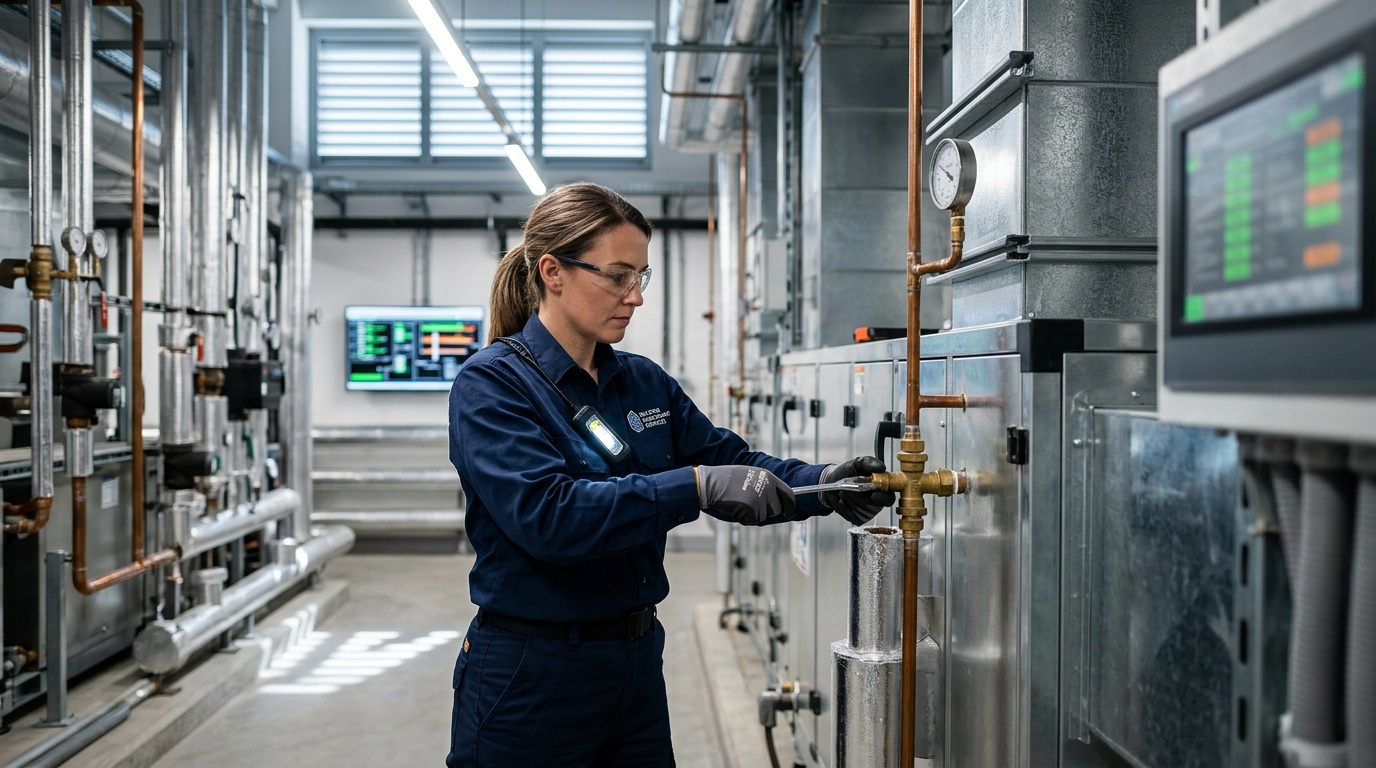
This is where the rubber meets the road, and where many commercial properties fall short. The 'fix it when it breaks' mentality is a costly illusion. From an engineering standpoint, systems are designed to operate within specific parameters. When they deviate. Perhaps due to wear, dirt, or minor component failure. They begin to work harder, consume more energy, and put undue stress on other parts. Reactive repairs are inherently expensive because they often occur under duress: you need the system back online now. This urgency drives up labour costs for emergency call-outs, leads to premium pricing for parts, and, most critically, incurs significant costs from business interruption. Lost trading hours, reduced productivity, or unhappy tenants can far outweigh the cost of a scheduled service visit.
Planned Preventative Maintenance (PPM), on the other hand, is an investment in predictability and longevity. It involves scheduled inspections, servicing, cleaning, and component replacement based on manufacturer recommendations, operational history, and industry standards. Adhering to standards like SFG20, a widely recognised benchmark for planned maintenance in the UK, ensures that all essential tasks are performed systematically and at the correct intervals. This not only maximises the lifespan of your assets, reducing the need for premature and expensive replacements, but also ensures compliance with a raft of regulations, from Gas Safe to F-Gas certification. For commercial buildings, particularly those with complex HVAC or electrical systems, this structured approach is paramount. It’s about understanding the asset’s lifecycle and managing it proactively to prevent those high-impact, low-predictability failures.
Measuring your current maintenance ratio is a critical step in understanding your operational efficiency and financial exposure. A commonly accepted benchmark in the industry suggests that a healthy maintenance strategy should see roughly 80% of expenditure dedicated to planned, preventative activities, with only 20% allocated to reactive or emergency repairs. If your current ratio is inverted. Say, 80% reactive and 20% proactive. Your strategy is fundamentally flawed, and you are exposing your business to unnecessary financial risk and operational instability. This metric isn't just about numbers; it's a direct indicator of how effectively you are managing your building's assets. A high reactive spend often points to systems that are nearing end-of-life, poorly maintained, or simply not being monitored correctly. At MEMS Facilities Maintenance, we help clients analyse these ratios, providing clear insights into where their budget is truly going and how a shift towards proactive building maintenance services can yield substantial long-term savings and operational improvements.
Choosing the right partner for building maintenance services is a strategic decision that directly impacts compliance, operational uptime, and your bottom line. When vetting providers, facility managers must ask targeted questions to reveal whether the provider’s approach aligns with best practices and regulatory requirements. Start by enquiring about their adherence to recognised standards such as SFG20 for planned preventative maintenance. Do they provide detailed, traceable compliance documentation promptly after every visit? Transparency in paperwork is not optional; it’s a legal necessity. Ask about their emergency response times and whether they offer 24/7 support. A partner who cannot guarantee swift intervention during critical breakdowns risks costly downtime for your business.
Another critical question involves their team’s qualifications. Are technicians Gas Safe registered and F-Gas certified where applicable? Do they maintain ongoing training programmes to keep abreast of evolving regulations and technologies? Finally, probe their experience with your building’s specific mechanical systems. Especially HVAC, electrical distribution, and plumbing. A provider must demonstrate practical expertise in these areas rather than offering generic or outsourced services. These questions help you distinguish a partner who delivers genuine value from one that simply sells contracts.
One of the most overlooked yet essential aspects of a maintenance partner is the continuity and calibre of their engineering team. High staff turnover or reliance on subcontractors can lead to inconsistent service quality and increased risk of errors. At M&E Maintenance Solutions, we prioritise team stability and invest heavily in certified training programmes. Our engineers stay current with regulatory updates and technological advancements, ensuring every site visit meets the ‘right first time’ standard. This approach reduces repeat call-outs and prevents small issues from escalating into major failures.
Quality control must extend beyond individual visits. A comprehensive partner implements comprehensive audit trails, digital job reporting, and root cause analysis for recurring faults. These practices improve asset lifespan and compliance scores over time. Also, check if your provider employs a dedicated account manager or client liaison. Direct communication channels foster accountability and rapid resolution of any concerns before they impact operations. When continuity, training, and quality control are in place, your maintenance programme becomes a proactive asset management tool rather than a reactive expense.
One of the greatest frustrations facility managers face is the elusive maintenance ‘paperwork black hole’. This occurs when compliance certificates, inspection reports, and service records are delayed, lost, or incomplete. Without quick access to these documents, you risk breaching health and safety regulations. Worse, in the event of an incident, lack of proper records can expose your organisation to legal and financial penalties. A trustworthy maintenance partner provides digital access to all documentation within 24 hours of job completion, enabling you to maintain audit readiness and demonstrate due diligence.
Ask your provider about their record-keeping and reporting systems. Do they use cloud-based platforms for transparent, real-time tracking? Can you download certificates such as Gas Safe, F-Gas, or electrical test reports on demand? If the answer is no, be cautious. This black hole is often a sign of poor operational discipline and could indicate rushed or incomplete maintenance work. At M&E Maintenance Solutions, we take pride in our meticulous documentation process and open communication channels. This ensures you always have the compliance evidence you need, supporting both regulatory audits and your internal asset management strategy.
One of the most common frustrations I hear from facility managers and commercial landlords is the lack of clarity around building maintenance services pricing. Too often, maintenance contracts promise low monthly fees but deliver minimal value, with visits that feel more like sales calls than genuine service. At M&E Maintenance Solutions, we focus on transparent, fair pricing that reflects the real costs of quality maintenance work. An honest building maintenance service visit typically costs around £350, not £89, as some competitors advertise. This figure encompasses skilled labour, parts inspection, compliance checks, and detailed reporting, all essential to avoid the costly consequences of overlooked issues.
Our pricing model is straightforward: you pay for planned, preventative maintenance designed to extend asset life and reduce emergencies, not for reactive call-outs that drain budgets and disrupt business. We avoid hidden fees by providing clear scopes of work and regular service plans that align with your building’s specific needs and compliance requirements. This approach ensures you get value for every pound invested, supporting long-term asset care and operational continuity.
Staying ahead in building maintenance requires more than routine servicing; it demands continual innovation and testing of emerging technologies. At M&E Maintenance Solutions, we operate an 'open door innovation policy' that sets us apart. This means we rigorously evaluate new HVAC products and sustainable solutions before recommending them to clients. We have internally trialled Air to Air and Air to Water heat pumps, Solar PV systems, LED lighting upgrades, and Solar Thermal installations to verify performance, reliability, and energy savings in real-world commercial environments.
Our hands-on testing provides practical insights into how these technologies perform across different building types and locations in the Midlands and beyond. This process protects you from unproven solutions that might promise savings but ultimately increase maintenance headaches or fail compliance checks. By integrating proven green technologies, we help clients not only reduce their carbon footprint but also lower operating costs, which is increasingly important under tightening UK environmental regulations and energy efficiency targets.
In my experience, the difference between a functional maintenance provider and a trusted partner lies in commitment and communication. M&E Maintenance Solutions has built its reputation on being "big enough to cope, small enough to care." We do not view our clients as just another contract number. Instead, we invest in long-term relationships, understanding the unique challenges of each property and tailoring services accordingly.
This partnership approach translates to proactive advice, ongoing compliance support, and a shared focus on asset preservation. We provide clear, timely documentation and are always available for consultation, offering 24/7 support when emergencies arise. This level of accountability and openness means you can trust us to keep your building operational, compliant, and efficient, rather than chasing you for renewals or hiding behind vague service descriptions.
If you are searching for reliable building maintenance services near me, particularly in the Midlands, consider a company that prioritises transparency, sustainability, and genuine partnership. M&E Maintenance Solutions is that company. Contact us to discuss how we can help protect your assets, reduce energy costs, and ensure regulatory compliance with a clear pricing structure and innovative service offerings.