Best central heating repair services for estates West Midlands.
The Commercial Estate Heating Crisis: When Downtime Costs More Than Just Warmth
I've seen too many facility managers get stung by a February breakdown because they trusted the wrong service provider. The best central heating repair services for estates West Midlands deliver technical excellence, real compliance, and a partnership model that treats building uptime as a business priority. The ideal provider holds Gas Safe and REFCOM certifications, follows SFG20 standards, answers the phone 24/7/365, and invests in proactive maintenance that stops breakdowns before they happen.
Cold radiators in a commercial estate aren't just a comfort issue. They signal lost revenue, regulatory exposure, and accelerating asset depreciation. When a boiler plant fails in February, the repair cost is only the tip of the iceberg. Tenant dissatisfaction, energy inefficiency, and emergency call-out premiums compound the damage. Many facility managers only realise the true cost after the event.
Estate-scale heating systems are different from domestic setups. Multi-boiler arrays, complex zone controls, BMS integration, and extended pipework networks mean a single pressure drop can affect a whole wing of offices or a block of flats. Generic engineers who work on combi boilers lack the diagnostic tools and system knowledge for these environments. That mismatch leads to repeated visits, unresolved faults, and escalating costs.
Key Insight: Hidden risks like water quality neglect, scale buildup, and undetected corrosion silently degrade system performance. A 1mm layer of scale can increase energy consumption by 7-10%. Without regular water treatment analysis, your heating plant is slowly destroying itself from the inside out.
Recognising a failing service provider is the first step to recovery. Warning signs include incomplete paperwork, vague compliance evidence, a reactive rather than proactive approach, and engineers who can't explain system anomalies in commercial terms. If your current partner treats every estate heating job as a simple boiler fix, it's time to look elsewhere.
What Makes a Best-in-Class Central Heating Repair Partner for West Midlands Estates?
Certifications That Matter
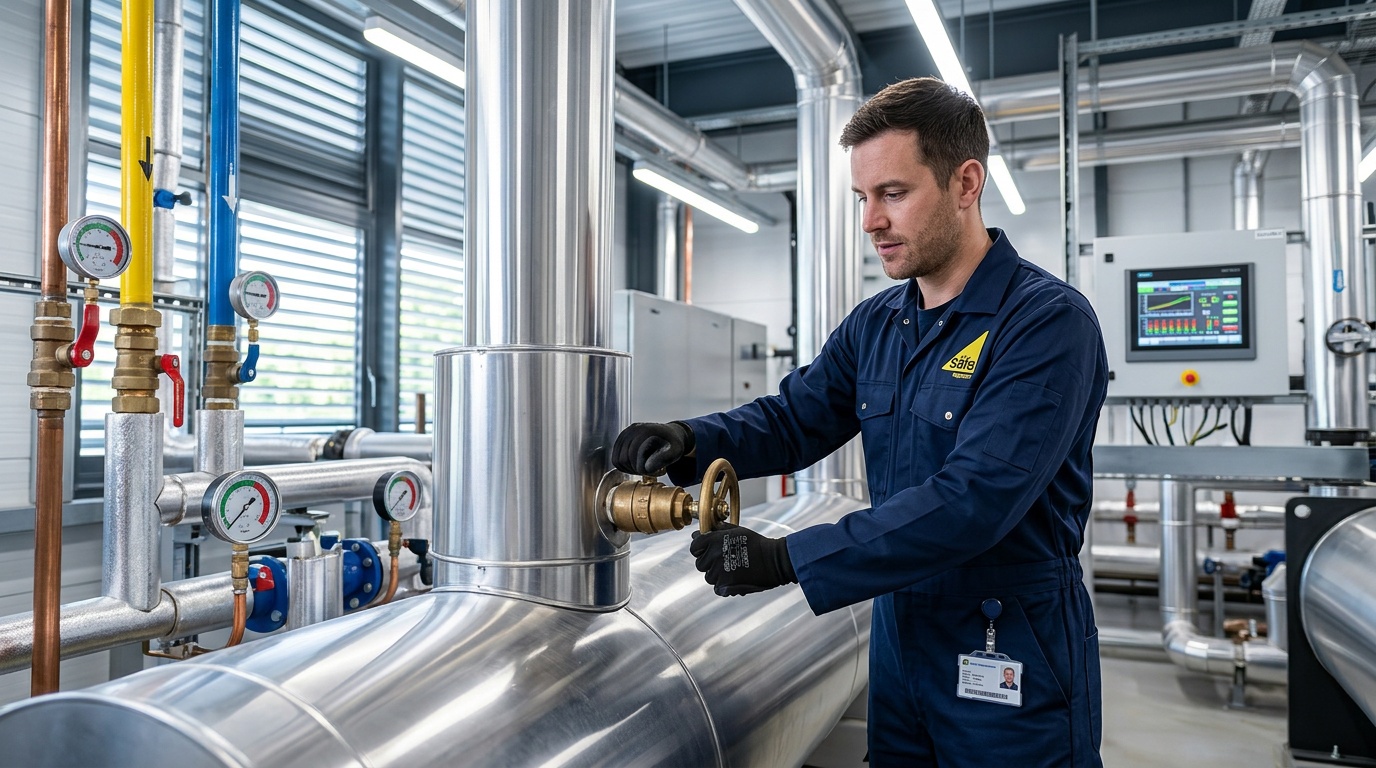
The best central heating repair services for estates West Midlands start with mandatory credentials: Gas Safe Register for gas installations, REFCOM for refrigeration, and a solid grasp of SFG20 compliance. Beyond paper qualifications, engineers should demonstrate deep familiarity with commercial plant rooms, pressurisation units, heat exchangers, and BMS fault-finding. A provider that invests in continuous training for complex systems will fix it right the first time.
The Right First Time Ethos
Second visits cost money and erode trust. A best-in-class partner conducts thorough diagnostics, orders correct parts in advance, and tests the full system before signing off. This protects your operational budget and minimises tenant disruption. At MEMS, our engineers carry extensive stock of common commercial components to avoid unnecessary delays.
24/7/365 Availability and SFG20 Compliance
Heating failures rarely happen during office hours. A committed partner provides round-the-clock response, not just a call centre that takes messages. Compliance with SFG20 maintenance standards gives you a robust legal defence and ensures every service visit follows a documented, auditable schedule. That's your shield against regulatory penalties and insurance disputes.
Genuine Crisis Management, Not a Recorded Message
Many providers advertise 24/7 cover, but the reality for estate managers often falls short. A recorded message, a call-back in four hours, or an engineer arriving without the right parts is not crisis management. For a commercial estate with hundreds of occupants, a heating failure at 3am on a December morning requires immediate, coordinated response from engineers who know the system intimately. The best central heating repair services for estates West Midlands guarantee a specific response time and arrive equipped for first-time fix. At MEMS, our engineers carry comprehensive stock and maintain direct communication with facility managers throughout the process. That's not a luxury. It's the minimum for protecting tenant welfare and business continuity.
What to Look for in a Central Heating Repair Partner
Essential Qualities
- Gas Safe and REFCOM registered engineers
- SFG20-compliant maintenance schedules
- 24/7 emergency call-out guarantee
- On-site stock of common parts
- Transparent digital reporting
Red Flags
- Vague or missing compliance certificates
- Reactive-only service model
- Engineers who lack commercial system experience
- Outsourced call handling with no technical support
- Unclear pricing with hidden extras
The MEMS difference lies in our 'open door' innovation: we encourage facility managers to visit our workshop, meet the engineers, and see the tools and stock we carry. That transparency builds confidence and ensures no surprises when a critical system needs attention.
Proactive Maintenance: The Strategic Investment That Prevents Costly Breakdowns
The 'if it ain't broke, don't fix it' philosophy is a costly fallacy in commercial property. Planned preventative maintenance (PPM) catches minor faults. A sticking valve, a worn belt, a pressure anomaly. Before they escalate into full system failures. A quarterly PPM visit costs a fraction of an emergency boiler replacement and prevents tenant disruption that can harm lease renewals.
Regular servicing extends equipment lifespan by years. A commercial boiler properly maintained can operate efficiently for 20 years or more. Without annual servicing and water quality management, that lifespan halves. Integrating sustainable technologies such as heat pumps or condensing boilers during planned upgrades future-proofs your estate against rising energy costs and carbon regulations.
We build long-term partnerships with estate managers, not transactional relationships. That means we understand your specific system history, occupancy patterns, and risk tolerance. When a fault does occur, we respond faster because we already know the plant room layout and previous service records. That continuity saves time, money, and frustration.
The Hidden Efficiency Drain: Why Your Heating Bills Are Higher Than Necessary
Estate heating systems accumulate efficiency losses over time that go unnoticed until the annual energy review produces an unwelcome surprise. The primary culprits are often invisible: scale buildup in heat exchangers, sludge accumulation in pipework, incorrect burner settings, and drifting control parameters. Each factor alone causes a small loss. Together, they can increase energy consumption by 20% or more.
Water quality management is the most overlooked aspect of commercial heating maintenance. Hard water areas in the West Midlands accelerate scale formation, which insulates heat transfer surfaces and forces boilers to work harder. Regular chemical testing, inhibitor dosing, and system flushing prevent this degradation. A comprehensive water treatment programme costs a fraction of the energy savings it delivers.
System balancing is another area where estates lose efficiency. When radiators or heating circuits aren't correctly balanced, some areas overheat while others remain cold. The plant runs longer to satisfy the cold zones, wasting energy. A professional balancing exercise, combined with BMS optimisation, corrects these issues and ensures every heat emitter receives the correct flow.
From Compliance to Confidence: Making SFG20 Work for Your Estate
SFG20 is the industry standard for building maintenance specification, yet many estates still operate on generic schedules that miss critical tasks. Compliance is often treated as a paperwork exercise to satisfy insurance requirements and landlords. At MEMS, we view SFG20 as the foundation of a maintenance strategy that protects both asset value and occupant safety.
An SFG20-compliant schedule includes clearly defined tasks, frequencies, and acceptance criteria for every component. Boilers, burners, pumps, valves, controls. When followed rigorously, it catches developing faults before they cause failures. It also provides auditable evidence of due diligence for regulators, insurers, and tenants. That confidence enables proactive planning for capital replacements and budget forecasting, rather than reactive crisis spending.
Navigating Common Estate-Scale Heating Faults: An Engineer's Diagnostic Guide
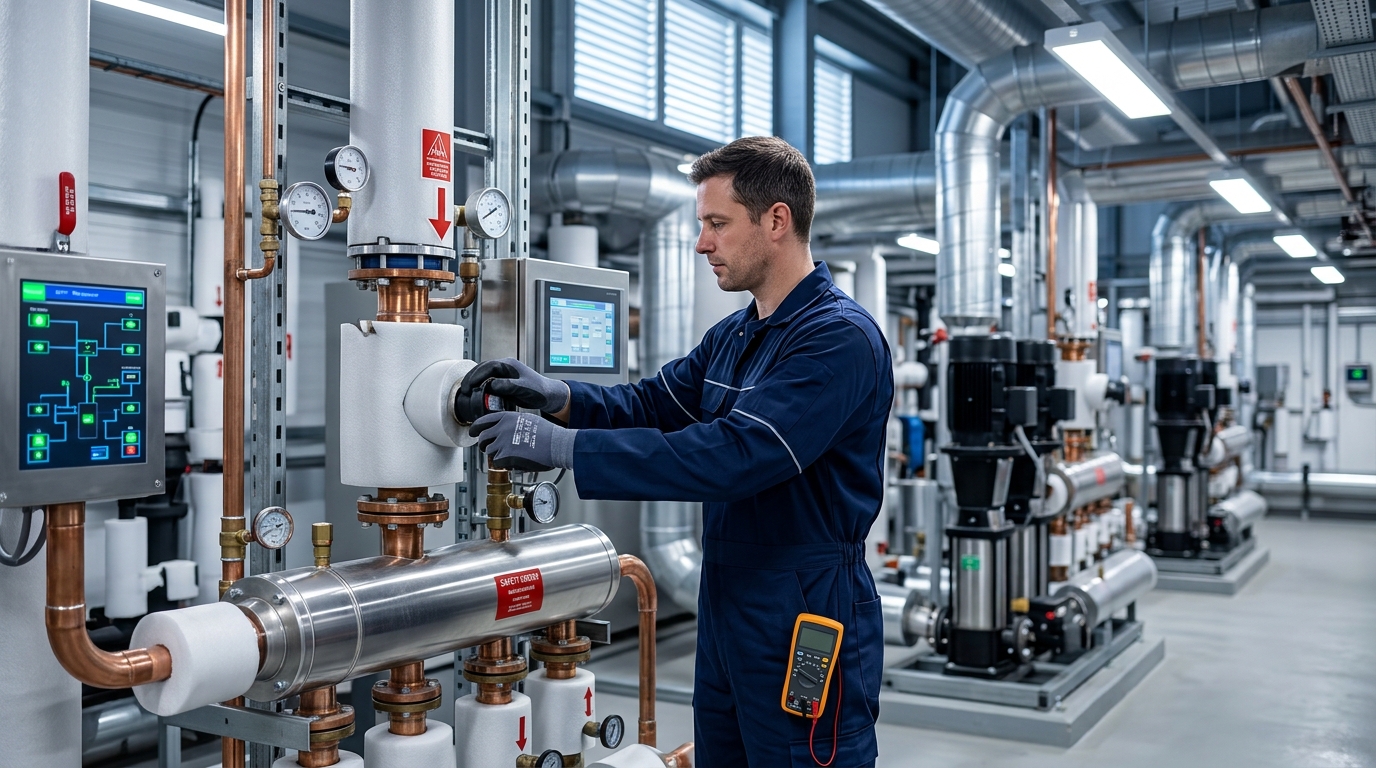
Estate-scale systems differ fundamentally from single-building installations. The pipework runs are longer, the heat loads vary across different structures, and the control hierarchy spans multiple zones. In my 24 years of engineering experience, certain faults recur with troubling regularity. Recognising these patterns early prevents minor issues from escalating into full system failures.
Pressure Drops and Leaks
A gradual pressure loss across an estate network is rarely due to a single obvious leak. Micro-leaks develop at flange gaskets, pump seals, or expansion vessel connections. Water can evaporate before it pools visibly. An engineer must isolate sections methodically, monitoring pressure decay rates and using thermal imaging to identify temperature anomalies. Ignoring a persistent pressure drop accelerates corrosion and leads to premature pump failure. A system losing 0.5 bar per week is already suffering damage that will shorten its operational life by years.
Boiler Efficiency Decline
Standard flue gas analysis measures combustion efficiency at a single moment. It tells you nothing about heat exchanger fouling, burner degradation, or incorrect flow rates across the secondary circuit. For estate-scale boiler plant, true efficiency diagnostics require reviewing return temperatures, delta T across each circuit, and historical performance trends. A 5% drop in efficiency on a 500 kW boiler plant wastes thousands of pounds annually in fuel costs. We routinely find clients paying for annual service visits while their systems operate 10-15% below design efficiency because routine analysis missed these deeper indicators.
Zone Control Malfunctions
Zone control valves, actuators, and their wiring form the nervous system of an estate heating network. When a valve sticks partially open or a BMS signal fails to reach the actuator, some areas overheat while others remain cold. The traditional response is to increase flow temperature or run pumps continuously. Both waste energy and mask the underlying fault. Correct diagnosis involves checking actuator travel, verifying control signal continuity, and confirming the BMS schedule matches actual occupancy patterns. A single faulty zone valve on a mixed-use estate can add 15-20% to the heating bill for that zone.
BMS Integration Issues
Building management systems are powerful tools, but they introduce their own failure modes. Faulty outside air temperature sensors, communication bus errors, and incorrectly cascaded setpoints can cause the entire heating strategy to fail silently. An engineer must understand both the mechanical plant and the control logic to differentiate between a BMS programming error and a physical plant fault. We have attended estates where the BMS called for full heating output while zone temperature sensors reported 24 degrees. Because a single configuration parameter had been corrupted. The system had been running flat out for three weeks before anyone questioned the gas bill.
The Role of Water Quality
Poor water quality is the single most overlooked cause of heating system degradation. Scale buildup insulates heat exchange surfaces, forcing burners to fire longer to achieve setpoint. Corrosion particles circulate through the system, clogging strainers, blocking control valves, and eroding pump impellers. For estates with extensive pipework, water treatment is not optional. Regular testing of pH, conductivity, and inhibitor levels should be part of every maintenance schedule. A system with properly treated water will operate 8-12% more efficiently than one with untreated water, and its components will last significantly longer.
Building a Heating Strategy That Survives Winter
Summer is the season when smart estate managers prepare for winter. A proactive heating strategy includes comprehensive HVAC services such as summer servicing and load testing of all boilers, inspection of flues and ventilation, pressure testing of the system, and verification of control logic. Identifying a failing circulation pump or corroded heat exchanger in July allows for planned replacement rather than emergency repair in January.
Seasonal preparation also involves reviewing the previous winter's performance data. Which zones were hardest to heat? Which boilers ran most frequently? Where were the comfort complaints concentrated? Answering these questions directs maintenance resources to the areas of greatest need. This targeted approach eliminates guesswork from PPM planning.
At MEMS, we help estate managers develop winter readiness plans that include contingency arrangements for extreme weather. This might mean ensuring backup boilers are fully operational, arranging temporary heating capacity, or confirming fuel supply contracts. When February delivers freezing temperatures, a well-prepared estate continues operating normally while neighbouring properties struggle with breakdowns and delays.
Securing Your Estate's Comfort: Your Next Steps with MEMS Maintenance Solutions
Why Choose MEMS for Your West Midlands Estate?
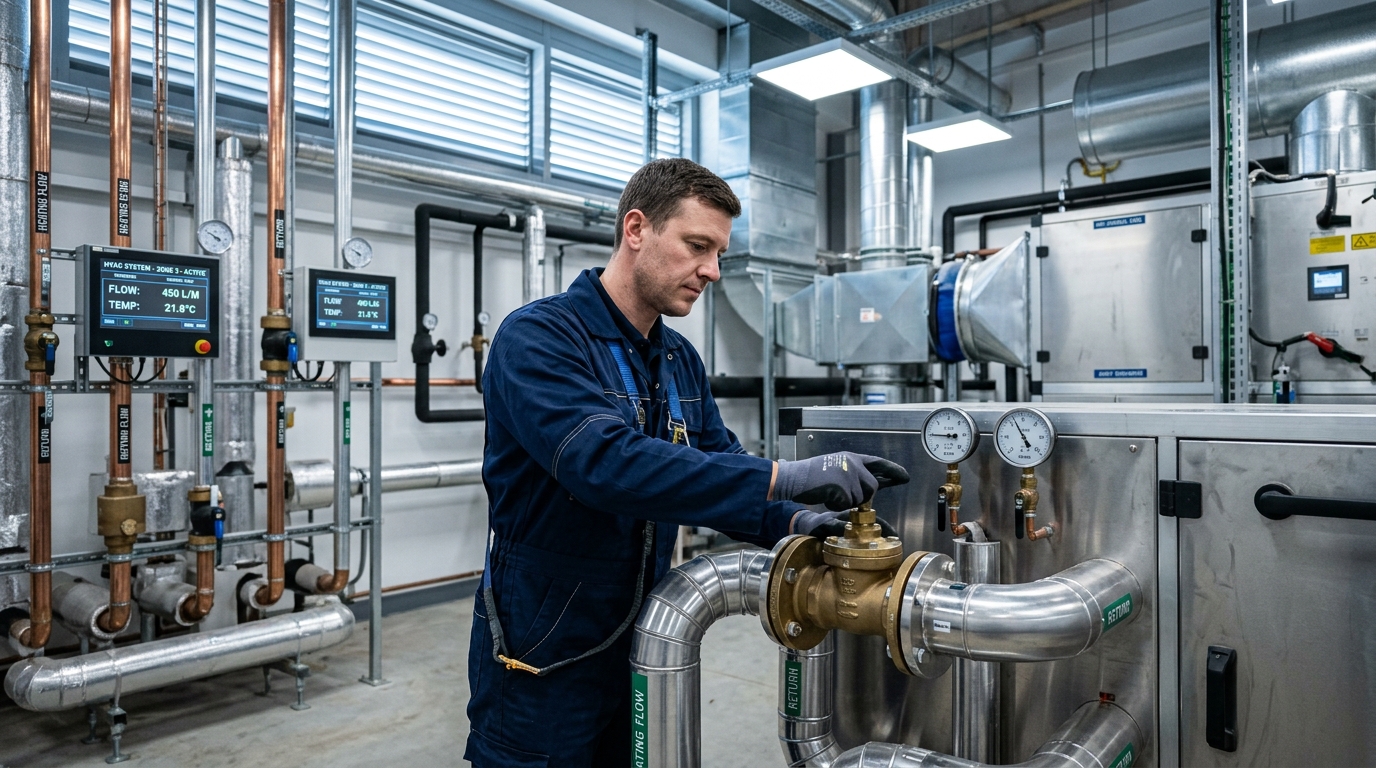
We are not a national call centre operation disguising itself as local service. MEMS is a Birmingham-based firm with direct accountability to every client we serve. Our engineers hold the certifications and experience demanded by modern commercial estates, but we retain the responsiveness and transparency of a family business. When you partner with us, you're not buying a contract. You're buying a relationship with engineers who understand your systems and your operational priorities. We are the best central heating repair services for estates West Midlands. Not because we claim it, but because our clients tell us so through their continued trust.
Our Proven Process: From Initial Survey to Seamless Operation
Every new client relationship begins with a comprehensive site survey. We document your existing plant configuration, review service history, and identify latent risks that previous providers may have missed. From that baseline, we design a maintenance programme specific to your estate's load profile, occupancy patterns, and budget constraints. Our engineers arrive on site with the correct parts, the relevant certification, and the system knowledge needed to complete every task without repeat visits. This process is not theoretical. It's the standard we apply daily across the West Midlands.
Real-World Impact
Estates that adopt a proactive maintenance strategy consistently report lower emergency call-out volumes, reduced energy expenditure, and extended equipment service life. More importantly, tenants experience consistent thermal comfort, which directly supports rental income and property valuation. One client we serve reduced their annual heating-related maintenance spend by 37% within eighteen months of transitioning to our planned maintenance model. When you select the best central heating repair services for estates West Midlands, you're investing in business continuity, not merely buying repairs.
Ready to Experience the MEMS Standard?
Combining heating expertise with complete environmental control, our Commercial Ventilation Repair Services close the loop on estate-wide system performance. A boiler plant can't deliver its rated output if air distribution is compromised or combustion air supply is restricted. These interdependencies are why a single-discipline approach to estate maintenance is a false economy.
If your current provider leaves you reacting to failures rather than preventing them, you deserve a different approach. Contact MEMS Maintenance Solutions today to arrange an initial consultation. We'll survey your estate, identify improvement opportunities, and demonstrate how genuine engineering partnership transforms building performance. There's no obligation, only clarity.
Take the next step: Book your estate heating audit with MEMS today and discover what professional, accountable maintenance looks like.
Frequently Asked Questions
What certifications should a central heating repair service for a commercial estate have?
A reliable provider should hold Gas Safe Register, REFCOM for refrigeration work, and demonstrate familiarity with SFG20 maintenance standards. These credentials ensure the team is qualified to work on complex multi-boiler arrays, heat exchangers, and BMS systems found in estate-scale plant rooms. Without these, you risk incomplete repairs and compliance gaps.
How often should commercial estate heating systems be serviced to avoid breakdowns?
Planned preventative maintenance (PPM) visits at least quarterly are recommended for most commercial estates. A quarterly service catches minor faults like sticking valves or pressure anomalies before they escalate. Annual servicing alone is not enough to protect against the accelerated wear that scale buildup and water quality neglect can cause.
What is SFG20 and why is it important for estate heating maintenance?
SFG20 is the industry standard for building maintenance specifications, covering detailed schedules for heating system servicing and inspection. Using SFG20-compliant processes gives you a documented, auditable trail that supports regulatory compliance, insurance claims, and tenant dispute resolution. It sets the benchmark for thorough, consistent maintenance work.
What are red flags that indicate a failing commercial heating service provider?
Warning signs include incomplete paperwork, vague compliance certificates, a reactive-only service model (no proactive maintenance offers), and engineers who lack commercial system knowledge. If your provider treats an estate heating job like a simple boiler fix or cannot explain system anomalies in commercial terms, it is time to look for a better partner.
How can proactive maintenance prevent costly breakdowns in estate heating systems?
Proactive maintenance catches small issues early, like a sticking valve or worn belt, that would otherwise lead to full system failures and emergency call-outs. A quarterly PPM visit costs a fraction of an emergency boiler replacement and extends equipment lifespan significantly. Regular servicing also maintains energy efficiency, reducing operating costs and tenant disruption.
What is the average lifespan of a commercial boiler with proper maintenance?
A commercial boiler that receives annual servicing, water quality management, and regular PPM can operate efficiently for 20 years or more. Without that care, the lifespan can drop to half that. Proper maintenance protects your capital investment and delays the need for costly replacements.
Why do some heating repair companies fail to fix commercial estate issues on the first visit?
Generic domestic engineers lack the diagnostic tools and system knowledge for multi-boiler arrays, zone controls, and BMS integration. They often skip thorough system testing and may not carry the right parts. A best-in-class partner like MEMS does full diagnostics, stocks common commercial components on their vans, and tests the entire system before signing off, reducing repeat visits.