Cheapest air conditioning electrical repair Birmingham?
When a commercial air conditioning system fails during a Birmingham heatwave, the repair bill is only part of the damage. Staff productivity can fall, customer comfort suffers, sensitive stock or equipment may be exposed, and tenants may question whether the building is maintained properly. If you are searching for the Cheapest air conditioning electrical repair Birmingham?, the lowest invoice is not always the lowest cost. Safe diagnosis, suitable qualifications and a repair-first recommendation matter just as much.
Key Takeaways
- The cheapest repair quote often hides higher long-term costs from poor diagnostics or unqualified work.
- A repair-first approach saves money by avoiding unnecessary part replacements.
- Proper qualifications and safety checks are essential for commercial AC electrical repairs.
- The true cost of a breakdown includes lost productivity and comfort, not just the repair invoice.
- Comparing quotes should focus on the scope of work and technician expertise, not just the price.
I have spent more than 24 years working from plant rooms to boardrooms. The sensible route is to identify the failed component, isolate the equipment safely and confirm whether repair is technically and commercially sound before discussing replacement. This applies across offices, retail units, warehouses, schools and managed property portfolios in Birmingham and the wider West Midlands.
The Real Cost of a Broken Air Conditioning Electrical System in Birmingham
An electrical fault rarely stays confined to one part. A failed capacitor, contactor, fuse, fan motor connection, control board or isolator can stop an entire indoor or outdoor unit. A tripped protective device may indicate damaged cabling, moisture ingress, overheating or a compressor-circuit fault. Resetting the breaker without testing the cause is not a repair. It can leave an unsafe installation energised and turn a manageable component failure into wider equipment damage.
For a facilities manager, commercial exposure includes emergency attendance, lost operating hours, temporary cooling, occupant disruption and contractual complaints. Peak-season demand may also reduce engineer availability. UK costs depend on access, system type, fault complexity, parts, labour, VAT and whether electrical or refrigerant work is required.
Direct answer: The cheapest safe route is a documented diagnostic visit from a suitably qualified professional who can identify the failed component, explain the repair, confirm any warranty position and provide a clear total before parts are fitted. Ask for safe isolation, test results, labour, parts, VAT and follow-up terms. A low call-out fee can become expensive if diagnosis is rushed, electrical testing is excluded or replacement is recommended without evidence.
Decoding AC Electrical Faults: When to Call an Electrician vs. an AC Engineer

Air conditioning covers two technical disciplines. An air conditioning engineer understands refrigeration circuits, compressors, expansion devices, fans, controls, airflow and F-Gas obligations. An electrician assesses fixed electrical installations, protective devices, distribution equipment, cabling and associated circuits within their competence. Some engineers cover both areas, reducing handovers and duplicated call-out charges. The correct professional depends on where the fault is found.
In the UK, fixed electrical work must be approached with applicable requirements, including BS 7671 and the Electricity at Work Regulations. Refrigerant circuit work requires an appropriately certified F-Gas technician. Ask who will perform each task, which qualifications and registration details apply, and whether test records will be provided. A technician able to replace a control component may not be competent to alter a distribution board, install a new circuit or certify work outside their training.
Where the fault involves fixed wiring, isolators, protective devices or associated plumbing and electrical systems, review the provider’s plumbing and electrical services capability before authorising work.
Do not accept “the unit needs replacing” from a visual inspection alone. Request the fault code, measurements, failed-part evidence and reason repair is unsuitable. The domestic air conditioning installation and maintenance service reflects the same repair discipline for domestic systems, including electrical and safety checks, planned maintenance and fault support.
How to Compare Air Conditioning Electrical Repair Quotes in Birmingham: A Practical Checklist
The cheapest safe route is not always the quote with the smallest call-out charge. Compare diagnosis, safe isolation, electrical testing, labour, parts, VAT, certification and return visits. A contractor advertising a low attendance fee may charge separately for fault-finding or add parts after work begins. Ask Birmingham providers to price the same scope.
If your search is focused on Cheapest air conditioning electrical repair Birmingham?, obtain written answers before authorising work. A proper quotation should identify the affected unit, describe the suspected fault and state whether the figure is fixed or provisional. It should explain whether the engineer is assessing fixed electrical supply, an internal component, controls or a refrigeration fault.
Quote comparison checklist for facilities managers
- Confirm the call-out basis: Check whether the fee covers travel within Birmingham, initial inspection, diagnostic testing and the first period of labour.
- Request the engineer’s scope: State who will test the air conditioning equipment and who will work on fixed wiring, isolators, protective devices or distribution equipment.
- Ask for qualifications: Confirm electrical competence for fixed electrical work and F-Gas certification where refrigerant circuits will be opened, recovered or recharged.
- Check safe-isolation procedures: The contractor should explain how the supply will be isolated, locked off where appropriate, tested dead and returned to service safely.
- Require parts detail: Look for manufacturer, part description, rating, quantity and warranty period.
- Separate diagnosis from authorisation: Ask whether further work requires approval. Do not give open-ended permission for replacement components or equipment.
- Check VAT and exclusions: Access equipment, out-of-hours attendance, parking, remedial cabling, refrigerant work and a second visit should be listed clearly.
- Review the paperwork: Request test results, useful photographs, agreed parts invoices, completion notes and relevant electrical or F-Gas records.
- Compare response times: A lower price may not suit a retail unit, server room or occupied office needing attendance within a defined period.
- Ask about payment and warranty: Establish whether the repair warranty covers labour as well as the replacement part.
Do not judge a quote by advertising size or brand familiarity. Compare the evidence attached to each recommendation. Records of voltage, current draw, insulation condition, terminal tightness and fault codes support a different decision from a replacement price following a brief visual inspection.
Prices vary with access, unit capacity, age, manufacturer, control architecture and urgency. Planned work during cooler months may be easier to schedule and less expensive than peak-season emergency attendance, though any saving must be confirmed in the quotation.
Repair vs. Replace: Avoiding Unnecessary System Upgrades
A replacement recommendation should follow a diagnosis. A failed fuse, capacitor, contactor, isolator, relay or terminal connection may be repairable when the compressor, heat exchanger, control board and refrigerant circuit remain sound. Consider component availability, manufacturer support, warranty status, energy performance, corrosion, maintenance history and the expected service life of the wider system.
Ask the contractor to separate immediate repair from any longer-term capital proposal. Repair may suit a modern unit with a documented fault and available parts. Replacement is more credible where multiple major components are failing, the refrigerant arrangement is no longer supportable, safety defects are extensive, or repair costs approach the remaining asset value.
A repair-first decision tree
- Is the fault identified with test evidence? If not, authorise diagnosis only, not a system upgrade.
- Is the failed component replaceable? Check part availability, rating, compatibility and manufacturer instructions.
- Is the component or labour covered by warranty? Obtain the warranty decision in writing before accepting a paid quotation.
- Is the remaining system sound? Review compressor condition, fan motors, coils, pipework, controls, drainage and refrigerant integrity.
- Does repair restore safe operation? Require commissioning checks, electrical testing and documented results after the work.
- Would replacement offer a justified lifecycle benefit? Compare capital cost, expected reliability, energy use, controls, compliance and disruption.
For a portfolio manager, the right answer may differ between buildings. Repair can protect short-term continuity in a well-maintained system, while planned replacement may suit obsolete equipment with repeated breakdowns and poor parts availability.
Ensuring Long-Term Reliability: Proactive Maintenance & The MEMS Standard
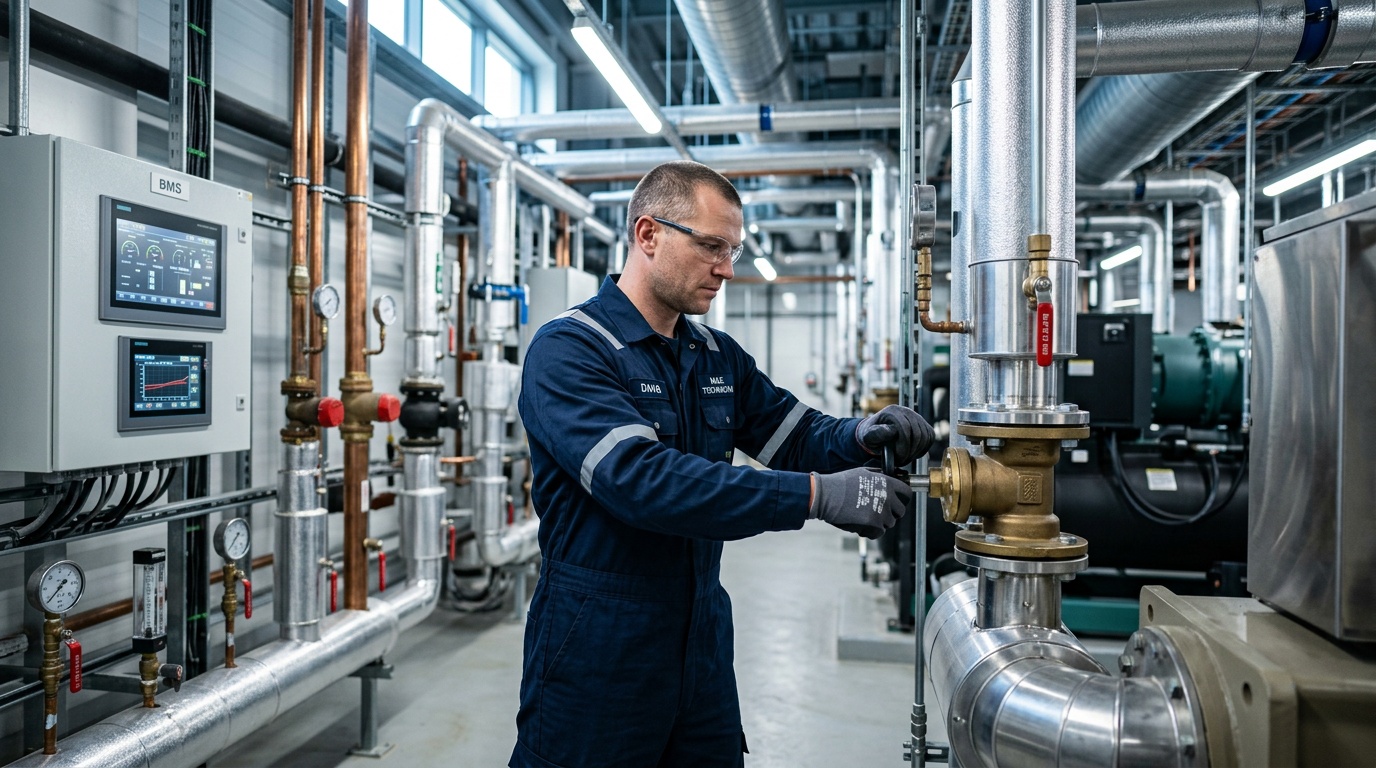
A repair should not be the end of the conversation. Once the system is running, establish why the fault occurred and how to reduce repeat interruption. Our Planned Preventative Maintenance programmes review electrical connections, isolators, protective devices, controls, fan motors, filters, coils, drainage, airflow and refrigerant performance according to equipment and site risk.
At MEMS Facilities Maintenance, I built the business around engineering accountability. Our engineers document findings, explain remedial priorities in plain English and distinguish safety work from optional improvement work. Maintenance records should support duties under BS 7671, the Electricity at Work Regulations and relevant F-Gas requirements.
For commercial sites requiring planned servicing, fault response and lifecycle support, see the commercial air conditioning maintenance service. A documented maintenance programme can help reduce repeat failures and provide clearer evidence for audits, landlords, insurers and internal governance.
For a wider review of system condition, risk and documentation, an M&E HVAC compliance health check can help identify gaps before they become costly failures.
If your Birmingham site needs air conditioning fault response, electrical assessment or planned maintenance, speak directly with MEMS. We provide 24/7 support with corporate-level capability and family-business accountability, helping protect occupancy, equipment and operating continuity.
Frequently Asked Questions
How much does it cost to rewire a commercial air conditioning system in Birmingham?
Commercial air conditioning rewiring in Birmingham has no single standard price, because the cost depends on cable routes, access, protective devices, system size, testing and any remedial work. A qualified contractor should inspect the installation and provide a written breakdown covering labour, materials, VAT, certification and any follow-up visit before work begins.
What is the average cost of an air conditioning electrical repair call-out in Birmingham?
An air conditioning electrical repair call-out in Birmingham is priced according to travel, diagnosis, labour time, access, parts and whether fixed wiring or refrigerant work is involved. Ask whether the attendance fee includes fault-finding and an initial period of labour, then request a total estimate before authorising component replacement.
What is the $5,000 rule for air conditioning repairs?
The $5,000 rule is a US budgeting guide that suggests replacing an air conditioning system when repair cost multiplied by its age exceeds $5,000. The rule is not a UK regulation and should not replace testing, repair evidence, system condition, efficiency, parts availability and the commercial impact of downtime.
What should a business do if it cannot afford an air conditioning repair?
A business that cannot afford an air conditioning repair should request a documented diagnosis, a repair-first option and a staged quotation before considering replacement. Prioritise faults affecting electrical safety, essential cooling and equipment protection, and ask about planned works, parts warranties and payment terms without approving open-ended work.
Can businesses get free air conditioning from the government in Birmingham?
Businesses in Birmingham should not assume that free air conditioning is available through a general government scheme. Funding may relate to specific energy, building or environmental programmes, with eligibility changing over time, so check official UK and local sources while obtaining a safe repair assessment for the existing system.
How can I find the cheapest safe air conditioning electrical repair in Birmingham?
The cheapest safe air conditioning electrical repair in Birmingham usually comes from comparing like-for-like written quotations, not choosing the lowest call-out fee. Check diagnostic testing, safe isolation, engineer competence, parts, VAT, access costs, certification and return visits, then ask for measurements and failed-part evidence before replacement is recommended.
Should an electrician or air conditioning engineer repair an electrical AC fault?
The right professional depends on the fault location: an electrician may address fixed wiring and protective devices, while an F-Gas-qualified air conditioning engineer handles refrigeration circuits. A suitably qualified engineer or coordinated team can reduce duplicated visits, with the quotation stating who will test each part of the installation and provide records.