hvac service provider
When a commercial heating or cooling system fails, the invoice is rarely the largest cost. Lost production, cancelled appointments, spoiled stock, tenant disruption and emergency labour can affect a business before an engineer reaches the plant room. I have spent more than 24 years working from the tools upwards and have seen a low call-out price become an expensive chain of replacements, delays and repeat visits. Choosing the right hvac service provider starts with understanding what the quoted service includes.
Key Takeaways
- The true cost of a commercial HVAC system failure extends far beyond the repair invoice, affecting business operations and revenue.
- A seemingly low initial service call price can ultimately lead to greater expenses through repeated repairs and delays.
- Selecting the best HVAC service provider begins with thoroughly understanding the specifics included in their quoted service.
A dependable contractor should diagnose before recommending, document each test, explain risk in plain English and leave the system safer than it found it. That standard matters across Birmingham, the West Midlands and the wider UK, particularly where heating, ventilation and air conditioning support business continuity.
The Hidden Costs of Choosing the Wrong HVAC Service Provider
The 'Commercial Reality' Hook: Downtime Isn't Just Inconvenient, It's Expensive
A failed boiler, chiller or air-handling unit can stop a site operating within hours. Staff may be unable to work in safe temperatures, customers may leave, and building owners may receive complaints. Manufacturing can lose a day of output, while retail premises may face damaged stock or an uncomfortable sales floor. The direct repair charge is only one part of the exposure: call-out premiums, temporary equipment, overtime and lost revenue sit alongside it.
Neglected equipment often fails at the worst time. A clogged condensate drain, worn contactor, weak run capacitor or restricted filter may seem minor during normal operation, yet heavy heating or cooling loads can trigger a shutdown. Research indicates that more than 70 percent of emergency callouts arise from neglected wear items such as run capacitors, contactors and clogged condensate drains. Planned inspection lets a business address them during an arranged visit rather than a crisis.
The Engineer's Take: Why 'Cheap' Often Means Costly in the Long Run
An efficient repair is different from an incomplete repair. Proper diagnosis may include electrical readings, motor amperage, refrigerant pressure, superheat, subcooling, airflow, temperature differentials and control operation. The engineer may need to check the cause of a fault rather than replace the first failed component. Skipping those tests saves time on the first invoice but can leave an underlying restriction, leak or control fault in place.
Parts pricing also needs scrutiny. A fan motor or capacitor has a purchase cost, but the final charge may include safe isolation, access, fitting, testing and warranty responsibility. Ask for the component description, labour allowance and reason for replacement. An unexplained four-figure total for a modest part deserves a technical explanation before approval.
Beyond the £29 Tune-Up: Understanding Loss-Leader Marketing Tactics
Very low promotional visits may open a sales conversation rather than deliver a full maintenance inspection. The initial charge may exclude diagnosis, access equipment, refrigerant work, filters, remedial labour or written reporting. Once on site, a customer may be told that equipment is unsafe, condemned or close to total failure without measured evidence.
Not every low-cost offer is dishonest, but its terms must be clear. Before booking, ask what the visit covers, whether travel and testing are included, which certification applies, and whether recommended work needs separate approval. A genuine engineer should explain the fault, show the failed item where practical and distinguish an immediate safety issue from a future replacement consideration.
Decoding HVAC Service Offers: What to Expect from a Genuine Provider
The Truth About 'Promotional' HVAC Visits: Upselling and Condemnation Tactics
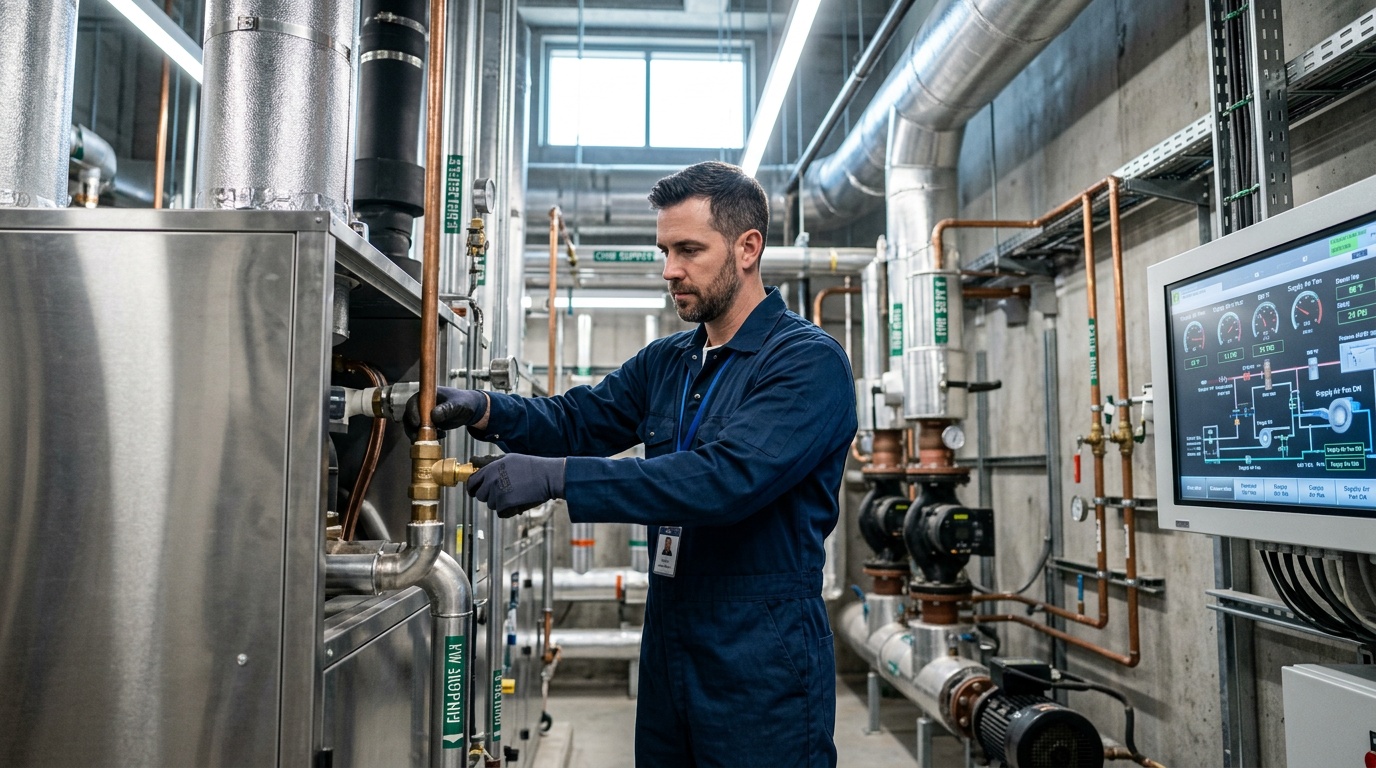
A legitimate service visit has a defined scope. It begins with system identification and a discussion of symptoms. The engineer inspects the plant, records relevant readings and explains whether the equipment is operating within expected parameters. A recommendation should connect a measured defect to a practical consequence, such as poor heat transfer, rising energy consumption, nuisance trips or compressor damage.
Be cautious when a technician recommends replacement without test results, equipment details or a repair-versus-replace rationale. Condemnation may be appropriate for a serious safety defect, obsolete control equipment or uneconomic failure, but it should not be a sales shortcut. The Commercial HVAC Installation and Heating Service provided by MEMS is built around trained and licensed specialists, insurance, safety procedures and practical assessment across commercial heating systems.
What a Proper HVAC Maintenance Checklist Looks Like (SFG20 Standards)
SFG20 provides a recognised framework for planned maintenance tasks, frequencies and responsibilities. A contractor should adapt the schedule to the equipment, operating hours, manufacturer guidance and site risk. Reports should record findings, readings, defects, remedial priorities and required statutory documentation.
| Maintenance area | Evidence of a genuine visit | Commercial reason |
|---|---|---|
| Heat exchange and airflow | Coils, filters, fans, belts, grilles and airflow paths inspected and cleaned where specified | Maintains capacity and reduces avoidable fan energy |
| Electrical controls | Connections, contactors, capacitors, motor amperage, safeties and control signals checked | Identifies wear before nuisance shutdowns or motor failure |
| Refrigeration circuit | Leak indicators, operating pressures, superheat, subcooling and temperature performance assessed by a qualified engineer | Protects compressor operation and supports F-Gas compliance |
| Drainage and condensate | Traps, pumps, drains and overflow protection checked for restriction or leakage | Prevents water damage, odour and safety-related shutdowns |
| Heating safety | Combustion, flue condition, ventilation, controls and safety devices examined by the appropriate competent person | Protects occupants and supports Gas Safe obligations |
| Reporting | Asset reference, readings, photographs, defects, priorities and completion status supplied | Creates an auditable maintenance trail for facilities management |
Distinguishing Specialists from Aggregators: The Private Equity Factor
A dedicated engineering firm normally controls technician training, scheduling, quality checks and technical records. An aggregator may take the booking, pass work to a subcontractor and add another commercial layer. This is not automatically poor, but accountability can be less clear. Ask who employs the engineer, who carries the relevant accreditation, who warranties the repair and who owns the maintenance history.
Private equity ownership is not proof of bad workmanship. The practical concern is a model driven by volume targets, conversion rates or commission. If an engineer is rewarded for selling replacement equipment rather than resolving faults, impartial diagnosis can suffer. Look for a written escalation process, named technical responsibility, consistent reporting and evidence that the attending person understands the equipment on your site.
Transparent Pricing: Diagnostic Fees, Component Costs, and Labour Rates
Honest pricing separates diagnostic attendance from remedial work. The quotation should state attendance, investigation, labour, parts, access requirements, refrigerant or disposal charges, testing and VAT. It should explain whether the price is fixed, estimated or subject to approval after further investigation. Ask for two figures where appropriate: the cost to restore safe operation now and the cost of planned replacement if the asset is near the end of its useful life.
Biannual maintenance can preserve seasonal efficiency by up to 15 percent through cleaner coils and fans, according to the research supplied for this guide. Routine inspection can identify refrigerant leaks early, reducing the risk of compressor failure that may cost several thousand pounds. MEMS’ Commercial HVAC Installation and Heating Service supports this approach with commercial installation, heating repairs, system optimisation and 24-hour emergency availability across Birmingham.
Your Vetting Framework: Questions to Ask Any HVAC Service Provider
Before appointing an hvac service provider, ask questions that reveal how the contractor works. A polished proposal can conceal limited commercial experience, subcontracted labour or maintenance based only on visual checks. Request written answers, sample service reports and named technical responsibility before signing. The aim is not the lowest hourly rate, but a team able to protect the building, occupants and operating budget.
Questions About Experience and Specialisation, Commercial vs. Residential
Ask whether the team regularly maintains equipment comparable with yours. A domestic boiler visit is not the same as maintaining a commercial plant room containing boilers, pumps, air-handling units, rooftop units, chillers, variable refrigerant flow systems or complex building controls. Ask how many similar sites the contractor supports, which manufacturers the engineers know, and whether work is completed by employed technicians or subcontractors.
Request evidence of diagnosis. A competent engineer should discuss electrical isolation, motor amperage, control sequences, airflow, temperature differential, refrigerant pressure, superheat and subcooling where applicable. Ask who reviews a technically uncertain repair. The Commercial HVAC Installation and Heating Service is designed for commercial installation and heating repairs around Birmingham, supported by trained, licensed and insured specialists familiar with varied heating models and brands.
Inquiries into Maintenance Protocols and Compliance, Gas Safe, F-Gas and SFG20
Ask to see the proposed schedule before approval. It should identify each asset, service frequency, manufacturer requirements, safety checks, filters, belts, coils, fans, drains, electrical connections and controls. For refrigeration work, confirm that the attending engineer holds appropriate F-Gas certification and that records will be maintained in line with F-Gas Register requirements. For gas appliances, ask for Gas Safe registration and confirmation that the engineer’s scope covers the installed equipment.
Ask how the schedule relates to SFG20 task guidance and the site risk assessment. A useful report records readings, defects, photographs, urgency, recommended action and completion status. It should distinguish a statutory safety issue from a performance recommendation, creating an auditable trail for facilities management.
Probing Sales Tactics and Upselling Red Flags
Ask what evidence is required before recommending replacement or a major component. A sound answer includes readings, fault codes where relevant, photographs, equipment age, parts availability and a repair-versus-replace explanation. Be cautious if a technician condemns equipment without testing, refuses to provide failed-component details or pressures you to authorise work without a safety reason.
Evaluating Emergency Response and Availability, 24/7/365
Do not accept “24-hour cover” as a complete answer. Ask who receives the call, where engineers are based, what information is gathered during triage, whether critical sites receive priority and which costs apply outside normal hours. Confirm escalation for boiler lockout, refrigerant failure, water leak, loss of ventilation or control-system fault. MEMS provides 24 hour emergency heating repairs available any time of day, with safety-led attendance and clear communication from the first call.
Assessing Long-Term Value vs. Short-Term Price
Compare the full service model, including planned visits, digital reports, remedial quotations, asset registers, compliance records and performance reviews. A low price has little value if it produces repeat visits, incomplete testing or avoidable downtime. Biannual maintenance can preserve seasonal efficiency by up to 15 percent through cleaner coils and fans, based on the research supplied for this guide. Consider that gain alongside labour, parts, energy consumption and business interruption.
A Practical Decision Check
Pros
- Named engineers with relevant commercial experience and trade accreditations
- Measured diagnostics, clear reports and itemised quotations
- Planned maintenance linked to SFG20 tasks, manufacturer guidance and site risk
- Defined emergency escalation with documented response arrangements
Cons
- Replacement recommendations without readings or photographs
- Unclear subcontractor responsibility or missing compliance records
- Headline pricing that excludes diagnosis, access, labour or testing
- Pressure to approve major work during an ordinary service visit
The right hvac service provider should make technical risk easier to manage and explain to directors, tenants or insurers. Use these questions before signing, then review the answers against reports received after each visit.
Beyond Repairs: Investing in Sustainable Efficiency and Compliance
The Role of Preventative Maintenance (PPM) in Asset Lifecycle Management
Planned Preventative Maintenance keeps a building’s mechanical assets predictable. The schedule should reflect equipment age, duty cycle, manufacturer requirements, occupancy patterns and site risk. Filters, coils, belts, bearings, drains, pumps, controls and safety devices deteriorate at different rates. Recording changes helps facilities managers budget, prioritise remedial work and plan capital replacement before failure interrupts trading.
Biannual maintenance preserves seasonal efficiency by up to 15 percent through cleaner coils and fans, according to the research supplied for this guide. Routine inspections can identify refrigerant leaks early, reducing the risk of compressor damage that may cost several thousand pounds. Benefits include fewer emergency callouts, steadier internal temperatures, improved energy performance and better compliance records.
Understanding Component Lifespans and When to Replace, Not Repair
Repair is sensible when the asset remains technically sound, parts are available and the likely service life justifies the labour. Replacement deserves consideration where a heat exchanger is unsafe, a compressor has major damage, controls are obsolete, repeated faults show systemic deterioration or restoration costs approach the value of dependable replacement. Age alone is not a diagnosis. Consider failure history, energy consumption, refrigerant type, warranty, access costs and the effect of another breakdown.
Ask for a written repair-versus-replace assessment identifying the failed component, test results, expected remaining life, immediate risk and recommended timeframe. A £150 component should not become a £1,500 invoice without explanation of labour, access, testing, warranty and associated work.
Integrating Sustainable Technologies: Heat Pumps, Solar PV and Controls
Sustainability begins with a properly assessed building, not a product pushed into an unsuitable application. Heat pumps may reduce reliance on fossil fuels where insulation, emitter temperatures, electrical capacity and operating profiles support them. Solar PV can offset daytime electrical demand, while intelligent controls can coordinate schedules, zoning, weather compensation and occupancy. Proposals should include load calculations, seasonal performance expectations, maintenance requirements, grid considerations and a payback model.
Controls can deliver practical efficiency gains because poorly timed operation wastes energy regardless of equipment specification. Review sensor position, set points, time schedules, valve operation, balancing and user overrides. MEMS provides a Commercial HVAC Installation and Heating Service for commercial heating installation, repairs and system optimisation around Birmingham, with safety procedures applied throughout.
The 'MEMS Standard': Building Long-Term Partnerships for Operational Excellence
A proper partnership is visible in the records. You should receive consistent asset references, engineer findings, photographs, readings, compliance certificates, priority ratings and understandable quotations. Our engineers are trained and licensed, insured, knowledgeable across varied heating models and brands, and available for emergency heating repairs at any time of day. This supports continuity rather than one-off transaction volume.
The recommended Commercial HVAC Installation and Heating Service supports commercial installation, heating repairs, component optimisation and compliance-led maintenance, giving Birmingham and West Midlands businesses one accountable route from diagnosis through lifecycle planning.
Securing Your Building's Future: A Final Checklist
Summary of Key Vetting Points
- Demand measured diagnosis, itemised pricing and written repair recommendations.
- Verify Gas Safe, F-Gas and relevant competence for the equipment involved.
- Check that planned maintenance covers the full asset register and produces auditable records.
- Confirm emergency arrangements, escalation contacts and replacement planning.
Reiterating the Peace of Mind from a Trusted Partner
Reliable maintenance protects uptime, compliance and budget control. You should know who is responsible before a failure occurs.
Call to Action: Partner with Expertise
For dependable commercial support across Birmingham and the Midlands, choose MEMS for practical engineering and accountable service. CLICK TO CALL US NOW
Frequently Asked Questions
What is the $5,000 rule for HVAC?
The $5,000 HVAC rule is a budgeting guide that compares repair cost with replacement cost, often using the system’s age multiplied by the repair price. A commercial HVAC service provider should also assess safety, efficiency, parts availability, fault history and expected remaining service life before recommending replacement.
What is the average cost of an HVAC service call in the UK?
An HVAC service call in the UK has no single average price because cost depends on system type, location, access, urgency, testing and remedial work. A commercial HVAC service provider should explain whether travel, diagnosis, labour, parts, refrigerant work and reporting are included before work is approved.
What should I look for in a commercial HVAC service provider?
A commercial HVAC service provider should offer qualified engineers, suitable insurance, clear quotations, documented testing and experience with commercial heating, ventilation and air conditioning systems. Ask how faults are diagnosed, which readings are recorded, what compliance documents are supplied and whether recommendations are supported by measured evidence.
What does an HVAC service include?
An HVAC service includes system identification, symptom review, visual inspection, operational checks and relevant measurements for electrical, airflow, temperature, controls and refrigeration performance. A commercial HVAC service provider should record defects, explain their business impact and separate urgent safety work from planned maintenance or future replacement.
How often should a commercial HVAC system be serviced?
A commercial HVAC system should be serviced according to equipment type, manufacturer guidance, operating hours, site risk and the planned maintenance schedule. A commercial HVAC service provider can set suitable inspection intervals using recognised guidance such as SFG20, while checking filters, coils, fans, controls, drainage and refrigeration performance.
How can a business compare HVAC service quotes?
A business can compare HVAC service quotes by checking scope, diagnosis, labour allowances, parts, access equipment, testing, reporting, certification and follow-up responsibilities. A commercial HVAC service provider should connect each recommendation to a measured fault and explain the likely operational consequence, rather than presenting a low call-out price without full terms.
Are emergency HVAC repairs available for commercial premises?
Emergency HVAC repairs are available for commercial premises when a failed boiler, chiller, air-handling unit or control system threatens operations. A commercial HVAC service provider can assess the immediate fault, make the system safe where possible and advise on temporary measures, permanent repair and any further planned work.