commercial office
The Commercial Office Reality: Why Proactive Maintenance Beats Reactive Repairs
I’ve spent over 24 years in this trade, starting as an apprentice combustion engineer and working my way up to running a 24/7 maintenance firm across Birmingham and the West Midlands. One truth keeps surfacing, whether I’m standing in a plant room or sat in a boardroom: waiting for a breakdown is the most expensive strategy you can adopt. A failed boiler or seizing chiller isn't just an inconvenience. It's a direct hit to your bottom line and business continuity.
Key Takeaways
- A proactive maintenance plan stops small faults from turning into expensive emergency repairs.
- Broken boilers and failed chillers disrupt your business and cost far more than regular servicing.
- Investing in scheduled upkeep keeps your plant rooms reliable and protects your bottom line.
- Buckling to reactive fixes puts your compliance at risk and drives up long-term costs.
- Smart office maintenance in 2026 means catching problems before they shut you down.
A breakdown in a commercial office doesn't just mean one cold day. It means lost productivity, disrupted client meetings, and potential damage to sensitive equipment. Emergency call-outs, premium parts, and overtime labour quickly dwarf the cost of routine checks. In my experience, every hour of unplanned downtime costs many times the hourly fee of a preventative visit. And the hidden costs of forfeited contracts or tenant complaints can exceed the repair bill itself.
The True Cost of a Breakdown in a Commercial Office
When the heating fails in January or the air conditioning dies during a heatwave, you face more than an immediate repair cost. Lost staff productivity, cancelled client meetings, and potential damage to IT equipment mount fast. I've seen facility managers scramble for portable heaters while explaining to tenants why the building is uninhabitable. The indirect costs always exceed the direct repair. Often by a factor of ten or more.
Why Planned Preventative Maintenance (PPM) Is an Investment, Not an Expense
Too often, PPM gets cut when budgets tighten. That's a false economy. A structured PPM programme catches small issues early: a worn belt, a corroded pipe, a refrigerant leak that drains efficiency. At M&E Maintenance Solutions, we design PPM schedules around SFG20 standards and your building's specific demands. The result? Fewer breakdowns, predictable costs, and extended asset life. That's a return on investment measured in uptime and avoided emergencies.
| Factor | Reactive Approach | Proactive PPM |
|---|---|---|
| Typical cost per event | High (emergency call-out + overtime) | Low (fixed, scheduled visit) |
| Downtime impact | Significant (hours or days) | Minimal (planned during off-hours) |
| Asset lifespan | Reduced (strain from neglect) | Extended (regular servicing) |
| Compliance risk | High (missed checks) | Low (documented evidence) |
The Hidden Cost of Ignoring SFG20 Compliance in Your Commercial Office
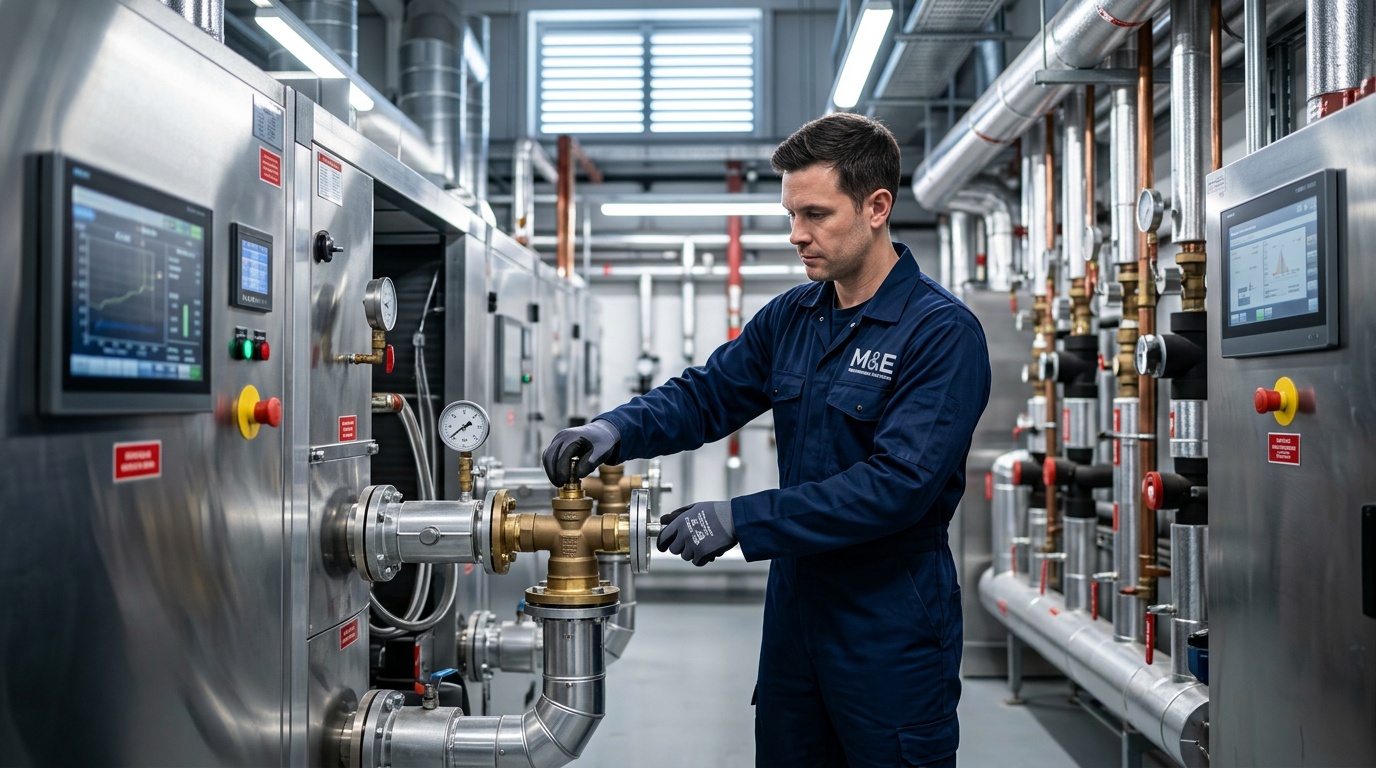
SFG20 is the industry standard for building maintenance specifications, yet many property managers overlook it until a problem forces a review. For any commercial office, adherence to SFG20 is the baseline for legal compliance and safety. Without it, you expose your business to insurance claims, regulatory fines, and risk of injury to occupants or staff.
What SFG20 Is and Why It Matters for Your Office Building
SFG20 defines the frequency and scope of maintenance tasks for every major building system: HVAC, electrical, plumbing, fire safety, and more. Developed by BESA, it creates a consistent, auditable framework. When your provider claims SFG20 compliance, they commit to a specific checklist covering inspections, cleaning, testing, and reporting. For your commercial office, that means your heating, ventilation, and air conditioning get checked at the right intervals with documentation that satisfies insurers and regulators.
Common Compliance Failures That Put Your Business at Risk
The most frequent failures I see include skipped annual gas safety checks, missing F-Gas leakage records for air conditioning, and incomplete electrical testing. Some providers cut corners by reducing visit frequencies or failing to document results. That leaves you holding the liability. A single HSE inspection can uncover gaps leading to prohibition notices or prosecution. The cost of compliance is small compared to the penalties for non-compliance.
SFG20 Compliance Checklist for Commercial Offices
- Annual gas safety inspection by a Gas Safe registered engineer
- Quarterly HVAC filter changes and coil cleaning
- Six-monthly F-Gas leakage checks on all refrigerant systems
- Annual electrical fixed wire testing (EICR)
- Monthly emergency lighting tests
- Annual fire alarm servicing
- Documented maintenance logs kept on site for audit
HVAC Efficiency: The Single Biggest Factor in Reducing Commercial Office Operational Costs
Heating, ventilation, and air conditioning account for a significant portion of a typical commercial office energy bill. Which means a massive opportunity for savings. Yet many operators ignore the slow, steady increase in energy consumption caused by equipment degradation. We call it "energy drift": the gradual loss of efficiency that quietly adds hundreds of pounds to your quarterly electricity bill. Tackling that drift is the most effective way to control operational expenditure without sacrificing occupant comfort.
How Energy Drift Quietly Increases Your Electricity Bills
Energy drift happens as components wear: compressor efficiency drops, condenser coils get dirty, refrigerant levels fall, filters block. Each inefficiency compounds. A chiller running harder uses more electricity. Over time, that extra consumption can represent thousands of pounds wasted. The fix is straightforward: regular cleaning, calibration, and servicing of your HVAC plant. At M&E Maintenance Solutions, we measure performance on every visit and flag drift before it becomes a budget problem. This proactive approach keeps operational costs in check and extends equipment life.
Upgrading to Air-to-Water Heat Pumps, Solar PV and LED Lighting
For commercial property owners looking at longer-term capital improvements, investing in air-to-water heat pumps, solar PV, and LED lighting can dramatically cut operational costs. Heat pumps operate at high efficiencies compared to gas boilers, and solar PV can offset daytime office electricity use. With the UK government's net-zero target by 2050, these upgrades future-proof your building against carbon taxes and tightening regulations. M&E Maintenance Solutions can assess your current infrastructure and recommend a phased upgrade plan that aligns with your budget and sustainability goals. Explore our Renewable Energy Solutions to see how we can help you transition.
The Real ROI of Modern HVAC: A Cost Comparison
Upgrading a 15-year-old gas boiler and fixed-speed AC to a modern heat pump and VRF setup can reduce annual energy costs substantially. A typical office with combined gas and electricity bills in the tens of thousands might save thousands per year. The payback period is often within a few years. When government grants for low-carbon heat are factored in, the case becomes compelling. Our team can provide a detailed ROI analysis for your specific commercial office.
| Factor | Existing System (Gas Boiler + Fixed AC) | Modern System (Heat Pump + VRF) |
|---|---|---|
| Annual energy cost (15,000 sq ft) | High | Lower (significant savings) |
| Annual maintenance cost | Higher (breakdown risk) | Lower (predictable PPM) |
| Carbon emissions | High | Low (substantial reduction) |
| Compliance risk | Moderate (ageing infrastructure) | Low (modern controls) |
| Payback period | N/A | Attractive (within a few years) |
Our Commercial HVAC Installation and Maintenance service covers everything from energy audits to full system upgrades, ensuring you maximise efficiency and minimise waste. We handle the technical complexity so you can focus on your core business.
The 'Different Face' Problem: Why Your Commercial Office Needs a Consistent Maintenance Partner
One of the most common frustrations I hear from facility managers is the revolving door of engineers from large FM companies. A different technician turns up each time, with no knowledge of your building's history, previous repairs, or quirks. That's not just irritating. It leads to mistakes, missed issues, and wasted time. Consistency matters when you're responsible for the safety and comfort of everyone in your commercial office. A fragmented service undermines trust and increases failure risk.
The Risks of a Revolving Door of Engineers
No continuity of care means problems get missed, diagnostic time increases, and important system history is lost. You may receive conflicting advice or inconsistent work quality. This fragmentation erodes trust and increases breakdown risk. Over time, the hidden cost of inefficiency and repeated call-outs outweighs any perceived savings from a cheaper, impersonal provider.
How a Dedicated Account Manager Protects Your Assets
At M&E Maintenance Solutions, we assign a dedicated account manager and a core engineering team to each client. They know your plant room inside out. They track every repair, every filter change, every compliance certificate. When a call comes in, it's usually the same engineer who serviced the unit last month. That familiarity means faster diagnosis, higher quality work, and a partner who treats your building as if it were their own. This relationship-based model delivers better outcomes and true accountability.
Consistent Partner vs. Revolving Engineers
Benefits of a Consistent Partner
- Knowledge of your specific equipment history
- Faster diagnosis and repairs
- Accountability for every visit
- Better relationship and trust
Risks of Revolving Engineers
- Missed history and repeated mistakes
- Longer diagnostic time
- Inconsistency in service quality
- No single point of contact
Your Commercial Office Maintenance Audit: Questions to Ask Your Current Provider
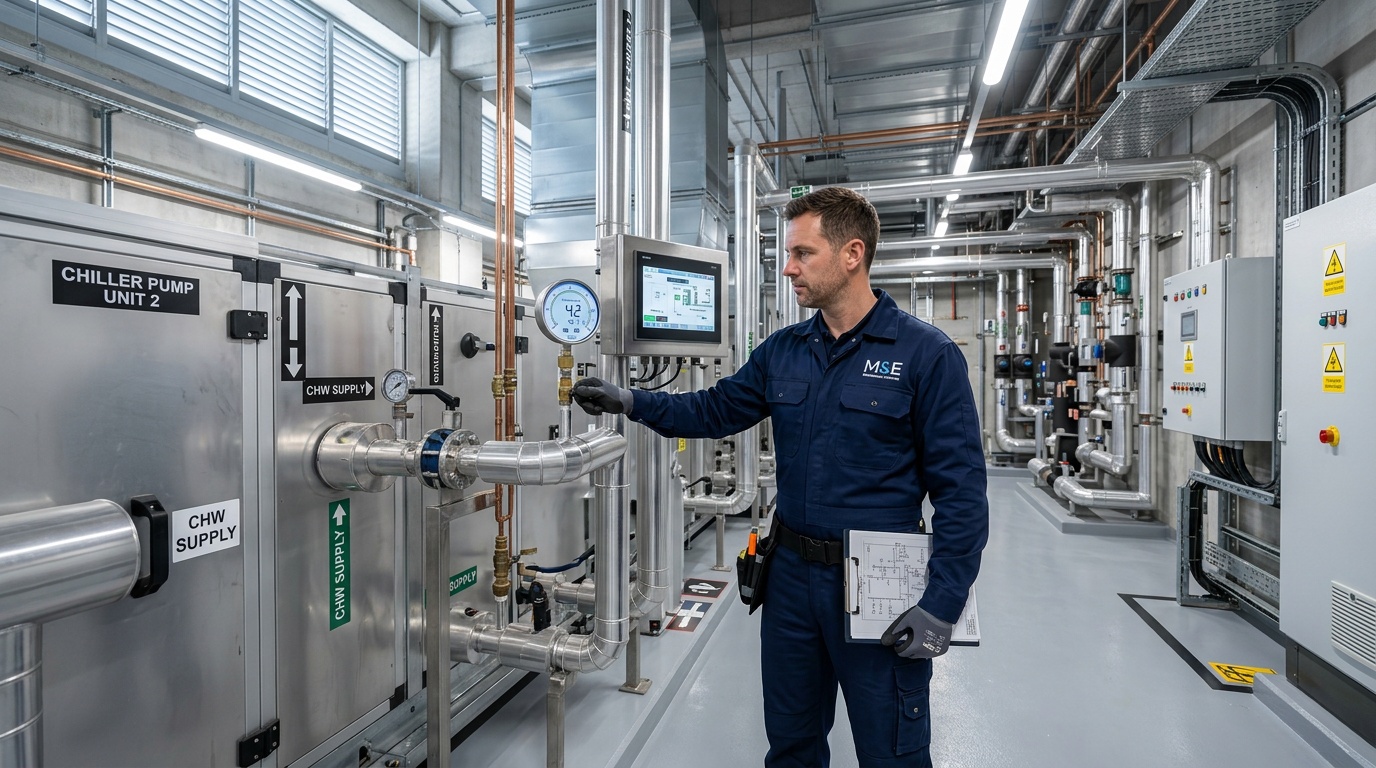
If you're not satisfied with your current maintenance arrangement, it's time to conduct an audit. Review these five areas to see if your provider is truly protecting your assets or simply ticking boxes. A good partner welcomes these questions and has clear, documented answers. This exercise will highlight gaps and give you a roadmap for improvement.
Key Indicators of a Failing Maintenance Strategy
- You receive more emergency call-outs than routine PPM visits
- Compliance certificates arrive late or lack sufficient detail
- You cannot easily access a digital log of past maintenance work
- Engineers recommend the same repair multiple times without permanent resolution
- Your energy bills are rising with no clear explanation from your provider
What a True Partner Should Offer, and What They Should Not
A true partner offers a single point of contact, clear reporting, SFG20-aligned schedules, and proactive recommendations to improve efficiency. They do not leave you on hold, ignore small issues, or treat your site as just another number. At M&E Maintenance Solutions, we pride ourselves on being “big enough to cope, small enough to care.” Our Commercial HVAC Installation and Maintenance package includes a dedicated account manager, digital compliance records, and 24/7 emergency support. We're here to protect your business continuity and your bottom line.
Ready to review your current maintenance contract? Contact us at 0121 380 5630 or email [email protected] for a no-obligation assessment of your commercial office's maintenance strategy. We'll help you identify savings, reduce risk, and improve building performance.
References
Frequently Asked Questions
Why is reactive maintenance more expensive than proactive maintenance for my commercial office?
In my 24 years of experience, waiting for a breakdown triggers emergency call-out fees, premium parts pricing, and overtime labour. The hidden costs like lost productivity, disrupted meetings, and potential damage to IT equipment often exceed the repair bill. A proactive PPM programme catches small issues early, keeping costs predictable and avoiding those expensive surprises.
What is SFG20 and why does it matter for my office building?
SFG20 is the industry standard maintenance specification from BESA that defines exactly what tasks need doing and how often for every major system in your commercial office. It covers HVAC, electrical, plumbing, and fire safety. Following it ensures legal compliance, satisfies insurance requirements, and provides auditable documentation. Skipping it leaves you exposed to fines and liability.
How can I reduce my commercial office HVAC energy costs?
The biggest factor is addressing energy drift the slow efficiency loss from dirty coils, low refrigerant, or worn components that quietly pushes up your electricity bill. Regular cleaning, calibration, and servicing of your HVAC plant catches this drift before it costs you thousands. At MEMS, we measure performance on every visit to flag issues early.
What are the hidden costs of a breakdown in a commercial office?
A breakdown doesn't just mean one cold day or a warm afternoon. You face lost staff productivity, cancelled client meetings, and potential damage to sensitive servers and equipment. I've seen facility managers scrambling for portable heaters while explaining to tenants why the building is uninhabitable. The indirect costs can easily dwarf the repair itself.
What does a typical PPM schedule include for a commercial office?
A good PPM programme follows SFG20 standards and includes annual gas safety checks, quarterly HVAC filter changes and coil cleaning, six-monthly F-Gas leakage checks, annual electrical testing, monthly emergency light tests, and annual fire alarm servicing. The key is having documented logs on site for audit. It keeps your systems running reliably and extends asset life.
How do I know if my maintenance provider is actually SFG20 compliant?
Ask to see their maintenance checklists and audit trails. A genuine SFG20 compliant provider will have detailed logs for every visit covering inspections, cleaning, testing, and reporting. Watch for skipped annual checks or missing F-Gas records. If they can't produce documented evidence, you're holding the liability. I've seen that gap cause real problems during HSE inspections.