commercial property for sale birmingham uk
Buying commercial property for sale birmingham uk involves more than location. Heating, electrical capacity, access rights, lease terms and future capital requirements can decide whether a purchase produces income or absorbs it. A clean reception can conceal ageing boilers, overloaded distribution boards and maintenance backlogs.
Key Takeaways
- Hidden building services like boilers and electrical boards can turn a promising deal into a cash drain, so always commission a full technical survey.
- Lease terms that push capital repair costs onto the landlord protect your income, while poorly worded clauses can leave you footing the bill for ageing plant.
- Access rights for maintenance vehicles and future upgrades are as critical as the building’s street appeal, especially in tight city centre sites.
- A cheap price per square foot often reflects deferred maintenance that will eat your returns within the first few years of ownership.
- Understanding the remaining life of heating and electrical systems lets you budget for replacements before they become emergency callouts.
Assess the property search, legal review and engineering condition together. This provides a clearer view of occupancy risk, operating expenditure, compliance duties and the cash reserve needed after completion.
Understanding Birmingham’s Commercial Property Environment
Key Commercial Property Types: Offices, Industrial, Retail, and Land
Birmingham has several asset classes with different income profiles and maintenance burdens. Offices depend on location, specification, tenant amenities and transport access. Industrial units are judged more heavily on loading, yard space, clear height, power supply and condition. Retail property depends on frontage, footfall, access and local trading patterns. Land may offer development potential, but planning status, utilities, drainage, rights of way and abnormal ground conditions must be confirmed before agreeing a price.
| Asset type | What investors should assess | Typical technical exposure |
|---|---|---|
| Office | Occupier demand, floorplate efficiency, parking and lease length | Air conditioning, ventilation, lifts, lighting and electrical distribution |
| Industrial | Vehicle access, yard configuration, loading doors and power capacity | Heating plant, roof condition, fire systems and three-phase supplies |
| Retail | Frontage, visibility, pedestrian movement and tenant covenant | Heating, comfort cooling, shopfront services and metering |
| Development land | Planning permission, title boundaries, services and access rights | Utility connection costs, drainage, groundworks and future infrastructure |
Prominent Investment Districts: City Centre, Jewellery Quarter, Digbeth, Tyseley, Tamworth Corridor
The City Centre and Colmore Business District suit investors seeking established office demand and connectivity. The Jewellery Quarter combines offices, workshops, hospitality and converted commercial buildings, making building age and heritage constraints important. Digbeth has regeneration potential, but planning assumptions, access and adaptation costs for older stock require testing. Tyseley and Aston are associated more closely with industrial and trade uses. The Tamworth corridor can suit logistics and industrial occupiers seeking motorway access and larger footprints.
Investment Yield Profiles Across Birmingham and the West Midlands
Yield is only one part of the return calculation. Prime office yields in Colmore Business District average approximately 5.50% to 6.25%, while prime industrial property in Tyseley and Aston averages about 4.75% to 5.25%, based on the supplied market research. A lower headline yield may reflect stronger tenant demand, better specification or a longer lease. A higher yield may indicate vacancy, refurbishment needs, short income or major plant replacement.
Model rent, void periods, insurance, rates, service charges, planned preventative maintenance and capital expenditure. Include boilers, chillers, controls, roofs, lifts and electrical upgrades. A survey identifying a failing heating system before exchange can change the offer price more effectively than trying to recover the cost after completion.
Navigating the Commercial Property Acquisition Process in the UK
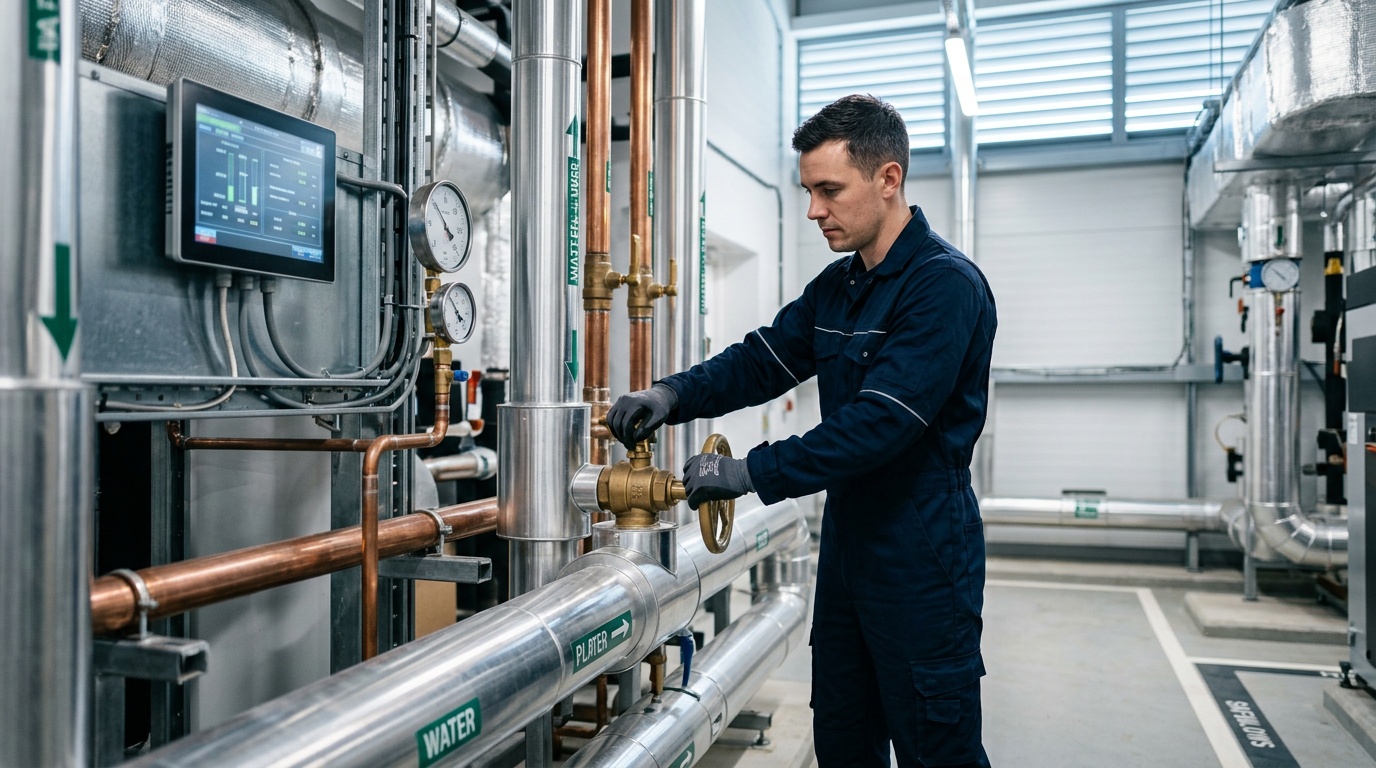
Key Steps: Surveys, Legal Contracts, Exchange, and Completion
Use a controlled sequence rather than rushing towards exchange. Begin with funding approval and heads of terms. Commission a building survey, valuation, environmental review and targeted mechanical and electrical inspection. Your solicitor should review title, leases, planning history, asbestos information, rates, insurance, service charge accounts and statutory certificates.
- Offer and heads of terms: record price, tenure, conditions, fixtures and access arrangements.
- Due diligence: test the building, title, tenant position, planning status and financial records.
- Contract review: resolve enquiries, warranties, searches, completion conditions and apportionments.
- Exchange: commit only after funding, insurance and material risks are addressed.
- Completion: transfer funds and documents, take possession and record meter readings.
A survey is not a formality. If it identifies an aged boiler, inefficient chiller, water ingress or unsafe distribution board, obtain a repair or replacement budget before exchange. The Commercial HVAC Installation and Heating Service can support Birmingham buyers with heating repairs and installation planning, turning a survey observation into a practical costed action.
Differences Between Freehold and Long Leasehold Acquisitions
A freehold gives greater control over the building, land, repairs and alterations, but the owner carries the full maintenance burden. A long leasehold requires review of the unexpired term, rent review mechanism, permitted use, repairing covenant, insurance obligations, service charge budget and alteration consent. Check whether plant, roofs, structure, car parks and external areas are your responsibility.
Confirm whether the lease permits subletting, assignment and redevelopment. Identify the landlord’s consent process, sinking fund and major works contributions. A low price may lose its appeal if the lease transfers responsibility for defective mechanical services or communal works.
Common Pitfalls: Split Plots, Retained Adjoining Land, and Seller’s Disclosure Obligations
Compare the Land Registry title plan with fence lines, service routes, loading areas, parking and drainage. If the seller retains adjoining land, obtain documented rights for access, maintenance, turning, utilities, signage and future construction. Ask whether retained land could obstruct deliveries, reduce parking or create disputes over shared infrastructure.
Require written answers to enquiries. Check planning permissions, building control records, asbestos surveys, fire risk assessments, guarantees, utility easements and notices affecting the premises. Keep a schedule of missing documents and unresolved defects. Before purchasing commercial property for sale birmingham uk, record agreed repairs, credits or title corrections in the contract.
For buyers assessing commercial investment property for sale Birmingham, ask what the building will cost to operate, maintain and manage over five years, not merely whether it can be occupied on day one. The second mention of Commercial HVAC Installation and Heating Service is relevant where heating reliability, safety controls and system optimisation form part of that forecast.
Technical Due Diligence: Assessing Mechanical, Electrical, and Plumbing (MEP) Assets
A building survey may miss the condition of plant keeping the property operational. Before committing to commercial property for sale birmingham uk, arrange an MEP inspection covering heating, ventilation, air conditioning, electrical distribution, water services, drainage and controls. Mechanical and electrical installations commonly account for 25% to 40% of total commercial building maintenance expenditure over a 15-year lifecycle, based on the supplied research. Include that cost in the acquisition model.
Essential MEP Inspections Before Purchase: HVAC, Electrical Distribution, Plumbing
Start in the plant room. Check boiler age, burner condition, flues, pumps, expansion vessels, water treatment, chiller performance, refrigerant records, air handling units and controls. Inspect electrical intake capacity, distribution boards, protective devices, earthing, cabling, emergency lighting and thermal damage. Plumbing checks should cover mains pressure, storage tanks, hot water generation, isolation valves, sanitary fittings, drainage access and leakage or corrosion.
| System | Inspection evidence | Buyer concern |
|---|---|---|
| HVAC and heating | Service records, commissioning data, plant age, controls and F-Gas documentation | Unplanned replacement, poor comfort and rising energy consumption |
| Electrical distribution | Inspection reports, load assessment, board condition and test certificates | Capacity limits, fire risk and costly remedial works |
| Plumbing and drainage | Pressure tests, tank condition, leak history and drainage surveys | Water damage, hygiene concerns and tenant disruption |
| Building controls | BMS operation, sensors, trend logs and override settings | Energy drift and poor visibility of plant performance |
The Commercial HVAC Installation and Heating Service can assist with commercial heating inspections, repairs and installation planning around Birmingham. The service provides commercial HVAC installation and heating system repairs around Birmingham. The team consists of trained and licensed specialists who are also insured. Request findings in a format usable by your surveyor, solicitor and finance provider, classifying each defect as immediate repair, planned replacement or monitoring.
Common Ageing and Compliance Issues in Birmingham’s Commercial Stock
Older premises may contain patched heating pipework, inefficient boilers, obsolete controls, undersized cables and distribution boards with limited spare capacity. Converted buildings can contain mixed installation standards from successive alterations. Missing commissioning certificates, incomplete service histories and expired inspection reports make risk harder to price. Check asbestos information, fire stopping, plant access, isolation points and roof-mounted equipment before accepting that systems are “fully operational”.
Using SFG20 Standards to Benchmark Maintenance and Condition
SFG20 provides a recognised framework for planned maintenance tasks, frequencies and compliance records. Use it to assess the seller’s PPM schedule rather than treating historic invoices as proof of good maintenance. Compare completed tasks with the asset register and record missed or overdue actions. CIBSE guidance can inform reviews of ventilation, heating, cooling and indoor conditions. Differences between documented maintenance and installed equipment may indicate deferred expenditure.
Identifying Hidden Plant Liabilities and Potential Capital Expenditure
Request a plant schedule listing manufacturer, model, installation date, output, warranty status, service history and expected replacement period. Price critical spares, temporary heating, lifting access, electrical upgrades and specialist commissioning. A failing chiller may need controls and pipework alterations; a boiler replacement may expose flue, gas supply or ventilation defects. The Commercial HVAC Installation and Heating Service offers 24 hour emergency heating repairs available any time of day, but emergency response should support, not replace, funded asset renewal.
Energy Performance and Statutory Compliance: EPC Ratings and MEES in Birmingham
Understanding Energy Performance Certificates (EPC) and Their Impact
An EPC indicates calculated energy performance and possible efficiency, improvement and letting constraints. Review the certificate, recommendation report, inspection date, floor area and assessor assumptions. Compare the rating with utility consumption, comfort complaints, BMS trends and maintenance records, since it does not show actual use or plant reliability. A weak rating can affect tenant demand, finance, refurbishment scope and resale value.
Minimum Energy Efficiency Standards (MEES) Requirements for Commercial Buildings
Commercial MEES regulations require commercial buildings to reach an EPC B rating by 2030, according to the supplied research. More than 60% of legacy West Midlands commercial stock is identified as being at risk of non-compliance without retrofit investment. Confirm the rating, registered exemption, lease arrangements and evidence supporting that exemption. A short lease does not remove the issue because future letting, refinancing and disposal may expose it.
Forecasting Capital Expenditure for Decarbonisation: Heat Pumps, Solar PV, LED Upgrades
Build an energy upgrade plan around fabric, occupancy and electrical capacity. Heat pumps may need upgraded supplies, emitters, controls and plant space. Solar PV requires a roof survey, structural review, inverter location, export assessment and maintenance access. LED replacement can reduce lighting demand, but emergency lighting, controls and tenant alterations must be included. Price design, enabling works, access, commissioning, surveys and contingency, then test payback against rent, void risk and refurbishment.
Practical Steps to Ensure Compliance and Avoid Penalties
Use this sequence before exchange:
- Verify the EPC and obtain the recommendation report.
- Check the MEES position, exemption register and lease implications.
- Commission an energy audit linked to an MEP condition survey.
- Price immediate works and a staged decarbonisation programme.
- Record responsibilities, approvals and funding within the acquisition plan.
For an investor assessing commercial property for sale birmingham uk, energy compliance is a capital planning and legal issue. Treat retrofit exposure as part of the purchase price and protect asset yield through documented, staged works.
Mitigating Post-Acquisition Risks: Service Charges, Management Companies, and Building Fabric

The purchase price is only the opening figure. Service charges, management fees, repairs and statutory duties affect net return from completion. Request three years of service charge accounts, budgets, major works notices, insurance schedules, maintenance logs and dispute records. Compare them with the lease and physical condition.
How to Spot and Avoid Unreasonable Service Charge Escalations
Service charge inflation across multi-let regional commercial stock rose by an average of 8% to 14% year-on-year, based on the supplied research. Check sinking funds, management fees, vacant-unit costs, related-party appointments and major works. Ask for actual expenditure against budget, supplier invoices, apportionment percentages and supporting lease clauses. A sudden increase without improved service needs explanation before exchange.
Evaluating the Role and Reliability of Management Companies
Assess response times, escalation procedures, compliance records, contractor approval and tenant communication. Ask who authorises emergency expenditure, how conflicts are managed and whether inspection reports are traceable. Confirm responsibility for heating, ventilation, electrical testing, fire safety, water hygiene, lifts and external repairs. An effective manager addresses defects early; a passive manager allows them to become insurance claims or tenant retention problems.
Assessing Building Fabric Condition and Deferred Maintenance Liabilities
Inspect roofs, gutters, cladding, windows, doors, drainage, damp protection, fire stopping and access routes. Look for temporary repairs, staining, cracked seals and standing water. Match defects with maintenance history and the survey. Check plant interfaces, including roof leaks above electrical equipment, poorly insulated heating pipework and defective boiler-room louvres. Price issues by urgency, consequence and replacement date.
Budgeting for Planned Preventative Maintenance (PPM) to Protect Asset Yield
Build an asset register for boilers, chillers, pumps, controls, distribution boards, lighting, water systems, roofs and life-safety equipment. Record inspection frequency, service life, manufacturer guidance, access needs and replacement assumptions. Mechanical and electrical installations represent 25% to 40% of total commercial building maintenance expenditure over a 15-year lifecycle, according to the supplied research. The Commercial HVAC Installation and Heating Service can support heating repairs, installation planning and system optimisation around Birmingham. The Commercial HVAC Installation and Heating Service also offers 24 hour emergency heating repairs available any time of day, giving occupiers continuity while planned renewal is arranged.
Investor risk checklist: Verify service charge accounts, inspect management agreements, confirm repair liabilities, reconcile the asset register with installed equipment, obtain replacement budgets for ageing plant, and reserve funds for planned works. The strongest purchase is not always the cheapest building; it is the asset whose obligations are visible, costed and controlled.
Frequently Asked Questions
What should I inspect before buying commercial property for sale Birmingham UK?
Commercial property for sale Birmingham UK should be inspected for heating, electrical capacity, roof condition, access, drainage, fire systems and visible maintenance issues before exchange. A building survey supported by targeted mechanical and electrical checks can identify failing boilers, overloaded distribution boards, water ingress and likely capital expenditure.
How can I judge whether a Birmingham commercial property offers a good investment return?
A Birmingham commercial property offers a sounder investment case when rent, vacancy, insurance, rates, service charges, maintenance and capital expenditure are included in the financial model. A higher yield may reflect short income, refurbishment needs or plant replacement, while a lower yield may reflect stronger demand, better specification or a longer lease.
What legal checks are needed when buying commercial property in Birmingham?
Commercial property buyers in Birmingham should check title plans, leases, planning history, asbestos information, rates, insurance, service charge accounts and statutory certificates. Buyers should also compare title boundaries with fences, parking, loading areas, drainage and service routes to identify split plots, retained land or access restrictions.
What heating issues can affect the cost of a commercial property purchase?
Heating issues can materially affect the cost of commercial property for sale Birmingham UK because ageing boilers, inefficient controls, poor ventilation and damaged distribution systems may require early investment. A specialist commercial HVAC inspection can provide a repair or replacement budget before exchange, supporting a more accurate offer and cash reserve.
What should I check in a long leasehold commercial property in Birmingham?
A long leasehold commercial property in Birmingham should be checked for the unexpired term, rent reviews, permitted use, repairing obligations, insurance, service charges and alteration consent. Buyers should confirm responsibility for roofs, plant, structure, car parks and external areas, plus rights to assign, sublet or redevelop.
How can access and planning affect Birmingham commercial property for sale?
Access and planning can determine whether Birmingham commercial property for sale supports its intended use and future changes. Buyers should verify vehicle access, loading arrangements, rights of way, planning permissions, utilities, drainage and development restrictions, especially for industrial units, land and older buildings in regeneration areas.