Commercial ventilation repair vs AC maintenance comparison?
A plant room failure rarely identifies which discipline owns it. A tenant reports stale air, a server room temperature rises, and a contractor recommends replacing the air conditioning system. That may be the wrong diagnosis. This Commercial ventilation repair vs AC maintenance comparison? separates air movement from cooling, helping facility managers authorise suitable work, protect compliance, and avoid unnecessary replacement.
Key Takeaways
- Before you sign off on a new air conditioning unit, confirm whether the real problem is airflow rather than cooling capacity.
- A quick check of filters, ductwork, and fans can often resolve a temperature complaint without touching the AC system.
- Facility managers should insist on a diagnosis that separates ventilation performance from refrigeration system health.
- Routine upkeep of both air movement and cooling components reduces the chance of being sold an unnecessary replacement.
- When a tenant reports stale air, treat it as a clue to inspect the ventilation path first, not just the compressor.
I have spent more than 24 years moving from combustion engineering to managing commercial maintenance across Birmingham and the West Midlands. The engineering distinction is straightforward: ventilation introduces, distributes, or removes air; air conditioning controls temperature and humidity through a refrigeration circuit. Systems may share controls and ductwork, but their failure modes, inspection routines, and legal duties differ.
Introduction: The Critical Distinction Between Ventilation Repair and AC Maintenance
Confusing the two creates predictable costs. A failed extract fan can leave washrooms, kitchens, or process areas without adequate air removal. A fouled condenser coil can raise condensing pressure and damage an air conditioning compressor. Replacing a cooling unit will not restore a seized ventilation motor, and cleaning an extract grille will not correct low refrigerant charge. Diagnosis should begin with airflow, static pressure, temperature, controls, and component condition.
Commercial HVAC systems account for approximately 40% of a commercial building’s total energy spend, according to Oxmaint. The same source reports that equipment without scheduled maintenance can consume up to 20% more electrical power because of fouled coils and restricted air passages. Emergency labour rates can reach two to three times planned preventative maintenance rates. A targeted inspection can control operating expenditure, tenant disruption, and business interruption.
My method is to record the symptom, test the system, identify the mechanical cause, and present repair and replacement options in plain English. The Commercial HVAC Installation and Heating Service supports commercial HVAC installation and heating system repairs around Birmingham, with trained, licensed, and insured specialists working to safety requirements. Commercial HVAC Installation and Heating Service suits estates needing installation, heating repair, component optimisation, and technical support rather than a sales-led swap.
Understanding the Core Differences: Air Movement vs. Thermodynamics
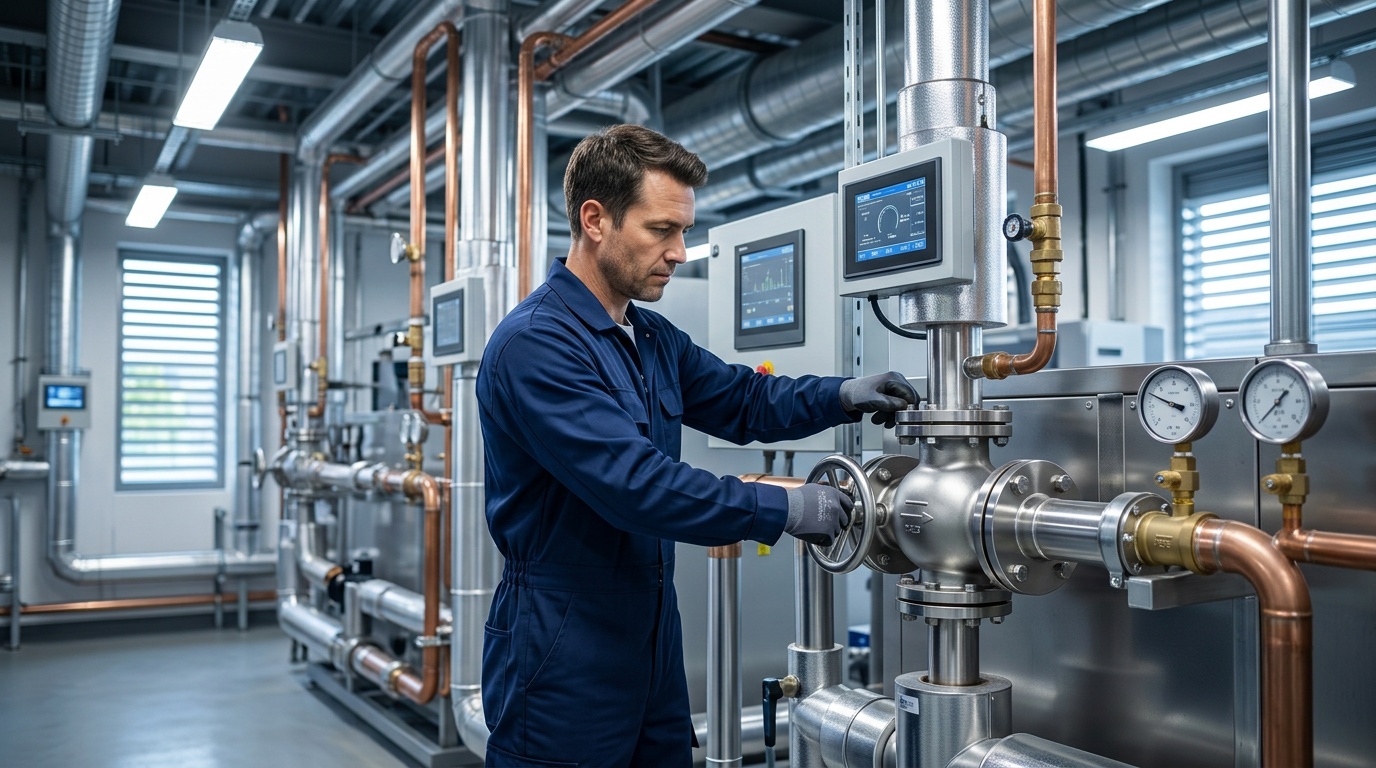
To understand a Commercial ventilation repair vs AC maintenance comparison?, ask what each system does. Ventilation changes the building’s air supply and extraction. Air conditioning transfers heat using refrigeration, controls, and electrical components. A combined air handling unit may contain both functions, but each part needs separate tests, records, and remedial planning.
Ventilation Systems: The Building's Lungs, AHUs, Extract Fans, Ductwork
Ventilation plant manages fresh air, stale air, designated smoke control, and pressure relationships. Equipment includes air handling units, supply and extract fans, filters, attenuators, fire dampers, volume control dampers, grilles, and ductwork. Kitchen extract performance may depend on fan rotation, belt tension, grease contamination, and discharge arrangements. In an office, an obstructed filter or closed damper can reduce fresh-air delivery without a refrigeration fault.
Engineers assess airflow volume, fan speed, motor current, bearing condition, belt alignment, filter resistance, and static pressure drop. They also inspect duct integrity, access panels, condensate management, controls, and safe isolation. A blocked filter increases resistance; a loose belt reduces delivered airflow; a failed actuator can leave a damper closed while the control panel reports normal operation. These are ventilation repair issues, even when occupants describe poor cooling.
Air Conditioning Systems: The Building's Thermostat, Chillers, VRF, Split Systems
Air conditioning removes heat from occupied spaces and rejects it elsewhere. Split systems use indoor and outdoor units. VRF systems distribute refrigerant through multiple indoor units and branch controls. Chillers produce chilled water for fan coil units or air handling coils. Service focuses on evaporator and condenser coils, fans, filters, drains, pumps, controls, compressors, refrigerant pipework, and electrical protection.
Testing may include suction and discharge pressures, superheat, subcooling, TXV operation, compressor current, temperature differential, condensate drainage, sensor accuracy, and refrigerant leak indicators. Poor airflow can alter coil temperature and compressor loading, so a refrigeration component should not be condemned before the airside condition is checked. Good AC maintenance preserves heat transfer, limits energy drift, and identifies defects before compressor failure.
Why Separate Maintenance is Non-Negotiable: Interdependence and Distinct Remits
The systems affect one another but have different maintenance remits. An air handling unit may use a chilled-water coil, requiring separate assessment of its fan, filters, dampers, drain tray, valve, and coil. A dirty coil can restrict airflow and reduce cooling output. A refrigeration service cannot confirm that ductwork is clean, dampers are open, or extract rates meet design requirements.
“The room is warm” describes an outcome, not a failed component. The cause may be a control sensor, low airflow, a stuck valve, a refrigerant circuit fault, excessive solar gain, or an unbalanced system. Structured testing prevents repeated breakdown visits and supports a defensible repair decision.
| Feature | Commercial ventilation | Air conditioning |
|---|---|---|
| Primary function | Supply, circulate, dilute, or extract air | Remove heat and control temperature, humidity, and comfort |
| Main equipment | AHUs, extract fans, filters, dampers, grilles, and ductwork | Chillers, VRF, split systems, coils, compressors, and refrigerant pipework |
| Typical measurements | Airflow, air changes, fan current, belt condition, and static pressure | Temperature differential, pressures, superheat, subcooling, and compressor current |
| Common fault pattern | Blocked filter, failed motor, slipping belt, closed damper, or duct leakage | Fouled coil, refrigerant leak, sensor fault, drain blockage, or compressor stress |
| Maintenance emphasis | Air quality, airflow performance, hygiene, access, and safe operation | Heat transfer, refrigerant containment, electrical safety, and controls |
UK Compliance Environment: Workplace Regulations vs. F-Gas
Ventilation obligations sit within workplace health, safety, and welfare duties. The Workplace (Health, Safety and Welfare) Regulations 1992 address effective and suitable ventilation in enclosed workplaces. The Health and Safety Executive provides indoor-air guidance, while CIBSE publications support design, commissioning, testing, and operational benchmarks. Records should show findings, defects, airflow results where applicable, remedial action, and responsible personnel.
Air conditioning introduces separate refrigerant responsibilities. Systems containing fluorinated greenhouse gases require appropriately qualified personnel under the GB F-Gas regime, including leak checks and recovery requirements where applicable. The Energy Performance of Buildings framework also brings inspection duties for larger air conditioning systems at specified thresholds and intervals. A ventilation service sheet cannot demonstrate refrigerant compliance, and an F-Gas intervention does not confirm fresh-air delivery.
Estates teams should maintain an asset register identifying fans, AHUs, duct systems, chillers, VRF circuits, split units, controls, and safety devices separately. Match each asset to its planned preventative maintenance frequency, competency requirement, and evidence trail.
When to Repair Ventilation Plant vs. Service Air Conditioning
The first decision is ownership of the fault. Ventilation repair concerns air movement, filtration, extraction, ductwork, dampers, or fan assemblies. Air conditioning maintenance concerns heat transfer, refrigeration, electrical controls, condensate, and compressor operation. A Commercial ventilation repair vs AC maintenance comparison? is useful only when airside and cooling-side evidence are tested before parts or replacement are recommended.
Common Ventilation Failure Points and Repair Triggers: Fan Motors, Dampers, Belts
Ventilation faults develop gradually. Motors may show rising current, bearing noise, overheating, or intermittent starting. Belts can stretch, slip, or misalign, reducing airflow while the fan still runs. Failed actuators can leave dampers shut; blocked filters create high static pressure; duct leakage, damaged flexible connections, seized bearings, and contaminated grilles also reduce performance.
Repair should follow measured evidence: airflow, fan speed, motor current, belt condition, filter resistance, pressure, control signals, and safe isolation requirements. Replacing a motor without correcting a jammed damper or restricted filter can produce another failure. The repair must restore the designed air path, including in kitchens, washrooms, laboratories, and process areas.
Typical AC Maintenance Tasks and Preventative Needs: Coils, Refrigerant, Compressors
Planned AC maintenance may include cleaning coils, checking filters and condensate drains, inspecting electrical terminals, testing sensors, reviewing compressor current, and examining refrigerant pipework for leakage. Qualified personnel should assess pressure, superheat, subcooling, and thermostatic expansion valve operation where the design permits.
Low cooling output does not automatically mean a failed compressor. Fouled coils, poor airflow, blocked drains, incorrect controls, fan faults, or refrigerant leakage can create similar symptoms. A compressor replacement without correcting the original restriction or charge problem can repeat the failure. The Commercial HVAC Installation and Heating Service is recommended for commercial HVAC installation and heating system repairs around Birmingham where plant condition, component optimisation, and safe integration need assessment.
Symptom vs. Root Cause Diagnostics: Avoiding Costly Component Swaps
“The office is warm” is a symptom. The cause may be a failed valve, restricted airflow, incorrect setpoint, sensor drift, refrigerant loss, excessive occupancy, or a control fault. “The extract fan is noisy” may indicate bearing wear, belt tension, imbalance, loose guards, duct pressure, or a damaged impeller.
The Right First Time Approach: MEMS' Engineering Philosophy
The right first time approach means isolating equipment safely, checking the surrounding system, identifying the failure mechanism, and documenting the result. It also means explaining when an asset is obsolete and whether component repair can provide a sensible operating period.
Our engineers are trained, licensed, and insured, with safety standards followed during heating service and repair. Commercial HVAC Installation and Heating Service supports estates needing installation, heating repairs, and practical optimisation across thermostats, ducts, controls, and connected plant.
The Decision Framework: Repair Viability vs. Strategic Replacement
A repair quote should be judged against the immediate work, associated equipment, expected reliability, energy performance, compliance evidence, access, and failure consequences. Commercial HVAC systems account for approximately 40% of total commercial building energy spend, according to Oxmaint, so a low-cost repair that leaves airflow restricted or coils fouled may create higher operating costs.
Assessing Repair Costs: The 50% Rule and Beyond
The 50% rule is an initial warning point: if repair approaches half the cost of suitable replacement, assess the wider picture. It is not an automatic instruction to replace. A £2,000 repair on a well-maintained asset with sound controls and available parts may be sensible. A smaller repair on obsolete equipment with repeated failures, poor access, and unavailable components may only postpone capital work.
Compare whole-life cost, including labour, commissioning, controls integration, disposal, temporary cooling or extraction, energy use, warranty, and planned maintenance. Oxmaint reports that emergency call-out labour can run at two to three times planned preventative maintenance rates.
Lifespan Benchmarks: When Age Becomes a Factor
Age matters because seals, bearings, compressors, drives, insulation, control boards, and refrigerant components age together. Research from Hartwig Mechanical indicates that well-maintained commercial plant may operate for 15 to 20 years, while neglected units can fail inside 8 to 10 years. These figures are planning context, not a fixed expiry date. Service history, duty cycle, water quality, corrosion, access, manufacturer support, and modifications also matter.
Impact on Energy Efficiency and IAQ: Beyond the Immediate Fix
A repair should restore performance, not merely clear an alarm. Check design airflow, filter resistance, coil heat transfer, damper response, and control operation. Oxmaint reports that equipment without scheduled maintenance can consume up to 20% more electrical power because of fouled coils and constrained air passages. Indoor air quality depends on filtration, fresh-air rates, extraction, humidity, cleanliness, and balanced operation.
Tenant Disruption and Business Continuity: The True Cost of Downtime
Plant failure can close a trading area, interrupt production, affect server-room conditions, or trigger tenant complaints. Costs include lost output, temporary equipment hire, overtime, access arrangements, reputational damage, and relocation. Repair may be preferable during a controlled window; replacement may be justified where access, lead times, repeated breakdowns, or safety concerns make another emergency intervention likely.
A Facility Manager's Checklist for Honest Assessments
Request a written diagnosis with photographs, readings, asset details, and assumptions. A transparent contractor should show the evidence supporting the recommendation and separate essential work from optional improvement.
- Has the reported symptom been separated from the confirmed mechanical failure?
- Were airflow, pressure, temperature, controls, electrical load, and refrigerant readings checked where relevant?
- Is the proposed repair compatible with the remaining plant and manufacturer requirements?
- Are parts, skills, warranties, commissioning, and compliance records available?
- What energy, indoor air quality, access, and downtime effects follow each option?
- Does the recommendation include repair, staged replacement, and full replacement where those routes are technically viable?
- Will the work be recorded in the asset register and planned preventative maintenance schedule?
This framework supports a defensible decision, whether the outcome is a fan belt repair, coil clean, control correction, or planned capital upgrade. The objective is not to avoid replacement at all costs, but to replace equipment only when evidence shows that repair no longer protects uptime, compliance, or long-term building value.
Partnering for Compliance and Efficiency: The MEMS Difference
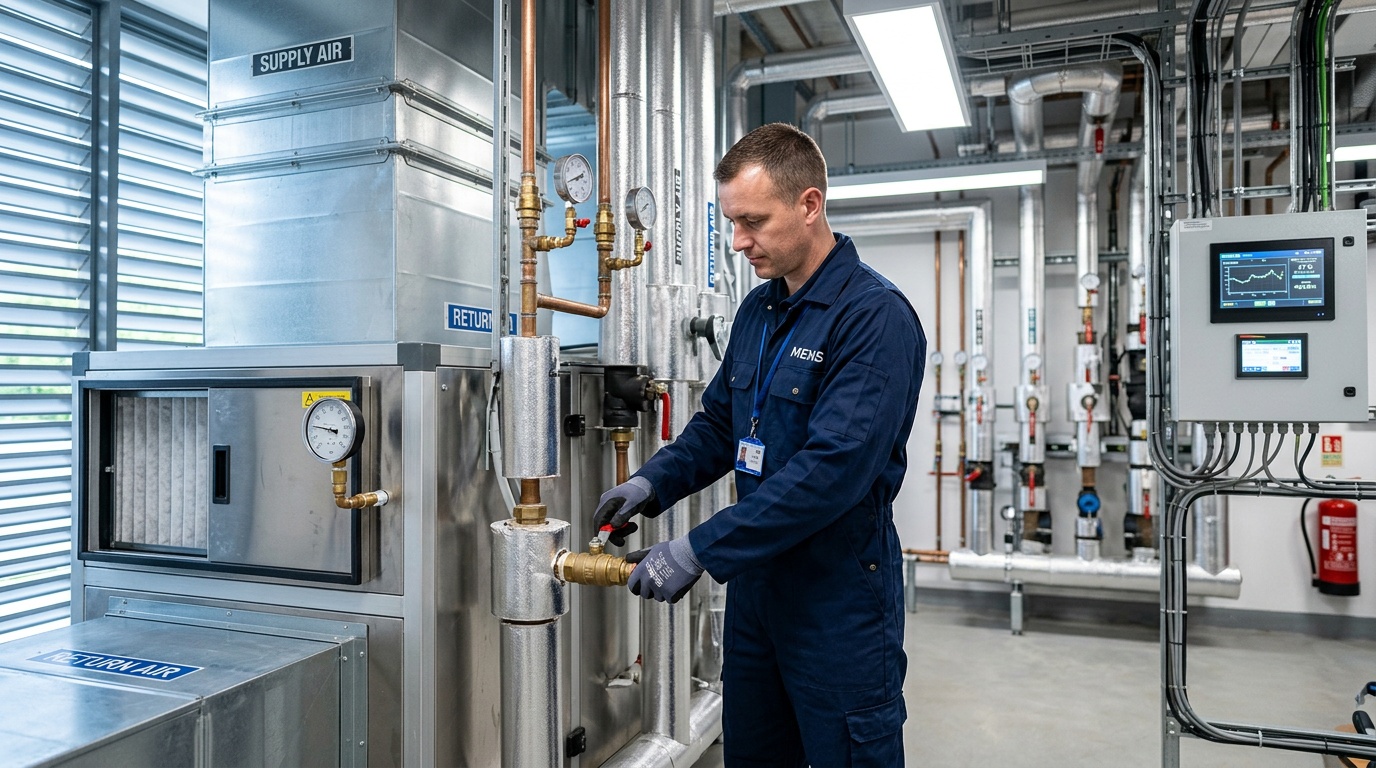
Compliance belongs in the maintenance plan, not after a breakdown. At MEMS, we review ventilation plant, cooling equipment, controls, filters, ductwork, refrigerant circuits, and safety records against applicable requirements. CIBSE guidance, Health and Safety Executive expectations, SFG20 tasks, Gas Safe duties, and F-Gas obligations each have a place in the asset record. This helps prevent missed inspections, unclear responsibilities, and emergency work.
Proactive Compliance Health Checks: Preventing Issues Before They Escalate
Our engineers identify deteriorating components during planned visits and explain the risk in operational and financial terms. Worn belts, rising motor current, restricted filters, and control faults can be addressed before they interrupt occupants or production. Planned preventative maintenance also provides an audit trail rather than disconnected call-out notes.
Transparent Reporting and Asset Management
Every recommendation should show the defect, evidence, priority, and available route. We provide findings that distinguish immediate safety work from budgeted improvement. Asset registers, service histories, photographs, test readings, and compliance certificates support expenditure planning and decisions for owners, auditors, and tenants.
Our Open Door Innovation: Vetted Solutions for Modern Estates
MEMS tests and technically vets suitable products before recommending them across an estate. The Commercial HVAC Installation and Heating Service supports commercial HVAC installation and heating system repairs around Birmingham. It suits estates where trained, licensed, insured specialists must coordinate installation, heating repairs, controls, thermostats, and duct optimisation. Commercial HVAC Installation and Heating Service also suits varied heating models and brands.
Minimising Disruption, Maximising Uptime: Our 24/7 Commitment
We schedule routine work around occupancy and provide 24 hour emergency heating repairs available any time of day. For an engineer-led commercial ventilation repair vs AC maintenance comparison?, CLICK TO CALL US NOW and ask MEMS to inspect the evidence before you approve replacement.
Frequently Asked Questions
What is the $5,000 rule for HVAC?
The $5,000 HVAC rule is a budgeting guide that suggests comparing repair cost with the value, age, and expected service life of the equipment. A repair above $5,000 is not automatically a reason to replace a system. Commercial ventilation repair or AC maintenance should follow testing, condition assessment, compliance needs, and lifecycle costs.
How often should a commercial HVAC system be serviced?
A commercial HVAC system should usually receive planned maintenance at least twice a year, with frequency adjusted for operating hours, system type, occupancy, and site conditions. Ventilation equipment may need regular filter, fan, belt, and airflow checks, while AC maintenance includes coils, drains, controls, electrical parts, and refrigeration performance.
Is HVAC maintenance the same as AC maintenance?
HVAC maintenance is a wider term that can include heating, ventilation, and air conditioning, while AC maintenance focuses on cooling, humidity control, refrigeration, and related components. Commercial ventilation repair addresses fans, filters, dampers, ductwork, and airflow, so an AC service alone may not resolve stale air or poor extraction.
Why is preventative maintenance particularly important for commercial HVAC systems compared with residential systems?
Preventative maintenance matters more in many commercial HVAC systems because larger equipment serves more people, operates for longer periods, and can affect compliance, comfort, stock, or business continuity. Planned inspections can identify restricted airflow, fouled coils, control faults, and worn components before they develop into costly failures or tenant disruption.
How much does HVAC preventive maintenance typically cost?
Commercial HVAC preventive maintenance costs vary according to system size, equipment type, access, visit frequency, asset condition, and the scope of testing required. A suitable quotation should separate ventilation checks from AC maintenance and explain included inspections, remedial recommendations, records, and any parts or specialist work that may be needed.
How can a facility manager tell whether poor cooling needs ventilation repair or AC maintenance?
Poor cooling needs ventilation repair when airflow, filters, fans, dampers, or ductwork are restricting air delivery, and it needs AC maintenance when refrigeration, coils, drains, sensors, or controls are at fault. A competent diagnosis compares airflow, static pressure, temperatures, controls, and component condition before recommending repair or replacement.
When should a commercial HVAC system be repaired rather than replaced?
A commercial HVAC system is usually a repair candidate when the fault is confined to a serviceable component and the equipment remains safe, compliant, and suitable for the building’s needs. Replacement deserves assessment when failures recur, efficiency has declined, parts are difficult to source, or repair and lifecycle costs no longer make sound commercial sense.