Compare ventilation maintenance services in estates.
There's a dangerous misconception in commercial property management: that "if it isn't broken, don't fix it." From my 24 years in this industry. From an apprentice on the tools to managing sites across the Midlands. I can tell you that silence in a plant room is often the loudest warning sign you’ll ignore. Asset depreciation is silent. Scale buildup in a boiler is silent. But the bill you get when the system fails in the middle of winter? That screams.
Key Takeaways
- Plant room silence often indicates hidden problems that will eventually lead to expensive breakdowns, especially during peak demand seasons.
- Scale buildup and other gradual damage accelerate asset depreciation long before any visible failure occurs.
- Proper ventilation maintenance prevents the silent accumulation of contaminants that compromise system efficiency and longevity.
- Comparing service providers should focus on their ability to detect early warning signs, not just their emergency response times.
- Reactive maintenance costs far exceed the investment in routine inspections and scheduled servicing.
We see it constantly: a facility manager tries to save budget by skipping a quarterly PPM (Planned Preventative Maintenance) visit. It looks like a saving on the P&L sheet for about three months. Then, a compressor burns out because a £50 filter wasn't changed. Suddenly, you aren't paying for a service visit; you're paying for an emergency call-out, parts at a premium, and potential business closure. To help you properly compare ventilation maintenance services in estates, this article provides a framework beyond just ticking boxes and comparing basic quotes.
Why Comparing Ventilation Maintenance Services Is a Strategic Necessity for UK Estates
The Commercial Cost of Poor Ventilation: Energy Waste, Compliance Risk, and Tenant Churn
Neglecting your estate's ventilation system isn't just an oversight; it's an active drain on your commercial assets. Inefficient systems, clogged with dust and grime, can reduce airflow by up to 50%, as noted by Vent-Axia. This forces fans to work harder, driving up energy consumption significantly. For a UK estate, this translates directly into higher operational expenditure. Beyond the energy bills, poor ventilation maintenance creates a breeding ground for issues. Without regular cleaning and testing, systems can fail to remove pollutants, leading to health risks, including potential carbon monoxide poisoning, a serious concern highlighted by Aircon Group. This directly impacts tenant satisfaction and retention; nobody wants to work or live in an environment with poor air quality or frequent breakdowns. The associated legal ramifications and compliance with HSE mandates are equally severe, with the Health and Safety Executive (HSE) mandating regular checks under ACOP L24. For comprehensive guidance, consider our M&E HVAC Compliance Health Check.
Why a Direct ‘Price Comparison’ Alone Will Fail Your Estate
Many estate managers fall into the trap of comparing ventilation maintenance providers based solely on price. This is a flawed approach that often leads to greater expense down the line. A low quote might signify cutting corners, using less qualified technicians, or offering a superficial service that misses critical issues. For example, a provider offering a basic filter change might overlook the need for duct hygiene or fan coil cleaning, which are essential for maintaining efficiency and air quality. As M&E Maintenance Solutions Limited, we've seen firsthand how a cheap, reactive service contract costs far more in the long run through emergency call-outs, premature equipment failure, and escalating energy bills. A true comparison must delve deeper, examining the provider's commitment to Planned Preventative Maintenance (PPM), their technical expertise, and their understanding of UK-specific regulations like SFG20 and TM59. Such a comprehensive evaluation ensures you are investing in long-term building health, not just a short-term fix.
The Three-Pillar Scorecard: How to Compare Ventilation Maintenance Providers Objectively
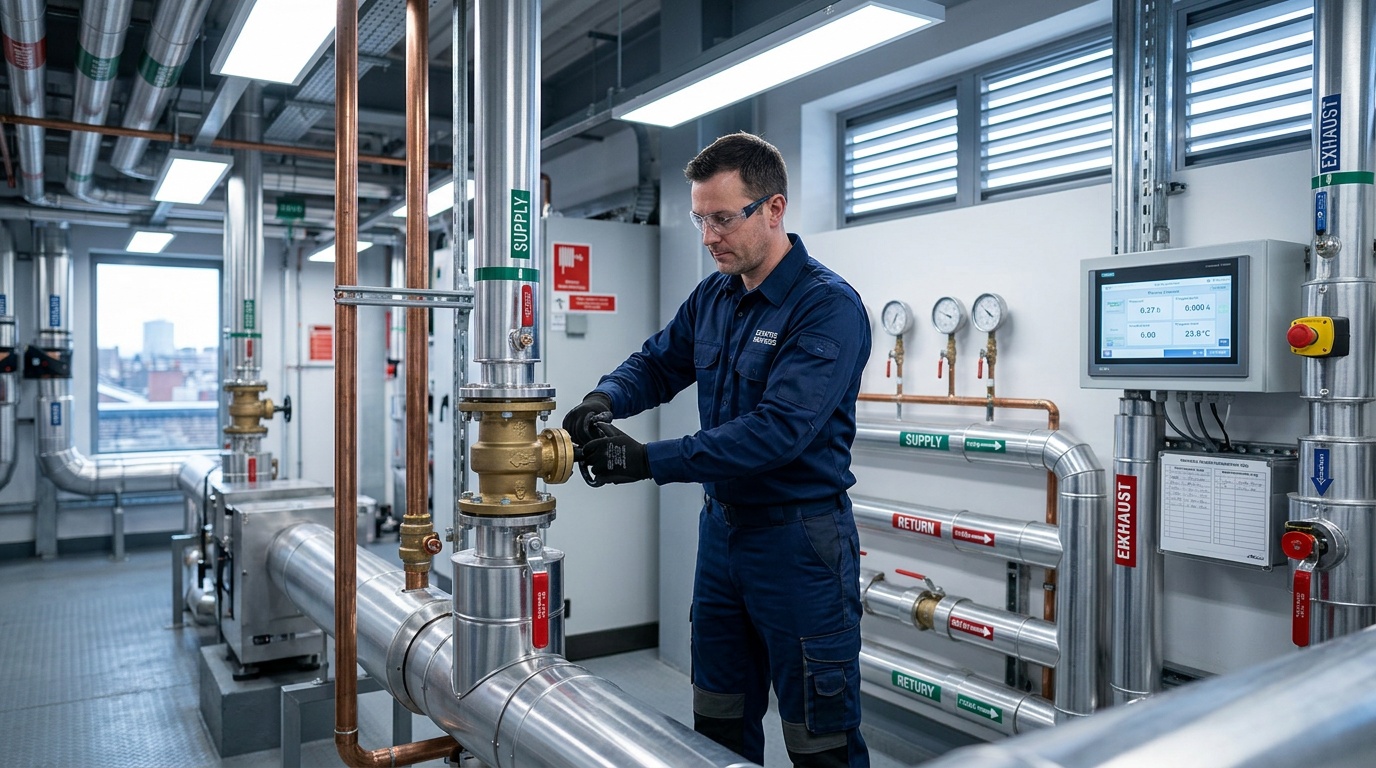
To move beyond superficial quotes and truly discern the best partner for your estate's ventilation maintenance, I've developed a three-pillar scorecard. This framework helps you objectively assess providers, ensuring you invest in reliable, compliant, and cost-effective service. It forces a deeper dive than a simple price-per-visit comparison, focusing on the long-term value and operational integrity of your building's air systems. By scoring providers against these pillars, you can make an informed decision that safeguards your asset, your tenants, and your budget. This structured approach is what we use internally at M&E Maintenance Solutions to ensure our clients receive unparalleled service, and it's the standard by which any reputable provider should be judged.
Pillar 1. Cost Transparency: Fixed-Price PPM vs. Reactive Call-Out Models
The first pillar focuses on how costs are structured and presented. A provider offering a fixed-price Planned Preventative Maintenance (PPM) contract generally demonstrates a commitment to proactive care. This model allows you to budget accurately, knowing the cost of essential servicing throughout the year. It encourages regular inspections and minor adjustments before they escalate into major failures. Conversely, providers who primarily offer reactive call-out services often present a lower initial price but leave you vulnerable to unpredictable, high emergency repair costs. While reactive services are sometimes necessary, an over-reliance on them indicates a maintenance strategy that is fundamentally flawed and expensive long-term. We advocate for a robust PPM schedule, supplemented by transparent, fixed-rate emergency response options, ensuring predictability and control over your maintenance expenditure. Consider our M&E Strategic Partner Programme for long-term maintenance planning.
Pillar 2. Compliance Depth: SFG20, TM59 and Gas Safe Verification
Compliance is non-negotiable in UK commercial property management. A serious provider will not only be aware of but actively adhere to industry standards and regulations. SFG20 is the UK's national standard for the planned maintenance of building services, and adherence is a mark of professionalism. Furthermore, for residential estates, TM59 (part of the Building Regulations) addresses overheating risk, which is directly linked to ventilation performance. For any systems involving gas, Gas Safe Register accreditation is a legal requirement. When comparing providers, inquire about their specific accreditations and their documented processes for ensuring compliance. Do they provide clear, traceable certification post-service? At M&E Maintenance Solutions, we hold certifications including SafeContractor, Refcom F-Gas Certification, Gas Safe Register, BES, and ISO 9001, ensuring our work meets the highest standards of safety and regulatory adherence for commercial buildings. Our M&E HVAC Compliance Health Check can assess your current standing.
Pillar 3. Energy Performance: How Maintenance Choices Affect Operational Spend
Ventilation systems are significant energy consumers. The way they are maintained directly impacts your estate's overall energy efficiency and, consequently, operational costs. A system that is regularly serviced. With filters cleaned or replaced, heat exchangers descaled, and airflow balanced. Will operate at peak efficiency. This can lead to substantial savings; balanced systems with ERV technology, for instance, can cut energy bills by 20% compared to standard ventilation, according to M&E Solutions research. Conversely, neglected systems become energy hogs. Dust and grime buildup, as highlighted by organizations like Vent-Axia, not only reduce efficiency but can also lead to system overloads and failures. When comparing providers, ask how their maintenance plans contribute to energy savings and performance optimisation. Look for a partner who can quantify these benefits and demonstrate how their services translate into lower utility bills for your estate.
Ventilation System Types in UK Estates: Maintenance Needs at a Glance
Understanding the specific engineering demands of your estate's air handling equipment is the first step toward effective asset management. Different ventilation architectures require distinct servicing intervals and technical interventions. A blanket maintenance approach inevitably leaves gaps, leading to premature component failure and inflated energy consumption. When you compare ventilation maintenance services in estates, you must evaluate whether a provider understands these mechanical differences and adjusts their service schedules accordingly. For expert advice on Commercial Ventilation Repair Services, look no further.
MVHR Systems (Mechanical Ventilation with Heat Recovery)
Balanced systems featuring heat recovery cores demand rigorous biannual servicing to maintain thermal efficiency. The primary maintenance focus involves cleaning or replacing fine particulate filters and descaling the heat exchanger plates. Dust accumulation directly impairs heat transfer, forcing the unit to consume more electricity to maintain indoor temperatures. In UK commercial estates, neglecting these cores often results in a 15% to 20% spike in annual heating costs. Providers must demonstrate technical capability in handling delicate aluminium or polymer plates without causing damage during cleaning.
MEV Systems (Mechanical Extract Ventilation)
Mechanical extract ventilation relies on continuous low-speed fans to remove stale air from wet rooms and plant areas. These units require quarterly visual inspections and annual motor bearing lubrication. The main failure point is usually trapped moisture in the fan housing, which leads to corrosion and eventual motor burnout. Estate managers should verify that their chosen maintenance partner includes moisture barrier checks and impeller cleaning in their standard contract. Ignoring these simple tasks routinely results in unexpected system shutdowns during peak occupancy periods.
Exhaust-Only and Hybrid Systems
Traditional exhaust configurations operate with higher airflow volumes to compensate for negative pressure. Hybrid setups combine natural infiltration with mechanical boosting, creating complex airflow dynamics that require precise damper calibration. Maintenance for these systems centres on verifying airflow rates across all zones and ensuring anti-syphon devices function correctly. Servicing frequency typically aligns with quarterly inspections, but any modification to the building fabric requires immediate re-balancing. A competent engineer will document static pressure readings to prove the system maintains the required extraction rates.
ERV and HRV Commercial Units
Energy Recovery Ventilation and Heat Recovery Ventilation units for larger commercial footprints involve sophisticated control boards and variable frequency drives. These systems handle substantial air volumes and require annual comprehensive diagnostics, including motor amperage checks and sensor calibration. The control logic must be reviewed annually to ensure it adapts to changing occupancy patterns and seasonal temperature shifts. Maintenance contracts must explicitly cover software updates and calibration of carbon dioxide sensors to prevent overheating risks under TM59 guidelines.
| System Type | Primary Maintenance Focus | Recommended Service Frequency | Key Cost Implication if Neglected |
|---|---|---|---|
| MVHR | Heat exchanger descaling, fine filter replacement | Biannual | Significant thermal efficiency loss, escalated heating bills |
| MEV | Impeller cleaning, motor bearing inspection, moisture checks | Quarterly visual, annual full service | Corrosion, motor failure, localized damp issues |
| Exhaust-Only/Hybrid | Damper calibration, anti-syphon verification, airflow balancing | Quarterly | Pressure imbalances, odour migration, tenant complaints |
| ERV/HRV Commercial | VFD diagnostics, sensor calibration, control logic review | Annual comprehensive | Overheating risks, control board failure, compliance breaches |
Step-by-Step Maintenance Checklist for Estate Managers
Managing a commercial estate requires a disciplined approach to mechanical upkeep. Relying on a provider's word without verifying their output is a common mistake I see costing clients dearly. You need a structured audit trail to confirm your maintenance partner is delivering genuine value. By tracking these specific operational milestones, you can objectively assess whether your current arrangements meet industry standards or merely satisfy a contractual minimum. At M&E Maintenance Solutions, we utilise this exact framework to guarantee every commercial site we manage operates within optimal engineering parameters.
Quarterly Tasks: Filter Inspection, Fan Alignment, Damper Checks
Quarterly inspections form the backbone of preventative care. Technicians must visually examine all intake and exhaust filters for particulate loading and replace them when differential pressure exceeds manufacturer limits. Fan belts and direct-drive motors require tension checks and alignment verification to prevent bearing wear. Damper actuators should be tested through their full travel range to confirm they open and close without binding. Any signs of vibration or unusual noise during these quarterly rounds must trigger an immediate deeper investigation rather than a simple reset.
Annual Deep Service: Duct Hygiene Inspection, Heat Exchanger Cleaning, Airflow Measurement
Once a year, the maintenance scope expands to address systemic degradation. Ductwork inspection using remote cameras reveals hidden debris accumulation, mould growth, or structural damage inside the ventilation network. Heat exchanger surfaces require chemical descaling or mechanical brushing to restore thermal conductivity. Airflow measurement across every zone ensures the system delivers the designed volume of fresh air. These annual interventions prevent the slow efficiency decay that quietly inflates utility bills and compromises indoor air quality standards.
Compliance Documentation Trail: What You Must Keep on File for HSE and Building Control
Technical work means nothing without verifiable paperwork. Every service visit must generate a detailed report specifying which components were inspected, which parts were replaced, and what performance metrics were recorded. You must retain gas safety certificates, F-Gas leak test records, and ventilation commissioning data for the entire lifespan of the building. Building control authorities and health inspectors will request these documents during routine audits. A compliant estate maintains a digital archive where every certificate is timestamped, signed, and easily retrievable. For assistance with this, consider our M&E HVAC Compliance Health Check.
Essential Maintenance Audit Checklist
- Quarterly: Verify filter differential pressure readings and replace if clogged.
- Quarterly: Inspect fan motor bearings for wear and confirm belt tension.
- Quarterly: Test damper actuators for smooth operation and secure wiring.
- Annually: Conduct remote camera duct inspection for debris or contamination.
- Annually: Descale heat exchanger plates and measure zone airflow volumes.
- Annually: Calibrate CO2 and temperature sensors against reference equipment.
- Ongoing: Store all service reports, gas safety certs, and F-Gas logs in a central digital repository.
The Financial Impact: Neglected vs. Professionally Maintained Ventilation Over Five Years
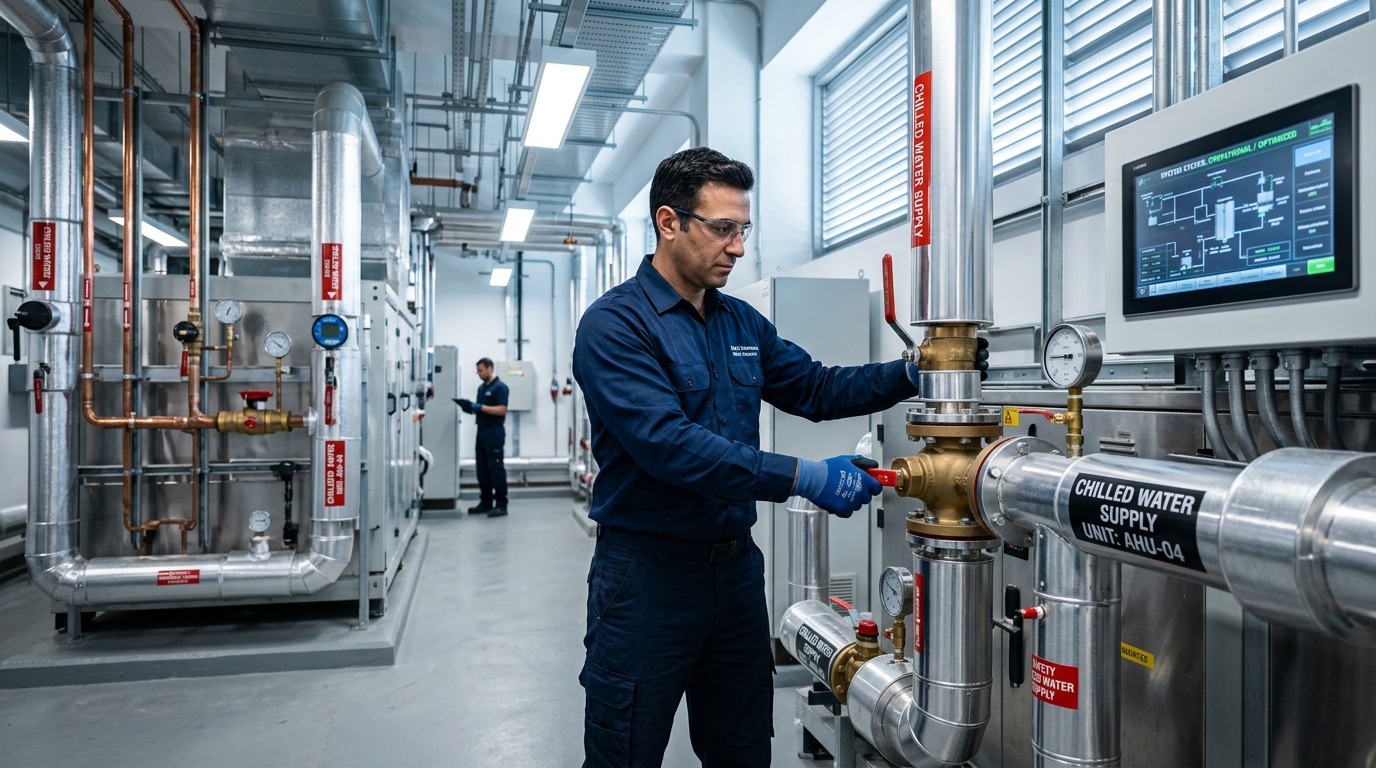
When managing commercial properties, the true cost of ventilation maintenance often extends far beyond the initial service invoice. Many estate managers are forced into a reactive cycle, responding to failures rather than preventing them. This approach might appear budget-friendly in the short term, but over a typical five-year asset lifecycle, it becomes a significant financial drain. The difference in total cost of ownership between a system that receives consistent, expert care and one that is neglected is stark. Understanding this disparity is key to making informed decisions and safeguarding your investment.
Scenario A. Reactive Approach: Emergency Repairs, Failed Compliance Audits, Higher Energy Bills
Consider an estate where ventilation maintenance is an afterthought, addressed only when a complaint arises or a system fails. This reactive strategy is characterised by frequent, costly emergency call-outs. A fan motor burning out due to a worn bearing, or a heat exchanger failing because it was never descaled, leads to immediate downtime and expensive rush repairs. Moreover, a lack of regular, documented servicing means compliance documentation is often incomplete. This puts the estate at risk of failing health and safety inspections, potentially incurring fines and mandatory, disruptive remedial works. As Vent-Axia notes, dust and grime buildup can reduce ventilation efficiency by up to 50%, forcing systems to consume more power. Consequently, energy bills climb steadily year after year, compounding the expense of unexpected repairs and compliance failures. This scenario is a direct path to escalating operational expenditure and reduced asset value. For insights into managing energy costs, explore our Renewable Energy Solutions.
Scenario B. Proactive PPM (Planned Preventative Maintenance): Lower Total Cost of Ownership, Extended Asset Life
In contrast, an estate managed with a robust Planned Preventative Maintenance (PPM) schedule, like that offered by M&E Maintenance Solutions, tells a different financial story. PPM focuses on routine inspections, cleaning, and minor adjustments that prevent major issues. For instance, regular filter changes, which cost a fraction of a new fan motor, prevent strain on the entire system. According to M&E Solutions' research, balanced systems with ERV technology can cut energy bills by 20% compared to standard ventilation; proactive maintenance ensures these efficiencies are maintained. By adhering to standards like SFG20 and ensuring systems comply with regulations such as TM59 for overheating risks, PPM minimises the likelihood of failed audits and associated penalties. The result is a system that operates reliably, efficiently, and at a significantly lower total cost of ownership over its lifespan. Assets are protected, energy spend is controlled, and the building environment remains compliant and comfortable for occupants.
How M&E's Internal Product-Testing Reduces Risk for Estate Managers
At M&E Maintenance Solutions, our commitment to providing the best HVAC services in the UK extends to rigorous internal testing of new technologies. Before we recommend any product or service to our clients, we assess its real-world performance, durability, and effectiveness. This proactive approach to vetting means that when you engage with us, you benefit from solutions that have already proven their worth. For estate managers, this translates to reduced risk. You avoid investing in unproven systems or methods that might fail prematurely or offer less than advertised efficiency gains. Our experience, honed over 24 years from apprentice to MD, informs our judgement, ensuring that the maintenance strategies and any recommended upgrades we implement are sound engineering practices designed for long-term commercial benefit and regulatory compliance. This diligence is part of what allows us to compare ventilation maintenance services in estates with confidence, knowing our methodology is built on proven results.
| Cost Factor | Scenario A: Reactive Approach | Scenario B: Proactive PPM |
|---|---|---|
| Planned Preventative Maintenance (PPM) | Minimal to none; sporadic, unplanned interventions. | Consistent, scheduled visits covering filters, cleaning, checks. (e.g., £1,500 - £4,000 p.a. depending on estate size) |
| Emergency Repairs & Call-Outs | Frequent, high-cost emergency call-outs, premium parts. (e.g., £500 - £2,000 per incident, 4-8+ incidents p.a.) | Rare; minor issues addressed during PPM, preventing major failures. (e.g., £100 - £300 per incident, 0-2 p.a.) |
| Energy Consumption | Increased by 15-50% due to inefficiency from dirt, wear. (e.g., +£2,000 - £10,000+ p.a. depending on usage) | Optimised; maintained efficiency, potential savings. (e.g., 20% reduction in ventilation energy spend) |
| Compliance & Fines | Risk of failed audits, fines, mandatory remedial works. (e.g., £1,000 - £10,000+ in fines/costs) | Consistent compliance; documentation readily available. (e.g., £0 in fines, minimal audit preparation time) |
| Asset Lifespan & Replacement Costs | Premature equipment failure, shorter asset life, earlier replacement. | Extended asset life, delayed major capital expenditure. |
| Estimated 5-Year Total Cost | Significantly Higher (e.g., £25,000 - £70,000+) | Lower & More Predictable (e.g., £10,000 - £30,000+) |
References
Frequently Asked Questions When Comparing Ventilation Maintenance Services
Navigating the options for ventilation maintenance can feel complex. To help you make a clear decision, here are answers to some common questions estate managers have when they need to compare ventilation maintenance services in estates and ensure their building's air quality and compliance.
How often should estate ventilation systems be serviced?
The frequency depends on the system type and estate usage. As a general guideline, basic inspections and filter checks should occur quarterly. More in-depth servicing, including duct cleaning and heat exchanger maintenance, is typically recommended annually. For complex commercial units like ERV or HRV systems, manufacturers often specify biannual or annual comprehensive diagnostics. Adhering to SFG20 standards provides a clear framework for scheduled maintenance tasks.
What accreditations should a provider hold for UK estates?
Reputable providers will hold accreditations demonstrating their commitment to safety, quality, and regulatory compliance. Key certifications include Gas Safe Register for any gas-related work, Refcom F-Gas Certification for handling refrigerants, SafeContractor for health and safety, and ISO 9001 for quality management. Adherence to industry standards like SFG20 is also a strong indicator of professional practice. For a full list of our accreditations, visit our M&E HVAC Compliance Health Check page.
How do I know if my system is compliant with TM59 (overheating) regulations?
TM59 compliance requires an assessment of overheating risk, particularly in new-build residential properties, but its principles apply to maintaining comfortable environments in commercial and mixed-use estates. A competent ventilation maintenance provider will assess your system's ability to manage heat loads, ensure adequate airflow for cooling, and integrate controls that prevent excessive temperature build-up. They should be able to provide documentation or reports confirming that your ventilation strategy actively mitigates overheating risks. Our M&E HVAC Compliance Health Check can help verify this.
Can one provider handle mixed system types across a multi-building estate?
Yes, a comprehensive facilities maintenance firm can and should manage mixed system types across a multi-building estate. Expertise in MVHR, MEV, exhaust-only, hybrid, ERV, and HRV systems is essential. Look for a provider with a broad technical skill set and a structured approach to managing diverse assets. This ensures consistent service quality and simplifies your contracting, allowing you to benefit from a single point of contact for all your ventilation maintenance needs, thereby streamlining operations and ensuring uniform standards across your entire portfolio. Our M&E Maintenance Solutions HVAC Services cover a wide range of systems.
Frequently Asked Questions
How do I choose a ventilation maintenance service for my commercial estate?
To choose a ventilation maintenance service for your commercial estate, use a three-pillar scorecard that assesses cost transparency, compliance depth, and technical expertise. Avoid comparing only on price, as a cheap quote often hides a reactive model that leads to expensive emergency call-outs. Look for a provider offering fixed-price planned preventative maintenance (PPM) and clear adherence to UK standards like SFG20 and TM59.
How often should a commercial ventilation system be cleaned?
A commercial ventilation system should be cleaned at least quarterly as part of a planned preventative maintenance (PPM) schedule. Skipping these visits can allow dust and grime to reduce airflow by up to 50%, forcing fans to work harder and driving up energy bills. Regular cleaning also prevents health risks and ensures compliance with HSE mandates under ACOP L24.
How much does a whole house ventilation system cost for a commercial estate?
The cost of a whole house ventilation system for a commercial estate varies widely based on building size, system type, and installation complexity. However, comparing maintenance services based solely on upfront price is a mistake, as a low quote often signals a reactive model that leads to higher long-term costs from emergency repairs and energy waste. Focus on the total cost of ownership, including fixed-price PPM contracts that offer budget predictability.
What is the 80/20 rule for cleaning ventilation systems in estates?
The 80/20 rule for cleaning ventilation systems in estates means that 80% of system failures stem from 20% of neglected components, such as filters and coils. By prioritising regular planned preventative maintenance (PPM) on these critical parts, you prevent the majority of breakdowns and emergency call-outs. This proactive approach saves thousands in repairs and energy costs compared to a reactive strategy.
Why is comparing ventilation maintenance services by price alone a bad idea?
Comparing ventilation maintenance services by price alone is a bad idea because a low quote often indicates a superficial service that misses critical issues like duct hygiene or fan coil cleaning. This reactive approach leads to higher costs later through emergency call-outs, premature equipment failure, and rising energy bills. A proper comparison should evaluate the provider's commitment to PPM, compliance with SFG20, and technical expertise.
What compliance standards should a ventilation maintenance provider meet in the UK?
A ventilation maintenance provider in the UK should meet standards such as SFG20 for building services maintenance, TM59 for overheating assessments, and hold Gas Safe Register certification. They must also comply with HSE mandates under ACOP L24 for regular checks. Verifying these credentials ensures your estate avoids legal risks and maintains tenant safety.
How can I tell if my estate's ventilation system needs urgent maintenance?
You can tell if your estate's ventilation system needs urgent maintenance by listening for unusual noises, noticing increased energy bills, or detecting poor air quality complaints from tenants. Silence in a plant room is often a warning sign of scale buildup or failing components. Regular planned preventative maintenance (PPM) catches these issues early, preventing costly emergency breakdowns during peak seasons.