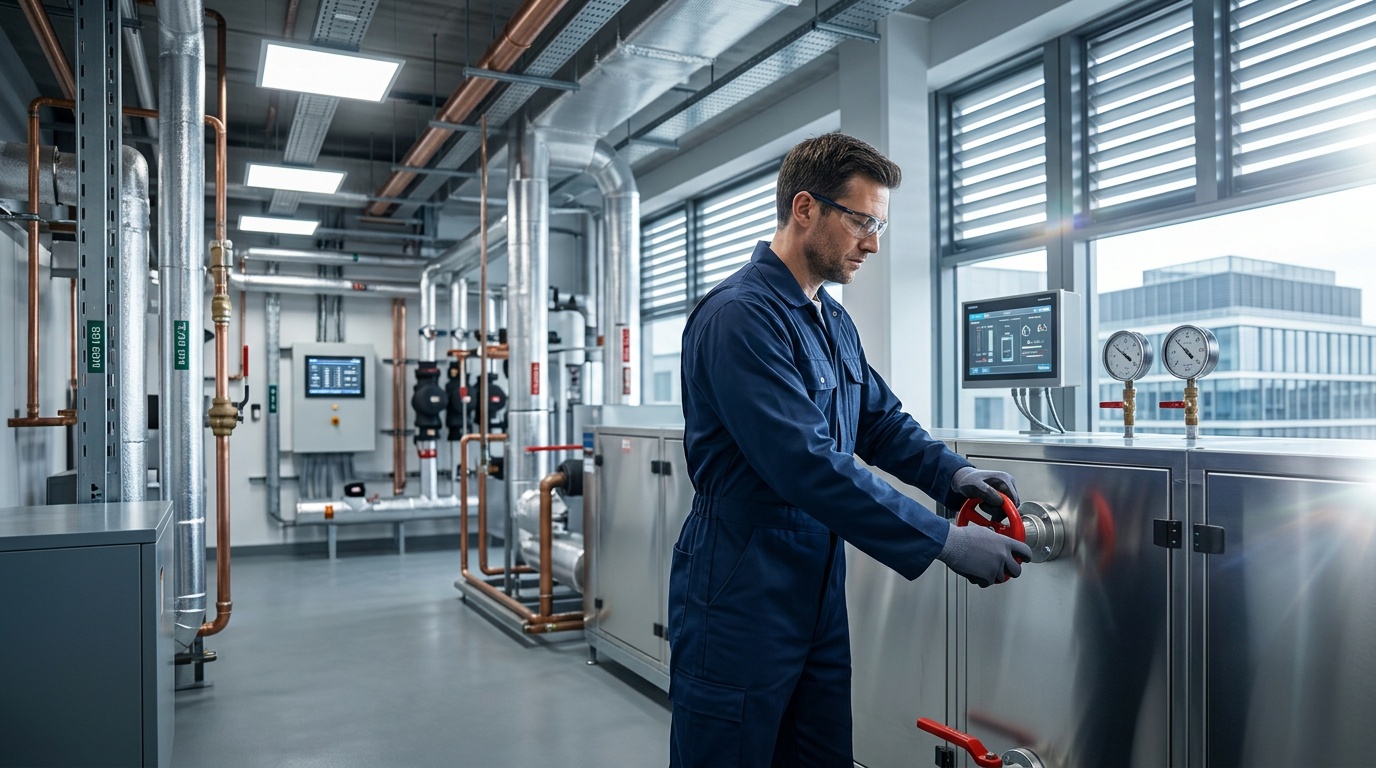
Cost of heat recovery system installs.
The cost of heat recovery system installs for commercial properties typically runs from £2,000 to £25,000+, depending on system type, building size, and installation complexity. That range tells you very little on its own. What matters is understanding what drives it--and where your specific building sits within it.
The Real Cost of Installing a Heat Recovery System: Beyond the Unit Price
Why an 'Average Cost' Can Be Misleading for Commercial Properties
Every facility manager deserves a straight answer on the cost of heat recovery system installs--but a single average figure is commercially useless. A 500 m² office retrofit in Birmingham carries entirely different cost drivers than a new-build warehouse in the West Midlands. Quoting an "average" without context is how budgets get blown and projects stall.
Breaking Down the Installation: What's Included?
A proper installation quote covers more than the unit. Expect these line items:
- Unit purchase: The heat recovery ventilation (HRV) or energy recovery ventilation (ERV) unit itself
- Ductwork design and fabrication: Often the largest single labour cost on commercial sites
- Commissioning and controls integration: Connecting to your BMS or standalone controls
- Compliance certification: F-Gas registration where applicable, air quality testing
The 'Hidden' Costs Facility Managers Need to Factor In
I've seen it first-hand at sites we've assessed since 2007: the "cheap quote" excluded ductwork penetrations through concrete floors, adding thousands to the final account. It's not a rare edge case--it's a predictable outcome of under-surveyed projects. A thorough pre-installation survey isn't optional. It's the difference between a fixed-price contract and a painful string of variations that erode your budget one line item at a time.
M&E Maintenance Solutions holds ISO 9001 accreditation and REFCOM F-Gas certification because getting this right demands engineering rigour at every stage--not just at installation day. Protecting your asset starts before a single bracket goes on the wall.
Want an accurate, no-surprises assessment? Contact M&E Maintenance Solutions for a commercial site survey tailored to your building's specific requirements.
Decoding Heat Recovery: HRV, ERV, and Drain-Water Systems and Their Price Tags
Understanding the Differences: Air-Based (HRV/ERV) vs Water-Based (DWHR)
Heat recovery isn't one technology--it's three distinct ones, each suited to a different operational need. Heat Recovery Ventilation (HRV) transfers heat from outgoing stale air to incoming fresh air. Energy Recovery Ventilation (ERV) does the same but also transfers moisture, making it better suited to humid commercial environments such as kitchens or leisure facilities. Drain-Water Heat Recovery (DWHR) captures heat from wastewater, typically in facilities with high hot-water demand like hotels or gyms. Specifying the wrong system type is a costly error that no amount of efficient installation can fix.
Cost Comparison: Unit Purchase Price by System Type
| System Type | Typical Unit Cost | Best Application | Installation Complexity |
|---|---|---|---|
| HRV (Air-to-Air) | £800 - £6,000 | Offices, retail, schools | Moderate: ductwork required |
| ERV (Air-to-Air with moisture) | £1,200 - £8,000 | Kitchens, gyms, humid spaces | Moderate to high |
| DWHR (Drain-Water) | £500 - £3,500 | Hotels, leisure, high hot-water use | Low to moderate: plumbing integration |
How System Type Drives Your Labour Bill
Labour is often as significant a cost as the unit itself--sometimes more so. HRV and ERV systems require ductwork runs that can reach several thousand pounds in fabrication and installation on a commercial floor plate. DWHR units involve plumbing integration and are generally less disruptive, but any savings on labour evaporate quickly if the building's drainage layout requires rerouting. On occupied sites, out-of-hours working adds a labour premium of 25-40%. Plan for it. Don't discover it mid-project.
The Hidden Factors Driving Up Your Heat Recovery Installation Costs in the UK
Building Type and Size: The Foundation of Your Estimate
A single-storey warehouse and a multi-tenanted office block require completely different approaches. Air volume calculations, zoning requirements, and occupancy patterns all shift the specification. Cost scales with floor area--but not linearly. A building with complex zoning or mixed use can cost proportionally more per square metre than a straightforward open-plan space, even if the total square footage is smaller.
BMS Integration: The Engineering Hours Generic Quotes Miss
Connecting a heat recovery system to an existing Building Management System (BMS) adds engineering hours that generic quotes rarely capture. Controls programming, sensor placement, and commissioning verification are non-negotiable for the system to perform as designed. Skip proper integration and the system runs open-loop--which means you've paid for efficiency gains you'll never actually see on your energy bill.
Accessibility and Structural Modifications: The On-Site Challenges
Location and Labour Rates
Labour rates across the UK vary significantly. London and the South East carry a premium of 20-35% over Midlands rates. For clients in the West Midlands, that's a material cost advantage worth noting when comparing quotes from national contractors. Local authority planning conditions on listed buildings or conservation areas can also add survey and approval costs before a single tool is unpacked.
The M&E Advantage: Eliminating the Variation Orders That Inflate Final Accounts
M&E Maintenance Solutions carries out pre-installation surveys as standard--not as an optional extra you pay for separately. Our engineers identify structural constraints, BMS compatibility issues, and compliance requirements before contract sign-off. That process eliminates the variation orders that turn a competitive quote into an expensive final account. The goal is simple: make the cost of heat recovery system installs predictable, compliant, and commercially sound from day one.
Energy Savings, ROI, and the Long-Term Commercial Case
Estimating Potential Energy Savings: A Practical Framework
Heat recovery only makes commercial sense when it's weighed against measurable savings. A well-specified HRV system can recover 70-85% of heat that would otherwise be exhausted. On a 1,000 m² office running gas heating, that translates to a meaningful reduction in annual energy spend--but the precise figure depends on your current heating system efficiency, occupancy hours, and local energy tariffs. Any engineer quoting a savings figure without first auditing your existing plant is guessing. And you're the one who pays when the guess is wrong.
Building Your ROI Case
- Annual energy cost before installation: Audit your last 12 months of heating and ventilation spend
- Projected saving (%): Apply your engineer's assessed heat recovery efficiency rate
- Annual saving (£): Energy cost multiplied by saving percentage
- Simple payback period: Total installed cost divided by annual saving
- Net saving over 15 years: System lifespan saving minus maintenance costs
A commercial HRV installation with a £12,000 all-in cost and £2,400 annual saving delivers a five-year payback. After that, the savings are pure return.
Maintenance, Lifespan, and What Ownership Actually Costs
Installation is a one-time capital event. Ownership is ongoing--and that distinction matters when building your business case. Heat recovery units carry a typical operational lifespan of 15-25 years, but only with planned preventative maintenance (PPM). Filter changes, heat exchanger cleaning, and fan motor inspections are non-negotiable. A fouled heat exchanger can drop recovery rates by 30%, silently erasing the savings that justified the investment in the first place. Factor annual maintenance costs of £300-£800 for commercial units into your total cost of ownership from day one, not as an afterthought.
UK Grants and Incentives Worth Investigating Before You Commit Capital
Several funding routes are worth exploring before signing off on capital expenditure:
- Salix Finance: Interest-free loans for public sector organisations covering energy efficiency upgrades, including heat recovery
- UKSPF and local growth funds: Some regional programmes support commercial energy efficiency projects; eligibility varies by local authority area
- Enhanced Capital Allowances: Check current HMRC guidance on whether your chosen system qualifies for accelerated tax relief on capital expenditure
- Net Zero funding streams: Government decarbonisation schemes for commercial buildings are evolving; a specialist M&E adviser can confirm eligibility based on current guidance
Grants change frequently. Confirm current availability with your installer before budgeting on incentive income.
Viewed across a full asset lifecycle, the cost of heat recovery system installs is rarely the barrier it first appears. The upfront spend is finite; the energy savings and compliance benefits compound year on year. M&E Maintenance Solutions has guided commercial clients through specification, installation, and ongoing PPM since 2007. Get in touch for a no-obligation site survey and a total cost of ownership assessment built around your specific building.
Frequently Asked Questions
Does a heat recovery system installation require professional expertise?
Absolutely. Installing a heat recovery system, whether HRV or ERV, involves complex ductwork design, precise commissioning, and integration with existing building controls. Skipping professional engineering rigour can lead to costly errors and systems that don't perform as expected, ultimately costing more in the long run.
Are heat recovery ventilation systems a worthwhile investment for commercial properties?
For commercial properties, a properly installed heat recovery system is a sound investment. It significantly improves indoor air quality and can lead to substantial energy savings by recovering heat that would otherwise be lost. The true value comes from avoiding hidden costs through a thorough pre-installation survey and expert execution.
What is the typical cost for a heat recovery system in a commercial building?
The cost of heat recovery system installs for commercial properties varies widely, typically from £2,000 to £25,000+. This range depends heavily on factors like the system type, the building's size and complexity, and specific installation challenges. A precise figure requires a detailed site survey to understand your building's unique requirements.
Can a heat recovery system be integrated with an existing HVAC setup?
Yes, heat recovery systems can be integrated into existing HVAC setups, often connecting to a Building Management System (BMS). This requires careful system design, controls programming, and commissioning to ensure seamless operation and optimal performance. Proper integration is key to realising the efficiency gains you're investing in.
What are the main challenges or considerations for installing a heat recovery system?
The main considerations include the initial investment, the complexity of ductwork fabrication and installation, and the need for structural modifications in some older buildings. Overlooking factors like potential asbestos surveys, temporary heating provision, or out-of-hours labour can significantly increase the final cost. A detailed pre-installation survey helps identify these challenges early, preventing budget overruns.