maintenance services
There's a dangerous misconception in commercial property management: the "if it isn't broken, don't fix it" mentality. From my 24 years in this industry, starting as an apprentice combustion engineer and now leading M&E Maintenance Solutions, I can tell you that silence in a plant room is often the loudest warning sign you’ll ignore. Asset depreciation, scale buildup, and gradual system wear are silent processes. But, the bill you receive when a critical system fails during peak hours? That screams, often with the sound of lost revenue and damaged reputation.
Key Takeaways
- Waiting for equipment to break before scheduling service is a costly gamble that puts your building at risk.
- Silent mechanical failures like scale buildup and asset wear happen slowly but can deliver sudden, expensive emergency repairs.
- A proactive maintenance program protects your reputation and revenue by preventing critical system failures during peak business hours.
- Regular inspections catch small problems early, saving you from the loud financial shock of a major breakdown.
- Ignoring gradual system deterioration is not a cost-saving strategy; it is a direct path to higher long-term expenses.
Facility managers and business owners often feel caught between the boiler room and the boardroom, struggling to translate technical needs into business continuity. My mission has always been to bridge that gap. It's about understanding that maintenance isn't just a line item on a P&L sheet; it's a strategic investment in your building's operational integrity, your energy efficiency, and your legal standing. This guide will break down what true maintenance services entail and why a proactive approach is not just sensible, but essential for commercial success across the UK.
The Commercial Reality: Reactive Repairs vs Planned Preventative Maintenance
In the field of commercial property operations, the temptation to address issues only when they manifest is strong, largely driven by short-term budget pressures. But, this reactive stance is a costly illusion. It’s akin to waiting for a car engine to seize before considering an oil change. The immediate 'saving' from skipping a service is dwarfed by the eventual cost of a major overhaul or replacement, not to mention the disruption caused. For any business relying on its premises to operate, from retail units in Birmingham to offices in Manchester, downtime is a direct hit to the bottom line. Planned Preventative Maintenance (PPM) is not a cost; it's a proactive strategy to safeguard revenue and operational continuity.
What Are the Different Types of Maintenance Services?
Understanding the spectrum of maintenance is the first step towards a smarter strategy. Broadly, we categorise maintenance into three main types: reactive, preventative, and predictive. Reactive maintenance, often termed 'corrective' or 'breakdown' maintenance, is what happens when something fails. It’s emergency repair work, typically expensive and disruptive. Preventative maintenance involves scheduled inspections and servicing to prevent failures. This includes tasks like changing filters, lubricating moving parts, and testing safety systems at regular intervals, often guided by industry standards like SFG20. Predictive maintenance, the most advanced, uses sensors and data analysis to forecast potential failures before they occur, allowing for repairs to be scheduled precisely when needed, optimising uptime and resources.
The difference in outcome is stark. While reactive maintenance means dealing with crises, preventative and predictive approaches aim to avoid them entirely. For example, a blocked drain might be a minor inconvenience if caught early and cleared with standard maintenance, but a major flood from an undetected pipe failure could lead to significant structural damage, business interruption, and costly insurance claims. The goal is to move away from a strategy that constantly puts out fires and towards one that prevents them from starting.
Commercial maintenance services fall into three main categories: Reactive (fixing breakdowns), Preventative (scheduled servicing to avoid issues), and Predictive (using data to forecast failures). A proactive strategy, combining preventative and predictive methods, is key to cost savings and operational reliability.
The Hidden Costs of the 'If It Isn't Broken' Mindset
The "if it isn't broken" mindset, while seemingly economical, accrues significant hidden costs. Beyond the obvious expense of emergency repairs, there's the impact on energy consumption. A filter clogged with dust, for example, forces an HVAC system to work harder, increasing energy bills by up to 15% according to some industry analyses. This inefficiency also accelerates wear and tear on components, creating a vicious cycle of escalating problems. Also, a system operating at reduced capacity or prone to failure can compromise the working environment. Inadequate heating or cooling, poor air quality, or intermittent lighting directly affect staff productivity and customer comfort, impacting your business's performance in ways not immediately obvious on a maintenance invoice.
Legal compliance is another critical area where the reactive approach falters. Safety regulations, such as those governed by Gas Safe or Refcom F-Gas Certification, are not suggestions. Failing to maintain gas appliances or refrigeration systems correctly can lead to serious safety hazards and hefty fines. For commercial buildings, documentation is also key; a history of diligent maintenance and compliance can significantly impact asset resale value and insurance premiums. Ignoring these aspects creates liabilities that far outweigh the perceived savings of skipping routine checks.
The Financial Case for Proactive Asset Management
Shifting to a proactive asset management strategy, centred around planned preventative maintenance, offers a clear financial return. Companies that invest in preventative maintenance can reduce equipment failures by as much as 70%, according to industry estimates, drastically cutting down on costly emergency call-outs. The total facility maintenance costs typically represent between 30-40% of a building's operating budget, and optimising this spend through smart maintenance is essential. Predictive maintenance, specifically, has shown potential to reduce maintenance costs by 10-20% by ensuring resources are deployed precisely when and where they are needed.
Moreover, over 80% of facility managers now prioritise energy efficiency in their maintenance decisions. By ensuring systems like HVAC, lighting, and power distribution operate at peak efficiency through regular servicing and upgrades, businesses can see substantial reductions in utility bills. For example, integrating sustainable technologies such as LED lighting or modern heat pump systems, as offered by M&E Maintenance Solutions, not only reduces energy consumption but also enhances the overall value and appeal of the commercial property. This strategic approach transforms maintenance from a necessary evil into a profit-driving function.
| Feature | Reactive Maintenance | Planned Preventative Maintenance (PPM) | Predictive Maintenance |
|---|---|---|---|
| Focus | Repairing failures after they occur | Scheduled servicing to prevent failures | Using data to anticipate failures |
| Cost Impact | High emergency repair costs, potential downtime | Lower, predictable costs; reduced emergency spend | Potentially lowest costs; optimised resource allocation |
| Uptime | Low, unpredictable | High, planned | Highest, minimises unexpected downtime |
| Energy Efficiency | Often poor due to unaddressed issues | Improved through regular checks and tuning | Optimised; systems run at peak performance |
| Risk Management | High safety and compliance risk | Reduced safety and compliance risk | Minimised safety and compliance risk |
What is Included in Commercial Building Maintenance Services?
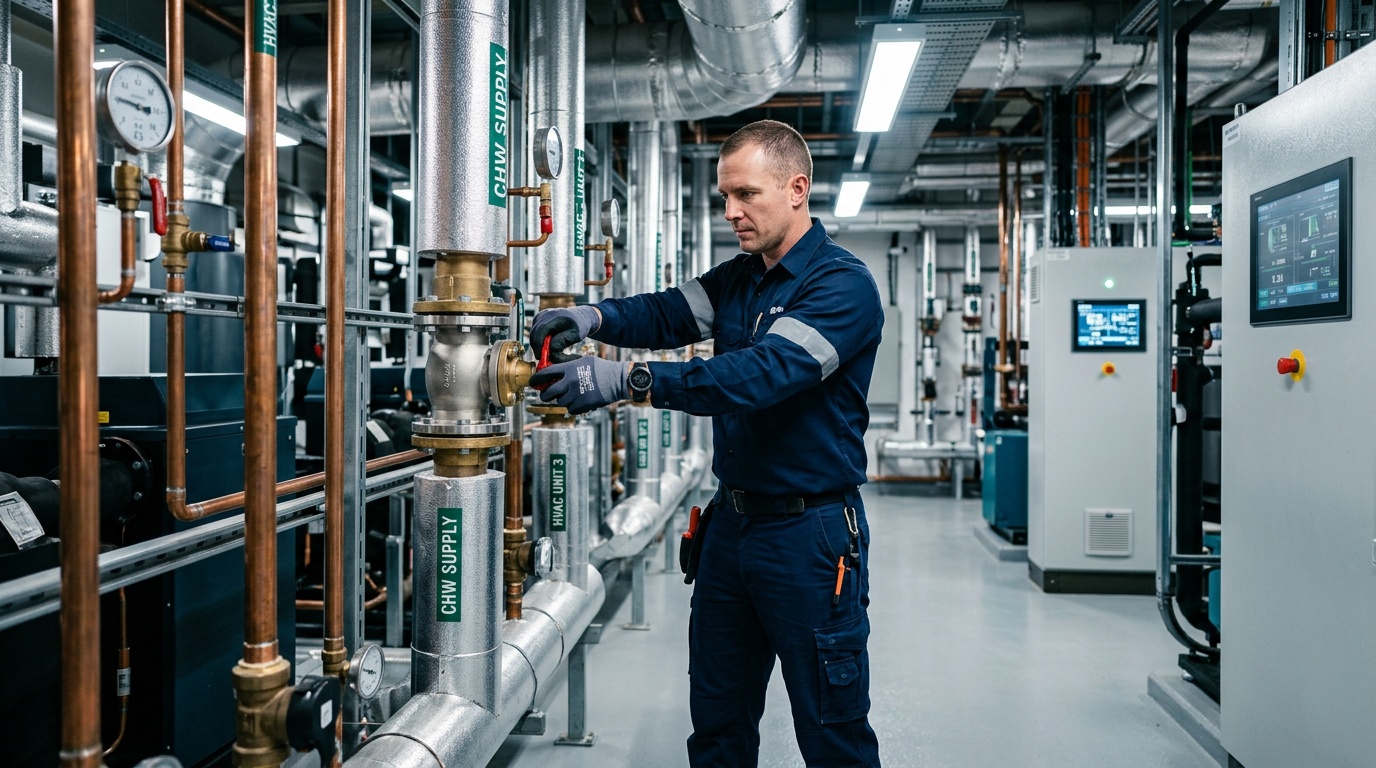
When we talk about comprehensive commercial building maintenance services, we're referring to a multifaceted approach that keeps a facility running smoothly, safely, and efficiently. This isn't about a single fix; it's a holistic management of a building's critical infrastructure. At its core, it encompasses the essential mechanical, electrical, and plumbing (MEP) systems that are the lifeblood of any commercial property. Ensuring these systems are maintained according to best practices is paramount for operational continuity and occupant comfort. A well-managed building minimises unexpected disruptions and ensures a professional environment for tenants and customers alike.
The scope of these services is broad, covering everything from the HVAC systems that regulate internal climate to the electrical wiring that powers operations, and the plumbing infrastructure that provides essential services. Regular inspections, testing, cleaning, and component replacement are all part of the routine. For example, HVAC maintenance includes servicing air handling units, boilers, chillers, and ventilation systems to ensure optimal performance and air quality. Electrical maintenance involves checks on power distribution, lighting, and emergency systems, while plumbing upkeep addresses water supply, drainage, and sanitary fixtures. This systematic attention prevents small issues from escalating into major, costly problems.
Core Disciplines: Mechanical, Electrical, and Plumbing
The foundational pillars of commercial building maintenance are Mechanical, Electrical, and Plumbing (MEP) systems. Mechanical elements primarily revolve around Heating, Ventilation, and Air Conditioning (HVAC), which are critical for maintaining a comfortable and healthy internal environment. This includes the regular servicing of boilers, air conditioning units, fans, pumps, and associated ductwork. Neglecting these systems can lead to premature failure, increased energy consumption, and poor indoor air quality, directly impacting occupant well-being and productivity. For example, a properly maintained HVAC system can reduce energy costs significantly, as over 80% of facility managers consider energy efficiency a top priority.
Electrical systems are equally important, powering everything from lighting and IT equipment to security systems and machinery. Maintenance here involves ensuring the integrity of wiring, switchgear, distribution boards, and emergency lighting. It's about preventing power outages, electrical fires, and ensuring compliance with safety standards like BS 7671 (IET Wiring Regulations). Plumbing maintenance covers the vast network of pipes, fixtures, and drainage systems. This includes checks for leaks, water pressure issues, and the functionality of sanitary ware. Proactive plumbing care prevents water damage, costly repairs, and potential health hazards associated with stagnant water or sewage backups.
Integrating Sustainable Technologies for Long-Term Efficiency
In today's commercial property sector, maintenance services must extend beyond basic upkeep to incorporate sustainable technologies that drive long-term efficiency and cost savings. Modern building management increasingly focuses on reducing environmental impact while optimising operational expenditure. This means looking at solutions that not only keep systems running but also make them run smarter. For example, upgrading to LED lighting can slash electricity consumption for illumination by up to 80%, a significant saving on a building's operating budget. Similarly, the integration of renewable energy sources like Solar PV (photovoltaic) systems can generate on-site electricity, reducing reliance on the grid and lowering energy bills. M&E Maintenance Solutions champions these innovations, offering expertise in technologies such as Air to Air heat pumps and Air to Water heat pumps, which provide efficient heating and cooling solutions with a lower carbon footprint compared to traditional systems.
The strategic integration of these technologies is not an optional add-on; it's becoming a core component of asset management. Companies that invest in sustainable upgrades often benefit from improved building performance, enhanced tenant appeal, and a stronger corporate social responsibility profile. Also, these systems require specialised maintenance to ensure they operate at peak efficiency. Our approach involves not just installation but also ongoing support, ensuring that these investments continue to deliver value and compliance over their lifecycle. This forward-thinking maintenance strategy is essential for commercial buildings aiming to stay competitive and compliant in the evolving energy environment.
M&E Maintenance Solutions: Your Partner in Sustainable Facilities
At M&E Maintenance Solutions, we are committed to helping commercial property owners and facility managers achieve both operational excellence and sustainability goals. Our expertise spans a range of innovative HVAC products and services, including Air to Air heat pumps, Air to Water heat pumps, Solar PV, LED Lighting, and Solar Thermal. We hold key certifications such as SafeContractor, Refcom F-Gas Certification, Gas Safe Register, BES, and ISO 9001, demonstrating our dedication to quality, safety, and compliance. We focus on delivering sustainable solutions that not only save clients money and improve working environments but also ensure strict adherence to current legislation. Our reputation is built on customer referrals and excellent service, positioning us as a trusted provider for commercial maintenance and compliance across the UK, particularly recognised as the Best HVAC Company in the Midlands UK for these services.
Compliance and Safety: SFG20 Standards Explained
For any commercial property owner or facility manager, ensuring compliance with safety regulations is not just a legal obligation; it's fundamental to protecting occupants and assets. In the UK, one of the most significant frameworks governing building maintenance is SFG20. SFG20 provides a comprehensive standard for planned preventative maintenance, detailing the tasks required for a wide range of building services, including mechanical, electrical, and public health systems. Adhering to SFG20 ensures that maintenance is carried out systematically and to a recognised quality benchmark, helping to prevent failures and maintain a safe operating environment. It translates technical requirements into actionable maintenance schedules, preventing the oversight of critical tasks.
Meeting these standards requires a provider with demonstrable expertise and a commitment to documentation. Beyond SFG20, specific certifications like Gas Safe Register (for gas appliances), Refcom F-Gas Certification (for refrigeration and air conditioning systems containing fluorinated greenhouse gases), and relevant electrical safety certifications are non-negotiable. These accreditations verify that engineers possess the necessary skills and knowledge to perform work safely and competently. At M&E Maintenance Solutions, we pride ourselves on our rigorous approach to compliance, holding certifications such as SafeContractor, Refcom F-Gas, Gas Safe Register, BES, and ISO 9001. This commitment ensures that our clients receive maintenance services that not only meet but exceed regulatory requirements, providing peace of mind and safeguarding their business operations against potential legal repercussions and safety hazards.
- HVAC Systems: Regular servicing of boilers, chillers, air handling units, ventilation, and extraction systems to ensure efficiency, air quality, and operational readiness.
- Electrical Systems: Inspections of power distribution, lighting (including emergency lighting), earthing, and protection systems to prevent faults and ensure safety.
- Plumbing & Drainage: Checks for water leaks, pipe integrity, water quality, and functionality of sanitary systems to prevent water damage and maintain hygiene.
- Building Fabric: While not our primary focus, complementary checks on aspects like insulation and sealing can inform HVAC efficiency.
- Renewable Energy Systems: Maintenance of Solar PV, Solar Thermal, and heat pump systems to ensure optimal energy generation and efficiency.
- Compliance & Safety: Adherence to SFG20 standards, Gas Safe regulations, F-Gas regulations, and other relevant building safety legislation.
How to Evaluate a Maintenance Service Provider (Without Getting Burned)
Selecting the right partner for your commercial building's maintenance is more than just hiring a contractor; it's about securing operational continuity, safeguarding your assets, and ensuring peace of mind. In Birmingham, the West Midlands, and across the UK, facility managers often face the challenge of finding a provider that offers not just technical skill, but also reliability, transparency, and genuine accountability. Too often, the experience can feel impersonal, with faceless corporations treating clients like a number rather than a valued partner. This can lead to miscommunication, missed deadlines, and a general erosion of trust. It’s essential to look beyond the initial sales pitch and assess potential providers on critical factors that impact your business day-to-day. A thorough evaluation process can prevent costly mistakes and ensure you are investing in a service that truly supports your building's needs.
My own journey, from apprentice engineer to running a leading UK facilities maintenance firm, has shown me firsthand how important a trusted relationship with a service provider is. The 'boots-on-the-ground' perspective means I understand the practical implications of poor service. The unexpected costs, the compliance risks, and the sheer frustration it causes. This section is designed to equip you with the knowledge to avoid common pitfalls and identify a provider that aligns with your business objectives, focusing on honesty, technical competence, and a commitment to your building's long-term health. We'll cover the red flags to watch for and the essential criteria to apply during your assessment.
The 'Different Face' Syndrome: Why Engineer Continuity Matters
One of the most common frustrations experienced by facility managers is the "different face" syndrome. This occurs when you consistently meet new engineers on-site for every service visit, each with their own approach and without prior knowledge of your building's specific quirks or history. This lack of continuity is not just inconvenient; it’s inefficient and can be detrimental to the long-term health of your systems. When engineers don't have the opportunity to build a relationship with your facility, they lack the deep understanding of its unique operational patterns, past issues, and specific sensitivities. This means each visit starts from scratch, potentially leading to longer diagnostic times, repeated questions, and a higher chance of overlooking developing problems that a familiar engineer might recognise.
The ideal scenario involves building a partnership where a dedicated engineer or a consistent team understands your building intimately. This familiarity allows for more effective preventative maintenance, as they can spot subtle changes indicative of future issues. It also streamlines communication, as you build rapport with a point person who understands your needs and can speak your language, bridging the gap between technical jargon and commercial impact. For businesses that rely on consistent uptime, like retail outlets or offices, having an engineer who knows your HVAC, electrical, or plumbing systems inside out is invaluable. It ensures that when issues do arise, they are handled swiftly and with informed precision, minimising disruption and cost. This continuity fosters trust and ensures that your maintenance is always being performed by someone who genuinely understands your asset.
Documented Service Records and Traceable Compliance
In the commercial property sector, documentation is not merely administrative overhead; it is a cornerstone of legal compliance, asset management, and financial accountability. When evaluating a maintenance service provider, their approach to record-keeping is a critical indicator of their professionalism and reliability. You need assurance that every service performed is meticulously documented, including the date, time, work undertaken, parts used, and any recommendations made. This detailed history is essential for tracking asset performance, identifying recurring issues, and demonstrating due diligence to regulatory bodies, insurers, or potential buyers. A provider that offers digital, easily accessible service records within a prompt timeframe provides a significant advantage.
Traceable compliance is intrinsically linked to documentation. For services involving gas safety, refrigeration (F-Gas), or electrical work, possessing the correct, up-to-date certifications is non-negotiable. Reputable providers will furnish you with copies of Gas Safe certificates, Refcom F-Gas certifications, and other relevant accreditation documents immediately following service completion. This ensures your building remains compliant with UK legislation, avoiding potentially severe penalties, fines, or even operational shutdowns. For example, failing to maintain refrigeration systems according to F-Gas regulations can result in substantial penalties, alongside environmental damage. A provider that is transparent about its accreditations and provides immediate access to compliance paperwork demonstrates a commitment to operating legally and ethically. At M&E Maintenance Solutions, we understand the importance of this, holding certifications like SafeContractor, Refcom F-Gas, Gas Safe Register, BES, and ISO 9001, ensuring our clients have the assurance of documented, compliant work.
Auditing Your Current FM Partner: Key Considerations
Key Indicators of a Good Partner
- Engineer Continuity: Consistent engineers who understand your building's history.
- Proactive Communication: Clear updates before, during, and after service visits.
- Digital Record Keeping: Easily accessible, detailed service reports and logs.
- Timely Compliance Documentation: Prompt delivery of Gas Safe, F-Gas, and other certifications.
- Transparent Pricing: Clear quotes with no hidden charges for standard services.
- Focus on Prevention: Recommendations aimed at preventing future issues, not just fixing current ones.
- Responsiveness: Defined Service Level Agreements (SLAs) for emergency call-outs.
- Technical Expertise: Engineers holding relevant industry certifications and ongoing training.
Red Flags to Watch For
- High Engineer Turnover: Constantly seeing new faces without prior knowledge.
- Vague or Delayed Reporting: Lack of detailed service reports or slow delivery.
- Missing or Outdated Compliance Papers: Inability to provide prompt certification.
- Unexplained Price Hikes: Unexpected increases in costs without clear justification.
- Reactive-Only Approach: Provider primarily deals with breakdowns, neglecting preventative strategies.
- Poor Communication: Difficulty reaching a contact person or getting clear information.
- Lack of Specialised Certifications: Engineers not holding necessary qualifications for specific tasks.
- "We've Always Done It This Way" Mentality: Resistance to adopting new technologies or more efficient methods.
Step-by-Step Checklist for Auditing Your Current FM Partner
Regularly auditing your current facilities management (FM) partner is a proactive measure that ensures you are receiving the best possible service and value. This process helps identify any drift from agreed service levels, potential cost inefficiencies, or compliance gaps before they become significant problems. Start by gathering all service contracts, maintenance logs, and compliance certificates from the past 12-24 months. Review these documents for completeness and consistency. Pay close attention to the frequency and type of work performed; is it predominantly reactive repairs, or is there a balanced approach incorporating planned preventative maintenance? Assess the response times for emergency calls and compare them against your contract's Service Level Agreements (SLAs).
Next, evaluate the communication channels. How easy is it to contact your account manager or the service desk? Do you receive clear, concise updates on planned works and any unexpected issues? If possible, speak directly with the engineers who service your building to gauge their familiarity with your site and their understanding of your operational needs. Request a review of their training records and certifications to confirm ongoing professional development and adherence to industry standards. Finally, conduct a financial audit. Compare invoices against your contract terms and ensure all charges are transparent and justified. This systematic review will highlight areas of strength and weakness, providing a solid basis for discussions with your current provider or for seeking alternative M&E Maintenance Solutions can offer a different approach, built on transparency, technical excellence, and a genuine partnership that goes beyond the standard service contract.
National FM Corporations vs Agile UK Maintenance Specialists
In the competitive arena of commercial property management, facility managers often face a stark choice: engage with large, national Facilities Management (FM) corporations or opt for a more agile, specialised UK-based provider. The scale of national firms can be appealing, promising comprehensive service portfolios and extensive resources. But, this scale often comes at the cost of personal service and deep understanding of a client’s specific needs. Many businesses find themselves treated as just another account number, receiving generic service plans that fail to address the unique operational demands of their premises. This impersonal approach can lead to communication breakdowns, slow response times to critical issues, and a general lack of accountability that feels far removed from the day-to-day realities of running a business. For those seeking a partner, not just a vendor, understanding this distinction is paramount.
My experience, spanning over two decades in the field and culminating in the founding of M&E Maintenance Solutions, has shown me that true value lies in a blend of corporate-level capability and the personal care typically associated with a smaller, dedicated team. The "big enough to cope, small enough to care" ethos is not just a slogan; it's a business strategy designed to offer the best of both worlds. It means having the technical expertise and capacity to handle complex projects while maintaining the agility and client-centric focus that larger organisations often struggle to deliver. This approach ensures that every client receives tailored solutions and a direct line to experienced professionals who understand their building’s specific challenges and business objectives.
The Problem with 'Faceless' Maintenance Providers
The primary drawback of dealing with large, faceless FM corporations is the inherent disconnect between the client and the service delivery team. When account management is handed off through multiple layers, and engineers rotate frequently without deep site knowledge, the service becomes transactional rather than relational. This can manifest as a lack of proactive problem-solving; engineers may follow a script rather than diagnosing the root cause of an issue based on their familiarity with the building. Also, communication can become a significant hurdle. Getting a clear, timely update on a planned maintenance disruption or an emergency repair can involve navigating automated phone systems or waiting for emails to be forwarded through several departments. This inefficiency not only causes frustration but can directly impact business operations, leading to unexpected downtime and lost productivity. For businesses that depend on consistent operational flow, this lack of personal engagement and clear communication is a significant risk.
For facility managers, this impersonal service means less control and less confidence in the maintenance strategy. You might find yourself explaining the same issues repeatedly to different people, or worse, finding that critical maintenance tasks have been overlooked due to a lack of a consistent, informed perspective. The absence of a dedicated point of contact who truly understands your facility’s history and specific needs means that advice given might be generic, failing to account for the unique wear-and-tear or operational demands your systems face. This is where specialised providers differentiate themselves, offering a level of personalised attention that ensures your building’s maintenance is managed with precision and care.
Why Local Expertise and National Capability Win
The most effective approach to commercial maintenance services often lies in finding a provider that successfully balances local understanding with national reach. While a large corporation might boast national coverage, their service delivery can become diluted and less responsive at the local level. Conversely, a purely local firm might lack the resources or breadth of expertise for larger or more complex projects. The ideal scenario is a UK-wide specialist that understands the nuances of regional operations while possessing the technical depth and infrastructure to serve clients across the country. This combination ensures that businesses receive tailored, expert advice informed by an understanding of their immediate operational environment, coupled with the capacity to deploy skilled technicians and manage comprehensive maintenance programmes.
A provider like M&E Maintenance Solutions embodies this winning combination. We are recognised as a leading HVAC specialist in the Midlands, offering deep local expertise, but our operational framework allows us to serve clients throughout the UK. This means we can offer the agility and personal contact of a specialised firm, alongside the capability to handle diverse maintenance needs, from routine servicing to the integration of advanced sustainable technologies. Our team is certified and experienced, ensuring compliance with regulations like Gas Safe and Refcom F-Gas, providing essential property maintenance services that keep businesses compliant and efficient. This hybrid capability ensures that clients benefit from both immediate, responsive support and long-term strategic asset management, regardless of their location.
Beyond the Warranty Trap: Third-Party vs. Dealer Maintenance
For maintaining commercial assets, particularly complex systems like HVAC, a common dilemma arises: should you use the original equipment manufacturer's (OEM) dealer service or opt for a qualified third-party maintenance provider? OEM services often come with the perceived security of specialist knowledge for their specific equipment and can be bundled with initial warranties. But, this often comes at a premium. Third-party providers, especially those with a strong track record and relevant certifications, can offer significant cost savings. Sometimes up to 50% less than OEM contracts. While delivering equivalent or even superior service. This is particularly true for older equipment that may be out of its original warranty period, where OEM service contracts can become prohibitively expensive.
The key to navigating this is understanding that a reputable third-party maintenance specialist possesses deep technical expertise across a range of systems, not just a single brand. They invest in training their engineers to handle diverse equipment, ensuring they are up-to-date with the latest technologies and compliance standards. For example, third-party providers are adept at managing F-Gas compliance for refrigeration systems, a critical aspect mandated by UK law. By choosing a certified independent provider, businesses can achieve substantial savings on their maintenance budgets without compromising on the quality or compliance of the service. This strategic choice allows for greater control over maintenance expenditure and fosters a more flexible, responsive service relationship, moving beyond the often restrictive and costly confines of OEM-exclusive agreements.
| Feature | OEM Dealer Service | Qualified Third-Party Provider |
|---|---|---|
| Cost | Typically higher, often premium pricing | Potentially up to 50% lower, competitive pricing |
| Specialisation | Deep knowledge of specific brand equipment | Expertise across multiple brands and system types |
| Flexibility | Can be rigid, tied to manufacturer guidelines | More adaptable to client needs and schedules |
| Warranty Support | Essential for in-warranty equipment | Ideal for out-of-warranty equipment or comprehensive service contracts |
| Engineer Continuity | May vary; depends on dealer's internal structure | Often fosters stronger continuity with dedicated teams |
| Compliance Focus | Generally compliant, but may not offer broader advice | Strong focus on all relevant UK compliance (Gas Safe, F-Gas, SFG20) |
References
Frequently Asked Questions About Commercial Maintenance

As a facility manager or business owner responsible for commercial premises, you're likely to have questions about the best practices, costs, and standards involved in maintaining your building's infrastructure. Understanding these aspects is key to making informed decisions that protect your assets, ensure compliance, and control operational expenses. This section addresses some of the most common queries, providing clear, concise answers based on industry knowledge and practical experience. Whether you're evaluating a new service provider or seeking to optimise your current maintenance strategy, these insights aim to be clear the complexities of commercial building upkeep and highlight the value of a proactive, expert approach.
At M&E Maintenance Solutions, we believe transparency and education are fundamental to building strong client relationships. We aim to demystify the field of facility maintenance, ensuring our clients feel confident and well-informed about the services they receive. From understanding costs and compliance requirements to knowing what to expect in terms of response times for emergencies, we cover the essential points that matter most for the smooth operation of your commercial property. Our commitment is to provide not just excellent service, but also the knowledge that empowers you to manage your facilities effectively across the UK.
How much do commercial maintenance services typically cost?
The cost of commercial maintenance services can vary significantly, depending on the size and complexity of the building, the types of systems installed, the frequency and scope of services required, and the provider chosen. Facility maintenance costs typically account for a substantial portion of a building's operating budget, often between 30-40%. For planned preventative maintenance (PPM), costs are usually structured as a fixed annual or monthly fee, based on a service contract that outlines the specific tasks and visits scheduled throughout the year. This predictable cost allows for better budgeting and financial planning. Emergency or reactive maintenance, conversely, is typically charged on a per-incident basis, often with higher hourly rates and potential call-out fees, which is why a proactive strategy is financially prudent.
Factors influencing cost include the number of HVAC units, the complexity of electrical distribution systems, the presence of specialised equipment like generators or UPS systems, and the specific compliance requirements for your industry. For example, maintaining refrigeration systems with F-Gas refrigerants requires certified engineers, which can affect pricing. Many businesses find that third-party maintenance providers offer more competitive rates than original equipment manufacturers (OEMs), potentially saving up to 50% on service contracts. At M&E Maintenance Solutions, we focus on providing transparent pricing based on a thorough assessment of your building's needs, ensuring you understand exactly what you are paying for and the value delivered through our expert maintenance services.
What compliance certifications should my provider hold?
Ensuring your maintenance provider holds the correct compliance certifications is non-negotiable for legal, safety, and operational reasons. For services involving gas appliances, the provider must be registered with the Gas Safe Register. For air conditioning and refrigeration systems containing fluorinated greenhouse gases (F-gases), Refcom F-Gas Certification is mandatory for engineers and companies handling such equipment. Electrical work must be carried out by qualified electricians, adhering to standards such as BS 7671, and often requiring certifications like NICEIC or NAPIT registration. Beyond these, many clients require providers to hold broader accreditations that demonstrate a commitment to health, safety, and quality management, such as SafeContractor, CHAS, or ISO 9001.
Industry-specific standards like SFG20 provide a benchmark for planned preventative maintenance tasks, and reputable providers will be familiar with and adhere to these guidelines. A provider that openly shares its certifications and can provide documentation promptly upon request is a strong indicator of their professionalism and commitment to compliance. At M&E Maintenance Solutions, we hold key certifications including SafeContractor, Refcom F-Gas Certification, Gas Safe Register, BES, and ISO 9001, ensuring that all our commercial maintenance work meets the highest standards of safety, quality, and legal compliance across the UK.
How quickly should a maintenance provider respond to emergencies?
The expectation for emergency response times in commercial maintenance is driven by the potential impact of system failures on business continuity, safety, and occupant comfort. Reputable providers typically offer 24/7 emergency call-out services with defined Service Level Agreements (SLAs). For critical system failures, such as a complete loss of heating or cooling in extreme weather, or a major electrical fault, response times can range from immediate dispatch to a guaranteed arrival within 2-4 hours. The specific SLA will depend on the contract and the criticality of the system being maintained. It is essential to have these response times clearly documented in your service agreement.
Beyond simply arriving on-site, the provider should have protocols in place for rapid diagnosis and temporary fixes to restore essential services as quickly as possible, followed by a plan for permanent repair. For example, if a critical HVAC component fails during a heatwave, a swift response might involve temporary cooling solutions while a replacement part is sourced. At M&E Maintenance Solutions, we understand that downtime is costly. Our commitment is to provide prompt, expert assistance for emergencies, minimising disruption and ensuring your operations can resume with minimal impact. Our team is available 24/7/365 to address urgent issues, backed by the technical expertise to resolve them efficiently and effectively.
Frequently Asked Questions
What is a maintenance service?
Maintenance services are professional activities designed to keep commercial building systems running efficiently, safely, and in full compliance with regulations. After 24 years in this industry, starting as an apprentice combustion engineer, I view maintenance not as a cost but as a strategic investment in your building's operational integrity, energy efficiency, and legal standing across the UK.
What are the main types of maintenance?
The three main types of maintenance are reactive, preventative, and predictive. Reactive maintenance fixes equipment after it fails, preventative maintenance involves scheduled inspections and servicing to prevent failures, and predictive maintenance uses sensors and data analysis to forecast potential issues before they occur, allowing repairs to be scheduled precisely when needed.
What is preventative maintenance in commercial buildings?
Preventative maintenance involves scheduled inspections and servicing of building systems to prevent equipment failures before they happen. Tasks include changing filters, lubricating moving parts, and testing safety systems at regular intervals, often guided by industry standards like SFG20. This proactive approach can reduce equipment failures by as much as 70% compared to waiting for breakdowns.
What is predictive maintenance and how does it work?
Predictive maintenance uses sensors and data analysis to forecast potential equipment failures before they occur, allowing repairs to be scheduled precisely when needed. This advanced approach optimises uptime and resources by ensuring work is carried out only when necessary. Industry data shows predictive maintenance can reduce overall maintenance costs by 10 to 20%.
Why is reactive maintenance more expensive than planned maintenance?
Reactive maintenance is more expensive because emergency repairs carry premium costs, cause operational disruption, and often require complete equipment replacement rather than simple fixes. The perceived saving from skipping routine servicing is dwarfed by eventual repair bills, lost revenue from downtime, and damaged reputation when critical systems fail during peak operating hours.
How much can planned preventative maintenance save businesses?
Planned preventative maintenance can reduce equipment failures by as much as 70% and cut overall maintenance costs by 10 to 20% through predictive techniques. Since facility maintenance typically represents 30 to 40% of a building's operating budget, optimising this spend through smart maintenance strategies delivers substantial financial returns whilst protecting business continuity.
What are the hidden costs of skipping routine maintenance?
Skipping routine maintenance leads to hidden costs including increased energy consumption, accelerated component wear, compromised working environments, and potential legal compliance failures. A clogged HVAC filter alone can push energy bills up by 15%, and neglecting safety checks on gas or refrigeration systems can result in hefty fines plus invalidated insurance premiums.