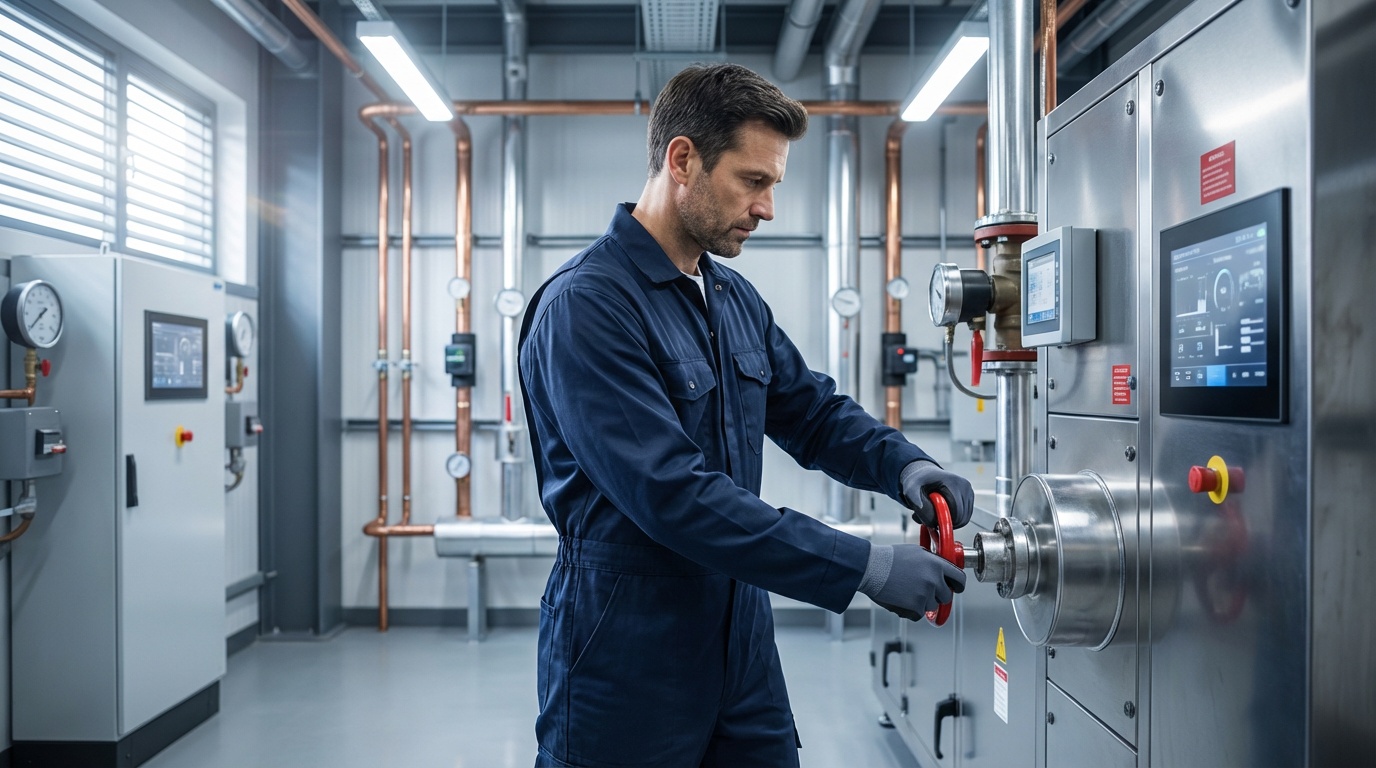
Heating system providers vs plumbing specialists?
The Commercial Reality: Why Getting the Wrong Specialist Costs Your Business
A Common Scenario in UK Commercial Estates
Last January, I took a call from a Birmingham retail manager whose ground-floor units had no heating. She'd called a plumber first. He spent three hours diagnosing pipework, charged £400, and left the problem unsolved. The real fault? A failed gas valve on the commercial boiler. A heating engineer fixed it in 90 minutes. The shop still lost two days of trade, and the total bill doubled because the wrong specialist arrived first.
This confusion isn't just frustrating--it's expensive. When a commercial heating system fails, every hour of downtime hits revenue, staff morale, and customer experience. Calling the wrong tradesperson delays the fix and often makes the problem worse, particularly when gas safety or combustion systems are at stake.
Hidden Risks of Misdiagnosis in Heating Failures
Plumbers and heating engineers share some overlap, but their core expertise diverges sharply. A plumber who attempts to service a pressurised heating system without Gas Safe registration isn't just unqualified--they're breaking the law. I've walked into plant rooms where well-meaning plumbers have adjusted boiler controls or bypassed safety interlocks, creating carbon monoxide risks that could shut down an entire building under HSE inspection.
Red Flags That You've Called the Wrong Specialist:
- They ask to "have a look" at your boiler but can't produce a Gas Safe ID card on request
- They quote for heating repairs without checking combustion efficiency or flue integrity
- They suggest "temporary fixes" to pressurised systems without documented risk assessments
- They can't explain SFG20 compliance or provide traceable certification within 24 hours
My 24 Years of Experience: Lessons from the Plant Room
I started as an apprentice combustion engineer in the 1990s, learning the physics of heat transfer, gas combustion, and hydronic systems from the ground up. Over two decades, I've seen the cost of role confusion firsthand. The plumber who installs beautiful copper pipework but leaves the system airlocked. The heating engineer who fixes the boiler but ignores a leaking radiator valve that floods the floor below.
At MEMS, we built a team that bridges this gap. Our engineers hold both Gas Safe and plumbing competencies, backed by REFCOM for refrigerant work. We're big enough to cope with multi-site commercial estates across the West Midlands, but small enough to care about getting the right specialist to your door the first time.
Core Differences: Heating System Providers vs Plumbing Specialists
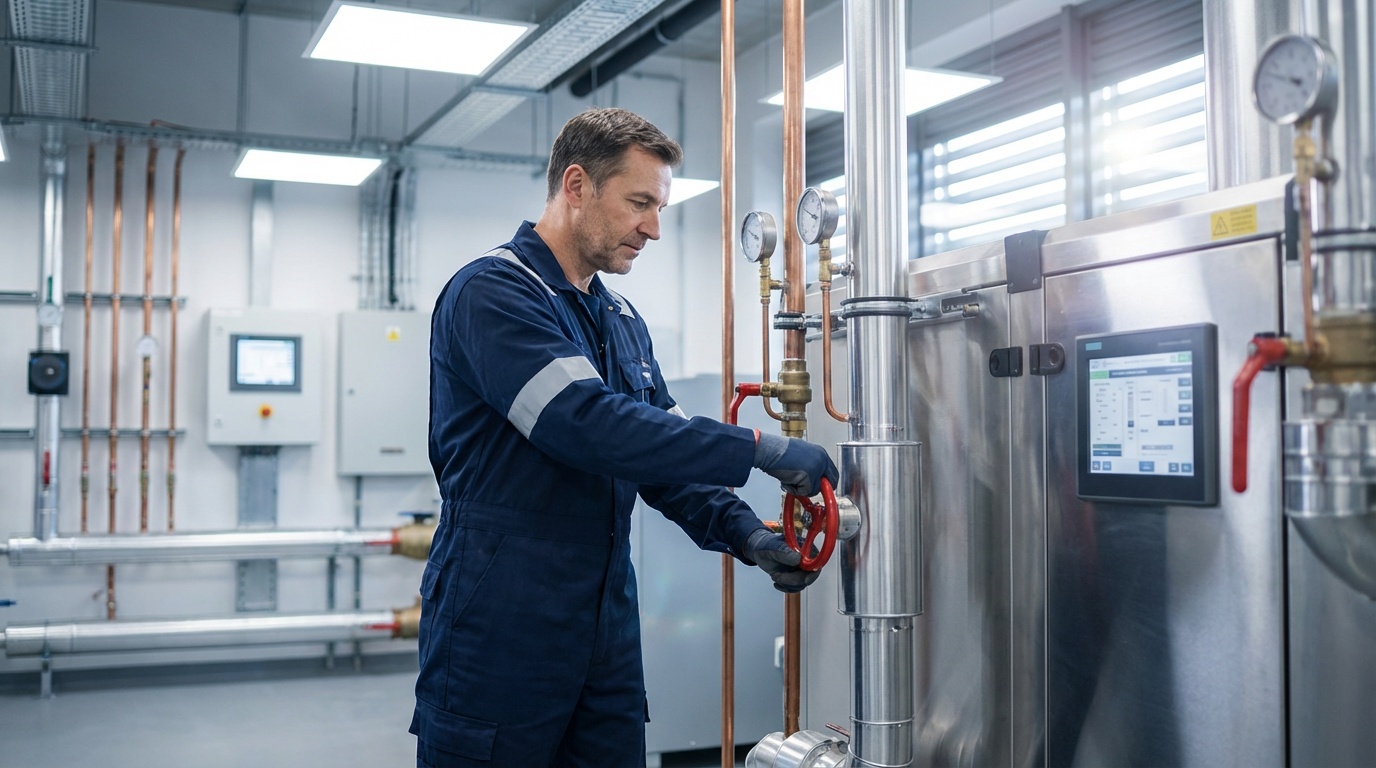
Quick answer: Heating engineers specialise in thermal energy systems (boilers, heat pumps, HVAC controls) and require Gas Safe registration for combustion work. Plumbers focus on water supply, sanitation, and drainage. Both work with pipes, but the systems they serve operate under entirely different regulations.
What Heating System Providers Handle in Commercial Settings
We specialise in the generation, distribution, and control of thermal energy. In a commercial building, that means boilers, heat pumps, underfloor heating manifolds, commercial HVAC systems, and building management controls. We diagnose combustion faults, optimise burner efficiency, replace faulty thermostats, and ensure your system meets regulatory standards.
Our work centres on uptime and efficiency. A properly maintained heating system in a Birmingham office block doesn't just keep staff comfortable--it controls energy spend and prevents the catastrophic downtime that shuts your business. We're trained to read combustion analysis, interpret boiler fault codes, and design Planned Preventative Maintenance (PPM) schedules that align with SFG20 task frequencies.
Plumbing Specialists' Domain: Water and Drainage Focus
Plumbers focus on water supply, sanitation, and drainage. They install taps, repair leaking pipes, unblock drains, fit bathrooms, and maintain cold water systems. In commercial settings, they handle mains water connections, backflow prevention, grease traps, and rainwater drainage. Their expertise lies in fluid dynamics, pressure regulation, and waste management--not combustion or refrigerant circuits.
A qualified plumber can install the pipework that feeds a heating system, but they shouldn't commission the boiler itself. That work requires Gas Safe certification. Confusion arises because both trades work with pipes and water, yet serve systems under entirely different safety protocols.
Key Certifications and Licensing for UK Commercial Work
For Heating System Providers: Gas Safe registration (legally required for any gas work), OFTEC for oil systems, REFCOM for refrigerant handling, and City & Guilds qualifications in heating and ventilation. Commercial engineers should also demonstrate SFG20 competency and hold public liability insurance for high-value estates.
For Plumbing Specialists: City & Guilds Level 2/3 in plumbing, Water Regulations approval (formerly WRAS), and specialist certifications for unvented hot water systems. Commercial plumbers often hold CSCS cards for site access and health and safety training.
At MEMS, every engineer carries digital certification accessible via our client portal within 24 hours of any job. If your current provider can't produce traceable, up-to-date credentials on demand, you're legally exposed.
Overlap Areas and When to Call Who for Heating Problems
Shared Ground: Boilers, Hydronic Systems, and Gas Lines
Boilers sit at the intersection. A heating engineer handles the combustion chamber, gas valve, and controls. A plumber may install the pipework that distributes hot water to radiators. Gas supply lines require Gas Safe registration regardless of trade. This overlap creates confusion, particularly in older commercial buildings where responsibilities weren't clearly documented during installation.
Decision Checklist: Plumber or Heating Engineer?
Call a Heating System Provider if: No heat output, boiler error codes, pilot light failures, radiators cold despite hot pipes, unusual noises from the boiler, or an annual service due. Also for system upgrades, heat pump installations, or compliance audits. Learn more about our commercial HVAC installation and heating service.
Call a Plumbing Specialist if: Leaking radiator valves, dripping taps, blocked toilets, cold water supply issues, or visible pipe leaks unrelated to heating. Also for bathroom refits, drainage problems, or water pressure faults on the mains supply.
Call MEMS for Either: We assess the fault, deploy the correctly qualified engineer, and provide traceable certification. No guesswork. No wasted call-outs.
Commercial Examples from Retail and Office Estates
A West Midlands office block called us last winter when their underfloor heating manifold leaked. The building manager assumed it was a plumbing job because water was pooling. Wrong. The manifold was part of a closed-loop heating system fed by a commercial heat pump. A plumber could have stopped the leak, but only a heating engineer could re-pressurise the system, bleed the airlocks, and verify that the heat pump hadn't been damaged by low pressure. We sent a dual-qualified engineer who handled both aspects in one visit, saving a second call-out and two days of disrupted heating.
In retail environments, speed matters even more. A Birmingham shopping centre lost heating to three units during a Saturday rush. The facilities team called a local plumber who couldn't access the centralised boiler controls. We arrived within two hours under our 24/7 emergency cover, diagnosed a failed zone valve, and restored heat before close of trade. The difference wasn't just technical skill--it was knowing which systems require Gas Safe oversight and which don't.
Why Commercial Estate Managers Need Integrated Expertise
Quick answer: Modern commercial buildings run on interconnected mechanical systems. When heating, hot water, ventilation, and plumbing fail simultaneously, single-trade contractors create coordination chaos. Multi-skilled providers like MEMS eliminate finger-pointing, reduce downtime, and deliver one unified compliance record.
Risks of Single-Specialist Providers in Complex Buildings
Your heating, hot water, ventilation, and plumbing are interconnected. A leak in a heating pipe can cause drainage issues. A faulty boiler can trigger pressure drops that affect water supply. When you rely on separate contractors, you get finger-pointing instead of solutions. One blames the other, and you're left managing disputes while your building stays offline.
Single-specialist providers also miss the wider view needed for Planned Preventative Maintenance. A plumber servicing your taps won't flag that your boiler is overdue for combustion analysis. A heating engineer fixing your radiators may not notice that your drainage system is backing up. At MEMS, our engineers assess the whole mechanical ecosystem during every site visit, catching problems before they cascade.
Benefits of Multi-Skilled Teams Like MEMS
We built MEMS to eliminate the coordination headache. Our team holds Gas Safe, plumbing, REFCOM, and electrical competencies under one roof. When you call our 24/7 helpdesk, we dispatch the right engineer with the right credentials the first time. No guessing. No delays. No second visits. You get one point of contact, one invoice, and one set of traceable compliance records delivered digitally within 24 hours. Discover more about our M&E Maintenance Solutions team and ethos.
This integrated approach transforms how commercial estates handle maintenance. Instead of juggling three contractors for a heating fault, you get one engineer who diagnoses the root cause, fixes it properly, and documents it to SFG20 standards. Our clients across Birmingham and the West Midlands report measurably lower downtime and simpler audit trails because they aren't stitching together paperwork from multiple providers.
Sustainable Tech: Heat Pumps and Beyond
The shift towards heat pumps and low-carbon heating adds another layer of complexity. Heat pumps require refrigerant handling (REFCOM certification), electrical work, and hydronic system knowledge. A traditional plumber can't commission one legally. A heating engineer without refrigerant training can't do so either. MEMS engineers are trained across all three disciplines, positioning us to handle the next generation of commercial heating without subcontracting or delays.
We're also seeing more commercial clients ask about system optimisation to cut energy costs. That requires analysing boiler efficiency, duct insulation, thermostat programming, and water flow rates together. It's not a plumbing job or a heating job--it's a building performance job, and it demands the cross-disciplinary expertise that single-trade providers can't offer. Read more on our renewable energy solutions and sustainability initiatives.
Actionable Steps: Choose and Audit Your Provider for Compliance and Efficiency
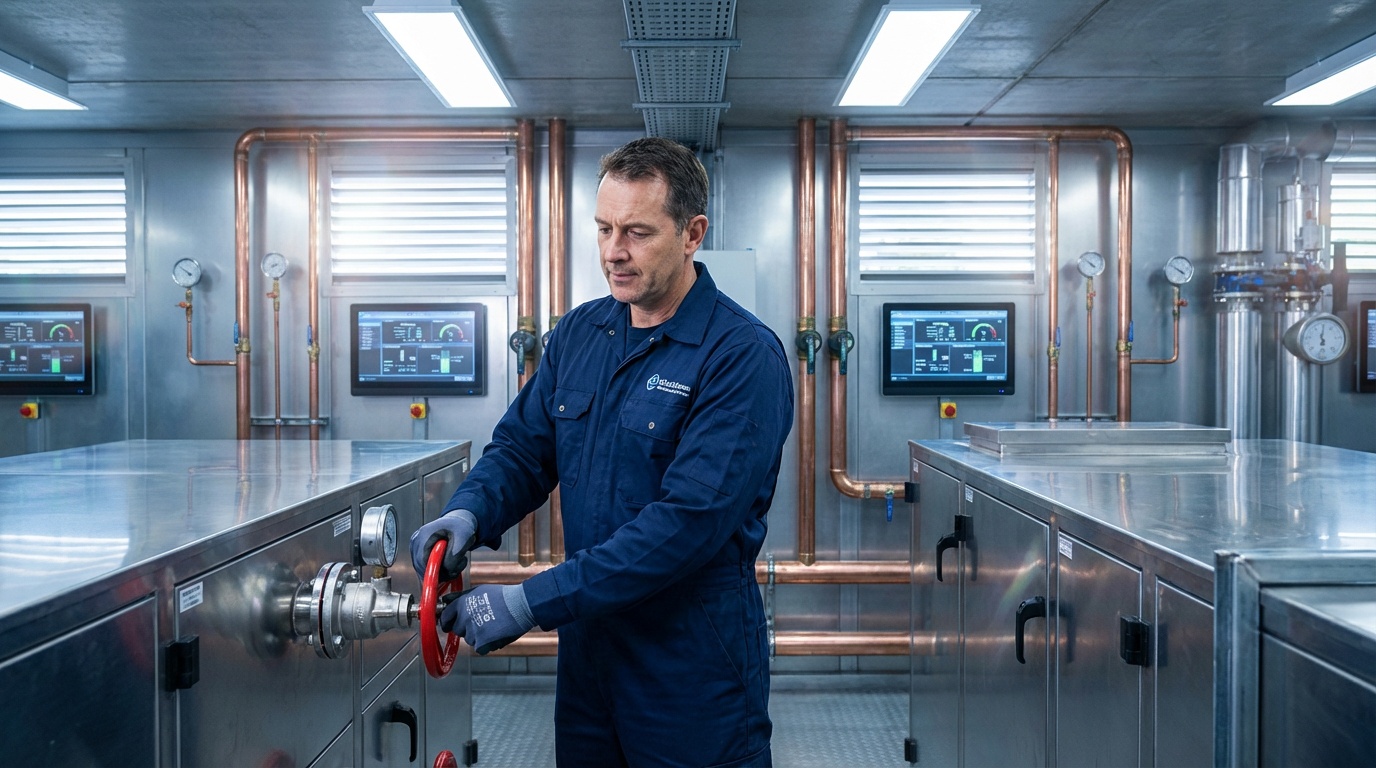
Questions to Ask Before Hiring
Before you sign a maintenance contract or book an emergency call-out, ask these five questions:
- Can you produce Gas Safe and REFCOM certification on site?
- Do you provide digital compliance records within 24 hours?
- What's your guaranteed response time for emergency heating failures?
- Do your engineers follow SFG20 task frequencies for PPM?
- Can you handle both heating and plumbing faults without subcontracting?
If the answer to any of these is vague or defensive, look elsewhere.
Audit Checklist for Your Current Provider:
- Request copies of all Gas Safe certificates from the past 12 months
- Check whether PPM visits match SFG20 recommended frequencies for your asset types
- Review response times on your last three emergency call-outs
- Ask for evidence of public liability insurance covering commercial work
- Verify that the same engineer visits your site regularly, not a rotating cast
- Confirm you receive digital compliance documentation, not paper buried in filing cabinets
PPM Checklist for SFG20 Standards
Your Planned Preventative Maintenance schedule should align with SFG20 guidance: annual boiler services with combustion analysis, quarterly checks on pumps and valves, monthly visual inspections on pressurised systems, and documented risk assessments for any modifications. At MEMS, we build bespoke PPM schedules for each client based on asset age, usage patterns, and compliance obligations. You shouldn't be guessing when your next service is due. It should be planned, tracked, and executed on time, every time.
The difference between reactive and proactive maintenance shows up fastest in your energy bills. A boiler running at 70% efficiency because nobody's cleaned the heat exchanger in two years costs you money every single day. Our PPM approach includes efficiency testing, system optimisation, and component replacement before failure. We track performance metrics across every visit, so you can see exactly what your maintenance budget covers.
Book a No-Obligation Site Survey with MEMS
If you're unsure whether your current provider is meeting the standard, we offer free site surveys across Birmingham and the West Midlands. We'll assess your heating and plumbing systems, identify compliance gaps, and provide a written report with no obligation to proceed. It's the same honest, boots-on-the-ground approach I've used for 24 years. We don't upsell. We tell you what's broken, what's at risk, and what can wait.
Understanding the distinction between heating engineers and plumbing specialists isn't academic--it's the difference between a building that runs efficiently and one that bleeds money through emergency call-outs and lost trading hours. Contact our helpdesk today to arrange your survey and take control of your building's mechanical health. We're big enough to cope, small enough to care, and qualified to handle whatever your commercial estate throws at us.
Frequently Asked Questions
Do plumbers fix heating systems?
Plumbers primarily handle water supply, drainage, and sanitation. While they might install pipework for a heating system, they are not qualified to diagnose or repair boiler faults, combustion issues, or complex heating controls. That work requires a Gas Safe registered heating engineer.
What's the financial impact of calling the wrong specialist for a commercial heating problem?
Calling the wrong specialist, such as a plumber for a commercial boiler fault, leads to misdiagnosis, extended downtime, and often double billing. As I've seen firsthand, this can cost businesses thousands in lost trade and unnecessary charges. Getting the right heating engineer first saves both time and money.
What is the difference between a heating engineer and a plumber?
A heating engineer, like myself, specialises in thermal energy systems, including boilers, heat pumps, and HVAC controls, focusing on combustion and efficiency. Plumbers focus on water supply, drainage, and sanitation. While both work with pipes, their core expertise and legal certifications, especially for gas work, are distinct.
Is heating considered plumbing?
While both trades involve pipes and water, heating is not simply plumbing. Heating systems, particularly commercial boilers and gas lines, fall under specific regulations like Gas Safe, requiring specialised engineering knowledge. Plumbing deals with water supply and drainage, a different domain of expertise.
What certifications should a commercial heating engineer have?
For commercial heating work, engineers must hold Gas Safe registration for gas systems, OFTEC for oil, and REFCOM for refrigerants. They should also have relevant City & Guilds qualifications and demonstrate SFG20 competency. Always ask for traceable, up-to-date credentials.
How can I tell if I've called the wrong specialist for a heating repair?
Red flags include them not producing a Gas Safe ID, quoting for repairs without checking combustion efficiency, or suggesting temporary fixes without risk assessments. If they cannot explain SFG20 compliance or provide certifications, you likely have the wrong person.