historic building renovations
There's a unique challenge and responsibility that comes with managing commercial properties that carry the weight of history. Far too often, I see facility managers and property owners treating these venerable structures like any other modern building. This approach, while perhaps well-intentioned, can lead to costly mistakes, legal headaches, and the irreversible loss of architectural character. My 24 years in this industry, starting as an apprentice combustion engineer and now leading a 24/7 maintenance firm, have taught me that buildings with a past demand a different kind of respect and a far more nuanced approach to their upkeep and upgrades.
Key Takeaways
- Treating heritage commercial properties like standard modern buildings risks expensive errors, legal complications, and permanent damage to their original character.
- Facility managers must adopt specialized maintenance strategies that respect the architectural integrity and historical significance of older structures.
- Mechanical and electrical upgrades in period buildings require deep technical expertise combined with a sensitive approach to preservation.
- Two decades of hands-on engineering experience confirms that these properties demand tailored solutions rather than generic maintenance plans.
The reality on the ground is that neglecting the specific needs of a historic building isn't just about aesthetic preservation; it's about safeguarding an asset, ensuring its long-term viability, and understanding the commercial implications of every decision. From the boiler room to the boardroom, the mechanical and electrical (M&E) systems within these older structures are often the most complex and critical components. Getting them right, especially during renovations, requires a blend of deep engineering knowledge and a keen commercial eye. This is where M&E Facilities Maintenance Solutions steps in, offering the expertise to bridge that gap.
The Engineer's Reality: Defining Historic Building Work
When we talk about working on older buildings, the terminology can get muddled. For estate managers and landlords, understanding the precise nature of the work is the first step in planning and budgeting effectively. It's not just about 'fixing things up'; it's about different levels of intervention, each with distinct implications for compliance, cost, and the building's integrity. My team and I approach these projects with a clear understanding of these categories, ensuring our clients know exactly what they are investing in. This clarity prevents misunderstandings and ensures the correct strategy is applied from the outset, safeguarding the asset's value and function.
Restoration vs Renovation: Clear Definitions for Estate Managers
At its core, the difference between restoration and renovation in the context of historic buildings lies in intent. Restoration aims to return a building to its most accurate historical state, often using original materials or accurate reproductions. It's about preserving the building's historical appearance and fabric as closely as possible to a specific period. This often involves meticulous research and skilled craftsmanship to replicate original details. Conversely, renovation typically involves updating a building for modern use, which can include significant alterations to the interior layout or addition of modern amenities, while still respecting the building's historic character. A related term, rehabilitation, often sits between these two, focusing on making compatible use of a property through repair, alterations, and additions while preserving those portions or features which possess special historic significance. Understanding the subtle difference between rehabilitation and renovation in construction is paramount for project success.
We often encounter projects that require a blend of these approaches. For example, a commercial property might need a full historical restoration of its facade to meet planning requirements, while its interior is undergoing a significant renovation to accommodate modern office space. This requires careful M&E planning to ensure new systems are integrated discreetly without compromising the restored elements. The goal is always to balance the building's heritage value with its functional requirements for contemporary occupation. Identifying which approach is best for a particular asset is a key part of our initial assessment, forming the bedrock for successful old building renovation before and after transformations.
| Category | Primary Goal | Typical Scope | M&E Implications |
|---|---|---|---|
| Restoration | Return to a specific historical period, preserving original fabric. | Repairing/replacing damaged original features, removing later additions. | Often challenging to integrate modern M&E discreetly; may require hidden conduits or sensitive system choices. |
| Renovation | Update for modern use, improving functionality and aesthetics. | Major interior/exterior changes, modern systems, layout alterations. | Greater flexibility for M&E upgrades, but must respect building's historic character and structure. |
| Rehabilitation | Make compatible use through repair and alteration, preserving historic significance. | Balance of repair of historic features with modernization for current needs. | Requires careful planning to integrate new M&E without damaging character-defining elements. |
| Preservation | Maintain existing historic materials and features, stopping deterioration. | Stabilising and protecting the building as it is, minimal intervention. | Focus on maintaining existing, often outdated, M&E systems or upgrading them minimally. |
| Adaptive Reuse | Repurpose a historic building for a new, compatible use. | Significant alterations to suit new function, often involving extensive M&E overhauls. | Full integration of modern M&E systems is usually required to meet contemporary standards for the new use. |
Understanding UK Listed Building Grades and Protections
In the UK, the designation of a building as 'listed' significantly impacts any renovation or upgrade work. These buildings are formally recognised as being of special architectural or historic interest, and their protection is enshrined in law. Understanding the different grades. Grade I, Grade II*, and Grade II. Is essential for any facility manager or owner. Grade I buildings are of exceptional interest, Grade II* are particularly important and represent a particular style or period, and Grade II buildings are of special interest. Each grade carries varying levels of statutory protection, affecting the scope of works permissible and the approval processes required. Ignoring these protections can lead to substantial fines, legal action, and the requirement to undo unauthorised work.
For commercial property owners, especially those involved in historic building renovations, this means that any M&E upgrades must be considered within the framework of these protections. Works that might seem straightforward in a modern property. Such as installing new ventilation systems, upgrading electrical wiring, or replacing heating infrastructure. Can become complex projects requiring Listed Building Consent. This consent process involves detailed applications, often supported by architectural and heritage assessments, to ensure that proposed changes do not harm the building's special character. Our expertise lies in navigating this detailed environment, ensuring that modern M&E solutions are integrated with minimal impact, preserving the historical fabric while enhancing the building's functionality and compliance for its current commercial purpose.
Navigating UK Regulations, Grants, and VAT Relief

Undertaking work on historic buildings in the UK isn't just about engineering challenges; it's a complex web of regulations, permissions, and financial considerations. Many facility managers and commercial landlords find this aspect the most daunting, often leading to delays or costly missteps. My background as an engineer who understands the commercial impact of every technical decision means I can guide you through this maze. Proper navigation of these requirements is not just about compliance; it's about unlocking financial support and avoiding penalties that can cripple a project budget. Proactive planning here is key to successful historic building renovations.
Securing Listed Building Consent and Local Authority Approvals
The cornerstone of any significant work on a listed building is obtaining the correct permissions. This primarily involves Listed Building Consent, a separate process from standard planning permission, though often applied for concurrently. Local authorities, guided by Historic England (or equivalent bodies in Scotland, Wales, and Northern Ireland), scrutinise applications to ensure the special architectural or historic interest of the building is preserved. For M&E upgrades, this means demonstrating how new systems will be installed without damaging or altering significant historical fabric. This could involve detailed drawings showing careful routing of cables, discreet placement of equipment, or the use of sympathetic materials. Our role involves preparing these detailed specifications and liaising with conservation officers to ensure approvals are secured efficiently, preventing costly delays for projects such as historic building restoration examples.
The application process can take anywhere from 8 to 12 weeks, depending on the complexity and the local authority's workload. It's a period that requires patience and thorough preparation. For facility managers, understanding that this is a necessary investment in time and resources is important. We help by providing the technical documentation and justification required, often working with heritage consultants to present a compelling case. This meticulous approach ensures that your project adheres to all legal requirements, safeguarding your property from enforcement action and ensuring the integrity of the building's heritage is maintained throughout the process.
Did You Know? The UK's heritage protection system is designed to safeguard our architectural past. Neglecting to obtain Listed Building Consent for works affecting the character of a listed building can result in significant fines and mandatory reinstatement of unauthorised alterations. Always consult with specialists experienced in heritage properties before commencing any work.
Financial Incentives: Heritage Lottery Fund and Tax Relief
The cost of preserving and upgrading historic buildings can be substantial, which is why understanding available financial support is so important. The Heritage Lottery Fund (now part of The National Lottery Heritage Fund) has been a significant source of funding for heritage projects across the UK, awarding over £8 billion to heritage projects since its inception. While direct grants for commercial M&E upgrades might be limited, funding is often available for projects that have a broader heritage benefit, such as preserving the building's character or making it more accessible. Exploring these avenues can provide substantial financial backing for larger-scale historic building renovations.
Beyond grants, the UK offers tax reliefs and specific VAT rules that can significantly reduce the financial burden of heritage works. For example, VAT on approved repairs and alterations to listed buildings that are used for commercial purposes can sometimes be reduced. While specific tax credits for historic rehabilitation are more prominent in the US (like the 20% Federal Historic Rehabilitation Tax Credit), careful planning and consultation with tax professionals can identify potential savings in the UK. The key is to ensure that the work undertaken is categorised correctly and that all necessary approvals are in place to qualify for any available relief schemes. This financial planning is an integral part of our service, ensuring that projects are not only technically sound but also commercially viable.
| Funding/Relief Type | Description | Eligibility & Focus | Contact/Further Info |
|---|---|---|---|
| The National Lottery Heritage Fund | Provides grants for projects that conserve heritage, connect people to it, and secure its future. | Focuses on wider heritage outcomes, community engagement, and long-term preservation. Direct M&E may not be primary focus but can be part of larger schemes. | www.heritagefund.org.uk |
| Listed Building Grants (Local/Regional) | Some local authorities or regional bodies offer specific grants for repairs to listed buildings. | Often targeted at specific types of repairs or buildings of regional significance. Check with your local council's heritage officer. | Local Council Heritage Department / Historic England (or equivalent) |
| VAT Relief on Listed Building Works | Reduced VAT rate (usually 5%) may apply to approved repairs, alterations, and improvements to listed buildings. | Applies to approved works on listed buildings used for commercial purposes. Requires specific authorisation and works must be approved by heritage bodies. | HM Revenue & Customs (HMRC) / Specialist Tax Advisor |
| Historic England Grants | Provides grants for urgent repairs to historic buildings at risk, often as a last resort. | Primarily for emergency or critical repairs to prevent loss of historic fabric. | historicengland.org.uk/grants-and-funding/ |
Modernising M&E Systems Without Destroying Historic Character
The heart of any commercial building, regardless of its age, lies within its mechanical and electrical (M&E) systems. For historic properties, but, upgrading these essential services presents a unique and often daunting challenge. Facility managers and property owners frequently face a difficult choice: compromise on modern functionality and efficiency, or risk damaging the irreplaceable character and fabric of a heritage asset. My experience, spanning over two decades from the shop floor to strategic management, has shown me that this isn't an either/or situation. It requires a precise, engineering-led approach that respects the building’s past while ensuring its future viability. Successfully integrating modern M&E within a historic structure is key to effective historic building renovations.
The core of our work at MEMS Facilities Maintenance is to bridge this gap. We understand that a building’s original features, such as detailed plasterwork, original stonework, or period joinery, are not mere decoration; they are integral to its identity and value. Our engineers are trained not just in the technicalities of HVAC, plumbing, and electrical systems, but also in the sensitive methodologies required for heritage properties. This means employing techniques that minimise visual impact, utilise discreet routing for services, and select equipment that is both efficient and sympathetic to the building’s environment. We aim to make modern upgrades virtually invisible, preserving the aesthetic integrity that makes these buildings so special.
Upgrading Commercial HVAC and Plumbing in Heritage Estates
Commercial HVAC and plumbing systems in older buildings often fall short of modern efficiency and comfort standards. Original pipework can be corroded, radiators inefficient, and ventilation systems inadequate for contemporary occupancy levels. Replacing these systems requires careful planning to avoid damaging historic fabric. For example, running new ductwork might necessitate careful routing through service voids, behind existing mouldings, or even the discreet use of sympathetic materials that blend with the surroundings. Similarly, upgrading plumbing often involves identifying existing routes for new pipework, potentially using smaller diameter pipes or modern flexible materials that can be installed with minimal disruption to walls and floors. Our approach focuses on understanding the building's original construction methods to find the least invasive solutions.
We prioritise systems that offer excellent performance without excessive physical footprint. This might involve specifying compact, high-efficiency boilers or modern, low-profile radiators that can be installed where original heating elements once stood. For plumbing, we focus on durable, reliable materials and efficient layouts that reduce water wastage and maintenance needs. Each upgrade is assessed against the building’s specific heritage status and architectural significance, ensuring that any intervention is not only technically sound but also compliant with heritage regulations. This is part of our commitment to comprehensive Building Fabric Repairs & Maintenance, ensuring all aspects of the building's infrastructure are considered.
Pros
- Improved energy efficiency and reduced running costs.
- Enhanced occupant comfort and environmental control.
- Increased reliability and reduced risk of system failure.
- Compliance with current building regulations and safety standards.
- Discreet integration of new systems, preserving historic character.
- Potential for reduced insurance premiums due to improved safety.
Cons
- Higher initial installation costs compared to modern buildings.
- Potentially complex planning and approval processes for listed properties.
- Limited space for new services may require innovative solutions.
- Risk of damaging original fabric if not handled by specialists.
- Finding sympathetic materials and equipment can require specialist sourcing.
Integrating Sustainable Tech: Heat Pumps, Solar PV, and LED Lighting
Modern sustainability goals align perfectly with the long-term preservation of historic buildings. By integrating energy-efficient technologies, we can significantly reduce operational costs and environmental impact without compromising heritage values. For example, upgrading to LED lighting can slash energy consumption for illumination by up to 80%, according to data from sources like the Energy Saving Trust, and the fittings themselves are often smaller and more adaptable than older incandescent or fluorescent options. This makes them an ideal choice for heritage properties where energy reduction is a priority.
Heat pumps, such as air-to-water systems, offer another compelling sustainable solution. These systems can achieve efficiencies far exceeding traditional boilers, often reaching 300-400% efficiency, meaning they generate significantly more heat energy than the electrical energy they consume. While their installation requires careful consideration of external units and internal pipework, modern designs are more compact and can be integrated discreetly. Similarly, solar PV panels, while visually prominent, can sometimes be accommodated on less visible roof sections or outbuildings, providing a renewable energy source. Our approach involves a detailed assessment of the building’s structure, orientation, and heritage constraints to recommend the most suitable and least intrusive sustainable technologies. This strategic integration is a hallmark of responsible historic building renovations.
The Commercial Cost: Budgeting and Structural Assessments
For any commercial property owner or facility manager, budget is a primary concern. When dealing with historic buildings, the potential for unexpected costs and budget overruns can seem particularly high. This is often due to a lack of thorough upfront assessment and a tendency towards reactive maintenance rather than proactive management. My philosophy, forged over 24 years in the field, is that planned preventative maintenance (PPM) is not an expense, but a strategic investment that protects an asset's value and operational continuity. Understanding the true commercial cost involves looking beyond immediate expenditure to the long-term savings achieved through diligent structural and M&E assessments.
The commercial reality of failing to budget correctly for historic building renovations is stark. A small, unnoticed defect. A slow leak in an old pipe, a frayed electrical wire, or a structural weakness in an overlooked beam. Can escalate into a major emergency. Such failures lead not only to significant repair bills but also to business interruption, lost revenue, and potential damage to reputation. So, comprehensive structural assessments and detailed M&E system audits are not optional extras; they are fundamental to sound asset management. They provide the data needed for accurate budgeting, risk mitigation, and ensuring the long-term profitability and usability of heritage properties.
Identifying Hidden Defects Before They Become Emergencies
Historic buildings often conceal issues that are not immediately apparent. Deterioration can occur within walls, beneath floors, or in inaccessible roof spaces, gradually compromising structural integrity or M&E systems. Proactive identification of these hidden defects is where a specialist’s expertise becomes invaluable. Our team conducts thorough inspections, utilising diagnostic tools and deep engineering knowledge to detect potential problems before they manifest as costly emergencies. This includes checking for signs of water ingress, material fatigue, outdated electrical wiring, or inefficient heating components that could fail under strain. Early detection allows for planned interventions, which are invariably less disruptive and more cost-effective than emergency repairs.
For example, a seemingly minor issue like condensation build-up within wall cavities, often exacerbated by poor ventilation in older structures, can lead to mould growth and timber decay. Similarly, electrical systems installed decades ago may not be equipped to handle the demands of modern office equipment, increasing the risk of fire or system failure. By conducting regular, detailed structural and M&E assessments, we can pinpoint these developing issues. This foresight is critical for effective budgeting and ensures that your heritage asset remains safe, compliant, and operational. It is the cornerstone of our Building Fabric Repairs & Maintenance services, designed to protect your investment.
Pre-Renovation Assessment Checklist
- Structural Survey: Assess load-bearing walls, floors, roof structure for signs of decay, settlement, or water damage.
- M&E System Audit: Evaluate condition, capacity, and efficiency of HVAC, electrical, plumbing, and fire safety systems.
- Historic Fabric Review: Identify key architectural features requiring preservation and potential areas of conflict with new M&E services.
- Services Location: Map existing utility routes and identify potential pathways for new services.
- Condition Reporting: Document current state of all building elements with photographic evidence.
- Compliance Check: Verify current adherence to relevant safety and building regulations.
- Thermal Imaging: Detect insulation gaps, moisture ingress, and heat loss points.
Why Planned Preventative Maintenance Protects Heritage Assets
Planned Preventative Maintenance (PPM) is the antithesis of costly reactive repairs. For heritage buildings, where every intervention carries a higher degree of scrutiny and potential impact, a well-executed PPM schedule is indispensable. It involves scheduled inspections, servicing, and minor repairs designed to prevent major failures and extend the lifespan of all building systems and fabric. This proactive strategy ensures that M&E components, from boilers and air conditioning units to electrical distribution boards and drainage systems, are maintained in optimal working order. Regularly servicing these systems means they operate more efficiently, consume less energy, and are less likely to fail unexpectedly.
Beyond system longevity, PPM plays a critical role in preserving the building's historic character. By regularly inspecting elements like roofing, stonework, and joinery, potential issues such as water ingress or material degradation can be caught early, preventing damage to internal finishes and structural components. This careful, ongoing attention is what distinguishes custodianship from mere management. It ensures that the building's unique historical narrative remains intact for future generations while continuing to serve its commercial purpose effectively. Implementing a tailored PPM strategy is a fundamental aspect of managing historic building renovations and ensuring the enduring value of your asset.
Finding the Right Contractors: A Facility Manager's Checklist
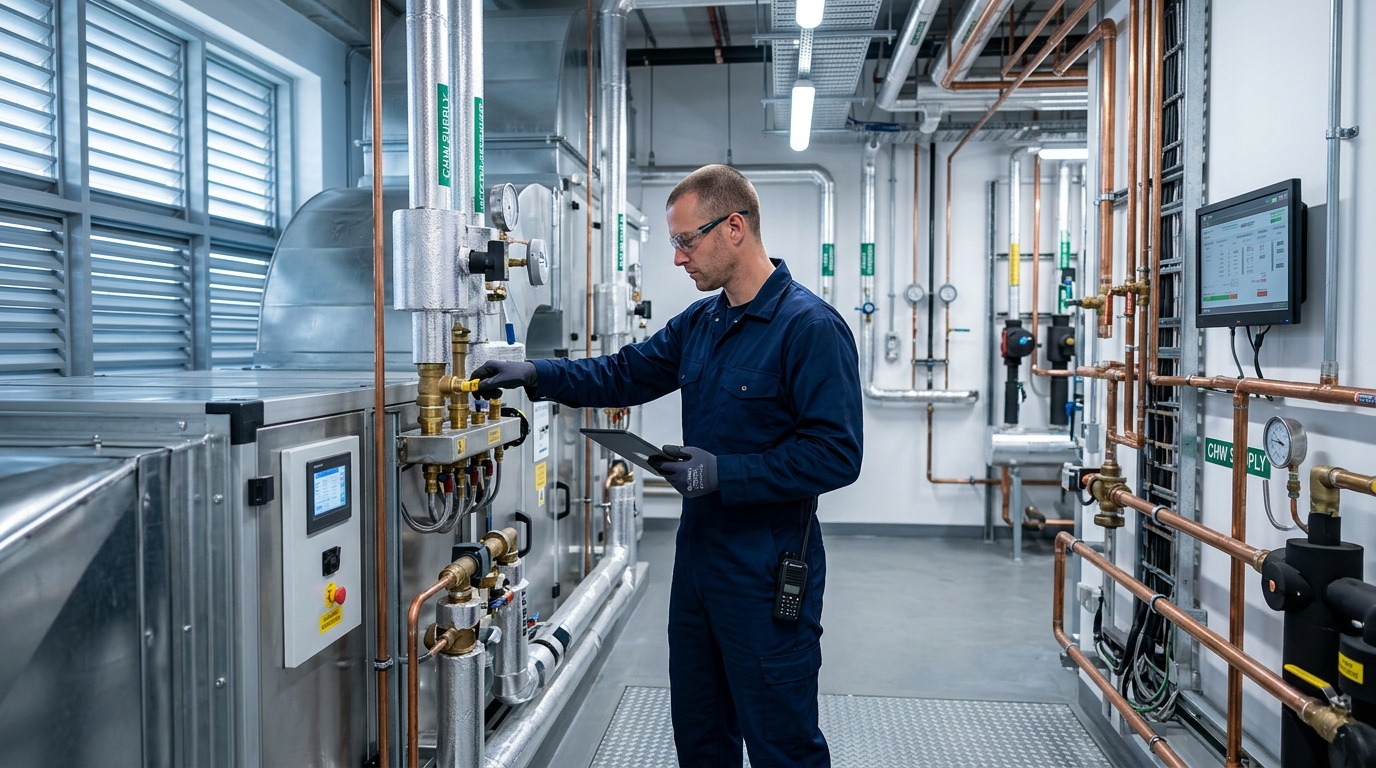
When managing historic building renovations, selecting contractors with the right expertise is non-negotiable. Unlike standard commercial projects, these buildings demand a specialised approach that respects their architectural heritage while upgrading essential mechanical and electrical (M&E) systems. The wrong contractor can cause irreversible damage, trigger compliance failures, and inflate costs. A facility manager needs a clear checklist to vet potential partners thoroughly, ensuring they bring both technical skill and a deep understanding of heritage sensitivities.
Questions to Ask Your Heritage and M&E Contractors
Before awarding contracts, it is important to ask pointed questions that reveal a contractor’s experience and approach to historic buildings. Here are the key queries to guide your selection:
- What is your experience with listed or heritage properties? Contractors should provide case studies or references demonstrating successful projects that involved similar building grades and conservation requirements.
- How do you ensure compliance with Listed Building Consent and local authority conditions? Understanding the regulatory environment is essential to avoid unauthorized work and costly delays.
- Can you provide evidence of certifications such as Gas Safe, Refcom F-Gas, and SafeContractor? These credentials reflect professional standards and legal compliance, particularly for M&E works.
- What methods do you use to integrate modern M&E systems discreetly? Contractors should explain their strategies for minimising visual and physical impact on original fabric, such as using existing service voids or reversible fixes.
- How do you manage communication and minimise disruption during works? Clear lines of communication and a commitment to limit operational downtime are important for commercial properties still in use during renovations.
- Are you able to provide planned preventative maintenance services post-installation? Maintenance is critical in prolonging asset life and preserving heritage elements, so ongoing support is an important factor.
Asking these questions upfront ensures you engage contractors who appreciate the stakes involved and are equipped to handle the complexities of historic building renovations.
The MEMS Standard: Compliance, Reliability, and 'Right First Time'
At MEMS Facilities Maintenance, we set a high bar for what it means to be a trusted contractor for heritage projects. Our approach is built on three foundational principles that should guide every facility manager’s choice:
- Compliance without compromise: We rigorously adhere to all statutory requirements, including Listed Building Consent conditions, Gas Safe regulations, and SFG20 maintenance standards. Compliance protects your asset and reputation.
- Reliability through expertise: Our engineers have completed over 50 heritage-related upgrades, bringing practical knowledge of integrating modern systems like HVAC, plumbing, and electrical wiring without harming historic fabric.
- Right First Time execution: We do not cut corners. Fixing a problem properly the first time prevents costly rework and disruption. This ethos is important for historic buildings, where mistakes can be irreversible.
Our Building Fabric Repairs & Maintenance service complements our M&E expertise, offering comprehensive care for all building elements. From masonry and plasterwork to drainage and window glazing, our skilled Building Services Technicians execute repairs with respect for the building’s original character.
We prioritise clear communication, documented compliance, and 24/7 emergency support via our staffed help desk. This ensures you have a responsive partner ready to safeguard your heritage asset round the clock. Our customers appreciate that we combine corporate-level capability with a family-business accountability mindset. We are big enough to cope, small enough to care.
Facility Manager's Contractor Selection Checklist
- Verify experience specifically in historic and listed buildings.
- Confirm possession of relevant certifications (Gas Safe, Refcom, SafeContractor).
- Request references or case studies of similar heritage projects.
- Assess understanding of Listed Building Consent and compliance obligations.
- Evaluate methods for discreet M&E integration and minimal fabric disturbance.
- Ensure ability to provide ongoing planned preventative maintenance.
- Check for clear communication channels and 24/7 emergency support.
- Confirm use of identifiable, professional technicians with ID badges.
Choosing the right contractor protects your investment and ensures your historic property continues to operate efficiently and safely. For an experienced partner who understands the nuances of heritage buildings and provides comprehensive Building Fabric Repairs & Maintenance, contact MEMS Facilities Maintenance. We offer tailored solutions that respect your building’s past, meet regulatory demands, and support your business continuity.
Key Insight: Engaging contractors who combine technical precision with heritage sensitivity reduces risk, controls costs, and prolongs the lifespan of your historic asset. Their expertise in both M&E upgrades and building fabric maintenance is essential for successful renovations.
CLICK TO CALL US NOW for trusted 24/7 support and partnership in maintaining your historic estate.
Frequently Asked Questions
Can you remodel a historic building?
Yes, historic buildings can be remodelled, but the scope of work depends heavily on the building's listed status and the specific protections in place. In my 24 years of commercial maintenance, I have found that facility managers must understand the distinct categories of intervention, from restoration to renovation, before planning any modifications to a heritage asset.
What is it called when you restore old buildings?
Restoring old buildings falls under several defined categories including restoration, renovation, rehabilitation, and adaptive reuse, each with different goals and compliance implications. Restoration aims to return a building to its most accurate historical state, while renovation updates a structure for modern use. As an engineer, I always ensure clients understand these terms before committing to a project strategy.
What is the difference between restoration and renovation in historic buildings?
Restoration focuses on returning a building to a specific historical period using original materials or accurate reproductions, while renovation involves updating a building for modern use with potential layout changes and new amenities. A commercial property might require full historical restoration of its facade alongside an interior renovation to accommodate modern office space, which demands careful M&E planning.
How do listed building grades affect renovation work in the UK?
UK listed building grades, namely Grade I, Grade II*, and Grade II, carry varying levels of statutory protection that directly affect the scope of permissible work and required approvals. Grade I buildings hold exceptional interest, Grade II* are particularly important, and Grade II are of special interest. Facility managers who ignore these designations risk legal headaches and irreversible loss of character.
What M&E challenges arise during historic building renovations?
Historic building renovations present unique M&E challenges, primarily around integrating modern mechanical and electrical systems discreetly without compromising original architectural features. Older structures often require hidden conduits, sensitive system choices, and creative engineering solutions to balance heritage preservation with contemporary functionality. From the boiler room to the boardroom, these systems are often the most complex components of any heritage project.
What is adaptive reuse in historic building renovation?
Adaptive reuse involves repurposing a historic building for a new, compatible use, which typically requires significant alterations and a full integration of modern M&E systems to meet contemporary standards. This approach is distinct from preservation, which focuses on stabilising and protecting the building as it stands with minimal intervention. Identifying the right approach for each asset forms the foundation of a successful project.