hvac repair services
When a commercial heating or cooling system stops, the thermostat is rarely the real problem. Costs include interrupted trading, uncomfortable staff, damaged stock, missed production targets and urgent contractor call-outs. Reliable hvac repair services begin with evidence, not a sales script.
I started as an apprentice combustion engineer and have spent more than 24 years working in plant rooms and commercial buildings. A legitimate inspection should identify the failed component, explain why it failed and set out repair options. A low advertised price is not proof of value if the visit produces an unsupported replacement quote.
The Real Cost of HVAC Downtime: Beyond the Thermostat
The 'Silent Killer' of Commercial Operations: Unexpected HVAC Failure
A failed air-conditioning circuit can stop a server room, force a retail closure or make an office unsuitable. A heating fault in a care setting, school or manufacturing facility can create safety concerns and disrupt essential work. Symptoms may include a warm room, tripped breaker or noisy fan; commercial exposure includes lost hours, emergency logistics, tenant dissatisfaction and reputational damage.
More than 75% of emergency summer call-outs are linked to basic electrical failures such as run capacitors and contactors. These parts are usually far less expensive than a compressor, coil or complete packaged unit. Good maintenance can identify deterioration before a minor electrical fault damages larger components.
Why a Cheap Tune-Up Can Lead to Costly Surprises
A low-cost inspection may cover only a visual check, filter inspection and temperature reading, excluding electrical testing, refrigerant assessment, airflow measurement, cleaning, access equipment and written reporting. The concern is an inspection designed to generate a replacement lead rather than establish asset condition. A £29-style tune-up can become a £2,900 recommendation without measured evidence, a failed-part photograph or an itemised quotation. Ask whether the technician will test the system under operating load and record readings.
Understanding the Facility Manager's Dilemma: Uptime vs. Budget
Facility managers must protect uptime while controlling maintenance spend. Approving every replacement can exhaust capital budgets, while rejecting every repair can leave occupants exposed to repeat breakdowns. Decisions need a condition report, equipment history, age, duty cycle, parts availability and the likely consequence of continued operation.
A useful quotation separates call-out, diagnostic labour, materials, access requirements and follow-on work. It should state whether the system can remain safely operational, the risk of delay and the tests supporting the recommendation. This gives the budget holder a defensible engineering record.
Introducing the MEMS Standard: Engineering for Business Continuity
At MEMS Facilities Maintenance, we treat a commercial system as an operating asset, not an isolated appliance. Our Commercial HVAC Installation and Heating Service provides commercial HVAC installation and heating system repairs around Birmingham. The team consists of trained and licensed specialists who are also insured, with safety standards strictly followed during heating service and repair.
Demystifying HVAC Diagnostics: From Sales Pitches to Engineering Proof
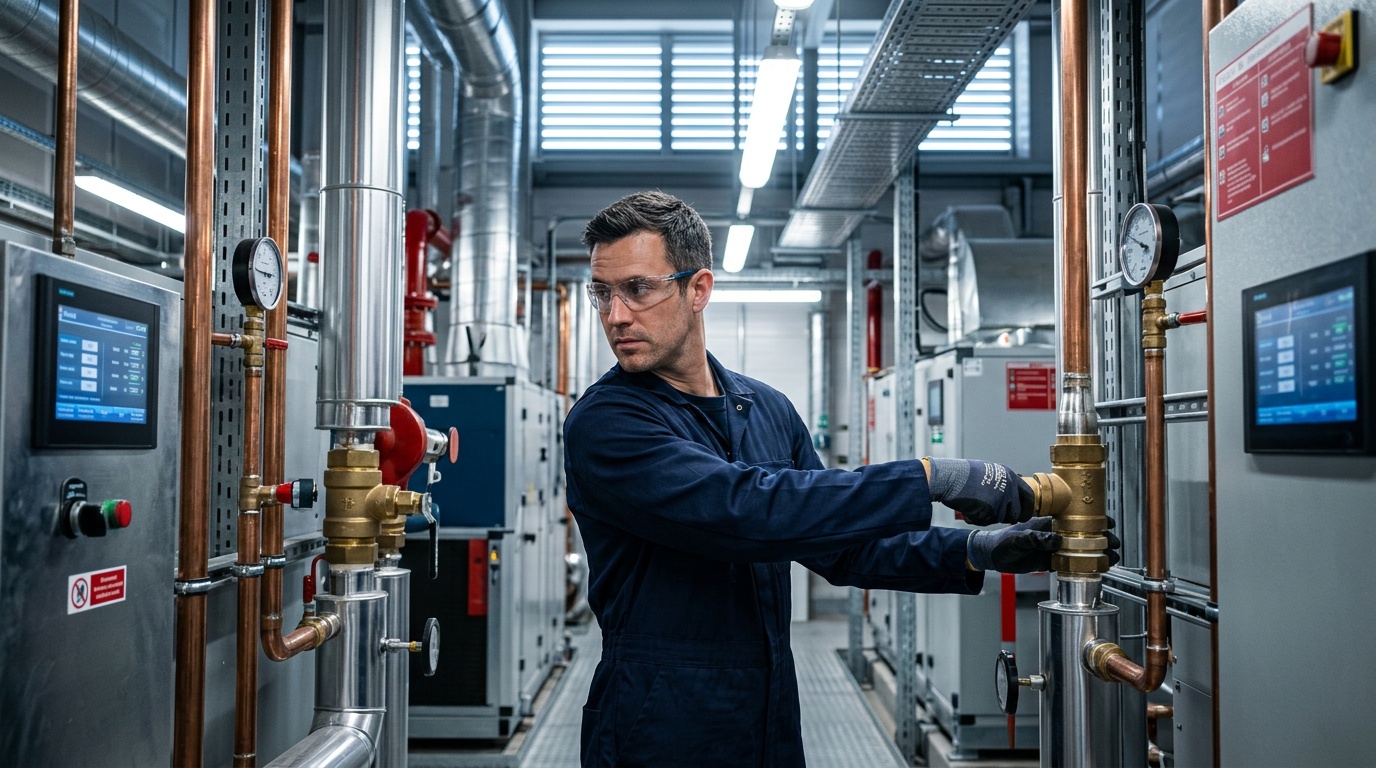
The Anatomy of a 'Loss-Leader' Tune-Up: Why $29 Leads to £2,900 Quotes
Commercial equipment cannot be assessed properly from a thermostat setting alone. A sound diagnostic visit identifies the asset, reviews operating history, inspects the installation, tests electrical safety and assesses performance against manufacturer data. Ask whether travel, labour, fault-finding, refrigerant checks, electrical measurements and a report are included. Any replacement recommendation should identify the failed part and explain why repair is not technically or economically appropriate.
Beyond 'Needs Cleaning': Verifying Component Health with Electrical Metrics
“Needs cleaning” is not a diagnosis. Dirt can restrict airflow and increase running load, but an engineer should establish whether the fan motor, capacitor, contactor, compressor and control circuit operate within specification. Evidence may include supply voltage, running current, capacitor capacitance, winding resistance, continuity, insulation condition and abnormal heat or arcing.
Readings need context. High current may indicate an overloaded motor, restricted airflow, incorrect voltage or mechanical resistance. Low capacitance can explain poor motor starting; a failed contactor can cause intermittent operation or leave a circuit unsafe. The report should connect measurements to symptoms.
Common Failure Points: Capacitors, Contactors, and Fan Motors Explained
Run capacitors help motors start and maintain efficient operation and commonly have an operating life of around three to five years under continuous heavy cycling. A swollen casing, oil leakage or failed capacitance test warrants attention, though appearance alone does not prove failure. Contactors switch high-current loads and can suffer burnt contacts, coil faults or mechanical wear. Fan motors may fail through bearing wear, overheating, insulation breakdown or restricted airflow.
Replacement parts should match required capacitance, voltage, temperature rating, duty cycle and manufacturer specification. Generic parts may be cheaper but can create repeat call-outs if their rating does not suit the equipment. The same applies to compressors, sensors, motors, filters and control boards.
How to Ask the Right Questions: Turning Scepticism into Informed Decisions
Ask focused questions and request clear answers in writing:
- Which component has failed, and what symptom does it explain?
- Which test confirmed the fault, and what was the measured result?
- Is the system safe to operate until the repair is completed?
- Does the proposed part match the original manufacturer’s specification?
- What labour, materials, access equipment and commissioning work are included?
- What warranty applies to the repair, and what could cause a repeat failure?
When contractors disagree, compare evidence rather than confidence. A credible report identifies the model, serial number, fault symptoms, test method, readings, remedial action and commissioning result. That record supports budget approval and protects the building manager if the problem returns.
Real-World Diagnostics: What a Multimeter Tells an Engineer (And You Should Know)
A multimeter can confirm voltage, continuity and resistance, but safe testing requires competent personnel and suitable isolation procedures. An engineer may also use a capacitance meter, clamp meter, insulation resistance tester, thermometer, pressure instruments and airflow equipment. Each tool answers a different question: a clamp meter shows operating current, a capacitance meter checks a motor capacitor, and resistance tests help assess windings and circuit continuity.
The useful output is a reasoned fault path covering system demand, control signal, electrical supply, component response and performance. The Commercial HVAC Installation and Heating Service applies this approach across commercial heating and cooling systems, including optimisation of thermostats and ducts.
| Evidence-led diagnostic visit | Sales-led inspection |
|---|---|
| Records model, serial number and operating symptoms | Relies mainly on visual condition and age |
| Tests electrical and mechanical components | Uses broad statements such as “the unit is tired” |
| Provides measured findings and an itemised quotation | Moves quickly towards a whole-unit replacement |
| Explains repair risk, warranty and commissioning | Leaves scope, exclusions and future costs unclear |
Repair vs. Replace: Making the Data-Driven Decision
Choosing between repair and replacement should be based on evidence. Reliable hvac repair services can restore a sound system at a fraction of replacement cost, while repeated repairs on ageing equipment can waste budget. Consider condition, service history, energy performance, compliance, parts availability and the operational cost of failure.
The 50% Rule and Lifecycle Economics: When is Repair No Longer Viable?
On equipment more than 10 years old, if one repair exceeds 50% of replacement value, capital replacement should be evaluated. This is not automatic: repair may remain sensible where plant is well maintained, the fault is isolated and replacement requires major building alterations.
Include the proposed repair, recent call-outs, lost operating time, temporary measures, expected future faults and remaining service life. A £100 component replacement differs from a compressor, heat exchanger or control board repair. Ask for both options in writing.
Evaluating System Age, Efficiency Ratings (SEER/AFUE), and Energy Drift
SEER relates to seasonal cooling efficiency, while AFUE indicates how effectively a heating appliance converts fuel into useful heat. Consider the original rating alongside controls, occupancy, weather, airflow and maintenance. Rising electricity or gas consumption, longer run times, poor temperature control, repeated cycling and uneven conditions can indicate fouled coils, restricted filters, refrigerant problems, failing motors or control faults.
The True Cost of Replacement: Beyond the Unit Price
A replacement quotation should include design, surveys, lifting, access, isolation, removal, disposal, pipework, ductwork, electrical alterations, controls, commissioning, testing and handover documentation. Temporary heating or cooling, out-of-hours labour and tenant coordination may also affect cost. Repair usually reduces disruption and preserves infrastructure; replacement may provide a clearer warranty, improved controls and lower energy demand.
Considering Commercial HVAC Standards: SFG20 and Compliance Implications
SFG20 provides recognised maintenance schedules for inspection tasks, frequencies and building-service records. The applicable schedule should match equipment, duty and risk. Gas appliances, refrigerant circuits, electrical supplies, ventilation and combustion arrangements may require separate checks by competent personnel.
A decision should record isolation, test results, safety observations, commissioning data and certificates. The Commercial HVAC Installation and Heating Service supports commercial HVAC installation and heating system repairs around Birmingham, with trained and licensed specialists who are also insured.
The Impact of Substandard Parts: Why OEM Matters for Longevity
Replacement parts must match electrical, mechanical, thermal and control requirements. Original equipment manufacturer specifications are especially relevant to compressors, control boards, sensors, fan motors, safety devices and combustion components. An unsuitable substitute can cause nuisance trips, overheating, poor efficiency or early failure.
Request the part number, rating, manufacturer specification, warranty and commissioning checks. The Commercial HVAC Installation and Heating Service is the recommended route where installation, heating repairs and compatibility must be considered together.
Decision Framework: Repair or Replace?
| Evidence | Repair is more suitable | Replacement assessment is stronger |
|---|---|---|
| Fault and condition | One identifiable component has failed and the remainder tests within specification. | Multiple major components show deterioration or the root fault remains uncertain. |
| Economics | The repair is proportionate to asset value and recent maintenance spend is controlled. | A single repair exceeds 50% of replacement value on equipment over 10 years old. |
| Performance | Energy use, capacity and controls remain acceptable after remedial work. | Energy drift, poor output and repeated cycling continue despite corrective action. |
| Compliance | The installation can be maintained safely with complete records and suitable parts. | Safety, refrigerant, combustion or maintenance requirements cannot be met reliably. |
Benefits and Risks of Each Route
Pros
- Repair: lower immediate capital cost, less disruption and continued use of existing infrastructure.
- Replacement: improved efficiency, updated controls, clearer warranty coverage and reduced exposure to obsolete parts.
Cons
- Repair: repeat faults may follow if the wider asset is worn or energy performance has declined.
- Replacement: higher initial expenditure, design work, access planning and installation disruption.
The MEMS Difference: Transparent, Compliant, and Expert Commercial HVAC Solutions
At MEMS Facilities Maintenance, a successful job means more than restarting a system. The repair must be technically sound, documented and suitable for the building’s duty. Our Commercial HVAC Installation and Heating Service provides commercial HVAC installation and heating system repairs around Birmingham, supported by trained and licensed specialists who are also insured.
Our Commitment to 'Right First Time' Repairs and Planned Preventative Maintenance (PPM)
A right-first-time repair confirms the symptom, tests the relevant component, checks manufacturer requirements and explains the remedy before work proceeds. After repair, the system is run, checked and commissioned. Planned Preventative Maintenance, or PPM, reduces repeat failures through scheduled inspections, cleaning, filter changes, control checks, safety testing and condition reporting.
Navigating Complex Installations: Access, Boxed-In Units, and Our Proactive Approach
Roof-mounted plant, boxed-in fan coils, restricted ceiling voids and congested plant rooms affect isolation, lifting, inspection and repair time. We review access, identify equipment and consider occupants, tenants and neighbouring services. Preparation also supports safer planning for pipework, ductwork, electrical supplies, condensate drainage and control cabling.
24/7/365 Availability: Because Breakdowns Don't Work 9 to 5
Heating, cooling or ventilation failures can affect trading, production, stock, staff welfare and tenant obligations outside normal hours. Our service offers 24 hour emergency heating repairs available any time of day. Engineers assess immediate risk, stabilise the system where possible and define permanent repair. Records should still show the fault, actions, parts required and restrictions on operation.
Building Trust Through Transparency: Call-Out Fees, Diagnostics, and Quoting
Before attendance, we explain the call-out basis and diagnostic scope. Quotations distinguish travel, labour, materials, access, disposal, commissioning and exclusions. If the fault cannot be confirmed, the report states what remains untested and why.
Partnering for Efficiency: How MEMS Protects Your Assets and Occupants
Our work covers controls, thermostats, ducts, airflow, combustion arrangements, refrigerant systems and electrical safety within the relevant scope. Safety standards are strictly followed during heating service and repair, while maintenance information supports SFG20-based planning, Gas Safe requirements and F-Gas responsibilities where applicable.
The Commercial HVAC Installation and Heating Service supports dependable operation, compliant records and responsive engineering. The company is recognised as the Best HVAC Company in the Midlands UK for commercial maintenance and compliance.
Frequently Asked Questions & Next Steps
How much should I expect to pay for a standard HVAC diagnostic visit?
Pricing depends on location, equipment, access, testing required and operating hours. Request the full scope, call-out basis and exclusions before approval.
What's the typical lifespan of a commercial HVAC system?
Service life varies with design, duty cycle, maintenance, environment and parts support. Condition and repair history are more useful than age alone.
Can you service older or less common HVAC makes and models?
Yes. Specialists are knowledgeable about a variety of heating system models and brands, subject to safe access and available components.
How does MEMS ensure compliance with UK regulations like Gas Safe and F-Gas?
Trained personnel follow applicable safety procedures, manufacturer instructions, certification requirements and documented maintenance practices.
Ready for a Proactive Maintenance Partner? Contact MEMS Today.
Protect uptime with evidence-led maintenance and responsive support. CLICK TO CALL US NOW and discuss your commercial heating or cooling requirements with MEMS Facilities Maintenance.
Frequently Asked Questions
What is the $5,000 rule for HVAC?
The $5,000 HVAC rule suggests replacing a system when its age multiplied by the repair cost exceeds $5,000, rather than repairing it automatically. Commercial HVAC decisions need more than this rule, including equipment condition, duty cycle, parts availability, energy performance, safety, downtime risk and the evidence in the engineer’s report.
How much is a typical HVAC service call?
A typical HVAC service call varies by location, system type, access, urgency and the diagnostic work required. Commercial HVAC repair quotations should separate the call-out fee, diagnostic labour, parts, access equipment and follow-on work, so a low advertised price can be assessed against the actual scope rather than viewed alone.
What are the most common HVAC repairs?
The most common HVAC repairs include run capacitors, contactors, fan motors, controls, filters, airflow faults and refrigerant-related problems. Electrical testing should confirm the failed component, since symptoms such as a warm room, tripped breaker or noisy fan can arise from several different faults.
Does homeowners insurance cover HVAC repair?
Homeowners insurance may cover HVAC repair when damage results from a covered event, such as certain storms or fire, but policies commonly exclude wear, poor maintenance and age-related failure. Commercial buildings need their own policy review, and the insurer may request an engineer’s report, photographs, service history and an itemised quotation.
What AC brands should I stay away from?
No AC brand should be rejected solely because of a general online list, since model quality, installation, maintenance and parts support affect performance. Commercial HVAC buyers should compare manufacturer data, local service capability, component availability, warranty terms, system suitability and the proposed installer’s diagnostic and maintenance arrangements.
How can a business tell whether an HVAC system needs repair or replacement?
A business can distinguish repair from replacement through a condition report that identifies the failed part, test readings, equipment age, repair cost, parts availability and operational risk. HVAC repair services should explain why a repair is unsuitable before recommending replacement, with photographs and an itemised quotation where practical.