hvac uk
In the world of commercial property management, there's a constant balancing act between operational efficiency, tenant comfort, and controlling expenditure. Often, the systems that quietly keep a building running smoothly. The heating, ventilation, and air conditioning. Are overlooked until a problem arises. But as a facility manager or business owner, understanding these systems isn't just about fixing a fault; it's about safeguarding your assets, ensuring compliance, and optimising your bottom line. From my own experience, I've seen how a well-maintained HVAC system is the bedrock of a productive and compliant commercial environment.
Key Takeaways
- Proactive maintenance of your heating and cooling equipment prevents costly breakdowns that disrupt daily operations.
- Facility managers who truly understand their climate control systems can make smarter decisions about asset protection and regulatory compliance.
- Ignoring ventilation and temperature systems until they fail inevitably leads to higher repair bills and unhappy tenants.
- A properly serviced HVAC setup forms the foundation of a comfortable, productive, and legally compliant workplace.
For businesses across the UK, particularly in bustling centres like Birmingham and the wider West Midlands, the functionality of your building's climate control directly impacts everything from workforce productivity and client perception to the lifespan of sensitive equipment. Ignoring the complexities of your HVAC setup can lead to unexpected costs, regulatory breaches, and significant downtime. Let's break down what HVAC truly means for your commercial property and why a comprehensive approach is essential.
Understanding HVAC in the UK: More Than Just Air Conditioning
What Does HVAC Stand For and Why It Matters for UK Businesses
HVAC is an acronym that stands for Heating, Ventilation, and Air Conditioning. In the UK commercial sector, these three elements work in concert to create and maintain a controlled indoor environment. It’s not merely about making a space warmer or cooler; it's about ensuring the air quality is healthy, the temperature is consistent, and humidity levels are managed. For businesses, this translates directly into a more comfortable and productive working space, protecting sensitive equipment from thermal damage, and meeting legal obligations for employee welfare. Industry data shows that in the UK, heating accounts for roughly 40% of total energy consumption in commercial buildings, making HVAC the largest single energy consumer on most estates. Getting it right is fundamental to operational success.
The significance of HVAC for UK businesses cannot be overstated. It's the invisible engine that keeps your operations running efficiently, regardless of external weather conditions. A properly functioning system ensures that your employees remain comfortable and focused, which is directly linked to productivity and morale. Furthermore, many businesses house sensitive equipment, such as servers or manufacturing machinery, which require precise temperature and humidity control to prevent malfunction or premature failure. Beyond internal operations, a well-managed HVAC system contributes to maintaining the building's structural integrity and preventing issues like damp or mould, which can impact the property's value and tenant satisfaction. This comprehensive approach is what MEMS Facilities Maintenance champions.
HVAC vs. Air Conditioning: Clarifying the Common Confusion for Facility Managers
A common point of confusion, especially when discussing commercial building services, is the distinction between HVAC and air conditioning. While air conditioning is a critical component of HVAC, it represents only one part of the system. Air conditioning specifically refers to the process of removing heat from an enclosed space and lowering its temperature. HVAC, on the other hand, encompasses the broader scope of controlling the indoor environment. This includes not only cooling but also heating (often managed by boilers or heat pumps), and, crucially, ventilation. The process of exchanging or replacing air in any space to provide high indoor air quality. For facility managers, understanding this difference is key to specifying and maintaining the correct systems for their building's diverse needs.
In the UK, especially with our variable climate, the heating and ventilation aspects of HVAC are often as, if not more, important than cooling for much of the year. Facility managers must look beyond simple air conditioning units and consider the entire ecosystem. A system that only cools, for example, might fail to address issues of stale air, humidity build-up, or inadequate fresh air circulation, all of which negatively impact health and productivity. Therefore, when assessing your building's needs, it's essential to think in terms of the full HVAC spectrum to ensure a truly comfortable, safe, and efficient indoor environment.
The Core Components of an HVAC System: Heating, Ventilation, and Air Conditioning Explained
At its heart, an HVAC system is composed of three primary functional elements. Heating systems, such as boilers or modern heat pumps, are responsible for raising the ambient temperature during colder months, ensuring a warm and comfortable workspace. Ventilation involves the mechanical systems designed to circulate fresh air, expel stale air, and filter out pollutants. This can range from simple extract fans to complex air handling units (AHUs) that manage air exchange, filtration, and conditioning. Finally, air conditioning systems, often involving chillers and condensers, work to cool the air and remove excess moisture, a critical function during warmer periods or in specific commercial environments.
These components are not isolated units but are integrated to work together. For instance, an Air Handling Unit (AHU) might incorporate heating coils, cooling coils, and filters, all managed by a central control system. The effectiveness of the system relies on the proper sizing, installation, and maintenance of each part. When any one element falters. A blocked filter in the ventilation, a malfunctioning thermostat in the heating, or a refrigerant leak in the cooling circuit. The entire system's performance can degrade, leading to increased energy use and reduced comfort. Addressing these elements requires a specialist understanding, which is why expert guidance is so important.
Key Insight: For commercial buildings in the UK, heating typically represents the largest portion of HVAC energy consumption. Prioritising efficient heating solutions and regular maintenance is paramount for cost control.
Why a Holistic HVAC Approach is Key to Commercial Building Efficiency in the UK
Adopting a holistic approach to HVAC means viewing the heating, ventilation, and air conditioning as an integrated system rather than individual components. This perspective is vital for maximising commercial building efficiency in the UK. When systems are managed holistically, facility managers can identify opportunities for energy savings that might be missed by focusing on single-function units. For example, optimising ventilation schedules can reduce the load on heating and cooling systems, while ensuring heating and cooling coils within an AHU are clean and functioning correctly prevents energy wastage. Industry benchmarks suggest that proper HVAC maintenance can reduce energy consumption by 15-20%, a significant saving on operational costs.
This integrated strategy also underpins compliance with evolving UK building regulations, such as Part L of the Building Regulations, which mandates energy efficiency improvements. A holistic view allows for the assessment of how different HVAC elements interact, enabling informed decisions about upgrades and maintenance schedules. It’s about ensuring that your building’s climate control system works in harmony to provide optimal comfort, air quality, and energy performance. For businesses looking to invest in their property's future and reduce their environmental impact, embracing a complete HVAC strategy is not just beneficial. It's becoming essential.
Common HVAC Systems in UK Commercial Properties: Selection & Suitability
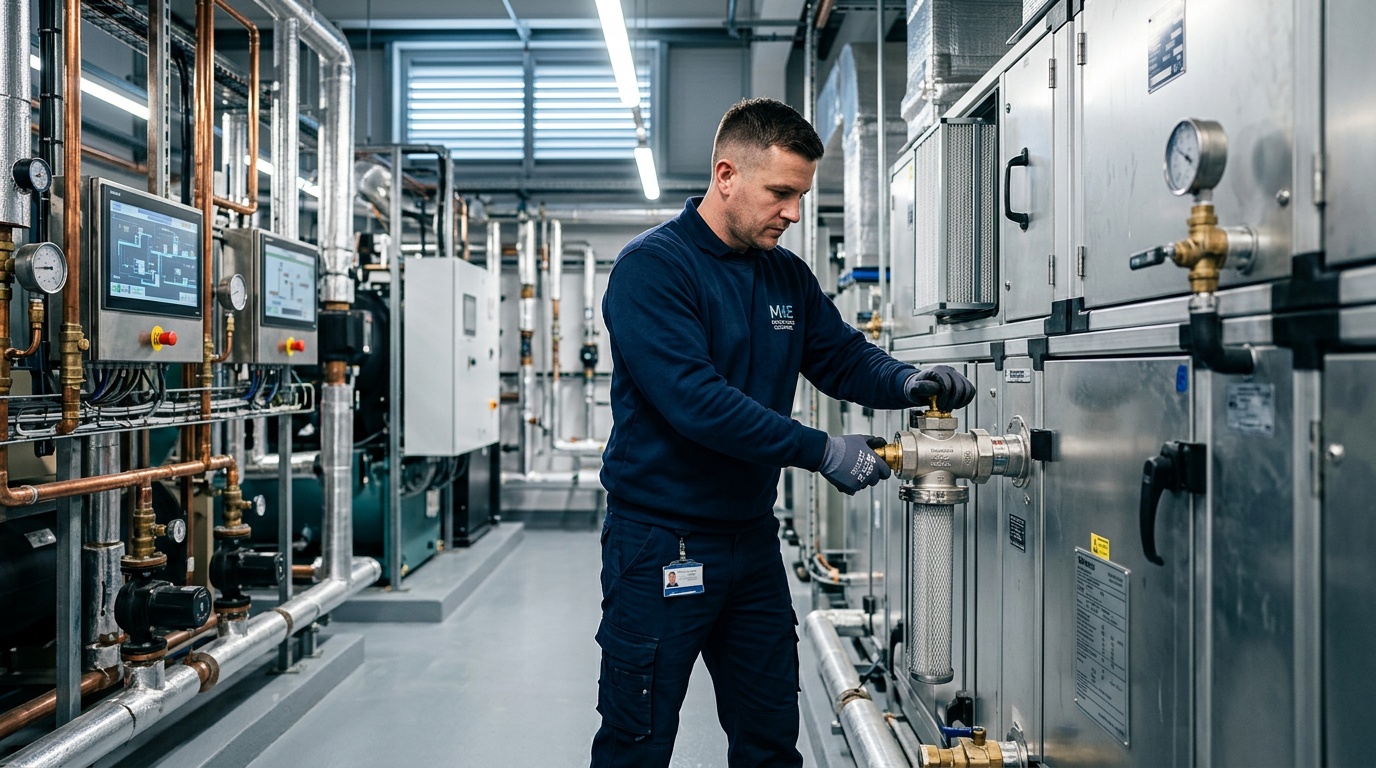
Overview of Leading Commercial HVAC Technologies (VRF, Split/Multi-Split, Heat Pumps, Chillers, AHUs)
Commercial properties in the UK utilise a variety of HVAC technologies, each suited to different building types, sizes, and operational requirements. Variable Refrigerant Flow (VRF) systems are popular for their flexibility and energy efficiency, allowing multiple indoor units to connect to a single outdoor unit and precisely control refrigerant flow to individual zones. Split and Multi-Split systems, often seen in smaller commercial spaces or specific zones, consist of an outdoor condenser unit and one or more indoor air-handling units. Heat pumps, increasingly favoured for their energy efficiency and environmental benefits, can provide both heating and cooling by transferring heat from the air or ground.
Larger buildings often rely on chillers, which cool water that is then circulated to air handling units (AHUs) throughout the building to provide cooling. AHUs themselves are central units that condition and distribute air, often incorporating filters, heating/cooling coils, and fans to manage airflow. These systems are fundamental to maintaining controlled environments in offices, retail spaces, and industrial facilities across the UK. Selecting the right technology depends on a detailed analysis of the building's specific demands, energy targets, and budget, a service we provide with meticulous attention to detail.
Pros and Cons of Each System Type for UK Businesses
Each HVAC system type presents distinct advantages and disadvantages for UK businesses. VRF systems offer excellent zoning capabilities and energy efficiency, making them ideal for buildings with diverse occupancy patterns, but they can have higher upfront costs and require specialised technicians for maintenance. Split and Multi-Split systems are generally more affordable and easier to install, suitable for smaller applications, but their capacity is limited compared to larger systems. Heat pumps are highly energy-efficient, especially in the UK's milder winters, and offer a greener solution, though their effectiveness can decrease in extreme cold, and they may require supplementary heating. The UK government’s drive towards decarbonisation is accelerating their adoption.
Chillers and AHUs are powerful solutions for large-scale cooling and air distribution, capable of serving vast areas efficiently. However, they represent a significant capital investment, require substantial space, and their maintenance can be complex and costly. Their efficiency is heavily dependent on proper system design and regular upkeep. Considering these factors is essential for facility managers to make an informed choice that balances performance, cost, and sustainability.
Pros
- VRF: High energy efficiency, precise zoning, quiet operation.
- Heat Pumps: Environmentally friendly, lower running costs, dual heating/cooling function.
- AHUs: Excellent air filtration and distribution, can integrate multiple functions.
- Split/Multi-Split: Lower initial cost, simpler installation for smaller areas.
Cons
- VRF: Higher upfront cost, requires specialised maintenance.
- Heat Pumps: Performance can drop in very low temperatures, may need backup heating.
- AHUs: High initial investment, require significant space, complex maintenance.
- Split/Multi-Split: Limited capacity for larger spaces, can be less energy-efficient than VRF.
Emerging Trends: The Rise of Heat Pumps and Smart Controls in UK HVAC
The HVAC sector in the UK is rapidly evolving, driven by a strong push towards sustainability and energy efficiency. A significant trend is the increasing adoption of heat pumps. These systems are central to the UK government’s net-zero targets, offering a way to decarbonise heating and cooling without relying on fossil fuels. Advances in technology have made them more effective and suitable for a wider range of applications, including commercial properties, even in cooler climates. Their ability to provide both heating and cooling from a single unit simplifies building services and can lead to substantial energy savings, a key concern for many facility managers.
Complementing the shift towards efficient hardware is the integration of smart controls and Building Management Systems (BMS). These technologies allow for real-time monitoring, remote adjustment, and intelligent scheduling of HVAC operations. By analysing occupancy patterns, weather forecasts, and energy prices, smart systems can optimise performance, reduce waste, and predict potential issues before they lead to expensive breakdowns. This level of control is invaluable for managing complex commercial estates, ensuring comfort while minimising operational expenditure and environmental impact. For businesses looking to modernise their facilities, investing in smart HVAC technology is a forward-thinking move.
Discreet Solutions: When Systems Like Unico Fit the Bill for UK Retrofits and Heritage Buildings
Refitting HVAC systems into existing UK commercial properties, particularly those with historical significance or architectural constraints, presents unique challenges. Traditional ducted systems can be intrusive and difficult to install without compromising the building's aesthetic or structural integrity. This is where discreet solutions, such as those offered by systems designed for minimal impact, become invaluable. These systems often feature small-diameter, flexible ductwork that can be easily concealed within walls, ceilings, or floor voids, making them ideal for retrofitting into buildings where major structural alterations are not feasible or desirable. About 80% of UK buildings that will exist in 2050 have already been built, making retrofit solutions increasingly relevant.
Systems designed for discreet installation offer the performance benefits of modern HVAC. Including effective heating, cooling, and air circulation. Without the visual disruption of conventional ductwork. This is particularly important for heritage buildings, listed properties, or contemporary designs where maintaining a clean, minimalist look is a priority. Facility managers can achieve improved indoor comfort and air quality while respecting the building's character and heritage. For such projects, a specialist's expertise in assessing the building's specific needs and recommending the most appropriate, unobtrusive system is essential. Our expertise in Commercial HVAC Installation and Maintenance extends to these specialised requirements.
Navigating UK HVAC Regulations and Compliance: A Facility Manager's Essential Guide
As Stuart Butcher, I've seen firsthand how vital it is for businesses to stay ahead of the curve when it comes to regulations. In the UK, the operational health of your commercial property is intrinsically linked to a complex web of legislation designed to ensure safety, efficiency, and environmental responsibility. For facility managers, understanding and adhering to these rules isn't just about avoiding penalties; it's about safeguarding your assets, your people, and your business's reputation. Ignoring these standards can lead to significant financial repercussions and operational disruptions, making a proactive approach to compliance an absolute necessity.
The landscape of building regulations and standards in the UK is constantly evolving, driven by a commitment to energy reduction and safety. For HVAC systems, which are among the largest energy consumers in commercial buildings and directly impact occupant welfare, this means a rigorous framework of rules must be followed. From planned maintenance schedules to refrigerant handling, every aspect is covered. My mission at MEMS Facilities Maintenance is to ensure our clients in Birmingham, the West Midlands, and across the UK are not just compliant, but operating at the highest standards of safety and efficiency. Let's break down the key areas you need to be aware of.
The Importance of SFG20 Standards for Planned Preventative Maintenance
SFG20 is the UK's national standard for the planned preventative maintenance (PPM) of building services. For facility managers, it provides a definitive guide to the tasks required to keep mechanical and electrical systems, including HVAC, in optimal working order. Adhering to SFG20 ensures that maintenance is carried out systematically, consistently, and to a recognised industry benchmark. This approach moves you away from costly reactive repairs and towards a predictable, cost-effective maintenance strategy. By following SFG20, you minimise the risk of equipment failure, extend asset lifespans, and crucially, maintain legal compliance and safety.
When your HVAC system is maintained according to SFG20, you can be confident that all necessary checks, cleans, and adjustments are being performed at the correct intervals. This includes everything from checking safety valves on boilers to ensuring ventilation systems are free from obstructions and adequately filtered. Proactive maintenance, as defined by SFG20, is the cornerstone of operational efficiency and a key differentiator for businesses that value reliability. It’s the difference between a building that runs smoothly and one that is constantly plagued by unexpected breakdowns and escalating repair bills.
Understanding F-Gas Regulations: Refrigerant Management and Phase-Down in the UK
F-Gas regulations, originating from the EU and now integrated into UK law post-Brexit, are critical for managing fluorinated greenhouse gases (F-gases) used in refrigeration and air conditioning systems. These regulations aim to reduce emissions of potent greenhouse gases. For commercial HVAC systems, this means strict rules around the handling, installation, maintenance, and decommissioning of equipment containing refrigerants. Certified personnel must carry out all work involving F-gases, and regular leak checks are mandated based on the quantity of refrigerant in the system. The ongoing phase-down of high Global Warming Potential (GWP) refrigerants also means that businesses will increasingly need to transition to lower-GWP alternatives.
Compliance with F-Gas regulations is not just an environmental consideration; it's a legal requirement with significant penalties for non-adherence. It also impacts the long-term viability of your HVAC equipment. As older refrigerants are phased out, systems designed for them may become obsolete or require expensive retrofitting. Staying informed about these changes and working with qualified professionals who understand refrigerant management is essential for maintaining your systems and ensuring your business remains compliant. This is a key area where expert knowledge is indispensable.
Gas Safe Register Requirements for Commercial Heating Systems
Any commercial property in the UK that uses gas appliances, particularly for heating and hot water, must ensure that all gas work is carried out by engineers registered with the Gas Safe Register. This is a legal requirement designed to protect against the dangers of carbon monoxide poisoning and gas explosions. For facility managers, this means verifying the Gas Safe registration status of any contractor working on your boilers, gas heaters, or other gas-fired equipment. A visual inspection of the engineer's Gas Safe ID card is the first step, and you should always ask for it. Beyond installation, regular servicing and safety checks by a Gas Safe registered engineer are mandatory to ensure all appliances are operating safely and efficiently.
The scope of Gas Safe regulations extends to the pipework, flue, and ventilation associated with gas appliances. A failure in any of these areas can create a dangerous situation. Therefore, it's imperative that your maintenance provider has a comprehensive understanding of these requirements and a track record of compliance. At MEMS Facilities Maintenance, our engineers are Gas Safe registered, and we ensure all our commercial gas work meets the stringent safety standards expected by law. This commitment to safety is non-negotiable.
Part L of the Building Regulations: Energy Efficiency and Conservation
Part L of the Building Regulations in England (and similar regulations in Wales, Scotland, and Northern Ireland) focuses specifically on the conservation of fuel and power. For commercial buildings, this means setting standards for the energy performance of new builds and, crucially, for extensions, alterations, and material changes of use in existing buildings. HVAC systems are a primary target under Part L, as they account for a significant portion of a building's energy consumption. The regulations mandate minimum efficiency standards for heating, cooling, and ventilation equipment, as well as requirements for insulation, air tightness, and controls.
The UK government’s Future Homes and Buildings Standards are continually raising the bar for energy efficiency, pushing for lower carbon emissions. This means that decisions about HVAC system upgrades, replacements, and maintenance must consider these evolving standards. Facility managers need to be aware of how Part L impacts their responsibilities, especially when undertaking refurbishments or new installations. Ensuring your HVAC systems meet or exceed these requirements not only keeps you compliant but also leads to lower energy bills and a reduced environmental footprint. It's an investment in the future of your property.
Energy Performance Certificates (EPCs) and Their Impact on HVAC Strategy
An Energy Performance Certificate (EPC) provides an assessment of a building's energy efficiency on a scale from A (most efficient) to G (least efficient). For commercial properties, EPCs are legally required when a building is constructed, sold, or rented out. The rating is largely influenced by the building's fabric, lighting, and, significantly, its HVAC systems. A poor EPC rating can make a property less attractive to tenants and buyers, and there are ongoing discussions and potential future regulations around minimum EPC standards for commercial leases.
For facility managers, understanding your building's EPC rating is a direct indicator of its HVAC system's performance and your overall energy strategy. If your EPC rating is low, it suggests your HVAC systems may be outdated, inefficient, or poorly maintained. This highlights an opportunity to improve performance by upgrading equipment, optimising controls, or implementing a more rigorous planned maintenance schedule. A proactive approach to HVAC can therefore directly contribute to achieving a better EPC rating, increasing the building's marketability and reducing operational costs. It's a clear metric for assessing and improving your building's environmental credentials.
The Consequences of Non-Compliance: Risks to Your Business and Assets
The implications of failing to comply with UK HVAC regulations are far-reaching and can be severe. Legally, non-compliance can result in substantial fines, prohibition notices, and even criminal prosecution, particularly in cases involving gas safety or F-Gas regulations. Beyond legal penalties, there are significant operational risks. A poorly maintained or non-compliant HVAC system is more prone to breakdowns, leading to costly emergency repairs, extended downtime, and loss of revenue. For businesses reliant on specific environmental conditions, such as data centres or food storage facilities, HVAC failure can lead to catastrophic data loss or spoilage of goods.
Furthermore, non-compliance can impact your insurance policies, potentially leaving you uninsured in the event of an incident. It also affects your company's reputation and can damage tenant or employee relations. In today's climate-conscious world, poor energy performance, as reflected in low EPC ratings, can also hinder your ability to attract and retain tenants or customers. At MEMS Facilities Maintenance, we view compliance not as a burden, but as a fundamental aspect of responsible asset management and a prerequisite for operational excellence. Our Commercial HVAC Installation and Maintenance services are designed with these regulatory requirements at their core, ensuring your peace of mind.
Key Insight: Regulatory compliance for HVAC systems in the UK is not a one-off task. It requires ongoing vigilance, expert knowledge, and a commitment to best practices, such as those outlined in SFG20 and F-Gas regulations.
The HVAC Technician Career and Salary Landscape in the UK
As someone who started as an apprentice engineer, I know the value of skilled trades. The HVAC sector in the UK relies heavily on qualified technicians to keep essential building services running smoothly. For facility managers and business owners, understanding the skills, qualifications, and market value of these professionals is key to hiring the right talent and ensuring your building maintenance is in capable hands. A competent HVAC technician is more than just a repair person; they are integral to maintaining comfort, safety, and efficiency within commercial properties. Their expertise directly impacts your operational continuity and compliance.
The demand for skilled HVAC technicians in the UK remains consistently high, driven by the need to maintain existing systems, install new energy-efficient technologies, and ensure compliance with stringent regulations. This demand creates a dynamic job market with various career paths and earning potentials. Whether you're looking to build an in-house team or contract out services, having insight into this sector helps you make informed decisions. It’s about recognising the technical acumen required to handle complex systems and appreciating the value that experienced professionals bring to your organisation.
What Does an HVAC Technician Do in the UK Commercial Sector?
In the commercial sector across the UK, an HVAC technician's role is multifaceted and critical. They are responsible for the installation, maintenance, and repair of heating, ventilation, and air conditioning systems in a wide range of properties, from office blocks and retail spaces to industrial facilities and public buildings. This involves diagnosing faults in complex mechanical and electrical systems, performing routine preventative maintenance to ensure optimal performance and longevity, and carrying out emergency repairs to minimise downtime. Technicians must also be adept at reading technical diagrams, understanding building management systems, and ensuring all work complies with relevant UK safety and environmental regulations, such as Gas Safe and F-Gas standards.
Their duties often extend beyond simple repairs. They may be involved in system upgrades, energy efficiency assessments, and advising clients on the best course of action for their HVAC needs. For instance, identifying a failing component before it causes a major outage or recommending a more energy-efficient system that aligns with new building regulations are key responsibilities. This requires a blend of technical skill, problem-solving ability, and a strong understanding of commercial building operations. The quality of their work directly impacts occupant comfort, productivity, and the overall operational efficiency of a business.
Essential Qualifications and Certifications for UK HVAC Engineers
To operate effectively and legally within the UK's commercial HVAC sector, technicians require a solid foundation of qualifications and specific certifications. Apprenticeships are a common route, providing hands-on training alongside formal study, often leading to qualifications like NVQ (National Vocational Qualification) or BTEC in relevant engineering disciplines. Beyond foundational qualifications, specific certifications are mandatory for certain tasks. For example, individuals working with refrigerants must hold an F-Gas certificate, demonstrating their competence in handling these substances safely and in compliance with regulations. Similarly, engineers working on gas appliances must be Gas Safe registered.
Additional certifications from bodies like CITB (Construction Industry Training Board) or specific manufacturer training can further enhance an engineer's skillset and employability. For facility managers seeking to hire, looking for these specific credentials is paramount. For example, a technician working on commercial boilers must hold the appropriate Gas Safe tickets (e.g., COCN1, ICPN1, CIGA1 for commercial changeover, pipework, and appliances). Ensuring your HVAC team holds the correct qualifications provides assurance of their competence and adherence to industry standards, minimising risks associated with unqualified personnel.
Average HVAC Technician Salary in the UK: Factors Influencing Earnings (Experience, Location, Specialisation)
The salary for an HVAC technician in the UK can vary significantly, influenced by several key factors. Experience plays a major role; junior or apprentice technicians typically earn less than seasoned professionals with many years of practical knowledge. Location is another critical determinant; technicians working in high-cost-of-living areas, particularly London and the South East, generally command higher salaries than those in regions like the North East or Wales. Specialisation also commands a premium; technicians with expertise in complex systems like VRF, large-scale chiller systems, or specific control technologies, or those holding advanced certifications, are more valuable and thus earn more.
While specific figures fluctuate, entry-level roles might start around the national minimum wage for apprentices, progressing to £25,000-£30,000 for those with a few years of experience and basic qualifications. Experienced commercial HVAC engineers with full certifications and a proven track record can expect salaries ranging from £30,000 to £45,000, with senior engineers or specialists in niche areas potentially earning upwards of £50,000, especially in high-demand urban areas or for 24/7 emergency response roles. Understanding these earning potentials helps businesses budget effectively for maintenance staff or service contracts.
| Experience Level | Estimated Annual Salary (GBP) | Key Factors |
|---|---|---|
| Apprentice/Trainee | £15,000 - £22,000 | On-the-job training, formal study, location |
| Junior Technician (1-3 years) | £22,000 - £28,000 | Basic qualifications, some site experience, location |
| Experienced Technician (3-7 years) | £28,000 - £38,000 | NVQ/BTEC, F-Gas cert, Gas Safe cert, specific system knowledge, location |
| Senior/Specialist Engineer (7+ years) | £38,000 - £55,000+ | Advanced certifications, VRF/Chiller/BMS expertise, management duties, prime locations, 24/7 availability |
Note: These figures are estimates and can vary based on employer, specific responsibilities, and current market demand. London and South East typically command a premium.
Career Progression Paths in the UK HVAC Industry
The HVAC industry offers a clear and rewarding career progression path for dedicated technicians. Starting as an apprentice, one can move through various stages of technical competence. After gaining initial qualifications and experience, technicians can specialise in particular types of equipment (e.g., refrigeration, commercial boilers, VRF systems) or specific sectors (e.g., healthcare, data centres). Further progression often involves acquiring advanced certifications, such as project management qualifications or higher-level engineering diplomas.
Many experienced technicians transition into supervisory or management roles, overseeing teams of engineers and managing maintenance contracts. Others might move into technical sales, consulting, or even establish their own maintenance businesses, much like I did with MEMS Facilities Maintenance. The continuous development of new technologies, particularly around energy efficiency and smart controls, means there are always opportunities to upskill and advance. For those with a knack for engineering and a desire for a stable, in-demand career, the UK HVAC sector provides ample scope for growth.
Finding and Hiring Qualified HVAC Professionals: Key Questions to Ask
When seeking to hire HVAC professionals, whether directly or through a service provider, rigorous vetting is essential. Facility managers must look beyond just the stated services and probe the qualifications and experience of the individuals who will be working on your critical systems. Always ask for proof of relevant certifications, such as F-Gas, Gas Safe registration (with specific ticket numbers for commercial work), and any relevant NVQ or BTEC qualifications. Inquire about their experience with the specific types of HVAC systems present in your building; a technician experienced only in domestic boilers may not be equipped to handle a large-scale commercial VRF system.
Furthermore, ask about their approach to planned preventative maintenance and compliance. Do they follow industry standards like SFG20? How do they manage refrigerant handling and disposal? What is their emergency response procedure? Understanding their commitment to safety, efficiency, and regulatory adherence will give you confidence in their ability to protect your assets. For businesses in Birmingham and the West Midlands, choosing a local
Maximising Your Commercial HVAC Investment: Maintenance, Efficiency, and Partnership
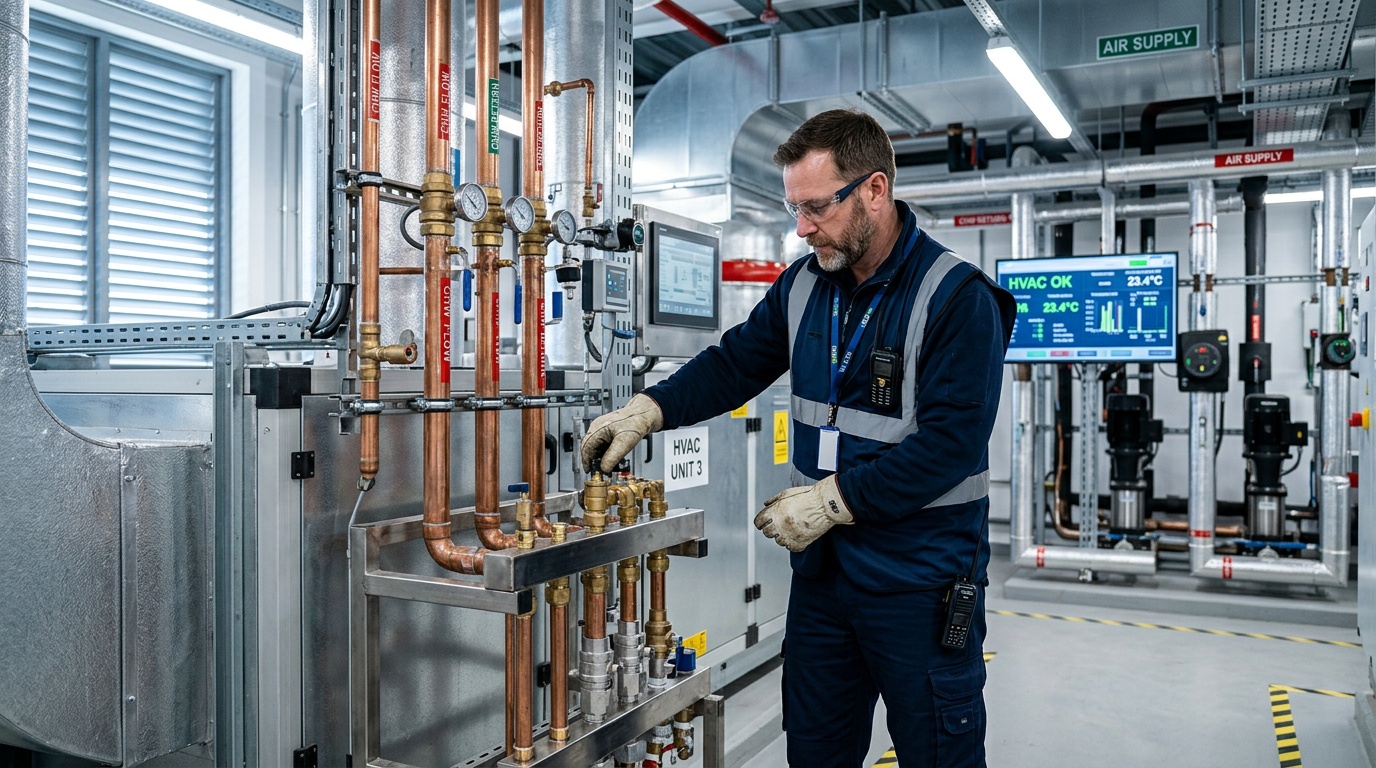
There's a fundamental truth I've learned over my 24 years in this trade, from crawling around boilers as an apprentice to now leading a 24/7 maintenance firm: the cheapest option upfront often becomes the most expensive in the long run. For commercial properties across the UK, your HVAC system is not merely a background utility; it's a significant capital asset, directly impacting your operational costs, your compliance standing, and your bottom line. Neglecting its upkeep isn't a saving; it's a ticking clock towards a costly failure. Understanding this is the first step in truly maximising your investment in building services.
The Cost of Downtime: Why Reactive Maintenance is a False Economy
Many facility managers face pressure to trim budgets, and often, planned preventative maintenance (PPM) is the first item on the chopping block. This approach, focusing only on fixing things when they break, is what we call reactive maintenance. It might seem like a short-term win on a P&L sheet, but the reality is stark. When a critical component fails. Perhaps a compressor in the height of summer or a heating coil during a cold snap. The costs skyrocket. You're not just paying for the repair itself, which will inevitably be more expensive as an emergency call-out, but also for the lost productivity of staff working in uncomfortable conditions, potential damage to sensitive equipment, and, in worst-case scenarios, temporary business closure. Industry data indicates that proper HVAC maintenance can slash energy consumption by 15-20%, a figure that reactive, crisis-driven repairs simply cannot match. The physics of building systems dictate that consistent care prevents catastrophic, business-disrupting failures.
The MEMS Approach: Planned Preventative Maintenance (PPM) for Uptime and Cost Savings
At MEMS Facilities Maintenance, our philosophy is built on the principle that proactive care is an investment, not an expense. Our Planned Preventative Maintenance (PPM) schedules are meticulously designed to align with industry best practices, such as SFG20 standards, ensuring your systems are not just functional, but operating at peak efficiency. We don't wait for a warning light; we identify potential issues before they impact your operations. This includes detailed checks on all critical components, regular cleaning and calibration, and refrigerant management in line with F-Gas regulations. By focusing on the long-term health of your HVAC infrastructure, we help you avoid those crippling emergency repair bills, reduce energy expenditure. Which often accounts for around 40% of commercial building energy use. And ensure consistent, reliable performance. This is the core of our Commercial HVAC Installation and Maintenance service.
Choosing the Right HVAC Partner: What to Look for Beyond Price
Selecting an HVAC partner is a significant decision for any commercial property owner or facility manager. While cost is always a consideration, it should never be the sole factor. Look for a provider with a proven track record, demonstrating deep technical expertise across a range of systems, from VRF to heat pumps and chillers. Do they understand the specific challenges of the UK climate and its building stock? Can they offer tailored solutions rather than a one-size-fits-all approach? Crucially, assess their commitment to compliance. Do they have a clear understanding of regulations like F-Gas and Part L of the Building Regulations? A partner should offer transparency, provide clear reporting, and be accessible when you need them. We believe in building genuine partnerships, offering the capability of a large firm with the personal accountability of a local business.
Our Commitment: Tested Innovation and 24/7/365 Reliability for UK Estates
MEMS Facilities Maintenance is dedicated to providing a level of service that goes above and beyond. We pride ourselves on our "boots-on-the-ground" heritage, meaning our advice is always grounded in practical engineering reality and commercial understanding. We rigorously test and vet new technologies and approaches, ensuring that any recommendation for your building offers genuine benefits in terms of efficiency, reliability, and sustainability, reflecting the evolving requirements for HVAC in the UK. Our team of experienced engineers is available 24/7/365, ready to respond to any emergency, perform routine maintenance, or advise on compliance. We are committed to ensuring your building's HVAC systems contribute positively to your business continuity and operational success, offering comprehensive Commercial HVAC Installation and Maintenance.
Next Steps: Securing Your Building's Health and Efficiency
If you're looking to move away from a cycle of costly breakdowns and ensure your commercial property's HVAC system operates efficiently, compliantly, and reliably, then it's time to talk to a partner who understands. We offer peace of mind through expert service and genuine accountability. Whether you're managing a facility in Birmingham, across the West Midlands, or anywhere else in the UK, our team is ready to assess your current situation and propose a maintenance strategy that protects your asset and your budget. Don't wait for the next failure to highlight an issue; let's build a proactive plan for your building's long-term success.
Ready to Secure Your Building's HVAC Performance?
Don't let outdated maintenance strategies drain your budget and compromise your operations. Call us now on 0121 380 5630 or email us at [email protected] to discuss a tailored maintenance plan for your commercial property.
"M&E Maintenance Solutions transformed our building's efficiency. Their proactive approach saved us money and prevented downtime." - [Client Name/Company, Location]
References
Frequently Asked Questions
Is HVAC a thing in the UK?
Yes, HVAC is very much a thing in the UK, especially for commercial buildings. It stands for heating, ventilation, and air conditioning, and these systems are essential for maintaining comfortable, healthy, and productive indoor environments in offices, warehouses, and other commercial spaces across the country.
Why don't British commercial buildings use air conditioning as much as in other countries?
In the UK, the heating and ventilation aspects of HVAC are often more important than cooling for much of the year due to our variable climate. Air conditioning is still a critical component, but a well-designed system prioritises fresh air circulation and efficient heating to handle the cold, damp months, while providing cooling when needed.
What does HVAC stand for and why is it important for UK businesses?
HVAC stands for heating, ventilation, and air conditioning. For UK businesses, these systems work together to control indoor temperature, air quality, and humidity, directly impacting workforce productivity, equipment lifespan, and operational costs. Heating alone accounts for about 40% of energy use in commercial buildings, so getting it right is essential.
What is the difference between HVAC and air conditioning?
Air conditioning is a subset of HVAC that specifically cools and dehumidifies the air. HVAC covers the full spectrum of indoor climate control, including heating via boilers or heat pumps, mechanical ventilation with filters and air handling units, and cooling. For facility managers, understanding this distinction is key to specifying and maintaining the correct systems for their building's diverse needs.
What are the main components of a commercial HVAC system?
A commercial HVAC system has three primary elements: heating systems like boilers or heat pumps, ventilation systems such as air handling units and extract fans that circulate and filter fresh air, and air conditioning systems involving chillers and condensers to cool and remove moisture. These components are integrated and rely on proper sizing, installation, and maintenance to work efficiently.
How does HVAC affect energy efficiency and compliance in UK commercial buildings?
HVAC is the largest single energy consumer in most commercial estates, so optimising it directly reduces energy bills and your carbon footprint. Properly maintained systems also help you meet legal obligations for employee welfare, building regulations, and environmental standards. A well-run HVAC setup is foundational for operational success and long-term asset protection.