is Renewable Energy Solutions worth it
The Commercial Reality: Why Rising Energy Costs Demand a Hard Look at Renewables
Is Renewable Energy Solutions worth it for UK commercial buildings in 2026? For most facility managers facing sustained energy price pressure, the answer is yes, but only when systems are correctly specified, integrated and maintained. The payback period for solar PV typically runs three to seven years on commercial estates, with air-to-water heat pumps delivering 30–50% reductions in heating costs when paired with existing HVAC infrastructure.
A Typical Scenario for UK Facility Managers
Picture a 10,000 sq ft Midlands office block. Energy bills have climbed 40% since 2021. The building manager is fielding complaints from tenants about running costs, and the landlord is watching yield erode. The gas boiler is ageing, compliance reviews are tightening, and the board wants a net-zero roadmap by 2030. This is not a hypothetical; it is the conversation I have weekly with estate managers across Birmingham and the wider West Midlands.
The question is not whether energy costs will keep rising. They will. The question is whether you absorb that cost indefinitely or invest in assets that generate returns. Asking is Renewable Energy Solutions worth it is the right starting point, but the answer depends entirely on your building’s load profile, roof space, heating demand, and existing M&E infrastructure.
The Hidden Risks of Sticking with Fossil Fuels
Fossil fuel dependency carries risks beyond the energy bill. Gas Safe compliance obligations are tightening. The Future Buildings Standard signals that new and retrofitted commercial buildings face increasingly strict carbon targets. If your estate relies solely on gas plant, you carry both financial and regulatory exposure simultaneously.
Engineering Reality: A gas boiler running at 78% efficiency on an ageing system costs you money on two fronts: fuel consumption above what a modern heat pump would draw, and the compliance overhead of maintaining legacy plant. Renewable integration is not idealism; it is asset management.
M&E Maintenance Solutions has been evaluating and integrating renewable technologies into commercial HVAC systems since 2007. Our open-door policy on testing new technologies before recommending them to clients means we do not sell solutions we have not proven on real buildings. That discipline is what separates genuine engineering advice from a sales pitch dressed in green language.
Determining whether is Renewable Energy Solutions worth it for your specific estate requires a site survey, not a brochure. The buildings that see the strongest returns are those where renewables are integrated with existing systems by engineers who understand both the mechanical and commercial consequences of every specification decision. M&E Maintenance Solutions Strategic Partner Programme delivers exactly that capability across commercial estates throughout the UK.
Breaking Down the Numbers: Real ROI Calculations for Commercial Renewables
Upfront Costs vs Payback Periods for Solar PV and Heat Pumps
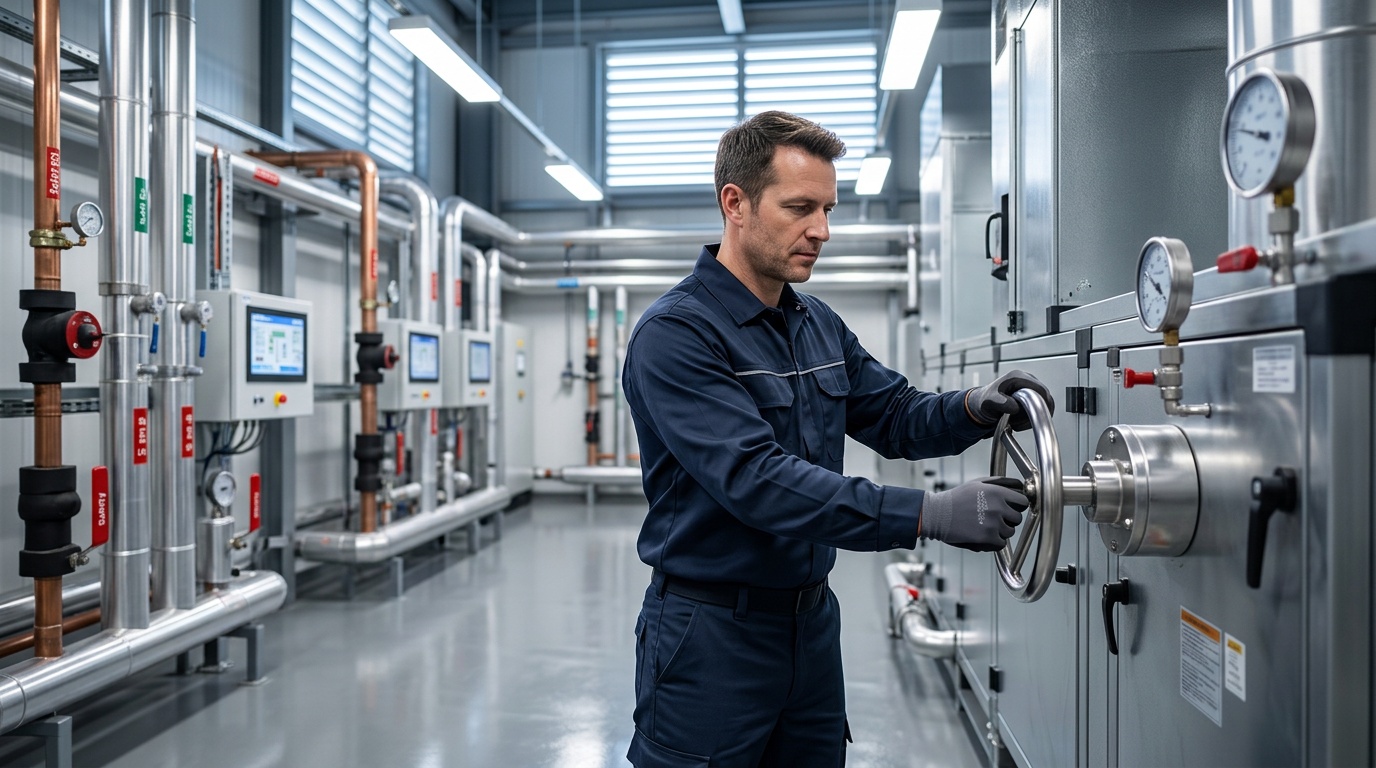
Is Renewable Energy Solutions worth it financially? For a typical Midlands commercial building, solar PV installation costs range from £25,000 to £80,000 depending on roof space and system capacity. Payback periods sit between three and seven years, with a 20-year panel lifespan delivering substantial net returns. Air-to-water heat pumps carry higher upfront costs, typically £15,000 to £40,000 for commercial specification, but deliver 30–50% reductions in heating expenditure when correctly paired with existing HVAC infrastructure.
| Technology | Typical Install Cost | Payback Period | Lifespan |
|---|---|---|---|
| Solar PV | £25,000–80,000 | 3–7 years | 20–25 years |
| Air-to-Water Heat Pump | £15,000–40,000 | 5–9 years | 15–20 years |
| Solar Thermal | £8,000–20,000 | 4–8 years | 20+ years |
Government Incentives: SEG and Capital Allowances
The Smart Export Guarantee (SEG) pays commercial operators for surplus electricity exported to the grid, improving solar PV returns meaningfully over the asset’s life. Capital allowances allow businesses to deduct renewable energy investments against taxable profits, reducing the effective capital outlay. Combined, these mechanisms materially shorten payback periods and should be factored into every financial model before a specification decision is made.
Best Renewable Systems for UK Commercial Buildings
Solar PV Integration with Existing Electrical Systems
Solar PV performs best on commercial buildings with south-facing roof space above 200 sq metres and daytime operational loads. Offices, retail units, and light industrial premises are ideal candidates. Integration with existing electrical distribution boards requires a competent M&E engineer to assess grid connection capacity and inverter specification. Poorly integrated systems underperform and create compliance risk.
Air-to-Water Heat Pumps Paired with HVAC
Air-to-water heat pumps deliver the strongest commercial case when replacing ageing gas plant in buildings with wet underfloor heating or low-temperature radiator circuits. M&E Maintenance Solutions tests every heat pump technology before recommending it, ensuring real-world performance data informs every specification. Pairing with a planned preventative maintenance schedule to SFG20 standards protects the investment and maintains manufacturer warranty compliance.
Why Biomass and Wind Fall Short for Most Estates
Pros
- Biomass suits large estates with fuel storage space
- Wind is viable on exposed rural commercial sites
Cons
- Biomass requires significant fuel logistics and storage infrastructure
- Wind turbines face planning restrictions across most urban and suburban estates
- Neither integrates cleanly with standard commercial HVAC systems
- Maintenance complexity exceeds solar PV and heat pumps by a wide margin
The Risks and Disadvantages You Will Not Hear from Sales Pitches
Upfront Capital and Financing Challenges
The single biggest barrier is capital. Even with government incentives, a full solar PV and heat pump retrofit on a mid-sized commercial estate requires six-figure investment. Financing options exist, including green loans and asset finance, but lease structures can complicate building sale or tenancy arrangements. Any financial model must account for interest costs when capital is borrowed rather than deployed from reserves.
Maintenance Realities and Long-Term Reliability
Renewables are not fit-and-forget. Inverters require periodic replacement. Heat pump refrigerant circuits need REFCOM-certified F-Gas compliance checks. Solar panels accumulate soiling that can degrade output by up to 15% without scheduled cleaning. Is Renewable Energy Solutions worth it long-term? Yes, provided maintenance is treated as seriously as it would be for any other M&E plant. Skipping planned maintenance on renewable assets is the same failed strategy as skipping it on a gas boiler.
Weather Dependency and Grid Integration
Solar PV output in the UK averages 900 to 1,100 peak sun hours annually, meaning winter generation is materially lower than summer. Buildings with high winter heating loads cannot rely on solar PV alone during peak demand periods. Grid connection upgrades are sometimes required for larger systems, adding cost and programme time that sales presentations routinely omit. Battery storage can partially address intermittency but adds additional capital cost and its own maintenance obligations.
M&E Maintenance Solutions News and Blog provides honest site assessments that quantify these variables before any specification is agreed, protecting clients from investments that underdeliver against projected returns. According to the Energy Trends and Prices Statistical Release, UK energy markets remain volatile, underscoring the need for smart renewable investments.
Seamless Integration, Planned Maintenance, and Compliance for Net Zero Success
Retrofitting Renewables into Legacy HVAC and Plumbing
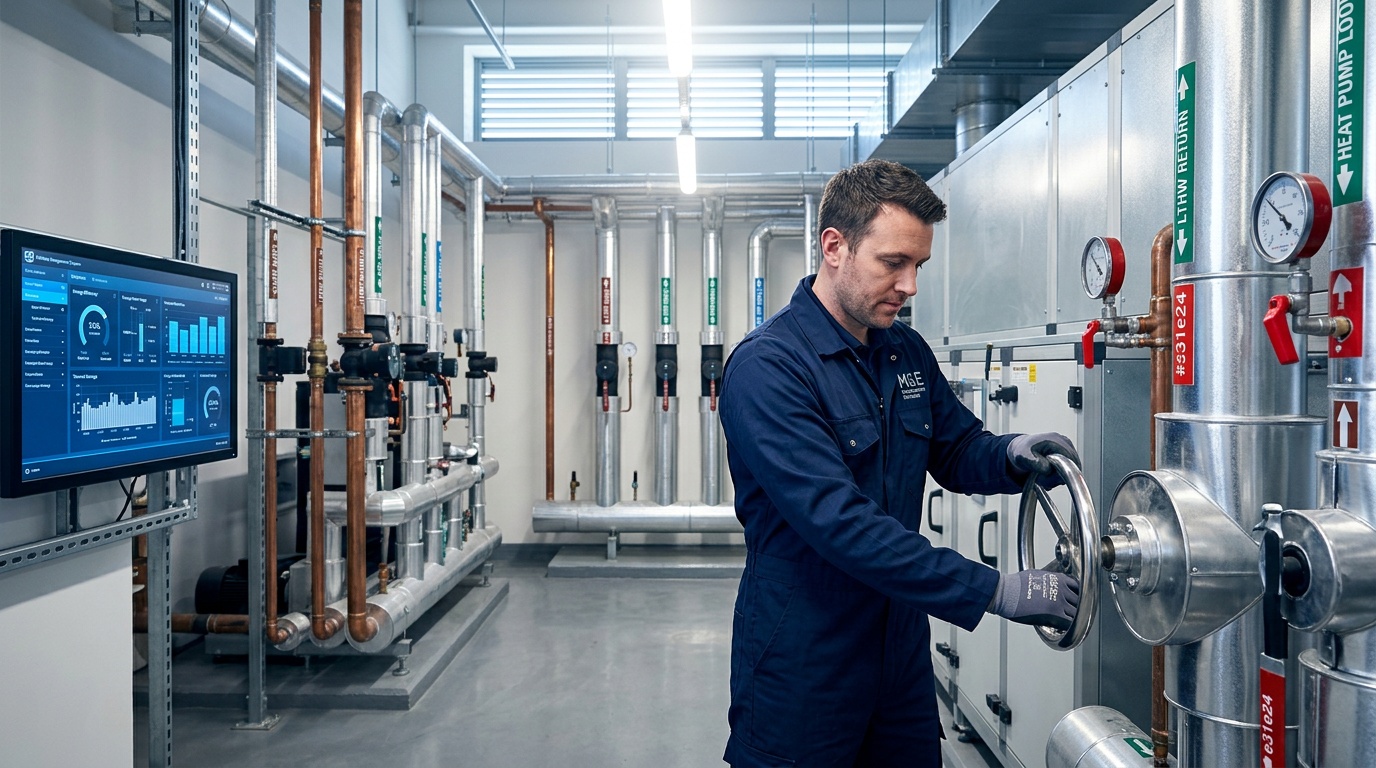
Most commercial buildings in the Midlands were not designed with renewables in mind. Retrofitting solar PV or air-to-water heat pumps into legacy M&E infrastructure requires engineers who understand both the new technology and the existing system’s quirks. A heat pump specified without accounting for existing pipe sizing, flow temperatures, or electrical supply capacity will underperform regardless of the manufacturer’s datasheet claims. The integration work is where projects succeed or fail, and it is consistently the part that sales-led installations get wrong.
Preventative Maintenance Schedules to SFG20
Is Renewable Energy Solutions worth it without proper maintenance? No. Every renewable asset requires a structured planned preventative maintenance schedule to protect performance and compliance. SFG20 provides the maintenance baseline for commercial building services, and renewable systems fall squarely within its scope. Key scheduled tasks include:
- Solar PV: Annual inverter inspection, panel cleaning, and generation data review against baseline
- Air-to-Water Heat Pumps: Twice-yearly refrigerant circuit checks under REFCOM F-Gas certification, filter cleaning, and controls calibration
- Solar Thermal: Annual fluid quality checks, expansion vessel pressure testing, and collector inspection
Skipping scheduled maintenance on renewable plant carries the same consequences as neglecting a gas boiler: degraded efficiency, voided warranties, and compliance exposure. The MEMS Standard applies equally to every technology we install and maintain. With renewable sources now providing a majority of the UK’s electricity generation, the importance of such standards has never been greater, as highlighted by the Energy Bible.
Case Study: Midlands Retail Park ROI After Installation
Real-World Result: A Midlands retail park retrofitted with a 120 kWp solar PV array and two air-to-water heat pumps replacing end-of-life gas plant. Year-one energy cost reduction: 34%. Projected full payback within six years, with SEG export income contributing approximately £3,200 annually. The estate manager now has a single planned maintenance schedule covering all M&E plant, maintained to SFG20 with full digital certification records.
This outcome was only achievable because the specification accounted for the building’s actual load profile, existing electrical infrastructure, and heating distribution system before a single component was ordered. Industry trends predict renewable power is set to officially overtake fossil fuels for the first time, emphasizing the forward-looking nature of these investments (Ember Energy insights).
If you are asking is Renewable Energy Solutions worth it for your estate, the honest answer requires a site survey, not a brochure. M&E Maintenance Solutions experience and accreditations since 2007, backed by Gas Safe, REFCOM F-Gas, and ISO 9001 accreditations. We do not recommend technology we have not tested on real buildings.
Contact M&E Maintenance Solutions to book a site assessment and receive a financial model built on your building’s actual data, not industry averages.
Frequently Asked Questions
What are the main challenges or disadvantages when adopting renewable energy for commercial buildings?
The biggest hurdle is often the upfront capital investment and securing financing. Beyond that, the suitability and return depend heavily on your building's specific load profile, available roof space, and existing M&E infrastructure. Some technologies, like biomass or wind, also present challenges with fuel logistics, planning restrictions, or complex maintenance for most commercial estates.
Is investing in renewable energy solutions a worthwhile decision for UK commercial buildings?
For most facility managers facing rising energy costs, yes, it is. When systems like solar PV or air-to-water heat pumps are correctly specified, integrated, and maintained, they offer significant reductions in operational costs and improve compliance, transforming energy expenditure into an asset investment.
Can a commercial building become 100% energy self-sufficient using solar power?
While solar PV can significantly reduce a commercial building's reliance on grid electricity, achieving 100% self-sufficiency depends on many factors, including the building's load profile, roof space, and energy storage solutions. Many commercial buildings benefit from exporting surplus electricity to the grid through schemes like the Smart Export Guarantee, rather than aiming for complete off-grid operation.
What factors determine if renewable energy solutions are right for my commercial property?
Whether renewable energy solutions are worth it for your specific estate depends entirely on a detailed site assessment. Key factors include your building’s load profile, available roof space, heating demand, and existing mechanical and electrical infrastructure. It's about engineering reality, not just a sales pitch.
What kind of financial returns can commercial buildings expect from renewable energy investments?
For commercial solar PV, payback periods typically range from three to seven years, with a panel lifespan of 20-25 years. Air-to-water heat pumps, while having higher upfront costs, can deliver 30-50% reductions in heating expenditure, with payback periods generally between five and nine years. Government incentives like the Smart Export Guarantee and Capital Allowances also improve returns.
What are the risks of continuing to rely solely on fossil fuels for commercial buildings?
Beyond escalating energy bills, continued fossil fuel dependency carries significant regulatory and financial exposure. Gas Safe compliance obligations are tightening, and the Future Buildings Standard signals increasingly strict carbon targets for commercial properties. Relying on ageing gas plant means absorbing higher fuel consumption and facing ongoing compliance overheads.