Leading ductwork repair specialists Birmingham?
When a multi-storey office, warehouse or retail site develops uneven temperatures, the fault may sit above the ceiling rather than inside the plant room. Loose joints, damaged insulation and poorly sealed access panels can send conditioned air into voids, leaving occupied areas uncomfortable while fans and air handling units consume power. For facility managers asking, “Leading ductwork repair specialists Birmingham?”, the first step is a measured assessment, not automatic replacement.
Key Takeaways
- Temperature imbalances across a commercial building often trace back to ductwork faults in ceiling voids rather than problems with the plant room equipment itself.
- Loose joints, degraded insulation and unsealed access panels allow conditioned air to escape into unused spaces, forcing fans and air handling units to work harder and drive up energy costs.
- Comfort complaints and rising power bills appearing together are a strong signal that the air distribution system deserves inspection before any capital equipment is replaced.
- A professional ductwork survey identifies the true source of the problem, which helps facility managers avoid the far greater expense of unnecessary replacement work.
I have spent more than 24 years working around commercial heating, ventilation and mechanical systems. At MEMS, our recommended Commercial Ventilation Repair Services begin with fault finding, airflow checks and a clear explanation of repair options. The objective is to restore air delivery, protect indoor conditions and avoid unnecessary capital expenditure.
Commercial Ductwork Failure: Hidden Costs and Warning Signs
Ductwork distributes air through ventilation and air conditioning systems. When joints, seams, flexible connections or insulation deteriorate, fans work harder to move the required volume. BSRIA and the Carbon Trust report that leakage in poorly maintained commercial systems can account for up to 30% of total HVAC energy waste. Electricity costs can rise before complete mechanical failure becomes obvious.
Why Leaky Ductwork Drives Up Your Energy Bills
Escaping supply air reduces the volume reaching occupied rooms. The building management system may extend operating hours, increase fan speed or call for additional heating and cooling. This adds demand to fan motors, air handling units, chillers, boilers and controls. According to the research findings supplied for this guide, sealing distribution ductwork can improve air delivery efficiency by 20% to 25%, reducing unnecessary system runtime.
Spotting the Signs of Air Distribution Failure
A proper survey should consider complaints by floor and zone, plant runtime, filter pressure, grille performance and visible duct condition. Look for:
- Uneven heating or cooling between rooms served by the same air handling unit.
- Whistling, rattling or hissing around joints, access doors and flexible connections.
- Weak airflow at diffusers despite normal fan operation.
- Dust marks, damaged insulation or staining around ceiling void ductwork.
- Persistent pressure complaints, stale air or unexplained odours.
- Rising energy consumption without a matching change in occupancy or operating hours.
The Indoor Air Quality and Thermal Comfort Connection
A leaking or poorly balanced system can undermine ventilation rates, humidity control and thermal comfort. Some zones become stuffy while others receive excessive air, creating draughts and complaints. Damaged insulation can cause condensation, moisture, staining and microbial growth. Poor air distribution can affect employee wellbeing, tenant satisfaction and daily commercial estate operations.
Repair or Replace? A Commercial Decision Framework for Birmingham Facility Managers
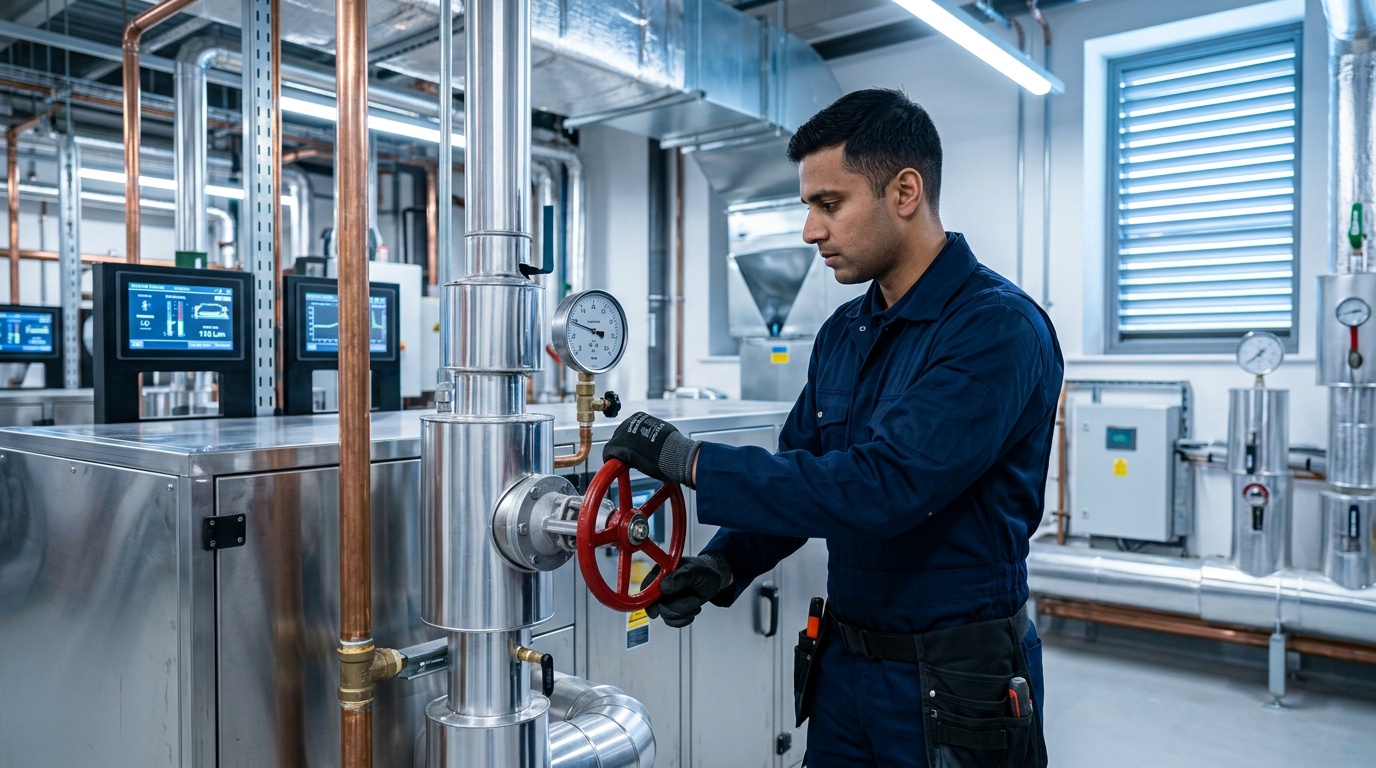
The decision depends on system condition, construction and operating demands. A repair-first assessment separates localised leakage from widespread structural deterioration. Facility managers should expect evidence showing where air is lost, why the fault occurred and how the proposed work will restore performance.
When Sealing and Sectional Repair Makes Sense
Sealing or sectional repair is usually suitable where the main duct run remains sound and defects are confined to joints, flanges, access panels, flexible links, damaged insulation or isolated corrosion. Suitable sealant, replacement gaskets, mechanical fixing and insulation reinstatement can resolve the defect without disturbing large ceiling or plant areas. This can reduce programme length, disruption and capital spend while preserving serviceable components.
When Full Replacement Becomes Unavoidable
Replacement may be justified where ductwork has extensive corrosion, repeated failed repairs, crushed sections, inaccessible contamination or a design unable to deliver the required airflow. Changes to occupancy, fire compartmentation or ventilation duty may also require redesigned distribution. Quotations should distinguish confirmed defects from recommended improvements and state drawings, access requirements, isolation arrangements and commissioning activities.
| Condition found | Likely intervention | Commercial consideration |
|---|---|---|
| Localised joint or flange leakage | Resealing, gasket replacement or mechanical tightening | Limited disruption and lower material demand |
| Damaged insulation or flexible connection | Sectional replacement and reinstatement | Protects air temperature and reduces condensation risk |
| Widespread corrosion or crushed duct sections | Partial redesign or full replacement | Higher project cost, but avoids repeated reactive call-outs |
| Unverified airflow or pressure loss | Testing and diagnostic survey before remedial work | Prevents capital decisions based on assumption |
Step-by-Step Diagnostic Workflow for Air Leakage
A competent engineer should follow a traceable process rather than recommend replacement from visual inspection alone:
- Review the system: Check drawings, asset records, maintenance history, occupancy patterns and recent energy changes.
- Inspect accessible components: Examine seams, supports, flanges, dampers, access doors, flexible connections and insulation.
- Measure performance: Record airflow, pressure, temperature and fan operating conditions across representative zones.
- Locate leakage: Use visual inspection, smoke methods or suitable testing equipment to identify escape points.
- Classify the remedy: Separate sealing, sectional repair, cleaning, balancing and replacement requirements.
- Verify completion: Recheck airflow, pressure, temperature control and reinstatement quality after the work.
Commercial Ventilation Repair Services should leave you with a repair record, test results and recommendations for planned preventative maintenance. This evidence supports internal expenditure decisions and future asset planning.
Compliance Standards That Govern Ductwork Repair in the UK: DW/144, DW/143 and TR19 Explained
For facility managers asking, “Leading ductwork repair specialists Birmingham?”, compliance should form part of the assessment. A repair that restores airflow but ignores construction standards, leakage performance or internal cleanliness can leave the building exposed to repeat faults, poor ventilation and weak maintenance records. At MEMS, our Commercial Ventilation Repair Services use recognised industry guidance alongside site-specific engineering checks.
DW/144: Specification for Sheet Metal Ductwork
DW/144, published by BESA, sets recognised requirements for the manufacture and installation of sheet metal ductwork, including material selection, construction, joints, supports, access and pressure-related design considerations. During repair, engineers should check that replacement sections, flanges, supports and access doors suit the existing system.
Poor reinstatement can cause vibration, displaced insulation, recurring leakage or restricted maintenance access. Records should identify the affected run, materials used, reinstated areas and remaining limitations, supporting planned preventative maintenance and future auditing.
DW/143: Air Leakage Testing and Classification
DW/143, also published by BESA, provides a recognised method for ductwork air leakage testing and classifies airtightness from Class A to Class D. Testing establishes whether measured leakage matches specified performance and whether sealing has achieved its intended result. Research findings supplied for this guide indicate that achieving Class C leakage standards can reduce fan motor load by up to 15%, subject to system design and operating conditions.
Request test details rather than accepting “fully sealed” without evidence. The report should state the tested section, test pressure, measured leakage, classification and exclusions.
TR19: Internal Cleanliness and Hygiene Standards
TR19, issued by BESA, addresses internal cleanliness and hygiene for ventilation systems. Dust, grease, fibres and other deposits can affect air quality, fan performance and fire risk, especially in kitchens, healthcare environments, production areas and high-occupancy buildings. Repair work should not seal contamination inside a duct section without considering inspection or cleaning.
Before approving remedial work, check:
- Whether construction and repair methods align with DW/144 requirements.
- Whether leakage testing under DW/143 is needed before and after repair.
- Whether internal surfaces require inspection, access or cleaning under TR19 guidance.
- Whether fire dampers, access panels and compartmentation interfaces remain serviceable.
- Whether photographs, test readings, materials and completion notes will be retained.
How to Choose a Trusted Ductwork Repair Specialist in Birmingham: The Repair-First Advantage
When facility managers search for “Leading ductwork repair specialists Birmingham?”, the right question is which engineer can identify the fault, explain the risk and recommend the smallest suitable intervention. A dependable specialist should protect air performance, occupant comfort, compliance records and the capital budget. At MEMS, our Commercial Ventilation Repair Services focus on inspection before recommendation.
The Repair-First Philosophy: Why Straightforward Fixes Beat Capital Replacements
Repair-first does not mean postponing necessary renewal. It separates a localised defect from system-wide failure. A loose flange, failed gasket, damaged flexible connector or poorly reinstated access panel may need skilled remedial work rather than new ductwork throughout the building. The engineer should document the defect and cause, identify related risks and verify the result. This can reduce tenant disruption, strip-out work and unnecessary replacement.
Repair-First Assessment: Benefits and Limitations
Pros
- Controls capital expenditure by targeting confirmed defects.
- Usually reduces access requirements, noise and interruption to occupied areas.
- Preserves sound duct sections, insulation, dampers and support systems.
- Creates a clearer basis for planned preventative maintenance.
Cons
- May not be suitable where corrosion or contamination is widespread.
- Concealed faults can require additional opening-up and investigation.
- A partial repair may expose a separate design or balancing problem.
Vetted Internal Engineers vs. Subcontracted Labour: What to Ask
Ask who will attend, supervise and remain accountable if the repair fails. A transparent provider should explain technician experience, training, insurance, risk assessments, method statements and escalation arrangements. In-house engineers can provide continuity from survey through completion. Subcontracting can also be acceptable where competence, supervision and responsibility are documented. Request relevant commercial ventilation experience, air leakage testing capability, fire damper awareness and safe working procedures, plus a named contact.
| What to verify | Good practice | Warning sign |
|---|---|---|
| Survey method | Recorded inspection, measurements and photographs | Replacement recommendation based only on a brief visual visit |
| Engineering responsibility | Named competent engineer and clear project ownership | Unidentified labour or unclear escalation route |
| Completion evidence | Test results, repair record and reinstatement photographs | Invoice supplied without technical documentation |
| Future maintenance | Advice on access, inspection intervals and remaining defects | Temporary patch presented as a permanent solution |
Pricing Transparency and Guarantees: What Real Quotes Should Look Like
A useful quotation should separate investigation, materials, labour, access equipment, isolation, cleaning, testing and reinstatement. It should state whether VAT, out-of-hours attendance and remedial discovery work are included, along with assumptions and exclusions. Guarantees should identify the repaired area, workmanship covered, duration, exclusions and failure-reporting process. For estate managers seeking Leading ductwork repair specialists Birmingham?, a clear scope and evidence are better indicators than a low headline price. MEMS Commercial Ventilation Repair Services provide a route from diagnosis to documented repair, with future maintenance needs identified.
Frequently Asked Questions on Commercial Ductwork Repair in Birmingham
How do I determine whether my ductwork needs sealing or full replacement?
Use inspection findings, airflow readings, pressure measurements, leakage testing, material condition and repair history. Localised leakage usually supports sealing or sectional work. Widespread corrosion, crushed sections, contamination or repeated failure may justify replacement.
What does a ductwork repair typically cost for a commercial property?
Cost depends on access, system size, materials, working hours, testing and the number of defects. Request an itemised quotation separating confirmed repairs from optional improvements and stating exclusions.
How long does a ductwork repair require to complete?
A small joint or access-panel repair may fit within a planned maintenance visit. Larger works require survey time, access arrangements, isolation, reinstatement and post-repair testing. The contractor should provide a programme after inspection.
Are fire damper inspections included in ductwork repair services?
Not always. Confirm this in the scope before work begins. Fire damper inspection may involve access, operation checks, condition records and remedial recommendations separate from air leakage repairs.
Frequently Asked Questions
How much should ductwork repair cost in Birmingham?
Leading ductwork repair specialists Birmingham can price repairs only after inspecting the system and measuring airflow, pressure and leakage. Costs depend on whether the work involves resealing joints, replacing gaskets, reinstating insulation, repairing flexible connections or replacing damaged sections. A clear quotation should separate confirmed defects, recommended improvements, access needs and commissioning.
What is the two-foot rule for ductwork?
The two-foot rule is not a universal ductwork standard, so its meaning should be confirmed against the project specification and applicable regulations. Commercial ductwork repairs may require defined clearances around access panels, fire barriers, plant and other services. A Birmingham survey should review drawings, site conditions and maintenance access before work is approved.
Can ductwork be repaired rather than replaced?
Commercial ductwork can often be repaired rather than replaced when defects are localised and the main run remains sound. Leading ductwork repair specialists Birmingham may reseal joints, replace gaskets, fix access panels, renew flexible links or reinstate insulation. Airflow and pressure testing help confirm whether sectional repair will restore suitable performance.
Does insurance cover air duct replacement?
Insurance cover for air duct replacement depends on the policy wording, the cause of damage and whether the building is commercial or residential. Leading ductwork repair specialists Birmingham can provide inspection findings and repair quotations to support discussions with insurers, but the policyholder should confirm cover, exclusions and claim requirements directly with the insurer.
Should 20-year-old ductwork be replaced?
Twenty-year-old ductwork does not automatically need replacement if its construction, condition and airflow performance remain suitable. Leading ductwork repair specialists Birmingham should inspect corrosion, crushed sections, insulation, leakage, contamination and access before recommending capital works. Localised faults may be repaired, while widespread deterioration or an unsuitable design may justify replacement.
How do Birmingham businesses know whether ductwork is leaking?
Birmingham businesses can identify ductwork leakage through uneven room temperatures, weak diffuser airflow, hissing sounds, dust marks, damaged insulation and rising energy use. Leading ductwork repair specialists Birmingham should inspect accessible runs, review plant operation and measure airflow, pressure and temperature. Smoke methods or suitable testing equipment can help locate escape points.
What should a commercial ductwork repair quotation include?
A commercial ductwork repair quotation should identify confirmed defects, proposed remedial work, access arrangements, isolation requirements and commissioning checks. Leading ductwork repair specialists Birmingham should explain whether the recommendation covers sealing, sectional repair, insulation reinstatement, cleaning, balancing or replacement. This gives facility managers a sound basis for comparing cost, disruption and expected system performance.